English
 中文简体
中文简体
It is made with Bio-base PLA, fully biodegradable Feature: 1. Industrial compost product 2. Made with PLA 3. Eco-frie...
READ MORE
Content
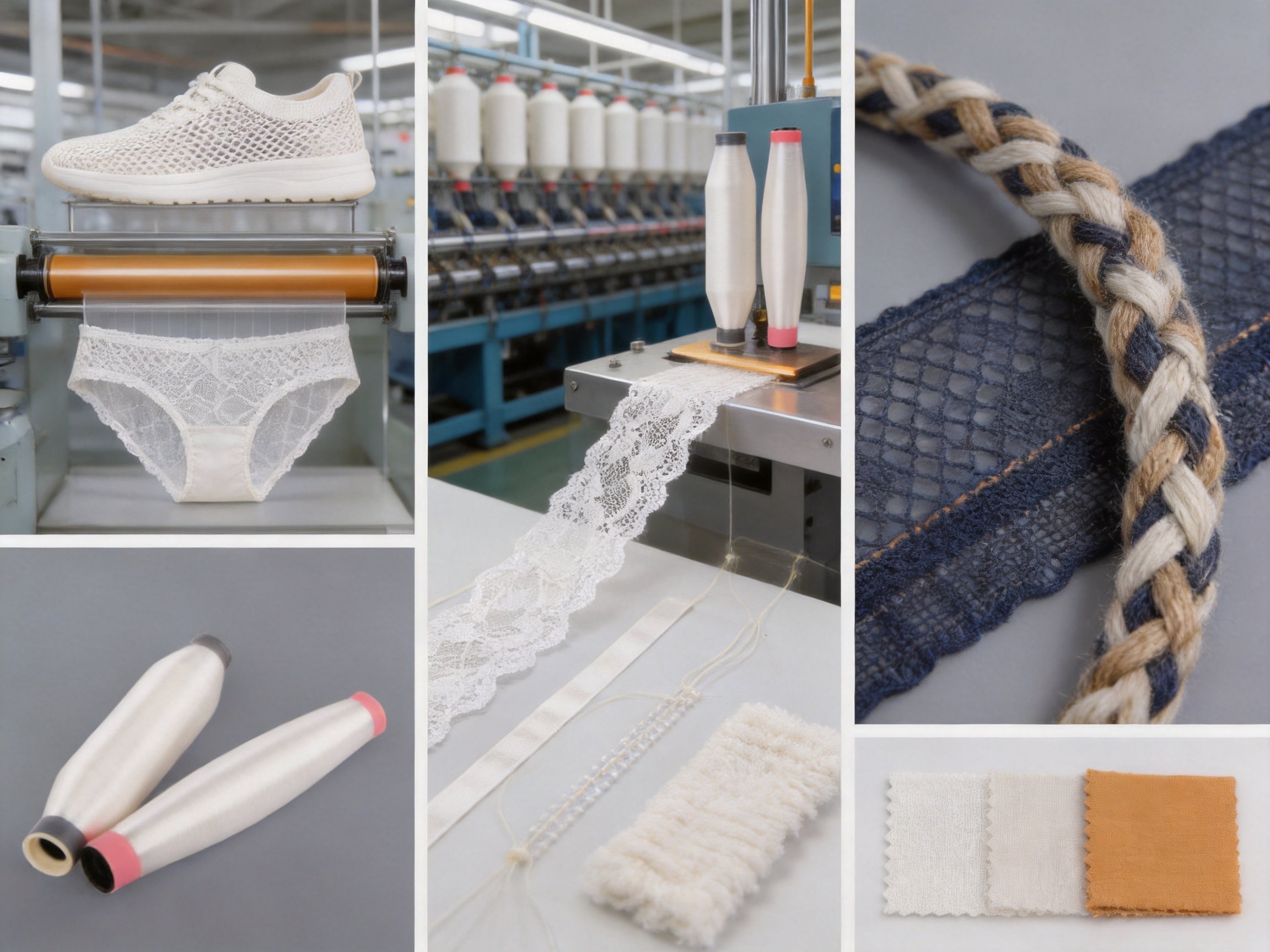
Pure Polyester Low Melting Yarn 110°C is a thermofusible textile yarn developed for applications that require reliable bonding, structural reinforcement, controlled heat activation, and compatibility with polyester-based materials. Made from 100% low-melting polyester, this functional yarn combines the mechanical advantages of polyester filament with a precisely controlled melting threshold of approximately 110°C. When exposed to suitable heat, the yarn softens and melts uniformly. After cooling, it solidifies to form a stable bond between fibers, fabric layers, yarn components, or technical textile structures.
Unlike conventional liquid adhesives, solvent-based bonding agents, and hot-melt powders, low melting yarn can be integrated directly into textile production. It can be knitted, woven, wrapped, stitched, or positioned as a reinforcing component before heat activation. This makes it suitable for manufacturers seeking a cleaner, more precise, and more automated approach to textile bonding.
The yarn is available in a broad range of deniers, including 20D, 30D, 40D, 50D, 70D, 100D, 150D, 200D, and 300D. This specification range allows users to select a lightweight yarn for delicate lingerie and lace applications or a heavier yarn for ropes, industrial meshes, bonded sewing threads, and cable protection structures.
Low melting yarn is a specialized functional yarn designed to act as a heat-activated bonding medium. Its polymer structure is engineered to melt or soften at a lower temperature than ordinary high-tenacity polyester yarns. In this product, the activation temperature is centered around 110°C, making it suitable for bonding processes that require moderate and carefully controlled heat.
During processing, the yarn remains stable under normal handling, winding, knitting, sewing, and fabric formation conditions. When the finished or semi-finished textile structure is subjected to steam, heated pressing, a hot-air oven, or an industrial calender, the yarn reaches its activation temperature. It then flows into surrounding fibers or adjacent textile layers. Once the heat source is removed and the material cools, the polymer hardens and creates a firm connection.
This bonding principle is especially valuable in textile manufacturing because the yarn can be incorporated into the structure before bonding. It does not need to be sprayed, brushed, laminated, or manually applied after the textile has been formed. As a result, the process can reduce handling steps and improve bonding consistency.
The pure polyester composition also offers an important compatibility advantage. When the low melting yarn is combined with standard polyester fabrics or polyester filament yarns, the materials exhibit closely matched behavior during dyeing, heating, and finishing. Similar thermal response, dye affinity, and dimensional characteristics can help reduce visible bonding lines, uneven coloration, puckering, and distortion.
The 110°C melting threshold is one of the most important features of this yarn. A precisely defined activation temperature allows textile producers to design repeatable thermal bonding procedures. Operators can select a suitable temperature, dwell time, pressure, and cooling method according to the fabric construction and intended end use.
A moderate melting point can be advantageous when working with heat-sensitive materials. Certain knitted fabrics, elastomeric components, decorative trims, coatings, foams, and composite layers may be damaged by excessive heat. A yarn that activates at approximately 110°C can provide bonding performance without requiring the extreme temperatures associated with some conventional thermoplastic materials.
The 110°C profile also supports energy-conscious production. Lower-temperature bonding may reduce the energy required by ovens, presses, steam systems, and calenders. The actual energy saving depends on machine efficiency, line speed, fabric weight, moisture content, pressure, and processing conditions, but the lower activation requirement gives manufacturers greater flexibility when optimizing the process.
Controlled melting is equally important. If a bonding yarn activates too early, it may deform during knitting, weaving, winding, or dyeing. If it requires excessive heat, it may fail to bond properly or damage neighboring materials. A stable 110°C profile helps create a practical balance between handling stability and effective bonding.
Uniform melting enables the yarn to distribute bonding material consistently along the selected area. This is particularly important in three-dimensional knitted fabric, lace, narrow fabric, technical mesh, and bonded sewing thread applications, where irregular melting could create hard spots, weak areas, or an uneven appearance.
Uniform activation also contributes to process repeatability. When the yarn is manufactured with stable denier, controlled polymer properties, and consistent winding tension, each production batch can be processed using similar machine settings. This supports quality control and reduces the need for frequent adjustment.
The product can be processed through equipment commonly found in textile factories. Depending on the application, bonding may be carried out using heated presses, steam ovens, hot-air ovens, thermal setting machines, or industrial calenders. The appropriate method depends on the fabric structure and the required bond strength.
Manufacturers should establish their own processing window through trials because actual activation depends on more than nominal temperature. Contact pressure, exposure time, yarn placement, fabric density, machine airflow, and cooling conditions all influence the final result.
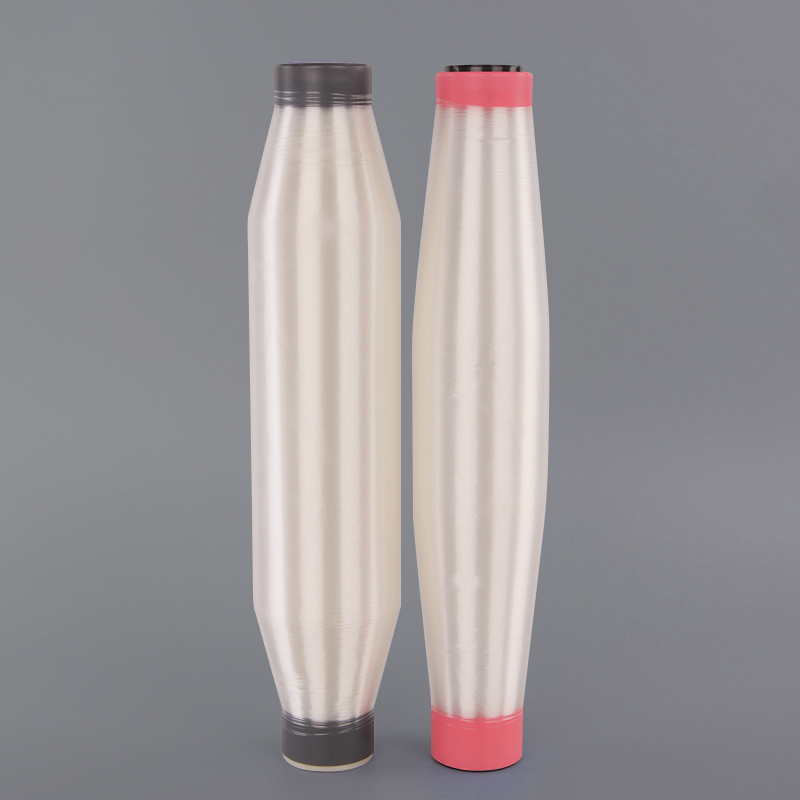
Pure Polyester Low Melting Yarn 110 Degree
Pure Polyester Low Melting Yarn 110°C is designed around the performance characteristics of polyester. Polyester is widely used in apparel, home textiles, industrial fabrics, automotive materials, and technical textiles because of its strength, dimensional stability, abrasion resistance, and processing versatility.
Using a pure polyester base provides several advantages over products that combine unrelated polymer families. Polyester-to-polyester bonding can produce a more visually uniform and mechanically compatible structure. It also allows manufacturers to integrate the yarn into polyester fabric systems without introducing a large difference in dye behavior, shrinkage, or long-term aging.
The yarn is engineered for high tenacity and stable handling. Before heat activation, it must withstand the forces generated during rewinding, knitting, sewing, weaving, and fabric assembly. A high-strength filament reduces the risk of breakage and helps maintain the intended position of the bonding yarn within the textile structure.
After activation and cooling, the bonded areas can provide additional structural support. The yarn may help stabilize fabric edges, secure core fibers, reinforce seams, hold three-dimensional forms, or prevent components from shifting during subsequent operations.
High tenacity is particularly useful in heavy-duty applications. Ropes, cable protection sleeves, bonded threads, and industrial meshes may experience repeated tension, bending, abrasion, or handling stress. Selecting the appropriate denier allows the user to balance flexibility and reinforcement.
Easy rewinding is a practical advantage that directly affects production efficiency. Yarn that rewinds smoothly with consistent tension can be prepared for knitting machines, sewing machines, narrow-fabric equipment, and composite textile lines with fewer interruptions.
The product is designed to glide through high-speed processing equipment with low risk of unnecessary snarling or breakage. Stable package formation is important because poor winding can cause tension variations, yarn slippage, uneven feeding, and machine stoppages. A well-controlled winding process helps maintain reliable unwinding performance from the outside layer of the package to the core.
For automated production, smooth yarn delivery is as important as the final bonding performance. A thermofusible yarn that bonds well but cannot run consistently may create more production problems than it solves. The combination of tenacity, controlled winding, and predictable thermal behavior makes this product suitable for modern textile lines.
Polyester is recognized for good dimensional stability. This characteristic is valuable when bonded textile structures must retain their shape after heating, cooling, washing, or repeated use. In three-dimensional knitted products, for example, the yarn can help maintain the intended volume and prevent excessive deformation.
Dimensional stability is also important in lace, ribbons, labels, and seamless garment components. A stable bond can help preserve clean edges and accurate shapes while reducing puckering and unwanted movement between textile layers.
Polyester offers useful resistance to abrasion, many common chemicals, and repeated handling. The supplied product information also identifies resistance to yellowing, ultraviolet exposure, acid, and alkaline chemicals as important performance characteristics. The actual resistance of a bonded structure depends on concentration, temperature, exposure time, and the complete textile formulation, but these properties support demanding industrial applications.
For products subjected to laundering or outdoor exposure, the stability of the bonded region is a key consideration. A durable thermal bond can help maintain the position of fibers and layers during repeated cleaning, use, and environmental exposure.
Textile manufacturers have traditionally used several methods to join or stabilize materials. These include liquid adhesives, solvent-based glues, hot-melt powders, adhesive films, mechanical stitching, and high-temperature thermoplastic yarns. Low melting polyester yarn offers a distinctive alternative because it combines textile processability with heat-activated bonding.
Liquid adhesives often require dedicated application equipment, drying or curing stages, precise coating control, and careful storage. Excess adhesive may stiffen the fabric, migrate through the structure, create visible marks, or reduce breathability. Some formulations may also contain solvents or produce volatile organic compounds during application.
Low melting yarn is applied as a solid textile material. It can be placed precisely during knitting, weaving, sewing, or assembly. This reduces the risk of uncontrolled spreading and allows bonding to occur only where the yarn has been positioned. The result can be a cleaner production environment and a more predictable bond pattern.
Because the yarn does not require liquid coating during use, it can simplify material handling and reduce the need for adhesive mixing, pumping, filtration, and container cleaning. This may lower maintenance requirements and improve production organization.
Hot-melt powders can provide effective bonding, but they must be distributed evenly across the target area. Uneven powder application can lead to weak zones, excess stiffness, dust generation, or material waste. Powder systems may also require specialized scattering and heat-fixation equipment.
Low melting yarn provides a defined, continuous bonding path. It is particularly suitable for lines, edges, seams, narrow zones, reinforcement grids, and three-dimensional structures where the bonding position must be controlled accurately. The yarn can be integrated into the product design instead of being applied across an entire surface.
Stitching is effective for many fabric constructions, but it can create perforations, visible seam lines, local stress concentrations, and additional bulk. In lightweight garments, lace, ribbons, and seamless products, manufacturers may want to join materials without adding a conventional sewn seam.
Thermal bonding with low melting yarn can complement or partially replace stitching in selected applications. It can stabilize an edge, hold a seam allowance, secure a trim, or reinforce a textile before and after sewing. The appropriate balance depends on product specifications and safety requirements.
Some thermoplastic bonding yarns require higher activation temperatures. These products may be suitable for applications involving high-temperature substrates, but they can be less appropriate for delicate fabrics, elastic components, foam layers, or heat-sensitive finishes.
The 110°C activation profile provides an option for moderate-temperature processing. It can reduce thermal exposure and make it easier to combine the bonding yarn with materials that could shrink, discolor, or lose performance at higher temperatures.
The performance of a low melting yarn depends on the entire manufacturing chain. Polymer selection alone is not enough. Stable results require control over raw materials, polymer preparation, spinning, filament formation, drawing, heat treatment, winding, packaging, and inspection.
GC FIBER, manufactured by NanTong Global Chemical Fiber Co., Ltd., has operated as a special textile factory in China since 2006. Its production focus includes functional and eco-friendly textile materials such as biodegradable yarn, low melting yarn, ECDP yarn, anti-static yarn, HDPE yarn, bio-component yarn, and polyester filament yarn. This product specialization provides a foundation for developing yarns designed for unusual processing and end-use requirements.
The first stage is the preparation of polyester raw material with the required thermal and mechanical properties. Material selection influences melting behavior, viscosity, tenacity, color, stability, and compatibility with the intended textile substrate.
For a yarn with a nominal activation temperature of 110°C, polymer consistency is particularly important. Variations in molecular structure or processing history can affect the softening range and bonding behavior. Controlled material preparation helps maintain a predictable thermal response across production lots.
During melt spinning, the polymer is heated and extruded through precision spinnerets to form continuous filaments. Spinneret geometry, extrusion conditions, throughput, cooling, and winding speed influence filament fineness and uniformity.
Stable spinning conditions help produce yarn with consistent denier and fewer defects. This is essential for applications where the yarn must feed through small guides, needles, sewing mechanisms, or high-speed winding systems. Consistency also improves the accuracy of heat activation throughout the finished package.
After extrusion, the filaments may be drawn and oriented to achieve the required balance of tenacity, elongation, flexibility, and dimensional stability. The drawing process must be controlled carefully because excessive orientation can influence thermal response, while insufficient orientation may reduce mechanical strength.
The goal is to create a yarn that is strong and stable during handling but still capable of softening and flowing at the designed activation temperature. This balance distinguishes a functional low melting yarn from an ordinary polyester filament.
Heat treatment can be used to stabilize the yarn and reduce unwanted shrinkage or tension variation. Finishing conditions influence surface behavior, friction, package formation, and downstream machine performance.
For industrial users, finishing must support both high-speed processing and reliable thermal bonding. Excessive surface friction may cause feeding problems, while inadequate control may lead to slippage or inconsistent winding. Process engineers therefore need to optimize the relationship between yarn surface properties and the equipment used by customers.
Winding is a critical manufacturing stage because it determines how efficiently the customer can unwind the yarn. The package should have controlled density, stable edges, and consistent tension. Poor package formation may cause ribboning, hard layers, loose sections, or sudden tension changes.
High-quality winding supports automatic production. It helps the yarn pass through circular knitting machines, sewing machines, rewinding units, and other textile equipment with fewer interruptions. Easy rewinding is therefore not merely a convenience; it is a measurable contribution to productivity and material utilization.
Quality control for low melting yarn may include visual inspection, denier testing, tensile testing, elongation measurement, thermal analysis, package inspection, and application trials. Testing methods should be selected according to the product specification and customer requirements.
Thermal testing is especially important. A nominal melting point should be supported by a stable softening or activation profile. Users may also evaluate the yarn under practical conditions, including different heating media, pressure levels, exposure times, and substrate types.
Batch consistency is valuable for customers who operate continuous production. Stable yarn behavior reduces the need to change machine settings between deliveries and helps maintain consistent finished-product quality.
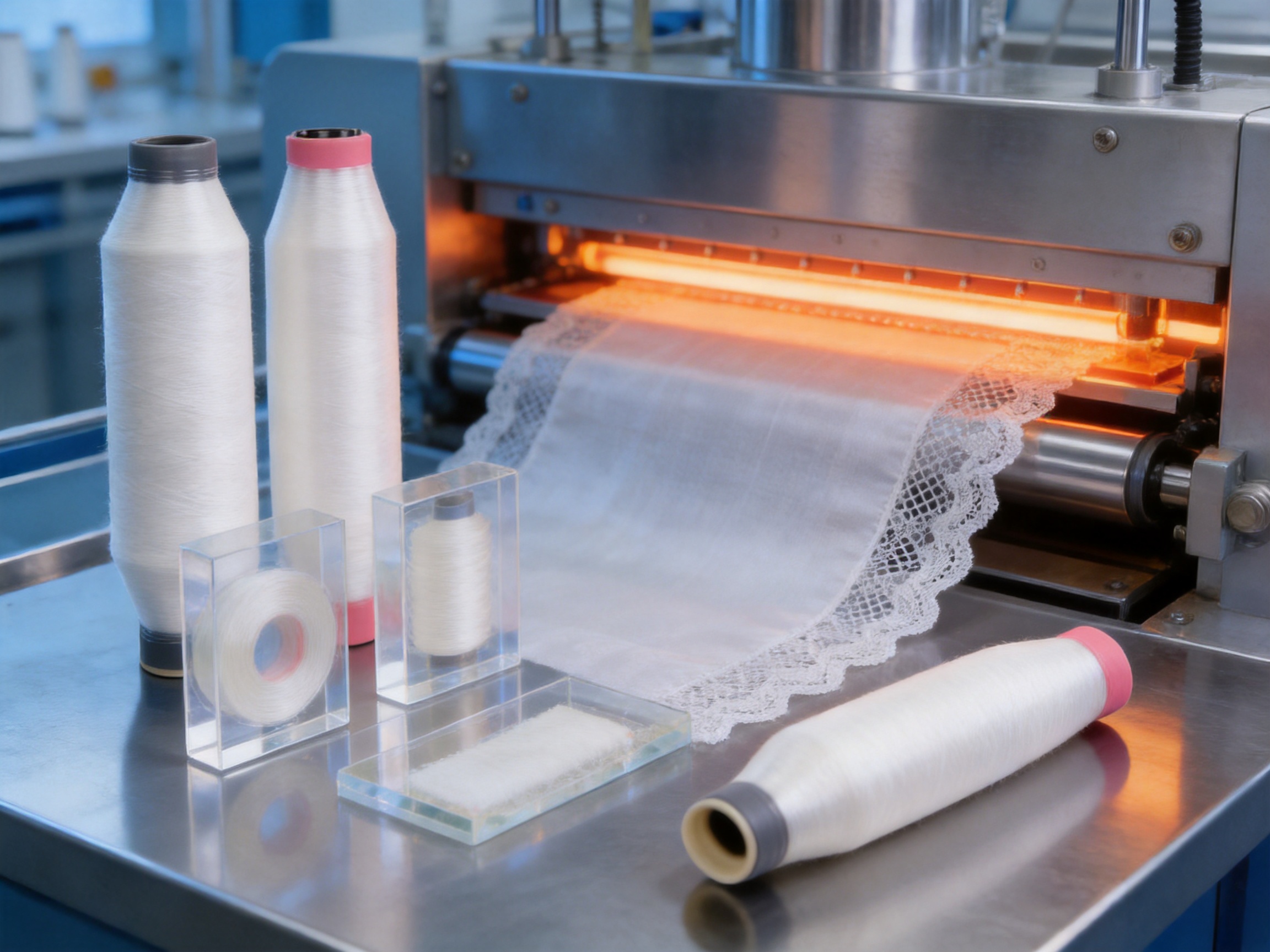
The product is available in the following denier options:
| Available Denier | General Positioning | Potential Application Direction |
|---|---|---|
| 20D | Ultra-light functional bonding | Fine lace, lightweight intimate apparel, delicate trims |
| 30D | Lightweight bonding and reinforcement | Fine ribbons, labels, lightweight knitted structures |
| 40D | Light to medium bonding | Underwear components, lace, narrow fabrics, fine seams |
| 50D | Balanced fineness and strength | Garment accessories, mesh, decorative textile structures |
| 70D | Medium reinforcement | Three-dimensional knitted fabrics, sports textiles, bonded seams |
| 100D | General-purpose industrial option | Chenille yarn, sewing thread, technical textile reinforcement |
| 150D | Higher reinforcement capacity | Industrial mesh, ropes, heavier textile assemblies |
| 200D | Heavy-duty bonding and support | Heavy fabrics, industrial structures, cable protection applications |
| 300D | Maximum listed denier option | Heavy reinforcement, ropes, technical and industrial textiles |
Denier selection should be based on the required bond density, fabric weight, machine capability, desired flexibility, and final strength. A finer yarn may be appropriate when softness, light weight, or appearance is the priority. A heavier yarn may be preferable when the product must provide greater reinforcement or withstand higher mechanical loads.
Manufacturers should also consider whether the yarn will be used continuously, intermittently, as a core component, as a surface reinforcement, or as an edge-sealing element. The best denier is determined by the complete construction rather than by yarn strength alone.
Three-dimensional knitted fabrics require carefully controlled structural support. They are used in footwear uppers, athletic products, spacer fabrics, cushioning structures, and technical mesh. Low melting polyester yarn can be incorporated into selected areas to stabilize the shape and improve resistance to deformation.
In three-dimensional footwear mesh, the yarn can help secure structural zones while maintaining the lightweight nature of the knitted material. It may also support the transition between flexible and semi-rigid areas. This is useful for uppers that need a combination of breathability, comfort, dimensional stability, and localized reinforcement.
The heat-bonding process can be designed around the geometry of the knitted structure. By positioning the yarn in selected courses, wales, borders, or reinforcement patterns, manufacturers can create targeted support instead of stiffening the entire fabric.
Chenille yarn contains a central structure and pile fibers that create its characteristic soft and velvety appearance. One challenge in chenille production is controlling fiber shedding and preventing pile fibers from being pulled out during handling or washing.
Low melting yarn can help secure core structural fibers or selected sections of the chenille construction. After thermal activation, the bonded areas may improve cohesion and reduce hair pull-out. The amount and location of bonding must be carefully controlled so that the finished yarn retains its softness, visual fullness, and attractive surface.
Fine lingerie ribbons and lace require a combination of softness, flexibility, shape retention, and clean appearance. Conventional stitching may add bulk or create visible puncture marks, while liquid adhesives can make delicate fabrics stiff or uneven.
A fine-denier low melting yarn can provide targeted edge stabilization and anti-fray performance. It can also help join narrow fabric components or maintain the shape of decorative trims. Because the yarn is available in fine specifications, manufacturers can select a construction that minimizes visual impact.
Heat settings should be optimized to protect elastane, dyes, coatings, and other heat-sensitive components often found in intimate apparel. Trials are recommended to confirm that the fabric retains its hand feel and elasticity after bonding.
Bonded sewing thread applications require reliable cohesion and resistance to tension. The low melting yarn can be used as a bonding component in thread structures or as a heat-activated thread for specialized seams. Once activated, it can help lock fibers and improve the stability of the sewn or assembled product.
This approach may be useful where thread slippage, fraying, or seam movement must be controlled. It can also support automated sewing operations when the yarn package is produced with consistent winding and predictable unwinding behavior.
Seamless underwear depends on smooth transitions, low bulk, elasticity, and wearer comfort. Thermal bonding can support the joining of panels, reinforcement of edges, and attachment of functional zones without relying exclusively on conventional seams.
Pure polyester low melting yarn can be selected in a fine denier to create discreet bonding lines. The final design should consider stretch direction, recovery, laundering, skin contact, and the flexibility of the surrounding fabric. Properly controlled bonding can improve appearance and comfort while reducing the thickness associated with traditional stitched seams.
Ropes and cords require high strength, abrasion resistance, and fiber integrity. Low melting yarn can be incorporated into selected rope constructions to secure components, improve cohesion, or provide a heat-sealable outer or internal bonding function.
Heavier deniers such as 150D, 200D, and 300D may be considered for applications that require greater reinforcement. The precise choice depends on rope diameter, load requirements, braid or twist structure, and the intended environmental conditions.
Textile sleeves used for cable and wire protection must remain stable during installation and service. A heat-activated polyester yarn can help secure the sleeve structure or seal selected edges. It may also support the formation of protective textile layers around cable assemblies.
Compatibility with polyester-based sleeve materials can help create a uniform composite. However, electrical, thermal, flame, and mechanical requirements must be evaluated for each cable application. The yarn should be tested as part of the complete sleeve system rather than considered in isolation.
The supplied product information identifies automotive interiors, building sound insulation materials, sports equipment, and other technical textiles as potential areas of use. In these fields, low melting polyester yarn can serve as both a reinforcing fiber and a bonding medium.
It can help stabilize composite structures, join textile layers, and reduce reliance on separate adhesive films. Its low added weight may support lightweight design, while its textile form enables integration into knitted, woven, braided, or nonwoven structures.
Environmental performance in textile manufacturing depends on the whole product life cycle, including raw materials, energy use, process emissions, durability, waste, and end-of-life treatment. Pure polyester low melting yarn can contribute to more efficient production by replacing certain liquid adhesives and reducing associated application steps.
The solid yarn format can help reduce the use of solvent-based bonding agents and minimize the risk of volatile organic compound emissions during application. It also avoids some of the handling issues associated with liquid adhesive containers, overspray, and cleaning residues.
Lower-temperature activation may reduce process energy in suitable applications. Again, actual savings depend on the equipment and operating conditions, but the ability to bond at approximately 110°C can help manufacturers evaluate lower-energy production routes.
Polyester materials can also be recycled in appropriate systems. Recycling feasibility depends on the complete product composition, dyes, coatings, blends, finishes, and contamination level. When the bonding yarn is compatible with the main polyester substrate, material separation may be simpler than in products that combine several incompatible polymer families.
Durability is another part of sustainability. A textile that maintains its structure for a longer service period may reduce replacement frequency and material consumption. Stable bonding can support longer product life in garments, technical fabrics, sports equipment, and industrial components.
GC FIBER’s product portfolio is centered on special and functional yarns rather than only standard commodity fibers. This focus is important because low melting yarn requires knowledge of polymer behavior, spinning technology, thermal activation, package performance, and end-use processing.
The company researches, develops, produces, and sells functional eco-friendly textile products. Its range includes biodegradable yarn, low melting yarn, ECDP yarn, anti-static yarn, HDPE yarn, bio-component yarn, and polyester filament yarn. This broad technical scope provides opportunities for cross-material development and customized solutions.
Customers may require a particular denier, package size, color, thermal profile, bonding speed, or mechanical performance. Special production by order is available for projects that do not fit a standard specification. Custom development can be especially valuable when a manufacturer is introducing a new textile construction or adapting an existing product to automated production.
The company is located in Haian, Nantong City, Jiangsu Province, China, with access to the Shanghai seaport for export logistics. This location can support international shipment of samples, trial quantities, and regular commercial orders.
Functional yarn development is most successful when the yarn producer and textile manufacturer share practical information. Important data may include substrate composition, fabric density, machine type, heating method, line speed, desired hand feel, required bond strength, laundering conditions, and environmental exposure.
GC FIBER also cooperates with customers to develop new materials. This collaborative approach can help users test the yarn within actual production conditions instead of relying only on laboratory descriptions. Application trials may reveal the best denier, yarn placement, temperature, pressure, and cooling method.
A broad denier range allows the manufacturer to serve both delicate and heavy-duty markets. It also enables customers to consolidate sourcing for multiple product lines. Fine yarns can be used in lace and intimate apparel, while coarse yarns can be directed toward industrial reinforcement and technical applications.
Production flexibility is valuable for companies that need small development batches before committing to larger volumes. It can also support seasonal products, custom textile constructions, and specialized industrial programs.
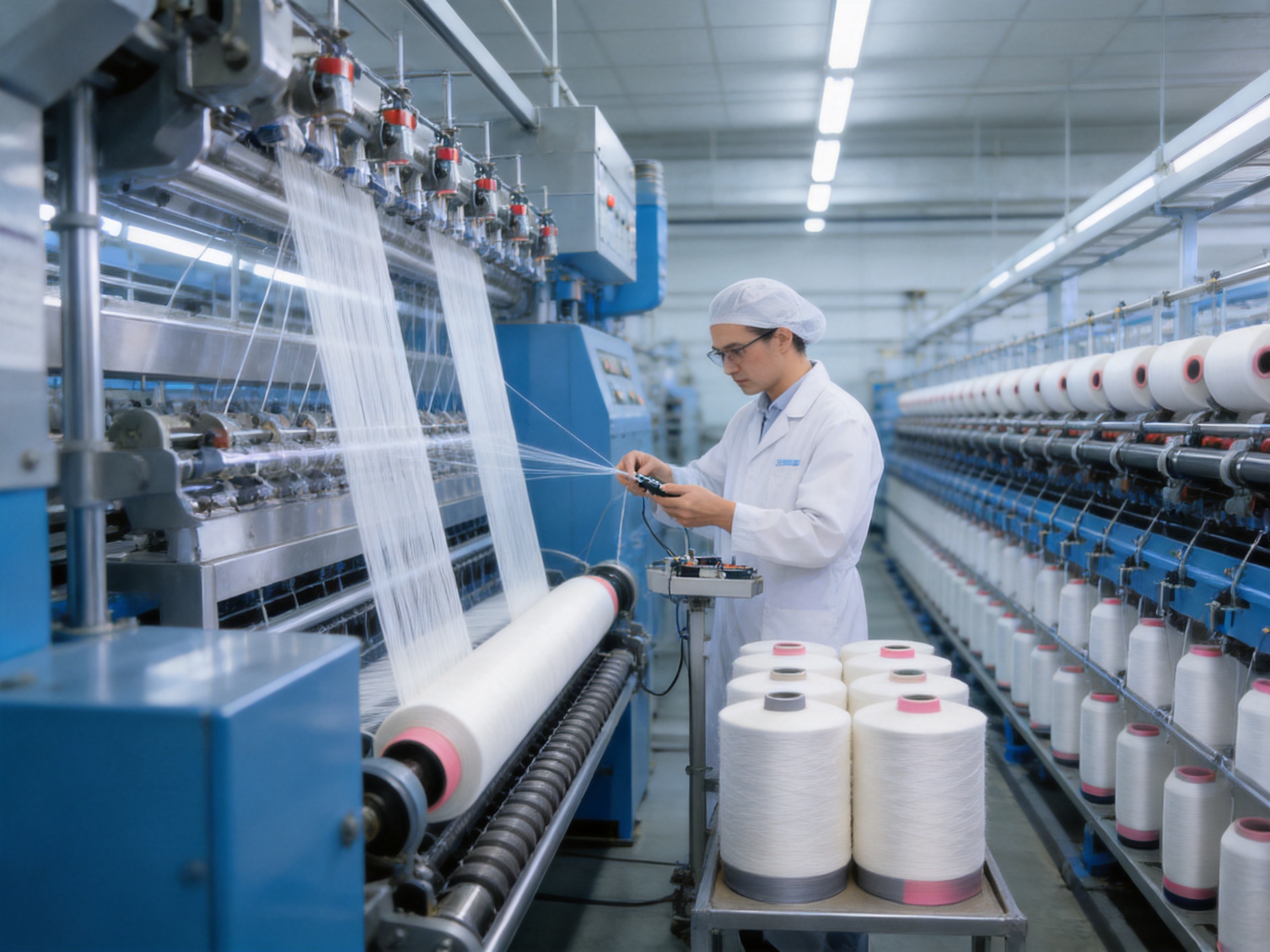
Every customer should establish application-specific settings through controlled trials. The following process considerations can serve as a starting framework:
First, identify the composition and thermal sensitivity of the base fabric. Confirm whether the fabric contains polyester, elastane, polyamide, polyurethane, coatings, foam, or other components that may respond differently to heat.
Second, select a suitable denier according to the desired bonding area and mechanical function. A fine yarn may be appropriate for edge sealing or decorative components, while a heavier yarn may be needed for structural reinforcement.
Third, position the yarn accurately. It may be knitted into the fabric, placed between layers, wrapped around a core, inserted into a seam, or used along an edge. Bond placement should match the areas where stability or adhesion is required.
Fourth, select a heating method. Heated pressing provides direct temperature and pressure control. Steam can transfer heat effectively through some textile structures. Hot-air ovens and calenders may be appropriate for continuous production. The choice depends on fabric thickness, line speed, and product geometry.
Fifth, optimize temperature, pressure, and dwell time. The nominal 110°C melting threshold does not mean that every application should be processed at exactly 110°C. Equipment calibration, heat transfer, and material construction influence the required setting. The goal is sufficient activation without excessive flow, discoloration, shrinkage, or stiffness.
Finally, allow the bonded structure to cool under suitable conditions. Cooling helps the melted polymer solidify and stabilize the finished shape. In some products, maintaining pressure during cooling may improve dimensional accuracy.
Bond quality should be assessed using tests that reflect the intended end use. Visual inspection can identify uneven flow, hard spots, discoloration, edge distortion, and incomplete bonding. Dimensional measurements can confirm whether the textile retains its intended shape.
Mechanical tests may include peel strength, seam strength, tensile strength, tear resistance, flexing, abrasion, and pull-out resistance. The relevant test depends on whether the yarn functions as an adhesive, reinforcement, structural support, or protective sleeve component.
Washing and aging tests are important for apparel, home textiles, and products exposed to moisture. A bonded area should be evaluated after repeated washing, drying, stretching, and normal handling. Outdoor products may require ultraviolet and weathering assessments.
For cable protection, automotive, and industrial applications, additional testing may be necessary. This can include chemical exposure, temperature cycling, vibration, compression, flame behavior, electrical compatibility, and long-term environmental aging.
Textile producers compete not only on raw material price but also on productivity, quality, design flexibility, environmental performance, and delivery reliability. Pure Polyester Low Melting Yarn 110°C can contribute to these priorities in several ways.
Its yarn form allows bonding to be incorporated into existing textile processes. This can reduce dependence on separate adhesive application equipment and simplify production planning. The broad denier range supports multiple product categories, while the high-tenacity construction helps reduce interruptions caused by yarn breakage.
Controlled thermal activation can improve product consistency. When bonding occurs at a defined temperature, manufacturers can establish repeatable process parameters and reduce variation between operators or production shifts.
Polyester compatibility can improve visual and mechanical integration. A bonded polyester structure may look more uniform than a composite containing a visibly different adhesive film or polymer. Similar material behavior can also help reduce problems during dyeing and heat finishing.
The product can support value-added designs such as seamless garments, three-dimensional knitted fabrics, shaped technical meshes, reinforced lace, and multifunctional textile composites. These products often command higher market value because they combine performance, comfort, appearance, and manufacturing innovation.
Low melting yarn should be stored in a clean, dry environment away from direct sunlight and uncontrolled heat sources. Packages should remain protected from dust, moisture, crushing, and mechanical damage. Storage conditions should prevent accidental exposure to temperatures that could affect package stability or yarn performance.
When packages are moved, they should be handled carefully to avoid damaging edges or creating loose sections. Before use, customers should inspect the package and confirm that the yarn is suitable for the planned machine and application.
Because the yarn is thermofusible, it should not be stored near hot machinery, steam lines, heaters, or areas subject to elevated temperatures. The exact storage period and packaging requirements should be confirmed with the supplier for each order.
It is a 100% polyester functional yarn designed to soften and melt at approximately 110°C. After cooling, it forms a thermally activated bond that can connect fibers, fabric layers, yarn components, seams, edges, or technical textile structures.
Yes. The product is described as pure polyester low melting yarn, also identified as 100% low-melt PET. Its polyester composition supports compatibility with polyester fabrics and polyester filament systems.
Under normal processing conditions, the yarn is intended to remain stable enough for rewinding, knitting, sewing, and other handling operations. It activates when exposed to appropriate heat near its designed thermal range. Machine temperature and friction should still be controlled to prevent unintended activation.
It can replace or reduce the use of liquid adhesives in many textile bonding applications, but suitability depends on the substrate, bond strength, flexibility, wash resistance, processing equipment, and regulatory requirements. Application trials are recommended before full-scale production.
Potential equipment includes heated presses, steam ovens, hot-air ovens, and industrial calenders. The best method depends on the construction, production speed, fabric thickness, and required bond pattern.
Available options include 20D, 30D, 40D, 50D, 70D, 100D, 150D, 200D, and 300D. Special production by order may be available for customers requiring a specific construction or specification.
Fine deniers such as 20D, 30D, 40D, or 50D may be considered for lightweight lingerie, lace, ribbons, and delicate trims. The final selection should be based on the fabric weight, bonding width, desired softness, and required strength.
Heavier options such as 100D, 150D, 200D, or 300D may be considered for ropes, cable protection sleeves, industrial meshes, and heavy reinforcement. Load requirements and the complete construction must be evaluated before selection.
Color and dyeing suitability depend on the specific product construction and process. Because the yarn is polyester-based, it can be considered for polyester textile systems, but customers should confirm dye compatibility and thermal conditions with the supplier before production.
Bond flexibility depends on denier, yarn placement, bonding temperature, pressure, polymer flow, and the surrounding fabric. Fine yarns and localized bonding generally create a lighter effect, while heavy yarns and extensive heat activation may produce a more rigid structure.
Yes. The yarn is listed for seamless underwear and can be used for selected joining, edge-stabilization, or reinforcement functions. Processing conditions should be optimized to preserve elasticity, softness, comfort, and appearance.
Yes. It can help secure core fibers and reduce shedding or hair pull-out in chenille yarn production. The bonding level must be controlled so that the finished chenille retains its softness and pile appearance.
The main advantage is its polyester composition and compatibility with polyester base fabrics. It may also offer a competitive material cost and similar thermal integration within polyester systems. The best choice depends on the substrate, required bond characteristics, and final product specifications.
The yarn is supplied as a solid polymer filament rather than a liquid adhesive. It is intended to reduce reliance on solvent-based glues and chemical spray adhesives in suitable applications. Customers should request the relevant technical and safety documentation for detailed product confirmation.
Polyester provides useful resistance to ultraviolet exposure, weathering, abrasion, and many chemicals. Outdoor suitability depends on the complete product design, exposure conditions, color, coating, and required service life. Weathering tests should be conducted for critical applications.
The product is associated with Shanghai seaport for shipment. Exact logistics, packaging, lead time, and export arrangements should be confirmed when placing an order.
Special production by order is available for suitable projects. Customers should provide details such as denier, color, package format, bonding temperature, target application, performance requirements, and expected order volume.
Pure Polyester Low Melting Yarn 110°C provides a practical and versatile method for thermal bonding in modern textile production. Its 100% low-melting polyester composition, high tenacity, smooth rewinding, controlled 110°C activation profile, and broad denier range make it suitable for both delicate and industrial applications.
The yarn offers advantages over liquid adhesives, hot-melt powders, and some higher-temperature bonding materials by combining accurate placement with textile processability. It can support cleaner production, reduce application complexity, and improve the integration of polyester-based materials. Its potential uses extend from three-dimensional knitted footwear fabrics and chenille yarn to lingerie ribbons, lace, bonded sewing thread, seamless underwear, ropes, and cable protection sleeves.
Manufacturing quality is central to its performance. Controlled polymer preparation, precision melt spinning, drawing, heat treatment, winding, and batch inspection help produce a yarn that can run reliably through automated textile equipment. GC FIBER’s specialization in functional and eco-friendly textile materials, together with its ability to cooperate on new material development, provides customers with a foundation for product customization and technical collaboration.
For the best results, users should select the denier according to the fabric structure and required function, then validate temperature, pressure, dwell time, and cooling conditions through application trials. With suitable process design, this low melting polyester yarn can help manufacturers create lighter, cleaner, stronger, and more innovative textile products.
1. Polymer-based textile materials: general principles of polyester fiber formation, orientation, thermal behavior, and dimensional stability.
2. Industrial textile bonding: methods for thermal bonding, adhesive integration, pressure application, heat transfer, and cooling control.
3. Polyester filament yarn processing: principles of melt spinning, drawing, heat setting, winding, and package formation.
4. Technical textiles and functional yarns: applications in three-dimensional fabrics, industrial meshes, ropes, cable sleeves, and composite structures.
5. Textile quality evaluation: general approaches to tensile strength, peel strength, abrasion resistance, laundering, weathering, and dimensional stability testing.
6. Sustainable textile manufacturing: reduction of solvent use, process energy optimization, material compatibility, durability, and polyester recycling considerations.
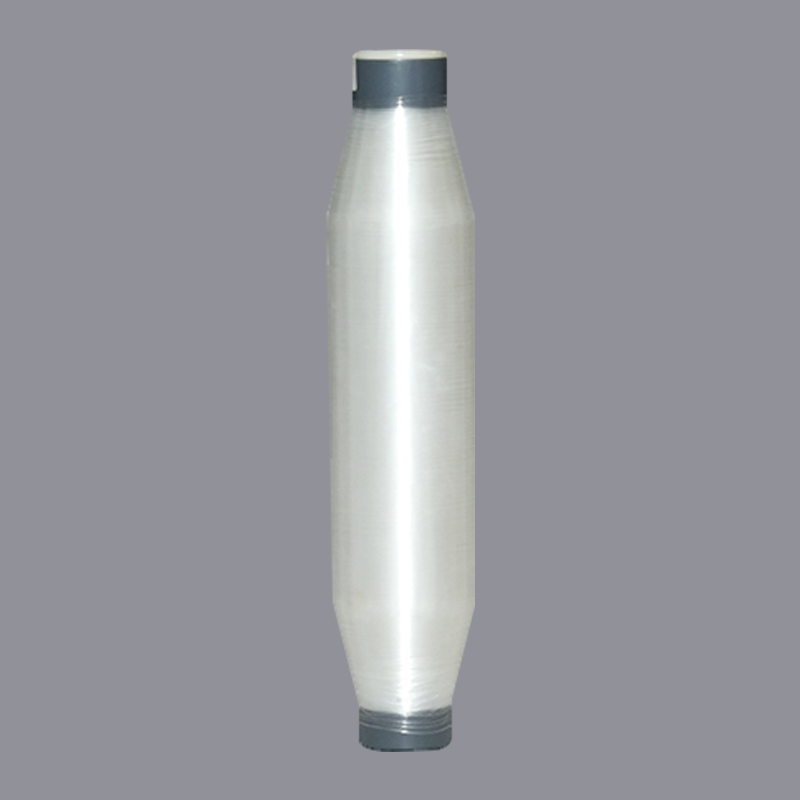
It is made with Bio-base PLA, fully biodegradable Feature: 1. Industrial compost product 2. Made with PLA 3. Eco-frie...
READ MOREPlease fill out the form below and our team will contact you as soon as possible.
Addres: No.66 Qiaogang Road, Haian, Nantong City, Jiangsu Province, China
E-mail: service@gcfiber.com admin@gcfiber.com
Copyright ? GC FIBER All Rights Reserved. Eco-Friendly Textile Products Manufacturer Biodegradable Yarn Company