English
 中文简体
中文简体
It is made with Bio-base PLA, fully biodegradable Feature: 1. Industrial compost product 2. Made with PLA 3. Eco-frie...
READ MORE
Content
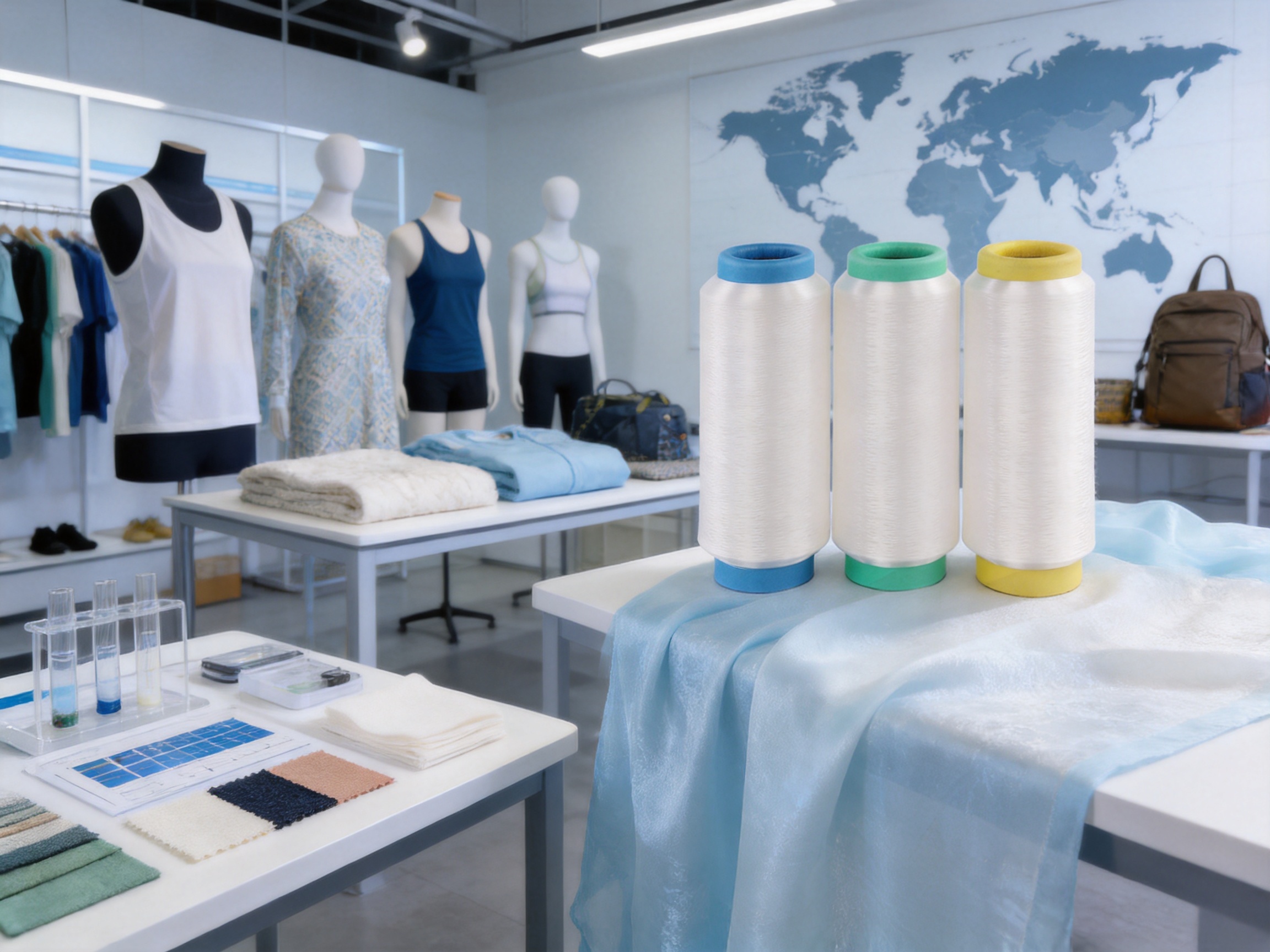
PE Texture DTY Yarn is a functional synthetic yarn designed for applications that require a cool touch, reliable strength, useful elongation, and adaptable material performance. Produced from polyethylene-based materials and available in several denier options, this textured draw-textured yarn combines a distinctive surface structure with practical advantages for apparel, home textiles, sports products, outdoor goods, and selected industrial applications.
Unlike conventional yarns that are selected only for softness, appearance, or basic tensile performance, PE Texture DTY Yarn is developed around a broader group of functional requirements. Its cooling hand feel can improve comfort in warm conditions. Its good tenacity and elongation help textile structures maintain integrity when exposed to tension or repeated movement. Its special cross-sectional design can improve surface effects, material interaction, and product differentiation. In addition, PE/PP and PE/nylon composite options allow manufacturers to adapt the yarn to different performance targets.
These characteristics make PE Texture DTY Yarn an important option for textile producers seeking a functional alternative to ordinary filament yarns. It can support the development of lightweight summer garments, sportswear, breathable fabrics, bedding, decorative textiles, and durable outdoor products. Its available counts of 30D, 40D, 50D, and 75D also give customers flexibility when balancing fabric weight, coverage, handle, strength, and production requirements.
PE Texture DTY Yarn is a textured filament yarn based primarily on polyethylene. The term “DTY” refers to draw textured yarn, a filament yarn that has undergone controlled drawing and texturing treatments. These processes modify the filament arrangement, appearance, elasticity, bulk, and hand feel. The result is a yarn that can offer a more textile-like surface and improved functional behavior compared with a completely flat, untreated filament.
Polyethylene is known for its low density, chemical resistance, moisture resistance, and low thermal conductivity relative to many common textile materials. When the material is engineered into a suitable filament structure and processed through drawing and texturing, it can provide a combination of low weight, surface comfort, and functional durability. The product described here adds a special cross-sectional structure and optional composite construction to further extend its performance range.
The yarn is supplied in several fine denier choices. A 30D yarn is suitable for applications that prioritize lightness and fine fabric construction. A 40D yarn provides a slightly higher level of substance while retaining a lightweight character. A 50D option can offer a balanced relationship between fineness, coverage, and strength. A 75D yarn is appropriate when a customer requires more body, coverage, or structural contribution from the filament.
Although denier is an important selection factor, it is not the only consideration. The final result also depends on fabric construction, knitting or weaving parameters, finishing conditions, color requirements, and the intended use of the finished article. For this reason, a professional supplier should evaluate yarn selection in relation to the customer’s complete manufacturing process rather than treating each count as an isolated specification.
One of the most distinctive features of PE Texture DTY Yarn is its cooling touch. When the textile surface comes into contact with skin, the material can help transfer heat away from the skin surface, creating a cooler first impression and improving comfort in warm environments. This effect is particularly valuable in products designed for summer use, active lifestyles, and climates where heat and humidity influence consumer comfort.
The cooling sensation is influenced by several factors, including the thermal behavior of the polymer, the yarn’s surface structure, the fabric construction, moisture conditions, and the finishing process. A special cross section can alter the way the yarn contacts the skin and interacts with air. Texturing can also create a surface that feels different from a smooth flat filament. Together, these structural features help produce a functional hand feel that can distinguish the finished fabric from ordinary polyester or standard synthetic yarn products.
For apparel manufacturers, cooling touch can become a valuable product-development feature. It may be used in lightweight shirts, base layers, summer trousers, scarves, sports tops, socks, sleepwear, and other garments where comfort is a major purchasing factor. In bedding, the yarn can contribute to a more comfortable surface for sheets, pillowcases, blankets, and lightweight covers. In each case, the yarn is part of a larger system, and the final cooling performance should be verified through fabric testing and wear trials.
PE Texture DTY Yarn is designed to provide good tenacity and elongation. Tenacity describes the yarn’s strength relative to its linear density, while elongation describes how much the yarn can extend before breaking. A useful balance between these properties is important because a textile must often withstand stretching, flexing, abrasion, sewing, repeated laundering, and everyday handling.
Good tenacity helps the yarn resist breakage during knitting, weaving, winding, and downstream processing. It can also improve the durability of the finished fabric when the product is exposed to tensile forces. Good elongation allows the yarn to accommodate movement and deformation without immediately losing structural continuity. When properly integrated into a fabric, this combination can support comfort, fit retention, and resistance to damage.
The balance between strength and elongation is especially valuable in sportswear and outdoor products. Garments used during exercise must move with the body and tolerate repeated stretching. Outdoor textiles may be exposed to pulling, folding, friction, and contact with equipment. PE Texture DTY Yarn can help manufacturers produce fabrics that combine lightweight construction with functional resilience.
It is important to distinguish yarn-level properties from final fabric performance. Knitting density, weave structure, finishing, seam design, and blending materials all influence the final product. Nevertheless, starting with a yarn that has dependable tenacity and elongation gives textile developers a stronger foundation for producing stable and durable fabrics.
The special cross section is another important advantage of this yarn. A filament’s cross-sectional geometry affects its surface area, optical appearance, contact behavior, moisture interaction, bulk, and tactile character. Compared with a conventional round filament, a specially shaped filament may provide a more distinctive surface and a different visual response when incorporated into a fabric.
A special cross section can also support product differentiation. Textile brands often seek fabrics that do more than meet basic technical specifications. They may want a recognizable hand feel, a subtle luster, a unique surface texture, improved coverage, or a more advanced functional story. The cross-sectional design of PE Texture DTY Yarn gives manufacturers an opportunity to develop such characteristics without relying only on chemical finishing or complex post-treatment.
The exact performance achieved depends on the geometry selected and the way the yarn is processed. A professional manufacturer must control polymer flow, spinneret conditions, cooling, drawing, texturing, winding, and package formation. Stable process control is essential because small changes in filament geometry can affect yarn uniformity and the appearance of the finished textile.
PE Texture DTY Yarn can be produced in composite forms such as PE/PP and PE/nylon, according to customer requirements. Composite construction allows different polymers to contribute different performance characteristics. Polypropylene may support low density, moisture resistance, and lightweight construction, while nylon may contribute strength, abrasion resistance, and a different tactile or visual effect.
A PE/PP structure may be suitable when the customer emphasizes low weight, water resistance, and a cool, dry hand. A PE/nylon structure may be considered when higher abrasion resistance, tear strength, or mechanical durability is required. The selection should be based on the intended end use, processing conditions, cost expectations, and required balance of performance.
Composite yarn development requires careful attention to compatibility, thermal behavior, interfacial bonding, drawing ratios, and texturing conditions. Different polymers may have different melting points, shrinkage behavior, viscosity, and response to heat. A reliable manufacturing partner must therefore develop the composite configuration and processing parameters systematically instead of treating the product as a basic mixture of materials.
| Yarn Option | Typical Functional Emphasis | Potential Application Direction | Selection Consideration |
|---|---|---|---|
| 30D PE Texture DTY Yarn | Very lightweight construction, fine handle, low fabric weight | Fine apparel, lightweight lining, summer textiles | Best when lightness and delicacy are priorities |
| 40D PE Texture DTY Yarn | Lightweight performance with increased substance | Sportswear, intimate apparel, knitted fabrics | Balances fineness, coverage, and handling stability |
| 50D PE Texture DTY Yarn | Balanced coverage, strength, and surface texture | Clothing, home textiles, decorative fabrics | Suitable for broad product development programs |
| 75D PE Texture DTY Yarn | Greater body, coverage, and structural contribution | Durable apparel, outdoor goods, selected industrial textiles | Useful where a more substantial yarn is required |
| PE/PP Composite | Lightweight, moisture-resistant, functional surface behavior | Outdoor textiles, active products, warm-weather articles | Evaluate polymer balance and finishing conditions |
| PE/Nylon Composite | Enhanced strength, abrasion resistance, and durability potential | Sportswear, protective products, demanding textile structures | Confirm compatibility and required mechanical performance |
The performance of a functional yarn depends not only on the selected polymer but also on the precision of the manufacturing process. PE Texture DTY Yarn requires coordinated control from raw-material preparation through filament formation, drawing, texturing, winding, inspection, and packing. Each stage affects the consistency, appearance, and downstream processability of the yarn.
Production begins with the selection and preparation of suitable polymer materials. The raw materials must be evaluated for purity, melt behavior, moisture condition, thermal stability, and compatibility with the intended composite structure. For PE/PP or PE/nylon products, the materials must be selected and prepared according to the required ratio and performance target.
Stable raw-material preparation helps reduce variation during extrusion. Contaminants, excessive moisture, or inconsistent polymer properties can lead to filament breakage, uneven denier, surface defects, or unstable texturing. A professional plant therefore treats raw-material control as a fundamental part of quality assurance rather than a preliminary administrative step.
During extrusion, the polymer is heated and conveyed through the equipment under carefully controlled temperature, pressure, and flow conditions. For a composite yarn, the extrusion system must ensure that the different polymer components reach the spinneret in a stable and controlled arrangement. Variations in melt viscosity or pressure can affect the final filament geometry.
Temperature control is particularly important because polyethylene, polypropylene, and nylon do not behave identically under heat. Each material has its own processing window. Excessive heat may damage the polymer or reduce its molecular integrity, while insufficient heat may cause incomplete melting, unstable flow, or surface defects. Advanced manufacturing therefore depends on accurate temperature regulation and continuous observation of operating conditions.
The spinneret is responsible for forming the molten polymer into filaments with the required cross-sectional shape. For PE Texture DTY Yarn, the spinneret and composite flow design are central to the product’s differentiated performance. The geometry must be reproduced consistently across many filaments and across successive production lots.
Uniform cross-sectional formation requires proper equipment maintenance, clean flow channels, stable melt pressure, and carefully selected processing parameters. If the geometry varies excessively, the yarn may show inconsistent luster, irregular texture, uneven strength, or unstable behavior during knitting and weaving. Process discipline at this stage directly supports the quality of the final fabric.
After extrusion, the newly formed filaments must be cooled and solidified. Cooling conditions influence molecular orientation, filament shape, surface quality, and mechanical properties. Airflow, temperature, cooling distance, and filament arrangement must be managed to prevent uneven solidification.
Controlled cooling is also important for maintaining the special cross-sectional structure. If cooling is too rapid, too slow, or uneven, the filament may deform or develop differences from one position to another. A stable cooling environment helps ensure that the yarn maintains consistent behavior throughout the package.
Drawing stretches the filaments to improve molecular orientation and develop the desired balance of strength and elongation. The draw ratio and roller conditions must be selected according to the polymer system, denier, filament count, and intended product behavior.
Under-drawing may result in insufficient strength, poor dimensional stability, or inconsistent yarn performance. Over-drawing can reduce elongation, increase breakage risk, or create excessive internal stress. The correct drawing process is therefore a controlled compromise that develops useful tenacity while retaining sufficient extensibility for the intended application.
The texturing stage gives the yarn its characteristic surface and bulk behavior. Through controlled deformation, the filaments can develop a more textile-like appearance and hand feel. The texturing conditions influence elasticity, crimp, bulk, cover, and the way the yarn reflects light.
For PE Texture DTY Yarn, texturing must be coordinated with the polymer properties and special cross-sectional design. A process that works for a standard round polyester filament may not produce the same result with a polyethylene-based or composite filament. This is why experience in functional yarn development is valuable. The manufacturer must understand how heat, tension, speed, and deformation interact with the specific material system.
After texturing, the yarn is wound onto packages suitable for transport and downstream textile processing. Winding tension, package density, traverse conditions, and edge formation must be controlled to prevent unwinding problems, snags, and tension fluctuations during knitting or weaving.
A well-formed package improves production efficiency for the customer. It supports smooth unwinding, reduces yarn breaks, and helps maintain consistent feed tension. In contrast, poor package formation can create problems even when the yarn itself meets laboratory specifications. Manufacturing quality therefore includes both intrinsic yarn properties and practical handling performance.
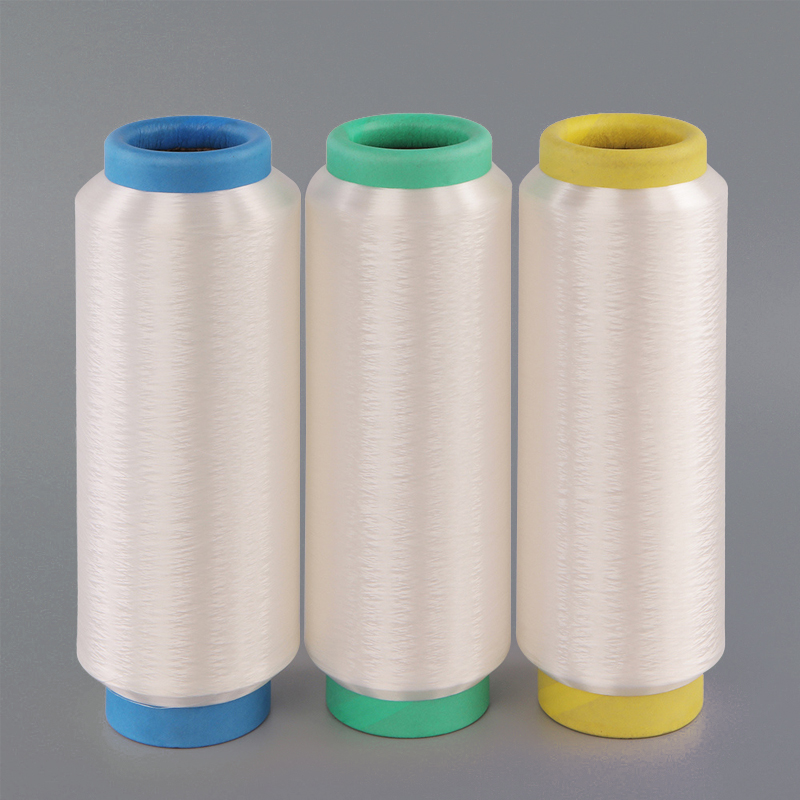
PE Texture DTY Yarn
Functional yarns must deliver repeatable performance. Customers generally require consistency in denier, strength, elongation, appearance, color behavior, package shape, and processing stability. A yarn that performs well in one sample but varies significantly between lots can create serious problems in fabric production.
Quality control for PE Texture DTY Yarn may include monitoring linear density, tensile strength, elongation at break, filament uniformity, surface appearance, package weight, winding quality, and thermal behavior. Depending on the customer’s requirements, additional testing may be carried out for abrasion resistance, moisture response, dimensional stability, composite structure, and color fastness after fabric production.
Inspection should take place at multiple stages. Incoming materials should be checked before production. Extrusion and spinning conditions should be monitored during operation. The yarn should be inspected after drawing and texturing, and finished packages should be reviewed before shipment. This multi-stage approach helps identify deviations early and reduces the risk of defective material reaching the customer.
Process records are also important. Recording production conditions, material batches, equipment status, and inspection results helps manufacturers trace the origin of potential issues. It also supports continuous improvement because engineers can compare process variables with yarn performance over time.
For customers developing a new fabric, laboratory testing should be combined with actual processing trials. A yarn may show excellent individual test results but behave differently under specific knitting speeds, loom settings, dyeing conditions, or finishing temperatures. A capable supplier should be willing to discuss these factors and provide technical support during sample development.
Ordinary flat filament yarn can provide smoothness and a clean appearance, but it may not offer the same textured hand feel, surface differentiation, or functional bulk. PE Texture DTY Yarn is designed to provide a more developed textile surface and can contribute a distinctive tactile experience to the finished fabric.
The cooling-touch characteristic is another potential advantage. While the final effect depends on fabric construction, polyethylene-based functional yarn can offer a different thermal sensation from many conventional yarns. This makes it attractive for applications where the consumer directly feels the textile surface.
Standard polyester DTY is widely used because of its strength, availability, colorability, and established processing systems. However, a customer may seek a yarn with a different surface temperature sensation, lower-density character, or composite-material flexibility. PE Texture DTY Yarn can serve as an alternative when the product concept requires more than general-purpose polyester performance.
Polyester remains appropriate for many applications, and PE Texture DTY Yarn should not be viewed as a universal replacement. Instead, it is a functional option for projects that prioritize cooling comfort, specific material combinations, special cross sections, and lightweight performance. The choice should be made according to the complete technical and commercial requirements of the finished product.
A single-polymer yarn may provide stable and predictable properties, but composite construction can give developers more flexibility. PE/PP and PE/nylon designs allow the manufacturer to combine selected characteristics from different materials. This can help address requirements involving strength, abrasion, weight, moisture behavior, and hand feel.
Composite yarns may require more sophisticated production control than simple single-component products. However, when properly designed and manufactured, they can offer a more targeted solution and reduce the need to compromise between competing performance requirements.
Some functional textiles achieve durability or special performance by increasing fabric weight or adding coatings. Such approaches can raise material consumption, reduce breathability, or affect drape and comfort. The fine denier options of PE Texture DTY Yarn allow developers to explore lightweight constructions while still seeking useful strength and elongation.
A lighter yarn can also support efficient product design. It may reduce the weight of garments and textile articles, improve packability for outdoor products, and create a softer or more flexible structure. The actual benefit depends on the fabric design, but fine-denier availability gives manufacturers more freedom during development.
Summer apparel is one of the most natural application areas for PE Texture DTY Yarn. Clothing worn in hot conditions must manage comfort, surface temperature, weight, movement, and appearance. The yarn’s cooling touch and lightweight options can support the development of shirts, tops, dresses, skirts, lightweight trousers, underwear, and other warm-weather garments.
The textured surface can also contribute to a distinctive visual effect. Depending on the knitting or weaving method, the fabric may present subtle surface variation, improved drape, or a more refined tactile character. Designers can combine the yarn with other fibers when they need additional softness, stretch, color depth, or recovery.
Sportswear must accommodate repeated body movement, friction, stretching, and washing. Good tenacity and elongation make PE Texture DTY Yarn a suitable candidate for selected sportswear structures, particularly where lightweight construction and a cool touch are important.
The yarn may be used in training tops, running garments, cycling articles, base layers, sports accessories, and other active products. Fabric engineers should assess seam performance, abrasion behavior, dimensional stability, and compatibility with any elastomeric yarns used in the design. When properly integrated, the yarn can contribute to a fabric that feels comfortable during movement while maintaining a stable appearance.
Bedding products remain in close contact with the skin for extended periods, so hand feel and thermal comfort are important. PE Texture DTY Yarn can be evaluated for sheets, pillowcases, lightweight blankets, mattress covers, and other home-textile products intended for warm seasons.
In home textiles, designers may also value the yarn’s surface texture and durability potential. The final product must withstand repeated laundering, drying, folding, and daily use. Testing should therefore include washing stability, dimensional change, pilling behavior, color retention, and comfort evaluation under realistic conditions.
Outdoor products often require a balance of low weight, strength, tear resistance, abrasion resistance, and weather-related performance. Composite PE/PP or PE/nylon options may be considered for selected outdoor textiles where material durability and functional surface behavior are important.
Potential applications include lightweight outdoor garments, equipment covers, bags, accessories, protective textile components, and recreational products. Product developers should select the composite structure according to the specific exposure conditions. Outdoor testing may include abrasion, tearing, ultraviolet exposure, moisture, temperature cycling, and repeated mechanical loading.
The special cross section and textured appearance may also be useful in decorative textiles. Depending on the final fabric design, the yarn can contribute surface interest, visual depth, and a differentiated hand. It may be suitable for selected interior products, decorative panels, trims, and lightweight furnishing materials.
Industrial applications may benefit from the yarn’s combination of low weight and mechanical performance. Possible uses should be evaluated individually because industrial textiles often have strict requirements for dimensional stability, chemical resistance, flame behavior, abrasion, and long-term service life.
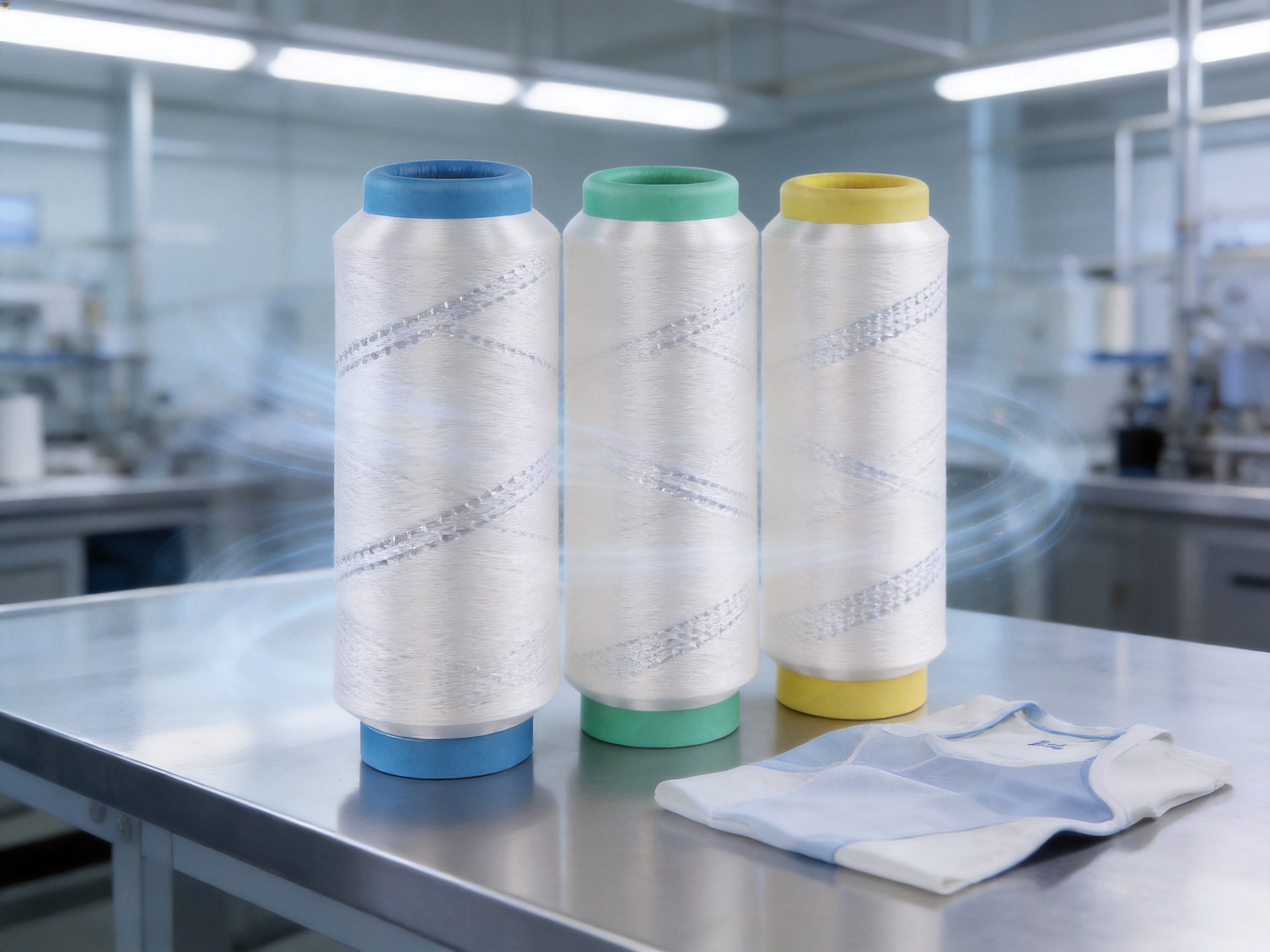
Different customers require different balances of fineness, strength, elongation, hand feel, color, composite structure, and processing behavior. PE Texture DTY Yarn is available for special production by order, allowing the product to be adapted to specific project requirements.
Customization may involve denier selection, PE/PP or PE/nylon construction, filament arrangement, texturing conditions, package format, color, or other production parameters. Not every request will be technically or commercially suitable, so development should begin with a clear specification and realistic performance target.
A successful customization program normally includes several stages. First, the customer identifies the intended application and the most important performance requirements. Second, the manufacturer evaluates the polymer combination, yarn count, process feasibility, and expected production conditions. Third, sample yarn is produced for testing. Fourth, the customer processes the yarn into fabric or a prototype product. Finally, both parties review the results and adjust the specification if necessary.
This cooperative approach is especially important for composite yarns. The relationship between material structure and process conditions can be complex. A yarn that performs well in one knitting system may require adjustments in another. Early communication can prevent misunderstandings and shorten the development cycle.
Customers should provide information about the intended machine type, knitting or weaving speed, fabric construction, finishing route, target hand feel, end-use environment, and applicable standards. The more complete the information, the more accurately the manufacturer can recommend a suitable yarn design.
A supplier with long-term experience in special textiles can offer more than basic yarn production. The company described in the supplied information has operated as a special textile factory in China since 2006 and focuses on research, development, production, and sales of functional and eco-friendly textile products. This background is relevant because functional yarn projects often require material knowledge, process development, and customer cooperation at the same time.
Its product range includes biodegradable yarn, low melting yarn, ECDP yarn, anti-static yarn, HDPE yarn, bio-component yarn, and polyester filament yarn. This broad portfolio indicates experience with multiple polymer systems and functional objectives. Such experience can support the development of composite and specialty yarns because engineers can compare material behavior across different product categories.
The company also cooperates with customers to develop new materials. This is an important strength for buyers who do not want a purely standard product. New textile materials often emerge from cooperation between a yarn manufacturer, a fabric mill, a garment producer, and an end-use brand. A supplier that can participate in this chain may help transform a general concept into a manufacturable specification.
Advanced manufacturing is not limited to machinery. It includes the ability to select suitable materials, establish stable process parameters, maintain equipment, inspect yarn continuously, and respond quickly when customer trials reveal new requirements. It also includes practical knowledge of downstream processing, because the success of yarn is ultimately judged by how effectively it performs in fabric and finished products.
For international customers, logistics and communication are also part of supplier capability. The product information identifies Shanghai seaport as the shipping point and indicates that special production can be arranged by order. Clear export coordination, accurate documentation, and reliable production scheduling can help customers manage international purchasing more efficiently.
PE Texture DTY Yarn is a synthetic material, so sustainability should be considered through the complete product life cycle rather than through a single marketing claim. Material selection, production efficiency, product durability, fabric weight, service life, and end-of-life management all influence environmental performance.
The yarn’s lightweight nature may help reduce material consumption in some applications. If a fabric can achieve the required coverage and durability with a lower mass, the product may use fewer raw materials and require less transport weight. Longer service life can also reduce the frequency with which a garment or textile article needs to be replaced.
Manufacturing efficiency is equally important. Stable extrusion, drawing, texturing, and winding processes can reduce waste caused by filament breaks, off-specification material, and defective packages. Careful process control therefore supports both quality and resource efficiency.
Customers should also consider whether the selected product is compatible with their sustainability strategy. They may need information about raw materials, production controls, recycled content, chemical restrictions, packaging, and applicable environmental standards. Because sustainability requirements vary by market and application, technical documentation should be reviewed before commercial adoption.
The company’s broader focus on eco-friendly and functional textile products provides a foundation for continued material research. Its product categories include biodegradable and bio-component yarns, indicating an interest in developing alternatives with different environmental and performance profiles. This research orientation may be valuable to customers seeking future-oriented textile solutions.
Before full-scale production, customers should conduct a controlled trial using the intended knitting or weaving equipment. The trial should evaluate unwinding stability, yarn tension, breakage frequency, fabric appearance, surface texture, and dimensional behavior. If the yarn is being blended with other fibers, the compatibility of feed rates and tension settings should also be assessed.
Texturing and special cross-sectional structures can influence the yarn’s response to heat and mechanical tension. Customers should therefore avoid assuming that standard settings for ordinary polyester or nylon will be suitable. Machine speed, tension, needle or loom settings, and finishing temperatures may need adjustment.
During dyeing and finishing, the selected process should be evaluated for color uniformity, dimensional stability, surface appearance, and hand feel. Polyethylene and composite structures may respond differently from conventional dyeable fibers. The correct coloration route must be selected according to the polymer system and customer requirements.
Storage conditions should also be controlled. Yarn packages should be protected from excessive heat, direct sunlight, moisture contamination, dust, and mechanical deformation. Proper storage helps preserve package quality and reduces the possibility of processing problems after delivery.
Choosing among 30D, 40D, 50D, and 75D requires consideration of both fabric design and final product requirements. The finest count is not automatically the best choice. A yarn that is too fine may provide insufficient coverage or body, while a yarn that is too heavy may reduce softness, drape, or lightweight comfort.
For very light garments and delicate constructions, 30D may be appropriate. It can help maintain low fabric weight and a fine hand. For activewear and lightweight knitted products requiring slightly greater coverage, 40D may offer a useful balance. The 50D option can serve as a versatile general-purpose choice for a wide variety of apparel and home-textile developments. When additional body, coverage, or strength contribution is required, 75D may be more suitable.
Customers should compare yarn options through actual fabric samples. A sample review should include visual appearance, touch, stretch behavior, drape, opacity, weight, dimensional stability, and resistance to repeated use. Technical data are essential, but practical evaluation provides the most reliable basis for final selection.
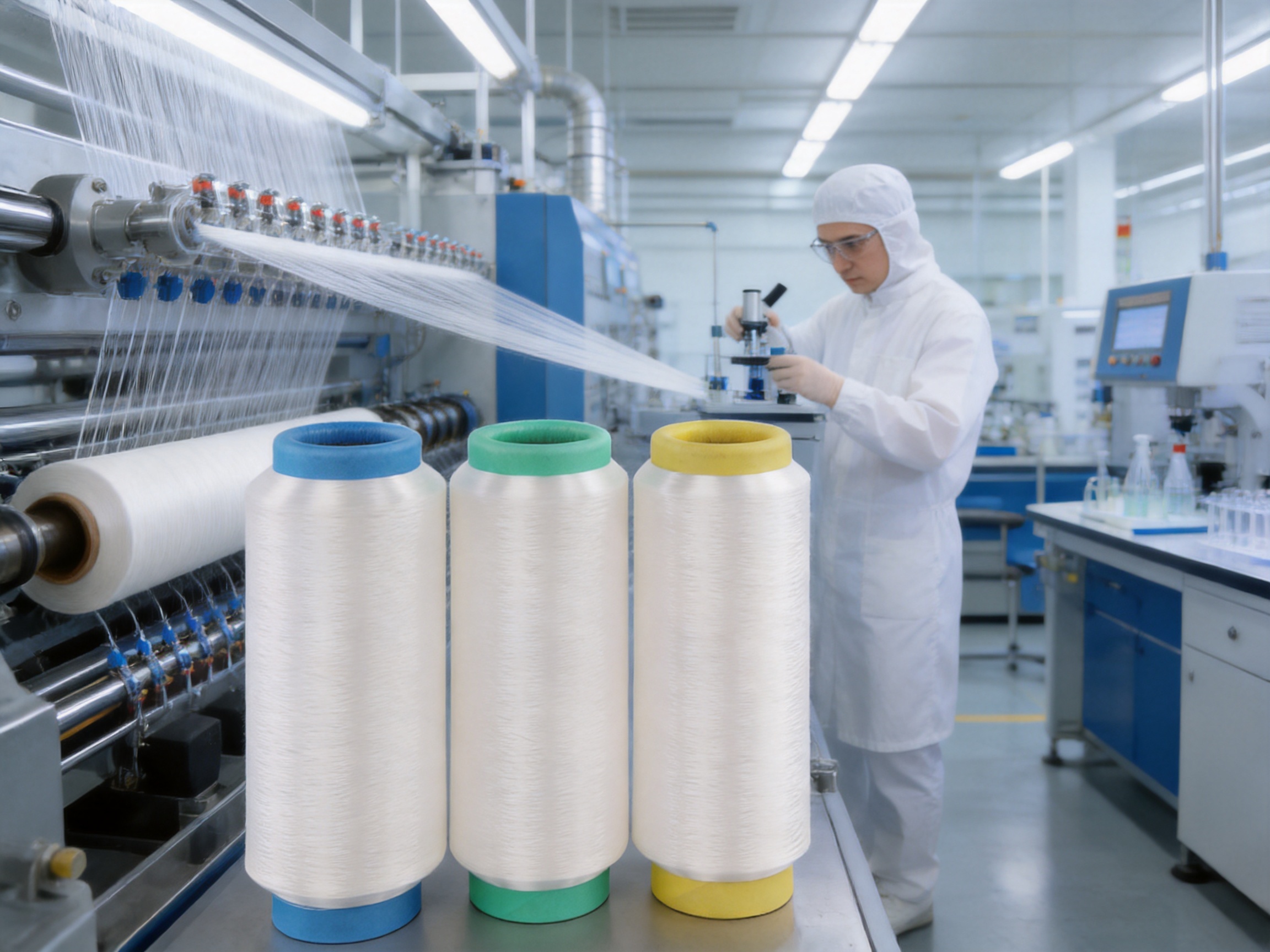
Functional differentiation can help textile manufacturers create products that stand out in competitive markets. A cooling-touch yarn gives a product developer a clear feature to communicate, while good tenacity and elongation support claims related to comfort and durability when verified through appropriate testing.
The availability of several denier options simplifies product-range planning. A manufacturer can use finer counts for lightweight collections and heavier counts for more substantial fabrics while maintaining a consistent functional concept. Composite options further extend the range by allowing material performance to be adjusted for different customers and applications.
Custom production by order can also reduce the limitations of an off-the-shelf product. Rather than redesigning a fabric around a standard yarn, the customer can work with the supplier to establish a more suitable specification. This may improve development efficiency, especially for specialized products where hand feel, texture, and mechanical performance must be carefully balanced.
A supplier with an established functional-yarn portfolio can provide useful technical continuity. Customers developing several product lines may benefit from working with one partner for multiple specialty materials, reducing the need to manage unrelated suppliers and unfamiliar production systems.
PE Texture DTY Yarn is a polyethylene-based draw-textured filament yarn. It is processed through controlled drawing and texturing treatments and features a special cross-sectional design. The yarn is intended to provide cooling touch, good tenacity, useful elongation, and adaptable performance in textile applications.
DTY means draw textured yarn. The yarn has undergone drawing to orient the polymer molecules and texturing to modify the filament surface, bulk, elasticity, and hand feel. These treatments help create a more textile-like yarn structure.
The listed counts are 30D, 40D, 50D, and 75D. The appropriate count depends on the intended fabric weight, coverage, hand feel, strength requirement, and production method.
The polyethylene-based material and the yarn’s structural design can help transfer heat away from the skin surface, creating a cooling touch. The final effect also depends on fabric construction, moisture, finishing, and the surrounding environment.
Yes. Its cooling touch, good tenacity, and elongation make it suitable for evaluating in sportswear and activewear. The finished fabric should be tested for stretch recovery, abrasion, seam performance, washing stability, and comfort during movement.
The special cross section gives the filament a differentiated geometry that can influence surface texture, appearance, contact behavior, and functional performance. It also provides an opportunity to create fabrics with a distinctive hand and visual effect.
PE/PP and PE/nylon composite versions can be specially produced according to customer requirements. The preferred structure should be selected according to the required balance of weight, strength, abrasion resistance, moisture behavior, and processing conditions.
It can be evaluated for bedding and other home textiles where cooling touch and surface comfort are important. Washing stability, color performance, dimensional change, pilling, and long-term comfort should be confirmed through product testing.
Yes. The product information indicates that special production by order is available. Customers should provide details about the intended application, yarn count, composite structure, color, package requirements, processing route, and technical targets.
Customers should conduct a sample knitting or weaving trial using their intended equipment. They should evaluate yarn unwinding, breakage, fabric appearance, hand feel, thermal comfort, stretch behavior, finishing response, and final product durability.
The listed shipping point is Shanghai seaport. Final logistics arrangements should be confirmed with the supplier according to order volume, packaging, destination, delivery terms, and export documentation requirements.
No. PE Texture DTY Yarn is a functional option for applications that value cooling touch, lightweight construction, special texture, and selected strength or elongation properties. The best yarn depends on the complete performance, processing, cost, and compliance requirements of the finished product.
PE Texture DTY Yarn combines a cooling touch, good tenacity, useful elongation, a special cross-sectional design, and composite-material flexibility. Available in 30D, 40D, 50D, and 75D counts, it can support a broad range of textile development programs, from lightweight summer apparel and sportswear to bedding, outdoor products, decorative textiles, and selected industrial applications.
Its advantages are strengthened by controlled manufacturing. Raw-material preparation, polymer extrusion, cross-section formation, cooling, drawing, texturing, winding, and inspection must all be coordinated to produce consistent yarn. The ability to develop PE/PP and PE/nylon structures by order further increases the product’s value for customers seeking a customized functional solution.
As a special textile manufacturer established in China since 2006, GC FIBER brings experience in research, development, production, and sales of functional and eco-friendly yarns. Its wider product portfolio and cooperation with customers on new materials provide a foundation for technical collaboration beyond standard product supply. For textile manufacturers seeking a differentiated yarn with cooling comfort, lightweight performance, and adaptable material design, PE Texture DTY Yarn is a practical option worthy of sample testing and application development.
1. GC FIBER. Product Information for PE Texture DTY Yarn, including product features, available counts, composite options, and shipping information.
2. GC FIBER. Company Information and Functional Textile Product Portfolio, including biodegradable yarn, low melting yarn, ECDP yarn, anti-static yarn, HDPE yarn, bio-component yarn, and polyester filament yarn.
3. Textile Institute. Textile Terms and Definitions. Draw-textured yarn, filament processing, yarn linear density, and textile performance terminology.
4. ASTM International. Standard Test Methods for Textile Yarns and Fabrics, including tensile strength, elongation, dimensional stability, abrasion, and related performance evaluations.
5. International Organization for Standardization. Textile Testing Standards for Yarn and Fabric Quality, Mechanical Properties, Color Performance, and Care Stability.
It is made with Bio-base PLA, fully biodegradable Feature: 1. Industrial compost product 2. Made with PLA 3. Eco-frie...
READ MOREPlease fill out the form below and our team will contact you as soon as possible.
Addres: No.66 Qiaogang Road, Haian, Nantong City, Jiangsu Province, China
E-mail: service@gcfiber.com admin@gcfiber.com
Copyright ? GC FIBER All Rights Reserved. Eco-Friendly Textile Products Manufacturer Biodegradable Yarn Company