English
 中文简体

Made of PBS (Polybutylene Succinate), fully biodegradable.Features:1.Home compostable2.Raw material: PBS Polybutylene Su...
READ MORE
Content
As manufacturers across the textile, hygiene, agricultural, and consumer-goods industries search for alternatives to conventional petroleum-based fibers, polybutylene succinate, commonly known as PBS, has become an increasingly important biodegradable polymer. PBS staple fiber combines the processing advantages of a synthetic fiber with an end-of-life profile designed for compostable applications. When correctly specified, processed, and disposed of under suitable composting conditions, it can return to the natural environment instead of remaining as persistent plastic waste.
This article examines PBS staple fiber in detail, including its material structure, technical behavior, available specifications, manufacturing advantages, processing routes, application opportunities, compostability, storage requirements, and customization potential. It also explains why a specialized manufacturer with experience in functional and eco-friendly fibers can provide greater value than a general-purpose fiber supplier.
For buyers, product developers, and production engineers, PBS staple fiber is not simply a replacement for polyester or polypropylene. It is a functional material that must be selected according to the end use, denier, cut length, web structure, bonding method, moisture conditions, and disposal environment. A reliable supply partner should therefore provide more than a standard fiber specification. The supplier should also be able to support material development, production trials, quality control, and application-specific customization.
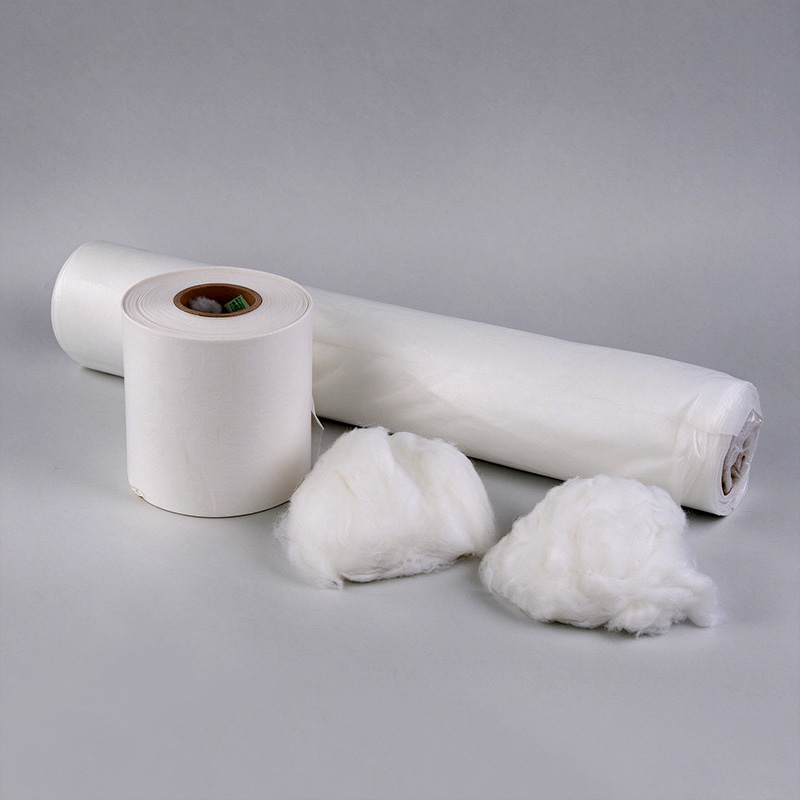
PBS Staple Fiber
PBS staple fiber is a short-cut fiber produced from polybutylene succinate, an aliphatic polyester generally manufactured from succinic acid and 1,4-butanediol. These components are polymerized to create a polyester chain containing ester bonds. Under suitable environmental conditions, microorganisms can gradually break these bonds down, allowing the material to decompose into carbon dioxide, water, biomass, and other naturally occurring substances.
Unlike conventional polyester, which is valued for its strength and durability but is not readily biodegradable, PBS is designed for applications where controlled service life and improved end-of-life behavior are important. Compared with some other biodegradable polymers, PBS also offers a useful combination of flexibility, processability, and relatively low-temperature thermal bonding.
The term “staple fiber” means that the continuous polymer filaments are cut into predetermined lengths. The resulting short fibers can be opened, carded, blended, cross-lapped, needle punched, thermally bonded, or incorporated into spun and blended yarn systems. This makes PBS suitable for both nonwoven and textile production routes.
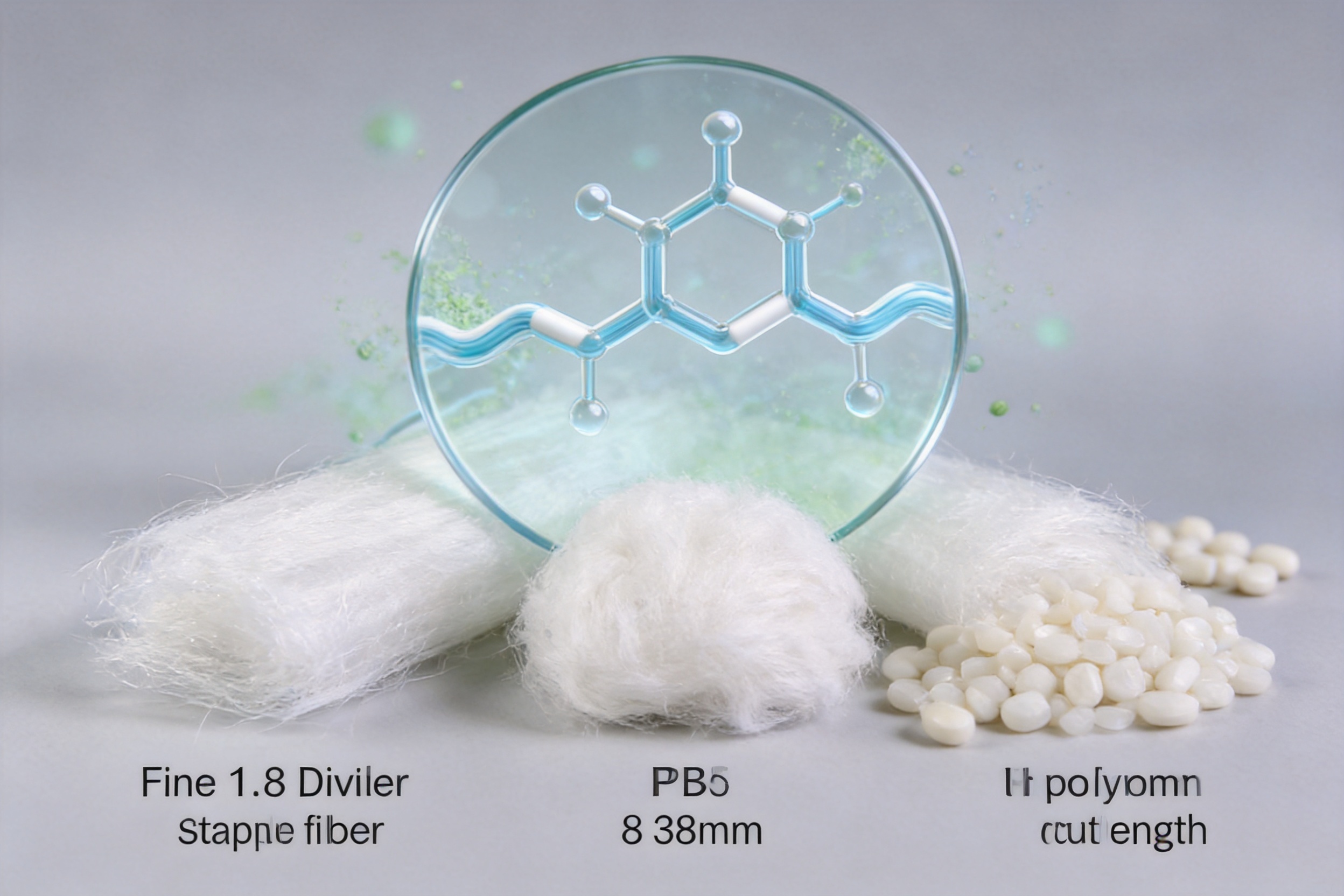
The product information for this fiber program identifies a standard specification of approximately 1.8 denier by 38 mm, while larger-denier options, including 8 denier by 38 mm, can be selected or developed for applications that require greater bulk, openness, or resilience. The final specification should be chosen according to the intended product and the equipment used by the customer.
PBS belongs to the aliphatic polyester family. Its molecular structure contains ester groups that can be attacked by water, enzymes, and microorganisms over time. The speed of this process is affected by temperature, moisture, oxygen availability, microbial activity, surface area, polymer molecular weight, and product construction.
This distinction is important. A fiber may be manufactured from a biodegradable polymer, but the finished article may not break down quickly if it is made into a dense, heavily finished, multilayer structure or blended with persistent fibers. Biodegradability must therefore be considered at both the polymer level and the finished-product level.
PBS is especially attractive for products intended for composting because it can be engineered into short-life or medium-life structures. Agricultural mats, seed blankets, disposable nonwovens, household fillings, and selected apparel accessories can be designed to provide useful service during their working life and then gradually decompose under an appropriate composting environment.
The material may be produced using fossil-based or bio-based feedstocks, depending on the raw-material program and customer requirements. Bio-based feedstock and biodegradability are not identical concepts. A product may contain bio-based carbon without being biodegradable, while a biodegradable polymer may use partially fossil-based feedstock. Buyers should evaluate both the feedstock origin and the applicable compostability certification.
PBS staple fiber is generally selected for its balance of biodegradability, flexibility, low-temperature bonding behavior, and compatibility with short-staple processing. Typical polymer values reported for PBS include a melting point of approximately 115°C, a glass transition temperature near -32°C, and a density of approximately 1.26 g/cm³. Actual values can vary according to molecular weight, copolymer composition, additives, spinning conditions, drawing ratio, and finishing treatment.
| Technical characteristic | Typical PBS behavior | Production significance |
|---|---|---|
| Polymer family | Aliphatic polyester | Provides a basis for biodegradable and compostable product development. |
| Melting point | Approximately 115°C | Enables relatively low-temperature thermal bonding, but requires careful control of heat exposure. |
| Glass transition temperature | Approximately -32°C | Supports flexibility and a less rigid hand than many high-glass-transition polymers. |
| Density | Approximately 1.26 g/cm³ | Allows web weight and material volume to be estimated using familiar synthetic-fiber calculations. |
| Standard cut length | Approximately 38 mm | Suitable for many cotton-type and short-staple carding systems. |
| Available fineness | Approximately 1.8D standard program, with larger-denier options available | Allows the fiber to be selected for softness, bulk, strength, or open-web structure. |
The relatively low melting point is one of the most useful production advantages of PBS. It permits thermal bonding at temperatures substantially lower than those used for conventional PET. This can reduce the thermal load on equipment and help create bonded nonwovens without exposing every fiber in the web to the full melting temperature.
At the same time, the low melting point requires discipline. Dryers, ovens, calenders, heated rollers, storage areas, and hot-air systems must be operated within a controlled temperature range. Excessive heat can cause premature softening, fiber deformation, web sticking, strength loss, or uneven bonding.
Denier expresses the mass in grams of 9,000 meters of fiber. A 1.8D fiber therefore weighs approximately 1.8 grams per 9,000 meters, while an 8D fiber weighs approximately 8 grams over the same length. Lower-denier fibers are generally finer, softer, and more suitable for applications requiring a gentle surface or a dense, uniform web. Higher-denier fibers generally provide greater bulk, resilience, openness, and structural support.
The 38 mm cut length is compatible with many short-staple production processes. It can be opened and carded using equipment designed for cotton-type fibers and other short synthetic fibers. In many cases, the customer can process PBS without making major mechanical changes, although feed rate, carding intensity, static control, and temperature settings may need to be optimized.
The 1.8D × 38 mm configuration is well suited to applications where surface uniformity, softness, and web cohesion are important. It can be considered for wipes, masks, hygiene components, lightweight nonwovens, and blended textile structures.
An 8D × 38 mm configuration provides a different performance profile. The coarser fiber creates a more open web with increased loft and a firmer hand. It may be advantageous in agricultural fabrics, seed mats, filling materials, cushioning layers, structural nonwovens, and certain blended yarns. It is generally less suitable as the only fiber in a soft skin-contact surface.
| Fiber fineness | Typical performance emphasis | Potential applications |
|---|---|---|
| Approximately 1.8D | Softness, surface coverage, web uniformity | Wipes, masks, hygiene layers, lightweight nonwovens, blended fabrics |
| Intermediate denier | Balanced softness, strength, and bulk | General-purpose nonwovens, household textiles, apparel accessories |
| Approximately 8D | Loft, openness, resilience, structural support | Seed mats, agricultural fabrics, fillings, felts, bulky blends |
The correct denier should not be chosen in isolation. Web weight, fiber orientation, bonding method, target tensile strength, moisture behavior, drape, softness, and final disposal conditions must all be considered together.
The primary advantage of PBS staple fiber over conventional polyester, polypropylene, and many other petroleum-based fibers is its potential to biodegrade under suitable composting conditions. Traditional synthetic fibers can remain in the environment for very long periods. They may fragment into smaller particles without fully disappearing, creating concerns about persistent plastic residues and microplastic contamination.
PBS is intended for products in which controlled biodegradation is a meaningful design objective. When the finished product is certified and managed correctly, the material can offer a more suitable end-of-life pathway than a conventional synthetic fiber.
The product program is described as certified home compostable by TÜV. This is significant because home composting differs from industrial composting. Industrial facilities normally operate at higher and more consistent temperatures, while a household compost heap may remain between ambient temperature and approximately 30–40°C for much of its operation.
A fiber intended for home-compostable applications must therefore be evaluated under less controlled conditions. Certification provides a stronger basis for product claims than relying only on the polymer name. Nevertheless, the finished product, additives, colorants, coatings, and blended materials must also be considered. A compostable fiber does not automatically make every finished product compostable.
PBS can soften and bond at a lower temperature than PET. This creates opportunities for thermal-bonded nonwovens, molded fiber structures, filling batts, and lightweight bonded fabrics. Low-temperature bonding may help reduce energy demand, shorten heating cycles, and simplify the bonding of structures that cannot tolerate very high temperatures.
Thermal bonding also makes PBS useful as a functional component in blends. In a mixed web, PBS fibers can act as the bonding phase while cotton, viscose, or other biodegradable fibers provide absorbency, softness, or additional strength.
PBS has a low glass transition temperature and can retain flexibility under ordinary room-temperature conditions. Depending on denier, finish, web construction, and blending partner, PBS can provide a softer and less rigid feel than some high-modulus biodegradable polymers.
This flexibility is valuable in disposable products, household fabrics, filling materials, and apparel accessories. It also helps the fiber tolerate bending and compression in nonwoven structures.
The approximately 38 mm cut length allows PBS staple fiber to be processed on many existing short-staple production lines. Customers may be able to use familiar opening, carding, cross-lapping, needle-punching, and thermal-bonding systems rather than investing in an entirely new production platform.
Processing conditions should still be validated. PBS is not identical to polyester, and its lower softening range, different surface energy, and static behavior require process adjustments. However, the ability to use established equipment can reduce the barrier to adoption.
PBS staple fiber can be used in disposable nonwovens such as wipes, masks, cleaning products, and selected hygiene components. For soft skin-contact surfaces, the finer 1.8D specification or a blend with finer fibers is generally more appropriate than a coarse 8D fiber.
In a wipe, PBS may serve as part of the structural web, especially when blended with viscose, cotton, lyocell, or another absorbent fiber. The absorbent component carries liquid, while PBS contributes shape retention, web support, and a biodegradable synthetic element.
For masks and other multilayer structures, PBS may be considered for a support layer, backing layer, or bonding component. Product developers must separately evaluate filtration efficiency, breathability, fluid resistance, skin comfort, sterilization, and disposal requirements.
Agricultural applications are among the most compelling opportunities for biodegradable fibers. Seed mats, growing fabrics, nursery sheets, mulch structures, and erosion-control materials may be designed to remain intact long enough to support germination and early plant growth, then gradually break down after their useful life.
Compared with conventional plastic films or persistent synthetic fabrics, a biodegradable agricultural structure can reduce the need for collection and removal after harvest. It may also reduce the risk of leaving long-lasting plastic fragments in cultivated soil.
Coarser PBS fibers can create an open, resilient web that holds seeds in position and allows air and water movement. A needle-punched construction can provide mechanical integrity without requiring a large quantity of chemical binder. The appropriate web weight may range from lightweight structures to heavier mats, depending on crop type, climate, soil condition, wind exposure, irrigation method, and service period.
PBS staple fiber can be considered for acquisition layers, support layers, absorbent-core carriers, back-support structures, and other components in hygiene products. Because PBS itself is hydrophobic, it is generally not selected as the only absorbent material. Instead, it can be blended with cellulose-based fibers that absorb and transport liquid.
The resulting structure can combine the bulk and resilience of PBS with the liquid-handling capability of cotton, viscose, fluff pulp, or other hydrophilic materials. The final product must be assessed for skin contact, odor, chemical safety, liquid retention, compression recovery, and compostability of the complete construction.
PBS staple fiber can be carded into batts for cushions, pet bedding, household padding, soft furnishings, and other filling applications. The fiber’s flexibility and resilience can help create a lightweight structure with useful loft.
Thermal bonding can be used to stabilize the batt, provided the temperature and dwell time are carefully controlled. Mechanical bonding methods such as light needle punching may also be considered. A product developer can adjust denier, blend ratio, web weight, and bonding intensity to balance softness, recovery, thickness, and durability.
Household fabrics made from PBS or PBS-containing blends may include organizers, protective pads, filtration supports, decorative felt structures, packaging components, and short-life interior products. The choice of fiber size and bonding method can create different surface textures and levels of stiffness.
Where compostability is a central selling point, the complete product should avoid persistent coatings, unsuitable adhesives, metal components, and non-compostable laminates that could prevent the product from meeting the required end-of-life standard.
PBS can be used in selected apparel accessories, labels, padding, trims, structural tapes, and bulky blended yarns. It may be combined with cotton, viscose, recycled cellulose, or other fibers to achieve a particular hand and appearance.
Processing temperatures must remain controlled during drawing, heat setting, dyeing, drying, and finishing. For applications requiring a high-temperature press or permanent heat treatment, the material should be tested carefully before commercialization.
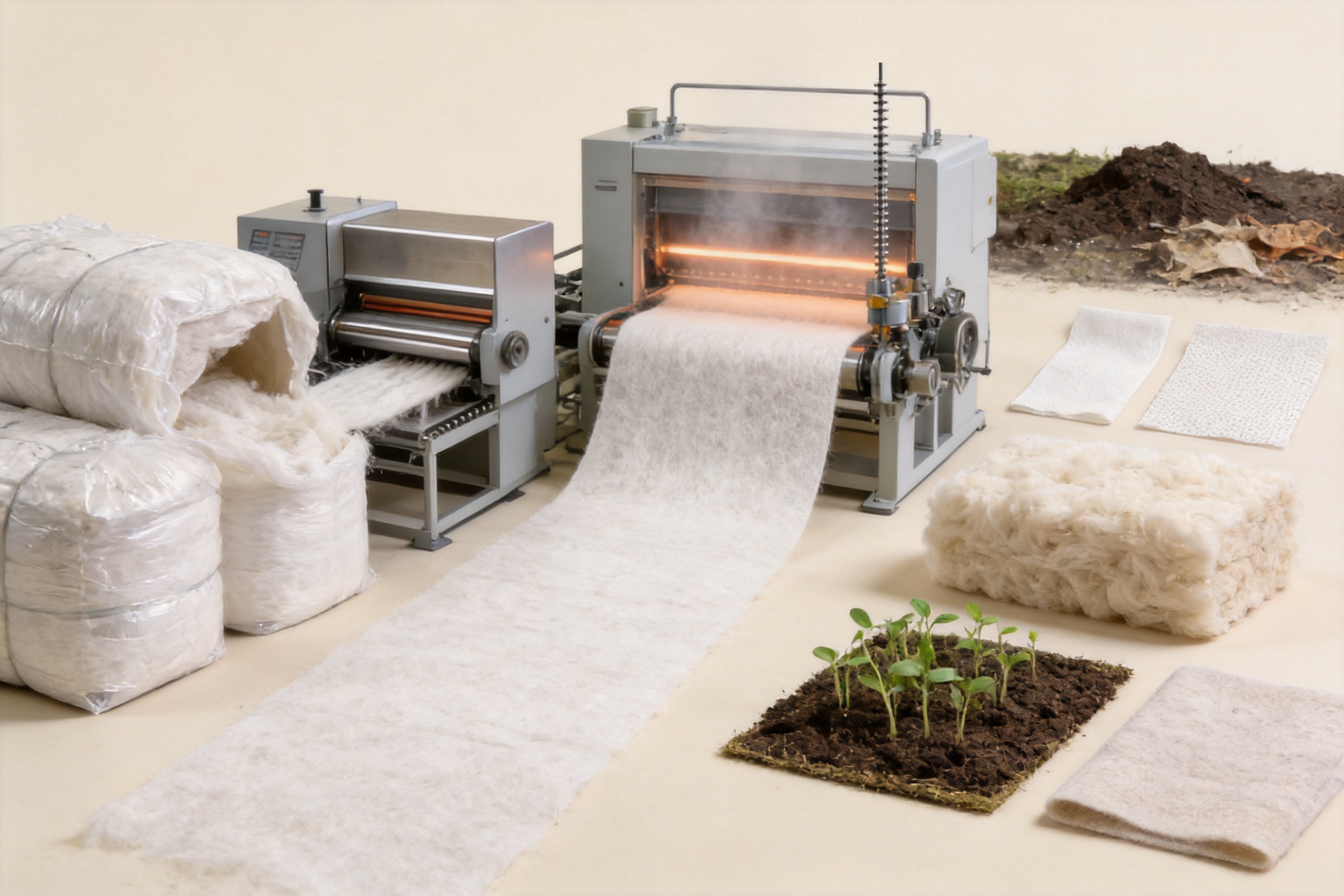
The opening stage should be gentle enough to separate the fibers without excessive damage. Overly aggressive opening can create neps, shorten fibers, or generate unnecessary fly. The fiber should be fed consistently and blended thoroughly when combined with cotton, viscose, or other materials.
Because PBS is a synthetic polyester-type fiber, static electricity may develop in dry conditions. A controlled relative humidity of approximately 55–65% can help reduce clinging and improve web formation. Depending on the equipment and blend, a suitable antistatic finish may also be used.
The 38 mm cut length is suitable for many cotton-type carding systems. The ideal carding settings depend on denier, crimp, finish, blend composition, production speed, and target web weight. Excessive carding force can damage coarse fibers or create uneven fiber distribution, while insufficient carding can result in poor web uniformity.
For fine PBS fibers, the operator should monitor fiber alignment, web cohesion, surface smoothness, and static-related defects. For coarse fibers, the main focus may be opening efficiency, loft retention, and adequate distribution across the web width.
Needle punching is highly suitable for PBS agricultural fabrics, seed mats, felts, and structural nonwovens. The process mechanically entangles fibers, allowing the manufacturer to create a stable web without relying entirely on chemical binders.
Needle density, penetration depth, line speed, and web weight should be adjusted to prevent excessive fiber breakage. A dense needle-punched fabric may offer higher strength but may also decompose more slowly than a light, open web made from the same polymer.
Thermal bonding is one of the most important routes for PBS. The material can soften near its melting range and create bonding points between fibers. Oven temperature, air circulation, line speed, pressure, and dwell time must be balanced carefully.
As a starting point, trials may be conducted near the lower end of the softening range, with short dwell times and gradual adjustments. The goal is to achieve sufficient bonding without causing shrinkage, hard spots, film formation, discoloration, or loss of loft.
It is not advisable to apply a fixed temperature to every product. A thin web, a dense batt, a blended structure, and a high-speed production line will each respond differently. Laboratory trials and pilot-scale tests should be used to determine the best thermal profile.
Spunlace generally favors finer fibers because water jets must effectively entangle the web. The approximately 1.8D specification may be more suitable than an 8D specification for this route, although the final decision depends on the web structure and blend.
Coarser PBS fiber may be used as a limited structural component in a blended spunlace product, but it may not provide the same softness, drape, or surface uniformity as finer fibers. Developers should evaluate absorbency, tensile strength, linting, hydroentanglement energy, and drying conditions.
PBS staple fiber can be incorporated into blended yarns where biodegradable content, bulk, flexibility, or low-temperature bonding is desired. The ideal blend ratio depends on the target yarn count, spinning system, fiber length distribution, crimp, finish, and required strength.
Initial trials may begin with approximately 10–30% PBS in a blend with cotton, viscose, or another suitable fiber. Higher PBS ratios may be appropriate for applications where biodegradability and bulk are more important than moisture absorbency. The yarn should be evaluated for evenness, tenacity, elongation, hairiness, abrasion resistance, dye uptake, and finishing stability.
PBS is hydrophobic, like many polyester-type materials. It does not absorb water in the same way as cotton or viscose. This characteristic can be advantageous where dimensional stability and quick drying are desired, but it can also increase static accumulation in dry processing environments.
Maintaining workshop relative humidity at approximately 55–65% can reduce static-related problems. Appropriate grounding, ionization, antistatic finishes, and controlled air movement may also improve production stability.
Moisture management is equally important during storage. The fiber should be kept in sealed packaging until use and stored in a cool, dry warehouse away from direct sunlight and heat sources. Long exposure to humid conditions and elevated temperatures may affect fiber performance over time.
Hot equipment should be checked regularly. Heated rollers, drying ovens, calenders, and storage areas located near steam pipes or other heat sources can expose the material to temperatures above the recommended range. Good housekeeping and temperature monitoring are particularly important because PBS softens at a much lower temperature than PET.
Home composting typically occurs at lower and less consistent temperatures than industrial composting. A household compost pile may experience warm conditions during active decomposition, but it may also cool significantly between cycles. Moisture, oxygen, microbial population, and surface area strongly influence the rate of breakdown.
A thin, open PBS fabric will generally provide microorganisms with more accessible surface area than a thick, dense felt. Cutting a finished article into smaller pieces may help increase contact with moisture and microorganisms. Maintaining compost moisture similar to a wrung-out sponge and turning the heap regularly can support aerobic decomposition.
Compostability claims must always refer to the complete finished product and the relevant certification standard. If PBS is blended with polypropylene, conventional polyester, acrylic, or another persistent fiber, only the biodegradable portion may break down. Likewise, coatings, dyes, adhesives, elastic components, labels, and packaging may affect the compostability of the complete item.
For agricultural products, the expected service period must be considered carefully. The material should remain functional during planting, germination, irrigation, and early crop development, but should not persist unnecessarily after its intended use. A manufacturer can adjust fiber fineness, web weight, bonding method, blend composition, and fabric density to help meet the required balance.
Producing a reliable biodegradable staple fiber requires more than purchasing a biodegradable polymer and cutting it into short lengths. Fiber quality depends on raw-material consistency, polymer drying, melt filtration, spinning stability, drawing, crimp development, cutting accuracy, finish application, packaging, and final inspection.
Consistent raw-material selection is essential. Variations in polymer molecular weight, moisture content, additives, and thermal history can influence melt flow, spinning stability, fiber strength, elongation, shrinkage, and bonding behavior.
A specialized manufacturer should control incoming materials and maintain traceability from polymer batch to finished fiber. This helps the customer investigate any variation in carding performance, thermal bonding, color, or finished-product strength.
In melt spinning, the polymer is heated, filtered, extruded through spinnerets, cooled, and drawn to develop the required molecular orientation. The spinning temperature must be high enough to produce a stable melt but low enough to avoid excessive degradation.
Drawing conditions influence tenacity, elongation, dimensional stability, and processability. A fiber intended for needle-punched agricultural fabric may require a different balance of strength and flexibility from a fiber intended for soft wipes or blended yarns.
Crimp affects bulk, cohesion, resilience, cardability, and web stability. Consistent crimp helps the customer maintain even web formation and predictable filling performance. Cut-length control is also important because excessive variation can cause uneven carding, poor blending, and inconsistent yarn or fabric properties.
A 38 mm target length should be supported by appropriate cutting and inspection systems. Customers should be able to request information about cut-length tolerance, fiber fineness, strength, elongation, crimp, finish level, and moisture content.
PBS requires a manufacturing and technical team that understands low-temperature polymers. The supplier should be able to advise customers on drying, storage, carding, thermal bonding, dyeing, finishing, and heat-setting conditions.
This expertise is particularly valuable when PBS is introduced into a production line designed for PET or polypropylene. A general-purpose fiber supplier may provide the material but offer little guidance on the process window. A specialized manufacturer can help reduce trial-and-error time by connecting fiber specifications with actual production conditions.
A dedicated design and research department can develop special and functional eco-friendly textile products beyond standard catalog items. This capability is useful when a customer needs a particular combination of denier, cut length, cross-section, color, crimp, finish, bonding response, or biodegradation profile.
Development work may begin with an application review. The customer can provide the target end use, equipment type, web weight, required service life, tensile requirements, softness, absorbency, composting route, and expected annual volume. The technical team can then recommend a starting specification and plan sample trials.
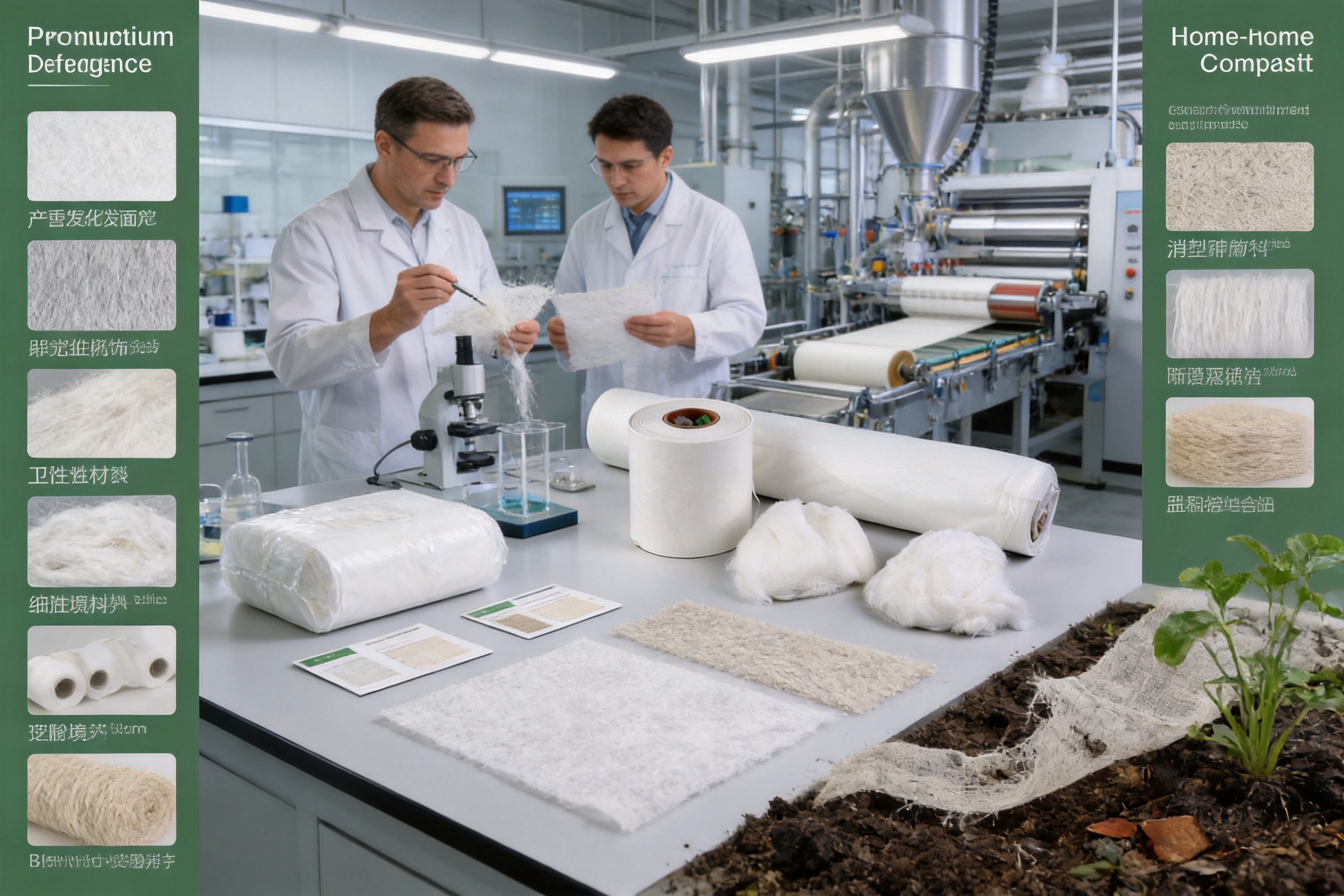
Custom manufacturing is especially important for biodegradable fibers because the same polymer can be used in products with very different performance requirements. A wipe, a seed mat, a cushion filling, and a blended yarn do not require the same fiber.
Customization may include the following parameters:
OEM cooperation can begin with a standard specification such as 1.8D × 38 mm and then progress toward a customized version after customer trials. For applications requiring higher bulk and structural support, an 8D × 38 mm option or another coarse specification may be evaluated.
The ability to produce both smaller customized orders and larger-volume requirements is an important advantage. New materials are often introduced through laboratory or pilot production before moving to commercial scale. A supplier with multiple production lines and machines can support this progression more effectively than a supplier that only accepts very large standard orders.
Raw-material supply control also contributes to production reliability. Stable access to suitable polymer, colorants, finishes, packaging materials, and spare parts helps the manufacturer maintain delivery schedules and reduce unexpected changes between batches.
Dedicated cooperation between sales, research, design, production, and quality teams can simplify communication. Instead of transferring technical information through several unrelated organizations, the customer can work with a coordinated team that follows the project from initial specifications through sampling, production, inspection, and delivery.
A specialized manufacturer understands that eco-friendly fibers are application materials rather than commodity products. The supplier must consider not only whether the polymer is biodegradable, but also how the fiber behaves on the customer’s equipment and how the finished product will be used and disposed of.
GC FIBER, operated by NanTong Global Chemical Fiber Co., Ltd., has worked in special textile manufacturing since 2006. Its product range includes biodegradable yarn, low-melting yarn, ECDP yarn, antistatic yarn, HDPE yarn, bio-component yarn, and polyester filament yarn. This broad product background is relevant because PBS projects often require comparison with, or blending alongside, other functional fibers.
The company’s capabilities include research, development, production, sales, customer cooperation, and new-material development. Its design and research team focuses on special and functional eco-friendly textile products, providing a foundation for customized material projects rather than only standard product sales.
Multiple production lines and machines support production flexibility. This can be useful for customers that need samples, trial quantities, seasonal production, or full-scale orders. Strong control over raw-material supply and quality can also help maintain consistency during repeat orders.
Technical service is another important consideration. Customers may need support with denier selection, processing temperature, blending ratio, carding conditions, bonding settings, packaging, and shipping. A responsive supplier can help identify the cause of production problems and recommend adjustments before the issue becomes a large-scale loss.
Before adopting PBS staple fiber in commercial production, customers should conduct a structured trial rather than replacing a conventional fiber immediately.
Define the product objective. Identify whether the priority is compostability, softness, bulk, strength, absorbency, low-temperature bonding, or a combination of these properties.
Select an initial specification. Compare the 1.8D × 38 mm option with coarser alternatives when necessary.
Review the processing equipment. Record card type, line speed, oven temperature, needle density, water pressure, drying conditions, and yarn-spinning parameters.
Prepare small laboratory or pilot batches. Evaluate opening, carding, web uniformity, static, bonding, and fabric appearance.
Test mechanical performance. Measure tensile strength, elongation, tear resistance, compression recovery, thickness, and dimensional stability as appropriate.
Test end-use behavior. For wipes, evaluate absorbency and skin-contact comfort. For seed mats, evaluate wet strength and soil performance. For fillings, evaluate loft and recovery.
Review the end-of-life route. Confirm that the complete finished article, including blends, dyes, coatings, and packaging, meets the intended compostability claim.
Scale up gradually. Move from laboratory trials to pilot production and then to commercial production after the process window has been confirmed.
PBS staple fiber should be stored in a cool, dry warehouse away from direct sunlight, steam, hot machinery, and other heat sources. A storage temperature below approximately 35°C is recommended for routine handling, although the customer should follow the supplier’s technical data and packaging instructions.
Bales should remain sealed until they are needed. The packaging helps protect the fiber from moisture, contamination, and unnecessary exposure to the warehouse environment. First-in, first-out inventory rotation is recommended so that older material is used before newer stock.
Before processing, the bales can be opened and conditioned to the workshop environment. Conditioning allows the fiber to reach a more stable temperature and moisture state, which may improve opening and carding consistency.
Products can be shipped through Shanghai seaport. Delivery planning should take account of production quantity, customization requirements, packaging format, inspection procedures, export documentation, and destination regulations.
PBS is a biodegradable polyester, and the staple fiber is designed for biodegradable applications. The actual breakdown rate depends on the product construction and environmental conditions. A finished article should be evaluated under the relevant compostability standard rather than judged only by the polymer name.
The product program is described as certified home compostable by TÜV. Customers should confirm the specific certification scope for the fiber grade and ensure that dyes, finishes, blends, adhesives, and other components in the finished product do not invalidate the intended claim.
The product information lists approximately 1.8D × 38 mm as a standard choice. Other specifications, including coarser options such as approximately 8D × 38 mm, may be produced according to the application and order requirements.
In many cases, PBS can be processed on existing short-staple carding equipment because the 38 mm cut length is compatible with cotton-type and synthetic-fiber systems. However, lower-temperature settings, humidity control, static management, and gentler thermal treatment are normally required.
Yes. PBS has a melting point near 115°C and can be used in low-temperature thermal bonding. The exact oven temperature, dwell time, air circulation, and line speed must be established through trials because excessive heat can cause sticking, shrinkage, hard spots, or strength loss.
It may be suitable for disposable wipes, especially in a blend or structural layer. The final choice depends on softness, absorbency, web strength, surface feel, and product construction. PBS should generally be combined with absorbent fibers when high liquid uptake is required.
An 8D fiber is relatively coarse and is generally better suited to structural layers, agricultural fabrics, fillings, or bulky products. It may feel too firm for a direct skin-contact surface unless used in a carefully designed blend or internal layer.
No. PBS is hydrophobic and does not absorb water like cotton, viscose, or other cellulose fibers. For absorbent products, PBS can be blended with hydrophilic fibers so that the cellulose component manages liquid while PBS provides structure and resilience.
Yes. Initial trials may use approximately 10–30% PBS with cotton, viscose, or another compatible fiber. The ideal percentage depends on the required softness, strength, absorbency, bonding response, and biodegradability of the finished product.
PBS can be colored using suitable disperse-type dye systems or supplied as spun-in colored fiber. Dyeing and drying temperatures should be controlled carefully and kept below the range that could damage the fiber. Colorfastness and compostability should be tested together.
There is no single breakdown time for every PBS product. Open, thin fabrics usually break down more readily than dense felts. Moisture, temperature, oxygen, microbial activity, surface area, and the presence of non-degradable blend fibers all affect the result.
Yes. PBS is suitable for developing biodegradable seed mats and agricultural fabrics that support seeds and plants during an early growth period. The mat’s weight, density, strength, service life, and composting behavior should be matched to the crop and local conditions.
Customization may include denier, cut length, cross-section, crimp, color, finish, and other functional properties. The manufacturer can also cooperate with customers on new-material development and application-specific trials.
Customers should provide the intended application, target denier and cut length, processing method, equipment type, expected order volume, web weight or yarn count, color requirements, functional finishes, packaging needs, destination, and desired delivery schedule.
PBS staple fiber provides a practical route toward more sustainable nonwovens and textile products. Its main advantages include biodegradability, home-compostable product potential, low-temperature thermal bonding, flexibility, compatibility with short-staple processing, and suitability for both pure and blended structures.
The material can serve a wide range of applications, from disposable nonwovens and hygiene components to agricultural seed mats, compostable household fabrics, filling materials, apparel accessories, and blended yarns. The best results come from selecting the fiber specification according to the final product. Fine fibers such as approximately 1.8D × 38 mm may support soft and uniform structures, while coarser options such as approximately 8D × 38 mm can provide openness, resilience, and bulk.
Successful PBS production also depends on process control. Temperature, humidity, static, carding intensity, thermal bonding, storage, and end-of-life design must all be considered. A specialized manufacturer with experience in functional yarns and eco-friendly fibers can help customers move from material selection to reliable commercial production.
With its experience in special textile manufacturing, research and development resources, multiple production lines, OEM flexibility, and cooperation across sales, design, production, and technical teams, GC FIBER can support customers developing customized PBS staple-fiber solutions. The result is not merely a biodegradable raw material, but a complete material-development pathway for products designed to perform during use and return more responsibly to the environment after use.
Xu, J., and Guo, B.-H. “Poly(butylene succinate) and Its Copolymers: Research, Development and Industrialization.” Biotechnology Journal, 2010, volume 5, issue 11, pages 1149–1163.
Food and Agriculture Organization of the United Nations. Assessment of Agricultural Plastics and Their Sustainability: A Call for Action. 2021.
U.S. Environmental Protection Agency. Composting at Home. Guidance on household composting conditions and management.
TÜV certification information relating to home-compostable materials and finished products.
Denier and fiber-diameter calculations based on the standard denier definition of grams per 9,000 meters and the approximate density of PBS.
Made of PBS (Polybutylene Succinate), fully biodegradable.Features:1.Home compostable2.Raw material: PBS Polybutylene Su...
READ MOREPlease fill out the form below and our team will contact you as soon as possible.
Addres: No.66 Qiaogang Road, Haian, Nantong City, Jiangsu Province, China
E-mail: service@gcfiber.com admin@gcfiber.com
Copyright ? GC FIBER All Rights Reserved. Eco-Friendly Textile Products Manufacturer Biodegradable Yarn Company