English
 中文简体

Made of PBS (Polybutylene Succinate), fully biodegradable.Features:1.Home compostable2.Raw material: PBS Polybutylene Su...
READ MORE
Content
Sheath-core polyester low melting yarn with a 110°C activation point is a specialized bi-component yarn designed to combine thermal bonding performance with reliable mechanical strength. Unlike a conventional low melting filament that may soften throughout its entire cross section, this yarn contains two polyester components: a low melting polyester sheath on the outside and a regular, higher-melting polyester core inside. During heating, the sheath softens and bonds neighboring fibers, while the core retains its strength and dimensional stability.
This structure makes the yarn suitable for applications that require controlled bonding, fine denier performance, and dependable processing. It can be used in 3D knitted fabrics, chenille yarn, lingerie ribbons, lace, seamless underwear, ropes, cable wire sleeves, nonwoven materials, wadding, filtration media, automotive interiors, and other technical textile products.
The product is available in 30D, 50D, and 70D specifications. These fine counts provide flexibility for delicate and lightweight textiles while preserving the high tenacity needed for winding, knitting, weaving, and other high-speed production operations.
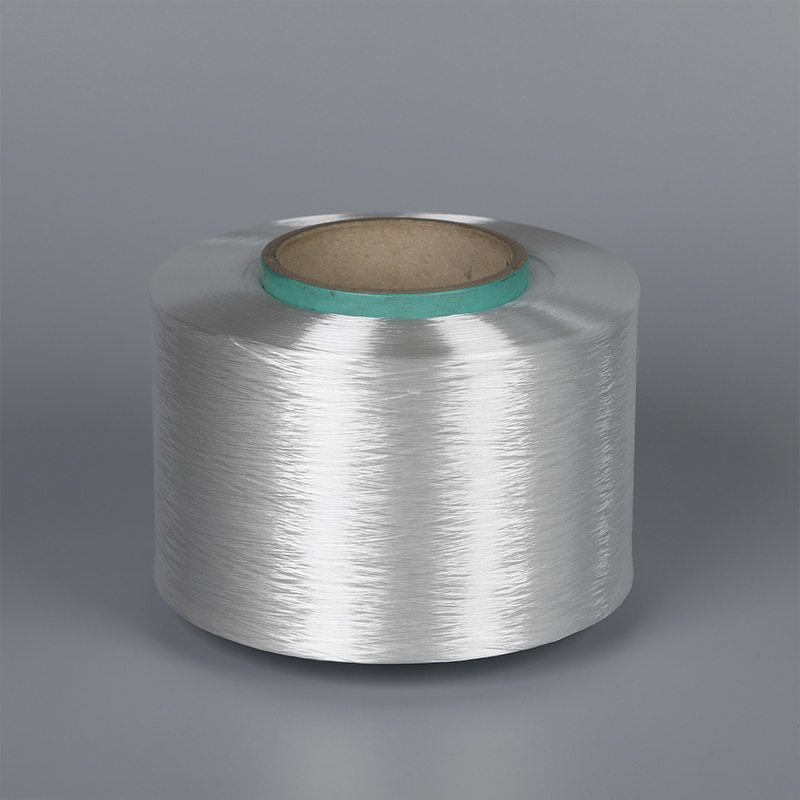
Sheath-Core Polyester Low Melting Yarn 110 Degree
Sheath-core low melting yarn is a bi-component polyester yarn manufactured with a concentric or controlled sheath-core cross section. The outer sheath is made from a polyester polymer engineered to soften and become adhesive at approximately 110°C. The inner core is composed of regular polyester with a higher melting temperature and stronger structural stability.
The two components are combined during a specialized bi-component extrusion process. Separate polymer streams are melted, metered, and joined before being extruded through a precision spinneret. The spinneret determines the final cross-sectional geometry, ensuring that the low melting polymer remains positioned around the core rather than being randomly blended throughout the filament.
After extrusion, the filaments are cooled, drawn, heat-treated, and wound into stable packages. Each stage influences the yarn’s final performance. Cooling affects filament formation, drawing affects molecular orientation and tenacity, heat treatment affects dimensional stability, and winding affects package quality and downstream unwinding behavior.
The resulting yarn performs two functions within one strand. The sheath serves as a thermal bonding agent, while the core acts as a permanent reinforcing element. This dual function can reduce the need for separate adhesive fibers, coatings, or binder chemicals in suitable manufacturing processes.
When the yarn is exposed to steam, hot air, heated rollers, a heat press, or another controlled thermal environment, the outer sheath begins to soften at approximately 110°C. The softened polymer flows into contact with surrounding fibers or adjacent yarns. After cooling, it forms bonding points that help hold the textile structure together.
The inner polyester core remains substantially intact because its melting temperature is higher than the activation temperature of the sheath. It maintains the tensile strength and shape of the original filament. This means the yarn does not become a completely melted adhesive strand. Instead, it becomes a bonded structural component with an integrated adhesive surface.
Processing temperature, dwell time, pressure, fabric density, and the composition of surrounding materials all affect the final bond. The stated 110°C value should therefore be treated as a reference activation or melting point rather than a universal processing setting for every application. Production trials are recommended to establish the best combination of temperature, speed, pressure, and cooling conditions.
The relatively moderate activation temperature can be beneficial when the surrounding fibers are sensitive to heat. It may also help manufacturers reduce energy consumption compared with bonding systems that require substantially higher temperatures. However, the appropriate process window must always be verified against the actual equipment and textile construction.
The sheath-core cross section is the most important technical feature of this yarn. In a well-controlled filament, the low melting sheath should be distributed consistently around the polyester core. Uniform sheath coverage helps create predictable bonding behavior across the length of the yarn and from one production batch to another.
A stable cross section also supports better compatibility with automated equipment. If the sheath is uneven, excessive in one area, or absent in another, the yarn may show irregular bonding, inconsistent stiffness, or variable shrinkage. For this reason, control of polymer flow, spinneret design, extrusion pressure, cooling conditions, and draw ratio is essential.
The core provides a continuous load-bearing path. During knitting, winding, weaving, braiding, or other mechanical operations, the core helps the yarn resist tension and abrasion. Once the sheath is activated, the core continues to support the finished product instead of disappearing into a fully melted adhesive layer.
This construction offers an important advantage over many single-component low melting yarns. A single-component yarn may soften throughout its entire cross section, which can reduce strength after heat treatment and may produce a comparatively stiff or brittle bonded area. The sheath-core design separates bonding function from structural function more effectively.
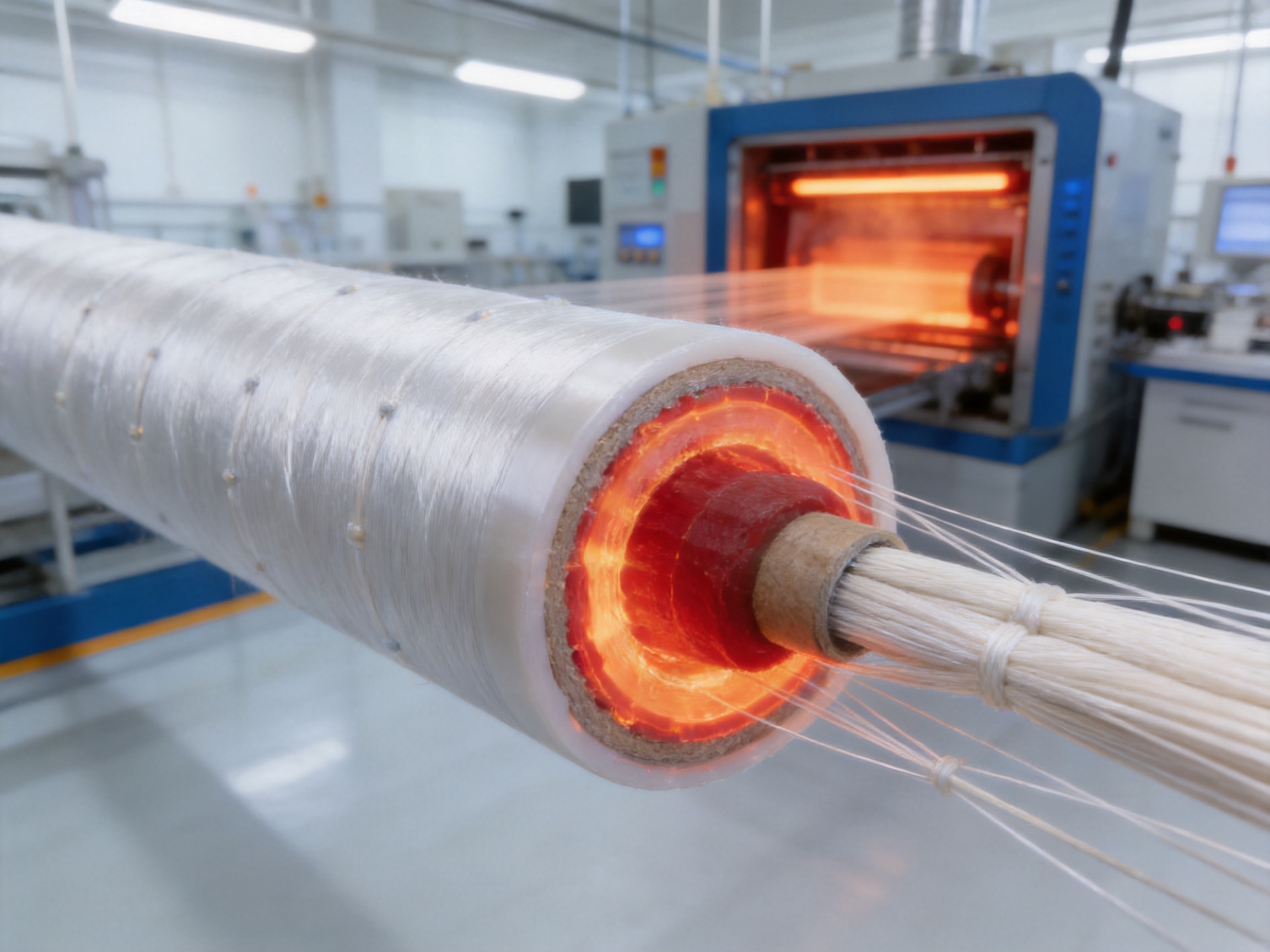
The polyester core gives the yarn the strength needed for high-speed winding, knitting, warp knitting, weaving, braiding, and rewinding. High tenacity helps reduce filament breakage during production and supports stable operation when the yarn is subjected to tension or repeated directional changes.
In practical terms, good tensile performance can reduce machine stops caused by yarn breaks. It can also improve package utilization, reduce the amount of waste generated during setup, and make the yarn easier to transfer between processes.
Package quality is an important but sometimes overlooked factor in industrial textile production. A yarn with a controlled winding package can unwind more evenly, pass through guides with fewer interruptions, and maintain more consistent tension.
Sheath-core polyester low melting yarn is designed for rewinding into cones or other packages according to buyer requirements. Smooth winding and easy rewinding are especially valuable for customers using computerized flat knitting machines, warp knitting machines, narrow fabric equipment, automated winding systems, and other continuous production lines.
The 110°C low melting point allows the yarn to bond at a moderate thermal range. This is useful for processes involving heat-sensitive base materials or constructions that could be damaged by excessive heat. A lower activation temperature may also support shorter heating cycles or lower energy demand, depending on the equipment and fabric design.
Moderate-temperature activation gives manufacturers greater flexibility when combining the yarn with polyester, selected synthetic fibers, nonwoven webs, wadding, filtration materials, and composite structures. Process testing remains necessary because different materials transfer heat at different rates.
The low melting sheath acts as a built-in bonding agent. In appropriate applications, this can reduce the need for a separate adhesive coating, binder fiber, or chemical bonding layer. Fewer material inputs may simplify formulation, reduce handling steps, and improve production consistency.
The integrated bonding function is particularly useful when a manufacturer needs a fine yarn that can be processed as a normal textile strand before heat activation. The yarn can be knitted, woven, braided, or incorporated into a fiber web and then bonded during a later thermal operation.
Because the core helps support and contain the softened sheath, the yarn can offer more controlled polymer distribution than a freely applied liquid adhesive. In suitable conditions, this may help reduce excessive adhesive bleed-through, surface contamination, or uncontrolled migration.
Cleaner processing can be valuable around calendar rollers, heat presses, steam ovens, and other thermal equipment. The actual level of residue depends on temperature, pressure, dwell time, sheath quantity, and the surrounding material, so production trials should be used to confirm the result.
The 30D, 50D, and 70D options are designed for lightweight and high-gauge textile products. Fine counts can be integrated into lace, lingerie ribbons, seamless underwear, narrow fabrics, delicate mesh, lightweight sportswear, and other products where additional bulk is undesirable.
Compared with heavier bonding yarns, fine denier options can help maintain softness, drape, transparency, and flexibility. They also provide designers with more control over bonding density and local reinforcement. A buyer can select the count according to the required strength, coverage, visual effect, and fabric construction.
Because both the sheath and core are polyester-based, the yarn is well suited to products that already use polyester as the primary fiber. Compatibility can support more uniform heat response, dye behavior, and dimensional performance than a mixed-polymer system in some applications.
Using polyester-based components throughout the structure can also simplify material selection for manufacturers that prefer a consistent polymer family. Nevertheless, dyeing, finishing, and thermal shrinkage should be evaluated with the complete textile construction rather than the bonding yarn alone.
Manufacturing begins with the selection and preparation of two polyester polymer systems. The sheath polymer must provide a controlled softening point near 110°C, suitable melt flow, adequate adhesion, and stable performance during extrusion. The core polymer must provide the required tenacity, dimensional stability, and resistance to the selected thermal process.
Raw materials must be handled carefully because moisture and contamination can affect melt quality and filament formation. Drying and material preparation help maintain stable viscosity during extrusion. Consistent polymer preparation is especially important for fine-denier products, where small changes in flow can influence filament uniformity.
During bi-component extrusion, the sheath and core polymers are melted in separate extrusion systems. Each melt stream is controlled independently before entering a combining assembly. This permits the manufacturer to manage the ratio, pressure, temperature, and flow of each component.
The combined melt is then passed through a precision spinneret. The spinneret creates the sheath-core geometry and determines the number of filaments in the yarn. Accurate control at this stage is essential because the location and thickness of the sheath directly influence activation performance.
Advanced extrusion control helps prevent irregular core positioning, unstable sheath coverage, and variation between filaments. Stable melt pressure and temperature also support consistent spinning performance during extended production runs.
After extrusion, the hot filaments must be cooled in a controlled manner. Cooling solidifies the polymer and establishes the initial filament shape. Uneven cooling can lead to differences in filament diameter, internal stress, and orientation.
Carefully managed cooling supports a more uniform yarn structure. It also helps reduce defects that may become visible during winding or downstream processing. Airflow, temperature, and cooling-zone stability are important variables in this part of the process.
Drawing stretches the newly formed filaments and aligns polymer molecules along the yarn axis. This improves tensile performance and contributes to the high-tenacity characteristics required for industrial processing.
The draw ratio must be selected carefully. Excessive drawing can affect sheath integrity or reduce the intended thermal response, while insufficient drawing may result in lower strength and poor dimensional stability. The relationship between drawing speed, temperature, polymer ratio, and final denier must be monitored continuously.
Heat treatment can help stabilize the yarn and manage residual shrinkage. The objective is to obtain a balance between strength, elongation, thermal response, and package stability.
For a low melting yarn, heat treatment must be controlled so that the sheath remains suitable for later activation. Overheating during production may alter the sheath surface or affect the intended bonding window. Consistent thermal management therefore contributes to reliable downstream performance.
After the yarn has reached the required physical condition, it is wound onto cones or other packages. Winding tension, traverse pattern, package hardness, and edge formation all influence unwinding behavior.
Good winding practice reduces snarling, tension variation, and yarn damage. It also makes the product easier to use in automated equipment. Buyers may request packaging formats, cone weights, labeling systems, or winding specifications suited to their production lines.
Quality control should include checks of denier, appearance, winding quality, tenacity, elongation, thermal response, and cross-sectional structure. Depending on the application, additional tests may include shrinkage, bonding strength, heat aging, dye compatibility, and abrasion resistance.
Cross-sectional inspection is particularly valuable for sheath-core yarn. Microscopic examination can confirm whether the core is correctly positioned and whether the sheath is distributed consistently around it. This type of inspection supports process improvement and helps identify deviations before the material reaches the customer.
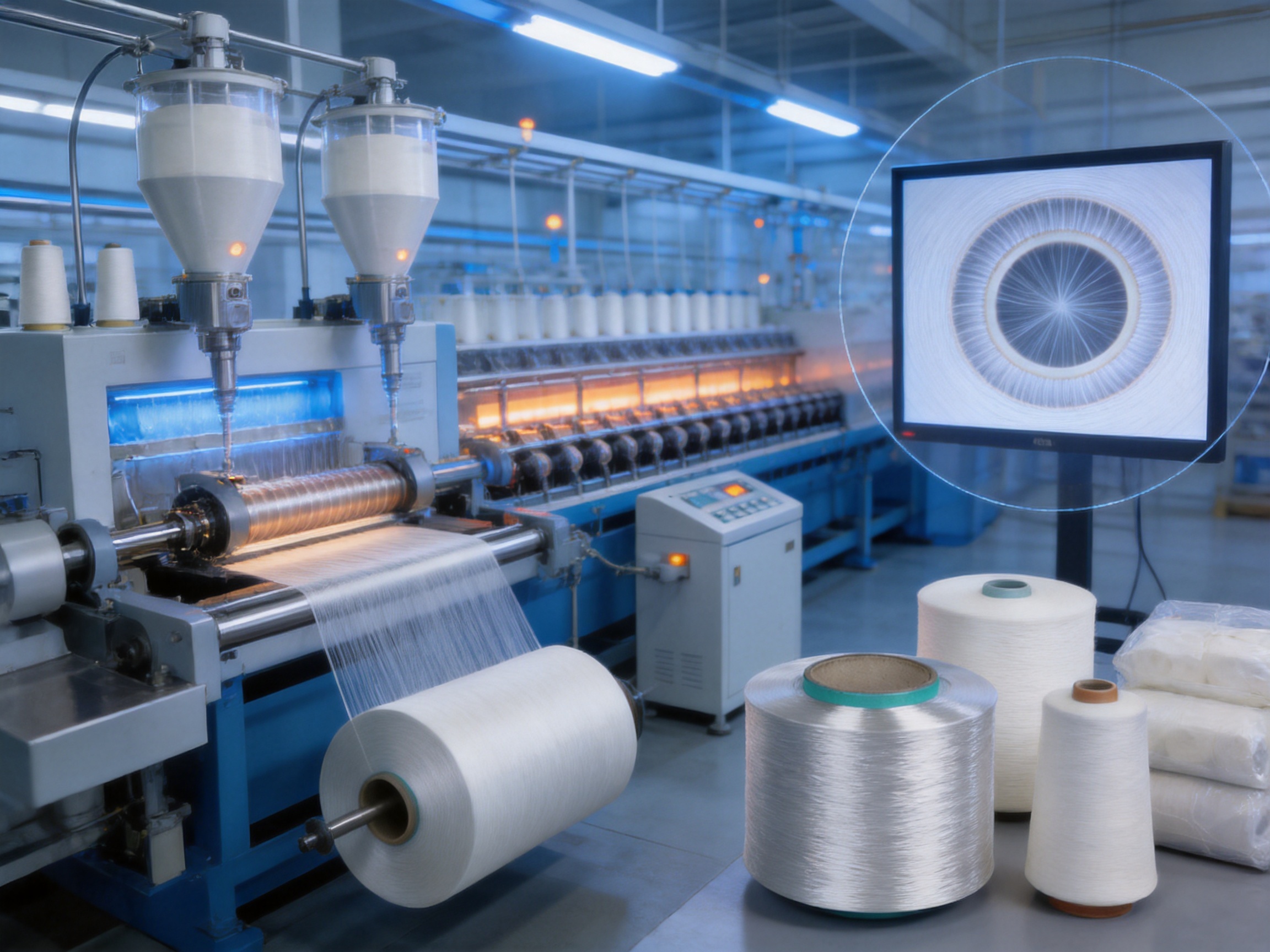
A major advantage of sheath-core yarn is that it combines the functions of a textile filament and a thermal adhesive. Conventional production may require a separate adhesive film, liquid binder, coating, or loose low melting fiber. A bonding yarn can simplify the construction by placing the bonding component directly where reinforcement or structural connection is needed.
Compared with a fully low melting filament, the sheath-core design retains a stronger internal skeleton after activation. The core can help preserve flexibility and shape, reducing the risk that the bonded area becomes excessively brittle or loses its structure.
Compared with liquid adhesives, the yarn can offer cleaner handling and more predictable placement. The bonding material is carried within the yarn rather than applied as a free-flowing liquid. This can reduce mixing, coating, drying, and chemical storage requirements in some production systems.
Compared with separate adhesive films, the yarn can be integrated into narrow, three-dimensional, knitted, woven, or braided structures. It can be placed selectively in specific zones instead of covering the entire product surface. This selective reinforcement may help preserve softness and breathability in areas that do not require bonding.
Compared with high-temperature bonding fibers, the 110°C grade may be more appropriate for materials that cannot tolerate severe thermal exposure. It can also give manufacturers a wider choice of process conditions when working with delicate textile constructions.
Fine-denier sheath-core yarn can be incorporated into seamless underwear to reinforce selected areas, stabilize edges, or support low-profile bonding. The fine count helps minimize bulk, while the sheath can create a bond during controlled heat treatment.
The yarn may be used in waist sections, leg openings, connection points, or internal structural zones. Application design should consider skin contact, softness, stretch recovery, and the final hand feel. Heat-setting conditions should be optimized so that the bonded area remains flexible rather than rigid.
Lingerie ribbons and narrow decorative bands often require a combination of appearance, softness, dimensional stability, and resistance to fraying. A fine low melting yarn can be incorporated into the ribbon structure and activated to stabilize edges or join selected components.
The sheath-core structure can provide bonding without requiring a heavy coating across the entire ribbon. This may help preserve the visual quality and drape of lightweight materials.
Lace products benefit from bonding yarns that do not add excessive weight or stiffness. The 30D and 50D options may be suitable for delicate lace constructions where the bonding effect must remain discreet.
Manufacturers should evaluate the yarn’s effect on transparency, dyeing, softness, and stretch. Heat treatment must be carefully controlled because open lace structures may respond quickly to thermal exposure.
Three-dimensional knitted fabrics require internal stability because their spacer structures contain multiple layers and connecting filaments. Sheath-core yarn can be positioned in selected zones to help lock structural elements together after heat activation.
Potential uses include breathable mesh, spacer fabric, cushioning structures, footwear uppers, sports supports, and other lightweight three-dimensional products. The core contributes strength while the sheath creates localized bonding between components.
In nonwoven manufacturing, low melting yarn or fiber can act as a thermal bonding component within a fiber web. After heating, the sheath bonds neighboring fibers and supports web integrity. The core helps retain strength after the thermal cycle.
The product may be used in lightweight nonwovens, technical sheets, composite structures, and reinforcement layers. Selection depends on web composition, basis weight, bonding temperature, production speed, and the required flexibility of the finished material.
Wadding, quilt filling, pillow filling, and insulation materials require sufficient cohesion to maintain shape during use. A low melting bonding yarn can help hold fibers together without relying entirely on chemical binders.
The sheath-core construction may support a balance between loft retention and structural stability. The final result depends on bonding density and thermal conditions. Excessive bonding can reduce loft, while insufficient bonding may allow the filling to shift.
Filtration materials often require stable geometry, controlled porosity, and resistance to handling forces. A fine thermal bonding yarn can help reinforce filter layers or stabilize selected regions without applying a continuous adhesive film across the entire surface.
For filtration applications, manufacturers should evaluate pressure drop, fiber shedding, chemical compatibility, temperature resistance, and the effect of bonding on pore structure. The yarn should be selected as part of the complete filter design.
In ropes, narrow bands, and braided structures, the yarn can provide heat-activated fixation between internal components. The polyester core contributes tensile support, while the sheath can reduce slippage or stabilize the arrangement after heating.
Potential uses include specialized cords, narrow elastic structures, cable protection layers, and heat-sealable sleeves. The final design should account for flexibility, bending fatigue, abrasion, and environmental exposure.
Fine polyester bonding yarn can be incorporated into protective textile sleeves around wires or cable assemblies. Heat activation may help close the sleeve, secure an overlapping section, or stabilize the position of textile components.
Electrical and safety requirements must be evaluated independently. The yarn is a textile bonding component and should not be assumed to provide electrical insulation, flame resistance, or other specialized properties unless those characteristics have been separately tested and specified.
Automotive interior materials may include molded composites, acoustic layers, trim structures, reinforcement textiles, and lightweight backing materials. Sheath-core bonding yarn can be considered where a heat-activated connection is required during forming or lamination.
Automotive applications normally require extensive testing for temperature cycling, odor, emissions, aging, flammability, vibration, and dimensional stability. The yarn can be developed for such projects, but final suitability depends on the complete component specification.
| Available Count | Typical Positioning | Potential Application Focus | Main Selection Consideration |
|---|---|---|---|
| 30D | Ultra-fine bonding and lightweight reinforcement | Delicate lace, lingerie, fine ribbons, high-gauge knitted fabrics | Low added bulk and discreet bonding effect |
| 50D | Balanced fine-denier performance | Seamless garments, mesh, narrow fabrics, three-dimensional textiles | Balance between flexibility, coverage, and strength |
| 70D | Higher fine-denier support | Ropes, cable sleeves, technical fabrics, structural knitted zones | Greater presence and reinforcement within the textile structure |
The correct count depends on the intended bonding strength, textile density, surface appearance, flexibility, and processing equipment. A 30D yarn may be preferred when the product must remain extremely light and soft. A 50D yarn offers a practical middle option for many apparel and technical constructions. A 70D yarn may be selected when additional reinforcement or more visible structural contribution is required.
Count selection should also consider the number of filaments, fabric gauge, stitch density, winding speed, and the amount of yarn used per unit area. Samples and pilot trials are recommended before full-scale production.
Manufacturers should begin with a controlled trial using a small quantity of yarn. The trial should record heating temperature, dwell time, line speed, pressure, cooling method, and the ratio of bonding yarn to base material.
Steam and dry heat may produce different results because heat transfer and moisture content vary between the two methods. A steam process may soften the sheath rapidly, while dry heat may require a longer dwell time or a different temperature profile. Calendar rollers, ovens, and heat presses also create different pressure and contact conditions.
The yarn should be stored in a clean, dry environment before use. Excessive moisture, dust, compression, or rough handling may affect unwinding and processing. Packages should be inspected before loading them onto production equipment.
During knitting, weaving, or winding, guide alignment and tension should be checked. Fine-denier yarns can be sensitive to excessive tension or sharp contact points. Proper guides and smooth machine surfaces help protect filament integrity.
After bonding, the finished product should be tested for peel strength, tensile strength, flexibility, dimensional stability, appearance, and wash or aging performance where relevant. Testing should represent the actual end-use environment.
GC FIBER is a specialized textile manufacturer based in Nantong, China, with experience in functional and special textile products since 2006. Its product focus includes biodegradable yarn, low melting yarn, ECDP yarn, anti-static yarn, HDPE yarn, bio-component yarn, and polyester filament yarn.
This specialized product range supports a manufacturing approach centered on functional fiber structures rather than only general-purpose polyester. Experience with different polymer systems and performance requirements can help the company respond to projects involving bonding temperature, tenacity, denier, cross-sectional structure, and processing behavior.
The company operates production and development activities for customers requiring standard catalog products as well as made-to-order specifications. Custom development may include adjustments to denier, filament count, sheath-core ratio, melting range, tenacity, winding format, and other properties subject to technical evaluation.
Close cooperation between sales, research and development, design, and production teams can help move a project from an initial application idea to a practical yarn specification. This is useful when a customer needs a bonding yarn for a product that is not covered by standard samples.
Production flexibility is also important for customers who require both trial quantities and larger commercial volumes. Multiple production resources, controlled raw material supply, and batch inspection can support the transition from laboratory testing to repeat manufacturing.
For international customers, the product can be prepared for shipment through Shanghai seaport. Packaging and documentation can be arranged according to buyer requirements, while production schedules and special specifications should be confirmed during quotation and order review.
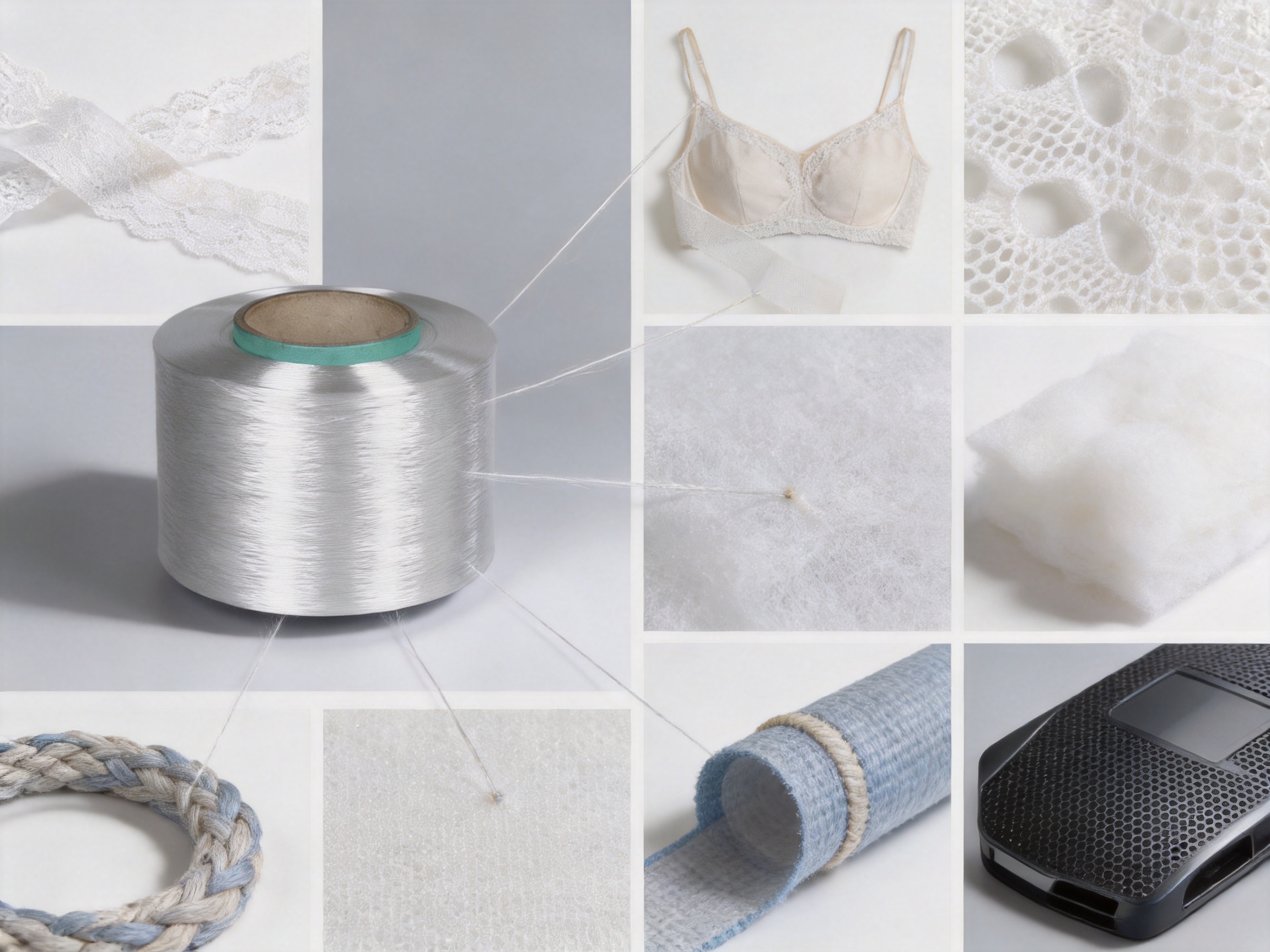
For a low melting yarn, quality is not defined only by the nominal melting point. Buyers should also evaluate cross-sectional consistency, tenacity, elongation, denier uniformity, package quality, thermal activation behavior, bonding strength, and batch-to-batch repeatability.
A dependable supplier should be able to discuss the intended application and recommend a suitable count or trial structure. Technical communication is particularly important because the best processing temperature can vary according to fabric construction and equipment.
GC FIBER supports customers with product information, specification discussions, custom development, and production coordination. Buyers can provide details such as target material, machine type, bonding method, desired softness, required strength, and expected order volume. These details help the supplier assess whether a standard 30D, 50D, or 70D product is appropriate or whether a customized version should be considered.
The polyester sheath is the low melting component. When heated to the appropriate processing range, it softens and bonds with neighboring fibers or textile elements. After cooling, it helps hold the structure together.
The core provides mechanical strength and dimensional stability. It remains substantially intact when the outer sheath is activated, allowing the yarn to retain a structural backbone after bonding.
No. The 110°C melting point refers primarily to the low melting sheath. The regular polyester core has a higher melting temperature and is designed to remain functional during normal activation of the sheath.
It may be used with selected non-polyester fibers if the processing temperature and compatibility are suitable. However, testing is necessary to evaluate adhesion, shrinkage, dye behavior, flexibility, and long-term performance with the specific base material.
30D or 50D is often considered for delicate lace, lingerie ribbons, and seamless underwear because these fine counts can minimize bulk. The final choice depends on the required bonding strength, fabric gauge, and desired hand feel.
70D may be considered when the structure requires greater yarn presence or reinforcement. The correct selection depends on rope construction, tensile requirements, flexibility, abrasion, and the thermal bonding method.
Yes. It can be incorporated into selected structural areas of three-dimensional knitted fabric and activated to help connect or stabilize layers. Process trials should confirm that the bonding does not reduce breathability, loft, or flexibility.
In many suitable applications, the low melting sheath can function as an integrated bonding agent and reduce the need for a separate adhesive layer. A technical trial is required to verify whether the yarn provides sufficient coverage and bond strength for the finished product.
Possible methods include steam, hot air, heated rollers, heat presses, and other controlled thermal systems. The best method depends on the textile construction, equipment, pressure, line speed, and required bond quality.
Not necessarily. The stated value is a reference melting or activation point. The actual machine setting may need to be higher or lower depending on heat transfer, dwell time, pressure, and the surrounding materials. Production testing is essential.
The yarn should be stored in a clean, dry environment away from excessive heat, moisture, dust, and mechanical damage. Packages should remain protected until they are ready for use.
Yes. Custom discussions may cover denier, filament count, cross-sectional structure, tenacity, melting range, winding format, and other functional requirements. Special production is subject to technical assessment and order conditions.
Buyers should provide the intended application, preferred count, bonding method, base material, equipment type, target order quantity, package requirement, desired delivery schedule, and any required performance testing. More detailed information helps the supplier prepare a practical recommendation.
Sheath-core polyester low melting yarn with a 110°C activation point offers a practical combination of thermal bonding and mechanical reinforcement. Its low melting polyester sheath provides controlled adhesion, while its regular polyester core preserves strength and structure after heat treatment.
The product is available in 30D, 50D, and 70D counts, allowing manufacturers to select a fine yarn for delicate apparel or a stronger option for technical structures. High tenacity, easy rewinding, moderate activation temperature, integrated bonding function, fine denier flexibility, and polyester compatibility make it suitable for a broad range of textile applications.
Its performance depends on accurate bi-component extrusion, uniform sheath distribution, controlled drawing, stable heat treatment, precision winding, and careful inspection. These manufacturing factors are central to achieving predictable bonding and reliable downstream processing.
For customers seeking a specialized low melting yarn supplier, GC FIBER combines functional textile experience, custom development capability, production flexibility, and technical cooperation. By evaluating the application, selecting the proper count, and conducting controlled process trials, manufacturers can use this yarn to simplify bonding operations while maintaining the softness, strength, and structural performance required by modern textile products.
1. Technical principles of bi-component fiber spinning and sheath-core cross-sectional control.
2. General practices for thermal bonding in nonwoven and composite textile manufacturing.
3. Polyester fiber processing, drawing, heat treatment, and dimensional stabilization guidelines.
4. Industrial textile testing methods for yarn tenacity, denier uniformity, thermal response, and bonding strength.
5. Manufacturer-provided product information for sheath-core polyester low melting yarn, 110°C grade.
6. Application notes concerning low melting fibers in apparel, nonwoven, filtration, wadding, and technical textile structures.
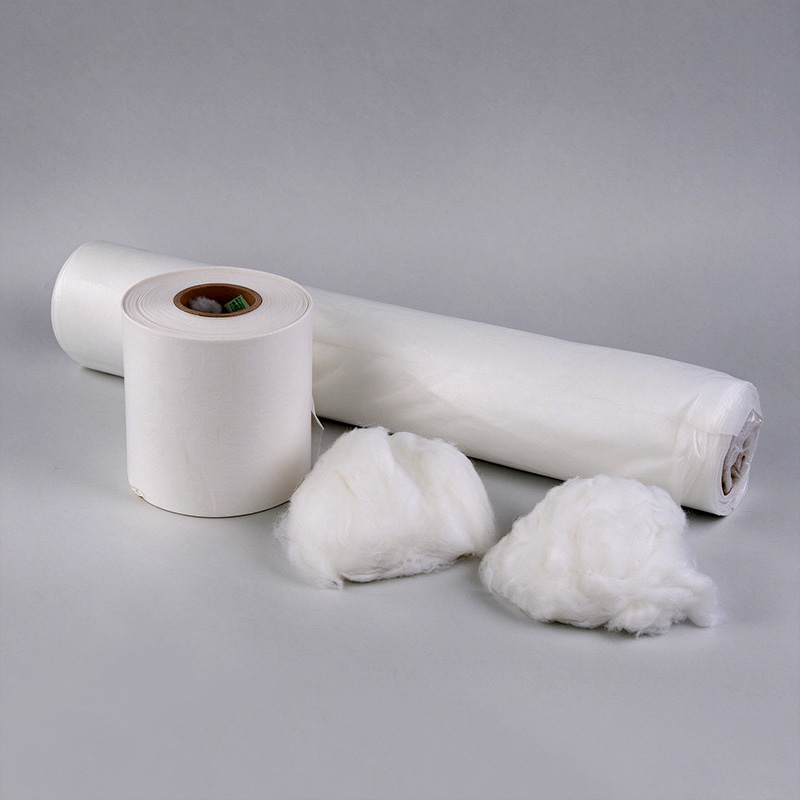
Made of PBS (Polybutylene Succinate), fully biodegradable.Features:1.Home compostable2.Raw material: PBS Polybutylene Su...
READ MOREPlease fill out the form below and our team will contact you as soon as possible.
Addres: No.66 Qiaogang Road, Haian, Nantong City, Jiangsu Province, China
E-mail: service@gcfiber.com admin@gcfiber.com
Copyright ? GC FIBER All Rights Reserved. Eco-Friendly Textile Products Manufacturer Biodegradable Yarn Company