English
 中文简体
中文简体It is made with Bio-base PLA, fully biodegradable Feature: 1. Industrial compost product 2. Made with PLA 3. Eco-frie...
READ MORE
Content
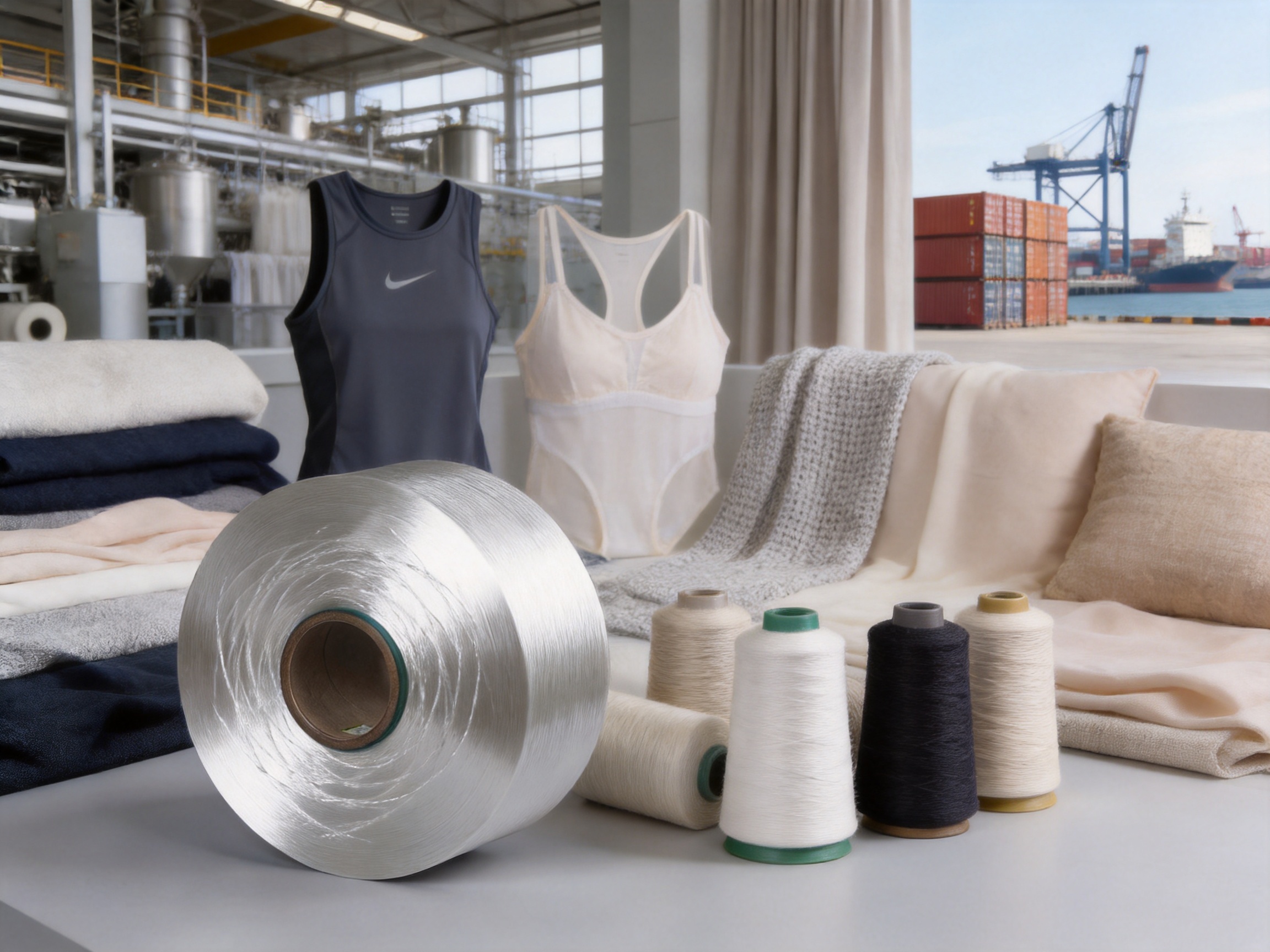
ECDP pre-oriented POY yarn is a modified polyester filament developed for textile manufacturers seeking deeper coloration, improved comfort, dependable processing, and broader product versatility. As a partially oriented yarn, it is designed to serve as an efficient upstream material for downstream draw-texturing, draw-winding, knitting, and weaving operations. Its controlled molecular orientation, residual drawability, and specialized polymer composition make it suitable for producing fabrics with attractive appearance, soft touch, color depth, and functional comfort.
Unlike ordinary polyester POY, ECDP POY is engineered to provide enhanced dye affinity at the polymer level. This feature allows the yarn to accept color more effectively and supports deep dyeing at approximately 85 degrees Celsius under suitable atmospheric dyeing conditions. The result is an efficient route toward saturated shades, uniform coloration, and reduced dependence on more demanding high-temperature processes.
The product is available in several counts, including 53Dtex/36F, 70Dtex/36F, 131Dtex/72F, and 250Dtex/144F. These options enable manufacturers to select a filament specification according to fabric weight, surface appearance, handle, coverage, stretch design, and end-use requirements. ECDP POY can be further processed into draw-textured yarn or fully drawn yarn and can support applications in sportswear, underwear, knitted fabrics, woven fabrics, home textiles, and other textile products.
GC FIBER, operated by NanTong Global Chemical Fiber Co., Ltd., has specialized in special and functional textile materials since 2006. Its production activities cover biodegradable yarn, low melting yarn, ECDP yarn, anti-static yarn, HDPE yarn, bio-component yarn, and polyester filament yarn. This product range reflects an established focus on material development, customized production, and the manufacture of yarns designed to solve specific textile-processing challenges.
POY means partially oriented yarn. It is a polyester filament produced at a high spinning speed, commonly within the range of approximately 3,000 to 3,600 meters per minute. During spinning, the polymer melt is extruded through a spinneret, cooled, solidified, and wound into packages while retaining an intermediate degree of molecular orientation.
This intermediate orientation gives POY a useful combination of strength, stability, and residual elongation. The yarn is not intended to be the final form for every application. Instead, it is an important semi-finished material that can be transformed by draw-texturing or draw-winding. During these downstream processes, the remaining drawability is used to develop the physical properties required by the final yarn.
ECDP refers to a modified polyester composition designed to increase dye receptivity compared with standard polyester. The modification is incorporated during the polymer or melt preparation stage, allowing the functional characteristics to be distributed throughout the filament rather than applied only to the surface after spinning.
This distinction is important. A surface treatment may provide temporary or limited changes, while a polymer-level modification is integrated into the fiber structure. When ECDP POY is converted into DTY or FDY, the deep-dyeing characteristics travel with the filament into the downstream product. This creates a consistent foundation for the production of dyed yarns and fabrics.
ECDP POY therefore combines two important functions. First, it provides the processing flexibility expected from a partially oriented polyester yarn. Second, it introduces improved dyeing behavior and comfort-related advantages that can distinguish the resulting fabric from products made with conventional polyester feedstock.
The available counts are intended to cover a wide range of textile constructions. Finer counts can be selected for lightweight fabrics, soft surfaces, underwear, fine knitting, and delicate garment structures. Heavier counts and higher filament totals can be selected where increased coverage, body, durability, or a fuller hand is required.
| Available specification | Typical processing direction | Potential textile applications | Primary selection considerations |
|---|---|---|---|
| 53Dtex/36F | Draw-texturing, draw-winding, knitting, or weaving | Lightweight apparel, fine knitted fabrics, underwear | Fine appearance, light fabric weight, soft handle |
| 70Dtex/36F | Draw-texturing, knitting, and weaving | Sportswear, fashion apparel, underwear, general fabrics | Balance of fineness, coverage, and process flexibility |
| 131Dtex/72F | Draw-texturing, weaving, and medium-weight knitting | Activewear, woven apparel, home textiles | Greater coverage, surface fullness, and fabric stability |
| 250Dtex/144F | Draw-texturing, weaving, and heavier textile constructions | Durable apparel, furnishing fabrics, technical textile uses | High filament count, fuller hand, and stronger visual coverage |
All counts can be produced according to order requirements. Customers may discuss the required denier or dtex, filament number, package format, brightness, color, winding conditions, and downstream process with the manufacturer before production. This made-to-order approach is useful for textile companies that need a particular yarn specification rather than a general commodity grade.
Because POY is a semi-finished feedstock, the appropriate downstream process should be selected according to the desired final result. Draw-texturing can introduce bulk, crimp, stretch recovery, and a softer fabric hand. Draw-winding can produce a more fully oriented yarn suitable for applications requiring a smooth filament structure and controlled physical performance. The selected processing route also influences luster, coverage, elasticity, and dyeing behavior in the final fabric.
The most important manufacturing advantage of ECDP POY is that the functional modification is introduced before filament formation. Polyester chips or polymer materials are prepared with the required chemical composition and processed through controlled melting and extrusion conditions. By incorporating the modification at this stage, the manufacturer can achieve a more uniform distribution of dye-receptive characteristics throughout the polymer.
Source-level modification is more reliable than relying solely on a finishing bath or surface coating. During subsequent drawing, texturing, knitting, weaving, and laundering, the filament retains its internal composition. This helps maintain consistent dyeing behavior across the length and cross-section of the yarn.
Controlled polymer preparation also helps protect production consistency. Moisture control, accurate material feeding, stable residence time, and appropriate melt temperature are important in polyester filament manufacturing. Excess moisture or uncontrolled thermal exposure can affect melt viscosity, spinning stability, filament strength, and package quality. A professional production system therefore requires disciplined preparation before the polymer reaches the spinning position.
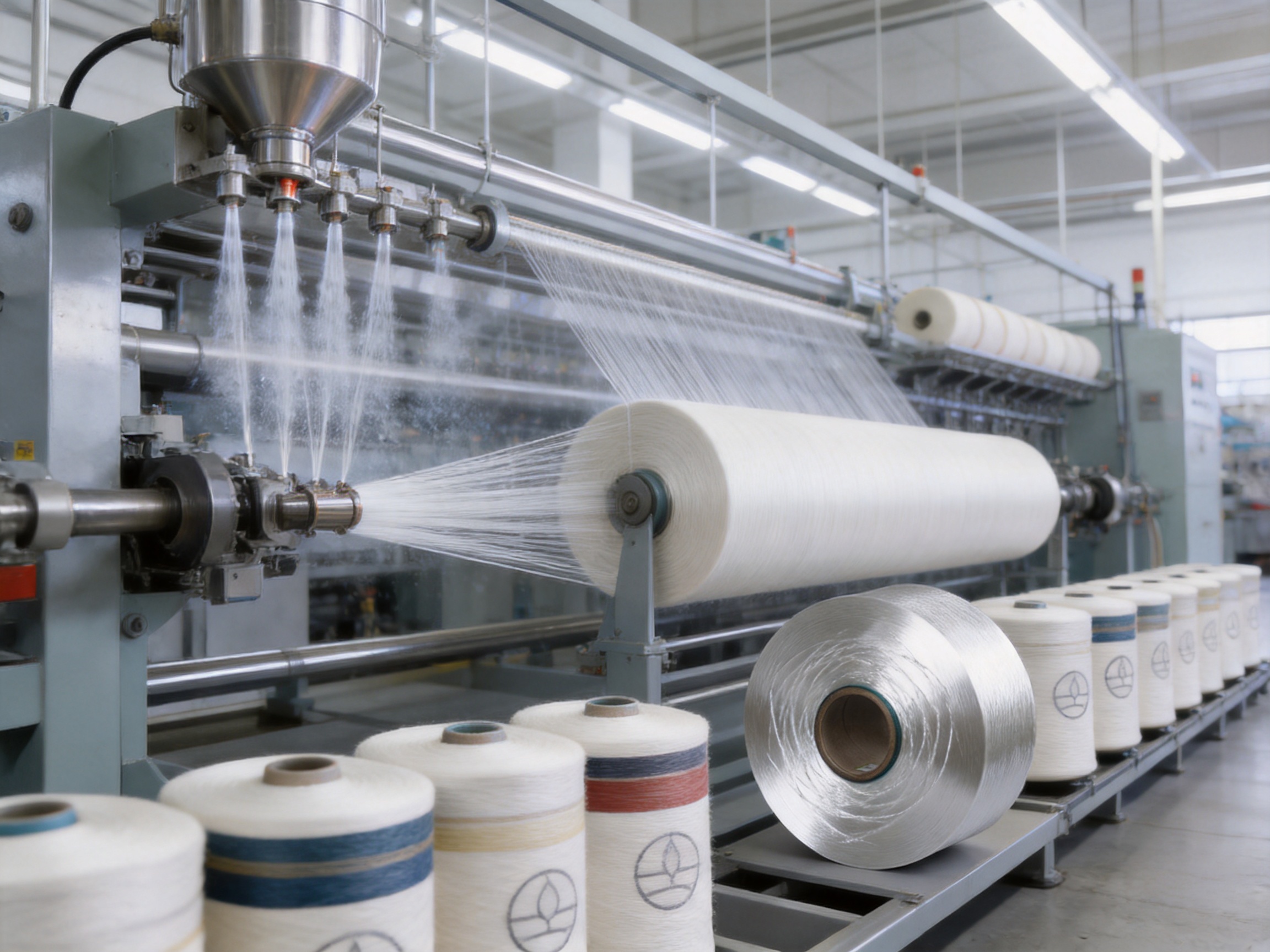
ECDP POY is produced through high-speed spinning. The molten polymer is metered through precision spinning components and extruded through a spinneret containing multiple capillaries. The resulting filaments are cooled and solidified under controlled airflow before being gathered and wound.
Spinning speed influences molecular orientation, yarn elongation, tenacity, and residual drawability. The production range of approximately 3,000 to 3,600 meters per minute provides an appropriate orientation level for POY. The objective is not to maximize orientation at the spinning stage. Instead, the process is balanced so that the yarn has enough stability for winding and handling while retaining sufficient drawability for downstream conversion.
Uniform cooling is particularly important for multi-filament yarn. Each filament should solidify in a consistent environment to reduce variation in diameter, orientation, and physical properties. The cooling system, spinning temperature, spinneret condition, and finish application all contribute to stable yarn formation.
After spinning, the filaments are combined and wound into packages suitable for transportation and downstream processing. Package density, winding tension, yarn traverse, and surface quality affect how easily the yarn unwinds during draw-texturing or draw-winding.
A package that is too hard may create excessive unwinding tension, while a package that is too soft may suffer from deformation or unstable feeding. Precise winding equipment is therefore essential. Consistent package formation helps reduce machine stops, yarn breaks, tension variation, and processing waste at the customer’s facility.
Quality checks may include appearance inspection, linear density measurement, filament integrity, winding condition, physical property testing, and dyeing evaluation. These checks help confirm that the material meets the agreed specification before shipment.
Manufacturing functional yarn requires more than a single modified raw material. It requires coordinated control of polymer preparation, melt spinning, cooling, filament convergence, finish application, winding, packaging, and inspection. Each stage can influence the final behavior of the yarn.
GC FIBER’s product portfolio and experience in special textile materials support a development-oriented manufacturing approach. The company works with customers to develop new materials and can arrange special production by order. This is valuable for brands, fabric mills, yarn processors, and textile converters that need a specific combination of dyeability, handle, luster, fineness, and processing performance.
Customization may involve count selection, filament number, production quantity, package requirements, or application-specific performance targets. For a customer developing a new sportswear fabric, for example, the preferred yarn may differ from the yarn needed for lightweight underwear or a dense woven home-textile construction. A flexible manufacturer can help match the yarn specification to the intended production method.
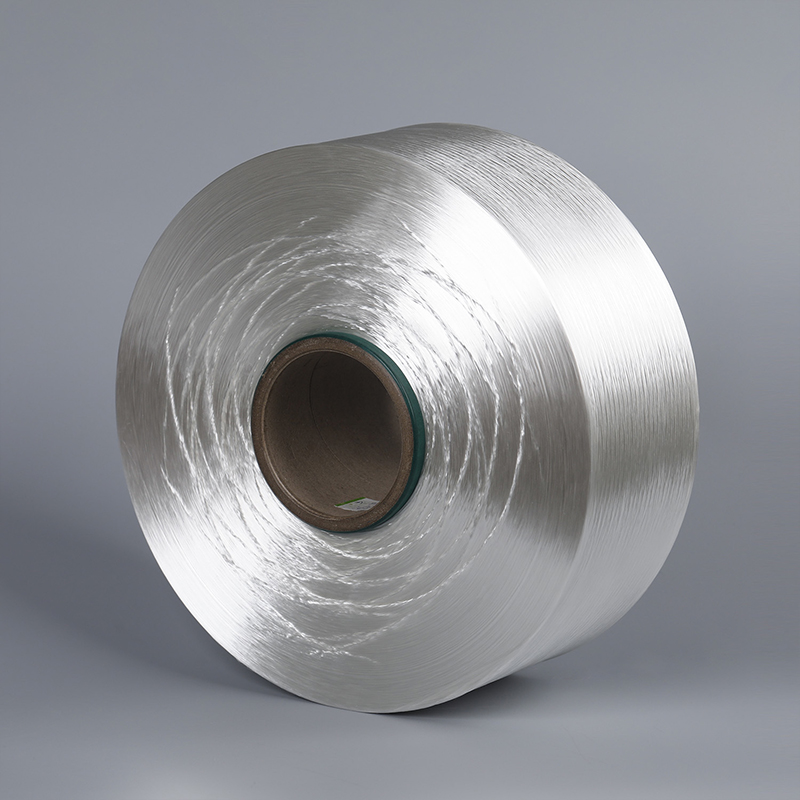
ECDP Pre-oriented POY Yarn
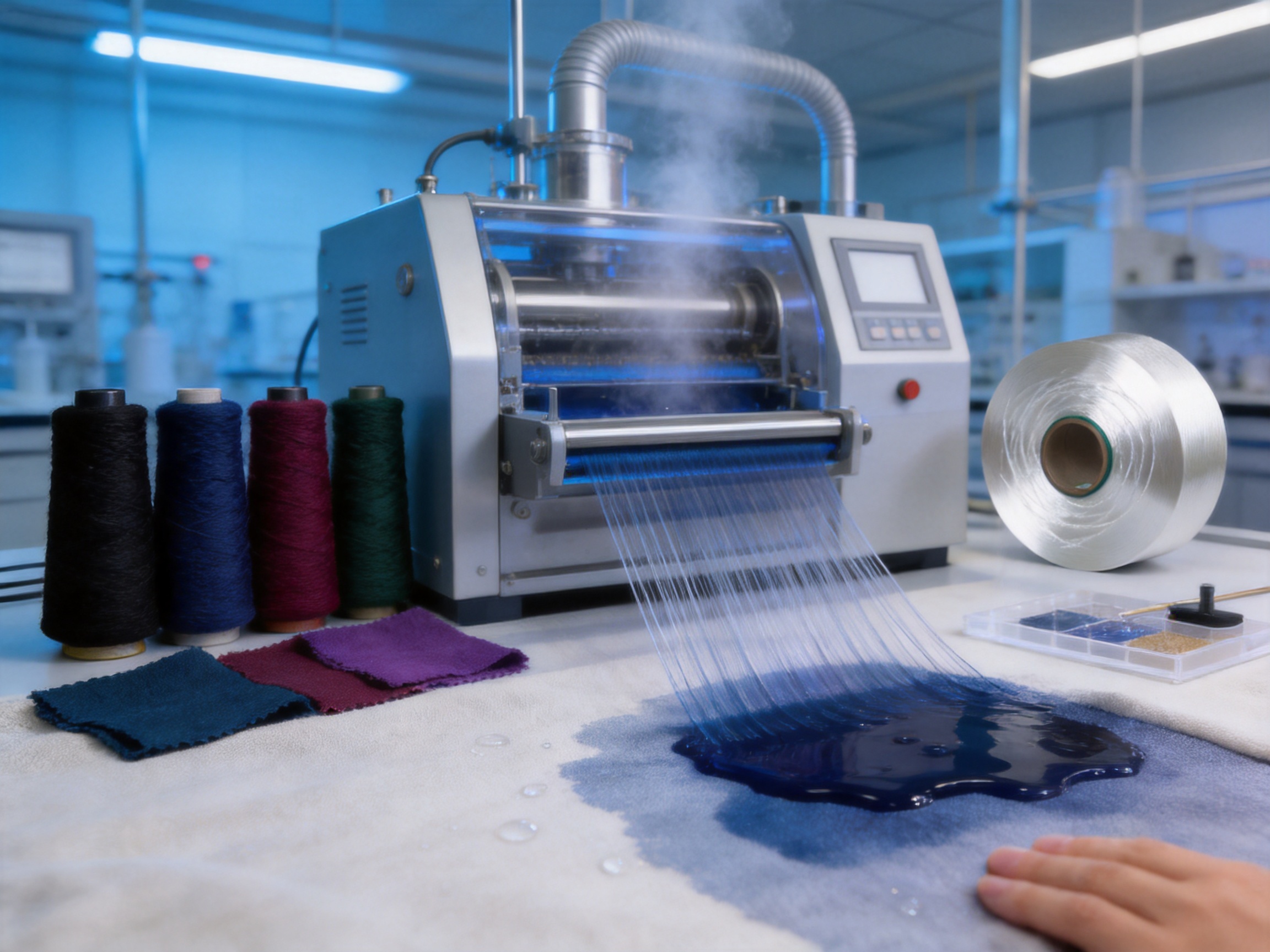
The principal benefit of ECDP POY is its enhanced dyeing performance. The ECDP modification increases the accessibility of dye-receptive sites in the polyester structure. Under suitable dyeing conditions, fabrics made from ECDP-derived yarn can achieve deep, saturated shades at approximately 85 degrees Celsius.
This temperature is lower than the high-temperature conditions commonly associated with the dyeing of conventional polyester. Lower-temperature dyeing can create several potential benefits. It may reduce energy demand, lower thermal stress on blended fibers, and simplify the processing of constructions containing elastane or other heat-sensitive components. It can also support more flexible production planning for mills that handle multiple fiber combinations.
Deep dyeing is not simply a matter of producing a darker color. It also involves shade clarity, levelness, reproducibility, and the ability to reach the required color depth without excessive dye dosage. ECDP POY is designed to help dyers reach strong shades with high dye uptake and consistent distribution.
The precise dyeing recipe remains dependent on the fabric construction, machine type, dyestuff selection, liquor ratio, pH, auxiliaries, heating profile, and finishing process. ECDP POY should therefore be tested in the customer’s own laboratory or production environment. Nevertheless, its enhanced dye affinity provides a useful starting point for efficient color development.
High dyeing take-up can reduce the amount of unfixed or residual dye remaining in the bath at the end of a cycle. This may lower dye consumption per kilogram of finished material and reduce the color load in wastewater. For mills operating under environmental procurement requirements, better dye utilization can support resource-efficiency objectives.
Improved uptake may also help shorten the path to the target shade. When a fiber accepts color effectively, the dyer may need fewer correction stages. Fewer reprocessing cycles can contribute to lower water use, reduced energy consumption, improved productivity, and more stable delivery schedules.
Deep color performance is especially valuable in black, navy, burgundy, dark green, and other saturated shades. Such colors often expose differences in dye affinity and levelness more clearly than pale colors. A yarn that supports uniform shade development can help reduce barre, patchiness, and visual inconsistency in the finished fabric.
ECDP POY is designed to contribute to a soft and comfortable fabric hand. The semi-oriented structure of POY provides a useful basis for subsequent draw-texturing, while the modified polyester composition can support a smoother, more refined surface character.
Softness is important in clothing worn directly against the skin. Underwear, lightweight sportswear, base layers, sleepwear, and fashion garments all require a balance between durability and comfort. Yarn selection influences fabric bending rigidity, surface friction, bulk, and the sensation perceived by the wearer.
The yarn can also provide good luster. Depending on the selected polymer formulation and delustrant content, the final product may be developed with a semi-bright, bright, or more subdued appearance. Consistent luster across the package is important because uneven brightness can become visible as streaks or shade-related differences after knitting, weaving, or dyeing.
When ECDP POY is processed into textured yarn, the resulting crimp can increase bulk and softness while improving fabric coverage. The combination of filament fineness, filament number, draw ratio, and texturing conditions allows manufacturers to adjust the final hand. This gives ECDP POY an advantage over less adaptable materials that provide fewer opportunities for surface and comfort adjustment.
Deep color is commercially useful only when it can be maintained during use. ECDP POY is designed to support good color fastness and durable shade depth because the dye-receptive characteristics are built into the polymer rather than applied as a temporary surface treatment.
Color fastness performance depends on the complete production system. Dye selection, fixation conditions, reduction clearing, washing, heat setting, finishing chemicals, and the final fabric construction all influence the result. Even so, a fiber with appropriate internal dye affinity provides a strong foundation for achieving reliable fastness.
Good fastness is important in sportswear and underwear because these products are frequently washed and exposed to perspiration. It is also important in home textiles, where curtains, upholstery, decorative fabrics, and bedding may need to retain their appearance through repeated cleaning or long periods of use.
Maintaining shade depth can help improve the perceived quality of a garment. Consumers commonly associate fading, dullness, and uneven coloration with premature wear. By supporting deep and stable coloration, ECDP-derived fabrics can contribute to a longer-lasting visual appearance.
Conventional polyester is known for strength, dimensional stability, and low moisture regain. However, standard polyester can sometimes feel less comfortable in applications where moisture management is important. ECDP POY is developed to provide better moisture regain than commodity polyester POY.
Moisture regain refers to the amount of moisture a fiber absorbs from the surrounding atmosphere under defined conditions. In a fabric, improved moisture interaction can influence the microclimate between the skin and the garment. The effect is particularly relevant to sportswear, underwear, active base layers, and other products that are worn for extended periods.
ECDP-derived fabric does not replace the need for appropriate fabric engineering. Wicking performance depends on filament geometry, yarn structure, fabric construction, capillary pathways, finishing, garment design, and environmental conditions. However, the improved moisture-related behavior of the yarn can complement these design factors.
For sportswear, comfort involves more than elasticity. The fabric should feel soft, move with the body, and help manage perspiration during activity. ECDP POY can support these goals when combined with suitable texturing, knitting, finishing, and garment construction.
For underwear, comfort is measured through softness, breathability, fit, moisture control, and repeated-wash performance. The yarn’s soft touch and moisture regain make it a suitable material for underwear fabrics that must remain comfortable throughout daily use.
Commodity polyester POY remains an important textile material, but it may not meet the performance requirements of every modern fabric. Compared with standard polyester POY, ECDP POY is differentiated by its modified dyeing behavior and comfort-related characteristics.
| Performance area | Conventional polyester POY | ECDP pre-oriented POY yarn | Practical value for manufacturers |
|---|---|---|---|
| Dyeing temperature | Often requires conventional high-temperature polyester dyeing routes | Designed to support deep dyeing at approximately 85 degrees Celsius under suitable conditions | Potentially lower thermal load and broader blend compatibility |
| Dye affinity | Standard polyester dye receptivity | Enhanced dye-receptive structure | Improved color depth and higher dyeing take-up |
| Moisture behavior | Typically low moisture regain | Improved moisture regain compared with commodity polyester POY | Better comfort potential in active and close-to-skin fabrics |
| Product development | General-purpose material | Functional material available in several counts and made-to-order options | More flexibility for specialized fabric programs |
| Downstream use | Suitable for standard draw-texturing and draw-winding | Suitable for downstream conversion while retaining ECDP dyeing benefits | Supports DTY, FDY, knitted, and woven product development |
| Environmental process potential | Depends on conventional dyeing efficiency | Higher dyeing take-up may reduce residual dye and processing waste | Supports resource-efficiency goals when validated in production |
These advantages do not mean that ECDP POY is the correct choice for every application. Commodity yarn may be appropriate when the primary requirement is low cost and standard performance. ECDP POY becomes more valuable when color depth, lower-temperature dyeing, moisture comfort, or specialized product positioning are important.
The competitive value of ECDP POY is therefore based on total performance rather than purchase price alone. A yarn that supports more efficient dyeing, fewer shade corrections, better fabric comfort, and stronger product differentiation may offer a better overall value to a mill or brand.
Sportswear fabrics must combine comfort, durability, appearance retention, and freedom of movement. ECDP POY is suitable for use in sportswear because it can be converted into yarns with soft touch, useful stretch potential after texturing, and improved moisture-related behavior.
In knitted sportswear, textured yarn made from ECDP POY can provide surface bulk, coverage, and a comfortable hand. The fabric may be engineered for close contact with the body or for a lighter, more breathable construction. Filament count and yarn fineness can be selected to achieve the required balance between opacity, air permeability, and surface smoothness.
Color is a major part of sportswear design. Teams, athletic brands, and fashion-oriented activewear companies often require strong and durable colors. ECDP POY supports deep shades and high dye uptake, helping manufacturers produce garments with clear visual identity and attractive color saturation.
Sportswear is also subjected to repeated washing, perspiration, friction, and stretching. The yarn’s good color fastness and the inherent strength of polyester can contribute to product durability when the complete fabric is correctly engineered. The final performance should be verified through appropriate abrasion, wash, perspiration, dimensional stability, and colorfastness testing.
Underwear requires a particularly careful balance of softness, fit, moisture management, resilience, and dyeing quality. ECDP POY can be processed into fine filament yarns that support smooth and comfortable fabrics for underwear and intimate apparel.
The 53Dtex/36F and 70Dtex/36F options may be considered where a lightweight and refined fabric structure is needed. The selected count can be combined with elastane or other yarns to create stretch constructions with close body fit. ECDP POY can contribute a soft surface and attractive color while the overall fabric design supplies the required recovery and support.
Good moisture regain is relevant to garments worn next to the skin. Although moisture management depends on the entire fabric system, the modified polyester structure can provide a more comfortable starting point than ordinary polyester. This is useful for daily underwear, performance base layers, sleepwear, and lightweight intimate apparel.
Color durability is also important because underwear is washed frequently. Good dye uptake and fastness help maintain shade quality during repeated laundering. Manufacturers should establish their own testing program to confirm performance under the intended detergent, washing temperature, mechanical action, and finishing conditions.
Knitting requires yarn that can run smoothly through guides, feeders, needles, and tension-control systems. Package quality and consistent yarn properties are essential for reducing breakage and preventing fabric defects.
ECDP POY can be converted through draw-texturing before being used in circular knitting, warp knitting, or other knitted constructions. Texturing conditions can be adjusted to influence bulk, crimp, stretch, recovery, and surface character. The resulting yarn can be used to create fabrics ranging from smooth and lightweight materials to fuller and more elastic structures.
Its soft touch is suitable for knitted apparel, while the available counts support different fabric weights. Fine yarns can be used for delicate surfaces and lightweight garments. Larger specifications can support fabrics requiring greater coverage and body.
Knitted products made from ECDP-derived yarn can include T-shirts, leggings, base layers, underwear, sportswear, casual garments, socks, and fashion fabrics. The final result depends on knitting gauge, stitch structure, yarn feed, fabric density, finishing, and dyeing conditions.
Woven fabrics require yarn with sufficient stability, strength, and abrasion resistance to withstand warping, sizing, weaving, and finishing. ECDP POY can be processed into suitable downstream yarns for woven constructions.
When converted into FDY or an appropriate textured yarn, the material can be used in apparel fabrics, lining materials, decorative textiles, furnishing fabrics, and other woven products. The higher filament-count specifications can provide a fuller surface and greater coverage, while finer specifications can create lightweight and smooth fabrics.
The good luster of ECDP-derived yarn can support attractive woven surfaces. Depending on the desired appearance, manufacturers may select a brighter yarn for a more vivid effect or a semi-bright yarn for a softer visual character. Deep dyeing can add further value to solid-color woven fabrics and patterned constructions.
For woven production, warp preparation and loom settings should be optimized for the selected yarn. Tension, sizing, reed configuration, speed, and take-up conditions can affect fabric appearance and productivity. A sample trial is recommended before full-scale production, especially when introducing the material to a new weaving system.
Although ECDP POY is strongly suited to apparel and performance fabrics, it can also be used in home textile and decorative applications. Curtains, upholstery, cushions, bedding, blankets, carpets, and other household products may benefit from polyester’s durability, design flexibility, and color variety.
Deep and stable coloration is valuable in home textiles because large fabric surfaces make shade variation highly visible. The yarn’s enhanced dyeing performance can support strong color development when the dyeing process is properly controlled.
Soft touch and luster also influence the perceived quality of household fabrics. A smooth and attractive surface can enhance curtains, decorative panels, bedding, and fashion-oriented home products. Filament count and texturing can be selected to produce the required balance between drape, fullness, softness, and surface brightness.
For heavier or more durable constructions, the 131Dtex/72F and 250Dtex/144F specifications may provide suitable coverage and fabric body. The appropriate choice depends on the product design, loom or knitting equipment, finishing method, and required weight.
ECDP POY can support more efficient textile processing through its dyeing characteristics. High dyeing take-up means that a larger proportion of the dye may be transferred from the bath to the fiber under appropriate conditions. This may reduce dye waste, improve bath utilization, and lower the amount of residual color requiring treatment.
The ability to develop deep shades at a lower temperature may also contribute to reduced energy use compared with higher-temperature routes. The actual environmental benefit depends on machine efficiency, liquor ratio, heating system, cycle time, auxiliaries, bath reuse, and wastewater treatment. Manufacturers should measure these factors in their own facilities rather than relying only on theoretical comparisons.
Lower-temperature dyeing can be particularly useful in blended fabrics. Elastane, certain regenerated fibers, coatings, and specialty components may have limited resistance to aggressive thermal conditions. A dyeing route based on ECDP POY may provide greater flexibility when the fabric includes temperature-sensitive materials.
Environmental performance is increasingly evaluated across the whole supply chain. Yarn selection, dyeing efficiency, production yield, wastewater load, energy use, and product durability all contribute to the overall impact. By helping produce fabrics with strong color retention and efficient dye uptake, ECDP POY can contribute to a more responsible production strategy when combined with appropriate factory management.
Reliable yarn quality begins with the control of raw materials. Polyester polymer or chips should be properly stored and conditioned to minimize moisture-related problems. The modified components must be accurately proportioned so that the intended dyeing characteristics are reproduced consistently.
During spinning, important control points include melt temperature, pressure stability, spinneret condition, cooling uniformity, finish application, spinning speed, and winding tension. Variation in these parameters can influence filament linear density, elongation, tenacity, interlace, and package quality.
Finished packages should be inspected for appearance and winding defects. Laboratory testing may include linear density, tenacity, elongation at break, shrinkage, oil content, inter-filament cohesion, and dyeing performance. The testing program should be aligned with the customer’s processing route and final application.
Technical support is especially important for functional yarn because the final product depends on downstream conditions. A yarn processor may need guidance on draw ratio, heater temperature, texturing speed, yarn tension, interlace level, or package unwinding. A dyehouse may need to establish an appropriate recipe for the target color and fabric construction.
GC FIBER’s experience with special and functional yarns allows it to work with customers beyond simple product supply. Cooperation can include material selection, specification adjustment, sample development, and special production by order. This collaborative approach is an advantage for customers developing differentiated fabrics or new textile applications.
The first consideration is the intended final product. A fine underwear fabric usually requires a different yarn than a heavy woven furnishing material. The customer should define the target fabric weight, construction, softness, luster, coverage, stretch, and durability before selecting the count.
The second consideration is the downstream process. Draw-texturing, draw-winding, knitting, and weaving each place different requirements on the yarn. A yarn intended for high-speed texturing should be evaluated for package unwinding, residual elongation, and process stability. A yarn intended for weaving should be evaluated for warp preparation, tension control, and abrasion exposure.
The third consideration is filament number. At the same total linear density, a higher filament count generally produces a finer individual filament and can contribute to a softer surface. A lower filament count may produce a different luster, hand, and coverage effect. The correct choice depends on the desired fabric appearance and processing performance.
The fourth consideration is dyeing. Customers should identify the required shade range, dyeing equipment, maximum process temperature, blend components, and fastness requirements. ECDP POY is especially valuable where deep colors, lower-temperature dyeing, or high dye utilization are important.
The fifth consideration is order volume and supply planning. Because counts are produced to order, customers should confirm lead time, minimum order quantity, package requirements, shipment schedule, and technical specifications in advance. Products can be shipped through Shanghai seaport, supporting export logistics for international customers.
| Selection question | Why it matters | Recommended customer information |
|---|---|---|
| What is the final product? | Different products require different yarn fineness, coverage, and handle | Garment, fabric, home textile, or technical textile application |
| Which process will be used? | POY behavior must match draw-texturing, draw-winding, knitting, or weaving | Machine type, operating speed, draw ratio, and finishing route |
| What surface effect is required? | Filament count and brightness influence luster, softness, and appearance | Bright, semi-bright, smooth, bulky, soft, or matte effect |
| What dyeing conditions are available? | The dyeing system determines the best recipe and processing window | Machine type, temperature, liquor ratio, dyes, and target shades |
| What volume is required? | Made-to-order production requires planning | Trial quantity, monthly demand, delivery schedule, and package format |
Functional yarn manufacturing requires specialized knowledge of polymer chemistry, spinning technology, textile processing, and end-use performance. A supplier that only offers standard commodity yarn may not be able to provide the same level of development support or customization.
GC FIBER has operated in the special textile materials sector since 2006. Its product portfolio includes several categories of functional and environmentally focused yarns. This background supports a broader understanding of how polymer modification affects spinning, dyeing, fabric construction, and final product performance.
The company’s location in Haian, Nantong City, Jiangsu Province, places its manufacturing operations within one of China’s important textile and chemical fiber regions. Access to established textile supply chains, technical resources, and export logistics can support efficient cooperation with domestic and overseas customers.
A further strength is the ability to develop new materials with customers. Textile brands and mills increasingly require yarns that provide a specific combination of environmental profile, dyeability, comfort, durability, and processability. Collaborative development enables the specification to be adapted to the customer’s actual production conditions instead of forcing the customer to accept a general-purpose grade.
For international supply, shipment through Shanghai seaport provides a practical export route. Customers can coordinate production schedules, packaging, documentation, and delivery arrangements according to their purchasing plans.
Before commercial production, customers should conduct a structured trial. Begin by confirming the yarn specification, package condition, intended downstream process, and target fabric construction. A small quantity can then be converted under normal machine settings while monitoring yarn tension, breaks, feeding behavior, and package unwinding.
For draw-texturing, record draw ratio, heater temperature, texturing speed, false-twist conditions, interlace settings, yarn tension, and finished yarn properties. Evaluate crimp, bulk, elongation, recovery, appearance, and package build.
For knitting or weaving, evaluate fabric uniformity, needle or loom performance, surface appearance, luster, handle, coverage, and dimensional stability. Any bars, streaks, loops, unevenness, or tension-related defects should be investigated before increasing production volume.
For dyeing, test pale, medium, and deep shades where possible. Compare shade depth, levelness, dye exhaustion, wash fastness, perspiration fastness, light fastness, rubbing fastness, and post-finishing appearance. Because ECDP POY is designed for deep dyeing at approximately 85 degrees Celsius, the mill should establish a recipe that confirms the target result under its own equipment and dyestuff system.
Finally, assess the finished fabric after laundering, stretching, abrasion, and normal-use simulation. This complete evaluation provides a more accurate picture of commercial suitability than yarn testing alone.
ECDP pre-oriented POY yarn is a modified polyester partially oriented yarn. It is spun at high speed with intermediate molecular orientation and residual drawability, making it suitable for downstream draw-texturing and draw-winding. The ECDP modification improves dye affinity and supports deep coloration under suitable lower-temperature dyeing conditions.
POY means partially oriented yarn. It is a semi-finished filament yarn that has been partially oriented during spinning but retains additional drawability. It is commonly converted into DTY through draw-texturing or into FDY through draw-winding.
ECDP modifies the polyester structure to provide higher dye receptivity than ordinary polyester. It is designed to support deep dyeing, good color fastness, high dyeing take-up, and improved moisture regain compared with commodity polyester POY.
ECDP POY is designed to support deep dyeing at approximately 85 degrees Celsius under suitable atmospheric dyeing conditions. The exact result depends on the fabric construction, dye selection, auxiliaries, equipment, bath ratio, pH, and process control. A production trial should always be completed before commercialization.
Yes. Its residual drawability makes it suitable as a feedstock for draw-texturing. The resulting DTY can be used in knitted and woven fabrics, sportswear, underwear, and other applications requiring softness, bulk, stretch potential, and attractive surface appearance.
Yes. ECDP POY can be processed through draw-winding to produce a more fully oriented yarn. The resulting product may be used in applications requiring smooth filament performance, controlled physical properties, and the dyeing advantages associated with the ECDP polymer.
The listed specifications include 53Dtex/36F, 70Dtex/36F, 131Dtex/72F, and 250Dtex/144F. Other requirements may be discussed for special production by order, depending on technical feasibility, quantity, and production planning.
Yes. It can support sportswear fabrics through its soft touch, color depth, good color fastness, improved moisture regain, and suitability for downstream texturing. The final sportswear performance also depends on fabric construction, elastane content, finishing, and garment design.
Yes. Fine counts can be used to develop soft and comfortable fabrics for underwear and close-to-skin garments. Its moisture-related properties and dyeing performance can contribute to wearer comfort and lasting color when the fabric is properly engineered.
Yes. After suitable downstream conversion, ECDP-derived yarn can be used in knitting and weaving. The available counts provide options for lightweight, medium-weight, and fuller fabric constructions.
It may reduce dye consumption or processing costs when its higher dyeing take-up and lower-temperature dyeing potential are realized in production. Actual savings depend on dye prices, machine efficiency, liquor ratio, energy costs, recipe design, wastewater treatment, and the target shade.
Compared with ordinary polyester POY, ECDP POY is designed to provide stronger dye affinity, deeper color, improved dyeing take-up, better moisture regain, and a softer comfort profile. Conventional polyester may remain suitable for applications where standard performance and low cost are the primary objectives.
Special production by order is available for the listed product. Customers should provide the required count, filament number, package specification, application, expected quantity, delivery schedule, and downstream processing conditions for evaluation.
The product can be shipped through Shanghai seaport. Export arrangements, packaging, documentation, and delivery schedules should be confirmed during order planning.
ECDP pre-oriented POY yarn is a functional polyester feedstock designed for textile manufacturers that need more than standard spinning performance. Its partially oriented structure provides the drawability required for downstream conversion, while its modified polymer composition supports deep dyeing, high dyeing take-up, soft touch, good luster, improved moisture regain, and dependable color performance.
The product is suitable for conversion into DTY and FDY and can be used in sportswear, underwear, knitted fabrics, woven fabrics, home textiles, and decorative products. Available specifications from 53Dtex/36F to 250Dtex/144F allow customers to match yarn selection with fabric weight, coverage, surface effect, and processing requirements.
Its strongest competitive advantages are the integration of dyeing functionality into the polymer, the potential for deep coloration at approximately 85 degrees Celsius, the improved comfort profile compared with commodity polyester, and the flexibility of made-to-order production. These benefits can help textile processors develop fabrics with stronger visual appeal, improved wearer comfort, and potentially more efficient dyehouse performance.
Supported by experience in special and functional chemical fibers, GC FIBER provides ECDP POY as part of a wider portfolio of customized textile materials. Through controlled polymer preparation, high-speed spinning, precision winding, quality inspection, and customer-oriented development, the company offers a practical material solution for manufacturers seeking differentiated polyester yarn products.
1. Technical product information for ECDP pre-oriented POY yarn, including specifications, applications, and stated performance features.
2. General principles of polyester polymer modification, melt spinning, filament orientation, and draw-texturing.
3. Textile dyeing practice for polyester and modified polyester fibers, including dye uptake, color fastness, and process-temperature control.
4. Standard textile testing concepts related to linear density, moisture regain, tenacity, elongation, shrinkage, and color fastness.
5. Product and company information supplied for NanTong Global Chemical Fiber Co., Ltd. and its functional textile material portfolio.
It is made with Bio-base PLA, fully biodegradable Feature: 1. Industrial compost product 2. Made with PLA 3. Eco-frie...
READ MOREPlease fill out the form below and our team will contact you as soon as possible.
Addres: No.66 Qiaogang Road, Haian, Nantong City, Jiangsu Province, China
E-mail: service@gcfiber.com admin@gcfiber.com
Copyright ? GC FIBER All Rights Reserved. Eco-Friendly Textile Products Manufacturer Biodegradable Yarn Company