English
 中文简体
中文简体
It is made with Bio-base PLA, fully biodegradable Feature: 1. Industrial compost product 2. Made with PLA 3. Eco-frie...
READ MORE
Content
Anti-static polyester yarn is an important functional textile material for industries where uncontrolled electrostatic charge can create discomfort, contamination, equipment interference, product damage, or safety risks. Anti Static Polyester Yarn Black is developed to provide stable static suppression while retaining the processing advantages, durability, and versatility associated with polyester filament yarn. Its black color, low resistance value, selection of standard deniers, and ability to support custom production make it suitable for a wide range of technical, industrial, protective, and interior textile applications.
The yarn is produced as FDY, or Fully Drawn Yarn, and is available in regular counts of 20D, 40D, and 60D. Special deniers can also be produced according to customer requirements. The black yarn has a specified resistance value of 10⁶ Ω/cm, providing a reliable basis for reducing electrostatic charge accumulation. Unlike conventional polyester yarn, which can contribute to static buildup in dry conditions, this functional yarn is engineered to suppress static electricity more effectively and consistently.
Static control is increasingly important in modern manufacturing, logistics, healthcare, cleanroom operations, chemical processing, transportation, and commercial interiors. As electronic components become smaller and more sensitive, even a minor electrostatic discharge may affect product quality or interrupt production. At the same time, synthetic textiles are widely used because of their strength, dimensional stability, ease of care, and attractive appearance. The challenge is therefore to combine polyester’s practical benefits with dependable anti-static performance. This yarn is designed to address that challenge.
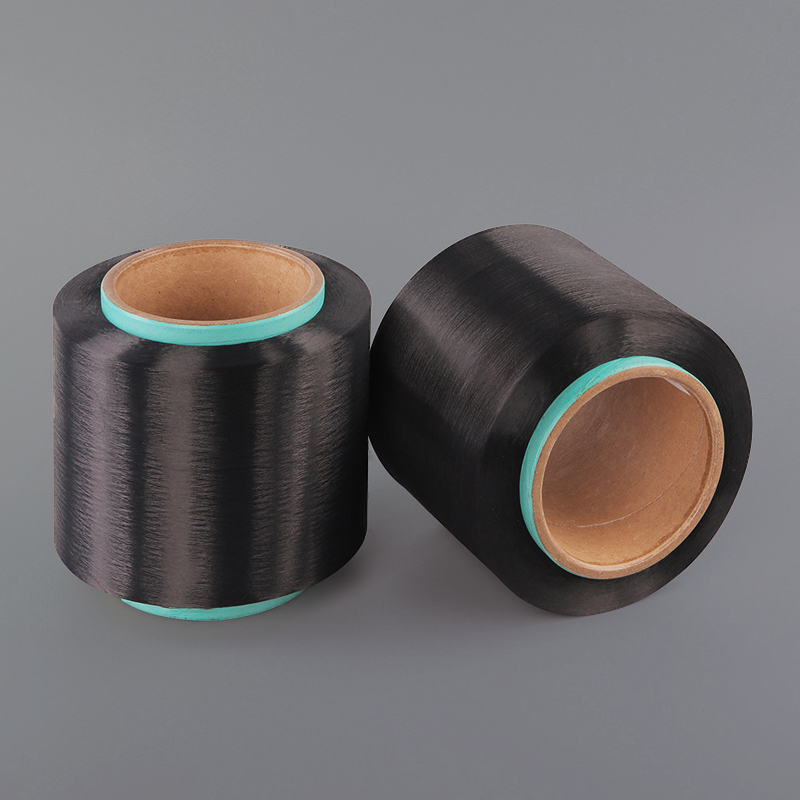
Anti Static Polyester Yarn Black
Anti-static polyester yarn is a functional polyester filament yarn treated or engineered to reduce the generation and accumulation of electrostatic charge. Polyester is widely used in clothing, upholstery, industrial fabrics, knitted materials, carpets, and technical textiles because it offers good tensile strength, abrasion resistance, dimensional stability, and resistance to many common environmental conditions. However, polyester is also a relatively low-moisture fiber, which means that static electricity can build up easily, especially in dry environments.
An anti-static version modifies the electrical behavior of the yarn. Its lower resistance allows accumulated charge to dissipate more effectively rather than remaining concentrated on the surface of a fabric. When the yarn is knitted, woven, blended, or incorporated into a finished textile, it can help reduce static attraction, crackling, uncomfortable shocks, dust attraction, and electrostatic discharge risks.
Anti Static Polyester Yarn Black is designed around four central performance principles:
1. Low resistance: The yarn reaches a resistance value of 10⁶ Ω/cm, supporting effective static charge suppression.
2. Long-lasting performance: The anti-static effect is intended to remain useful during repeated use and washing.
3. Heat and water resistance: The polyester fiber maintains its structure and functional properties under normal textile processing, cleaning, and service conditions.
4. Low humidity dependence: The static suppression effect is not highly dependent on atmospheric humidity, allowing more consistent use in dry climates and low-humidity production areas.
These characteristics make the yarn different from ordinary polyester yarn treated only with a temporary surface finish. The product is intended for applications where performance must remain stable beyond the first few uses or washes.
The yarn is offered in a practical range of standard deniers for different fabric constructions. Lower-denier yarns may be selected for lightweight, fine, or breathable materials, while higher-denier yarns may be more suitable for fabrics requiring greater body, coverage, or durability. Customers can also request special deniers when their fabric design, machine settings, production volume, or end-use requirements fall outside the standard range.
| Item | Specification | Production and Application Significance |
|---|---|---|
| Yarn type | FDY, Fully Drawn Yarn | Suitable for direct textile processing and stable filament performance |
| Color | Black | Provides a consistent dark appearance and supports technical textile designs |
| Standard deniers | 20D / 40D / 60D | Offers choices for lightweight, medium, and more substantial fabric constructions |
| Custom deniers | Available upon request | Supports special machine settings, fabric structures, and customer specifications |
| Resistance | 10⁶ Ω/cm for black yarn | Provides a defined electrical performance target for static control |
| Production mode | Special specifications produced to order | Enables flexible development and customized manufacturing |
| Shipping location | Shanghai Port, China | Supports domestic and international logistics arrangements |
Because yarn selection affects fabric weight, handle, coverage, appearance, air permeability, and processability, buyers should select the denier according to the intended textile structure. A technical sales or product development discussion can help determine whether 20D, 40D, 60D, or a custom specification is most appropriate.
The most important technical advantage of anti-static yarn is its ability to reduce electrical resistance compared with standard polyester yarn. The stated resistance value of 10⁶ Ω/cm for the black yarn provides a measurable reference for performance evaluation. Lower resistance can help charges move away from locations where they would otherwise accumulate, reducing the likelihood of sudden discharge or persistent surface attraction.
In clothing, static accumulation may cause fabric cling, uncomfortable shocks, hair attraction, and dust retention. In cleanrooms, it may attract particles to garments or work surfaces. In electronics manufacturing, electrostatic discharge can affect sensitive components even when the event is not visible to the operator. In chemical and petrochemical environments, static sparks may create a serious ignition hazard when flammable vapors, gases, or dust are present.
The yarn does not eliminate every possible source of static electricity, and complete static-control programs generally require appropriate garments, grounding systems, footwear, work surfaces, humidity control, and operating procedures. However, using a yarn with defined anti-static properties can be an important part of a wider electrostatic discharge management strategy.
A measurable resistance value also helps customers establish a clearer purchasing and quality-control standard. Rather than relying only on general claims such as “anti-static,” buyers can request test information, confirm the test method, and compare production batches against an agreed specification.
One of the limitations of some conventional anti-static textile treatments is that their performance may decrease after repeated washing, abrasion, exposure to heat, or extended use. If the antistatic effect is located mainly on the outer surface of the fiber, laundering and mechanical wear may gradually remove or weaken the treatment. This can increase replacement frequency and create uncertainty for industrial users.
Anti Static Polyester Yarn Black is developed to provide a more durable functional effect. The product information indicates that repeated washing does not prevent the fiber from maintaining its static suppression performance. This durability is especially valuable for workwear, uniforms, cleanroom garments, medical textiles, reusable protective fabrics, carpets, and other products that must withstand regular cleaning.
Long-lasting performance can provide several practical benefits. First, the finished textile can continue to perform its intended function during a longer service life. Second, manufacturers and users may reduce the need for frequent re-treatment. Third, product performance becomes easier to manage because the anti-static property is associated with the yarn used in the textile structure rather than depending solely on a temporary finishing step.
Actual service life depends on the fabric construction, washing chemistry, temperature, mechanical action, drying conditions, abrasion, blending ratio, and final application. For critical applications, customers should conduct validation tests using their own finished fabric and care process. The yarn’s durability provides a strong starting point for this evaluation.
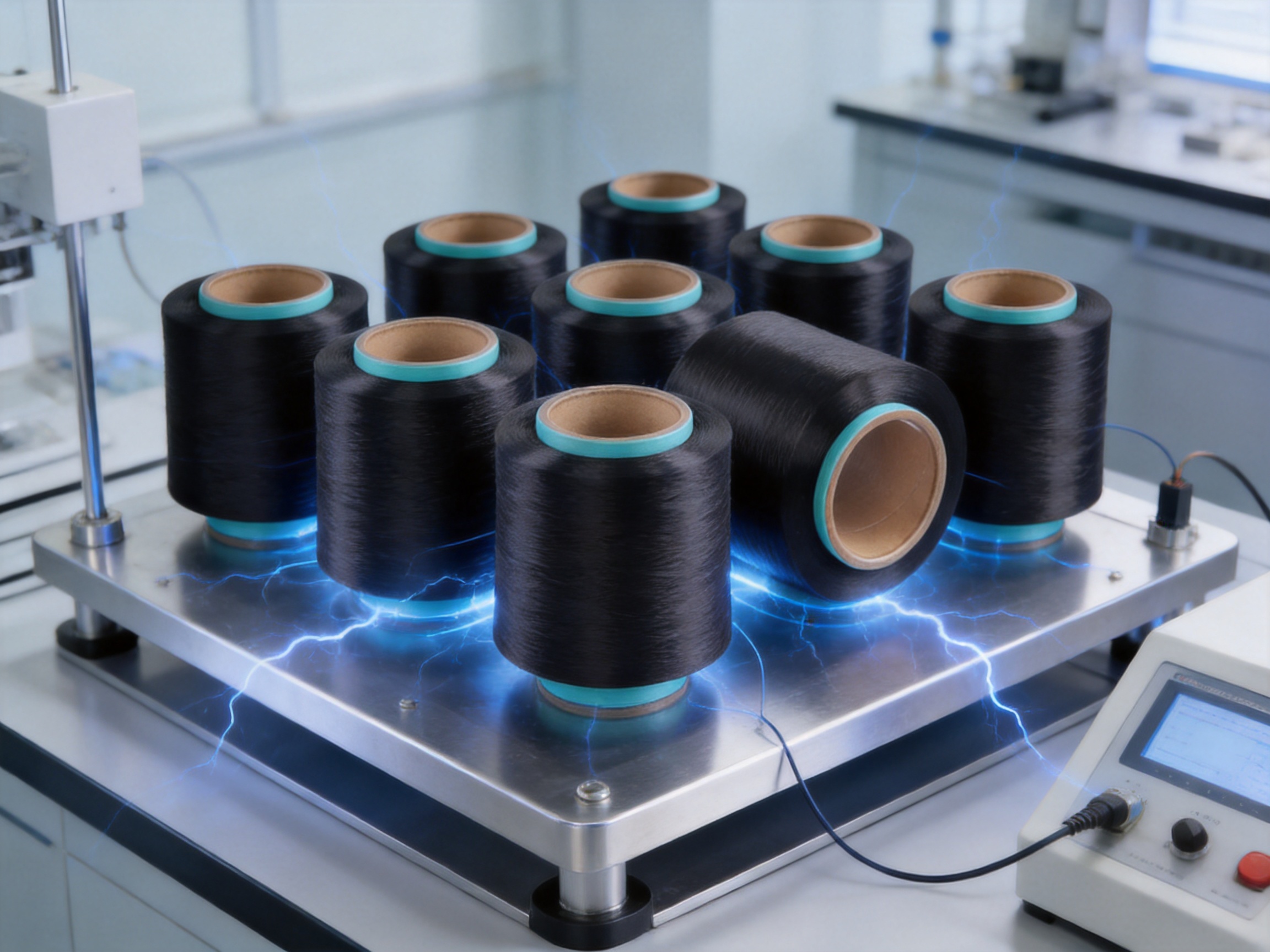
Polyester is valued in textile manufacturing partly because it maintains useful mechanical and dimensional properties under a wide range of processing conditions. Anti Static Polyester Yarn Black retains the basic advantages of polyester while adding a functional electrical property. Its heat resistance supports common textile processes, although exact operating limits should always be confirmed against the customer’s equipment and process parameters.
Heat resistance is relevant during knitting, weaving, dyeing, drying, heat setting, finishing, and garment production. A yarn that loses its functional properties during ordinary processing would be difficult to use commercially. The product is therefore intended to maintain stable structure and static suppression performance during normal textile manufacturing and service environments.
Water resistance and wash durability are also important. Workwear, cleanroom clothing, carpets, curtains, and household textiles may be exposed to moisture, detergents, or repeated laundering. The supplied product information indicates that the fiber can maintain its static suppression performance after repeated washing. This makes it suitable for reusable products where hygiene, cleanliness, and functional retention are all required.
Heat and water resistance should not be interpreted as unlimited resistance to every chemical, temperature, or cleaning procedure. Each final product should be tested under its actual conditions of use. Nevertheless, the combination of polyester durability and anti-static functionality provides a useful platform for demanding textile applications.
Humidity has a major influence on static electricity. In humid air, a thin layer of moisture may help charges dissipate from a textile surface. In dry air, especially during winter or in air-conditioned production areas, static charges can remain for longer periods. Conventional anti-static materials may therefore provide inconsistent results when humidity changes substantially.
A major advantage of this yarn is its weak dependence on humidity. The static suppression effect is designed not to rely primarily on atmospheric moisture. As a result, it can continue to help manage static electricity in low-humidity conditions where ordinary polyester may show a greater tendency to cling, attract dust, or generate unpleasant discharges.
This characteristic is valuable for customers serving different geographical markets. A garment or interior textile manufactured in a humid coastal region may later be used in a dry inland or winter environment. A material with more stable low-humidity performance can provide greater confidence across these changing conditions.
Low-humidity suitability is particularly relevant to semiconductor facilities, electronics assembly plants, precision instrument production, cleanrooms, server rooms, offices, dry warehouses, and heated buildings. It may also benefit household and commercial carpets, where friction between footwear and fibers can produce electrostatic charges.
Ordinary polyester filament yarn offers many useful properties, but it is not specifically designed to control static charge. In dry conditions, standard polyester may generate or retain electrostatic energy through friction. This can lead to fabric cling, dust attraction, shocks, and electrostatic discharge. Anti Static Polyester Yarn Black addresses this limitation by incorporating a defined low-resistance performance into the yarn specification.
Compared with ordinary polyester, the functional yarn provides the following advantages:
Defined electrical performance: The stated resistance value of 10⁶ Ω/cm gives buyers a clear reference point for static-control requirements.
Better low-humidity behavior: The static suppression effect is less dependent on atmospheric humidity than many conventional approaches.
Improved durability: The yarn is designed to retain useful performance after repeated washing and continued use.
Broader technical suitability: It can be considered for garments, protective fabrics, cleanroom materials, industrial textiles, carpets, interiors, and other functional products.
Flexible product development: Standard deniers are available, while special deniers can be produced according to customer requirements.
Consistent visual identity: The black color can be used directly in dark technical fabrics or blended into designs where a dark functional component is desired.
These advantages can reduce dependence on post-production anti-static finishes. Finishes may still be useful in some product designs, but starting with a functional yarn can simplify the performance strategy and improve durability throughout the textile’s service life.
Surface treatments are commonly used to modify textile behavior. They may be easy to apply and can provide initial anti-static effects, but their performance may be influenced by washing, abrasion, chemical exposure, migration, and humidity. A treatment that is removed from the surface may leave the textile with reduced functionality.
Using an anti-static yarn as part of the fabric structure can offer a more integrated approach. The yarn is present throughout the textile rather than existing only as a thin external layer. This can support more persistent performance and may reduce the risk that the entire anti-static function disappears after surface wear.
For manufacturers, an integrated yarn solution can also provide greater flexibility during product design. The yarn can be woven or knitted into selected areas, blended with other polyester yarns, or incorporated into a technical construction according to the required electrical performance and fabric appearance. The final arrangement should be developed according to the application, because static performance depends on yarn placement, blend ratio, fabric density, grounding, and finishing.
The yarn should not be considered a universal replacement for every finish or every static-control component. Instead, it is a valuable material option for manufacturers seeking a durable and measurable functional foundation.
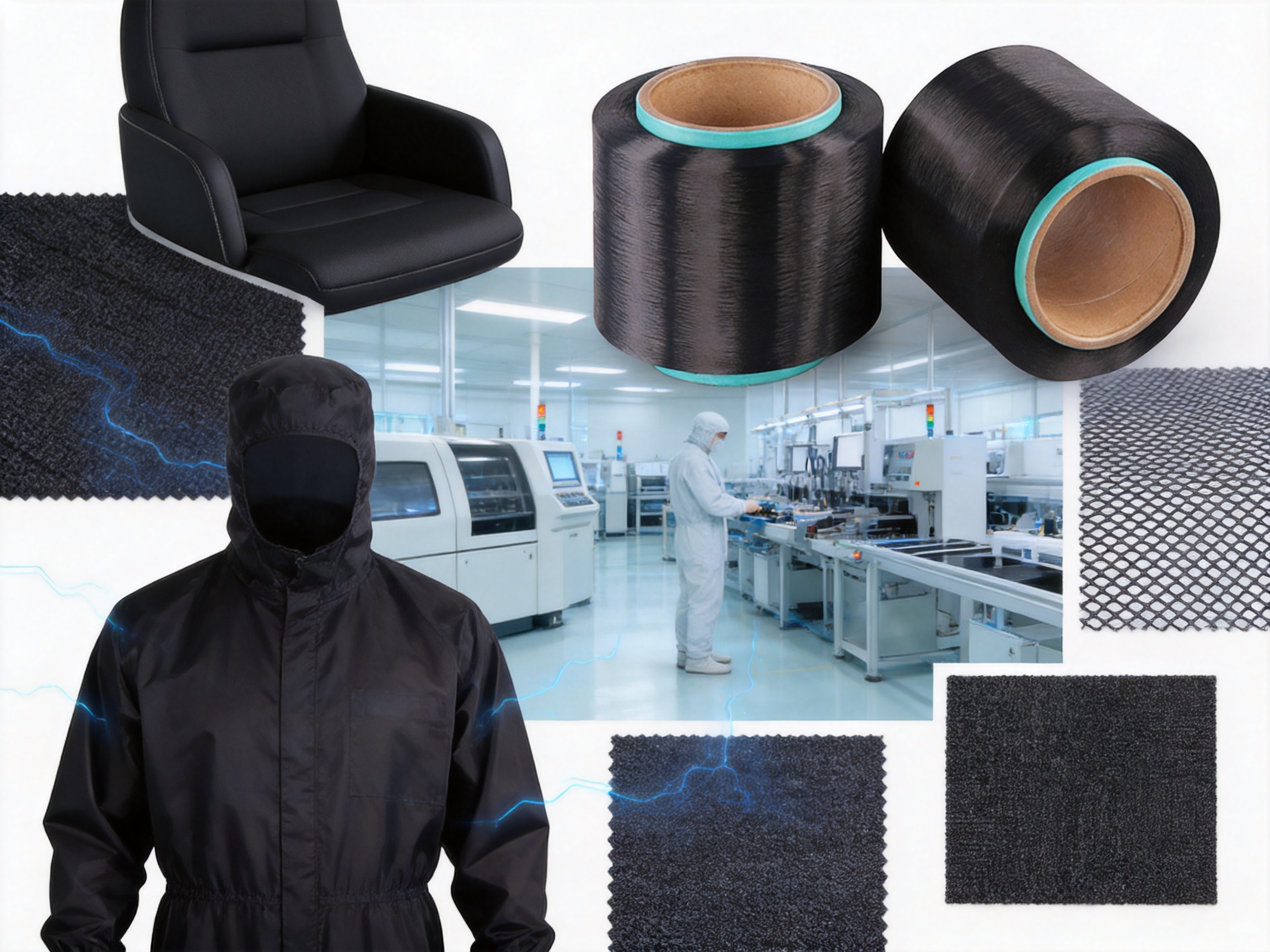
Anti-static workwear is used in environments where static electricity may affect workers, products, equipment, or safety. Garments can be manufactured with anti-static woven or knitted fabrics made using this yarn. Potential products include jackets, trousers, coveralls, shirts, vests, caps, gloves, and other workwear components.
In electronics manufacturing, anti-static garments help limit charge accumulation around sensitive components. In semiconductor fabs and precision instrument facilities, reducing static can also help minimize the attraction of airborne particles. In pharmaceutical, medical, and clean manufacturing environments, functional garments may contribute to a more controlled production area when combined with suitable garment construction and operating procedures.
Garment designers can select 20D, 40D, 60D, or custom deniers according to desired weight, softness, coverage, and durability. Lightweight constructions may be suitable for breathable garments, while more substantial constructions may be selected for protective outerwear or hard-wearing uniforms.
Static control is a critical consideration in petrochemical, chemical processing, paint manufacturing, powder handling, grain processing, and other environments where combustible gases, vapors, or dust may be present. Friction between garments and other surfaces can create a charge. If the charge discharges as a spark, it may create a hazard under the wrong conditions.
Anti-static polyester yarn can be used in protective fabrics designed to reduce charge accumulation. The finished garment must still comply with the applicable safety standards and should be assessed as a complete system. Yarn selection alone does not establish certification. Garment construction, seams, accessories, grounding, footwear, and workplace procedures all influence the final performance.
The yarn’s low-humidity suitability is particularly relevant in dry processing areas. It can help manufacturers develop protective textiles that maintain a more stable anti-static function across seasonal or regional changes.
Cleanroom garments must balance cleanliness, comfort, durability, and static control. Static charges can attract particles to garment surfaces and may interfere with sensitive production environments. Anti Static Polyester Yarn Black can be incorporated into fabrics for cleanroom coveralls, coats, hoods, shoe covers, and accessories.
Medical and laboratory clothing may also benefit from reduced static cling and improved wearer comfort. Potential products include staff uniforms, laboratory coats, curtains, privacy materials, and specialized protective fabrics. The yarn’s black color may be suitable for selected uniforms or technical designs, although color requirements should be considered during product development.
For cleanroom and medical use, the finished textile must be evaluated for lint generation, particle release, sterilization compatibility, laundering, chemical resistance, and skin-contact requirements. Anti-static performance is one component of a broader product specification.
Automotive interiors contain many textile and polymeric components that can accumulate static charge through friction, movement, and contact with passengers. Seat fabrics, carpeting, door panels, headliners, trunk linings, and other interior materials may require controlled electrical behavior to improve comfort and reduce static discharge.
Anti Static Polyester Yarn Black can be considered for automotive textile constructions where a dark appearance and functional static management are desirable. The yarn’s polyester base supports common requirements related to abrasion, appearance retention, and dimensional stability. Automotive customers should evaluate fogging, odor, flammability, abrasion, colorfastness, heat aging, and compatibility with adhesives or coatings in addition to anti-static performance.
Custom deniers may be useful when a customer needs a specific fabric weight, surface texture, knitting pattern, or weaving construction. Special production by order allows the yarn to be developed for the technical requirements of a particular interior component.
The yarn can be blended with standard polyester filament yarns to develop fabrics that combine comfort, appearance, strength, and anti-static function. This approach may allow the manufacturer to adjust softness, elasticity, moisture management, opacity, cost, and electrical performance according to the end product.
In knitted fabrics, the yarn can be integrated into jersey, rib, interlock, warp-knit, mesh, spacer, or other constructions. In woven fabrics, it may be used in the warp, filling, or selected conductive stripes depending on the intended design. The optimum arrangement depends on the fabric’s electrical pathway, surface coverage, garment pattern, and connection to grounding systems.
Manufacturers should conduct fabric-level testing rather than relying only on yarn data. The final resistance and charge decay behavior may be affected by yarn ratio, fabric density, finishing chemistry, moisture content, garment design, and test conditions.
Carpets, rugs, office textiles, curtains, upholstery, and wall coverings can generate static through friction. This is particularly noticeable in offices, computer rooms, server rooms, commercial buildings, and dry residential interiors. Static shocks may be uncomfortable, while electrostatic discharge near sensitive equipment may be undesirable.
Anti Static Polyester Yarn Black can be used in carpet pile, backing systems, upholstery materials, or decorative fabrics designed to reduce static-related problems. The yarn’s dark appearance may support modern commercial interiors, technical spaces, transportation interiors, and industrial facilities.
Carpet manufacturers should consider pile height, construction, underlay, flooring, footwear, walking friction, humidity, and grounding when evaluating performance. The yarn can provide a functional contribution, but the complete flooring system determines the final user experience.
The manufacturer specializes in special and functional eco-friendly textile products and has operated as a textile factory in China since 2006. Its product portfolio includes biodegradable yarn, low melting yarn, ECDP yarn, anti-static yarn, HDPE yarn, bio-component yarn, and polyester filament yarn. This breadth indicates experience across multiple functional material categories rather than dependence on a single conventional product.
A broad product portfolio can support customers that are developing several textile functions at once. For example, a buyer may require anti-static performance for one fabric, low-melting bonding characteristics for another, and biodegradable content for a third. Working with a manufacturer familiar with different specialty yarn technologies can simplify communication, sampling, and technical coordination.
The company also cooperates with customers to develop new materials. This is important for projects that cannot be solved by selecting a standard catalog item. New product development may involve adjusting denier, color, filament structure, blend compatibility, production parameters, electrical properties, or end-use performance.
Special specifications are produced by order. This production model gives customers an opportunity to request deniers outside the regular 20D, 40D, and 60D range. It may also support applications requiring a particular fabric hand, appearance, weight, machine setting, or electrical target.
The production of functional yarn requires more than ordinary filament spinning. The yarn must combine physical textile performance with a measurable electrical property. Manufacturing control therefore needs to address polymer preparation, spinning stability, filament formation, drawing, winding, package quality, cleanliness, and electrical consistency.
Although detailed proprietary process parameters are not disclosed, the product information emphasizes advanced anti-static treatment technology, special production capability, customer development, and strict quality control. These strengths support a manufacturing approach focused on repeatability and application-specific performance.
A responsible quality program for anti-static yarn may include checks on denier, appearance, filament uniformity, package formation, tensile behavior, elongation, winding quality, and resistance. Electrical testing should be performed under controlled conditions, because temperature and humidity can affect measurement results. Customers should request the applicable test method and sampling procedure when comparing suppliers or approving production batches.
Process consistency is especially important for customers operating high-speed knitting, weaving, warping, or texturing equipment. Uneven yarn behavior can cause breaks, streaks, bars, tension variation, or fabric defects. Stable FDY performance helps downstream manufacturers maintain production efficiency while adding anti-static functionality.
Quality control should continue beyond the yarn stage. Development samples should be tested in the final fabric construction, after dyeing and finishing, and after representative washing or wear cycles. This confirms that the yarn’s functional properties are compatible with the customer’s actual production process.
Standard counts provide a convenient starting point, but specialty textile projects often require more precise specifications. A lightweight lining fabric, a technical mesh, a dense protective fabric, and a carpet construction may all need different yarn characteristics. Custom denier production can help customers align yarn selection with machine capability and finished-product objectives.
Customization discussions may include:
Desired denier and filament arrangement.
Fabric construction, including knitting or weaving method.
Target resistance and test conditions.
Required blend ratio with conventional polyester or other fibers.
Color and visual appearance.
Washing, heat-setting, drying, or finishing conditions.
End-use environment and expected service life.
Order quantity, sampling requirements, and delivery schedule.
Special production by order is particularly useful for customers who require a technical material without committing to a completely new fiber platform. It allows the manufacturer to adapt the product to an existing textile process while preserving the core anti-static function.
Black is one of the most widely used colors in technical, industrial, automotive, protective, and commercial textiles. It can provide a professional appearance, conceal certain types of surface contamination, and coordinate easily with other dark materials. Black yarn is suitable for workwear, automotive interiors, carpets, bags, protective covers, and functional knitted fabrics.
The black color also makes the product easy to identify within a production system. Manufacturers can use it as a dedicated functional component or blend it with other yarns in a controlled pattern. Depending on the application, black anti-static yarn may be used throughout the fabric or positioned selectively in stripes, grids, panels, or conductive pathways.
Color consistency remains important. Customers should confirm shade requirements, package labeling, and compatibility with dyeing or finishing processes before mass production. If a different color is required, the possibility should be discussed during the technical development stage.
Functional textile development increasingly includes environmental considerations. The manufacturer’s portfolio covers biodegradable yarn, bio-component yarn, low-melting yarn, ECDP yarn, HDPE yarn, anti-static yarn, and polyester filament yarn. This product range reflects an emphasis on special and functional eco-friendly textile materials.
Anti-static performance and sustainability are separate technical attributes, and a customer should evaluate both independently. Polyester yarn can contribute to long service life, reduced replacement frequency, and durable product performance. Longer service life may support resource efficiency, but environmental evaluation should also consider raw materials, production energy, transport, washing, recycling options, and disposal.
For customers seeking a combination of static control and environmental characteristics, the manufacturer’s broader development capability may provide a useful basis for exploring alternative material structures. Any environmental claim should be supported by appropriate product data and a clearly defined assessment method.
The product is shipped from Shanghai Port, China. Shanghai is a major international logistics center with access to domestic transport networks, container services, and global trade routes. This can support customers importing specialty yarn for textile production in Asia, Europe, North America, South America, the Middle East, Africa, and other regions.
Reliable logistics planning is important for functional yarn because production schedules may depend on coordinated delivery to knitting, weaving, dyeing, garment, or finishing facilities. Buyers should discuss packaging, minimum order quantities, sampling, lead time, production-by-order arrangements, documentation, and shipping terms before placing a commercial order.
For custom deniers, planning ahead is especially important. Special production may require technical confirmation, sample approval, production scheduling, and quality inspection before shipment. Early communication helps reduce delays and allows the customer to test the yarn in the intended fabric construction.
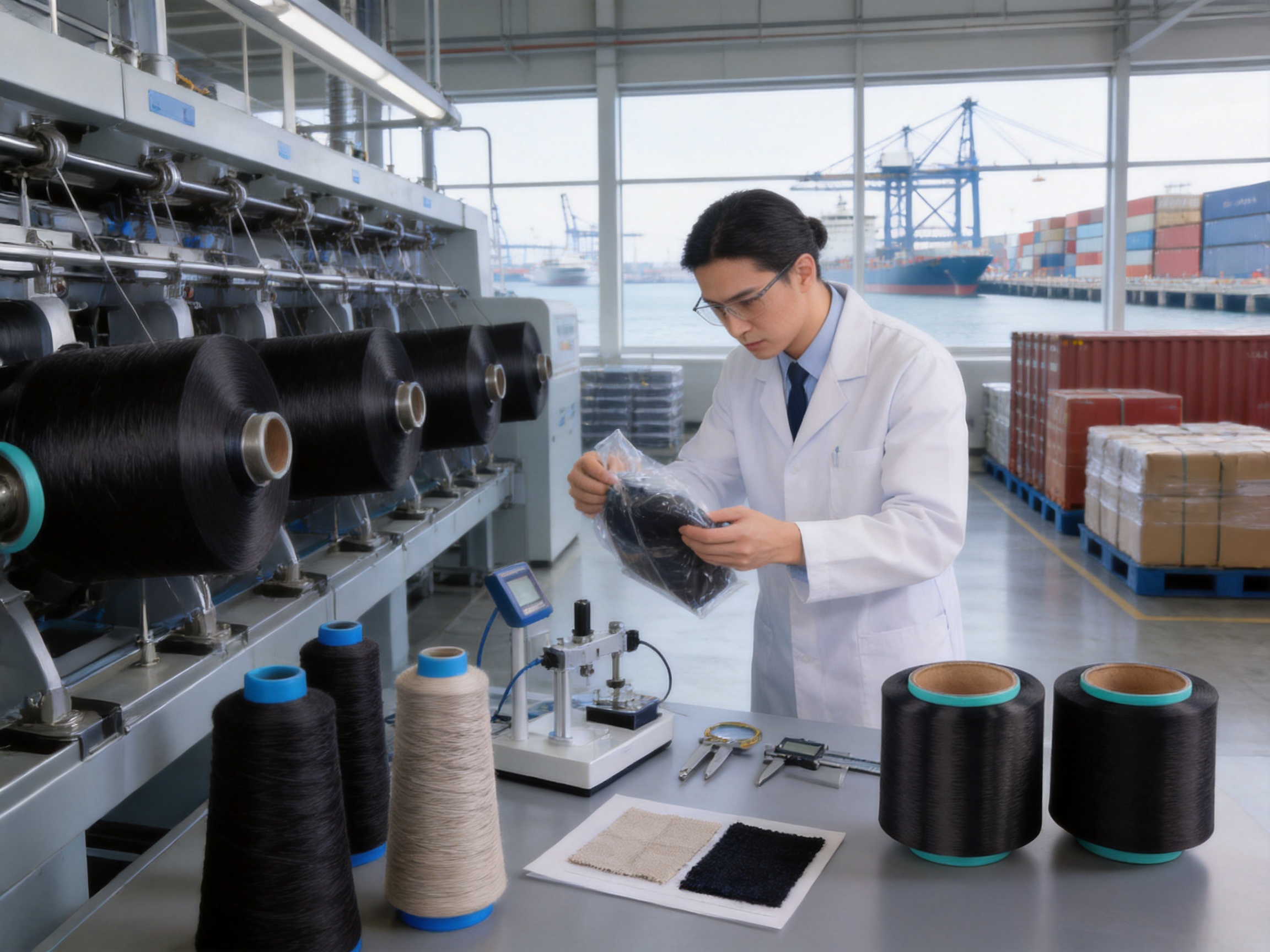
The 20D option may be considered for lightweight fabrics, fine knitted structures, breathable garments, thin linings, delicate mesh, and applications where a lower yarn mass is preferred. It may help preserve softness and lightness, although the final fabric must be tested for strength and coverage.
The 40D option provides a middle range for many general-purpose technical and apparel fabrics. It may offer a balance between flexibility, coverage, processability, and durability. It can be considered for workwear panels, knitted fabrics, lining materials, and interior textile constructions.
The 60D option may be selected for fabrics requiring a more substantial yarn presence, greater coverage, increased body, or higher resistance to handling and abrasion. Potential applications include heavier workwear, protective materials, automotive textiles, and interior products.
These are general selection guidelines rather than fixed rules. The most suitable denier depends on the fabric design, machine gauge, stitch density, warp and weft settings, blend ratio, and final performance requirements. Custom deniers can be discussed when standard specifications do not achieve the desired result.
A structured development process can help customers achieve reliable results. The first step is to define the static-control objective. The customer should determine whether the priority is reducing fabric cling, controlling surface charge, protecting sensitive electronics, limiting dust attraction, or supporting a certified protective garment.
The second step is to choose a preliminary denier and fabric structure. Samples should be produced using the intended knitting or weaving equipment. If the yarn will be blended with conventional polyester, the blend ratio and distribution should be recorded carefully.
The third step is to measure yarn and fabric performance. Electrical resistance, charge decay, surface potential, tensile strength, elongation, abrasion, colorfastness, and dimensional stability may all be relevant. Measurements should be made under specified environmental conditions and repeated after washing or simulated use.
The fourth step is to evaluate the finished product in its real application. A garment should be tested as a garment, not only as a fabric swatch. A carpet should be evaluated with the intended underlay and footwear. A cleanroom textile should be assessed for particle release and laundering. An automotive fabric should be tested under heat, abrasion, and aging conditions.
The final step is to establish quality-control criteria for mass production. These criteria may include resistance range, denier tolerance, package appearance, tensile performance, visual inspection, and sampling frequency. Clear specifications help both supplier and buyer maintain stable results.
Anti-static yarn performs most effectively when it is integrated thoughtfully into the fabric. A manufacturer may use it throughout the construction or place it at selected intervals. The correct approach depends on the required static pathway, fabric geometry, grounding arrangement, and end-use standards.
In garments, seams, closures, trims, labels, elastic components, and accessories can interrupt electrical continuity. In carpets, backing and floor contact influence charge dissipation. In cleanrooms, footwear and grounding systems may be as important as the textile itself. These factors should be considered during design rather than after the garment or fabric has been completed.
Finishing processes can also influence performance. Coatings, softeners, water repellents, resins, and other chemicals may change surface resistance or interfere with charge movement. Therefore, final testing should be performed after all relevant treatments have been applied.
It is an FDY, or Fully Drawn Yarn, polyester filament yarn with anti-static functionality and a black color. It is designed for use in knitted, woven, blended, and technical textile applications.
The regular options are 20D, 40D, and 60D. Special deniers can be produced by order according to the customer’s technical requirements.
The specified resistance value for the black yarn is 10⁶ Ω/cm. Customers should confirm the applicable test method, environmental conditions, and acceptable tolerance when approving the product for a specific application.
The product is designed to maintain its static suppression performance after repeated washing. The final fabric should still be tested using the customer’s actual detergent, washing temperature, mechanical action, and drying process.
The product is designed to have weak dependence on humidity and to suppress static electricity effectively in low-humidity environments. Actual performance should be confirmed in the intended application and under the relevant environmental conditions.
It can be considered for cleanroom garments and related fabrics because static control can help reduce charge accumulation and particle attraction. Cleanroom suitability also requires evaluation of lint, particle release, laundering, sterilization, garment design, and applicable standards.
It can be used as a material option for protective fabrics where static control is important. However, the complete garment must be assessed for the relevant safety requirements, including flammability, chemical exposure, grounding, and workplace procedures.
Yes. It can be blended with standard polyester yarns to create fabrics combining conventional textile properties with anti-static function. The required blend ratio should be established through fabric-level testing.
Black is suitable for many technical, industrial, automotive, protective, carpet, and interior applications. It provides a professional dark appearance and can be used as a visible or selectively integrated functional component.
Yes. Special deniers and other product requirements can be discussed for production by order. Customers should provide details about fabric construction, equipment, electrical targets, end use, and expected quantity.
No. Yarn is only one component of a complete static-control system. Proper grounding, conductive footwear, work surfaces, garment design, humidity management, and operating procedures may also be required.
The product is shipped from Shanghai Port, China. Customers should confirm shipping terms, packaging, lead time, documentation, and order requirements during the purchasing process.
Potential industries include electronics, semiconductors, precision instruments, clean manufacturing, chemical processing, petrochemicals, automotive interiors, protective clothing, medical textiles, office interiors, server rooms, carpeting, and technical fabric production.
The principal reason to select Anti Static Polyester Yarn Black is the combination of measurable electrical performance and practical polyester processing characteristics. The resistance value provides a defined technical target, while the FDY construction supports common textile manufacturing routes. Long-lasting performance, wash durability, heat resistance, and low-humidity suitability further extend its potential value.
The product also benefits from manufacturing flexibility. Standard counts can support routine procurement, while custom deniers allow the yarn to be adapted to specialized fabric designs. Special production by order is useful for customers developing new garments, technical fabrics, automotive materials, carpets, or interior products.
The manufacturer’s experience in special and functional textile materials provides an additional advantage. Its product range includes several advanced yarn categories, and its cooperation with customers on new materials supports application-specific development. Rather than treating every project as a standard commodity order, this capability can help customers solve technical challenges through sampling, adjustment, and collaborative development.
For international buyers, production from China and shipment through Shanghai Port provide access to established supply routes. Combined with technical customization and a broad functional product portfolio, this creates a practical supply option for companies seeking reliable anti-static polyester yarn.
Anti Static Polyester Yarn Black is a functional FDY polyester yarn developed for applications where static electricity must be reduced and controlled. Its low resistance value of 10⁶ Ω/cm, long-lasting anti-static performance, resistance to heat and water, and weak dependence on humidity make it suitable for demanding textile environments.
The yarn is available in standard 20D, 40D, and 60D counts, with custom deniers available by order. It can be used in anti-static workwear, cleanroom garments, protective fabrics, automotive interiors, knitted and woven fabrics, carpets, curtains, upholstery, and other technical textile products.
Its advantages over conventional polyester include a defined electrical performance, improved suitability for dry environments, greater durability after washing, and a flexible approach to functional fabric development. Compared with temporary surface treatments, integrating anti-static functionality into the yarn can support a more durable and consistent product strategy.
Supported by experience in special and functional eco-friendly textile products, advanced anti-static treatment technology, customer cooperation, custom production, and quality-control procedures, the manufacturer is positioned to serve both standard procurement and specialized material-development projects. Customers should evaluate the yarn in their own fabric and end-use conditions, but it offers a strong foundation for reliable static management across a wide range of modern textile applications.
1. Product specification information for Anti Static Polyester Yarn Black, including FDY construction, standard deniers, resistance value, production mode, and shipping location.
2. Technical information supplied for anti-static performance, repeated washing, heat and water resistance, and low-humidity suitability.
3. General principles of electrostatic discharge control in textile, electronics manufacturing, cleanroom, chemical processing, and industrial workwear applications.
4. General polyester filament yarn manufacturing and textile processing principles, including denier selection, knitting, weaving, finishing, and fabric-level testing.
5. General quality-control practices for functional yarns, including electrical resistance testing, denier inspection, tensile evaluation, package inspection, and batch consistency assessment.
It is made with Bio-base PLA, fully biodegradable Feature: 1. Industrial compost product 2. Made with PLA 3. Eco-frie...
READ MOREPlease fill out the form below and our team will contact you as soon as possible.
Addres: No.66 Qiaogang Road, Haian, Nantong City, Jiangsu Province, China
E-mail: service@gcfiber.com admin@gcfiber.com
Copyright ? GC FIBER All Rights Reserved. Eco-Friendly Textile Products Manufacturer Biodegradable Yarn Company