English
 中文简体
中文简体It is made with Bio-base PLA, fully biodegradable Feature: 1. Industrial compost product 2. Made with PLA 3. Eco-frie...
READ MORE
Content
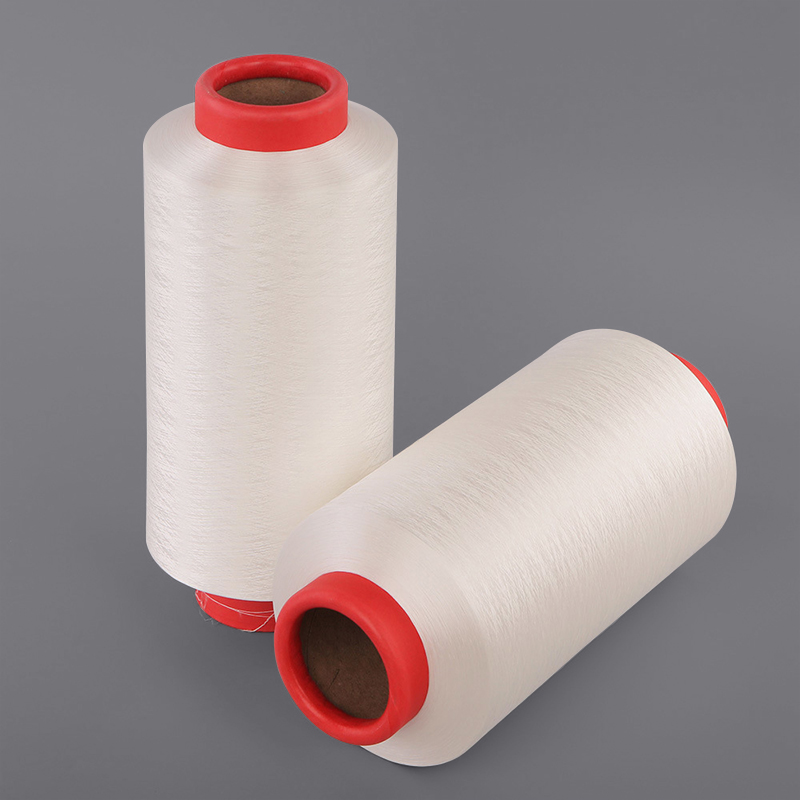
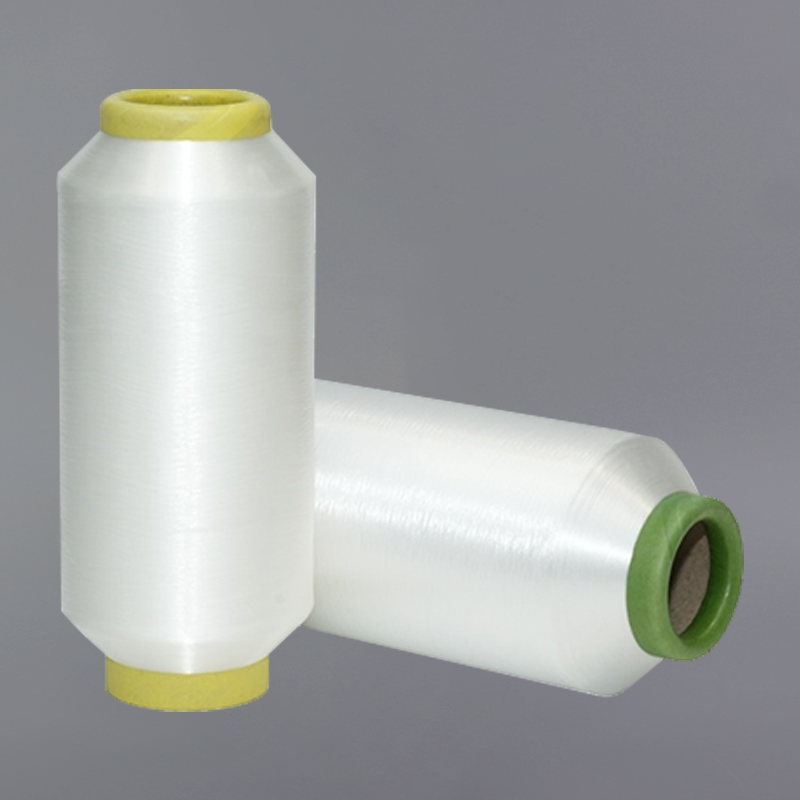
Pure Polyester Low Melting Yarn 110°C is a thermally fusible textile material developed for applications that require reliable bonding, structural stabilization, clean processing, and compatibility with polyester-based fabrics. Made from low-melting polyester, this yarn activates at approximately 110°C and forms a stable bond when exposed to controlled heat. After cooling, the bonded area becomes firm and secure, helping manufacturers fix fibers, stabilize fabric structures, prevent fraying, and create seamless textile constructions.
Unlike conventional adhesive systems that may require liquid chemicals, solvent-based products, hot-melt powders, or separate coating operations, low melting yarn can be incorporated directly into the textile structure. It is supplied in a familiar yarn form and can be processed through knitting, weaving, sewing, winding, braiding, and other textile operations before thermal activation. This makes it suitable for manufacturers seeking a cleaner, more integrated, and more controllable bonding method.
The product is available in a comprehensive range of counts, including 20D, 30D, 40D, 50D, 70D, 100D, 150D, 200D, and 300D. These options allow users to select a fine yarn for delicate lace, lingerie accessories, and lightweight knitted structures, or a heavier yarn for ropes, bonded sewing threads, cable protection, and industrial reinforcement.
Produced by NanTong Global Chemical Fiber Co., Ltd. under the GC FIBER product portfolio, the yarn reflects the company’s long-term focus on special and functional textile materials. Since 2006, the company has researched, developed, produced, and sold functional yarns, including biodegradable yarn, low melting yarn, ECDP yarn, anti-static yarn, HDPE yarn, bio-component yarn, and polyester filament yarn. Its experience in customized textile materials supports the development of stable products for both standard and specialized applications.
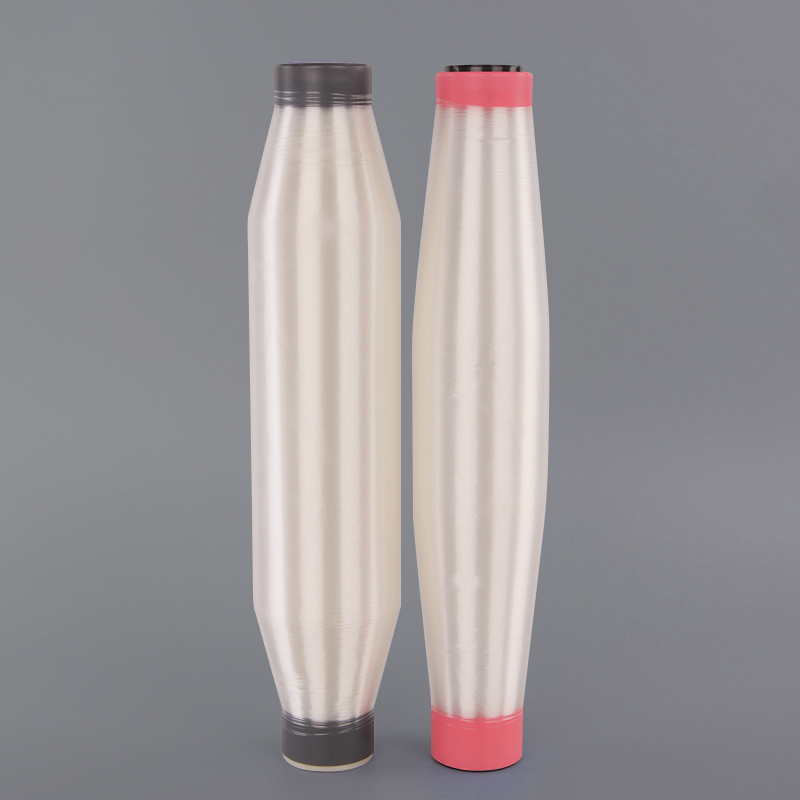
Pure Polyester Low Melting Yarn 110 Degree
Pure Polyester Low Melting Yarn is a thermoplastic polyester filament yarn engineered to soften and melt within a controlled temperature range. Its nominal melting or activation point is 110°C. When the yarn reaches the required temperature, its polymer structure becomes sufficiently soft to flow or fuse with adjacent fibers and textile surfaces. When the temperature decreases, the material solidifies and creates a bonded connection.
The yarn is different from ordinary polyester filament yarn because its primary function is not only to provide tensile strength or textile appearance. It also acts as a heat-activated bonding component. In a textile assembly, the yarn can serve as a structural thread, a reinforcement element, a stabilizing filament, or a thermally activated adhesive fiber.
The product is based on pure polyester rather than a mixed polymer system. This provides strong compatibility with polyester fabrics and polyester sewing materials. During dyeing, finishing, and thermal processing, polyester-based components generally demonstrate more consistent behavior when their chemical and thermal characteristics are closely matched. This can help reduce differences in shrinkage, surface appearance, and color absorption between the bonding yarn and the surrounding fabric.
Because the material is manufactured as a continuous filament yarn, it can be processed using conventional textile machinery. Manufacturers do not necessarily need to redesign their production lines around liquid adhesive application, powder distribution, or additional coating equipment. The yarn can be introduced at the knitting, weaving, sewing, winding, or braiding stage, followed by controlled heat activation at the appropriate point in the process.
The most important characteristic of the yarn is its controlled 110°C thermal activation profile. This temperature is low enough to support energy-conscious processing while remaining suitable for many industrial textile production lines. The yarn can be activated through heated presses, steam treatment, ovens, calenders, or other heating systems capable of delivering uniform thermal exposure.
Temperature control is essential. The heating system must provide enough energy to activate the yarn, while the exposure time, pressure, and surrounding material must be considered during production trials. When the correct conditions are selected, the yarn melts or softens evenly and then solidifies during cooling. This creates a repeatable bonding effect rather than an uncontrolled adhesive spread.
A defined activation temperature also improves production planning. Operators can establish standard operating conditions, evaluate bonding performance, and adjust line speed or heating time according to the fabric construction. The result is a more predictable process than manually applying an adhesive whose viscosity, quantity, and distribution may vary from batch to batch.
Although the yarn is designed to melt, it must remain strong and processable before activation. Pure Polyester Low Melting Yarn 110°C is engineered with high tenacity and good dimensional stability so that it can pass through winding, knitting, sewing, or other textile operations with reduced risk of breakage.
High tenacity is especially important in automated manufacturing. High-speed equipment places repeated tension on yarns during unwinding, guiding, stretching, and insertion. A yarn with insufficient strength may cause frequent stops, defective seams, uneven fabric structures, and higher labor costs. The product’s strong filament structure supports continuous operation and helps improve production efficiency.
The yarn is also designed for easy rewinding. Smooth rewinding is important when converting supply packages into formats suitable for circular knitting machines, sewing equipment, braiding machines, or special textile production lines. Good winding behavior helps maintain stable package density, consistent unwinding tension, and fewer interruptions during downstream processing.
The use of polyester as the primary material gives the yarn a natural advantage when bonding polyester fabrics, polyester sewing threads, polyester mesh, and other polyester textile components. Similar polymer characteristics can help create a more uniform bonded structure and reduce incompatibility between the adhesive yarn and the base material.
When a bonding yarn and a base fabric have significantly different shrinkage behavior, the finished material may develop puckering, distortion, delamination, or uneven surface tension. Polyester-to-polyester bonding can reduce these risks when the heating, pressure, and cooling conditions are properly controlled. It may also support a more consistent appearance during subsequent dyeing or finishing operations.
Compatibility is valuable in applications where appearance matters. Lingerie ribbons, lace, seamless garments, labels, and fashion accessories may require clean edges and smooth surfaces. A bonding yarn that integrates more naturally with the fabric can help manufacturers achieve a less visible joining line and a more professional final appearance.
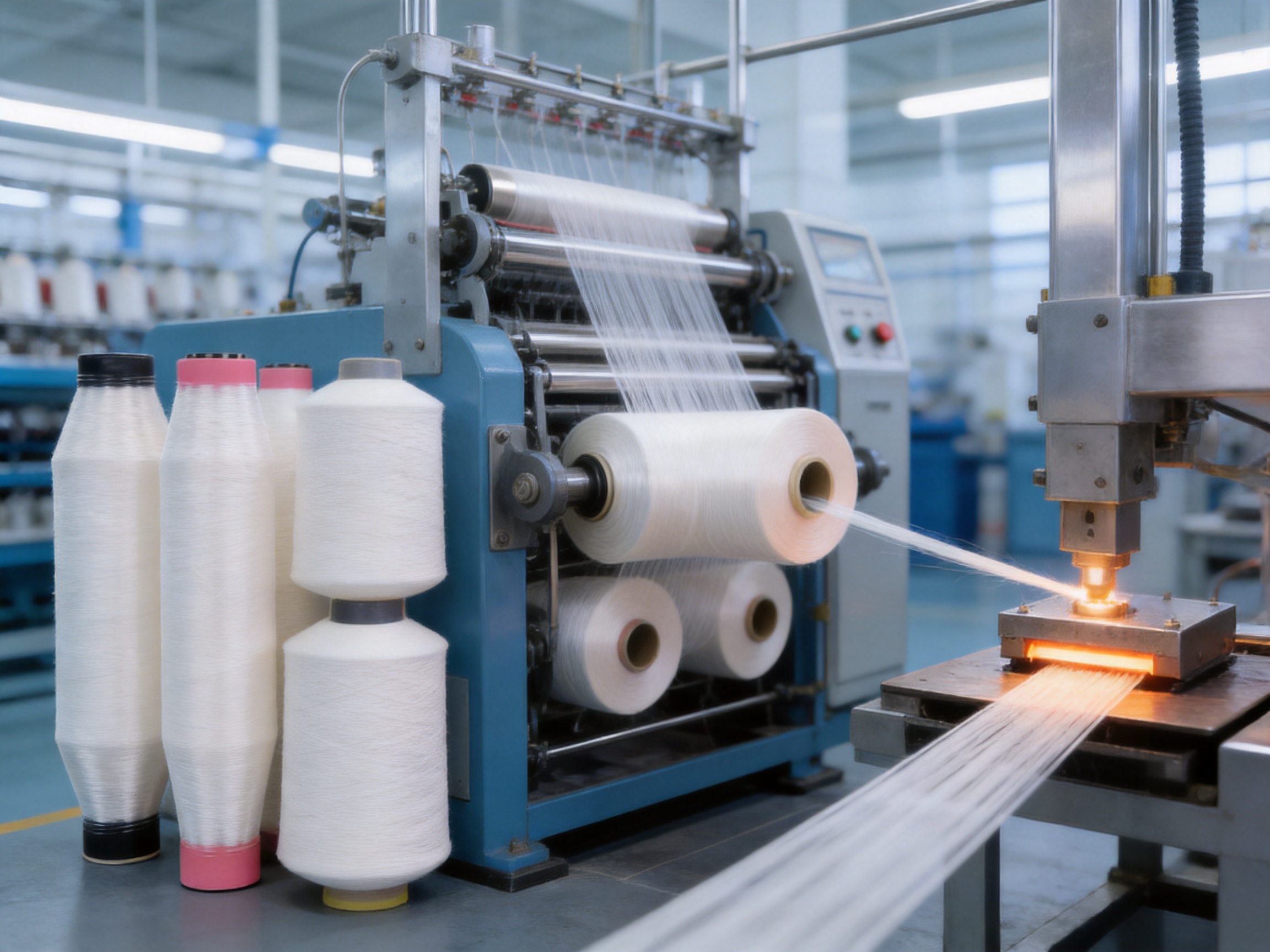
The yarn provides a solid-state alternative to many liquid bonding agents. It can replace or reduce the need for solvent-based glues, chemical sprays, and hot-melt powders in selected applications. Since the material is incorporated in yarn form, it can be positioned precisely in the textile construction before activation.
This approach may reduce problems associated with wet adhesive handling, including uneven coating, overspray, adhesive migration, drying time, contamination of machinery, and chemical storage. It also allows manufacturers to integrate bonding into existing textile processes instead of adding a separate liquid application stage.
The product is intended to support cleaner industrial production. As a thermoplastic polyester yarn, it does not require a solvent carrier for activation. This can help reduce the use of volatile chemical components in the bonding operation. Manufacturers should still evaluate their complete process, including heating emissions, ventilation, and workplace safety requirements, but the yarn offers a practical route toward more controlled adhesive-free or reduced-chemical processing.
Liquid adhesives can provide strong bonding, but they often require mixing, metering, coating, drying, and quality inspection. Their viscosity may change with temperature or storage conditions, and their application quantity must be carefully controlled. Too little adhesive can produce weak bonding, while too much can create stiffness, visible marks, bleeding, or a heavy hand feel.
Low melting yarn simplifies the adhesive delivery method. The bonding material is supplied as a measured filament and placed where bonding is required. This can reduce the risk of uncontrolled spreading and help maintain a more consistent bonding line. It also avoids the need to dry water or solvent carriers after application.
The yarn is particularly useful when a manufacturer needs localized bonding. Instead of coating an entire fabric surface, the operator can position the yarn along an edge, seam, reinforcement zone, or selected structural area. This may preserve more of the original fabric softness and air permeability.
Hot-melt powders can be effective in laminating and coating, but powder application may require specialized equipment to distribute the material evenly. Excess powder can create waste, while insufficient powder can result in incomplete bonding. Fine particles may also create housekeeping and handling challenges.
Yarn-form bonding material offers a more direct placement method. It can be knitted, sewn, woven, or wrapped into the product before heat activation. This is useful for three-dimensional structures, narrow textile components, ropes, cable sleeves, and decorative materials where a powder coating may be difficult to control.
A filament yarn also provides mechanical reinforcement before and after activation. Powder acts mainly as an adhesive, whereas low melting yarn can contribute tensile strength and structural support during textile processing. This dual function is an important advantage for manufacturers that need both bonding and reinforcement.
Nylon-based low-melting yarns are used in certain bonding applications, but polyester offers specific advantages when the surrounding material is polyester. The close material relationship may support more consistent heat behavior, dyeing compatibility, appearance, and long-term performance.
Pure Polyester Low Melting Yarn 110°C is positioned as a cost-effective alternative for applications where polyester compatibility and industrial durability are priorities. It offers high tenacity, resistance to wear, and good resistance to common environmental influences. The specific performance of any bonding system depends on fabric construction, activation conditions, and end-use requirements, but polyester provides a strong foundation for many textile assemblies.
Mechanical joining methods such as sewing, tying, stitching, or stitching with conventional thread remain essential throughout the textile industry. However, mechanical joining may leave needle holes, bulky seams, exposed edges, or concentrated stress points. In some structures, it may be difficult to join complex three-dimensional shapes through sewing alone.
Thermal bonding can complement mechanical joining or, in selected cases, reduce the need for additional stitching. It may stabilize a seam, seal a cut edge, fix a core fiber, or hold a three-dimensional form in place. The result can be a cleaner appearance, improved shape retention, and more freedom in product design.
GC FIBER is focused on special and functional textile materials rather than only commodity yarn production. This specialization supports the development of yarns with targeted properties such as thermal bonding, biodegradability, anti-static performance, high strength, and material compatibility.
Functional yarn development requires a close relationship between polymer selection, spinning conditions, filament formation, heat treatment, winding, and end-use testing. Each stage influences the final performance. A low-melting yarn must activate at the intended temperature while maintaining sufficient strength during transportation and textile processing. This balance requires process control and practical knowledge of textile manufacturing.
The company’s product range includes low melting yarn alongside ECDP yarn, anti-static yarn, HDPE yarn, bio-component yarn, biodegradable yarn, and polyester filament yarn. This broader portfolio gives the company experience with different polymer systems and functional requirements. It also creates opportunities to develop combined or customized solutions for customers with specialized applications.
The production of a stable low-melting yarn begins with suitable polymer preparation. The polymer must be handled under controlled conditions so that moisture, temperature, viscosity, and melt stability remain within the appropriate production range. Consistent polymer quality helps support uniform filament formation and a reliable activation profile.
During spinning, the molten polymer is extruded through precision spinnerets to form continuous filaments. The extrusion temperature, throughput, cooling conditions, and drawing ratio influence denier, strength, elongation, and surface characteristics. For a yarn supplied in counts from 20D to 300D, production control is important because fine and coarse specifications require different process settings.
Cooling and drawing help establish the physical structure of the filament. The yarn must be strong enough for high-speed rewinding and textile processing, while retaining the thermal response required for later bonding. Excessive orientation may affect melting behavior, while insufficient orientation may reduce tenacity and processing stability. The manufacturing process therefore requires a carefully controlled balance between mechanical performance and thermal activation.
Uniform denier is essential for textile quality. Variations in filament thickness can lead to uneven tension, inconsistent appearance, weak points, and irregular bonding. Modern textile equipment depends on stable yarn geometry to maintain accurate feeding and reliable stitch or weave formation.
Package formation is another important quality factor. A well-formed package unwinds smoothly and reduces the possibility of loops, snags, slubs, or tension fluctuations. Easy rewinding allows the yarn to be prepared for specific machine formats and production requirements. This is particularly valuable for automated lines where an unstable package can reduce efficiency and increase waste.
NanTong Global Chemical Fiber Co., Ltd. has operated in the special textile field since 2006. Its experience includes research, development, production, and sales of functional and environmentally oriented textile products. Long-term manufacturing experience is important for buyers who need stable supply, technical communication, and support for custom specifications.
The company is located in Haian, Nantong City, Jiangsu Province, China. Its location provides access to China’s developed textile manufacturing ecosystem, including polymer suppliers, spinning equipment, downstream textile factories, logistics providers, and export infrastructure. Products can be arranged for shipment through Shanghai seaport, supporting international supply requirements.
In addition to standard product specifications, the company supports special production by order. This is useful when customers require a particular denier, package format, color, winding condition, or application-specific performance. Custom production should be confirmed through technical discussions and sample testing before mass production.
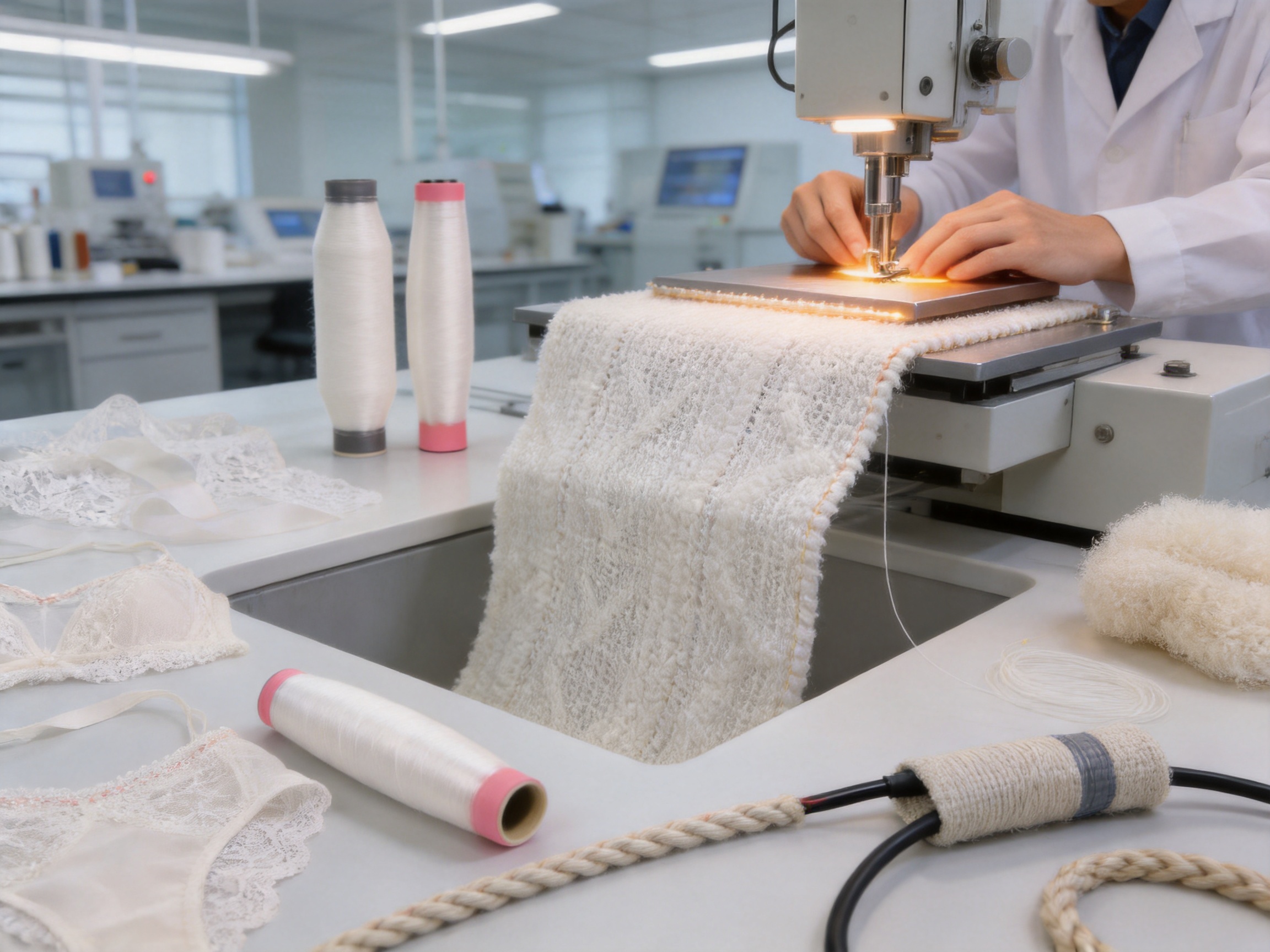
Pure Polyester Low Melting Yarn 110°C is available in a broad range of counts. The correct specification depends on the intended application, the required bonding quantity, the fabric weight, the desired flexibility, and the processing equipment.
| Available Count | Typical Positioning | Potential Application Direction |
|---|---|---|
| 20D | Very fine bonding filament | Fine lace, delicate lingerie components, narrow ribbons, and lightweight textile structures |
| 30D | Fine bonding and stabilization yarn | Lightweight knitted fabrics, labels, lace, and intimate apparel accessories |
| 40D | Lightweight functional yarn | Fine seams, decorative structures, and soft textile reinforcement |
| 50D | Balanced fine-count option | Underwear, ribbons, mesh, lace, and light three-dimensional knitted fabrics |
| 70D | Medium-light bonding yarn | Knitted structures, sewing applications, textile accessories, and shaped fabric components |
| 100D | General-purpose count | Three-dimensional fabrics, bonded sewing thread, chenille production, and apparel reinforcement |
| 150D | Medium-heavy structural yarn | Industrial textile reinforcement, ropes, cable protection, and heavier knitted constructions |
| 200D | Heavy bonding and reinforcement yarn | High-tension textile structures, industrial mesh, ropes, and technical fabric components |
| 300D | Heavy-duty functional filament | Industrial reinforcement, cable sleeves, heavy ropes, and applications requiring more bonding material |
The table provides general selection guidance rather than a fixed application standard. A fine count may be preferred where softness, low visual impact, and flexibility are important. A heavier count may be more suitable when the yarn must provide greater reinforcement, stronger edge fixation, or more substantial bonding coverage.
The nominal activation temperature is 110°C. Actual processing conditions should be established according to the equipment, fabric composition, pressure, line speed, and desired bond strength. A production trial is recommended because the temperature measured at the machine setting may differ from the temperature experienced by the yarn inside a multilayer textile structure.
Uniform heating is important. Localized overheating may cause excessive flow, surface marks, discoloration, or unwanted stiffness. Insufficient heating may leave the yarn only partially activated and result in weak or incomplete bonding. Manufacturers should record heating temperature, dwell time, pressure, cooling conditions, and line speed during pilot testing.
Pressure can improve contact between the low-melting yarn and the adjacent fibers. In a press, calender, or laminated construction, suitable pressure can help the softened polymer spread across the intended interface. In a knitted or woven structure, the yarn placement and surrounding fiber density may provide the necessary contact.
Too much pressure may force the melted polymer beyond the intended bonding area or flatten the textile structure. Too little pressure may leave gaps between the yarn and the material being bonded. The correct balance depends on the product design and should be determined through testing.
After activation, the bonded material should be allowed to cool under suitable tension and shape control. Cooling allows the polymer to solidify and lock the textile structure in place. If the product is moved or stretched before the bond has stabilized, the final shape may not meet specification.
For three-dimensional knitted fabrics and shaped apparel components, cooling conditions can influence dimensional stability. Manufacturers may use molds, forms, controlled tension, or fixtures to hold the desired geometry while the bonding yarn sets.
Before full-scale production, users should evaluate peel strength, tensile strength, washing resistance, heat aging, flexibility, appearance, dimensional stability, and compatibility with dyes or finishing agents. The appropriate testing program depends on the end use.
Testing should include the complete textile assembly rather than only the yarn. A bonding result is influenced by fabric weight, fiber type, stitch density, yarn placement, pressure, heating time, and cooling. A successful laboratory result should therefore be confirmed on the intended production equipment.
Three-dimensional knitted fabrics require structural control because the fabric may contain raised areas, internal cavities, connecting layers, or shaped zones. Pure Polyester Low Melting Yarn 110°C can be integrated into selected areas and activated to stabilize the three-dimensional form.
In footwear uppers, athletic mesh, and performance textiles, the yarn may help reinforce zones that experience repeated bending, tension, or shape distortion. It can support the structure without requiring a heavy coating over the entire fabric. This preserves the breathable nature of an open textile construction while adding stability where needed.
For three-dimensional fashion fabrics and molded textile components, the yarn can assist with shaping and edge control. After heating and cooling, the bonded areas may retain a more defined form. This can support complex design concepts, dimensional decoration, and lightweight structural construction.
The yarn is also relevant to luggage fabrics, semi-rigid mesh, and technical textile panels. In these products, the bonding element can help prevent movement between layers or reduce deformation around edges and joints.
Chenille yarn consists of a core structure and pile fibers that create a soft, velvety appearance. One challenge in chenille production is maintaining the pile fibers securely so that they do not shed excessively during processing, handling, or washing.
Low melting yarn can be used to help fix core structural fibers within the chenille construction. When activated, it forms a bonding effect that supports the relationship between the core and surrounding fibers. This may reduce hair pull-out and improve the durability of the finished fancy yarn.
The bonding yarn can also help maintain the visual fullness and stability of chenille products. The exact effect depends on the yarn design, pile density, twist, heat conditions, and finishing process. Trial production is recommended to preserve the desired softness and avoid excessive stiffness.
Fine counts such as 20D, 30D, 40D, and 50D are suitable starting points for delicate textile components. Lingerie ribbons and lace require a balance between appearance, softness, flexibility, and edge stability. A thermal bonding yarn can be placed along selected edges or joining lines to help prevent fraying and maintain the intended shape.
In seamless underwear, the yarn may support the construction of smooth joins and shaped textile zones. It can help reduce the need for bulky stitching in selected areas, which may improve comfort and appearance. The bonding process can also support three-dimensional cutting and integrated garment design.
Because intimate apparel is sensitive to hand feel and skin comfort, the selected count and bonding level must be carefully controlled. Excessive thermal activation may create a rigid area that is unsuitable for direct skin contact. Manufacturers should evaluate softness, flexibility, wash durability, and wear comfort as part of product development.
For lace and decorative trims, the yarn may also enhance edge definition and dimensional detail. It can help stabilize narrow patterns, maintain fine contours, and reduce distortion during handling or sewing. When used correctly, the bonding effect can remain discreet while improving the quality of the finished accessory.
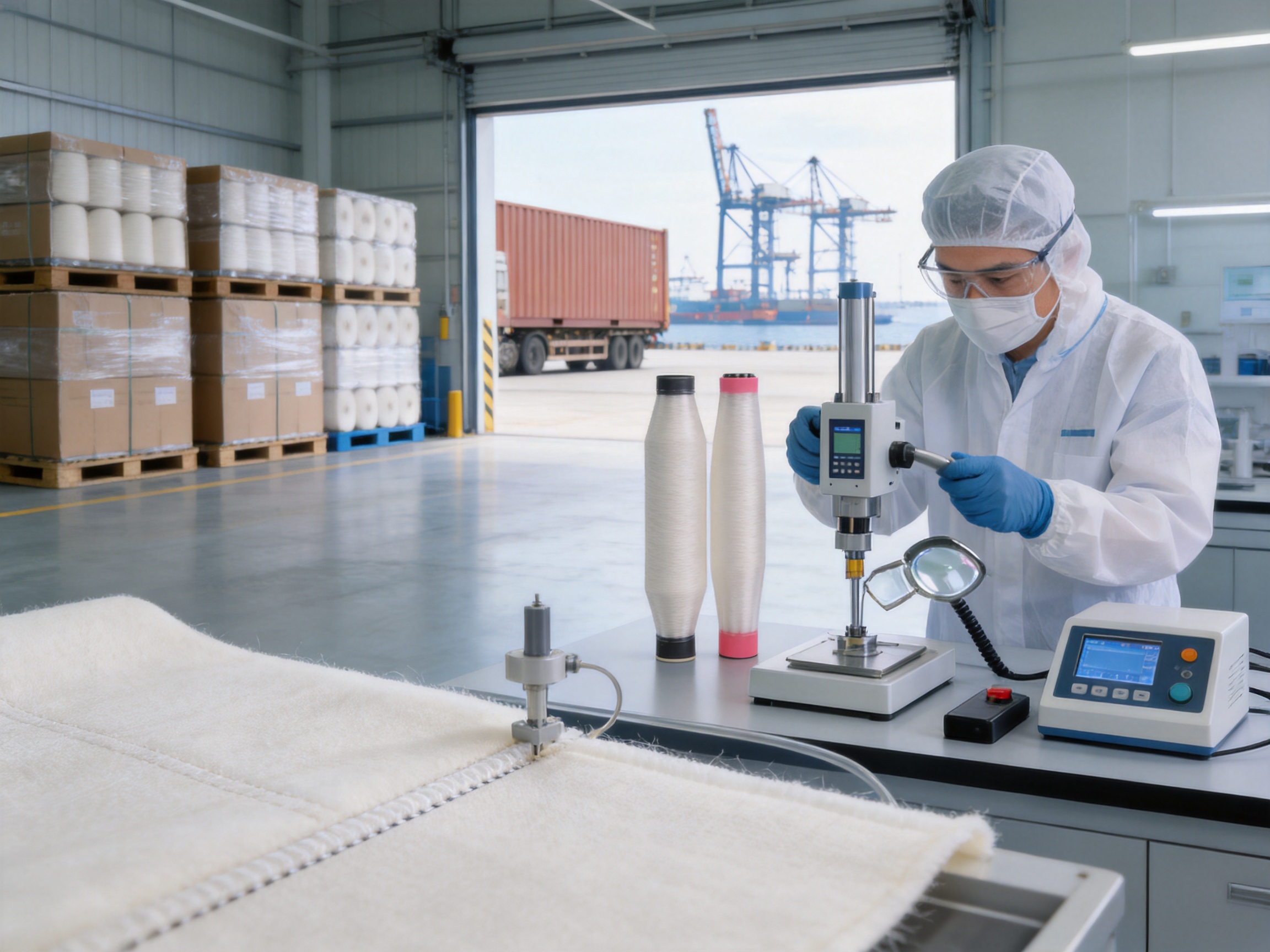
Bonded sewing thread is used when improved thread stability, seam strength, and resistance to fiber separation are required. Pure Polyester Low Melting Yarn 110°C can serve as a bonding component in sewing thread processing or in specially designed sewing constructions.
Thermal bonding may help lock individual filaments together, reduce filament spreading, and improve the thread’s behavior during high-speed sewing. A more stable thread can pass through guides, needles, and tension devices with less movement. This may contribute to more consistent stitch formation and fewer sewing interruptions.
The yarn’s high tenacity is important for sewing operations that place repeated tension on the thread. Strong thread performance is especially relevant in workwear, bags, technical textiles, footwear components, and other products where seams must withstand pulling and abrasion.
Manufacturers should select the count according to needle size, thread construction, sewing speed, seam design, and required finished appearance. The bonding conditions must be controlled so that the thread remains strong and flexible rather than becoming excessively rigid.
Rope construction often requires high tensile performance, abrasion resistance, and stable fiber positioning. Low melting polyester yarn can be incorporated into a rope or braided structure to help secure the arrangement of core fibers after heat treatment.
The yarn can also be used in cable wire protection sleeve coatings and heat-sealable textile covers. In this application, it may help close a sleeve, stabilize an edge, or bond selected layers around the cable. The 110°C activation profile may be suitable for systems where the surrounding textile and cable components must not be exposed to excessive heat.
Careful testing is essential for cable-related applications. Electrical insulation, dimensional recovery, flame performance, chemical exposure, and long-term temperature resistance must be evaluated according to the intended use. The yarn should be treated as one component in a complete cable protection design.
Polyester is widely used in industrial textiles because of its strength, dimensional stability, and resistance to wear. Pure Polyester Low Melting Yarn 110°C is designed to provide a durable bonded section after activation. This makes it suitable for products that may experience repeated handling, washing, or outdoor exposure.
The material demonstrates resistance to common environmental influences such as UV exposure, yellowing, acids, and alkaline chemicals under appropriate conditions. However, the exact durability of a finished bonded textile depends on the concentration, temperature, exposure time, and combination of chemicals involved. End users should conduct application-specific testing when the product will be used in aggressive environments.
In industrial laundering, bonded sections must retain their structure after repeated washing and drying cycles. The yarn can support edge stability and fiber fixation, but the final performance depends on the base fabric, bond coverage, thermal history, and laundering conditions. Trial washing is recommended for garments, workwear, upholstery, and reusable technical textiles.
For outdoor applications, resistance to sunlight and weathering may be important. Polyester’s established use in outdoor textiles makes it a suitable material platform for many applications. Nevertheless, product designers should assess the entire construction, including dyes, coatings, finishing agents, and any non-polyester components.
The yarn offers an alternative to bonding systems that rely on solvents or liquid chemical carriers. Its solid filament form can simplify material handling and reduce the number of chemical components involved in the bonding step. This may support cleaner production areas, lower adhesive waste, and more efficient use of raw materials.
Pure polyester can be recycled in suitable systems, and a polyester-based bonding yarn may be advantageous when the overall textile product is also designed around polyester. A more uniform material composition can simplify certain recycling strategies compared with products made from multiple incompatible polymers, coatings, and adhesive layers.
Recyclability depends on the complete product design. Dyes, finishes, elastomers, labels, coatings, and mixed fiber compositions may affect recycling possibilities. Manufacturers should assess the entire lifecycle of the finished textile rather than considering the yarn in isolation.
Energy efficiency is another consideration. A 110°C activation profile can reduce the thermal demand compared with higher-temperature bonding systems, depending on the competing product and process. Lower processing temperatures may also help protect heat-sensitive textile components and reduce the risk of thermal damage.
Different applications require different yarn counts, package formats, bonding levels, and processing conditions. A single standard specification cannot satisfy all textile manufacturers. The availability of nine principal counts gives customers a practical starting range for product selection.
Special production by order allows technical requirements to be discussed before manufacturing. Customers may provide information about fabric composition, machine type, target activation temperature, required tensile performance, package weight, winding direction, and final application. This information helps the manufacturer recommend a suitable specification and prepare samples for evaluation.
Customization is particularly important for delicate apparel, narrow fabrics, technical meshes, industrial ropes, and cable protection products. These applications may have very different expectations for softness, bonding coverage, dimensional stability, and heat resistance.
GC FIBER also cooperates with customers to develop new materials. This collaborative approach is valuable when a customer is creating a new product rather than replacing an existing yarn. Joint development may involve selecting a different count, optimizing the thermal response, adjusting the winding format, or combining the low-melting function with another textile performance requirement.
Buyers evaluating low melting yarn should consider more than the nominal melting point. Important quality indicators include denier consistency, tenacity, elongation, winding quality, filament uniformity, thermal activation behavior, package appearance, and lot-to-lot consistency.
A stable product should activate predictably under comparable conditions. If the activation profile varies substantially between lots, manufacturers may experience inconsistent bond strength or changes in fabric hand feel. Sampling and comparative testing are therefore important parts of supplier qualification.
Buyers should also request technical information related to storage and handling. Polyester yarn should be kept in conditions that protect the package from contamination, excessive humidity, direct sunlight, and mechanical damage. Proper storage helps preserve unwinding performance and reduces the risk of package deformation.
For export orders, customers should confirm packaging requirements, carton or pallet configuration, labeling, loading quantity, documentation, and shipping arrangements. Shanghai seaport is available for shipment arrangements, while specific logistics details should be confirmed according to destination and order volume.
The selection process should begin with the role of the yarn in the product. If the yarn is mainly intended to provide a discreet bonding line in a delicate textile, a fine count may be appropriate. If it must reinforce a heavy industrial structure, a larger count may provide greater material coverage and strength.
The second consideration is the fabric density. Open mesh and low-density structures may require careful placement because the bonding yarn may have limited contact with surrounding fibers. Dense fabrics may provide more contact but may also require additional heat or pressure to activate the yarn throughout the structure.
The third consideration is flexibility. Fine yarns generally create a lighter bonding effect, while heavier yarns may produce a stronger and more rigid bonded zone. The final selection should be based on the desired balance between stabilization and softness.
The fourth consideration is machine compatibility. Yarn guides, needles, tension devices, winding packages, and feeding systems must accommodate the selected count. A sample package should be tested on the intended equipment before a large purchase is made.
Low melting yarn can be integrated at several points in a factory workflow. During knitting, it may be fed as a structural or selective bonding yarn. During sewing, it may be used as a thread component or edge-stabilizing element. During braiding, it may be inserted into a rope or sleeve construction. During finishing, it may be activated through a press, oven, steam system, or calender.
Integration is most effective when the position of the yarn is defined during product design. Engineers should identify where bonding is needed, how much movement must be restricted, and whether the bonded region should remain flexible or become semi-rigid. This prevents unnecessary use of the material and helps maintain the original textile properties in non-bonded zones.
Production teams should establish a control plan covering yarn tension, placement, temperature, heating time, pressure, cooling, and inspection. A consistent control plan makes it easier to reproduce product quality across shifts and production lots.
Visual inspection may identify edge fraying, incomplete bonding, excessive flow, surface marks, or package-related yarn defects. Mechanical testing should be added where the application involves load, washing, abrasion, or repeated flexing.
The nominal activation or melting point is 110°C. Actual machine settings and dwell times should be determined through production trials because heat transfer varies according to equipment, fabric thickness, pressure, and line speed.
Yes. The product is described as pure polyester low melting yarn, based on 100% low-melt PET. Its polyester composition makes it particularly suitable for bonding polyester fabrics and polyester textile components.
It can replace or reduce liquid adhesives in selected textile bonding applications. The yarn is especially useful when the bonding line can be incorporated into the textile construction before heat activation. Application testing is necessary to confirm bond strength and durability.
It can be processed using conventional textile equipment for winding, knitting, sewing, weaving, and braiding. Thermal activation may use a heated press, steam oven, dry-heating system, industrial oven, or calender. The exact equipment depends on the product design.
Available counts include 20D, 30D, 40D, 50D, 70D, 100D, 150D, 200D, and 300D. Special specifications may be discussed for production by order.
Fine counts such as 20D through 50D may be suitable starting options because they can provide stabilization with less visual impact. The final selection should consider lace density, desired flexibility, bonding coverage, and skin-contact requirements.
Medium or heavy counts such as 100D, 150D, 200D, or 300D may be considered for industrial applications. The correct choice depends on the rope construction, sleeve thickness, required bond strength, and machine capability.
Yes. The yarn can help fix core structural fibers in chenille yarn and may reduce shedding or hair pull-out. Processing conditions should be optimized to retain the required softness and pile appearance.
The polyester bonded area is designed for industrial durability and wash resistance. Actual performance depends on the fabric construction, bond conditions, detergent, temperature, mechanical action, and number of wash cycles. Finished-product washing tests are recommended.
Polyester provides good resistance to wear, weathering, and UV exposure in many textile applications. Outdoor products should still be tested under their specific sunlight, moisture, temperature, and chemical exposure conditions.
Customers should confirm dyeing requirements before production. Because the yarn is polyester-based, it is intended to match polyester textile systems more closely than many non-polyester bonding materials. Dyeing behavior depends on the dye type, temperature, treatment sequence, and bonded construction.
Yes. Special production by order is available. Customers can discuss count, package, application, processing conditions, and other technical requirements with the manufacturer before sample confirmation and mass production.
Shipment can be arranged through Shanghai seaport. Packaging, loading, documentation, and delivery terms should be confirmed for each order.
Useful information includes the required count, estimated quantity, application, fabric composition, preferred package size, delivery destination, target delivery date, and whether customized production is required. Technical samples or fabric details can improve product selection.
A reliable low melting yarn supplier should provide more than a product catalog. Customers need technical communication, stable production, responsive sampling, and the ability to understand how the yarn will be used in a complete textile process.
GC FIBER combines manufacturing experience with a portfolio of special functional yarns. Its product development work covers different performance requirements, including thermal bonding, environmental considerations, anti-static behavior, high strength, and polymer compatibility. This broad experience supports communication with customers from apparel, home textile, footwear, industrial, and technical textile sectors.
The company’s research and development capability is also relevant to customers developing new materials. A new textile product may require a combination of properties that cannot be achieved through a standard commodity yarn. Cooperation between the buyer and manufacturer can help identify the right material structure and production route.
For international customers, the company provides a direct manufacturing source in China, with products available for export through Shanghai seaport. Direct cooperation may help buyers coordinate product specifications, packaging, lead times, and technical questions more efficiently.
Pure Polyester Low Melting Yarn 110°C is a versatile functional yarn for textile bonding, reinforcement, edge stabilization, and shape control. Its controlled 110°C activation profile enables thermal bonding through heated presses, steam systems, ovens, calenders, and other suitable equipment. Its high tenacity and easy rewinding support high-speed textile production, while its polyester composition provides strong compatibility with polyester fabrics.
The product offers clear advantages over many conventional bonding methods. It is supplied as a precise filament rather than a liquid, powder, or solvent system. It can be positioned within the textile structure, activated only where required, and combined with mechanical reinforcement. This may reduce adhesive handling, simplify production, improve process control, and support cleaner manufacturing.
Its application range includes three-dimensional knitted fabric, athletic mesh, footwear uppers, chenille yarn, lingerie ribbons, lace, seamless underwear, bonded sewing thread, ropes, and cable wire protection sleeves. The availability of counts from 20D to 300D allows the product to serve both delicate apparel components and heavier industrial structures.
With manufacturing experience dating from 2006, GC FIBER provides a specialized source for functional textile materials and supports special production by order. Customers can evaluate standard counts or discuss customized solutions according to their fabric construction, equipment, thermal process, and performance requirements.
For manufacturers seeking a strong, polyester-compatible, heat-activated bonding material, this low melting yarn provides a practical path toward more efficient and integrated textile production. Proper count selection, controlled heating, suitable pressure, and application-specific testing will help users achieve the best balance of bonding strength, flexibility, durability, and appearance.
1. Product technical information for Pure Polyester Low Melting Yarn 110°C, including available counts, applications, and processing characteristics.
2. NanTong Global Chemical Fiber Co., Ltd. company information and functional textile product portfolio.
3. General principles of thermoplastic polymer bonding in textile manufacturing.
4. Technical guidance on polyester filament spinning, drawing, winding, and package formation.
5. Textile testing principles for tensile strength, dimensional stability, washing resistance, abrasion resistance, and thermal bonding performance.
6. Industrial textile design practices for three-dimensional knitted fabrics, bonded sewing threads, chenille yarns, ropes, and cable protection materials.
7. Sustainable textile manufacturing principles concerning solvent reduction, material compatibility, energy-conscious processing, and polyester recycling considerations.
It is made with Bio-base PLA, fully biodegradable Feature: 1. Industrial compost product 2. Made with PLA 3. Eco-frie...
READ MOREPlease fill out the form below and our team will contact you as soon as possible.
Addres: No.66 Qiaogang Road, Haian, Nantong City, Jiangsu Province, China
E-mail: service@gcfiber.com admin@gcfiber.com
Copyright ? GC FIBER All Rights Reserved. Eco-Friendly Textile Products Manufacturer Biodegradable Yarn Company