English
 中文简体
中文简体It is made with Bio-base PLA, fully biodegradable Feature: 1. Industrial compost product 2. Made with PLA 3. Eco-frie...
READ MORE
Content
PLA biodegradable non-woven fabric is an advanced textile material developed for manufacturers seeking to reduce dependence on conventional petroleum-based plastics without sacrificing functional performance. Produced from polylactic acid derived from renewable plant resources, this non-woven fabric combines a bio-based origin with useful properties such as low-temperature processing, antibacterial behavior, good ultraviolet stability, soft touch, and industrial compostability under suitable controlled conditions.
As governments, retailers, manufacturers, and consumers place greater emphasis on plastic reduction and circular material systems, the demand for compostable and renewable alternatives continues to expand. Traditional polypropylene and polyethylene non-woven fabrics remain widely used because of their strength, affordability, and processing efficiency. However, these materials are fossil-fuel based and can persist in the environment for extended periods after disposal. PLA non-woven fabric offers a different material pathway: it begins with renewable feedstocks and is designed to return to natural components through industrial composting at the end of its useful life.
This product is suitable for a broad range of applications, including hygiene products, medical-adjacent disposables, agricultural covers, packaging, shopping bags, filtration media, catering products, protective layers, and selected outdoor applications. Available in common weights such as 30 GSM, 50 GSM, and 100 GSM, it can also be specially produced according to customer requirements.
The following article examines the composition, manufacturing process, performance advantages, applications, processing considerations, sustainability profile, quality-control requirements, and commercial value of PLA biodegradable non-woven fabric.
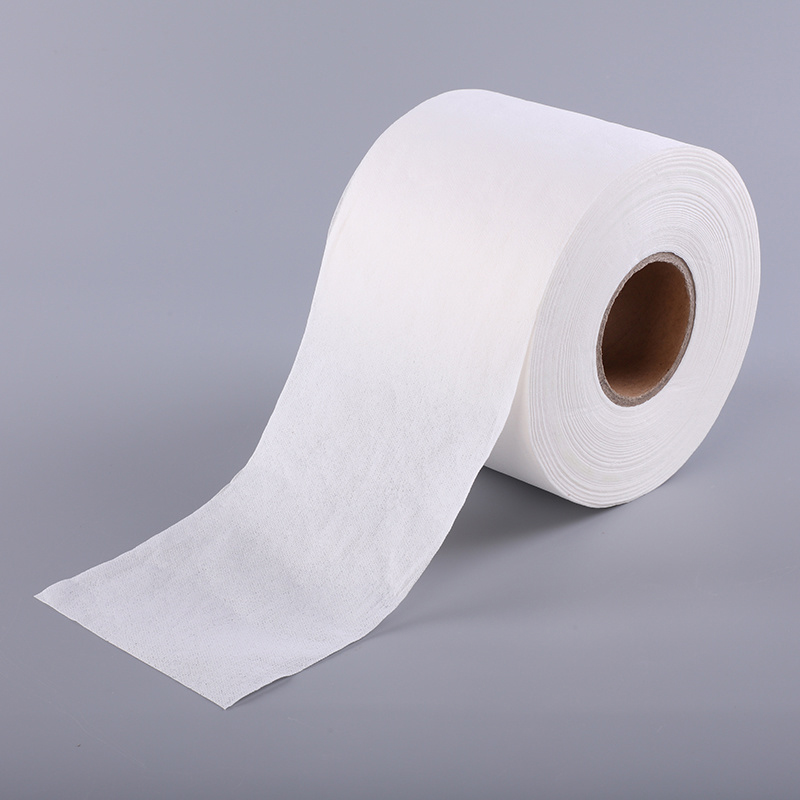
PLA Biodegradable Non Woven Fabric
PLA stands for polylactic acid, a polymer produced from lactic acid. Lactic acid can be obtained by fermenting plant-derived carbohydrates, including materials associated with corn starch and sugarcane. After purification and polymerization, the resulting PLA can be processed into fibers, films, molded products, and non-woven fabrics.
Unlike woven textiles, non-woven fabric is manufactured by forming and bonding a web of fibers or filaments without conventional interlacing of warp and weft yarns. This construction allows manufacturers to control basis weight, thickness, softness, air permeability, tensile strength, and surface characteristics with considerable flexibility.
PLA non-woven fabric may be produced using spunbond, meltblown, or related thermal-bonding technologies. In a spunbond process, molten PLA is extruded through fine holes to form continuous filaments. The filaments are drawn, distributed into a web, and bonded to create a stable fabric. In a meltblown process, polymer melt is attenuated by high-velocity air into very fine fibers, which are collected as a web with a high surface area.
The specific production route depends on the required end use. Spunbond structures are commonly selected when tensile strength, dimensional stability, and durability are priorities. Meltblown structures may be preferred when filtration, softness, and fine fiber formation are important. Hybrid or multilayer constructions can combine different performance characteristics.
The word “biodegradable” must be understood in relation to the disposal environment. PLA non-woven fabric is generally intended for industrial composting, where controlled temperature, moisture, aeration, and microbial activity support degradation. It should not automatically be assumed that the material will decompose rapidly in a household compost pile, soil, seawater, or an uncontrolled landfill.
One of the principal advantages of PLA non-woven fabric is its renewable material origin. Conventional synthetic non-wovens are commonly produced from polymers such as polypropylene or polyethylene, which are manufactured from fossil-based feedstocks. PLA, by contrast, can be made from plant-derived carbohydrate sources.
This renewable origin can help brands reduce their reliance on virgin fossil resources. It also supports product development strategies centered on renewable carbon, responsible material selection, and end-of-life planning. For companies working toward plastic-reduction targets, PLA provides an option that can replace selected petroleum-based components in suitable products.
PLA should be described accurately as a bio-based polymer and a compostable material under specified conditions. It is not necessarily “plastic-free” in a technical sense, because PLA is a polymeric material and is often categorized as a bioplastic. The important distinction is that its feedstock and end-of-life characteristics differ from those of conventional fossil-based plastics.
During industrial composting, appropriate PLA products can break down into carbon dioxide, water, and organic matter through biological activity. The exact rate and completeness of degradation depend on product design, thickness, additives, processing history, temperature, humidity, and the requirements of the relevant composting system.
A responsible sustainability program should therefore consider the full product life cycle. This includes raw-material sourcing, energy consumption during fiber production, converting efficiency, transportation, product use, waste collection, and access to suitable composting infrastructure. PLA non-woven fabric is most effective as part of a coordinated material and waste-management strategy rather than as an isolated substitute.
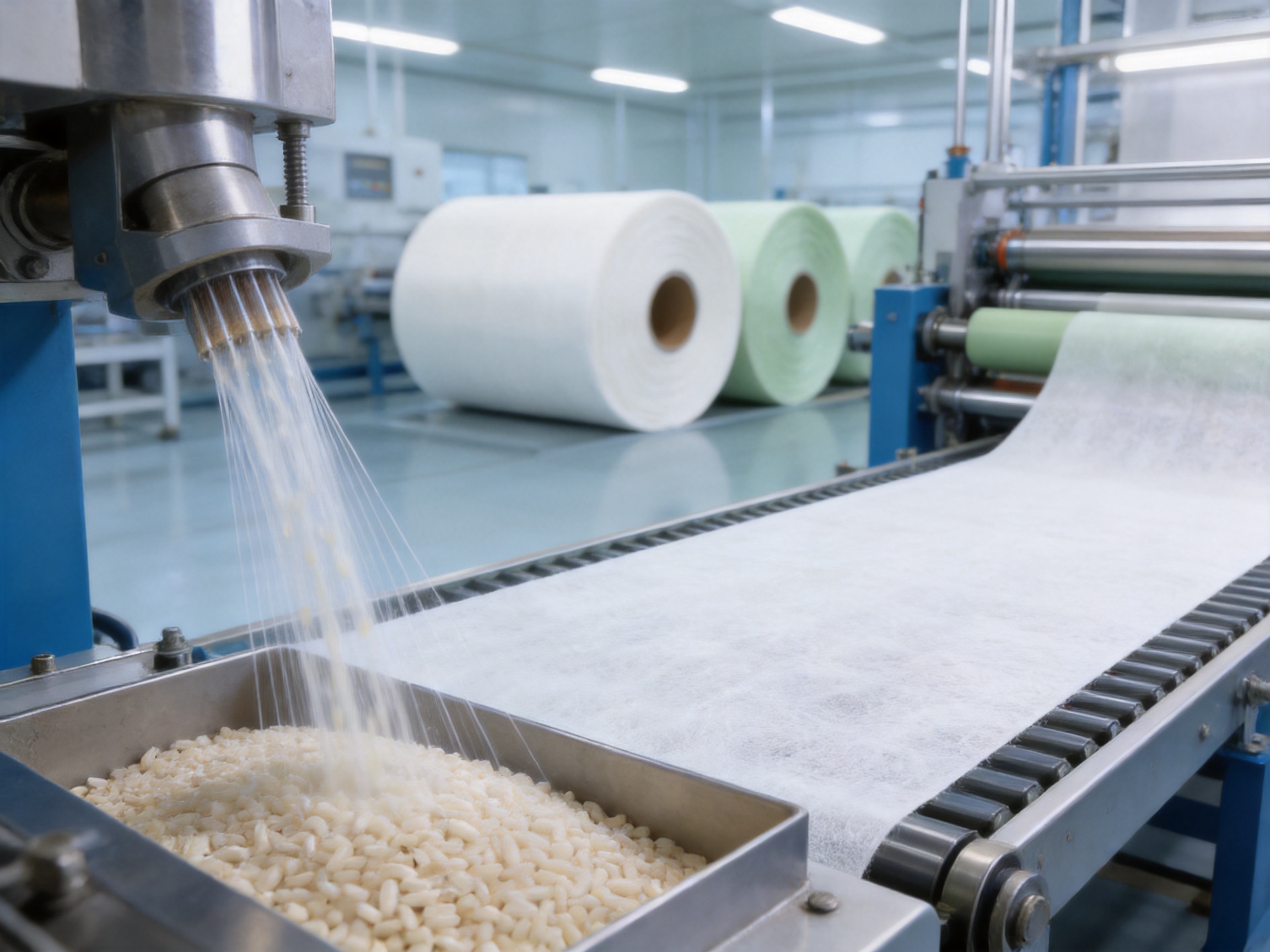
The manufacturing process begins with carefully prepared PLA resin. Polymer quality has a direct influence on melt stability, fiber formation, tensile performance, softness, color consistency, and process reliability. Resin is selected according to the intended non-woven structure and the required thermal and mechanical properties.
Before extrusion, the polymer must be handled under controlled conditions. PLA can be sensitive to moisture, and excessive moisture during melt processing may cause hydrolytic degradation. Proper drying, storage, and feeding procedures are therefore essential. Consistent material preparation helps maintain stable molecular weight and reduces variations in filament strength and fabric appearance.
In the extrusion stage, PLA pellets are transported through a heated extruder. The material gradually melts as it moves through controlled temperature zones. Screw design, residence time, pressure, and melt temperature must be balanced carefully to achieve a uniform polymer melt without unnecessary degradation.
Compared with many conventional synthetic polymers, PLA requires careful thermal management because its processing window can be relatively sensitive. Advanced production equipment allows operators to control temperature and pressure precisely, supporting stable output and consistent fiber formation.
For spunbond production, the molten polymer is forced through a spinneret containing numerous fine openings. The extruded streams are cooled and attenuated to form continuous filaments. The drawing process improves molecular orientation and contributes to tensile strength.
Uniform filament formation is important for achieving a consistent fabric. Variations in filament diameter can affect basis weight, surface appearance, strength, air permeability, and bonding behavior. Modern spinning systems are designed to distribute filaments evenly across the working width, reducing weak areas and improving roll-to-roll consistency.
For meltblown production, high-speed air is used to stretch the polymer melt into much finer fibers. Air temperature, air velocity, die configuration, polymer throughput, and collector distance all influence the resulting web. Meltblown structures can provide a soft, fine-fiber surface and may be suitable for selected filtration and hygiene applications.
After fiber formation, the filaments or fibers are deposited onto a moving collection surface. Airflow, electrostatic conditions, web speed, and fiber distribution affect the uniformity of the web. A well-controlled web-formation system helps achieve even GSM, stable thickness, and balanced mechanical properties in both machine and cross-machine directions.
For commercial customers, uniformity is particularly important. A fabric with inconsistent basis weight may create difficulties during cutting, sewing, heat-sealing, coating, bag conversion, or automated assembly. Controlled web formation reduces material waste and makes downstream production more predictable.
In many PLA non-woven constructions, fibers are bonded through heat. Calender rolls or other thermal-bonding equipment apply carefully controlled temperature and pressure to stabilize the web. PLA’s relatively low melting and bonding temperature can support reduced energy demand during suitable processing stages.
Lower-temperature bonding may also reduce thermal damage to the fabric and help preserve softness. However, temperature must be controlled precisely. Excessive heat can cause unwanted shrinkage, surface hardening, deformation, or loss of strength. Insufficient heat may result in poor bonding and weak tear resistance.
Depending on the intended application, additional finishing may include slitting, winding, embossing, coating, laminating, printing, or surface treatment. The fabric can be supplied in rolls or converted into finished components according to customer specifications.
A major manufacturing strength is the ability to adjust the production process to the end-use requirements. A hygiene application may require softness, breathability, and skin comfort. An agricultural cover may require higher strength, controlled light resistance, and suitable air and moisture transmission. A packaging application may prioritize stiffness, printability, heat-sealing, and appearance.
By adjusting polymer grade, filament configuration, basis weight, bonding pattern, roll width, color, and finishing conditions, the fabric can be developed for different markets. Special production by order allows customers to request customized dimensions and performance targets rather than selecting only from standard stock products.
The most visible difference between PLA and conventional polypropylene or polyethylene non-wovens is the origin of the polymer. PLA is derived from renewable plant-based resources, while many traditional alternatives depend on fossil-based feedstocks.
This distinction can provide a valuable marketing and sustainability advantage for brands. Products incorporating PLA fabric can support claims related to renewable content, subject to appropriate documentation and applicable market regulations. For companies seeking to communicate a more responsible material story, renewable feedstock can be an important part of product positioning.
PLA non-woven fabric is designed for industrial composting pathways when the product configuration and relevant standards are suitable. This gives it an end-of-life advantage over conventional synthetic non-wovens that may remain intact for long periods after disposal.
Industrial compostability can be particularly valuable in applications where recycling is difficult because the fabric is contaminated, combined with organic matter, or incorporated into a single-use product. Examples may include selected hygiene products, food-service items, agricultural materials, and compostable packaging components.
End-of-life claims should always be supported by product-specific testing and certification where required. A PLA fabric may be compostable in isolation, while a finished product containing inks, adhesives, coatings, elastic components, or other materials may have different disposal requirements.
PLA fibers can be thermally bonded at lower temperatures than many conventional synthetic materials. This feature may reduce energy consumption during bonding and finishing, depending on the equipment, line speed, and processing conditions.
Lower bonding temperatures can also be useful when the non-woven fabric is combined with temperature-sensitive components. Careful process design may support improved softness, reduced thermal distortion, and more efficient production. The actual energy benefit should be evaluated through site-specific measurements rather than assumed universally.
PLA has characteristics that can inhibit the growth or persistence of certain microorganisms under appropriate conditions. This can make PLA non-woven fabric attractive for hygiene, wipe, medical-adjacent, and food-contact-related applications where cleanliness and odor control are important.
The antibacterial performance of a final fabric depends on polymer formulation, surface structure, moisture conditions, test method, and exposure time. It should not be treated as a substitute for sterilization or validated medical protection. Nevertheless, the material’s inherent characteristics can reduce the need for certain additional chemical treatments in selected applications.
Soft touch is a significant advantage in products that contact skin or are handled directly by consumers. Fiber fineness, web structure, bonding pattern, and finishing conditions can be adjusted to provide a comfortable surface.
Compared with some stiff or heavily bonded conventional non-wovens, a properly engineered PLA fabric can offer a more textile-like hand. This is useful for wipes, liners, protective garments, packaging wraps, and other products where user perception influences acceptance.
PLA non-woven fabric offers good resistance to ultraviolet exposure in suitable formulations and applications. This can help reduce premature yellowing and strength loss when the material is used outdoors or exposed to sunlight during storage and transport.
UV performance depends on fabric weight, color, additives, exposure intensity, humidity, temperature, and duration. Outdoor applications should be validated through accelerated weathering or field testing. Even when UV stability is favorable, PLA products remain biodegradable materials and should not be expected to remain permanently unchanged under all environmental conditions.
Spunbond PLA non-woven fabric can provide useful tensile strength, tear resistance, and dimensional stability. These qualities are important during roll handling, die cutting, sewing, heat-sealing, ultrasonic welding, and automated conversion.
Mechanical performance depends on GSM, filament orientation, bonding pattern, polymer grade, and production conditions. Higher basis weights, such as 100 GSM, may be selected when greater coverage and strength are required, while 30 GSM and 50 GSM options may be more suitable for lightweight applications.
| Characteristic | PLA Biodegradable Non-Woven Fabric | Conventional Polypropylene Non-Woven Fabric | Practical Importance |
|---|---|---|---|
| Primary feedstock | Plant-derived renewable resources | Generally fossil-based resources | Supports renewable-material strategies |
| End-of-life pathway | Designed for industrial composting under suitable conditions | Typically not compostable | May support organic-waste and composting systems |
| Thermal bonding | Can be processed at comparatively lower temperatures | Usually requires conventional polypropylene conditions | Potential energy and process advantages |
| Hand feel | Soft and textile-like when properly engineered | Ranges from soft to firm depending on construction | Important for hygiene and consumer products |
| UV behavior | Good stability in suitable applications | Often requires stabilizers for outdoor exposure | Useful for agriculture and outdoor packaging |
| Customization | Available in different GSM, widths, structures, and finishes | Also widely customizable | Allows application-specific design |
The comparison above should not be interpreted as meaning that PLA is superior for every application. Conventional polypropylene may remain more economical or more suitable for products requiring long-term persistence, very high temperature resistance, or established recycling infrastructure. PLA is strongest when renewable origin, compostability, soft touch, and lower-temperature processing are important purchasing criteria.
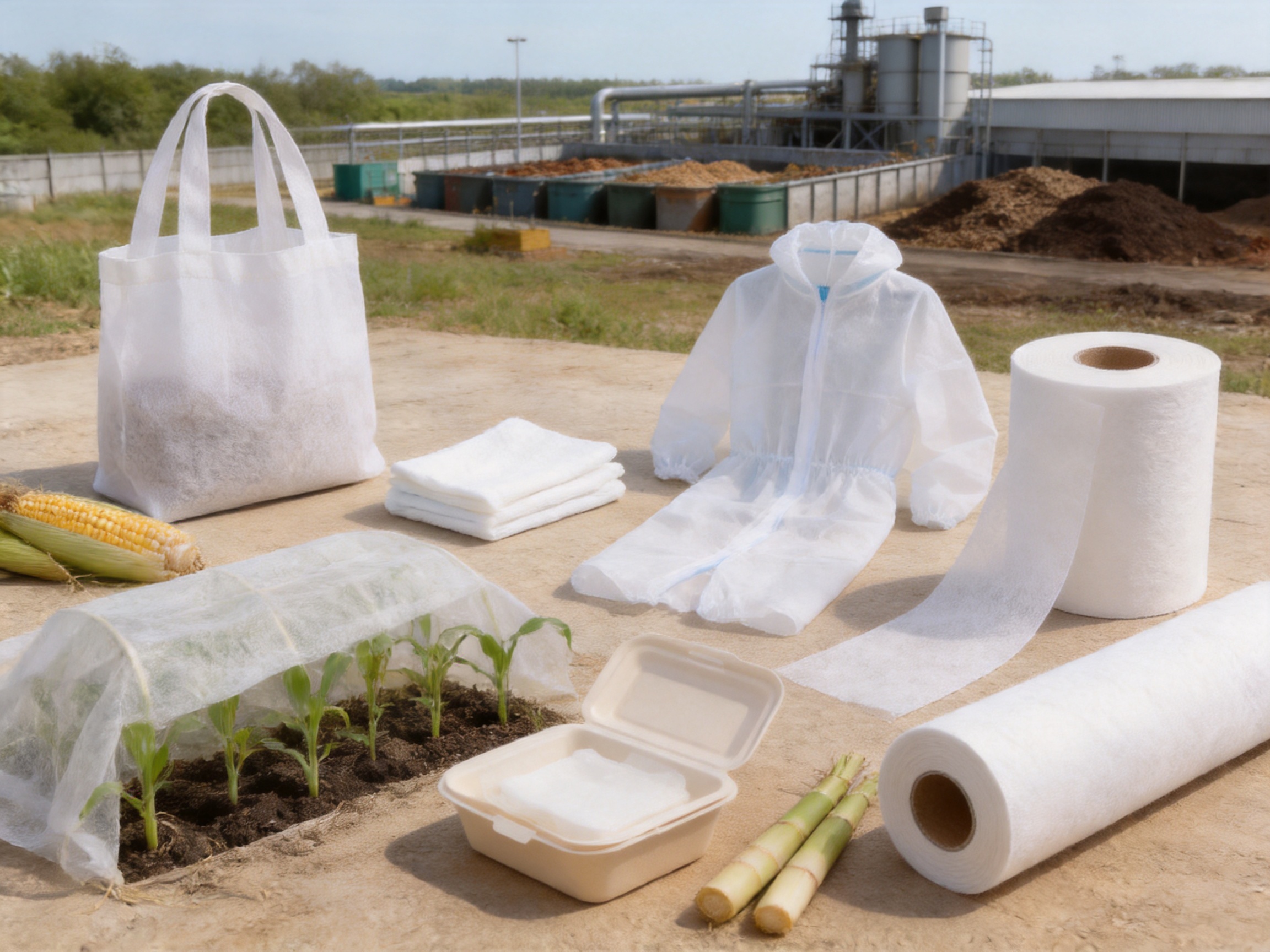
The fabric is available in several basis weights, including 30 GSM, 50 GSM, and 100 GSM. GSM means grams per square meter and is a practical indicator of fabric weight. It also generally correlates with coverage, thickness, opacity, and mechanical performance, although the final properties depend on fiber structure and bonding.
30 GSM PLA non-woven fabric is a lightweight option designed for applications where softness, breathability, low material consumption, and easy handling are priorities. Potential uses include lightweight liners, disposable covers, packaging inserts, wraps, wipes, and selected hygiene components.
The lower basis weight can reduce material cost and shipping weight. However, products requiring high puncture resistance or substantial load-bearing capacity may need a heavier structure or a laminated design.
50 GSM provides a balanced combination of coverage, flexibility, strength, and processability. It can be used for shopping bags, protective layers, agricultural covers, medical-adjacent disposables, table coverings, and other medium-duty products.
This weight is often appropriate when manufacturers need a fabric that is neither excessively light nor unnecessarily heavy. It can provide a useful balance between performance and resource efficiency.
100 GSM fabric offers increased coverage, substance, and mechanical support. It may be selected for more demanding packaging, protective materials, industrial filtration supports, automotive interior linings, durable agricultural covers, and other applications that benefit from a stronger or more opaque structure.
Higher GSM can improve certain strength and handling properties, but it may also affect flexibility, air permeability, drying time, and composting behavior. Product design should therefore consider the complete performance requirement rather than choosing the highest possible weight.
Special production by order is available for customers requiring non-standard widths, roll lengths, basis weights, colors, surface treatments, bonding patterns, or converting formats. Customization may also involve specific tensile targets, air permeability, softness, heat-sealing behavior, or compatibility with downstream equipment.
To obtain an accurate quotation and technical recommendation, customers should provide the intended application, required dimensions, target quantity, packaging format, expected service conditions, and any applicable regulatory or compostability requirements.
PLA biodegradable non-woven fabric is a promising material for selected hygiene products because of its soft touch, lightweight construction, breathability, renewable origin, and potential antibacterial characteristics. Possible applications include wipes, sanitary napkin components, diaper components, face-mask layers, disposable gowns, shoe covers, and protective liners.
For wipes, the fabric can provide a soft substrate with good liquid-holding and handling characteristics when combined with an appropriate formulation. For sanitary products and diapers, it may be considered for topsheets, backsheets, or other components, depending on liquid-management requirements and the design of the complete product.
In medical-adjacent products, PLA fabric may be used for disposable gowns, protective covers, packaging, or non-sterile components. Any application involving medical claims, biological barriers, sterilization, or direct clinical use requires product-specific validation and compliance with applicable regulations.
The material’s antibacterial potential can be useful, but it should not be confused with guaranteed pathogen protection. A mask, gown, wipe, or medical product must be evaluated as a complete system. Fabric weight, pore structure, filtration performance, fluid resistance, seams, elastic components, and sterilization methods all influence final safety.
Retailers and packaging converters are increasingly seeking alternatives to conventional plastic bags and wrapping materials. PLA non-woven fabric can be converted into biodegradable shopping bags, gift packaging, produce bags, tea-bag structures, coffee-related components, protective sleeves, and premium presentation materials.
Its soft surface and textile-like appearance may help brands create packaging with a more natural and premium visual identity. The fabric can also be printed or laminated when compatible inks and adhesives are selected. Packaging designers should verify heat-sealing parameters because PLA’s processing window differs from that of polypropylene and polyethylene.
For packaging intended to contact food, the complete system must be evaluated. Food-contact suitability depends on the resin, additives, inks, coatings, adhesives, manufacturing hygiene, and destination-market regulations. A general statement about PLA fabric should not replace application-specific compliance documentation.
Another advantage is the opportunity to align packaging with a controlled composting program. Where collection and composting infrastructure exists, compostable packaging can be integrated into broader organic-waste strategies. Without appropriate collection, however, the environmental benefit may not be fully realized.
Agricultural applications can benefit from the combination of renewable origin, outdoor stability, lightweight construction, and potential compostability. PLA non-woven fabric may be used for crop covers, fruit-protection bags, seedling covers, soil-protection layers, protective wraps, and selected mulch-related systems.
Crop covers can help protect plants from insects, wind, light frost, and physical damage. The fabric’s air permeability allows designers to balance protection with ventilation. Different GSM values can be selected according to crop type, climate, and expected service duration.
Good UV stability is important for agricultural use because the material may be exposed to sunlight for weeks or months. Even so, field testing is recommended. The required service period should be defined clearly so that the fabric maintains performance throughout cultivation and begins degradation only after its intended useful life.
When used in agricultural systems, the product’s end-of-life pathway must be planned carefully. Soil incorporation, collection, industrial composting, and local waste-management requirements may differ by region. Farmers and distributors should receive clear disposal instructions to prevent contamination of recycling or composting streams.
Beyond consumer and agricultural applications, PLA non-woven fabric can serve as a material for industrial and catering products. Possible uses include filtration media, disposable table coverings, airline service items, protective packaging, automotive interior linings, and temporary barrier layers.
In filtration applications, the fiber diameter, web density, air permeability, and surface area are critical. Meltblown PLA structures may be considered when fine fibers and a high surface area are required. Filtration performance must be verified using the relevant test method because a biodegradable material is not automatically suitable for every filter category.
For catering and food-service products, the fabric can be used in tablecloths, trays, protective wraps, disposable covers, and selected service items. Softness, appearance, liquid resistance, and printability can be adjusted according to the design. Food-contact claims require regulatory review of the complete product.
In automotive interiors, PLA non-woven fabric may be used as an interior lining, acoustic layer, backing, or protective component. The material’s renewable origin can contribute to a vehicle manufacturer’s effort to increase bio-based content. Automotive applications require careful testing for heat aging, odor, flammability, abrasion, dimensional stability, and long-term durability.
One of the commercial benefits of PLA non-woven fabric is its compatibility with common converting operations. Depending on the fabric construction and equipment settings, it can be slit, cut, folded, heat-sealed, ultrasonically welded, coated, printed, laminated, or sewn.
Heat-sealing parameters should be optimized for temperature, pressure, dwell time, and sealing-bar design. Because PLA can soften at lower temperatures than some conventional polymers, excessive heat may distort the edge or create a brittle seal. A controlled trial is recommended before full-scale production.
Ultrasonic welding can create clean bonds without additional adhesives. The most suitable amplitude, pressure, weld time, and horn design depend on fabric weight and the number of layers. Properly developed ultrasonic bonds can support efficient assembly for bags, covers, hygiene products, and protective components.
Coatings or laminates may be added to improve liquid resistance, barrier properties, printability, stiffness, or appearance. The coating system must remain compatible with the intended composting pathway if compostability is part of the product claim. Non-compostable coatings can change the end-of-life characteristics of the finished item.
Printing can be used to add brand graphics, usage instructions, disposal information, or decorative patterns. Ink adhesion, drying temperature, surface energy, color consistency, and rubbing resistance should be evaluated. For compostable packaging, ink selection and total printed coverage may be relevant to certification or market requirements.
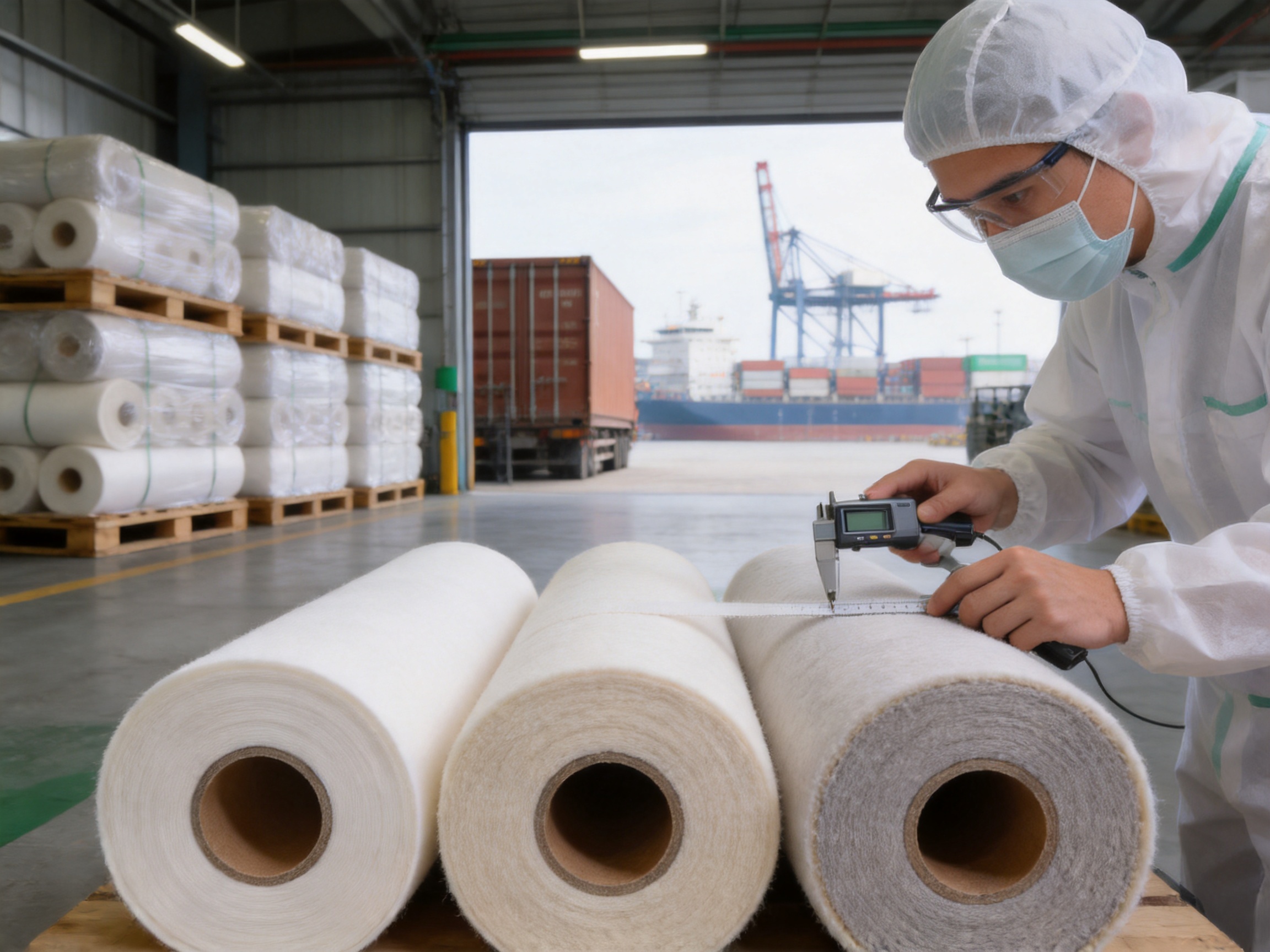
Consistent quality is essential when PLA fabric is supplied to international converters and product manufacturers. A reliable factory should control raw materials, process parameters, fabric uniformity, roll packaging, and final inspection through defined procedures.
Important quality-control checks may include basis weight, thickness, width, roll length, tensile strength, elongation, tear resistance, color, surface appearance, moisture content, air permeability, thermal behavior, and bonding strength.
Visual inspection can identify defects such as holes, streaks, contamination, uneven bonding, wrinkles, edge damage, color variation, and winding problems. Instrumental testing provides more objective data for release decisions and customer documentation.
Process monitoring is equally important. Extrusion temperature, melt pressure, spinning conditions, web speed, bonding temperature, calender pressure, and winding tension can influence final performance. Recording these parameters helps identify trends and supports continuous improvement.
GC FIBER, operated by NanTong Global Chemical Fiber Co., Ltd., has specialized in special textile materials in China since 2006. Its product range includes biodegradable yarn, low melting yarn, ECDP yarn, anti-static yarn, HDPE yarn, bio-component yarn, and polyester filament yarn. This broader technical background is valuable because PLA non-woven fabric requires knowledge of polymer behavior, fiber formation, thermal processing, and downstream textile applications.
The company’s experience in developing functional and eco-friendly textile products also supports customized material development. Customers may collaborate with the factory when a standard fabric does not fully meet a particular application. Such cooperation can involve selecting a polymer grade, adjusting fiber fineness, modifying fabric weight, developing a specific bonding pattern, or evaluating a new end-use requirement.
Located in Haian, Nantong City, Jiangsu Province, China, the factory can arrange shipment through the Shanghai seaport. This logistics position supports international supply and facilitates containerized delivery for customers requiring regular production volumes.
PLA non-woven fabric is not simply a conventional non-woven material with a different label. It requires appropriate control of drying, extrusion, spinning, bonding, and storage. A manufacturer experienced in functional fibers is better positioned to manage these factors and to respond to technical challenges during development.
A specialized producer can also evaluate the relationship between fiber properties and finished-fabric performance. For example, changes in polymer viscosity may affect spinning stability; changes in filament orientation may influence tensile strength; and changes in thermal bonding may alter softness and dimensional stability.
Technical experience becomes especially important for customers moving from laboratory samples to commercial production. A sample may perform well under limited conditions, while mass production introduces variations in line speed, roll width, ambient humidity, and equipment loading. Strong process control helps maintain product consistency as order volume increases.
Another advantage is the ability to coordinate material development across multiple product categories. A company familiar with biodegradable yarns, bio-component fibers, low-melting fibers, and polyester filament yarns can help customers compare alternatives and select a construction appropriate for the application.
PLA non-woven fabric can support a differentiated product strategy. Brands may use its plant-based origin, compostable design, and soft performance to create products positioned for environmentally conscious consumers and regulated markets.
However, sustainability communication must be precise. Terms such as “biodegradable,” “compostable,” “plant-based,” and “renewable” have different meanings and may be regulated in different countries. A product should state whether it is industrially compostable, whether certification applies to the fabric or the finished product, and what disposal conditions are required.
Cost should also be assessed across the complete supply chain. PLA resin may have a different price profile from polypropylene. On the other hand, lower-temperature bonding, lighter construction, reduced need for certain finishing chemicals, brand value, and compliance with plastic-reduction policies may contribute to the overall commercial case.
Manufacturers should compare not only purchase price but also conversion yield, production speed, energy use, waste, packaging weight, transportation, customer acceptance, and end-of-life management. A correctly designed 30 GSM or 50 GSM fabric may provide a better total-value proposition than a heavier conventional material.
Supply planning is another important consideration. Customers should confirm minimum order quantities, lead times, roll dimensions, packaging standards, storage conditions, and production capacity before launching a large program. Early communication helps the manufacturer reserve capacity and prepare suitable raw materials.
PLA non-woven fabric should be stored in a clean, dry, and well-ventilated area. Rolls should remain protected from excessive moisture, direct sunlight, dust, oil, and chemical contamination. Original packaging should remain intact until the material is ready for conversion.
Temperature and humidity can influence fabric handling and dimensional behavior. Large changes in environmental conditions may affect softness, static behavior, winding stability, and sealing performance. Allowing the material to reach the converting environment before processing can support more consistent results.
Rolls should be handled carefully to prevent edge damage, crushing, telescoping, and deformation. Forklift operators and warehouse staff should use appropriate supports and avoid dragging rolls across rough surfaces.
If the fabric is intended for compostable products, it should be kept separate from materials that may cause contamination. Clear identification and stock rotation can help preserve traceability and reduce the risk of mixing different polymer types.
Successful compostable-product design involves more than selecting PLA fabric. Every component must be considered, including thread, adhesive, ink, coating, elastic, label, packaging, and any attached accessories.
A product made from compostable PLA fabric may lose its compostable qualification if it contains non-compatible components in significant amounts. Designers should therefore work with material suppliers from the beginning of the development process and evaluate the full bill of materials.
Product thickness also influences degradation. A lightweight 30 GSM structure may behave differently from a dense 100 GSM multilayer product. The finished item’s shape, bonding, coatings, and exposure conditions affect how quickly industrial composting organisms can access the material.
Clear disposal instructions are essential. Consumers and commercial users should know whether the product belongs in an industrial composting collection system, an organic-waste stream, or another designated pathway. Without communication and infrastructure, even well-designed compostable products may be disposed of incorrectly.
Many organizations are under pressure to reduce the amount of conventional single-use plastic in their products and supply chains. PLA non-woven fabric can help replace selected polypropylene or polyethylene components, particularly where a textile-like structure is desired.
The replacement process should begin with a technical assessment. Engineers should compare tensile strength, puncture resistance, liquid behavior, thermal sealing, printability, storage stability, and expected service life. The goal is not merely to substitute one material for another but to redesign the product for the new material’s characteristics.
In some applications, PLA fabric can reduce material use because its strength and structure allow a lower basis weight to meet the same functional requirement. In other applications, a higher GSM or multilayer design may be necessary. Optimization should be based on testing rather than assumptions.
For companies subject to EPR requirements or plastic-bag restrictions, documentation and traceability may be as important as physical performance. A specialized manufacturer can provide product information, production records, and technical data needed for internal sustainability reporting and customer communication.
Identify how the fabric will be used, how long it must last, what loads it will experience, whether it will contact skin or food, and how it will be disposed of. A clear application description prevents the wrong material from being selected.
Define GSM, width, roll length, tensile strength, elongation, air permeability, thickness, color, softness, sealability, and any special performance requirements. It is useful to separate essential specifications from preferred specifications.
Determine whether spunbond, meltblown, or a multilayer construction is appropriate. Spunbond is often considered for strength and durability, while meltblown may be suitable for fine-fiber and filtration-related requirements.
Run trials using the customer’s actual cutting, sealing, welding, printing, coating, or sewing equipment. Record the operating window and evaluate appearance, bond strength, production speed, and waste.
Test the complete product under realistic conditions. This may include aging, sunlight exposure, moisture, abrasion, liquid contact, loading, transport simulation, or compostability assessment.
Review technical data sheets, inspection records, raw-material information, safety documentation, and any relevant compostability or food-contact evidence. Claims should match the available documentation and the destination market’s requirements.
Once the material and product are approved, establish quality standards, packaging requirements, delivery schedules, and change-control procedures. Regular communication between the manufacturer and converter helps protect consistency over time.
A: It is made from polylactic acid, a polymer produced from lactic acid derived from renewable plant-based resources such as corn starch and sugarcane. The PLA is formed into fibers or filaments and bonded into a non-woven fabric.
A: It is designed for industrial composting under controlled conditions involving suitable temperature, moisture, aeration, and microbial activity. The compostability of a finished product depends on all of its components, coatings, inks, adhesives, and construction details.
A: Home composting systems may not provide the controlled conditions required for reliable PLA degradation. The fabric should be directed to an appropriate industrial composting system unless product-specific testing confirms another disposal route.
A: The primary polymer is plant-based PLA rather than conventional petroleum-derived polypropylene or polyethylene. However, any additional coating, adhesive, ink, thread, laminate, or accessory should be checked separately when assessing the composition of a finished product.
A: PLA has inherent characteristics that may inhibit certain bacteria and reduce odor development under suitable conditions. The actual antibacterial performance must be confirmed using an appropriate test method. It should not be interpreted as a guarantee of sterilization or complete protection against pathogens.
A: Common options include 30 GSM, 50 GSM, and 100 GSM. Other basis weights can be specially produced by order, depending on the required application, quantity, equipment, and technical targets.
A: Yes. Its good UV stability makes it suitable for selected outdoor and agricultural applications. Exposure duration, climate, color, basis weight, and required service life should be evaluated through application-specific testing.
A: It can be suitable for heat-sealing when the temperature, pressure, and dwell time are optimized. PLA has a different thermal processing window from polypropylene, so converting trials are recommended before commercial production.
A: Yes, ultrasonic welding may be used for compatible constructions. The best settings depend on fabric weight, number of layers, horn design, pressure, amplitude, and weld time.
A: It may be considered for selected food-contact applications, but compliance must be verified for the specific resin, additives, inks, coatings, adhesives, production process, and destination market. The fabric specification alone does not establish food-contact approval for every finished product.
A: No. PLA is a strong alternative when renewable origin, compostability, soft touch, and lower-temperature processing are important. Polypropylene may remain preferable for applications requiring very high heat resistance, long-term environmental persistence, or established recycling systems.
A: Customers should provide the required GSM, width, roll length, color, estimated order quantity, application, performance targets, packaging requirements, delivery destination, and any regulatory or compostability documentation needs.
A: Production is located in Haian, Nantong City, Jiangsu Province, China, with shipment arrangements available through the Shanghai seaport. Delivery terms and logistics schedules should be confirmed for each order.
PLA biodegradable non-woven fabric provides a practical route toward renewable, functional, and more responsible textile products. Its plant-based origin, industrial compostability design, soft touch, antibacterial potential, good UV stability, high uniformity, and lower-temperature processing create a valuable alternative to selected conventional non-woven materials.
The product is available in 30 GSM, 50 GSM, 100 GSM, and customized specifications, allowing manufacturers to select a structure that matches the intended balance of strength, coverage, softness, breathability, and cost. Its compatibility with slitting, heat-sealing, ultrasonic welding, coating, printing, and other converting operations can help customers adopt the material without rebuilding their entire production system.
Performance and sustainability depend on correct engineering. Customers should assess the complete product, confirm suitable processing conditions, verify end-of-life claims, and select coatings and accessories that support the desired disposal pathway. When these factors are managed carefully, PLA non-woven fabric can contribute meaningfully to plastic-reduction programs, eco-packaging strategies, hygiene innovation, agricultural protection, and functional textile development.
Supported by experience in biodegradable yarns, bio-component fibers, low-melting materials, anti-static yarns, HDPE yarns, and polyester filament yarns, GC FIBER provides a technical foundation for customized functional textile development. Its manufacturing capability and product-development cooperation can help customers move from a sustainability objective to a stable, application-ready material.
1. Technical information supplied for PLA biodegradable non-woven fabric, including product features, available GSM specifications, processing characteristics, applications, and storage considerations.
2. General polymer science references concerning polylactic acid production, plant-derived feedstocks, polymerization, melt processing, and fiber formation.
3. General non-woven textile engineering references concerning spunbond production, meltblown technology, web formation, thermal bonding, and fabric quality control.
4. Industrial composting guidance concerning controlled temperature, humidity, aeration, microbial activity, and the evaluation of compostable products.
5. General sustainability assessment principles for bio-based polymers, including feedstock origin, manufacturing energy, product use, waste collection, and end-of-life management.
6. General textile-converting references concerning heat-sealing, ultrasonic welding, slitting, coating, laminating, printing, and roll handling.
It is made with Bio-base PLA, fully biodegradable Feature: 1. Industrial compost product 2. Made with PLA 3. Eco-frie...
READ MOREPlease fill out the form below and our team will contact you as soon as possible.
Addres: No.66 Qiaogang Road, Haian, Nantong City, Jiangsu Province, China
E-mail: service@gcfiber.com admin@gcfiber.com
Copyright ? GC FIBER All Rights Reserved. Eco-Friendly Textile Products Manufacturer Biodegradable Yarn Company