English
 中文简体

Made of PBS (Polybutylene Succinate), fully biodegradable.Features:1.Home compostable2.Raw material: PBS Polybutylene Su...
READ MORE
Content
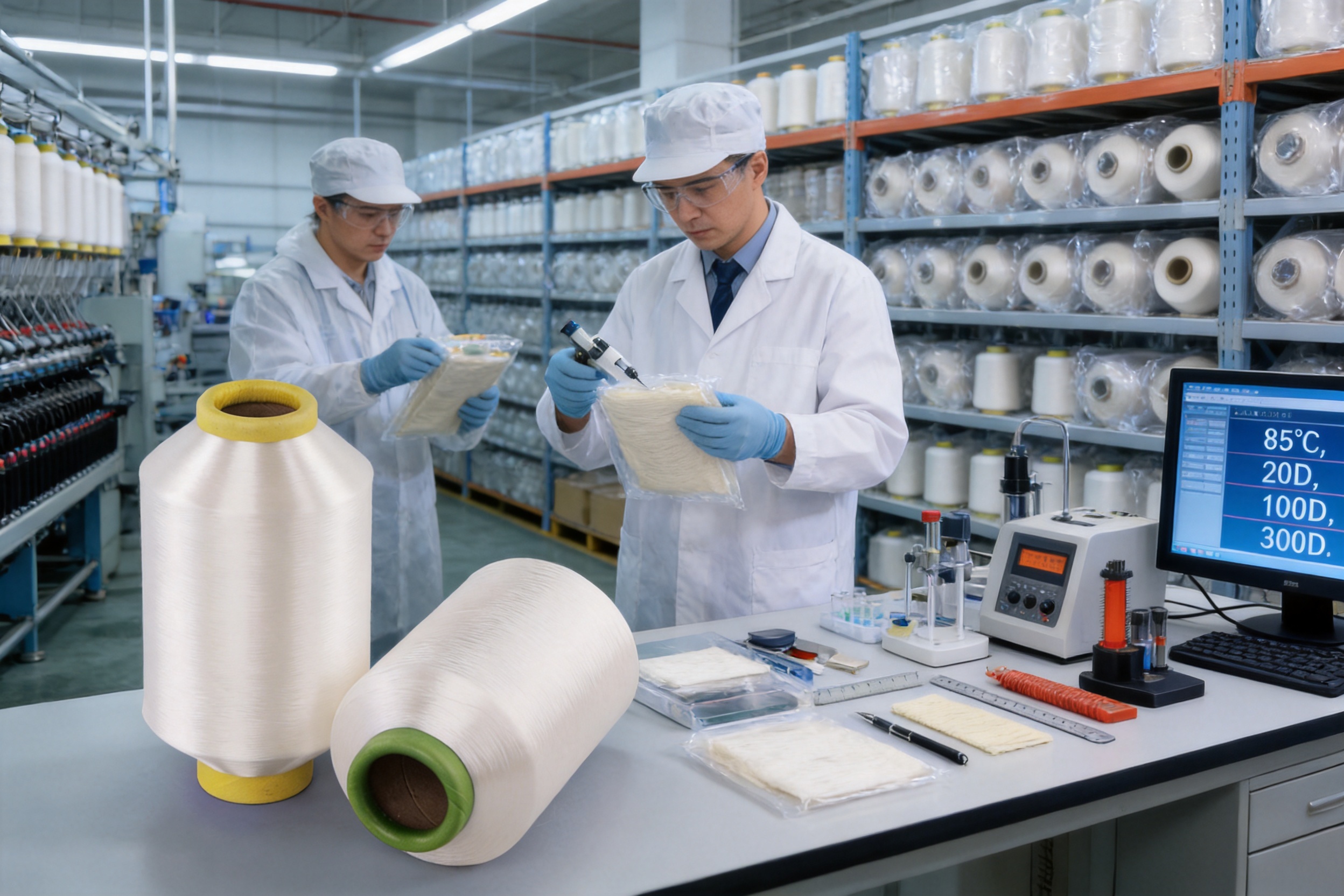
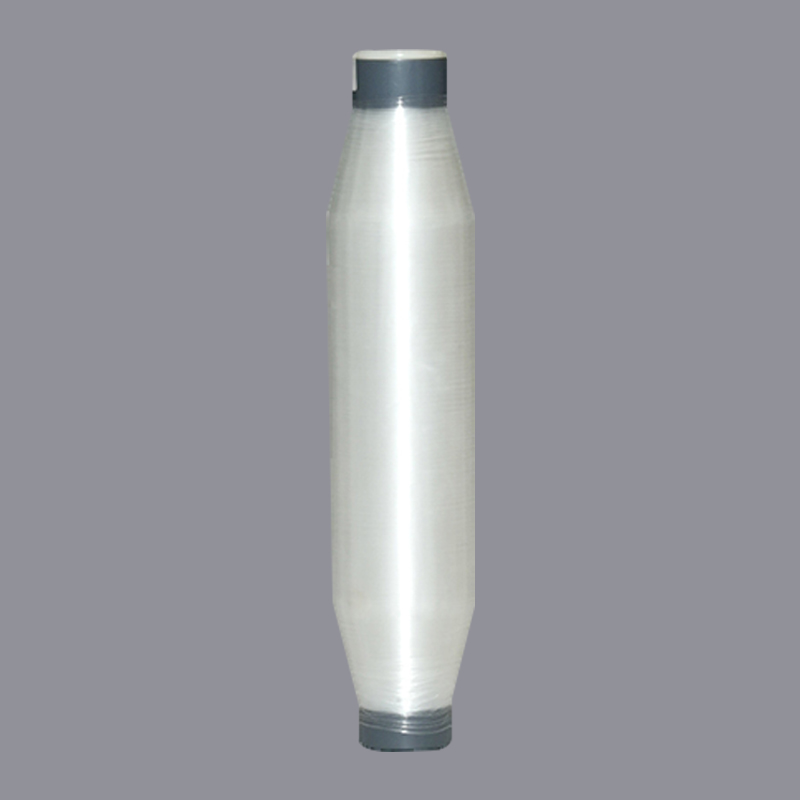
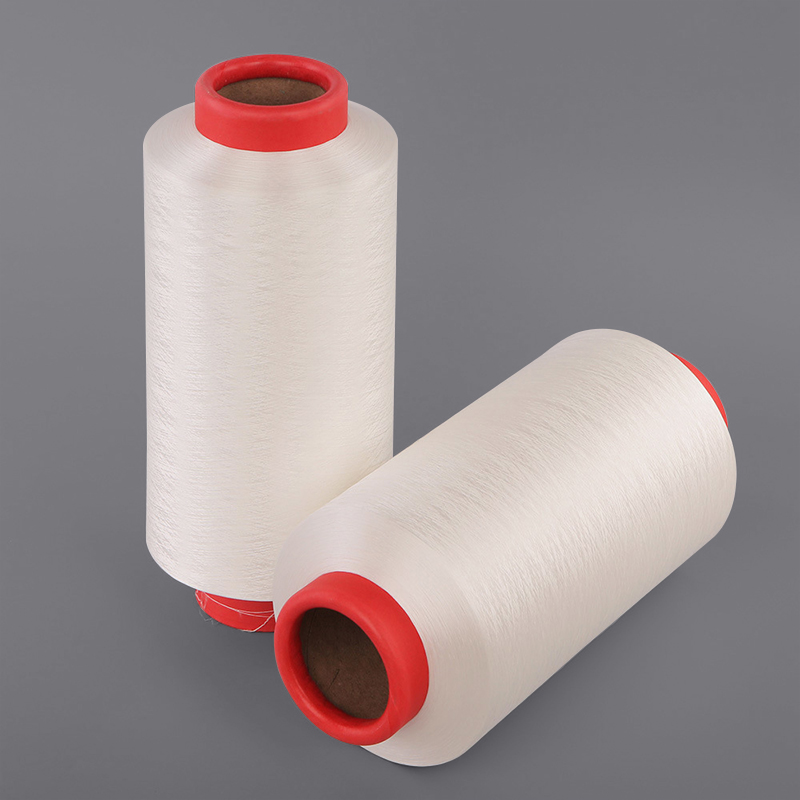
Pure Nylon Low Melting Yarn 85 Degree is a thermoplastic copolyamide filament yarn developed for textile bonding, shape setting, reinforcement, and low-temperature heat activation. Unlike ordinary nylon filament yarn, which is designed primarily for strength, abrasion resistance, and textile construction, this specialized yarn is engineered to soften and fuse at approximately 85 degrees Celsius. Its low activation temperature allows manufacturers to bond sensitive fabrics and components without exposing them to the high heat normally associated with conventional nylon processing.
The yarn functions as an invisible bonding agent when activated by controlled heat and pressure. It can be knitted, woven, laid, stitched, or incorporated into open net structures before the bonding process. Once heated, the yarn softens, flows into adjacent fibers, and solidifies during cooling. This creates a flexible bond while preserving the softness, breathability, elasticity, and appearance of the surrounding textile.
Available in counts from 20D through 300D, the product can be adapted to applications ranging from fine lingerie lace and seamless underwear to chenille yarn, bonded sewing thread, technical rope, cable wire sealing, and three-dimensional knitted fabrics. The combination of low activation temperature, high tenacity, smooth rewinding, and soft hand feel gives it a practical advantage over many higher-temperature low-melt yarns, rigid adhesive films, liquid glues, and polyester-based bonding materials.
Pure Nylon Low Melting Yarn 85 Degree is a heat-activated copolyamide yarn made from a nylon-based polymer structure modified to melt or soften at a much lower temperature than standard nylon. The product is commonly used where two or more textile layers must be joined without using a liquid adhesive, solvent, or permanent heavy stitching structure.
The term “85 degree” refers to the approximate melting or activation point of the yarn. In actual production, the effective softening range may begin somewhat below the nominal temperature, while complete melting and flow occur around the specified activation range. Actual values can vary according to denier, filament construction, production batch, heating equipment, pressure, dwell time, and testing method. For this reason, manufacturers should confirm the exact thermal curve and conduct trials using the intended face fabric and production equipment.
The yarn is based on pure nylon copolyamide rather than a conventional nylon-polyester mixture. This composition is important because it provides compatibility with nylon fabrics, a soft and flexible bond after cooling, and good dye affinity compared with many polyester-based alternatives. It also allows the finished textile to retain a more natural textile hand instead of developing the stiff or plastic feel sometimes associated with adhesive films and rigid hot-melt fibers.
In practical terms, the yarn provides three functions. First, it is a textile filament that can be processed on suitable knitting, weaving, winding, or sewing equipment. Second, it is a low-temperature adhesive structure that can join adjacent materials after heating. Third, it can act as a temporary positioning or shape-setting element before final stitching, lamination, or assembly.
Many textile materials cannot tolerate the high temperatures needed to melt ordinary nylon or high-temperature bonding fibers. Delicate lace, elastic fibers, polyurethane-based materials, thin mesh, foam, coated textiles, pre-dyed fabrics, and fine wool may shrink, discolor, lose elasticity, or suffer surface damage when exposed to excessive heat.
An 85-degree low-melting yarn provides a lower-temperature processing option. By activating the bonding yarn at a controlled temperature close to 85 degrees Celsius, manufacturers can reduce the thermal load placed on the surrounding textile. This is especially valuable when the product includes Spandex, Lycra-type elastic fibers, thin knitted structures, foam padding, or sensitive surface finishes.
The low activation point also helps reduce energy requirements in suitable bonding processes. Lower-temperature presses, ovens, laminating belts, and heat-setting systems generally require less energy than equipment operating at substantially higher temperatures. The exact energy saving depends on equipment design, production speed, insulation, dwell time, and the amount of material being heated, but the lower temperature creates an opportunity to shorten heating cycles and improve process efficiency.
Another benefit is reduced risk during production adjustment. When a production team is bonding a delicate textile, the difference between a successful bond and a damaged surface may be only a few degrees or a few seconds of dwell time. A low-temperature yarn gives operators a broader practical opportunity to bond the structure without exposing the base fabric to the extreme heat required by conventional nylon melting.
Standard nylon 6 and nylon 66 are valued for high strength, wear resistance, and thermal stability. Their regular molecular structures allow them to maintain performance at temperatures far above the activation point of low-melt copolyamide yarn. However, the same structural stability makes them unsuitable when a manufacturer needs a filament to soften at approximately 85 degrees Celsius.
Low-melting copolyamide is designed with a modified polymer structure that interrupts the highly ordered crystalline arrangement found in ordinary high-melting nylon. Reduced crystallinity allows the polymer chains to move at a lower temperature. When sufficient heat is applied, the yarn transitions from a stable filament into a softened and adhesive state.
This controlled structural modification does not simply turn the yarn into a liquid glue. The yarn remains a continuous filament during handling, winding, knitting, and sewing. It only becomes tacky or flowable after heat reaches the appropriate activation range. This makes it cleaner and easier to position than liquid adhesives, which can spread, contaminate machinery, release solvent odors, or require drying time.
The copolyamide structure also supports a flexible bond after cooling. A textile bond must often bend, stretch, fold, and recover repeatedly. A rigid adhesive may crack or cause an uncomfortable hard area, especially in underwear, sportswear, elastic webbing, and footwear uppers. Pure nylon low-melting yarn is designed to provide a more textile-like bond that moves with the surrounding structure.
The yarn is designed to maintain a soft and comfortable hand after bonding. This is especially important in products worn directly against the skin, including lingerie, seamless underwear, elastic bands, lace garments, and compression textiles. Compared with stiff adhesive films or some polyester hot-melt fibers, the copolyamide structure can produce a more flexible and less noticeable bond line.
Before activation, the yarn must withstand winding, knitting, weaving, sewing, and handling. High tenacity helps reduce filament breakage during processing and supports reliable positioning within the textile structure. The yarn can serve as a reinforcing or securing filament before thermal bonding, helping maintain dimensional stability during later assembly.
Consistent winding is essential for high-speed textile production. Poorly wound cones can create tension fluctuations, snarling, uneven feeding, and frequent machine stops. The product is engineered for smooth rewinding and stable unwinding so that it can pass through suitable circular knitting, warp knitting, winding, and sewing operations with reduced interruption.
The approximately 85-degree activation point is the defining feature of the product. It allows bonding at a temperature suitable for many heat-sensitive materials. Manufacturers should still validate the actual press temperature, heating uniformity, dwell time, and cooling conditions because the nominal melting point does not automatically represent the ideal machine setting.
After heating, the yarn becomes a bonding agent integrated into the textile rather than a separate adhesive layer. This can produce an open, breathable, and flexible bonding structure. The yarn can secure fibers in chenille, join layers in knitted textiles, stabilize lace, fix reinforcement components, or assist with cable and rope construction.
Available options include 20D, 30D, 40D, 50D, 70D, 100D, 150D, 200D, and 300D. Fine counts are suitable for delicate lace, lingerie, mesh, and lightweight knitted structures. Heavier counts can provide a larger bonding surface and greater reinforcement in ropes, webbing, technical textiles, and industrial applications. Exact count availability and filament configuration should be confirmed when placing an order.
The following table presents a representative specification framework for product selection. Final values should be confirmed against the supplier’s current technical data sheet and the specific production batch.
| Property | Typical Description | Production Significance |
|---|---|---|
| Material | Pure nylon copolyamide | Supports compatibility with nylon textiles and a soft flexible bond |
| Nominal activation temperature | Approximately 85 degrees Celsius | Suitable for low-temperature textile bonding |
| Available counts | 20D, 30D, 40D, 50D, 70D, 100D, 150D, 200D, and 300D | Allows selection for fine, medium, and heavier applications |
| Filament construction | Available construction depends on application and production specification | Influences softness, coverage, winding, and bonding behavior |
| Color | Raw white and special colors by order | Supports color matching and low-visibility bonding |
| Package form | Cone or bobbin | Compatible with textile processing and winding systems |
| Processing behavior | Softens under heat and sets during cooling | Creates a thermally activated textile bond |
| Customization | Special production by order | Allows adaptation to denier, color, structure, and application requirements |
The listed denier range is broad enough to cover both lightweight and relatively heavy applications. In practice, the correct count depends on the desired bond width, fabric weight, stitch or knit density, machine gauge, target flexibility, and required peel or pull strength. A fine yarn may be ideal for a nearly invisible bond, while a heavier yarn may be preferable where the bonding element must also add reinforcement.
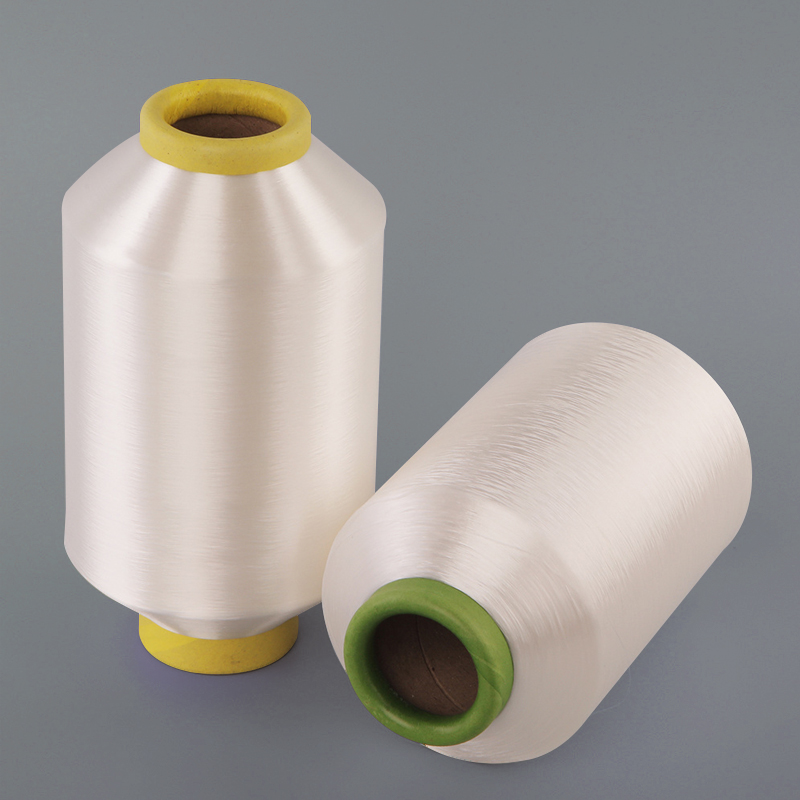
Pure Nylon Low Melting Yarn 85 Degree
The low-melting yarn is first incorporated into the textile assembly. It may be knitted into a three-dimensional structure, woven into a webbing, sewn into a seam, laid between fabric layers, or used as a securing filament in a specialty yarn. Accurate positioning is important because the yarn must contact the surfaces that need to be joined.
The assembly is exposed to heat through a press, roller, oven, laminating belt, hot-air system, or another controlled process. Heating must be uniform. If some areas remain below the activation range, the bond may be incomplete. If other areas become excessively hot, the yarn may flow too far, migrate through the face fabric, or create a visible glossy mark.
As the temperature approaches the activation range, the yarn begins to soften. Under light or moderate pressure, the softened polymer spreads into neighboring fibers and creates intimate contact between layers. The amount of flow depends on temperature, pressure, dwell time, yarn quantity, fabric absorbency, and the structure of the textile.
Pressure brings the materials together while the yarn is in its softened state. A practical starting pressure may be approximately 0.2 to 0.4 megapascal for suitable bonding equipment, although the appropriate value depends on the machine and material combination. Excessive pressure can force the polymer through a thin fabric or flatten a three-dimensional structure.
After heating and pressure contact, the assembly must cool sufficiently before it is moved or subjected to tension. As the copolyamide returns to a solid state, it locks the adjacent fibers and layers together. Cooling under controlled alignment can improve dimensional stability and reduce distortion.
Manufacturers should treat the following parameters as trial values rather than universal instructions. Different machines have different heat-transfer rates, and the temperature measured at the machine display may not equal the temperature at the yarn. A small trial batch should always be used before full-scale production.
| Processing Parameter | Suggested Starting Range | Adjustment Consideration |
|---|---|---|
| Press or bonding temperature | 90 to 100 degrees Celsius | Increase carefully if the bond is incomplete; avoid excessive heat |
| Dwell time | 8 to 15 seconds | Longer time may compensate for lower heat but can affect sensitive fabrics |
| Pressure | 0.2 to 0.4 megapascal | Adjust according to fabric thickness and desired penetration |
| Cooling before handling | 10 to 20 seconds | Allow the bond to set before stretching or folding |
| Trial design | Three or four temperature and dwell-time combinations | Compare bond strength, appearance, softness, and dimensional stability |
Many production teams begin by testing a moderate temperature with a short dwell time. If the bond is weak, they may increase dwell time or temperature in small increments. If the fabric shows glazing, shrinkage, color change, or excessive polymer migration, the temperature or dwell time should be reduced.
Liquid glue can provide strong adhesion, but it may introduce several production difficulties. Operators must control application weight, viscosity, drying time, spreading, storage, and cleaning. Liquid adhesives may also generate odors or volatile organic compounds depending on their chemical formulation. Uneven application can create hard spots, stains, or inconsistent bond strength.
Low-melting yarn provides a solid and clean alternative. It is positioned as a filament and activated only when required. This reduces the risk of spills, uncontrolled spreading, and adhesive contamination on machine surfaces. It also supports more precise placement in open structures, knitted nets, sewing lines, and reinforcement patterns.
Adhesive film forms a continuous layer. This can be useful for broad, fully covered lamination, but it may reduce breathability and alter the flexibility of the finished textile. Film can also create a noticeable stiff area, particularly in lightweight garments and elastic structures.
Low-melting yarn can be arranged as a line, grid, net, stitch, or open knitted structure. The result is a more breathable and flexible bond. Material usage can be concentrated only where bonding is necessary, potentially reducing unnecessary weight and improving the drape of the final product.
Ordinary nylon filament yarn provides high thermal resistance but does not melt at a temperature suitable for gentle textile bonding. Attempting to fuse it may damage the surrounding fabric long before the yarn becomes flowable. The 85-degree copolyamide grade solves this problem by offering a much lower activation point.
Polyester low-melt yarns can be effective in many industrial applications, but they may produce a firmer hand and may be less compatible with nylon face fabrics. Pure nylon copolyamide offers closer material compatibility when the surrounding textile is nylon-based. It can also provide better color coordination where nylon dye systems are used.
Low-melting yarns are available in different temperature bands, including approximately 85, 110, 120, and 130 degrees Celsius. Higher grades may be suitable for heavier applications or materials that require greater thermal resistance. However, the 85-degree grade offers a clear advantage when the surrounding components are heat-sensitive.
| Grade | Approximate Activation Range | Typical Selection Logic |
|---|---|---|
| 85-degree grade | Approximately 83 to 87 degrees Celsius | Delicate lace, thin mesh, elastic fabrics, foam, and sensitive pre-dyed textiles |
| 110-degree grade | Approximately 105 to 115 degrees Celsius | General interlining, shoe components, and moderately heat-resistant fabrics |
| 120-degree grade | Approximately 115 to 125 degrees Celsius | Applications requiring a higher processing margin |
| 130-degree grade | Approximately 125 to 135 degrees Celsius | Heavy webbing, industrial structures, and higher-temperature assemblies |
The correct selection rule is not simply to choose the lowest possible temperature. The grade must provide enough bond strength and durability for the intended product. However, when several grades meet the mechanical requirements, the lowest suitable activation temperature generally offers better protection for the base textile and greater processing flexibility.
Seamless underwear and intimate apparel require a careful balance of softness, stretch, recovery, appearance, and durability. Traditional stitching can create pressure points or visible seam lines. Adhesive films may feel stiff or reduce breathability. Pure nylon low-melting yarn can be integrated into a knitted or stitched structure and activated to secure the construction with a soft and flexible bond.
Fine counts such as 20D, 30D, 40D, or 50D may be considered for delicate lace, lingerie ribbons, elastic webbings, and lightweight garment components. The selected count should be tested for visibility, coverage, and bond strength. A correctly selected fine filament can help maintain the original drape and elasticity of the garment.
The low activation temperature is particularly valuable when elastic fibers are present. Excessive heat can reduce elastic recovery or cause distortion. Low-temperature bonding does not eliminate the need for testing, but it reduces the thermal challenge and makes it easier to preserve the performance of sensitive fibers.
Lace and ribbon structures often contain fine filaments, open spaces, and decorative edges that can be damaged by excessive heat or aggressive adhesive application. A thermally activated yarn can be placed along selected lines or incorporated into a patterned structure, creating support without covering the entire surface.
In elastic webbing, the bonding yarn may help stabilize the edge, secure layers, or hold components together before final sewing. The resulting construction can remain flexible instead of developing the board-like stiffness associated with some adhesive tapes. Testing should include repeated stretching, recovery, washing, and seam movement.
For decorative products, appearance is as important as mechanical performance. Raw white or custom-colored yarn can be selected to reduce visual contrast. The yarn’s position, thickness, and degree of flow should be controlled so that it does not produce an unwanted shine or visible ridge.
Chenille yarn contains a structure in which pile fibers must remain securely attached to the core. Fiber shedding and pull-out can reduce the quality and service life of the finished yarn. Low-melting nylon yarn can be used as a securing or bonding element to help stabilize the core and hold the surrounding fibers in place.
The soft bond is beneficial because chenille is commonly selected for its plush appearance and comfortable hand. A rigid adhesive could make the yarn harsh or reduce its flexibility. The copolyamide bonding structure is better suited to applications where the final yarn must remain soft while gaining improved resistance to fiber loss.
Manufacturers should evaluate the finished chenille for pile retention, abrasion resistance, bending behavior, washing stability, and visual uniformity. The correct denier and distribution of the bonding yarn will depend on the core construction and the target level of reinforcement.
Bonded sewing thread requires a stable thread structure that can pass smoothly through high-speed sewing equipment while maintaining good resistance to separation. Low-melting nylon yarn can function as a bonding component within a thread construction or can be used to stabilize selected thread structures after heat activation.
High tenacity and smooth rewinding are important in this application. Thread breakage can cause machine downtime, uneven seams, and quality problems. The yarn must be wound with consistent tension and supplied in a package suitable for the intended sewing equipment.
After bonding, the thread should be tested for abrasion, knot strength, seam slippage, washing stability, and resistance to repeated flexing. The appropriate performance will depend on whether the thread is used for apparel, footwear, upholstery, technical textiles, or another product category.
Three-dimensional knitted fabrics require controlled spacing, shape retention, and stable connection between structural layers. Low-melting yarn can be knitted into the architecture and then activated to stabilize selected points or surfaces. This allows the manufacturer to create shaped zones without relying entirely on stitching or rigid resin systems.
Potential products include three-dimensional shoe uppers, spacer fabrics, cushioning layers, technical mesh, and formed textile components. The open nature of a knitted structure allows air movement and flexibility, while the bonding yarn provides localized stability.
Fine or medium counts can be chosen according to machine gauge and the required support. Higher counts may produce stronger bonding lines, while lower counts may be preferred where softness and low visibility are the main priorities. Process trials should examine compression recovery, peel resistance, flex fatigue, and dimensional change after washing or heat exposure.
Footwear manufacturers may use low-melting yarn for mesh reinforcement, lining bonding, upper stabilization, and temporary positioning before stitching. The 85-degree grade is appropriate for components that could be damaged by the higher heat required by standard bonding materials. It can help maintain the softness and breathability of mesh while providing localized support.
In bags and luggage, the yarn may be used to hold reinforcement panels, stabilize lining structures, secure webbing, or position components before final sewing. Heavier denier options may be considered for thicker textile assemblies, although the finished bond must be tested for peel strength, flexing, abrasion, and load-bearing behavior.
It is important to distinguish between a bonding element and a primary structural component. In many footwear and luggage designs, the low-melting yarn should be combined with stitching, fabric reinforcement, foam, or another support layer. The yarn can improve assembly and stabilization, but the final construction must be engineered for the actual loads encountered during use.
The product can be used in selected rope and technical textile structures where a thermally activated bonding filament helps secure fibers or stabilize a construction. Heavier counts, such as 150D, 200D, or 300D, may be considered where greater polymer coverage or reinforcement is required.
In cable wire applications, the yarn may assist with insulation sealing or the positioning of textile components. The electrical, thermal, flame, and chemical requirements of the finished cable must be evaluated separately. The yarn should not be assumed to provide electrical insulation, flame resistance, or long-term heat resistance unless these properties have been specifically tested and documented.
Technical textile buyers should request application-specific samples and evaluate tensile strength, peel strength, aging, humidity resistance, chemical exposure, and temperature cycling. The appropriate specification may differ significantly from that used for apparel or decorative textiles.
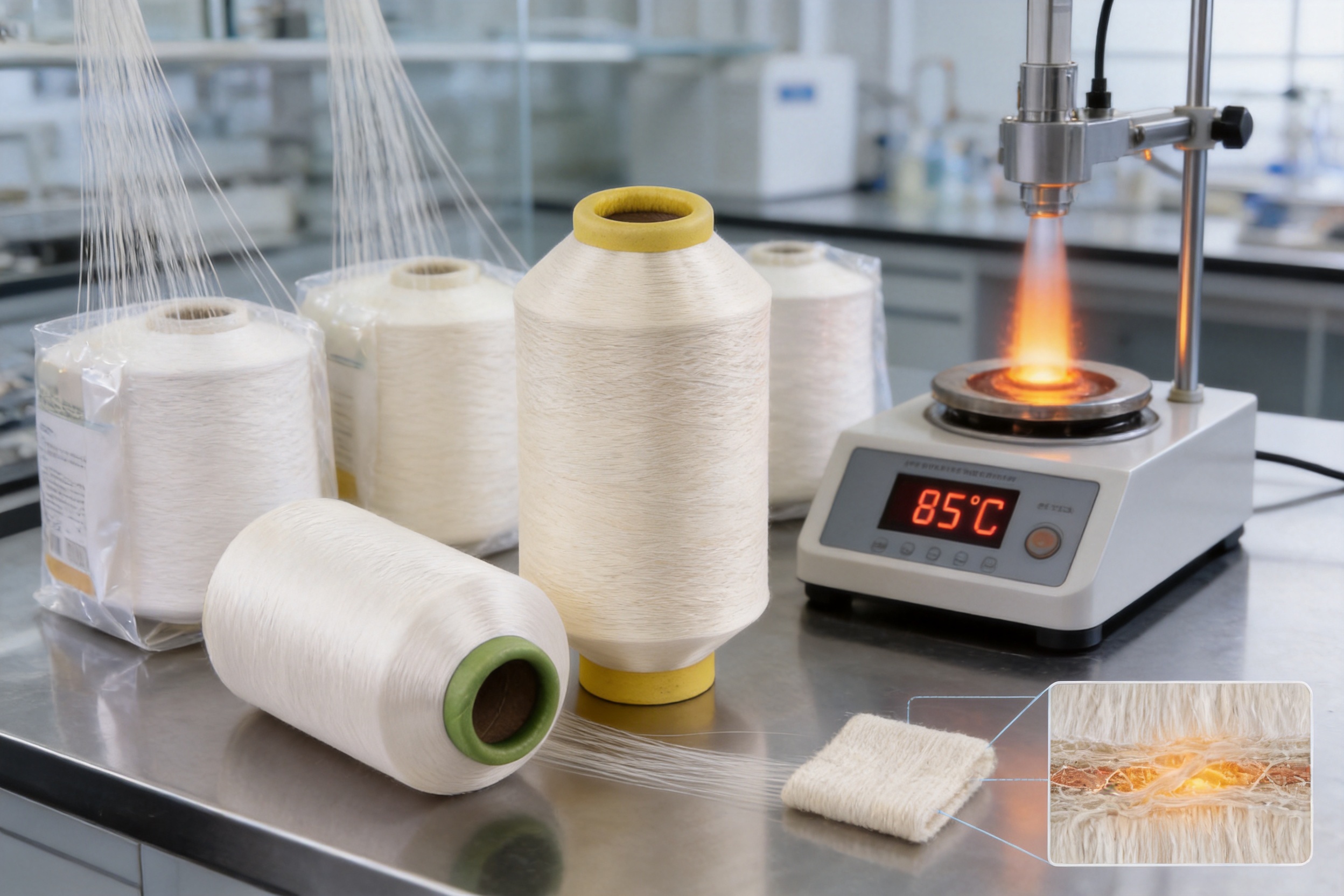
The product is supplied by GC FIBER, a specialized textile manufacturer established in China in 2006. The company focuses on special and functional eco-friendly textile products, including biodegradable yarn, low-melting yarn, ECDP yarn, anti-static yarn, HDPE yarn, bio-component yarn, and polyester filament yarn.
A major strength is the company’s ability to combine research, development, production, and sales within one organization. This structure supports communication between the customer, technical team, production department, and quality personnel. For specialty yarns, this coordination is important because the correct product is often determined not only by a catalog description but also by the customer’s machine, fabric construction, bonding temperature, and final performance requirements.
The company maintains a design and research and development function dedicated to special and functional textile materials. This capability supports the development of customized yarns with specified denier, filament count, cross-section, color, and functional behavior. It also allows the technical team to work with customers whose requirements do not fit a standard catalog grade.
For low-melting yarn projects, collaborative development may include selecting a suitable activation range, adjusting yarn fineness, evaluating the balance between tenacity and softness, and testing the yarn within the customer’s actual production process. This development approach can reduce the risk of selecting a material that appears suitable on paper but performs poorly on the production machine.
Multiple production lines and machines provide flexibility for different product types and order volumes. A specialty yarn manufacturer must control polymer processing, spinning, drawing, winding, packaging, and inspection. Stable equipment and experienced operators help maintain consistency in denier, winding quality, appearance, and processing behavior.
Production flexibility is also important for special orders. Customers may require a particular count, package form, color, filament arrangement, or small trial quantity before placing a larger order. The ability to support both custom development and larger-scale supply gives buyers a more practical path from sampling to commercialization.
Strong control over raw material supply helps maintain consistency between production lots. For a low-melting copolyamide yarn, polymer composition directly influences activation temperature, melt flow, tenacity, softness, and bond behavior. Raw material management therefore plays an essential role in producing a reliable product.
Quality control should include visual inspection, package inspection, denier verification, winding assessment, thermal testing, and application testing. Customers requiring strict process control may request batch test reports, thermal analysis, denier tolerance information, and color consistency data. Differential scanning calorimetry can be used to examine the melting curve and identify the actual softening and melting behavior of a production lot.
GC FIBER provides OEM and customized yarn solutions based on customer specifications. Customization may include denier, filament count, cross-section structure, color, and functional properties. Special production by order is useful when a customer needs a yarn that must operate within a particular machine gauge, fabric construction, bonding cycle, or finished-product standard.
The company’s technical and production teams can support projects from initial specification through sample development, trial production, order confirmation, and delivery. This is particularly valuable for customers entering a new application, because product selection can be refined through actual testing rather than relying solely on generic industry descriptions.
Low-melting yarn must be consistent enough to run on textile equipment before it is activated. Variations in denier, winding tension, surface condition, or thermal behavior can create problems during knitting, weaving, sewing, and bonding. A reliable production system therefore needs process controls at several stages.
The copolyamide raw material must be prepared under controlled conditions to support stable melt behavior. Moisture management is important for nylon-based polymers because excessive moisture can affect processing stability and final yarn properties. The polymer preparation process should be matched to the selected grade and intended performance.
During spinning, temperature, throughput, cooling, and drawing conditions influence filament uniformity and tenacity. The yarn must be sufficiently stable for handling but still retain the desired low-temperature activation behavior. Excessive thermal treatment could alter the polymer structure, while inadequate control could lead to uneven filaments.
Drawing affects strength, elongation, orientation, and shrinkage. The correct balance is necessary because a bonding yarn needs enough tenacity for textile processing but must also soften consistently during activation. Drawing conditions may be adjusted according to denier and the intended use.
Uniform winding supports stable unwinding and reduces tension fluctuations. Packages should be protected from heat, moisture, dust, and direct sunlight. Because the yarn activates at a relatively low temperature, storage and transportation conditions should be managed carefully to avoid softening or package deformation.
Final inspection may include package appearance, weight, yarn count, winding quality, color, thermal behavior, and application performance. Customers with demanding specifications should request a sample cone and conduct trials using their actual equipment before approving bulk production.
Cones or bobbins should remain in their original moisture-resistant packaging until they are ready for use. The storage area should be cool, dry, clean, and protected from direct sunlight. Whenever possible, storage temperatures should remain below 30 degrees Celsius.
The yarn should not be stored near steam stations, hot-air equipment, boilers, heating lamps, or warehouse areas that become excessively hot. Prolonged exposure to high ambient temperatures may soften the package surface or cause adjacent layers to adhere.
Stock should be rotated so that older batches are used first. Opened packages should be protected from moisture and contamination. Before production, operators should inspect the cone for deformation, surface sticking, broken filaments, or other signs of improper storage.
Denier selection should begin with the target textile and the required bond function. A fine 20D or 30D yarn may be appropriate where the bonding line must remain nearly invisible. A 40D, 50D, or 70D yarn may provide a balance between low visibility and improved coverage. Counts from 100D through 300D may be considered for heavier textiles, rope structures, technical fabrics, and applications where greater bonding material is needed.
Machine gauge and feed capability must also be considered. A yarn that is too heavy for a fine knitting machine may cause tension or feeding problems. A yarn that is too fine for a heavy structure may not provide sufficient coverage or bond strength. Sample trials should compare several counts whenever the application is new.
The final selection should be based on bond strength, softness, visibility, flexibility, washing resistance, and production efficiency rather than denier alone. A thicker yarn is not automatically stronger in the finished textile if it causes poor penetration, excessive flow, or an uneven bond line.
A structured validation program helps reduce production risk. The first step is to test the yarn on the actual fabric or component that will be used in the finished product. Substitute fabrics may behave differently because of differences in fiber type, dye, finish, thickness, porosity, or elastic content.
Testing should include at least one low-temperature trial, one moderate-temperature trial, and one trial with adjusted dwell time. The resulting samples should be examined for bond integrity, surface appearance, softness, flexibility, shrinkage, distortion, and polymer migration.
Mechanical testing may include peel strength, shear strength, tensile strength, seam slippage, flex fatigue, and repeated stretch recovery. For apparel and household products, washing and drying tests are important. For technical applications, exposure to humidity, chemicals, abrasion, temperature cycling, and long-term load may be required.
Thermal testing should confirm that the production equipment delivers the intended temperature at the bonding interface. A machine display may not accurately represent the temperature of the textile surface. Temperature-sensitive labels, contact probes, or validated process measurements can help identify differences between the set point and actual material temperature.
Once properly activated and cooled, a low-melting copolyamide bond can provide good resistance to ordinary flexing, handling, and moderate washing conditions. However, durability depends on the bond design, material compatibility, activation quality, pressure, and cooling process.
Manufacturers should not rely solely on the nominal melting point to predict wash performance. The finished article should be tested using the actual detergent, temperature, agitation, and drying method expected in the market. High-temperature tumble drying or ironing may approach the reactivation range and could weaken or alter the bonded area.
Dry-cleaning performance should also be confirmed for products intended for professional cleaning. Solvent exposure, repeated pressing, and mechanical agitation may affect the bond differently from household washing. Application-specific testing is especially important for premium garments, uniforms, footwear, and technical products where failure would be costly.
Low-melting yarn can help reduce dependence on liquid solvent adhesives in suitable applications. Because it is supplied as a solid filament and activated through heat, it can simplify adhesive handling and reduce the need for liquid storage, mixing, drying, and cleanup. The environmental profile of the complete product still depends on polymer sourcing, production energy, dyeing, finishing, and end-of-life treatment.
The lower activation temperature may also reduce energy demand in some bonding operations. Actual savings should be calculated from the specific equipment and production cycle rather than assumed universally. Lower-temperature processing can additionally reduce thermal damage and decrease the amount of rejected textile caused by scorching, shrinkage, or loss of elasticity.
Workplace cleanliness is another potential advantage. A yarn-based bonding system does not create the same type of wet adhesive overspray, dripping, or liquid residue associated with some glue application systems. This can support cleaner production areas and simpler machine maintenance.
Specialty yarns require more than a standard spinning process. The manufacturer must understand how polymer structure, denier, winding, thermal activation, and textile processing interact. A supplier that focuses on functional and eco-friendly textile products is better positioned to support application development than a supplier offering only general-purpose filament.
GC FIBER’s product portfolio includes several categories of functional materials, giving the company experience with different performance requirements. Its work in low-melting yarn, anti-static yarn, biodegradable yarn, bio-component yarn, HDPE yarn, ECDP yarn, and polyester filament yarn reflects a broader focus on specialized textile solutions.
The company also supports cooperation on new material development. This means customers can discuss a project according to its finished-product requirements rather than being limited to a fixed catalog specification. Such cooperation may be valuable when a customer needs a custom activation range, unusual denier, special color, modified filament structure, or a new combination of softness and tenacity.
A responsive technical team can also help customers identify the correct testing method, sample size, package form, and production conditions. This reduces the gap between laboratory performance and factory performance, which is one of the most common challenges in specialty textile sourcing.
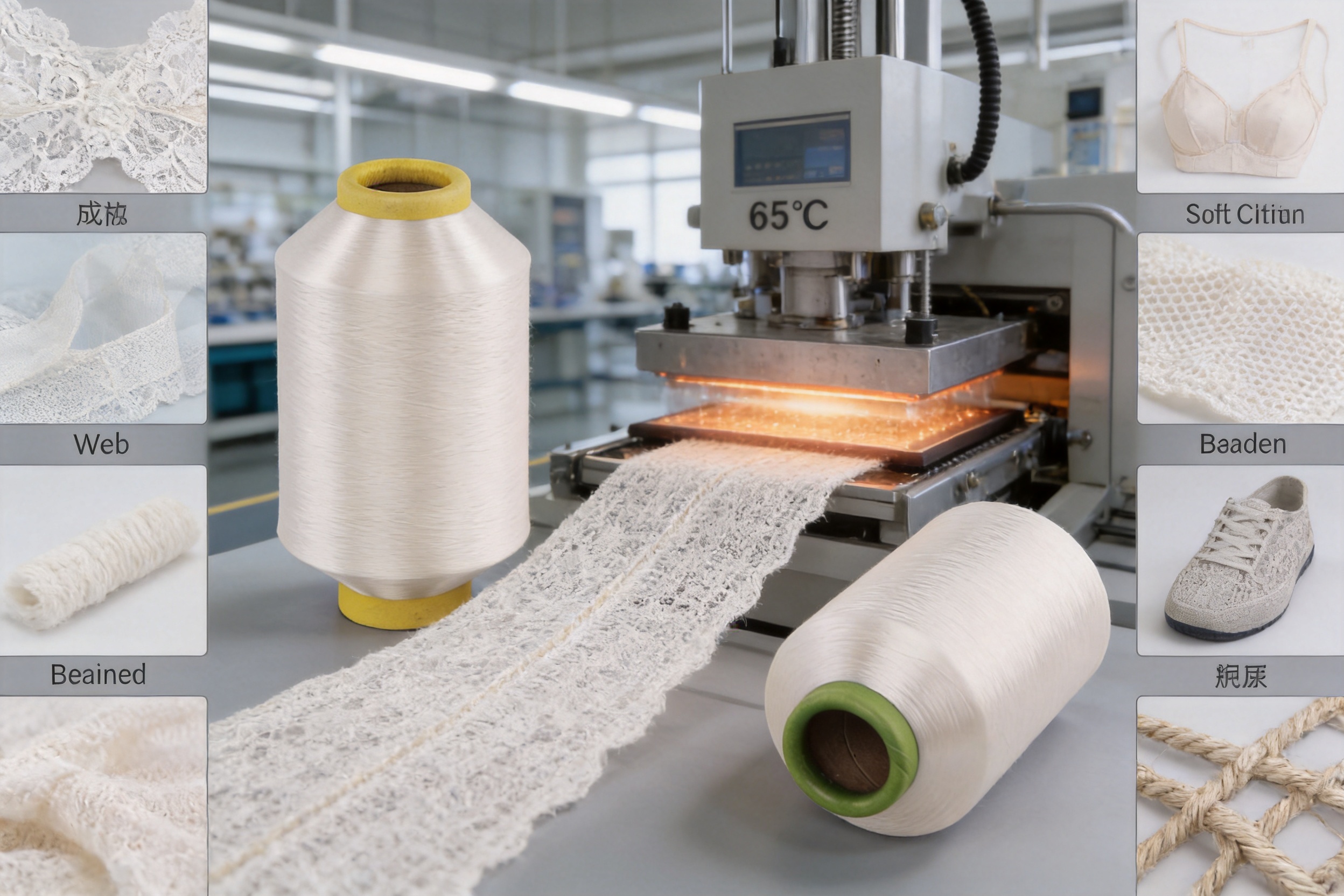
It is used as a heat-activated bonding and reinforcing yarn in three-dimensional knitted fabric, chenille yarn, lingerie ribbon, lace, bonded sewing thread, seamless underwear, rope, cable wire sealing, footwear components, bag reinforcement, and selected technical textile structures.
It refers to the nominal activation or melting point. Actual softening may begin below this temperature, while complete flow may occur across a small temperature range around the nominal value. Testing by the supplier and application trials on the customer’s equipment are recommended.
The product is made from pure nylon copolyamide. It is designed as a nylon-based low-melting yarn rather than a conventional high-melting nylon filament or a standard polyester blend.
Ordinary nylon yarn is designed to remain stable at much higher temperatures and does not normally function as a low-temperature adhesive. The copolyamide structure of this product allows it to soften and bond at approximately 85 degrees Celsius.
Adhesive film forms a continuous sheet, while low-melting yarn can be knitted, woven, sewn, or placed in an open net structure. The yarn therefore allows more breathability, flexibility, and localized bonding.
It can be suitable for elastic fabrics because its low activation temperature reduces thermal stress. However, the exact fabric, elastic content, dye, finish, and bonding cycle should be tested before production approval.
Fine counts such as 20D, 30D, 40D, or 50D may be suitable for lace and lightweight structures. The best choice depends on machine gauge, required bond strength, visibility, and the weight of the lace.
Higher counts such as 100D, 150D, 200D, or 300D may be considered for heavier structures. The correct selection depends on the rope construction, required reinforcement, processing method, and final mechanical requirements.
Suitable fine and medium counts can be processed on appropriate circular knitting, warp knitting, or raschel equipment. Machine tension, friction heat, feed control, and yarn package quality should be checked to prevent premature softening or filament damage.
A special needle is not generally required for ordinary handling before bonding. For fine yarns and high-speed sewing, a suitable needle eye and controlled tension can reduce friction and filament damage.
Excessive heat may cause over-flow, polymer migration, surface glazing, fabric shrinkage, discoloration, or loss of elasticity. It is usually safer to begin with a moderate temperature and adjust dwell time and pressure carefully.
Properly bonded products can generally be designed to withstand normal washing, but the actual performance depends on the textile construction and bonding conditions. Washing, drying, and ironing tests should be conducted using the finished product.
It may be suitable for dry-cleaned products, but solvent compatibility must be tested for the exact material combination. The customer should request application-specific test data when professional cleaning is required.
It is primarily a bonding, stabilizing, or reinforcing element. It should not automatically be treated as the only load-bearing component. The complete product must be engineered and tested with all structural materials included.
Special colors can be produced by order, subject to technical feasibility, minimum quantities, and color requirements. Customers should provide a color standard or sample and request confirmation before production.
Yes. Custom options may include denier, filament count, cross-section structure, color, package form, and functional requirements. Special production should be discussed with the technical team before sampling.
Buyers may request a technical data sheet, batch information, denier tolerance, thermal analysis, color data, packaging details, and application test results. A sample cone is also recommended before a large production order.
Store it in the original moisture-resistant packaging in a cool, dry area away from direct sunlight, steam, heating equipment, and other heat sources. Keeping the storage environment below 30 degrees Celsius whenever possible is recommended.
Shipping can be arranged through Shanghai seaport. Delivery terms, packaging, lead time, and order quantity should be confirmed during quotation and order negotiation.
Pure Nylon Low Melting Yarn 85 Degree is a specialized copolyamide filament designed to deliver controlled bonding at a temperature close to 85 degrees Celsius. Its principal advantages are low-temperature activation, soft feel, high tenacity, smooth rewinding, flexible bonding, and compatibility with a wide range of delicate and technical textile applications.
Compared with liquid adhesives, it offers cleaner solid-state handling and accurate placement. Compared with adhesive films, it can create breathable and flexible open structures. Compared with ordinary nylon yarn, it provides a practical thermal bonding function. Compared with higher-temperature low-melt grades, it reduces the thermal burden placed on sensitive fabrics, elastic materials, foam, lace, and fine mesh.
The product is available in a broad range of deniers and can be produced according to specific customer requirements. GC FIBER supports the material with research and development, specialized production lines, raw material control, OEM service, custom development, and technical cooperation. These capabilities help customers move from initial concept to sample testing and larger-scale supply.
For the best result, buyers should select the denier according to the textile construction, confirm the actual thermal behavior, test multiple processing conditions, and evaluate the finished product for strength, softness, appearance, washing, flexing, and long-term stability. When properly specified and processed, 85-degree pure nylon low-melting yarn provides an efficient and versatile solution for modern textile bonding and functional fabric construction.
1. Technical product information for Pure Nylon Low Melting Yarn 85 Degree, including available counts, features, applications, and ordering information.
2. General principles of copolyamide polymer modification, crystallinity control, softening behavior, and thermoplastic textile bonding.
3. Textile yarn processing practices for spinning, drawing, winding, knitting, sewing, and heat-setting operations.
4. General testing practices for textile peel strength, tensile strength, washing durability, flex fatigue, thermal stability, and dimensional change.
5. Manufacturer information concerning specialty textile production, functional yarn development, OEM cooperation, and custom material research.
6. General guidance for low-temperature textile lamination, heat-activated bonding yarns, adhesive films, and technical textile reinforcement.
Made of PBS (Polybutylene Succinate), fully biodegradable.Features:1.Home compostable2.Raw material: PBS Polybutylene Su...
READ MOREPlease fill out the form below and our team will contact you as soon as possible.
Addres: No.66 Qiaogang Road, Haian, Nantong City, Jiangsu Province, China
E-mail: service@gcfiber.com admin@gcfiber.com
Copyright ? GC FIBER All Rights Reserved. Eco-Friendly Textile Products Manufacturer Biodegradable Yarn Company