English
 中文简体
中文简体
It is made with Bio-base PLA, fully biodegradable Feature: 1. Industrial compost product 2. Made with PLA 3. Eco-frie...
READ MORE
Content
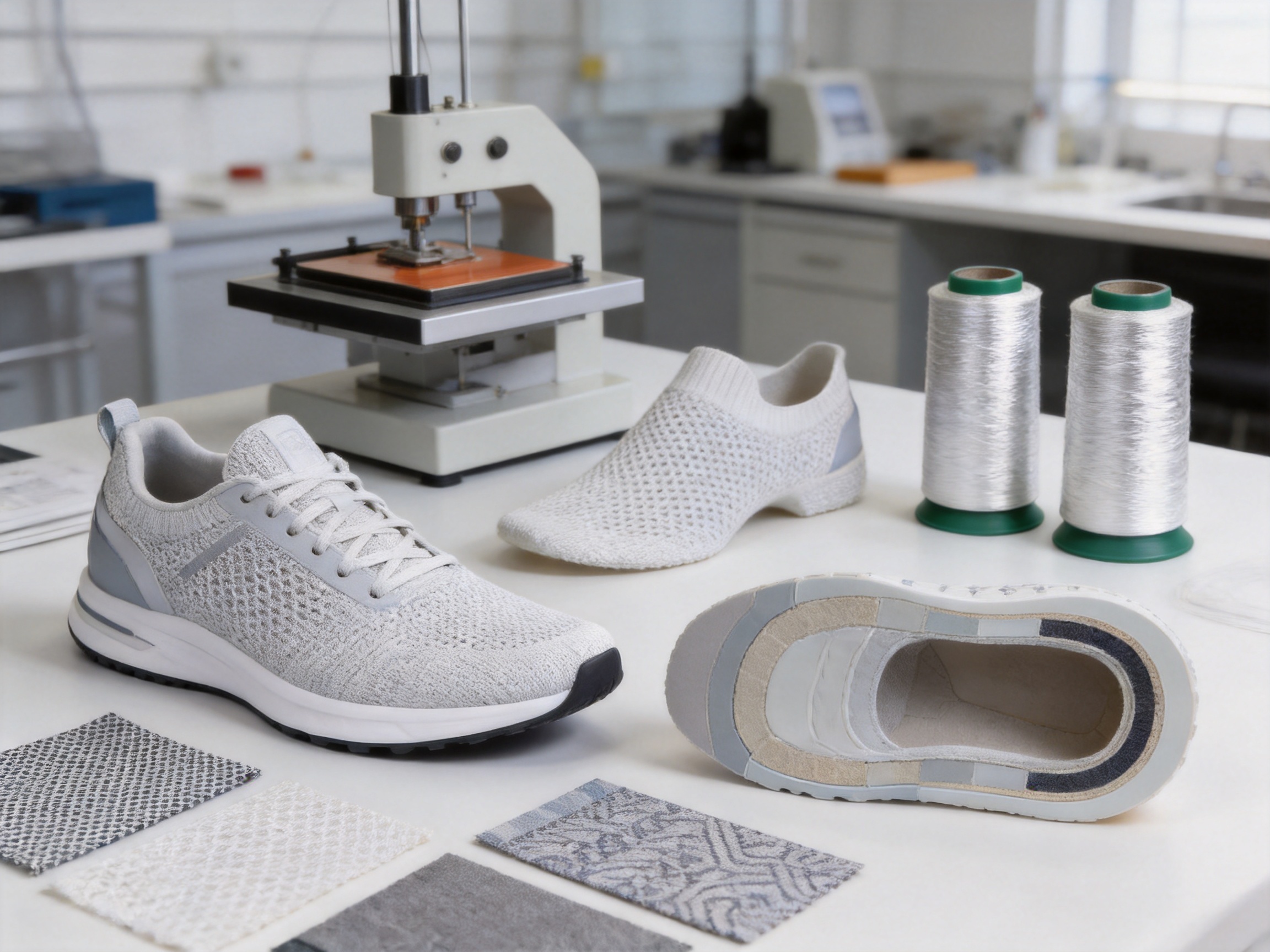
Polyester low-melting yarn is an important functional material for modern footwear production. It combines the dimensional stability and strength of polyester with a controlled thermal bonding function, allowing manufacturers to join textile layers without relying entirely on adhesives, additional stitching, or high-temperature processing. In shoe upper manufacturing, this combination is especially valuable because knitted meshes, woven fabrics, coated textiles, and lightweight reinforcement materials may be sensitive to excessive heat.
The product discussed in this article is a polyester low-melting yarn designed for shoe upper applications. It has a melting point of approximately 110 degrees Celsius, high tenacity, and smooth rewinding performance. A reference count of 150D is available, while other counts may be considered for special production by order. The yarn is intended for use in knitted and woven upper structures, flyknit panels, reinforcement zones, lining attachment, and other footwear components requiring controlled low-temperature bonding.
Compared with ordinary polyester filament yarn, this product provides a functional bonding response at a much lower temperature. Compared with some general-purpose bonding materials, it offers the advantages of continuous yarn processing, stable feeding, easy integration with knitting and weaving operations, and a clean bonding profile. These characteristics make it suitable for manufacturers seeking improved production consistency, material compatibility, and process efficiency.
A shoe upper is a technically demanding textile structure. It must provide comfort, flexibility, breathability, abrasion resistance, shape retention, and an attractive appearance. At the same time, the upper must connect reliably with reinforcement components, heel structures, tongue sections, lining materials, logos, and other elements used during footwear assembly.
Traditional production methods may rely on multiple layers of adhesive, sewing operations, heat-transfer films, or rigid reinforcement pieces. Each method can be effective, but each also introduces possible limitations. Adhesives may add weight, create stiffness, produce odor, require additional application equipment, or affect recyclability. Sewing adds puncture points and may be difficult to apply uniformly to complex three-dimensional textile surfaces. High-temperature processing can distort synthetic fibers, damage printed patterns, change color, or reduce the soft hand feel of the upper.
Low-melting yarn provides another approach. The yarn can be incorporated into a knitted or woven structure and then activated during a controlled heating or pressing stage. When the temperature reaches the designed activation range, the low-melting component softens and bonds with adjacent fibers or textile layers. After cooling, the bonded area helps hold the structure in its intended position.
This process allows the yarn to function as an integrated bonding element rather than as a separate adhesive layer. It can be placed precisely through the knitting or weaving design, enabling manufacturers to reinforce selected zones without applying a continuous film across the entire upper. This supports lighter construction and gives designers greater control over flexibility, breathability, and localized support.
For manufacturers of sports shoes, casual shoes, work shoes, and other textile footwear, the ability to create stable bonded zones at moderate temperatures can improve both product design and production control. It is particularly useful where the upper contains heat-sensitive mesh, stretch knit, coated fabrics, decorative patterns, or multi-layer constructions.
Polyester Low-Melting Yarn for Shoe Uppers is a functional polyester yarn engineered to provide controlled thermal bonding together with reliable textile-processing performance. Its primary features include high tenacity, easy rewind, a melting point of approximately 110 degrees Celsius, and suitability for shoe upper applications.
The yarn is available in a reference specification of 150D, with additional counts available depending on customer requirements and production conditions. This flexibility allows footwear manufacturers to evaluate the product according to yarn density, fabric construction, upper thickness, knitting machine settings, and the required level of bonding performance.
The yarn may be supplied on cones or in another packing format requested by the customer. Shipment can be arranged through the Shanghai seaport, while production can be organized according to the order specification and technical requirements of the buyer.
| Item | Reference Value or Description |
|---|---|
| Product type | Polyester low-melting yarn |
| Primary application | Shoe upper construction and bonding |
| Reference count | 150D |
| Melting point | Approximately 110 degrees Celsius |
| Tenacity | High-tenacity grade |
| Winding performance | Easy rewind and stable feeding |
| Suitable equipment | Common circular knitting, flat knitting, weaving, heat-pressing, and setting equipment |
| Packaging | Cone packaging or customer-requested format |
| Customization | Special production by order, subject to technical confirmation |
The values in this table should be treated as reference information. Final technical data, tolerances, packaging details, and process recommendations should be confirmed through a sample evaluation and an official product specification before mass production.
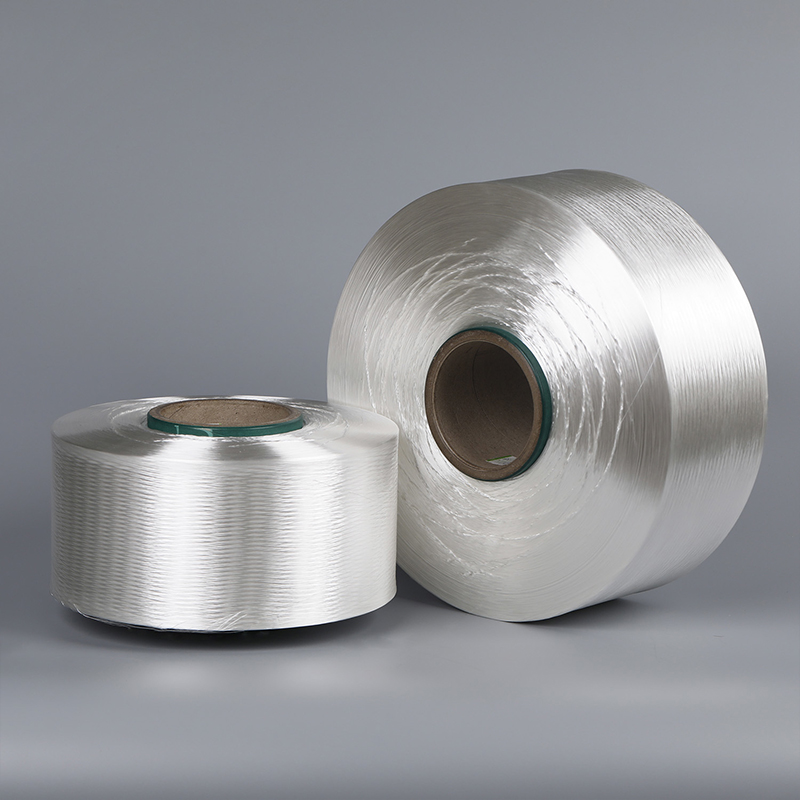
Polyester Low Melting Yarn For Shoes Upper
High tenacity is essential when yarn must pass through multiple stages of industrial production. During winding, warping, knitting, weaving, handling, and heat pressing, the yarn is exposed to tension, friction, bending, and repeated contact with guides or machine components. A yarn with insufficient tensile strength may break frequently, reduce machine efficiency, and create visible defects in the finished upper.
The high-tenacity design of this polyester low-melting yarn helps preserve structural integrity during normal shoe upper production. It is intended to resist breakage during high-speed feeding and to maintain stable performance when incorporated into knitted or woven constructions. This is particularly important for automated production lines where even a small number of repeated yarn breaks can affect output, labor requirements, and overall production cost.
High tenacity also supports the formation of consistent bonded structures. Before activation, the yarn must be positioned accurately within the textile. If the yarn stretches unpredictably or breaks during processing, the final bonding pattern may not match the design. Stable tensile behavior therefore contributes not only to machine performance but also to the repeatability of the finished product.
Easy rewind performance is another practical advantage. A yarn may have excellent laboratory properties but still cause production difficulties if it unwinds unevenly, tangles easily, or develops unstable tension on the machine. Smooth unwinding helps maintain continuous feeding and reduces the risk of interruptions caused by loops, snags, or uneven package release.
The product is wound to support smooth rewinding and stable feeding on automated textile equipment. This characteristic is useful during high-throughput knitting and weaving operations, where the yarn may be consumed continuously for many hours. Consistent unwinding can reduce the frequency of operator intervention and help maintain uniform fabric appearance.
Easy rewind performance also supports more efficient package changes. When the yarn runs smoothly from the cone, operators can spend less time correcting feeding problems and more time monitoring overall production quality. For footwear factories operating multiple machines, this can contribute to more predictable scheduling and better utilization of labor.
The approximately 110-degree Celsius melting point is the defining functional feature of this yarn. It provides a moderate thermal activation range for bonding textile layers and structural elements used in shoe uppers.
Standard polyester materials generally require a considerably higher temperature to melt. Processing at such temperatures may damage or distort neighboring materials, particularly when the upper contains synthetic mesh, stretch knits, printed surfaces, coatings, or thermally sensitive decorative elements. A low-melting yarn is designed to activate before those materials reach their own damaging temperature range.
At approximately 110 degrees Celsius, the yarn can soften and form a bond during a controlled heat-pressing, oven-setting, or thermal bonding operation. The exact temperature, pressure, dwell time, and cooling conditions will depend on the upper structure and equipment configuration. Nevertheless, the lower activation range gives engineers a practical process window for materials that cannot safely tolerate standard polyester melting temperatures.
A controlled melting profile also supports process repeatability. If the yarn activates consistently from batch to batch, manufacturers can establish more stable production parameters. This helps reduce variation between production lots and supports more uniform bonding strength, appearance, and dimensional behavior.
General-purpose low-melting yarns may be usable in many textile applications, but footwear uppers have specific requirements. They often combine fine yarns, open mesh areas, three-dimensional knitted zones, elastic sections, reinforcement regions, and areas that must remain soft against the foot. A yarn intended for this market must therefore balance bonding performance with flexibility, appearance, and processing stability.
This product is formulated for shoe upper applications, including knitted flyknit panels, jacquard mesh, woven upper sections, lining attachment, and heel reinforcement zones. Its purpose-built positioning allows manufacturers to evaluate it according to the real requirements of footwear production rather than relying on a material designed for an unrelated industry.
The yarn can be incorporated into selected areas of an upper to provide localized support. This may help designers avoid excessive use of rigid films or thick adhesive layers. The result can be a more controlled balance between structure and flexibility, depending on the construction and bonding conditions selected by the manufacturer.
Ordinary polyester filament yarn is widely used because it offers strength, abrasion resistance, dimensional stability, and good processability. However, standard polyester does not provide the same low-temperature bonding function. If a manufacturer wants standard polyester to melt and fuse, a much higher temperature may be required.
The low-melting product adds a thermal bonding function while retaining the familiar processing format of a continuous polyester yarn. This allows it to run through textile equipment and become part of the upper structure before the bonding stage. The manufacturer can therefore combine textile formation and later thermal activation in a planned sequence.
For shoe upper factories, this may reduce the need to select between a strong yarn and a bondable material. The product is designed to provide both high-tenacity textile performance and controlled low-temperature activation, subject to the final application conditions.
Adhesive films provide strong and uniform bonding over broad areas, but they may increase the weight and stiffness of a shoe upper. They can also require separate cutting, positioning, storage, and lamination steps. When the desired reinforcement is limited to a specific design zone, a full film may provide more material than necessary.
Low-melting yarn can be placed selectively in the knitted or woven structure. This allows the manufacturer to create bonding points or lines where they are needed. The approach may preserve more open area for breathability and reduce unnecessary material addition.
Because the yarn is integrated into the textile construction, it can also support more precise design control. The final result depends on yarn density, placement, heating conditions, pressure, and the characteristics of the surrounding fibers. For this reason, a trial run is important, but the design flexibility can be a significant advantage for advanced footwear development.
Stitching remains essential in many shoe constructions, but it may not be ideal for every location. Sewing can create visible lines, puncture delicate fabrics, and increase production time. It may also be difficult to apply uniformly to three-dimensional or highly elastic upper sections.
A low-melting yarn can provide a bonding function without creating additional needle holes. It can help stabilize layers, secure linings, or reinforce specific zones through heat activation. In some constructions, it may complement stitching by reducing movement before sewing or by supporting areas that are difficult to stitch.
The appropriate method depends on the product design and performance target. Low-melting yarn should not automatically be viewed as a total replacement for sewing or adhesive. Instead, it gives footwear engineers another tool for balancing strength, flexibility, appearance, and production efficiency.
High-temperature bonding materials may be unsuitable for shoe uppers containing heat-sensitive components. Excessive heat can cause shrinkage, surface distortion, discoloration, coating damage, loss of elasticity, or changes in hand feel. These problems may lead to rejected products and limit design options.
The approximately 110-degree Celsius activation range of this yarn gives manufacturers access to a lower-temperature bonding route. It is designed to activate within a range that can be more compatible with synthetic mesh, knit fabrics, nonwoven linings, and other upper materials. This does not eliminate the need for process validation, but it can make thermal bonding more accessible for delicate constructions.
The performance of a functional yarn depends not only on its formulation but also on the consistency of its manufacturing process. A low-melting yarn must maintain a controlled thermal response while also meeting the mechanical and winding requirements of textile production. Small variations in melting point, tension, filament condition, or package formation can influence the final result.
The manufacturer behind this product has specialized in special and functional textile yarns since 2006. Its product range includes low-melting yarn, biodegradable yarn, ECDP yarn, anti-static yarn, HDPE yarn, bio-component yarn, and polyester filament yarn. This product portfolio indicates experience with functional fiber development and with the processing requirements of materials that have properties beyond those of standard textile yarns.
Low-melting yarn production begins with the selection and management of polyester components that provide the required melting behavior. The material must be engineered so that the activation temperature is low enough for the intended bonding application while maintaining sufficient strength and stability during textile processing.
Material preparation should be carefully controlled because moisture, contamination, inconsistent feeding, and temperature variation can affect spinning behavior. Proper handling of the polymer components supports stable extrusion and helps reduce variation in the final yarn.
For a product designed around an approximately 110-degree Celsius melting point, thermal consistency is particularly important. The yarn must not activate prematurely during normal winding or knitting, yet it must soften reliably during the intended heating stage. This balance requires coordinated control of polymer formulation, spinning conditions, cooling, drawing, and winding.
During spinning, the polymer is heated, extruded through spinneret openings, and formed into continuous filaments. The geometry and uniformity of the extruded filaments influence yarn fineness, strength, appearance, and processing behavior.
Consistent filament formation helps the yarn maintain a stable diameter and reduces the possibility of weak points. Uniformity is important for shoe upper manufacturing because uneven yarn can create variation in fabric density, surface appearance, or bonding response. A controlled spinning process also contributes to predictable performance during high-speed knitting and weaving.
Functional yarn production requires careful management of temperature and throughput. If the polymer temperature is too high or too low, the filament may not form correctly. If the cooling or solidification conditions vary, the yarn may develop differences in orientation or physical behavior. A professional production system therefore monitors the key operating conditions throughout the spinning stage.
Drawing aligns the molecular structure of the filaments and helps develop the mechanical properties required for textile processing. The drawing ratio, heating conditions, and line speed must be balanced so that the yarn achieves high tenacity without losing the thermal characteristics needed for low-temperature bonding.
This balance is one of the key technical challenges of low-melting yarn. Excessive orientation may improve strength but alter shrinkage or melting behavior. Insufficient orientation may reduce tenacity and increase breakage during knitting. A controlled manufacturing process must therefore consider both mechanical performance and thermal activation.
For shoe upper applications, the resulting yarn should be strong enough for normal machine handling while remaining capable of softening at the intended bonding temperature. The production process is designed around this dual requirement.
Winding is more than a simple packaging operation. The yarn must be placed on the cone with suitable tension, density, and surface regularity so that it can unwind smoothly on the customer’s equipment. Poor package formation can cause snags, tension fluctuations, yarn loops, or feeding interruptions even when the yarn itself has good tensile properties.
The easy-rewind feature of this product reflects the importance of package quality. Controlled winding supports stable yarn release and helps reduce tangling during automated production. It also makes the material easier for operators to handle during package changes and machine preparation.
Quality checks during winding may include visual inspection, tension monitoring, package weight verification, and evaluation of unwinding behavior. The exact inspection plan depends on the production line and product specification, but the objective is consistent package performance from cone to cone.
Because the product is defined by its low-melting behavior, thermal verification is a central part of quality control. The manufacturer monitors melting point stability from batch to batch so that customers can achieve comparable bonding results on repeated orders.
Thermal testing may be combined with practical bonding trials. Laboratory measurement confirms the material’s thermal behavior, while application testing demonstrates how the yarn interacts with specific upper fabrics, pressure levels, and heating cycles. This combination provides a more useful understanding than relying on a single numerical value.
The stated melting point of approximately 110 degrees Celsius should be understood as a product design reference rather than a universal processing setting. Actual activation depends on heating method, contact efficiency, pressure, exposure time, fabric mass, machine calibration, and cooling conditions. The manufacturer can support customers in selecting suitable trial parameters for their equipment and construction.
Functional textile materials benefit from clear batch management. Traceability allows the manufacturer and customer to connect a shipment with its production records, test results, packing details, and technical communication. This is useful when a factory is comparing trial lots, investigating process variation, or scaling from development to mass production.
Technical support is also important because the best process conditions differ between customers. A thin knitted mesh may require different heat and pressure settings from a dense heel reinforcement or a multi-layer lining structure. The manufacturer’s experience with special yarns allows it to discuss these factors with sourcing teams, product engineers, and production managers.
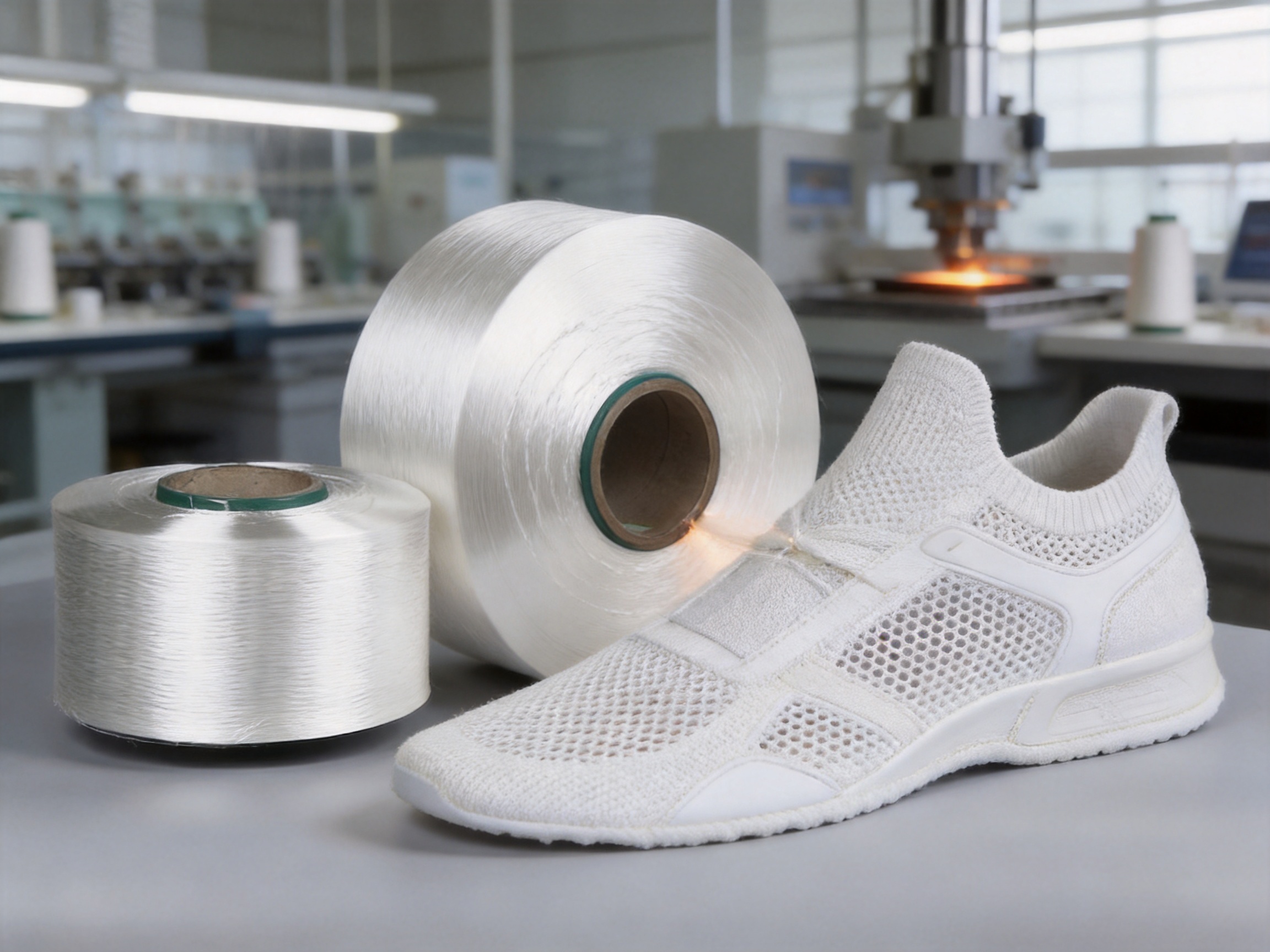
Knitted uppers often combine several stitch structures within a single component. Some areas need to remain soft and flexible, while others require reinforcement or shape retention. Low-melting yarn can be positioned in selected zones to support dimensional stability after thermal activation.
In a flyknit-style upper, the yarn may be used around the heel, eyestay, toe, or sidewall, depending on the design. The final performance will depend on stitch density, yarn arrangement, neighboring materials, and bonding parameters. A development trial can help determine whether the yarn should be used continuously, intermittently, or in a defined pattern.
Jacquard mesh and woven fabrics may require localized stabilization to preserve pattern definition or reinforce load-bearing areas. The low-melting yarn can be included in selected woven or knitted sections and activated after fabric formation.
Because the yarn is available in a fine textile format, it can be considered for constructions where a large reinforcement film would be too rigid or visually intrusive. Manufacturers can compare different yarn counts and placement densities to achieve the desired balance of support and flexibility.
The heel area experiences repeated movement and requires dimensional stability. Low-melting yarn can support bonding between textile layers used around the heel counter or rear-quarter section. It may help keep the reinforcement aligned during later assembly operations.
In this application, engineers should evaluate the bond strength after repeated flexing, compression, moisture exposure, and laundering or cleaning conditions relevant to the finished footwear. The yarn can provide a useful bonding function, but the complete shoe structure must be tested as a system.
Some footwear designs require the lining to remain accurately positioned against the outer upper. A low-melting yarn may be incorporated into the structure to create controlled attachment points between layers. This can reduce movement during assembly and help maintain a clean internal finish.
Since the yarn activates at a moderate temperature, it may be suitable for combinations involving synthetic mesh, knit fabric, and nonwoven lining materials that could be affected by higher-temperature processing. Sample testing remains necessary to confirm appearance, comfort, and wash durability.
Although this product is specially positioned for shoe uppers, the same low-temperature bonding principle may be relevant to other textile components. Potential related applications include sportswear construction, structured textile panels, fabric lamination, nonwoven assemblies, and components requiring controlled bonding without excessive heat.
Each application should be reviewed separately. A yarn specification that works well in a shoe upper may require different density, heating, or pressure conditions in apparel or industrial textiles. Special production by order may be considered when the customer has a specific bonding objective.
Before starting production, the yarn should be stored in a clean and dry environment and protected from contamination. Operators should inspect the cones for damage and confirm the count, batch information, and packaging condition. Machine guides, tension devices, needles, and feeding components should be checked to ensure that they are suitable for the selected yarn.
The equipment should be calibrated according to normal factory practice. Stable machine tension is important because excessive tension can increase breakage or alter the structure of the knitted or woven fabric. Too little tension may cause uneven feeding or fabric irregularity.
A small trial is recommended before mass production. The trial should reproduce the intended upper construction as closely as possible, including yarn count, stitch or weave density, surrounding materials, heating method, and pressure conditions.
During the trial, the factory should record yarn breakage, feeding stability, fabric appearance, dimensional change, thermal response, bond formation, and cooling behavior. These observations provide a practical basis for setting the production parameters.
The bonding stage may use a heat press, oven, or another suitable thermal setting system. The target temperature should be established through testing rather than assumed solely from the nominal melting point. Heat transfer may differ significantly between direct-contact pressing and circulating-air heating.
Important variables include temperature, dwell time, pressure, heating rate, cooling method, and the number of textile layers. A higher pressure may improve contact, while excessive pressure may flatten the texture or reduce the desired loft. Longer exposure may increase bonding but could also affect color, stretch, or hand feel.
The approximately 110-degree Celsius melting point provides a starting reference for development. The final operating window should be determined with the actual fabric, machine, and product design.
After heating, the bonded structure should be allowed to cool under controlled conditions. Premature movement may weaken the bond or cause distortion before the low-melting component has fully stabilized.
Inspection should include visual evaluation, dimensional measurement, manual bond assessment, and, where appropriate, peel or tensile testing. The upper should also be checked for scorching, discoloration, unwanted stiffness, surface marks, and loss of elasticity.
Purchasers and technical teams should evaluate the product using both yarn-level and finished-article criteria. A laboratory certificate can provide useful information, but application testing is necessary to confirm suitability for a particular shoe upper design.
| Evaluation Area | Suggested Questions |
|---|---|
| Yarn identity | Does the count and product specification match the purchase requirement? |
| Package quality | Does the cone unwind smoothly without tangling or excessive tension variation? |
| Machine performance | Are breakage, feeding interruptions, and operator interventions within acceptable limits? |
| Thermal response | Does the yarn activate within the intended temperature and time window? |
| Bonding result | Are the bonded layers stable after cooling and handling? |
| Appearance | Is there any discoloration, scorching, surface marking, or unwanted pattern change? |
| Comfort and flexibility | Does the finished upper retain the desired softness, stretch, and hand feel? |
| Durability | Does the bonded area remain stable after flexing, abrasion, moisture, and relevant cleaning tests? |
| Production consistency | Can the same process settings be repeated across multiple lots? |
These evaluation items help connect material performance with actual footwear requirements. A yarn may show good bonding in a laboratory sample but perform differently in a thick multi-layer upper. Testing should therefore represent the real product wherever possible.
Low-melting yarn can support material efficiency by allowing reinforcement to be positioned selectively rather than applying a full-area film. In a suitable design, this may reduce the amount of additional bonding material used in the upper. Lower-temperature processing may also help reduce thermal stress on heat-sensitive components and simplify certain production sequences.
The environmental profile of a finished shoe depends on the complete product system, including polymer sources, energy use, dyeing, finishing, assembly, durability, repairability, and end-of-life treatment. A low-melting yarn should not be described as automatically sustainable solely because it uses less processing heat or material in one stage.
Nevertheless, the ability to design lightweight bonded structures can support resource-conscious product development. The manufacturer’s wider portfolio includes biodegradable yarn, bio-component yarn, and other functional textile materials, indicating a broader focus on special and eco-friendly textile solutions. Customers seeking a particular environmental profile should request the relevant material information and verify the complete product construction.
Footwear brands and textile factories often require more than a standard catalog product. They may need a particular yarn count, package size, melting behavior, tenacity level, color, or compatibility with an existing machine. A supplier capable of discussing these requirements can reduce development time and improve the transition from sampling to mass production.
The product is available in a reference 150D specification, while all counts may be considered according to the customer’s application. Special production by order allows the technical discussion to focus on the actual requirements of the upper, including fabric weight, stitch density, bonding area, and heat-setting process.
Custom development should begin with a clear technical brief. The customer should provide the intended application, machine type, surrounding yarn composition, required bond strength, heating method, target appearance, packaging preference, and expected monthly volume. This information helps the manufacturer recommend a practical starting specification.
As a China-based manufacturer of special and functional yarns, GC FIBER combines product development, production, sales, and technical communication within one supply organization. Its experience since 2006 with low-melting yarn and other functional yarn categories supports communication with international textile and footwear customers.
The company’s location in Haian, Nantong, Jiangsu Province, provides access to established textile manufacturing resources and export logistics. Shipment through the Shanghai seaport can support international order handling, while standard cone packaging or customer-requested packaging can be discussed during quotation and order confirmation.
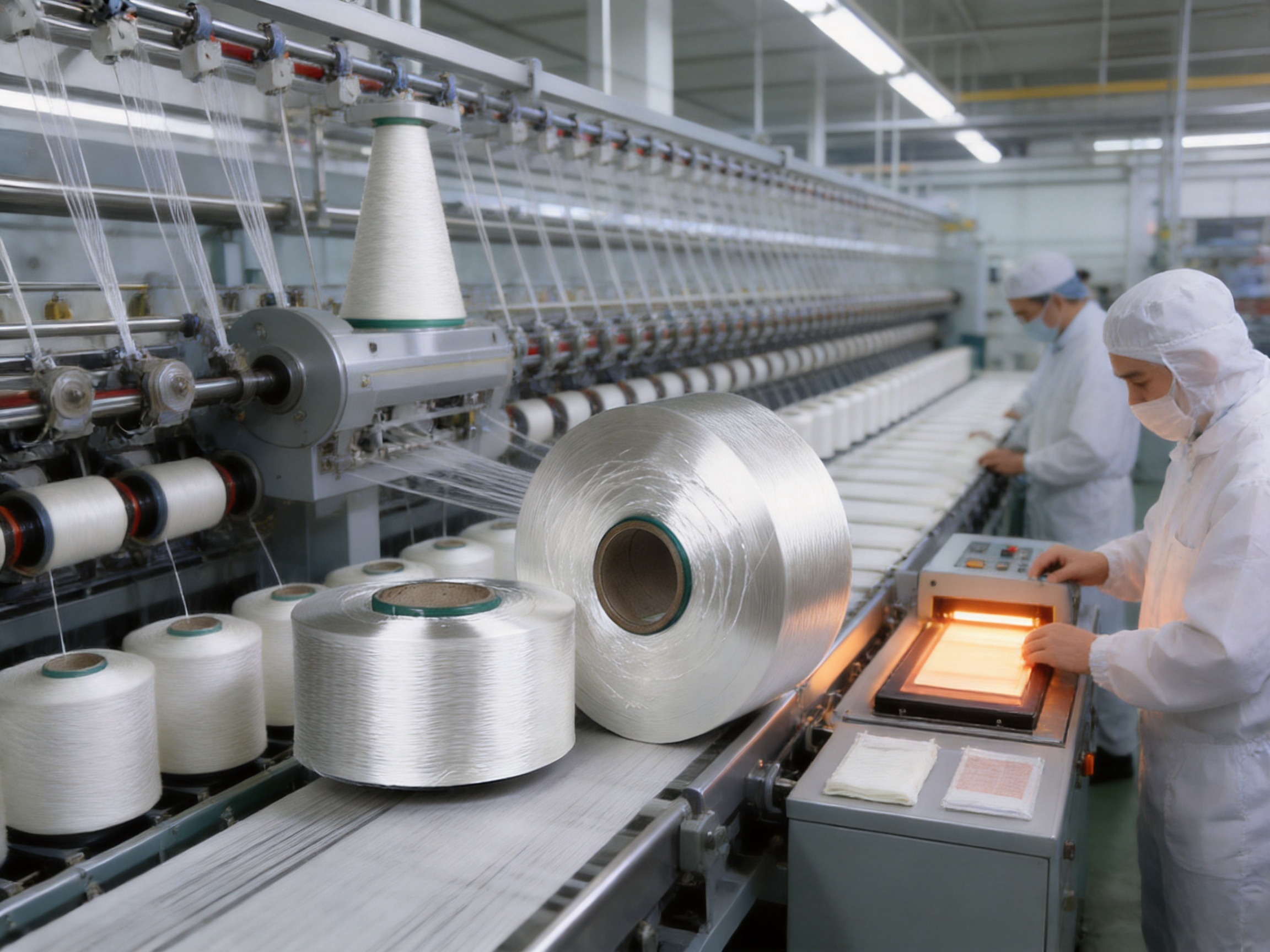
The yarn is designed with a melting point of approximately 110 degrees Celsius. This lower activation range allows it to form a bond during moderate-temperature heat pressing or thermal setting. The exact machine setting should be confirmed through trials because heat transfer, pressure, exposure time, and fabric construction influence the final result.
Many shoe upper materials, including synthetic mesh, stretch knits, coated fabrics, and nonwoven linings, may be damaged or distorted by high temperatures. A yarn that activates at approximately 110 degrees Celsius can bond within a more suitable processing window and help reduce the risk of scorching, discoloration, shrinkage, or loss of flexibility.
Yes. The yarn is specially intended for shoe upper applications and can be evaluated for knitted flyknit-style panels, jacquard mesh, heel reinforcement, and other structured textile areas. The final specification and placement pattern should be selected according to the stitch design and required support level.
In many cases, the yarn can be processed on standard circular knitting or flat knitting equipment used for shoe upper production. However, machine condition, yarn feeding components, tension settings, needle selection, and fabric design may affect performance. A small trial is recommended before full-scale production.
Easy rewind means that the yarn is designed to unwind smoothly from its package with reduced risk of tangling, looping, or unstable feeding. This can help reduce machine stoppages and support more consistent operation on automated knitting and weaving lines.
The product is described as a high-tenacity grade and is intended to maintain structural integrity during winding, knitting, weaving, and bonding. Actual performance depends on machine speed, yarn tension, guides, fabric design, and operating conditions, so production teams should confirm the result through a representative trial.
Not necessarily. The yarn can serve as an integrated thermal bonding element and may reduce or replace certain adhesive applications in suitable constructions. However, the best solution depends on the upper design, required bond strength, flexibility, waterproofing, durability, and assembly method. It may also be used together with adhesives or stitching.
The yarn may be evaluated with synthetic mesh, knitted fabrics, woven textiles, nonwoven linings, and related upper materials. Compatibility depends on the melting, softening, shrinkage, and surface characteristics of the adjacent materials. Testing should confirm that the selected combination meets appearance and durability requirements.
150D is a reference count listed for the product. Other counts may be considered depending on customer requirements and technical feasibility. The appropriate count depends on the upper thickness, stitch or weave density, desired bonding effect, machine capability, and final product specifications.
Special production by order is available for customers with specific technical or packaging requirements, subject to confirmation. Potential discussion points include yarn count, melting behavior, tenacity, package format, application design, and production volume.
Common heat presses, ovens, or thermal setting equipment may be suitable. The correct process depends on the construction and heat-transfer characteristics of the upper. Customers should establish the temperature, pressure, dwell time, and cooling method through a controlled trial using their own equipment.
Buyers should evaluate package unwinding, machine feeding, breakage, fabric appearance, thermal activation, bond stability, dimensional change, flexibility, and durability. Testing should use the intended upper materials and a process that represents mass production as closely as possible.
The product is specially formulated for shoe upper applications, but the low-melting polyester yarn family may also be considered for fabric lamination, sportswear components, nonwoven bonding, and other textile structures requiring controlled low-temperature bonding. Each new application requires separate technical validation.
The yarn may be supplied in cone packaging or another format requested by the customer, subject to production confirmation. Packaging requirements should be specified before quotation so that the supplier can assess package size, labeling, protection, and shipment conditions.
A useful inquiry should include the intended application, yarn count, required quantity, machine type, fabric construction, heating method, target melting behavior, packaging preference, delivery location, and any testing requirements. Providing detailed information helps the manufacturer recommend a suitable trial specification.
Polyester low-melting yarn for shoe uppers provides a practical combination of textile strength, easy processing, and controlled thermal bonding. Its approximately 110-degree Celsius melting point is designed to support bonding within a moderate temperature range, which can be valuable when working with synthetic mesh, knitted fabrics, nonwoven linings, coated materials, and other heat-sensitive upper components.
The product’s high tenacity helps it withstand winding, knitting, weaving, and assembly operations. Its easy-rewind performance supports stable feeding and can reduce interruptions on automated equipment. Its purpose-built positioning for shoe upper production makes it relevant to flyknit-style panels, jacquard mesh, heel counters, reinforcement zones, lining attachment, and selected textile lamination applications.
Compared with standard polyester yarn, it provides an additional bonding function. Compared with broad adhesive films, it can be integrated selectively into the textile structure. Compared with high-temperature bonding materials, it offers a lower-temperature activation route that may better protect delicate upper materials. These advantages should be confirmed through application testing, but they provide a strong foundation for footwear manufacturers seeking lighter, more integrated, and more controllable constructions.
The manufacturing strengths behind the product are equally important. Consistent polymer preparation, controlled spinning, tenacity development, package formation, melting-point verification, batch management, and technical support all contribute to reliable functional yarn performance. Since 2006, GC FIBER has focused on special and functional textile yarns and has developed a product portfolio covering low-melting yarn, biodegradable yarn, ECDP yarn, anti-static yarn, HDPE yarn, bio-component yarn, and polyester filament yarn.
For footwear brands, sourcing teams, and production engineers, the most effective evaluation method is a structured trial using the actual upper materials and equipment. With the correct count, placement, heat cycle, pressure, and cooling conditions, polyester low-melting yarn can become a valuable component in modern shoe upper manufacturing.
1. Internal product information for Polyester Low-Melting Yarn for Shoe Uppers, including reference count, melting point, application, packaging, and performance features.
2. Technical notes on polyester filament yarn processing, including spinning, drawing, winding, tension control, and package formation principles.
3. General textile engineering guidance for thermal bonding, heat pressing, fabric lamination, and low-temperature joining of synthetic textile materials.
4. Footwear manufacturing references covering knitted uppers, jacquard mesh, flyknit-style structures, heel reinforcement, and lining attachment.
5. General quality-control practices for functional yarn production, including tensile performance, unwinding behavior, thermal response, batch consistency, and application testing.
6. Product and company information supplied for NanTong Global Chemical Fiber Co., Ltd., including its development and production of special and functional eco-friendly textile yarns since 2006.
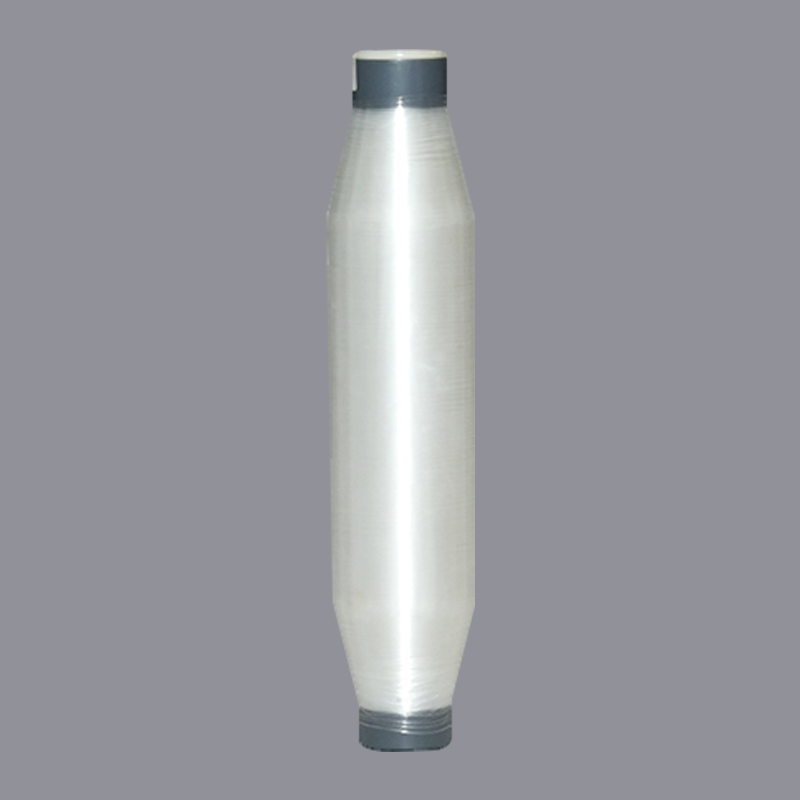
It is made with Bio-base PLA, fully biodegradable Feature: 1. Industrial compost product 2. Made with PLA 3. Eco-frie...
READ MOREPlease fill out the form below and our team will contact you as soon as possible.
Addres: No.66 Qiaogang Road, Haian, Nantong City, Jiangsu Province, China
E-mail: service@gcfiber.com admin@gcfiber.com
Copyright ? GC FIBER All Rights Reserved. Eco-Friendly Textile Products Manufacturer Biodegradable Yarn Company