English
 中文简体
中文简体
It is made with Bio-base PLA, fully biodegradable Feature: 1. Industrial compost product 2. Made with PLA 3. Eco-frie...
READ MORE
Content
Static electricity is a frequent but often underestimated challenge in modern textile production. It can cause discomfort in clothing, attract dust to fabric surfaces, interfere with precision manufacturing, and create safety concerns in environments containing flammable gases, vapors, or dust. As textile applications become more specialized, ordinary polyester yarn is increasingly required to deliver more than strength, flexibility, and appearance. It must also provide reliable functional performance under repeated washing, changing humidity, mechanical processing, and long-term use.
Anti-Static Polyester Yarn Black is a functional filament yarn developed to address these requirements. Based on high-quality polyester fiber and enhanced through anti-static treatment technology, the yarn combines the familiar processing advantages of polyester with a low resistance value and stable static suppression performance. It is available in FDY 20D, 40D, and 60D standard counts, while special deniers can be produced according to customer requirements.
The yarn is designed for applications that require effective static control without sacrificing textile appearance, durability, or production flexibility. Its black color is suitable for workwear, protective fabrics, technical textiles, automotive interiors, carpets, knitted materials, woven fabrics, and other products where a dark, consistent, functional yarn is required.
With a resistance value of 10⁶ Ω/cm for the black yarn, the product is intended to reduce static charge accumulation and help control electrostatic discharge risks. Its anti-static function is designed to remain effective after repeated washing and across different humidity conditions, including relatively dry environments where conventional moisture-dependent anti-static materials may lose effectiveness.
Static electricity is generated when two materials come into contact, separate, or rub against each other. In textiles, this phenomenon can occur during fiber production, weaving, knitting, garment use, laundering, packaging, and transportation. Polyester is valued for its strength, dimensional stability, abrasion resistance, and low moisture absorption, but these same characteristics can contribute to static charge accumulation.
When static charges accumulate on a fabric, several problems may appear. Clothing can cling to the skin, produce unpleasant shocks, attract lint and dust, or become difficult to handle during sewing and cutting. In manufacturing environments, uncontrolled discharge can interfere with electronic components and sensitive instruments. In industrial areas containing combustible dust, chemicals, or flammable vapors, electrostatic sparks may also create a safety concern.
Traditional approaches to static control may include topical finishes, surface coatings, conductive fibers, grounding systems, humidification, or the use of special textile structures. Each method has a role, but not every solution is suitable for every application. Surface finishes may gradually decline after washing. Humidity-dependent materials may perform less consistently in dry climates. Excessively conductive materials may not provide the desired balance of flexibility, appearance, processing compatibility, and cost.
Anti-Static Polyester Yarn Black addresses the issue at the yarn level. By incorporating anti-static functionality into the textile material rather than relying only on a temporary surface treatment, it can provide more consistent performance throughout the service life of the finished fabric. This approach is useful for manufacturers seeking a functional yarn that can be blended, knitted, woven, or processed using familiar polyester production methods.
The black yarn has a specified resistance value of 10⁶ Ω/cm. A low resistance value helps facilitate the controlled dissipation of electrical charges and reduces the likelihood of static accumulation on the textile surface. This makes the yarn suitable for fabrics where static suppression is an essential performance requirement.
Resistance values should always be evaluated according to the final fabric construction, blend ratio, test method, environmental conditions, and intended use. Nevertheless, the specified yarn-level value provides manufacturers with a clear functional reference during material selection and product development.
One of the most important advantages of the yarn is its durable anti-static function. The product is designed so that the static suppression effect is not limited to a short-term surface application. With appropriate processing and fabric construction, the anti-static performance can remain useful during repeated wearing, handling, and laundering.
This durability is important for uniforms, protective clothing, industrial fabrics, and household textiles that must be cleaned regularly. A yarn that loses its function quickly may require repeated re-treatment or premature replacement of the finished product. A durable functional yarn can help manufacturers and end users reduce maintenance concerns and improve the practical value of the textile.
Polyester is widely used because it offers good heat resistance, dimensional stability, and resistance to ordinary textile processing conditions. Anti-Static Polyester Yarn Black retains the important processing advantages associated with polyester while adding static control functionality.
The yarn is also designed to maintain its static suppression performance after repeated washing. This characteristic is valuable in apparel and industrial fabrics that undergo frequent cleaning. It also supports applications where the finished textile must remain functional after exposure to water-based laundering, routine maintenance, or changing service conditions.
Many anti-static materials rely heavily on moisture in the atmosphere to improve surface conductivity. In a dry environment, their effectiveness can decline because the surrounding air provides less moisture for charge dissipation. This can be a significant limitation during winter, in air-conditioned buildings, in dry production facilities, or in regions with naturally low humidity.
Anti-Static Polyester Yarn Black is designed to have weak dependence on humidity. It can continue to suppress static generation in relatively dry conditions, providing a more stable functional profile across different climate regions. This feature is particularly valuable for customers supplying textiles to international markets where environmental conditions vary considerably.
The black appearance provides a practical and versatile design option. Black textiles are widely used in industrial workwear, cleanroom garments, automotive interiors, carpets, bags, protective products, and fashion-related applications. The color can also help create a visually consistent appearance in fabrics where functional yarns are blended with standard polyester.
For technical textiles, black is often associated with professional appearance, easy coordination, and practical resistance to visible soiling. For interior materials, it can support modern design concepts and match a broad range of colors and structures.
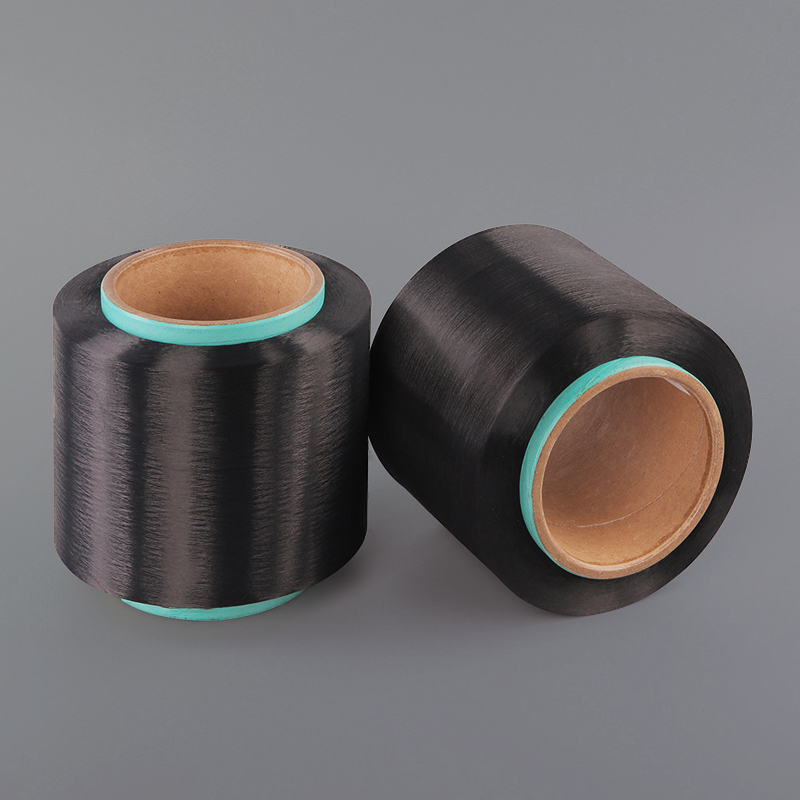
Anti Static Polyester Yarn Black
The standard product is a fully drawn yarn, commonly known as FDY. Fully drawn yarn is suitable for many downstream textile processes because it has already undergone drawing and is prepared for direct use in knitting, weaving, and other filament applications. The exact processing route depends on fabric design, machine settings, blend composition, and customer requirements.
| Item | Specification |
|---|---|
| Product type | Anti-Static Polyester Yarn Black |
| Yarn type | FDY, or Fully Drawn Yarn |
| Color | Black |
| Standard deniers | 20D, 40D, and 60D |
| Custom deniers | Available according to customer requirements |
| Resistance value | 10⁶ Ω/cm for black yarn |
| Production method | Special specifications produced to order |
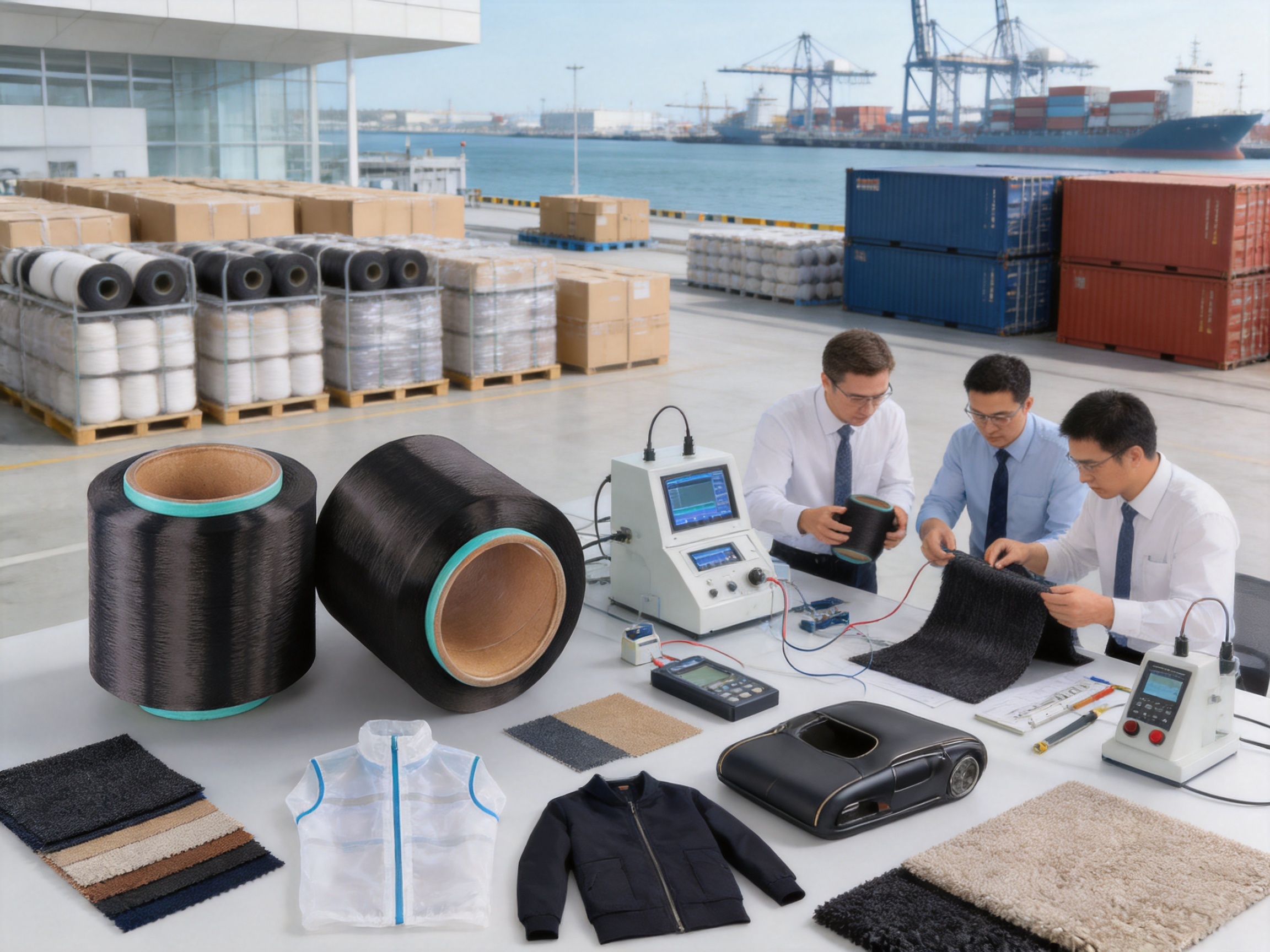
| Shipping port | Shanghai Port, China |
The 20D option is suitable for lightweight textile constructions where a fine filament is required. It may be considered for light apparel, thin knitted fabrics, lining materials, delicate technical fabrics, and blended structures where the anti-static yarn must contribute function without creating excessive weight or bulk.
Fine denier yarns can support soft hand feel and lightweight fabric design. They may also be useful when manufacturers want to distribute anti-static functionality through a fabric while preserving flexibility and drape. Final suitability depends on the fabric structure, machine gauge, blend percentage, and required resistance performance.
The 40D option offers a balanced choice between fineness and physical presence. It can be used in a wide range of knitted and woven fabrics, including functional garments, workwear, linings, interior textiles, and blended polyester structures.
This middle denier option may be suitable for customers looking for a practical general-purpose anti-static filament. It provides flexibility in fabric development while allowing designers and engineers to maintain control over fabric weight, surface appearance, and mechanical performance.
The 60D option is appropriate for stronger or more substantial fabric constructions. It may be used in durable workwear, protective fabrics, automotive interior materials, carpets, heavier knitted fabrics, and other products where the yarn must contribute greater body and coverage.
When integrated into a suitable fabric structure, the 60D yarn can support a balance of anti-static functionality, durability, and production efficiency. It may also be selected for applications that require a more pronounced textile structure or a stronger visual contribution from the filament.
Not every textile development can be completed with standard specifications. Customers may require a finer or coarser denier, a particular blend ratio, a specific fabric weight, or compatibility with specialized knitting and weaving equipment. For this reason, custom denier production is available upon request.
Made-to-order production allows the yarn to be evaluated as part of a complete textile system rather than as an isolated commodity. Customers can discuss the target fabric, processing route, static control requirement, delivery schedule, and other technical considerations before finalizing the specification. This approach helps improve compatibility between the yarn and the customer’s manufacturing process.
Some conventional anti-static finishes are applied to the outside of the fabric after knitting or weaving. Although these finishes can be convenient, their performance may decrease as a result of washing, abrasion, chemical exposure, or normal wear. The effect may also vary depending on how evenly the finish is distributed across the fabric.
A functional anti-static yarn offers a different approach. Because the anti-static characteristic is associated with the yarn material, it can remain part of the fabric structure rather than existing only as a temporary coating. This can reduce dependence on repeated finishing treatments and support more stable long-term performance.
Humidity can strongly affect the performance of conventional anti-static materials. In damp conditions, moisture may help dissipate charge, while dry conditions can increase static accumulation. A product with weak dependence on humidity can provide more predictable behavior across a wider range of operating environments.
This is a significant advantage for international textile manufacturers, exporters, cleanroom suppliers, and industrial customers. It reduces the need to design separate material solutions for humid and dry regions, although finished-fabric testing under actual conditions remains essential.
Polyester is one of the most established fibers in the textile industry. Many factories already possess the equipment and technical knowledge required to knit, weave, dye, cut, sew, and finish polyester-based fabrics. An anti-static polyester filament can therefore be integrated into familiar production systems more easily than a completely unfamiliar material.
Manufacturers can use the yarn alone or blend it with standard polyester yarns to develop fabrics that combine comfort, appearance, durability, and static control. The final blend design can be adjusted to match the application, cost target, resistance requirement, and desired fabric hand.
Durability is a key consideration when comparing functional textile materials. If anti-static performance declines rapidly, the customer may face higher replacement, maintenance, and quality-control costs. Anti-Static Polyester Yarn Black is designed to maintain useful static suppression after repeated washing and during extended service.
Long-term functional stability can improve the value of the finished garment or textile. It can also support more reliable quality management because the customer can evaluate a material that is intended to remain functional rather than a short-lived treatment.
Some specialized anti-static materials are limited to a narrow group of products. Anti-Static Polyester Yarn Black is more versatile. Depending on the selected denier and fabric construction, it can be used in apparel, protective fabrics, interior textiles, carpets, automotive materials, and industrial products.
This versatility allows a textile manufacturer to develop several product lines using a related functional material platform. It may also simplify sourcing and technical management for customers who need anti-static performance in multiple fabric categories.
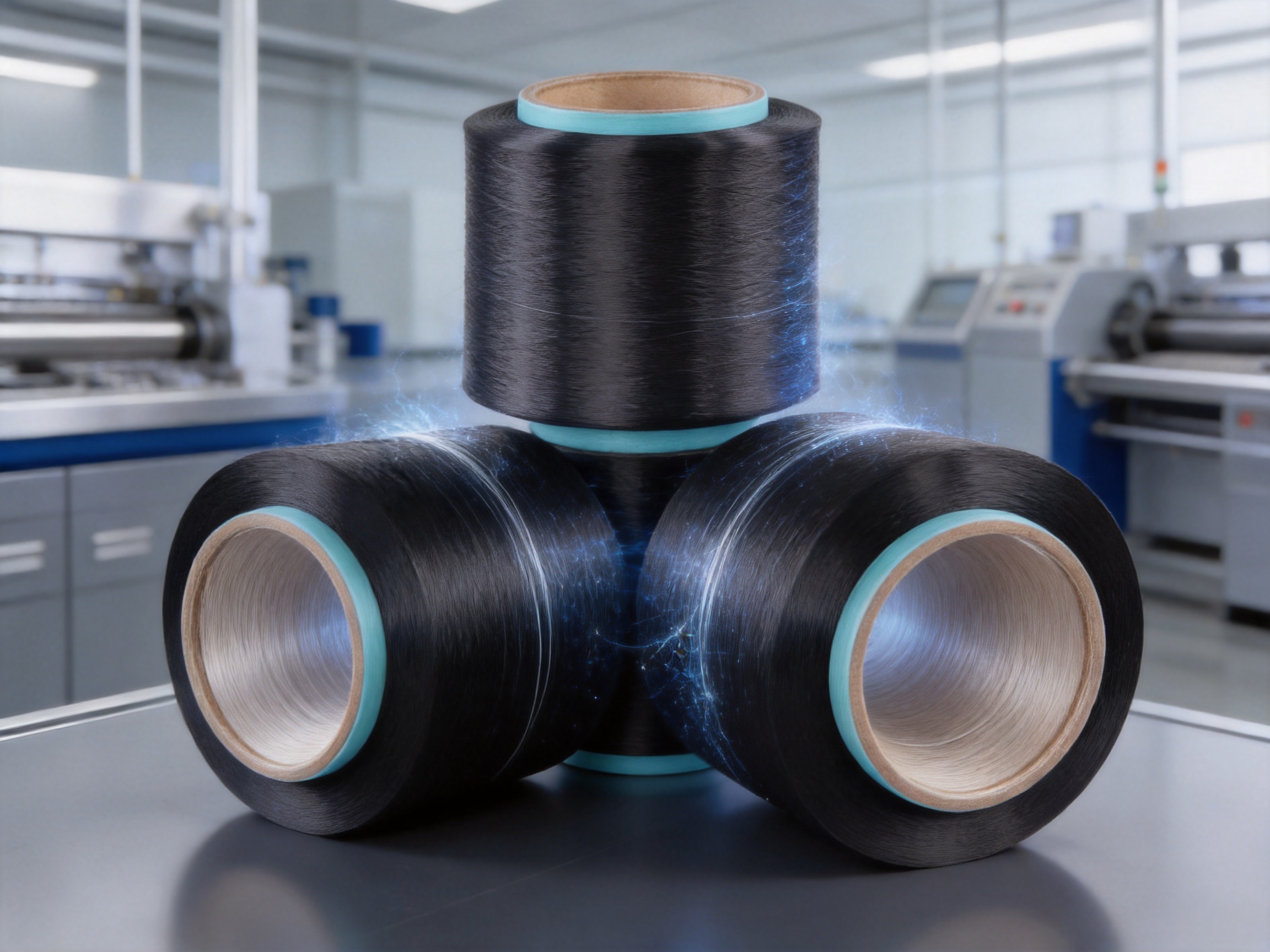
The performance of a functional yarn depends not only on the raw material but also on formulation control, spinning consistency, drawing conditions, winding quality, inspection standards, and order management. A yarn may have a promising concept but fail in practical use if its resistance varies excessively from batch to batch or if its physical characteristics are unsuitable for downstream processing.
GC FIBER is operated by NanTong Global Chemical Fiber Co., Ltd., a special textile factory in China established in 2006. The company researches, develops, produces, and sells special and functional eco-friendly textile products. Its product portfolio includes biodegradable yarn, low melting yarn, ECDP yarn, anti-static yarn, HDPE yarn, bio-component yarn, and polyester filament yarn.
Functional yarn manufacturing begins with material selection and formulation design. For anti-static yarn, the formulation must provide the desired electrical behavior while preserving the processability and physical characteristics required for filament production. The material must also be compatible with the target denier, color, spinning conditions, and downstream textile equipment.
The development process requires attention to the relationship between conductivity, fiber structure, strength, elongation, fineness, appearance, and thermal behavior. Excessive focus on one property may negatively affect another. A practical anti-static yarn therefore depends on balanced engineering rather than a single performance indicator.
GC FIBER’s focus on special and functional textiles enables the company to approach the product as part of a broader material-development program. Its experience with multiple functional yarn categories supports cooperation with customers that need to adapt an existing yarn or develop a new specification for a specific textile application.
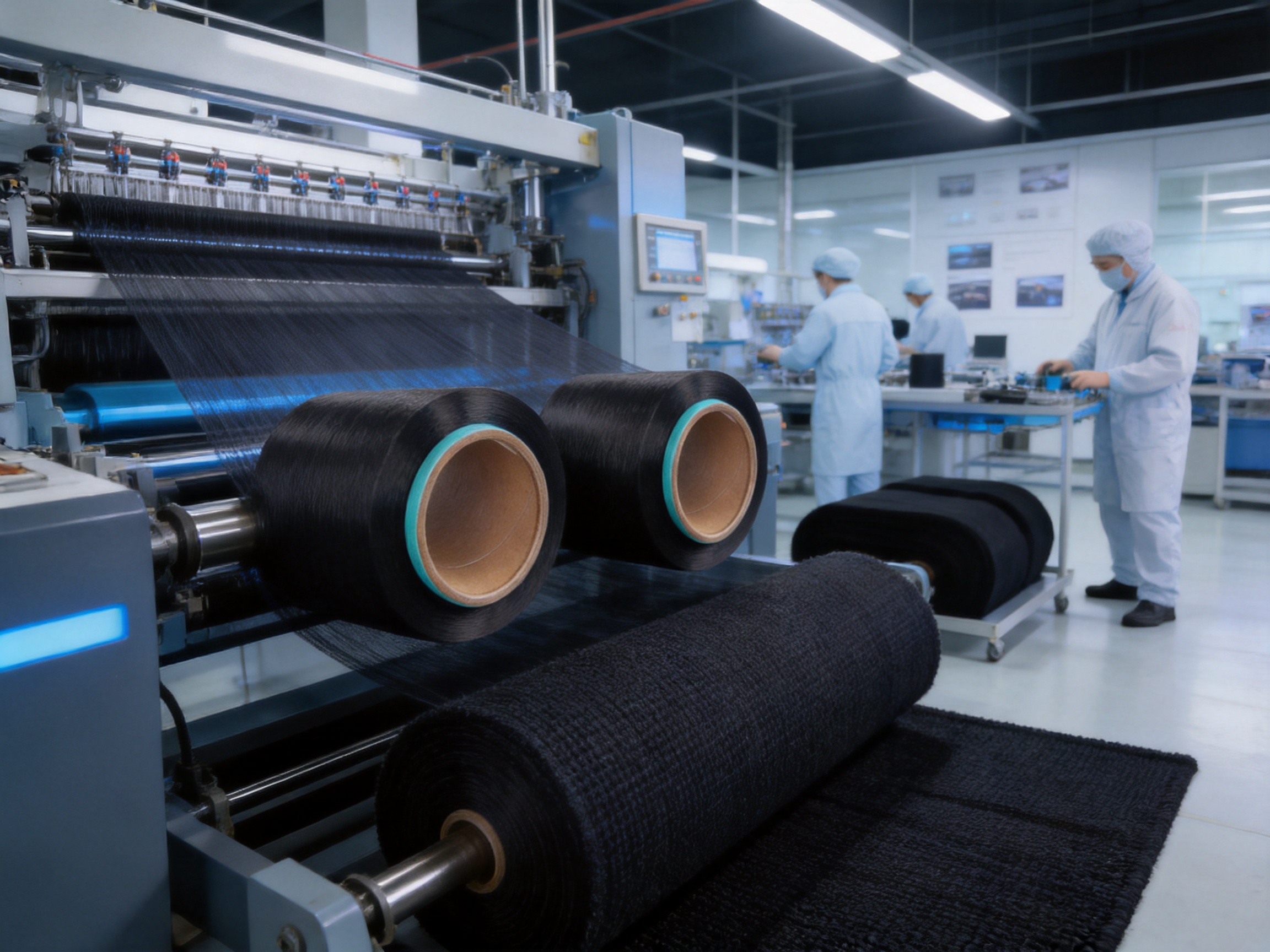
Filament yarn requires consistent extrusion, cooling, drawing, and winding. Variation in these stages can affect yarn fineness, tensile performance, surface quality, package formation, and downstream processing behavior. Stable production conditions are especially important for functional yarns because electrical performance must be maintained alongside ordinary textile properties.
For Anti-Static Polyester Yarn Black, production control includes attention to the uniform distribution of functional components, consistent black coloration, stable denier, and reliable package quality. Uniformity helps fabric manufacturers avoid problems such as uneven appearance, irregular static performance, excessive yarn breaks, or inconsistent fabric behavior.
Quality control is essential for products supplied to technical textile markets. The resistance value provides an important performance reference, but other characteristics should also be reviewed. Depending on the customer’s application, these may include denier variation, tensile strength, elongation, filament integrity, winding quality, color consistency, oil content, and compatibility with weaving or knitting processes.
Strict control of production batches helps ensure that a customer’s fabric behaves consistently during large-scale manufacturing. Reliable batch consistency can reduce machine adjustments, minimize fabric rejection, and make it easier for the customer to maintain a stable finished-product specification.
Testing requirements should be agreed upon before production, particularly for customized orders. Different industries may use different resistance measurement methods and acceptance criteria. Establishing the test method, sampling plan, environmental conditions, and reporting format in advance creates a clearer technical basis for cooperation.
Customized production is more than changing the denier. A successful custom order may require discussion of the customer’s machine type, fabric construction, end use, blend ratio, package requirements, color expectations, production volume, and delivery schedule. Technical coordination at the beginning of the project can help prevent incompatibility during later processing.
GC FIBER cooperates with customers to develop new materials and special textile solutions. This cooperation is valuable for customers that are not simply purchasing a standard yarn but are creating a new anti-static garment, protective fabric, interior textile, or industrial product.
The company’s product range covers several special and environmentally oriented yarn categories. This broader manufacturing capability can help customers evaluate anti-static yarn alongside other material requirements, such as biodegradability, low melting behavior, high strength, bio-based composition, or special polymer performance.
For example, a customer may require an anti-static textile that also has a specific bonding behavior, environmental profile, or structural performance. Access to a manufacturer experienced in multiple functional yarn types can support more efficient technical discussions and reduce the need to coordinate with several unrelated suppliers.
Anti-static workwear is used in environments where uncontrolled charge may create discomfort, attract contaminants, or interfere with workplace safety. Fabrics made with Anti-Static Polyester Yarn Black can be considered for jackets, trousers, coveralls, shirts, vests, and other garments requiring static control.
In workwear, the yarn must provide functional performance while also meeting expectations for comfort, flexibility, durability, colorfastness, and repeated laundering. The selected denier and blend ratio should be matched to the garment design and applicable industry requirements.
Electronics manufacturing, semiconductor production, precision instrument assembly, and related industries often require strict control of electrostatic discharge. Static charges can damage sensitive components or attract particles to critical surfaces. Anti-static garments are therefore used as part of a broader contamination and electrostatic-control system.
Anti-Static Polyester Yarn Black may be used in cleanroom-compatible fabrics, provided that the complete fabric and garment are tested for particle generation, surface resistance, charge decay, shedding, laundering stability, and other relevant requirements. Yarn selection is an important first step, but the final garment must be evaluated as a complete product.
Petrochemical plants, chemical-processing facilities, powder-handling operations, and other industrial workplaces may contain flammable atmospheres or combustible dust. Static control can help reduce the potential for electrostatic discharge when used together with suitable grounding, garment design, workplace procedures, and safety systems.
The yarn can be incorporated into protective fabric constructions designed for industrial clothing and related products. Customers should determine the necessary standards, resistance limits, mechanical requirements, flame behavior, chemical resistance, and garment construction before selecting the final material combination.
Static charge can be inconvenient in vehicle interiors and may contribute to dust attraction on seats, carpets, door panels, roof materials, and other surfaces. Anti-Static Polyester Yarn Black can be used in selected automotive interior fabrics where static management is required in combination with appearance, abrasion resistance, dimensional stability, and comfort.
Automotive applications often involve strict customer specifications. These may include resistance to sunlight, temperature variation, abrasion, cleaning agents, odor, fogging, and long-term deformation. The yarn should therefore be evaluated as part of the complete interior material and not solely on its initial resistance value.
The yarn can be blended with standard polyester filaments to create knitted or woven fabrics with anti-static properties. Blending provides flexibility in fabric design and enables manufacturers to adjust softness, strength, weight, air permeability, stretch, drape, and appearance.
Functional fabrics can be designed for uniforms, sportswear, technical clothing, linings, industrial covers, bags, and other products. The correct yarn count, blend percentage, fabric density, and finishing process should be selected according to the intended use.
Carpets, office textiles, curtains, upholstery, and other interior materials can accumulate charge through foot traffic, friction, and contact with synthetic surfaces. In server rooms, offices, laboratories, and equipment areas, reducing static discharge risk may be particularly important.
Black anti-static filament can support the development of dark carpets and interior fabrics with a professional appearance. The final product should be tested for floor interaction, surface resistance, durability, cleaning performance, and compatibility with the intended environment.
Medical staff clothing, laboratory garments, and institutional uniforms may benefit from reduced static cling and lower dust attraction. These properties can improve comfort and ease of handling, although each medical or controlled environment may have additional requirements related to hygiene, sterilization, particle control, and chemical exposure.
The yarn can be considered for these applications when its properties are matched with the relevant fabric and garment standards. It is not a substitute for complete product validation, but it can serve as a useful functional component in the textile design.
Denier selection influences yarn fineness, fabric weight, coverage, hand feel, and processing behavior. A fine 20D filament may be suitable for lightweight fabrics, while 40D offers a balanced general-purpose option and 60D may be more appropriate for heavier or more durable constructions.
The correct choice depends on the machine gauge, warp or weft arrangement, knitting tension, fabric density, blend ratio, and desired final performance. Customers should provide as much information as possible when requesting a recommendation or custom specification.
In many applications, anti-static yarn is blended with conventional polyester rather than used as the only yarn. Blending can help balance cost, appearance, comfort, strength, and electrical performance. The required amount of anti-static yarn depends on the construction of the fabric and the target resistance value.
Because the finished fabric’s resistance is influenced by yarn arrangement and fabric structure, customers should conduct trials using the intended blend ratio. Small-scale testing can help establish the most economical formulation before full production.
FDY is suitable for many knitting and weaving processes, but machine conditions should still be adjusted to the specific yarn. Tension, speed, guide alignment, needle condition, lubrication, and package handling can influence production efficiency. Proper process settings can reduce yarn breaks and improve fabric uniformity.
Before mass production, a trial run is recommended. The trial should examine yarn unwinding, breakage rate, fabric appearance, static performance, dyeing or finishing behavior, and dimensional stability. Such testing is especially important when the yarn is being introduced into a new machine or unfamiliar fabric construction.
Yarn-level resistance is an important reference, but the finished fabric must be tested separately. Fabric construction, humidity, contact materials, surface treatments, washing, abrasion, and garment design can all influence electrostatic performance.
Testing may include surface resistance, volume resistance, charge decay, static voltage, half-life, laundering retention, humidity conditioning, and physical durability. The selected methods should reflect the customer’s industry and final application. For critical environments, testing should be performed under representative operating conditions.
Functional durability can contribute to more sustainable textile use. When anti-static performance remains effective after repeated washing, garments and fabrics may remain useful for a longer period. Longer product life can reduce the frequency of replacement and lower the material and energy consumption associated with producing new items.
GC FIBER focuses on special and functional environmentally friendly textile products. Its portfolio includes biodegradable yarn and bio-component yarn in addition to anti-static polyester yarn and other functional materials. This broad focus reflects an effort to support textile development that considers both product performance and environmental responsibility.
Anti-Static Polyester Yarn Black can also create commercial value by enabling manufacturers to offer higher-performance products. Workwear suppliers, technical fabric producers, interior textile companies, and garment brands can use functional yarns to differentiate products in markets where customers require reliable static control.
The availability of standard deniers and made-to-order specifications further improves commercial flexibility. Customers can begin with a standard product for development or select a custom denier for a specialized product line. This can support both regular production and smaller technical projects.
The specified resistance value of 10⁶ Ω/cm provides a clear electrical performance reference for the black yarn. Consistent control of this property supports more predictable product development and quality management.
The yarn is designed to maintain its static suppression function after repeated washing. This supports garments and textiles that must withstand regular cleaning, maintenance, and long-term use.
The weak dependence on humidity is a major advantage for customers working across different markets. The yarn is designed to remain useful in relatively dry conditions, where moisture-dependent anti-static solutions may become less reliable.
FDY 20D, 40D, and 60D are available as standard choices. Special deniers can be produced to order, allowing the material to be adapted to specific fabric structures and production requirements.
GC FIBER has operated in the special textile field since 2006. Its experience covers research, development, production, and sales of multiple functional and environmentally oriented textile products. This background supports technical cooperation beyond ordinary yarn supply.
Products can be shipped through Shanghai Port, China, providing access to major domestic and international trade routes. Efficient logistics coordination can help customers manage lead times, production schedules, and overseas procurement.
A successful anti-static textile project begins with a clear technical brief. Customers should identify the final product, expected service environment, washing conditions, target resistance, fabric structure, machine type, color requirements, order quantity, and delivery expectations.
For a new application, it is advisable to begin with sample yarn or a small trial order. The trial can verify machine compatibility and fabric performance before large-scale production. It also gives the customer an opportunity to evaluate hand feel, appearance, static behavior, laundering retention, and finishing performance.
For customized deniers, early communication is particularly important. The manufacturer may need to review the required filament size, package format, production quantity, technical tolerances, and development schedule. Special production is normally arranged according to confirmed technical requirements and order planning.
Customers should also define the required inspection documentation. Depending on the application, this may include product specifications, resistance test results, batch information, physical-property data, packaging details, and shipping documents. Clear documentation supports internal quality control and customer audits.
Anti-static yarn is one part of a complete electrostatic-control strategy. In critical industrial or cleanroom applications, the finished garment or fabric must be tested and used with appropriate grounding, footwear, equipment, environmental controls, and operating procedures.
The yarn’s resistance value should not be interpreted as a guarantee that every finished product will meet every industry standard. Fabric design, blend ratio, sewing thread, accessories, coatings, contamination, laundering, and user contact can all affect performance. Customers are responsible for validating the complete textile system against the requirements of the intended market.
For protective clothing, additional properties may be required, including flame resistance, chemical resistance, tear strength, abrasion resistance, dimensional stability, and ergonomic comfort. Anti-static behavior should be evaluated together with these requirements rather than considered in isolation.
For cleanroom garments, particle release, linting, sterilization compatibility, and cleaning procedures may be as important as static control. For automotive interiors, environmental aging and abrasion may be decisive. For carpets, interaction with flooring systems and maintenance chemicals should be considered.
It is a black functional polyester filament yarn developed to reduce static charge accumulation. It is supplied as FDY and is available in standard 20D, 40D, and 60D counts, with special deniers available upon request.
The specified resistance value for the black yarn is 10⁶ Ω/cm. The final resistance of a fabric may vary depending on fabric construction, blend ratio, test method, humidity, and finishing conditions, so finished-product testing is recommended.
The yarn is designed to maintain its static suppression performance after repeated washing. Actual performance retention depends on the laundering process, detergent, temperature, mechanical action, finishing treatment, and final fabric construction.
The yarn is designed to have weak dependence on humidity and can help suppress static generation in low-humidity environments. Nevertheless, customers should test the finished textile under the climate conditions in which it will be used.
Yes. It can be blended with standard polyester yarns to create fabrics that combine anti-static functionality with desired levels of comfort, strength, appearance, weight, and cost efficiency. The optimal blend ratio should be established through fabric trials.
20D is generally considered for lightweight fabrics, 40D provides a balanced option for many applications, and 60D can be selected for heavier or more durable structures. The most suitable choice depends on the customer’s machine, fabric design, and final use.
Yes. Special deniers can be produced to order. Customers should provide information about the required denier, fabric structure, processing equipment, resistance target, order quantity, and delivery schedule.
It can be considered for cleanroom and electronics-related garments requiring static control. However, the complete fabric and garment must also satisfy applicable requirements for particle release, cleanliness, laundering, charge control, and other cleanroom performance characteristics.
Yes. Potential applications include anti-static workwear and protective fabrics for electronics, chemical processing, petrochemical, dust-hazard, and industrial environments. Additional protective requirements must be evaluated according to the specific workplace and applicable standards.
Yes. The yarn may be incorporated into seat fabrics, carpets, door panels, and other interior materials where static management is required. Automotive customers should conduct testing for abrasion, temperature, light exposure, cleaning, odor, and other vehicle-specific requirements.
The shipping port is Shanghai Port, China. Delivery arrangements, lead times, packaging, and order schedules should be confirmed according to the customer’s location and order requirements.
Customers should provide the required denier, estimated quantity, color, intended application, yarn type, package requirements, delivery destination, testing needs, and whether a custom specification is required. More detailed information allows the manufacturer to provide a more suitable production proposal.
Anti-Static Polyester Yarn Black provides a practical solution for textile manufacturers that need reliable static suppression, durable polyester performance, and flexible production options. Its low resistance value, long-lasting anti-static function, resistance to repeated washing, heat and water stability, and weak dependence on humidity make it suitable for a wide variety of technical and commercial textile applications.
The availability of FDY 20D, 40D, and 60D gives customers a useful range of standard choices, while made-to-order deniers support specialized fabric development. The yarn can be used independently or blended with standard polyester to produce workwear, cleanroom garments, protective fabrics, automotive interiors, carpets, curtains, knitted fabrics, woven fabrics, and other products requiring static control.
GC FIBER combines product development, functional yarn manufacturing, customer cooperation, and international logistics support. As a manufacturer focused on special and environmentally friendly textile materials, the company can support customers seeking more than a standard commodity yarn. Its wider portfolio and experience in functional products also provide a foundation for developing new materials that combine anti-static behavior with other performance or environmental objectives.
For the best results, customers should evaluate the yarn as part of the complete finished textile. Careful selection of denier, blend ratio, fabric structure, processing conditions, testing methods, and service requirements will help ensure that the final product delivers dependable performance. With appropriate technical coordination, Anti-Static Polyester Yarn Black can become a valuable component in modern textile systems where comfort, durability, safety, and electrostatic control are all important.
1. International Electrotechnical Commission. Electrostatics: Protection of Electronic Devices from Electrostatic Phenomena.
2. American Society for Testing and Materials. Standard Test Methods for Electrical Resistance and Electrostatic Properties of Textile Materials.
3. International Organization for Standardization. Textile Testing Standards for Electrical Resistance, Surface Properties, and Colorfastness.
4. Textile Institute. Principles of Textile Materials, Fiber Properties, Yarn Formation, and Fabric Performance.
5. Technical literature on polyester filament yarn production, fully drawn yarn processing, and functional textile material development.
6. Technical product information for Anti-Static Polyester Yarn Black, including standard deniers, resistance value, application guidance, and production options.
It is made with Bio-base PLA, fully biodegradable Feature: 1. Industrial compost product 2. Made with PLA 3. Eco-frie...
READ MOREPlease fill out the form below and our team will contact you as soon as possible.
Addres: No.66 Qiaogang Road, Haian, Nantong City, Jiangsu Province, China
E-mail: service@gcfiber.com admin@gcfiber.com
Copyright ? GC FIBER All Rights Reserved. Eco-Friendly Textile Products Manufacturer Biodegradable Yarn Company