English
 中文简体
中文简体
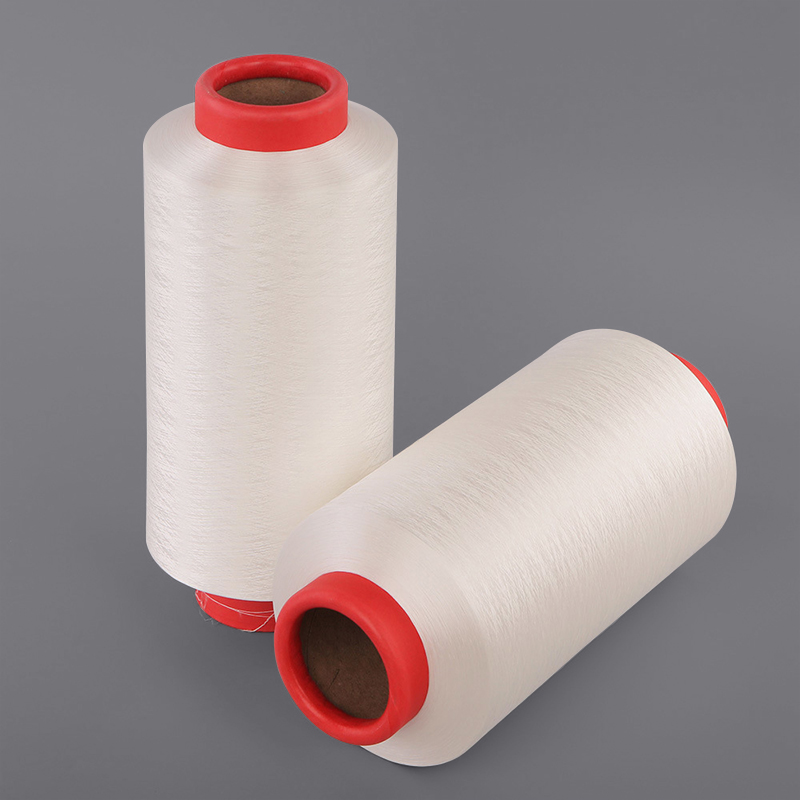
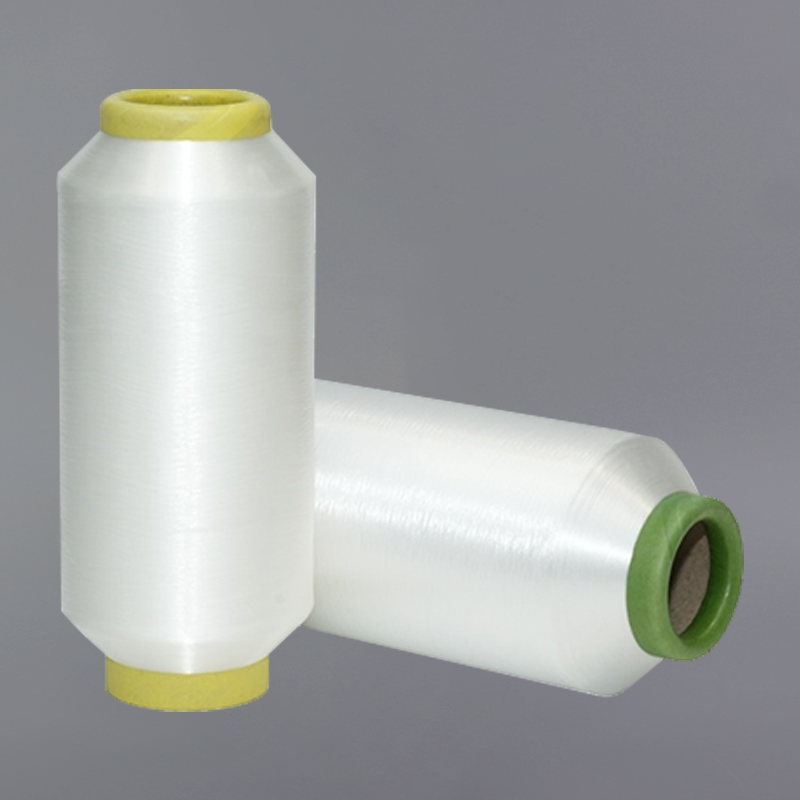
It is made with Bio-base PLA, fully biodegradable Feature: 1. Industrial compost product 2. Made with PLA 3. Eco-frie...
READ MORE
Content
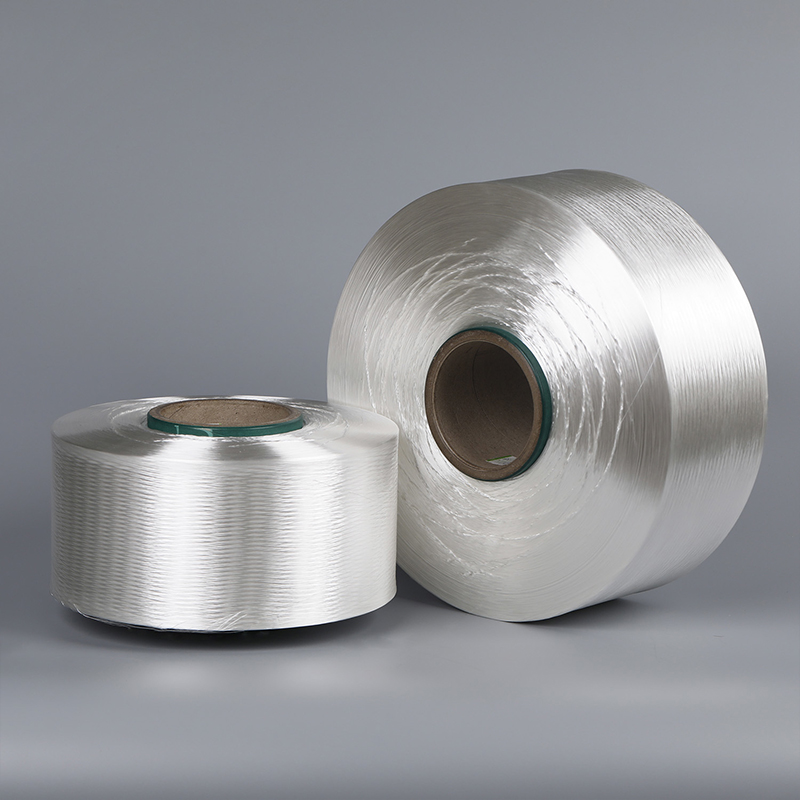
Polyester low melting yarn for shoes upper is designed for footwear manufacturers that need reliable bonding performance without exposing delicate upper materials to the excessive temperatures associated with standard polyester processing. With an activation temperature of approximately 110 degrees Celsius, this functional yarn creates a controlled bonding effect during heat pressing, thermal setting, and related footwear assembly operations.
The product combines high tenacity, easy rewind performance, stable feeding, and low-temperature bonding in one specialized yarn construction. It is suitable for knitted and woven shoes upper materials, including flyknit panels, jacquard mesh, synthetic fabrics, stretch structures, heel reinforcement zones, and other components that require dimensional stability and controlled adhesion.
Manufactured by NanTong Global Chemical Fiber Co., Ltd., operating under the GC FIBER name, this yarn is part of a broader portfolio of special and functional textile products. The company has worked in the special textile field since 2006 and develops biodegradable yarn, low melting yarn, ECDP yarn, anti-static yarn, HDPE yarn, bio-component yarn, and polyester filament yarn for customers in different textile and industrial applications.
For footwear factories, the importance of a low melting yarn extends beyond its melting point. A successful product must also feed consistently, withstand tension during knitting and weaving, rewind smoothly, bond evenly, and preserve the appearance and hand feel of the finished upper. This product is developed around those practical production requirements.
Polyester Low Melting Yarn For Shoes Upper
Modern shoes upper manufacturing increasingly relies on knitted, woven, laminated, and composite structures. These structures can reduce material waste, simplify assembly, and provide designers with greater freedom in creating breathable, lightweight, and supportive footwear. However, the more complex the upper construction becomes, the more important it is to control how separate layers are joined together.
Traditional joining methods often depend on adhesive films, liquid adhesives, stitching, or high-temperature fusion. Each method has limitations. Adhesives can add weight, change the flexibility of the fabric, create visible marks, or require additional drying and curing stages. Stitching can introduce perforations and may not be suitable for every three-dimensional knitted structure. Standard polyester requires a much higher temperature to melt, which can damage heat-sensitive synthetic fabrics, printed surfaces, coatings, and elastic components.
Low melting yarn offers another approach. It incorporates a polyester component engineered to soften and bond at a reduced temperature. When the yarn is placed in a suitable upper construction and exposed to controlled heat, it forms bonding points with adjacent fibers or layers. The result is a more integrated structure that can be processed with moderate heat rather than the extreme temperatures required to melt conventional polyester.
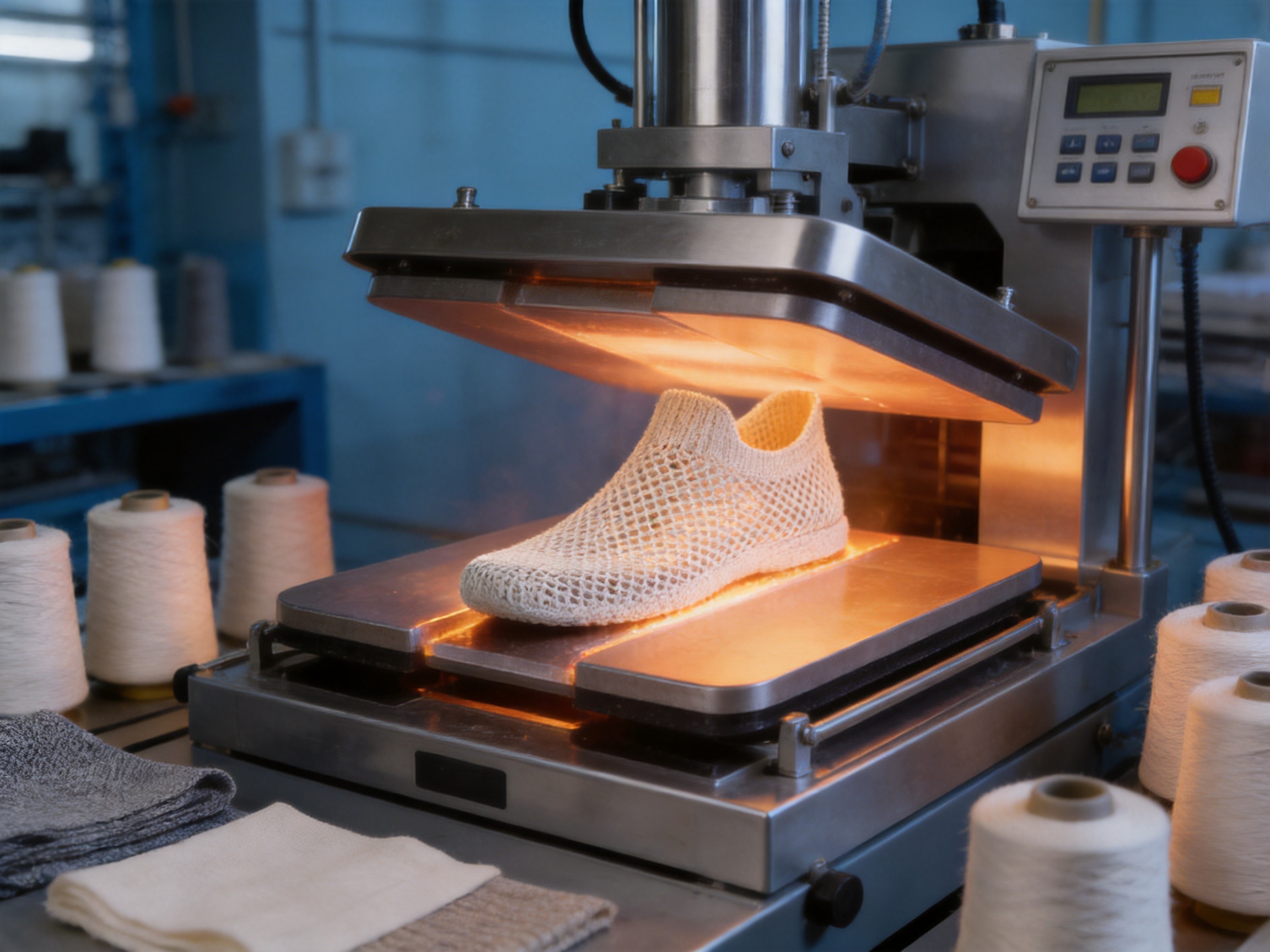
In shoes upper production, the yarn may be knitted directly into a structure, woven into a reinforcement zone, inserted into a bonding area, or combined with other yarns during fabric formation. After knitting or weaving, a heat press, oven, or thermal setting system activates the low melting component. This allows the manufacturer to stabilize the shape, reinforce selected areas, or join layers without applying a separate adhesive layer across the entire surface.
The product is especially relevant to footwear programs that use synthetic mesh, knitted uppers, three-dimensional flyknit-style panels, heel counters, and laminated textile constructions. Its low-temperature activation profile gives engineers a wider range of options when working with materials that could shrink, discolor, distort, or lose strength under excessive heat.
Polyester low melting yarn for shoes upper is a functional polyester yarn developed for controlled thermal bonding. The reference specification includes 150D, while other counts can be considered according to customer requirements and production conditions. The yarn is supplied on cones or in another packing format requested by the customer.
The principal product characteristics are high tenacity, easy rewind, a melting point of approximately 110 degrees Celsius, low-temperature bonding, and suitability for shoes upper production. These characteristics are not independent. They work together to support stable manufacturing performance from package unwinding through final heat activation.
High tenacity helps the yarn resist breakage during high-speed feeding, knitting, weaving, stitching, and handling. Easy rewind allows the yarn to unwind smoothly from the package with fewer interruptions caused by tangling, uneven tension, or irregular package formation. The low melting point enables thermal activation in a temperature range that is more compatible with many footwear upper materials than standard polyester melting conditions.
The yarn is not presented as a universal replacement for every bonding method. Instead, it is a specialized solution for production lines where low-temperature bonding, moderate flexibility, and controlled reinforcement are important. Final process parameters should be confirmed through a trial because the appropriate temperature, dwell time, pressure, and cooling conditions depend on fabric construction and equipment design.
| Item | Reference Information |
|---|---|
| Product type | Polyester low melting yarn |
| Primary application | Shoes upper production |
| Reference count | 150D |
| Melting point | Approximately 110 degrees Celsius |
| Strength characteristic | High tenacity grade |
| Winding characteristic | Easy rewind and stable unwinding |
| Processing methods | Heat pressing, thermal setting, and controlled oven bonding |
| Suitable structures | Knitted mesh, woven upper fabric, flyknit-style panels, and reinforcement zones |
| Packaging | Cone or customer-requested format |
| Customization | Special production by order |
The table provides a general reference rather than a complete technical data sheet. Buyers may request additional information concerning filament configuration, package weight, winding density, color, tenacity test results, elongation, moisture management, compatibility with other fibers, and recommended heat-setting conditions.
Standard polyester is known for its strength, durability, and thermal resistance. However, standard polyester generally requires a much higher temperature to reach a fully molten state, often around 260 degrees Celsius depending on the polymer type and test method. Such a temperature range is unsuitable for many shoes upper materials.
Synthetic mesh, coated fabrics, elastic structures, printed surfaces, thermoplastic components, and lightweight knitted materials may deform or suffer surface damage when exposed to excessive heat. Problems can include shrinkage, color change, loss of elasticity, hardening, surface gloss, scorching, or weakening of the surrounding fabric. Even when visible damage does not occur, excessive heat may alter the hand feel and breathability of the upper.
A low melting yarn with an activation point close to 110 degrees Celsius works within a more moderate processing window. At this temperature, the yarn can soften and create bonding points while the surrounding upper materials remain closer to their intended physical condition. This is particularly valuable when the upper contains multiple material types with different thermal tolerances.
The lower temperature also supports process flexibility. A manufacturer may use heat-pressing equipment, thermal ovens, heated rollers, or another controlled system already available on the production floor. The exact setting is not determined by the nominal melting point alone. Engineers must consider heat transfer through the fabric, machine calibration, pressure, dwell time, cooling speed, and the type of adjacent yarn or coating.
In practical terms, the 110-degree design can help manufacturers reduce the risk of thermal damage and improve the repeatability of bonding. It can also make it easier to combine a low melting yarn with decorative patterns, elastic zones, colored yarns, and lightweight structures that would be difficult to process at standard polyester melt temperatures.
It is important to distinguish between melting point, softening point, and recommended processing temperature. A nominal melting point is a material reference, while the actual machine setting must be validated according to the product structure and equipment. The best results are achieved when the manufacturer conducts a small trial, checks bond strength and appearance, and then establishes a production window.
Footwear upper production places repeated tension on yarn. The yarn may pass through guides, tensioners, needles, feeders, rollers, and winding systems before it reaches the bonding stage. If the yarn breaks frequently, the factory may experience machine stoppages, fabric defects, increased labor requirements, and reduced line efficiency.
The high-tenacity design of this low melting yarn helps maintain structural integrity during these stages. It is intended to resist breakage under the tension conditions common to knitting, weaving, and high-speed feeding. This is particularly important when the yarn is used alongside stronger structural yarns or when it is incorporated into a dense reinforcement area.
High tenacity also benefits handling after fabric formation. During cutting, positioning, stacking, heat pressing, and assembly, the yarn must remain in the intended area of the upper. A stable yarn structure can support more consistent dimensional control and reduce the risk that the bonding element will be displaced before thermal activation.
Compared with a generic low melting yarn that focuses only on low-temperature fusion, a balanced product must address both bonding and mechanical handling. A yarn that melts effectively but breaks during feeding may create more production problems than it solves. This product is therefore positioned as a process-oriented solution: it offers low-temperature bonding while retaining the strength required for textile production equipment.
High tenacity should not be interpreted as unlimited resistance to tension or abrasion. Machine settings, guides, needle conditions, package quality, and yarn path design all influence breakage rates. Nevertheless, selecting a high-tenacity grade gives manufacturers a stronger starting point for stable operation and long production runs.
Unwinding performance is one of the most practical factors in yarn selection. A yarn may meet laboratory requirements but still cause production problems if it does not unwind smoothly from the package. Tangling, sloughing, uneven tension, and sudden resistance can lead to broken ends and inconsistent fabric formation.
This product is designed for easy rewind. Precise winding and suitable tension control during package formation help the yarn unwind evenly on automated equipment. Smooth rewinding can reduce the frequency of bobbin changes, minimize yarn entanglement, and support more consistent feeding into knitting and weaving machines.
Stable unwinding is especially important for footwear uppers because many designs use programmed patterns, engineered zones, or multi-yarn structures. A short interruption or tension fluctuation can create a visible defect in a mesh panel or change the density of a reinforcement section. A well-formed package helps the yarn reach the machine with fewer irregularities.
Easy rewind may also improve warehouse and line-side handling. Operators can mount packages more efficiently, and production teams can spend less time correcting winding-related interruptions. When a factory operates multiple machines or produces large quantities of uppers, even small reductions in downtime can have a meaningful effect on total output.
Package performance depends on more than the yarn itself. Storage humidity, package orientation, transport conditions, machine tension, and guide friction should also be managed. The manufacturer can discuss suitable package formats and winding requirements with buyers whose equipment has special feeding conditions.
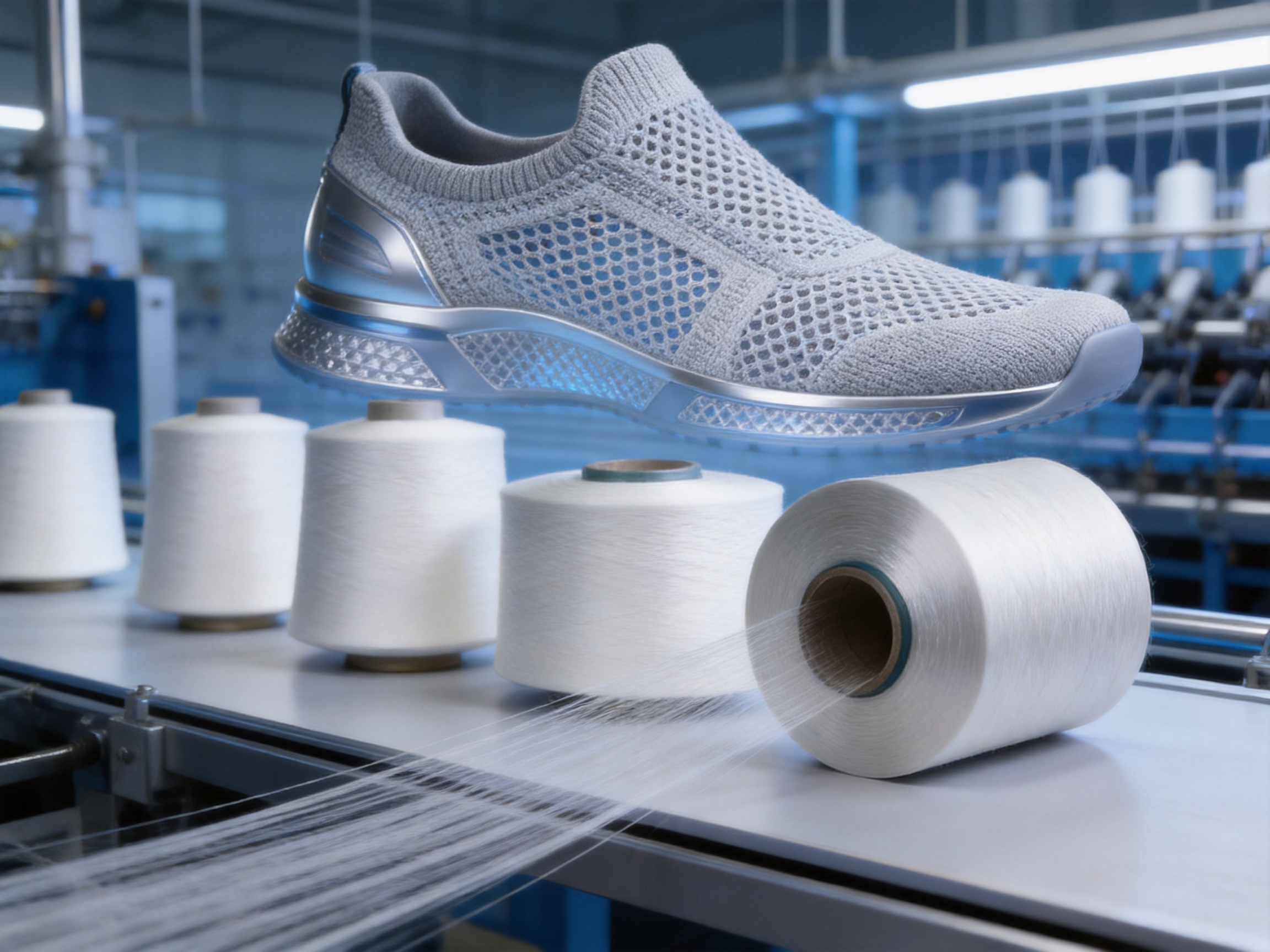
Standard polyester filament yarn remains valuable for applications requiring high thermal stability, strength, dimensional performance, and resistance to ordinary processing conditions. However, it is not always the best choice when the primary requirement is low-temperature bonding. Its higher melting behavior may require temperatures that are unsafe for sensitive shoes upper materials.
The main advantage of the low melting product is thermal selectivity. It is engineered to activate before standard polyester reaches its normal melting range. This allows a manufacturer to create bonding effects without treating the entire upper at an excessively high temperature.
A second advantage is process compatibility. Many footwear factories already use heat presses or thermal setting equipment. By selecting a yarn that activates at a moderate temperature, manufacturers may be able to integrate bonding into existing production arrangements rather than installing a completely different high-temperature process.
A third advantage is material protection. Lower-temperature activation can help protect color, surface appearance, stretch performance, and fabric hand feel. This is useful for lightweight athletic uppers, where even a small change in flexibility or surface texture may affect the finished shoe.
A fourth advantage is design freedom. Designers can combine the yarn with knit structures, mesh zones, printed areas, and reinforcement elements that could not tolerate standard polyester melt temperatures. This supports more complex upper constructions and more localized bonding patterns.
| Characteristic | Standard Polyester Yarn | Low Melting Yarn for Shoes Upper |
|---|---|---|
| Primary function | Structural or textile reinforcement | Structural support combined with thermal bonding |
| Thermal activation | Requires a much higher temperature to melt | Activates at approximately 110 degrees Celsius |
| Suitability for heat-sensitive upper materials | May require careful protection from high heat | Designed for a moderate-temperature bonding window |
| Bonding method | Usually requires another bonding component or process | Can form bonding points when properly heat activated |
| Process objective | Strength, appearance, and textile construction | Low-temperature bonding, stabilization, and reinforcement |
This comparison is general and does not replace a product trial. Different polyester constructions and different low melting yarns may show different results. The most important selection factors are the required bond strength, final flexibility, fabric composition, equipment temperature accuracy, and appearance standard.
Not all low melting yarns provide the same production performance. A generic product may have an appropriate melting point but lack the tenacity, winding quality, consistency, or footwear-specific formulation required by a demanding shoes upper program.
This product is purpose-built for shoes upper applications rather than being a general low-temperature material adapted from another textile field. Its development considers the requirements of knitted and woven footwear structures, including stable feeding, controlled thermal bonding, moderate flexibility, and compatibility with upper assembly processes.
The product also benefits from a combination of functional characteristics. Low melting behavior is supported by high tenacity and easy rewind performance. This balance is important because an upper factory needs a yarn that performs before, during, and after heat activation.
Another advantage is the possibility of technical communication during product introduction. Since processing conditions vary between machines and fabric constructions, the manufacturer can support trial evaluation and discuss recommended parameters based on the customer’s equipment model and upper design. This practical approach is more valuable than selecting a yarn only from a nominal melting-point number.
Customers may also request special production by order. Depending on the project, discussions can include count, melting behavior, tenacity, packaging, color, or other product requirements. Customization should be confirmed through technical review because changes to one property can influence feeding, bonding, flexibility, and final fabric performance.
Knitted uppers are often produced as engineered structures with different densities and functions in different zones. Breathable areas may use an open mesh, while toe boxes, sidewalls, and heel regions may require additional stability. Low melting yarn can be introduced into selected areas to help hold the knitted geometry after heat activation.
When the yarn is used correctly, thermal bonding can reduce unwanted movement between adjacent loops and help the panel maintain its intended form. The result may be a more stable upper that still retains the flexibility associated with knitted construction.
Three-dimensional knitted panels combine multiple stitch structures, yarn types, and reinforcement zones. Their performance depends on maintaining the relationship between these areas during later processing. A low melting yarn can serve as a bonding element within selected structures, helping reinforce specific zones without coating the entire panel with adhesive.
The moderate activation temperature is useful for designs that include elastic yarns, colored filaments, printed effects, or thin synthetic layers. A production trial is necessary to determine whether the bond produces the desired firmness and recovery without reducing comfort.
Heel counters require stability because they help maintain the shape of the rear portion of the shoe. Low melting yarn can be used with suitable textile layers to reinforce or secure the heel area during thermal processing. Its bonding behavior can help connect the textile structure to a support layer while avoiding the high heat associated with standard polyester melting.
Mesh materials are lightweight and breathable, but they may be difficult to laminate without blocking airflow or creating excessive stiffness. A low melting yarn can provide localized bonding points instead of a continuous adhesive film. This may allow manufacturers to preserve more of the original openness and flexibility of the mesh.
Toe protection, eyelet areas, side supports, and other structural zones may need additional stability. By placing the yarn in the relevant region, manufacturers can create targeted reinforcement during heat pressing. This supports material efficiency because bonding performance is concentrated where it is needed rather than distributed across the entire upper.
The performance of a functional yarn depends heavily on manufacturing discipline. A low melting yarn must be produced with control over polymer composition, spinning behavior, filament formation, drawing, winding, package construction, and quality inspection. Variations in any of these stages may influence melting behavior, strength, elongation, appearance, and feeding performance.
At GC FIBER, production is supported by experience in special and functional textile yarns dating back to 2006. The company researches, develops, produces, and sells several categories of eco-friendly and functional textile products. This broader technical background is valuable because low melting yarn development often requires knowledge of polymer behavior, filament processing, textile machinery, and customer application conditions.
The manufacturing process begins with the selection and preparation of suitable polyester raw materials. For a low melting yarn, the material formulation must support the targeted thermal behavior while maintaining adequate mechanical performance. Raw materials are handled in a controlled manner to reduce contamination and help maintain consistent processing conditions.
During polymer preparation and spinning, temperature and residence time are important. The polymer must be melted and processed uniformly so that the resulting filaments have consistent structure. Stable spinning conditions support more predictable yarn properties and reduce the possibility of irregular filament formation.
Drawing and orientation influence tenacity, elongation, shrinkage, and dimensional behavior. These properties must be balanced carefully. Excessive orientation could make the yarn less suitable for the intended low-temperature bonding function, while insufficient orientation could reduce mechanical stability and create feeding problems. Process engineers therefore need to coordinate thermal behavior with textile strength requirements.
Winding is another important manufacturing stage. The package must be formed with controlled tension and suitable density. Poor winding can lead to hard edges, loose layers, sloughing, or inconsistent unwinding. The easy rewind feature of this product is supported by attention to package formation and winding stability.
Quality control includes monitoring key properties from batch to batch. The production team monitors melting point stability so customers can achieve more consistent bonding results across shipments. Other inspections may include appearance, winding quality, package condition, yarn count, tensile behavior, and processing performance.
Laboratory testing provides a reference, but application testing is equally important. A yarn may behave differently when combined with a particular knit structure, coating, or adjacent filament. For this reason, technical evaluation can include customer fabric trials and process discussions. The objective is to connect yarn specifications with actual machine and heat-press conditions.
The manufacturer’s ability to develop new materials in cooperation with customers is another strength. Footwear brands and textile factories may have different requirements for softness, bonding strength, melting range, count, color, package size, or end-use performance. Collaborative development allows the product to be adjusted according to a defined application rather than relying only on an off-the-shelf specification.
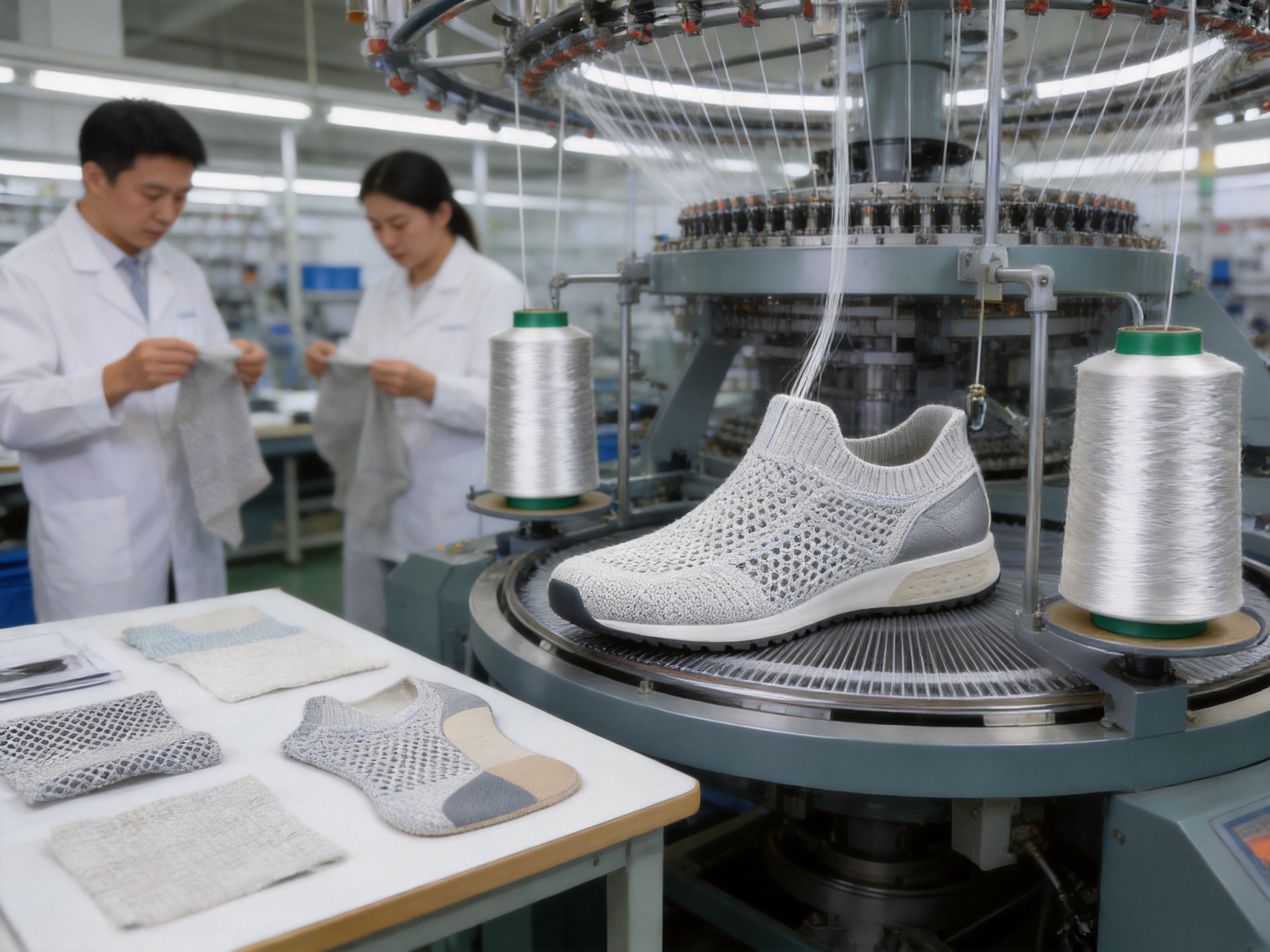
This low melting yarn is compatible with standard circular knitting and flat knitting machines commonly used for shoes upper production. It can also be evaluated on weaving equipment and other textile systems, provided that the yarn path, tension, and feeding devices are suitable.
Before full-scale production, the buyer should conduct a trial using the actual upper material and machine configuration. The trial should evaluate yarn feeding, breakage rate, fabric appearance, dimensional stability, bonding strength, flexibility, and final hand feel.
A typical thermal bonding evaluation may include the following steps. First, the yarn is incorporated into the selected area of the upper structure. Second, the fabric is positioned under the heat press or in the thermal setting equipment. Third, the temperature, pressure, and dwell time are adjusted in a controlled sequence. Fourth, the bonded sample is cooled before testing its shape, appearance, and mechanical performance.
The nominal 110-degree melting point should be treated as a product reference, not as an automatic machine setting. Heat transfer is affected by fabric thickness, machine calibration, contact pressure, the presence of coatings, and the speed at which the material moves through the heating zone. A lower or higher setting may be required to produce the desired result in a particular construction.
Engineers should begin with conservative conditions and increase heat exposure gradually while observing the yarn and surrounding material. Excessive temperature or dwell time may create a bond that is too hard, reduce the flexibility of the upper, or affect the appearance of adjacent components. Insufficient heat may produce weak or incomplete bonding.
Cooling is also important. The bonded structure should be allowed to stabilize under suitable conditions so that the final dimensions can be checked accurately. In some constructions, controlled cooling or temporary pressure after heating may help preserve the intended shape.
Machine operators should keep yarn guides, tensioners, and needles clean and correctly aligned. Friction or damage at the yarn path can increase breakage even when the yarn itself is stable. Packages should be stored in a clean, dry environment and protected from crushing, contamination, and excessive humidity.
The product belongs to a broader portfolio of functional and eco-friendly textile materials. While the environmental performance of a finished shoe depends on the complete product design, low melting yarn can contribute to more efficient material use and lower-temperature processing in suitable applications.
Localized bonding may reduce the need for continuous adhesive films or additional layers. By placing the bonding yarn in selected areas, manufacturers can create support where required while avoiding unnecessary weight in breathable or flexible zones. This approach may help optimize the material structure of the upper.
Moderate-temperature processing may also reduce the thermal burden of the bonding stage compared with processes that require much higher temperatures. The actual energy benefit depends on equipment efficiency, heating time, production speed, insulation, and factory operating conditions. Therefore, energy savings should be confirmed through a comparison of real production data.
Using a yarn that supports stable processing can also help reduce defects and material waste. If fewer uppers are rejected because of broken yarn, poor bonding, scorching, distortion, or uneven appearance, the factory may use its raw materials more efficiently. Consistent quality is therefore connected not only with productivity but also with responsible resource management.
GC FIBER’s wider product range includes biodegradable yarn and bio-component yarn as well as other functional polyester products. This portfolio reflects an approach that combines conventional textile performance with research into new material solutions. Customers developing more sustainable footwear programs may discuss how low melting yarn can be integrated with other material strategies.
Environmental claims should always be based on the complete life cycle and verified specifications of the final product. A low melting point alone does not establish biodegradability or complete environmental superiority. Its practical contribution is related primarily to controlled bonding, potential material reduction, and moderate-temperature processing.
Footwear manufacturers do not all use the same knitting machines, yarn combinations, upper thicknesses, or bonding equipment. A yarn that performs well in one program may require adjustment in another. Custom production allows customers to discuss the properties that matter most to their process.
Possible customization topics may include yarn count, package format, color, melting behavior, tenacity, elongation, bonding strength, and compatibility with a particular fabric structure. The 150D option provides a reference point, while other counts may be evaluated according to design and machinery requirements.
Technical cooperation normally begins with an application review. The customer provides information about the upper material, machine type, yarn position, heating equipment, target hand feel, and desired bonding result. The manufacturer can then recommend a trial specification and help define the evaluation procedure.
Sample testing should examine more than initial adhesion. Important factors include repeated flexing, washing or cleaning exposure where relevant, peel or separation resistance, dimensional stability, appearance after heating, and comfort-related properties such as softness and flexibility.
For high-volume programs, buyers may also evaluate lot-to-lot consistency, package weight, delivery capability, labeling, export packing, and quality documentation. The product can be supplied through Shanghai seaport, and special production can be arranged by order after technical requirements have been confirmed.
When sourcing low melting yarn, purchasing teams should first identify the exact function required. The yarn may be used for structural stabilization, layer bonding, reinforcement, temporary positioning, or a combination of these purposes. Defining the function helps determine the appropriate count and construction.
The second factor is thermal compatibility. The buyer should list all materials that will be exposed to the bonding process, including outer fabric, lining, coatings, elastic components, printed areas, and reinforcement layers. The lowest thermal tolerance among these materials may influence the process window.
The third factor is machine performance. The yarn should be tested on the actual knitting or weaving system whenever possible. Feeding tension, package size, guide design, machine speed, and yarn path geometry can influence performance significantly.
The fourth factor is final product comfort. Shoes upper materials must often balance stability with softness, flexibility, breathability, and low weight. A bond that is mechanically strong but too stiff may not meet the requirements of the finished shoe. Product trials should therefore include both technical strength tests and practical hand-feel evaluation.
The fifth factor is supply reliability. A suitable yarn must be available in consistent quality and adequate volume. Buyers should discuss regular production capacity, lead time, packaging, inspection documents, and the handling of repeat orders.
The sixth factor is technical support. Low melting yarn performance is application-dependent. A manufacturer that can provide samples, process discussion, and customized development gives the buyer more confidence during product introduction.
A structured evaluation program helps the buyer compare the yarn with alternative bonding materials. The first stage is package inspection. Operators should check the cone shape, winding uniformity, surface condition, labels, and absence of visible contamination or damage.
The second stage is machine testing. The yarn should be run at a representative speed while operators record breaks, tension fluctuations, snarling, uneven feeding, and package utilization. The test should be long enough to identify problems that may not appear during a short demonstration.
The third stage is fabric inspection. The knitted or woven sample should be checked for loop consistency, surface appearance, density, yarn displacement, and the accuracy of the intended reinforcement zone. Any difference between the design file and the actual fabric should be documented.
The fourth stage is thermal activation. Samples should be processed at several temperature and dwell-time combinations to identify a practical bonding window. The results should be compared for bond strength, flexibility, color, dimensional change, surface condition, and hand feel.
The fifth stage is durability testing. Depending on the intended footwear product, evaluation may include repeated flexing, abrasion, peel resistance, laundering, moisture exposure, aging, and temperature cycling. The correct test method depends on the upper design and the customer’s quality standard.
Testing should be performed with representative materials rather than only with the yarn by itself. The final result depends on the interaction between the low melting component and the adjacent fabric. A clear record of material combinations and machine conditions makes scale-up easier and improves repeatability.
The product is designed with a melting point of approximately 110 degrees Celsius. The precise processing temperature should be established through trials because the best setting depends on the fabric structure, equipment, pressure, dwell time, and heating method.
It is specially developed for shoes upper applications, including knitted mesh, woven fabric, flyknit-style panels, and reinforcement areas. Compatibility should still be confirmed with the specific materials used in a customer’s upper because coatings, elastic components, and composite layers can respond differently to heat.
In most cases, it can be evaluated on standard circular knitting and flat knitting machines used for shoes upper production. A small trial is recommended to confirm feeding tension, guide compatibility, package performance, machine speed, and the appearance of the knitted structure.
No. It is a specialized bonding yarn and may reduce or replace additional adhesive in suitable constructions, but the final decision depends on the required bond strength, upper design, production method, and customer quality standard. Some products may still require adhesive, stitching, or another reinforcement method.
Yes. The yarn can be evaluated in woven structures and other textile constructions where a controlled low-temperature bonding effect is required. The weaving tension, yarn placement, fabric density, and thermal process should be optimized for the intended application.
150D is provided as a reference count. Other counts and special specifications may be discussed according to the customer’s design, machine, bonding requirement, and final fabric performance target.
High tenacity helps the yarn resist breakage during feeding, knitting, weaving, handling, and thermal processing. It can support longer production runs, fewer interruptions, and more stable fabric formation when the machine and yarn path are correctly adjusted.
Easy rewind means the yarn is wound so that it can unwind smoothly and evenly from the package. This can reduce tangling, irregular feeding, sudden tension changes, and package-related downtime on automated textile equipment.
Special production by order is available for discussion. Customers may inquire about adjusted melting behavior, tenacity, count, packaging, and other requirements. Any proposed change should be evaluated to confirm that the complete yarn performance remains suitable for the intended machine and upper construction.
Heat presses, thermal ovens, heated rollers, and similar controlled heating systems may be considered. The equipment must provide accurate temperature control and suitable pressure or contact conditions. The manufacturer can discuss trial parameters based on the customer’s equipment model and fabric structure.
The yarn should be kept in a clean, dry, and protected storage area. Packages should remain protected from crushing, contamination, excessive humidity, and direct exposure to unsuitable heat. Proper storage helps preserve package quality and consistent unwinding behavior.
Yes. A sample trial is recommended before scale-up. The customer can evaluate machine feeding, fabric appearance, bonding performance, flexibility, and durability using actual production materials. Technical information should be shared so the sample can be matched to the intended application.
Export arrangements can be made through Shanghai seaport. Shipping terms, packing requirements, documentation, and delivery schedules should be confirmed during the quotation and order process.
Yes. The company’s product portfolio includes biodegradable yarn, low melting yarn, ECDP yarn, anti-static yarn, HDPE yarn, bio-component yarn, and polyester filament yarn. It also cooperates with customers on the development of new special and functional textile materials.
Choosing a low melting yarn supplier is not only a matter of comparing nominal melting points. The supplier should understand how the yarn behaves on textile machinery and how the finished material performs after heat activation. A specialized manufacturing partner can help connect polymer design, yarn processing, package quality, and footwear application requirements.
GC FIBER has focused on special and functional textile products since 2006. Its experience across several product categories supports a broader understanding of material development and textile processing. This is particularly useful when customers require a yarn that must perform both as a textile filament and as a controlled bonding component.
The company’s manufacturing strength includes research and development, production management, batch monitoring, winding control, and cooperation on customized materials. The objective is to deliver yarn that is stable not only in laboratory testing but also in real production environments.
Its location in Nantong, Jiangsu Province, provides access to China’s established textile and chemical fiber supply chain. The company address is No. 66 Qiaogang Road, Haian, Nantong City, Jiangsu Province, China. International buyers can discuss product samples, technical specifications, custom development, and shipping arrangements with the sales and technical teams.
A focused supplier relationship can shorten the trial process. Instead of treating yarn selection as an isolated purchasing decision, the buyer and manufacturer can evaluate the complete application, identify the desired bond behavior, and define practical production conditions. This approach helps reduce the risk of selecting a material that meets a specification but fails to meet the requirements of the finished upper.
Polyester low melting yarn for shoes upper provides a practical solution for footwear manufacturers that need controlled thermal bonding at a moderate temperature. Its approximately 110-degree melting point is designed to activate below the normal melting range of standard polyester, helping protect heat-sensitive upper materials during bonding and stabilization.
The product combines low melting performance with high tenacity and easy rewind characteristics. This balance supports stable feeding, knitting, weaving, handling, and thermal processing. It is suitable for knitted mesh, flyknit-style panels, woven uppers, heel counters, laminated fabric layers, and localized reinforcement zones.
Compared with standard polyester yarn, the main advantage is lower-temperature activation. Compared with generic low melting yarns, the product emphasizes footwear-specific application, mechanical stability, package performance, and technical cooperation. These advantages can help manufacturers improve process repeatability, reduce thermal damage, preserve fabric flexibility, and develop more efficient upper constructions.
Successful use requires application testing. Buyers should evaluate the yarn on their actual machines and materials, confirm the bonding window, and assess strength, flexibility, appearance, durability, and dimensional stability. With appropriate process control, this yarn can become a valuable component in modern shoes upper production.
For technical inquiries, sampling, custom specifications, and production cooperation, customers may contact GC FIBER through service@gcfiber.com. The company supports special yarn development and can discuss requirements for counts, tenacity, melting behavior, packaging, and application-specific performance.
1. GC FIBER. Product Information for Polyester Low Melting Yarn for Shoes Upper. Internal technical product materials.
2. NanTong Global Chemical Fiber Co., Ltd. Company Profile and Functional Yarn Product Portfolio. Corporate information materials.
3. International Organization for Standardization. Textiles—Testing Methods for Yarn Linear Density, Tensile Properties, and Related Characteristics.
4. International Organization for Standardization. Textiles—Determination of Melting Behavior and Thermal Properties of Polymer-Based Textile Materials.
5. Textile Institute. Textile Terms and Definitions. Reference concepts concerning yarn construction, filament processing, textile bonding, and fabric performance.
6. Polymer Science and Engineering References. General principles of polyester melting behavior, thermal transitions, polymer orientation, and filament formation.
7. Footwear Manufacturing Technology References. General methods for knitted upper production, textile lamination, heat pressing, reinforcement, and dimensional stabilization.
It is made with Bio-base PLA, fully biodegradable Feature: 1. Industrial compost product 2. Made with PLA 3. Eco-frie...
READ MOREPlease fill out the form below and our team will contact you as soon as possible.
Addres: No.66 Qiaogang Road, Haian, Nantong City, Jiangsu Province, China
E-mail: service@gcfiber.com admin@gcfiber.com
Copyright ? GC FIBER All Rights Reserved. Eco-Friendly Textile Products Manufacturer Biodegradable Yarn Company