English
 中文简体
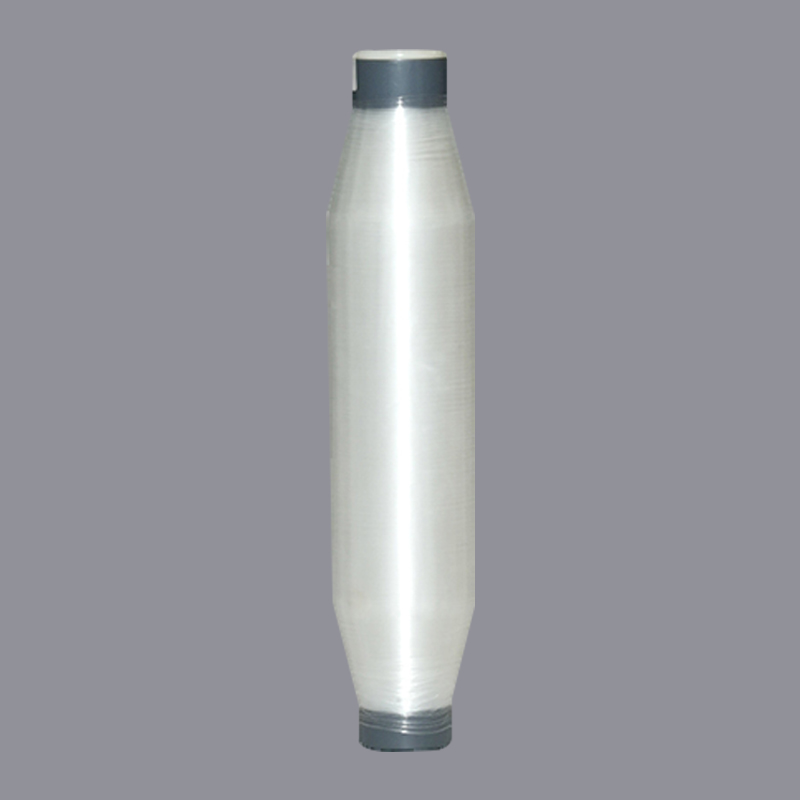
Made of PBS (Polybutylene Succinate), fully biodegradable.Features:1.Home compostable2.Raw material: PBS Polybutylene Su...
READ MORE
Content
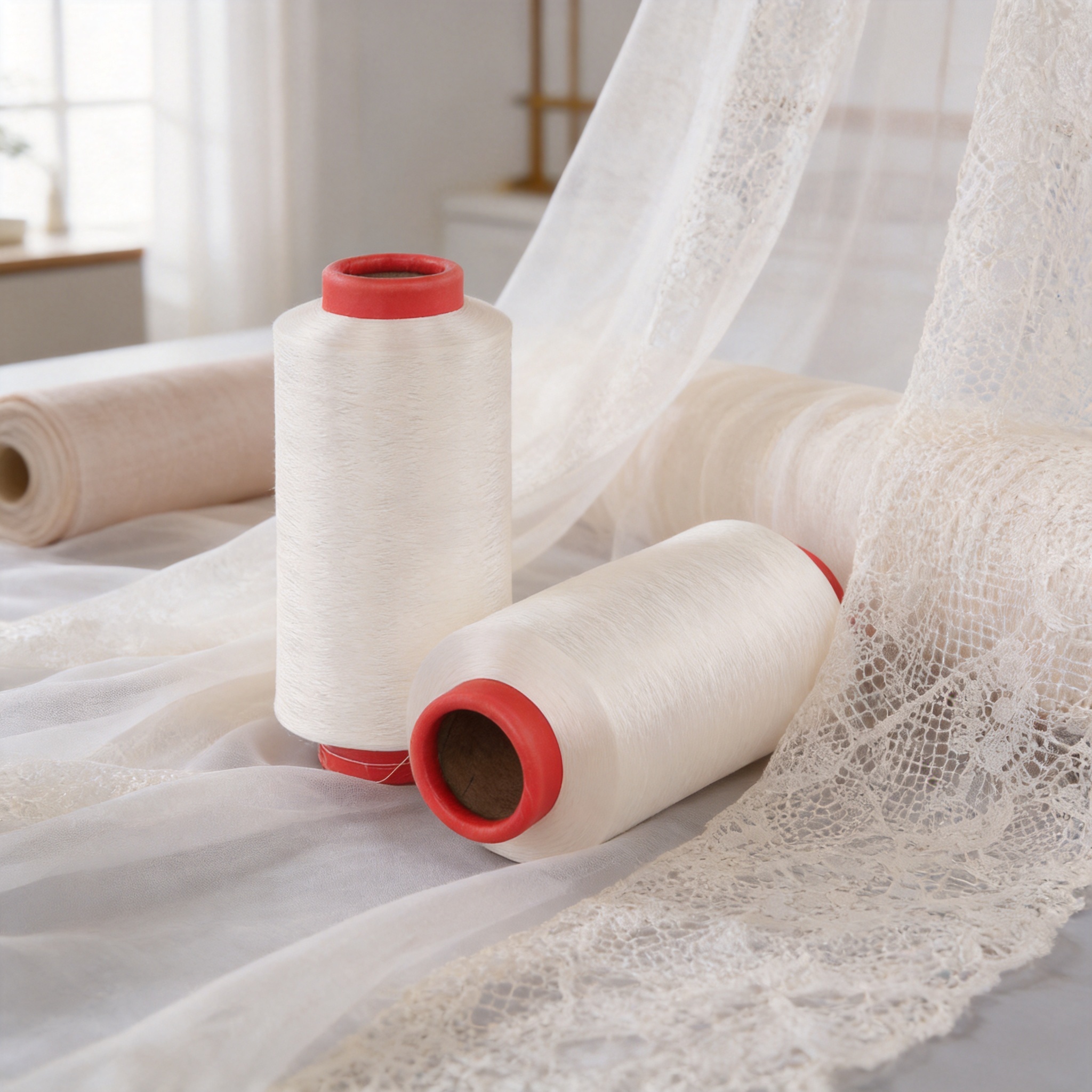
Polyester Finest Yarn is an ultra-fine drawn textured yarn developed for textile applications that require low weight, soft touch, fine surface effects, stable processing, and dependable mechanical performance. Produced from polyester, this specialized filament yarn is available in extremely fine specifications, including DTY 7D/8F and 10D/12F. These counts place the yarn among the finest options available for manufacturers seeking delicate, lightweight, and refined textile structures.
Unlike ordinary polyester yarns designed mainly for general-purpose production, Polyester Finest Yarn is developed around the technical demands of ultra-fine denier processing. The yarn must combine small diameter, reliable tenacity, stable rewinding, controlled elasticity, and a smooth hand-feel. Achieving this balance requires more than simply reducing the denier. It requires carefully selected raw materials, accurate spinning conditions, controlled texturing, specialized winding equipment, and systematic quality inspection.
This product is suitable for weaving and knitting and can support the production of lightweight apparel fabrics, sheer materials, fine linings, premium home textiles, delicate mesh structures, lace-related fabrics, and other textile constructions where softness and low fabric weight are important. It can also be customized according to customer requirements, including denier, filament count, cross-section, functional properties, and application-specific performance targets.
Polyester Finest Yarn is a polyester filament yarn manufactured at an exceptionally low denier. Denier describes the mass of a filament or yarn in relation to its length. A lower denier generally indicates a finer yarn, although actual fabric performance also depends on filament count, polymer characteristics, cross-sectional shape, texturing conditions, and finishing processes.
The available 7D/8F and 10D/12F specifications are particularly valuable for manufacturers producing fabrics with a soft, delicate, and lightweight character. In these constructions, each filament is extremely fine, while the multifilament arrangement helps provide continuity, coverage, flexibility, and a smoother fabric surface.
Drawn textured yarn, commonly known as DTY, is produced by drawing and texturing polyester filaments. Drawing improves molecular orientation and contributes to strength, while texturing introduces bulk, flexibility, elasticity, and a more textile-like appearance. The resulting yarn is better suited to many weaving and knitting processes than a completely flat filament because it can provide a more comfortable hand and improved fabric volume.
Ultra-fine DTY production requires careful control because small variations can have a noticeable impact on yarn behavior. Uneven tension, inconsistent heating, poor winding, or unstable texturing may cause problems such as filament breakage, uneven dye uptake, irregular fabric appearance, and processing interruptions. For this reason, the production of very fine DTY requires specialized technical knowledge and disciplined process management.
| Item | Available Information | Production Significance |
|---|---|---|
| Material | Polyester | Provides strength, durability, dimensional stability, and easy-care performance. |
| Yarn type | Drawn Textured Yarn | Offers a softer hand, improved bulk, and textile-friendly stretch and recovery. |
| Fine counts | 7D/8F and 10D/12F | Supports ultra-lightweight, delicate, sheer, and premium textile structures. |
| Processing methods | Weaving and knitting | Allows use in a wide range of fabric manufacturing systems. |
| Core performance | Good tenacity and rewinding stability | Helps maintain reliable downstream processing performance. |
| Hand-feel | Soft, smooth, and refined | Enhances comfort and the perceived quality of finished fabrics. |
| Customization | Special production by order | Supports customer-specific denier, filament, structure, and function requirements. |
| Logistics | Shipment through Shanghai seaport | Provides a practical export channel for international textile customers. |
The specifications above describe the principal product range, while exact technical parameters can be discussed according to the intended end use. Fabric construction, machine type, dyeing method, finishing system, and customer quality standards may influence the most appropriate yarn selection.
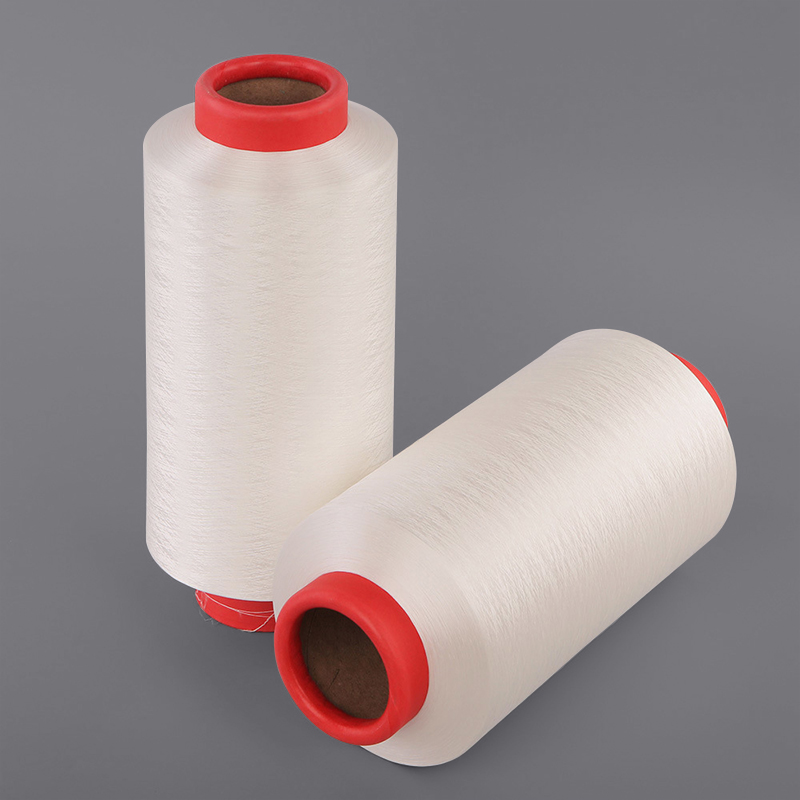
Polyester Finest Yarn
Ultra-fine denier yarns make it possible to create fabrics that are lighter, softer, and more delicate than those made with standard polyester yarns. The smaller filament size can contribute to a smoother surface and a more refined drape. When correctly processed, the yarn can help fabric manufacturers achieve a combination of lightness and coverage that is difficult to obtain with coarser yarns.
Fine yarn is especially useful when designers want a fabric that feels almost weightless while retaining the practical advantages of polyester. These advantages include good strength-to-weight performance, resistance to ordinary wear, easy care, quick drying, and relatively stable dimensions. Polyester Finest Yarn therefore provides a way to combine a refined aesthetic with the processing convenience associated with synthetic filament yarn.
The fine filament structure can also help create a more comfortable contact surface. In apparel, this may support smooth linings, lightweight outer materials, delicate activewear layers, or soft fashion fabrics. In home textiles, it may be used in light curtains, fine decorative fabrics, and other products where a soft touch and elegant appearance are desired.
However, ultra-fine yarn is technically demanding. The smaller the denier, the more sensitive the yarn can become to tension changes, mechanical contact, contamination, and process instability. This is why the manufacturing system must be designed to protect the yarn throughout spinning, drawing, texturing, winding, inspection, packaging, and transportation.
The most important advantage is the ability to produce 7D/8F and 10D/12F DTY. These specifications provide textile producers with access to an ultra-fine yarn platform for applications that demand reduced fabric weight and a premium surface effect.
Many standard polyester yarns are suitable for everyday fabrics but may not provide the delicate structure required for high-end lightweight products. The fine denier capability of this yarn gives designers greater freedom when developing sheer, soft, elegant, and fine-gauge materials.
Ultra-fine yarn must be strong enough to pass through subsequent processing without excessive breakage. Polyester Finest Yarn is designed to provide good tenacity for its fine size. This balance is important because a yarn that is merely fine but mechanically unstable may create production losses and inconsistent fabric quality.
Good tenacity supports more reliable knitting and weaving. It can help reduce filament breaks, machine stoppages, and visible defects in the finished fabric. It also contributes to the durability of fabrics made from the yarn, especially when the material is used in garments or products exposed to repeated handling.
Rewinding quality is a critical factor in filament yarn production. A well-formed package should unwind smoothly, maintain consistent tension, and minimize snarling or tangling. Polyester Finest Yarn is produced with attention to winding stability so that it can move efficiently through downstream textile operations.
Stable rewinding is particularly important for fine yarn because a small package defect can have a disproportionately large effect during processing. Uneven winding may lead to tension variation, yarn overlap, broken filaments, or irregular fabric formation. Controlled winding helps preserve yarn quality from the factory to the customer’s machine.
The ultra-fine filament structure contributes to a soft, smooth, and refined hand-feel. The texturing process can also add flexibility and a more textile-like surface compared with a completely flat filament yarn. This makes the yarn suitable for fabrics intended to touch the skin or communicate a premium visual and tactile impression.
Hand-feel is an important purchasing factor in apparel, lingerie, fashion accessories, lining fabrics, scarves, and premium home textiles. A softer fabric can improve wearer comfort and help manufacturers position the finished product in a higher-value market segment.
Polyester Finest Yarn offers a useful combination of strength and elastic resilience. The yarn can withstand tension during fabric formation while retaining recovery characteristics associated with textured polyester filament. This balance helps support fabric shape retention and resistance to deformation.
Elastic resilience does not mean that the yarn should be treated as a replacement for highly elastic specialty fibers in every application. Instead, it provides practical recovery and flexibility within a polyester DTY structure. The appropriate performance will depend on yarn count, texturing conditions, fabric construction, finishing, and the final product design.
The fine denier makes it possible to reduce the weight of a fabric while maintaining a continuous filament structure. This can be advantageous for garments designed for warm climates, travel, layering, or compact packing. Lightweight fabrics may also reduce material consumption per product when the desired coverage and strength can be achieved through optimized construction.
Designers can use this yarn to explore fine surfaces, translucent effects, delicate drapes, and compact fabric constructions. It can also be combined with other yarns to create contrast in texture, appearance, or performance.
Polyester Finest Yarn is suitable for both weaving and knitting. In weaving, it can be used as warp or weft material when the selected specification and machine conditions are appropriate. In knitting, its texture, flexibility, and fine filament structure can support smooth and comfortable knitted constructions.
Because ultra-fine yarn behavior can vary according to machine gauge, speed, tension, and fabric design, customers should conduct application trials before full-scale production. Technical discussion with the manufacturer can help determine suitable package, lubrication, tension, and processing recommendations.
The quality of an ultra-fine DTY product is directly connected to the consistency of its manufacturing process. The production system must control the yarn at every stage, from polymer-based raw material selection through final packaging. A factory producing very fine filament yarn needs appropriate machinery, trained operators, process monitoring, and an organized quality management system.
Production begins with the selection of suitable polyester raw materials. Raw material consistency is essential because variations in polymer quality can affect spinning stability, strength, elongation, dyeability, and texturing response.
High-quality polyester inputs are screened and tested before entering production. Important considerations may include intrinsic viscosity, moisture condition, cleanliness, thermal behavior, and batch consistency. Controlling these factors helps create a stable foundation for fine denier spinning.
For ultra-fine products, contamination control is particularly important. Foreign particles, impurities, or unstable material conditions can cause spinneret blockage, filament irregularity, and breakage. Careful material handling therefore contributes directly to yarn uniformity.
During melt spinning, polyester is heated and extruded through a spinneret to form continuous filaments. The spinneret design, extrusion pressure, temperature profile, cooling conditions, and take-up speed all influence the resulting filament size and uniformity.
Fine denier production requires precise control of polymer flow and cooling. The filaments must be formed evenly and cooled under controlled conditions to reduce variation between individual filaments. Accurate equipment calibration and regular maintenance are important because even small mechanical deviations may influence a very fine yarn.
The spinning stage establishes the basic filament structure. A consistent structure makes later drawing and texturing more predictable, which improves the stability of the final DTY product.
Drawing aligns the polymer molecules and increases the functional performance of the filament. The draw ratio, roller speed, temperature, and tension must be controlled to achieve a suitable balance of strength and elongation.
Overdrawing may reduce flexibility or increase breakage risk, while insufficient drawing may result in inadequate strength and unstable dimensional behavior. For this reason, the drawing process is adjusted according to the target denier, filament count, and final application.
Careful orientation control is particularly valuable for 7D/8F and 10D/12F products. Each filament is small, so differences in orientation can produce visible differences in yarn performance. Stable drawing conditions help achieve consistent tenacity and elongation across the package.
Texturing changes the form of the filament yarn and gives it a more flexible, bulky, and textile-friendly character. The process can introduce crimp and improve the fabric’s softness, cover, and elasticity. Texturing parameters may include heater temperature, disc or friction conditions, yarn speed, overfeed, and tension.
For ultra-fine polyester DTY, texturing conditions must be precisely matched to the filament structure. Excessive mechanical stress may cause filament damage, while insufficient texturing may reduce the desired hand-feel and bulk. A stable process helps produce yarn with uniform crimp and consistent downstream behavior.
The manufacturer’s ability to produce special fine counts demonstrates the importance of equipment capability and technical experience. Ultra-fine DTY cannot be treated as a simple extension of ordinary yarn production. It requires careful coordination between spinning, drawing, texturing, and winding stages.
After texturing, the yarn is wound into packages suitable for customer use. Winding must control package density, edge formation, tension, and surface uniformity. The package should allow the yarn to unwind smoothly at the customer’s weaving or knitting machine.
Good winding performance protects the benefits achieved during earlier production stages. Even a yarn with excellent tenacity and softness can create problems if it is delivered in an unstable package. Automated or closely monitored winding systems can help maintain repeatability across packages and production lots.
Quality control is applied throughout production rather than only at the final stage. Operators and technical personnel may monitor yarn appearance, linear density, tensile behavior, elongation, crimp characteristics, package formation, and winding performance.
Visual inspection can identify broken filaments, contamination, unevenness, loops, slubs, and package defects. Physical testing provides additional information about strength, elongation, and consistency. The exact inspection program can be adapted to customer specifications and application requirements.
Process records are also important. Tracking production conditions, raw material batches, machine settings, and inspection results supports traceability and helps the technical team identify the source of any deviation. This disciplined approach is especially valuable for customized orders and repeat production.
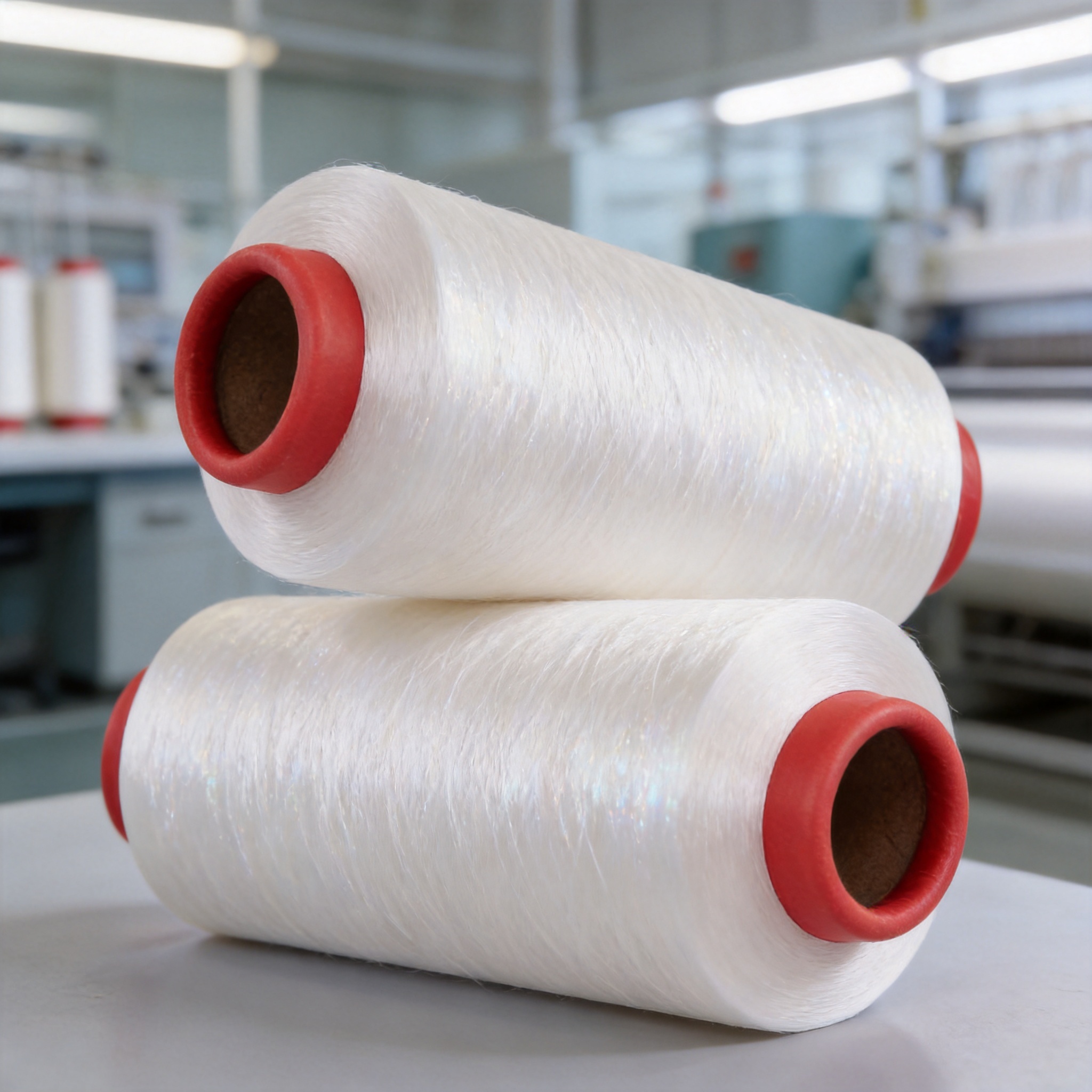
The manufacturer behind Polyester Finest Yarn is a special textile factory established in China in 2006. Its product scope includes biodegradable yarn, low melting yarn, ECDP yarn, anti-static yarn, HDPE yarn, bio-component yarn, and polyester filament yarn. This broad portfolio indicates experience with specialized and functional textile materials rather than only conventional commodity products.
Multiple production lines and machines provide flexibility for different product requirements. This flexibility can be important when customers need small customized orders, trial quantities, or larger volume production. The ability to coordinate different equipment and production conditions supports more efficient development from sample stage to commercial supply.
Strong control over raw material supply and quality also helps improve production consistency. For fine yarn, reliable raw material management reduces the risk of variation between batches. It can support better control over color development, mechanical performance, winding behavior, and delivery scheduling.
A dedicated design and research and development department supports the development of special and functional eco-friendly textile products. This capability is useful when a customer’s requirement does not match a standard catalog item. The technical team can collaborate with customers to evaluate new yarn structures, functional properties, or application-specific solutions.
R&D cooperation begins with understanding the customer’s intended application. Important information may include the target fabric type, machine gauge, processing method, finished width, desired weight, dyeing route, finishing process, required hand-feel, and performance objectives.
Based on these details, the technical team can discuss suitable denier, filament count, cross-section, texturing level, and package format. Trial production may then be arranged so that the yarn can be evaluated under actual customer conditions.
This collaborative approach can reduce the gap between laboratory development and industrial production. It also helps ensure that the yarn is evaluated not only by its basic specification but by how it performs in the customer’s complete process.
Custom production is available for customers who require special yarn parameters. Possible customization areas include denier, filament count, cross-section structure, functional properties, package requirements, and production quantity.
OEM service may be appropriate for textile brands, fabric mills, garment manufacturers, distributors, and material developers that need a reliable production partner. A coordinated team across sales, R&D, design, and production can support the project from initial inquiry through sampling, testing, order confirmation, manufacturing, and delivery.
Customization is subject to technical feasibility, minimum order considerations, raw material availability, machine capability, and quality requirements. Early communication is recommended so that the manufacturer can review the complete specification before confirming a production plan.
Conventional polyester yarn remains useful for many general textile applications, but Polyester Finest Yarn provides several advantages when the design requires an ultra-fine structure. The most direct difference is denier. Standard yarns may provide greater bulk or higher production efficiency in basic fabric constructions, whereas ultra-fine DTY is selected for lightness, softness, refinement, and delicate surface effects.
Another difference is application focus. Conventional polyester yarn may be optimized for broad market use, while Polyester Finest Yarn is developed for more specialized requirements. Its value lies in the combination of very fine denier, good tenacity, stable rewinding, soft hand, and elastic resilience.
Compared with a coarse filament yarn, a fine yarn can create a more delicate fabric appearance and may improve drape. It can also help manufacturers produce lighter products without relying only on lower fabric density. Compared with a flat filament, textured yarn may provide a softer, more flexible, and more fabric-like hand.
Compared with an ordinary fine yarn made without specialized process control, a carefully manufactured 7D/8F or 10D/12F yarn can offer more consistent package performance and better processing reliability. This distinction is important because ultra-fine yarn quality depends not only on the nominal denier but also on uniformity, winding, tension, and texturing consistency.
The product should not be viewed as universally superior for every textile application. Coarser yarns may be more suitable when maximum bulk, lower cost, or high abrasion resistance is the main priority. Polyester Finest Yarn is most valuable when the customer needs an exceptionally fine and refined material with controlled technical performance.
In weaving, Polyester Finest Yarn can be used to produce lightweight woven fabrics with a smooth appearance and soft surface. It may be suitable for fine apparel fabrics, linings, scarves, delicate fashion materials, and decorative constructions.
Warp preparation and loom settings should be selected carefully because ultra-fine yarn can be sensitive to tension and abrasion. Appropriate sizing, lubrication, guide surfaces, and speed settings may help preserve the filament structure. Trial weaving is recommended to determine the best operating conditions for each loom and fabric design.
The yarn can be used alone or combined with other yarns. A fabric designer may use it in the warp to create a fine, smooth base while introducing a different yarn in the weft for contrast. It may also be combined with functional yarns to add moisture management, stretch, thermal properties, or surface texture.
Fine woven fabrics can provide excellent drape and a lightweight appearance. Depending on construction and finishing, they may be used in blouses, dresses, fashion accessories, linings, light curtains, and premium decorative textiles.
Polyester Finest Yarn is also suitable for knitting applications. Fine DTY can contribute to comfortable knitted structures with a soft touch and controlled flexibility. It may be used in lightweight apparel, fine-gauge fabric, fashion knitwear, inner layers, and delicate mesh structures.
Knitting performance depends on machine gauge, yarn feed, tension, take-up, needle condition, and fabric design. A well-controlled yarn package helps support stable feeding and reduces unnecessary interruptions. Customers should evaluate the yarn on the intended knitting machine before committing to large production volumes.
The yarn’s texturing characteristics may contribute to a pleasant surface and improved fabric volume. When combined with suitable knitting parameters, this can help create a fabric that feels soft without becoming excessively heavy.
The yarn can be used in fabrics for lightweight shirts, dresses, skirts, blouses, scarves, and fashion layers. Its fine structure supports drape and softness, while polyester provides practical durability and easy-care characteristics.
Fine lining fabrics require smoothness, low weight, and a comfortable contact surface. Polyester Finest Yarn can help create thin and refined lining materials for garments, bags, accessories, and other products.
High-end textile products often depend on tactile quality and visual refinement. The yarn’s soft hand, fine denier, and potential for delicate fabric structures make it suitable for premium applications where material quality is a central selling point.
Fine yarn can support lightweight lace, mesh, and openwork structures. The suitability of the yarn will depend on fabric construction, finishing, and the strength requirements of the final product.
Potential home textile applications include light curtains, decorative fabrics, bed linens, quilt covers, and other soft furnishing products. In these products, the yarn can contribute to a smooth surface, lightweight construction, and elegant drape.
Polyester filament yarn is also used in selected industrial products, automotive interiors, filter materials, and other technical textile structures. Whether an ultra-fine specification is appropriate depends on the required filtration behavior, strength, thermal conditions, coating system, and durability criteria.
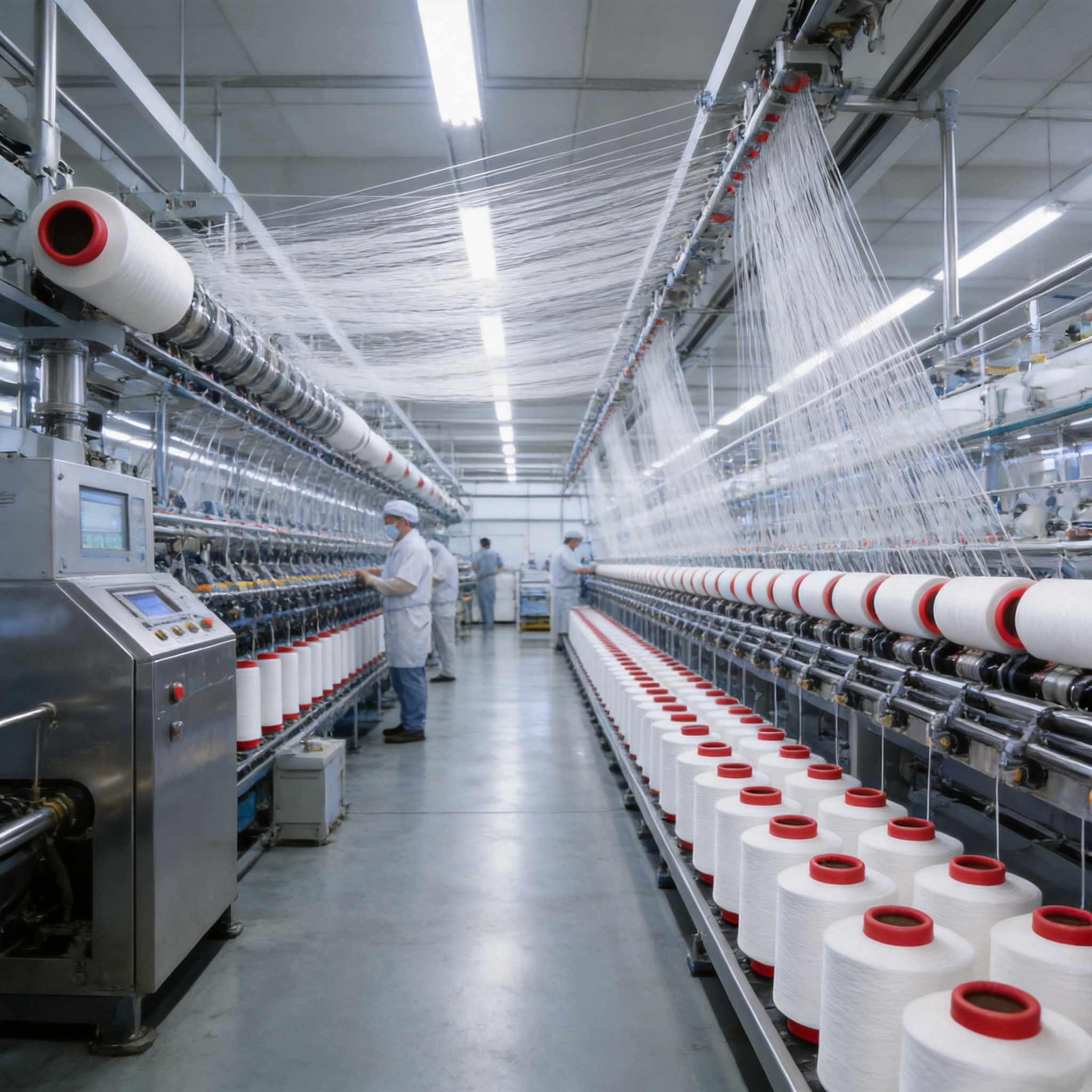
When purchasing Polyester Finest Yarn, buyers should evaluate more than the denier printed on the label. The final decision should consider yarn uniformity, tenacity, elongation, crimp, package formation, winding stability, moisture condition, oil content, appearance, and compatibility with the intended machine.
Customers should also clarify whether the yarn is intended for weaving, knitting, dyeing, covering, blending, or another process. Different applications may require different texturing levels, package formats, and quality tolerances.
Sample testing is recommended before bulk ordering. A proper evaluation may include unwinding behavior, machine running performance, fabric appearance, dyeing results, hand-feel, dimensional stability, and finished-product testing.
For repeat orders, customers should agree on quality standards and acceptable tolerances in advance. Consistent documentation helps both sides maintain stable production from one shipment to the next.
Fine yarn packages must be protected from moisture, dust, compression, impact, and deformation during storage and transport. Suitable packaging helps maintain package shape and protects the yarn surface until it reaches the customer’s production facility.
Storage conditions should be clean, dry, and stable. Excessive humidity, direct sunlight, or severe temperature changes may affect packaging materials and yarn handling. Customers should allow the yarn to acclimatize to the production environment when necessary before processing.
The product can be shipped through Shanghai seaport, providing an established export route for international buyers. Delivery schedules depend on order quantity, customization requirements, production planning, packaging, and shipping conditions. Special production by order should be discussed in advance to confirm lead time and minimum quantity.
Polyester Finest Yarn is part of a broader portfolio of special and functional textile products that includes biodegradable and bio-component yarn solutions. While conventional polyester and bio-based or biodegradable materials are different product categories, experience across these areas can support broader research into improved textile performance and material efficiency.
Ultra-fine yarn may help designers reduce fabric weight while maintaining the required appearance and function. Lower fabric weight can be useful in applications where lightness, compactness, or reduced material consumption is important. However, sustainability performance should always be assessed across the complete product life cycle, including raw materials, manufacturing energy, dyeing, finishing, use, and end-of-life management.
Customers seeking eco-oriented solutions can discuss whether a customized polyester-related, bio-component, biodegradable, or functional yarn is more appropriate for their product objectives. The manufacturer’s R&D capabilities allow technical requirements and environmental goals to be considered together.
The first selection factor is the fabric application. If the goal is an extremely lightweight and delicate structure, 7D/8F may be appropriate for evaluation. If the customer needs a slightly different balance of coverage, strength, and handling, 10D/12F may be considered.
The second factor is the fabric construction. Woven and knitted products may require different tension and texturing characteristics. Machine gauge, fabric density, and finishing conditions should be considered when selecting the yarn.
The third factor is the desired hand-feel. A soft and smooth fabric may require a particular combination of denier, texturing, fabric construction, and finishing. The yarn should therefore be tested in the complete fabric system rather than evaluated in isolation.
The fourth factor is production scale. Sample development, small trial orders, and regular bulk production may require different planning arrangements. Customers should provide their estimated annual demand and initial trial quantity so the manufacturer can recommend a suitable production approach.
The fifth factor is customization. If the required specification is outside the standard 7D/8F and 10D/12F range, the manufacturer can review the possibility of special production according to denier, filament count, cross-section, and functional requirements.
A successful yarn development project usually involves close communication between the customer and manufacturer. The customer should explain the intended end use, target performance, processing equipment, quality standards, and commercial requirements. The manufacturer can then recommend a practical specification and testing plan.
During sampling, feedback from weaving or knitting trials is valuable. Information about breakage, tension, feeding, fabric defects, dyeing, softness, stretch, and finishing results can guide further adjustment. This iterative approach is particularly important for ultra-fine products because application conditions have a strong effect on final performance.
The manufacturer’s professional team includes personnel working across sales, R&D, design, and production. Coordinated support helps ensure that technical information is transferred accurately from the initial inquiry to the production line. Dedicated tracking throughout the process can also help customers stay informed about development and delivery progress.
Polyester Finest Yarn is an ultra-fine polyester drawn textured yarn designed for lightweight, soft, and refined textile structures. It is available in special counts including DTY 7D/8F and 10D/12F.
7D/8F indicates a yarn with a total denier of approximately 7 denier and eight filaments. It is an extremely fine multifilament specification intended for delicate and lightweight textile applications.
10D/12F indicates a yarn with a total denier of approximately 10 denier and twelve filaments. It provides an ultra-fine structure while offering a different balance of filament arrangement and coverage compared with 7D/8F.
Yes. Polyester Finest Yarn is designed for weaving and knitting. The correct machine settings, tension, gauge, and fabric construction should be confirmed through application trials.
The principal advantages include ultra-fine denier, good tenacity, stable rewinding, a soft hand-feel, high strength, elastic resilience, lightweight fabric potential, and suitability for premium textile applications.
Yes. Custom production may be available for denier, filament count, cross-section structure, functional properties, package requirements, and other technical specifications, subject to feasibility and order conditions.
Strength depends on the specific yarn count, polymer, drawing ratio, texturing process, and testing method. Polyester Finest Yarn is designed to provide good tenacity for its extremely fine size, but it should be compared with a specific conventional yarn under the same test conditions.
Potential fabrics include lightweight apparel materials, sheer textiles, fine linings, premium fashion fabrics, delicate lace, fine mesh, light home textiles, and selected technical textile structures.
Buyers should test package unwinding, machine running behavior, yarn breakage, fabric appearance, hand-feel, dyeing performance, dimensional stability, and finished-product requirements. Testing should be conducted on the intended weaving or knitting equipment whenever possible.
The product can be arranged for shipment through Shanghai seaport. Exact logistics, lead time, packaging, and delivery conditions should be confirmed for each order.
Yes. OEM and customized yarn development services are available for customers with specific technical, functional, or commercial requirements. The project can be supported from specification review and sampling through production and delivery.
The manufacturer provides cooperation through sales, R&D, design, and production teams. Customers can work with the technical team to develop new materials and adapt yarn properties to a particular application.
Polyester Finest Yarn provides a specialized solution for textile manufacturers that need an exceptionally fine, soft, and technically stable filament yarn. With available DTY specifications of 7D/8F and 10D/12F, it supports the development of lightweight, sheer, delicate, and premium fabrics for weaving and knitting.
Its principal advantages include good tenacity, reliable rewinding, a smooth hand-feel, high strength, elastic resilience, and the ability to create refined fabric structures. These properties are supported by controlled raw material selection, precision melt spinning, drawing, texturing, winding, and quality inspection.
The manufacturing organization behind the product has operated as a special textile factory since 2006 and maintains capabilities across polyester filament yarn, functional yarn, eco-friendly yarn, and customized material development. Multiple production lines, technical personnel, R&D support, and OEM flexibility allow the company to serve both standard and specialized requirements.
For customers developing high-quality lightweight textiles, the product offers a practical combination of ultra-fine denier capability and polyester processing advantages. Through sample testing, technical cooperation, and customized production, Polyester Finest Yarn can be adapted to the performance and aesthetic requirements of modern apparel, home textile, fashion, and selected industrial applications.
1. Technical product information for Polyester Finest Yarn, including DTY 7D/8F and 10D/12F specifications.
2. General textile engineering principles related to polyester filament yarn, drawn textured yarn, denier, filament count, drawing, texturing, and winding.
3. Manufacturing information concerning special textile products, functional yarn development, eco-friendly material research, and customized OEM production.
4. General guidance for woven and knitted fabric development using ultra-fine polyester filament yarn.
5. Quality control considerations for filament yarn tenacity, rewinding stability, package formation, yarn appearance, and downstream processing performance.
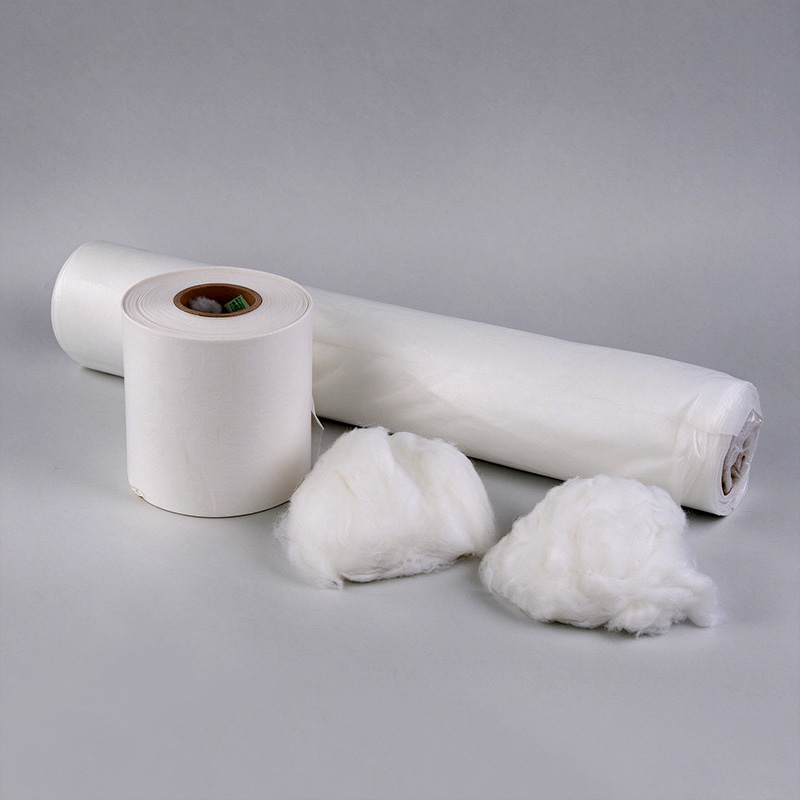
Made of PBS (Polybutylene Succinate), fully biodegradable.Features:1.Home compostable2.Raw material: PBS Polybutylene Su...
READ MOREPlease fill out the form below and our team will contact you as soon as possible.
Addres: No.66 Qiaogang Road, Haian, Nantong City, Jiangsu Province, China
E-mail: service@gcfiber.com admin@gcfiber.com
Copyright ? GC FIBER All Rights Reserved. Eco-Friendly Textile Products Manufacturer Biodegradable Yarn Company