English
 中文简体
Made of PBS (Polybutylene Succinate), fully biodegradable.Features:1.Home compostable2.Raw material: PBS Polybutylene Su...
READ MORE
Content
ECDP Pre-Oriented POY Yarn is a modified polyester filament designed for textile manufacturers that require reliable downstream processing, attractive fabric appearance, soft hand feel, and improved dyeing performance. Unlike ordinary polyester POY, this yarn combines the processing advantages of a partially oriented filament with the functional benefits of ECDP polymer modification. It can serve as an upstream material for draw-textured yarn, fully drawn yarn, knitted fabrics, woven fabrics, sportswear, underwear, home textiles, and other applications where color depth and comfort are important.
The yarn is produced in several counts, including 53Dtex/36F, 70Dtex/36F, 131Dtex/72F, and 250Dtex/144F. These specifications give processors flexibility when selecting yarn for different fabric weights, surface effects, stretch requirements, and construction methods. Production is available according to order requirements, with shipment through Shanghai seaport.
The product is manufactured by GC FIBER, a Chinese special textile manufacturer with experience in functional and eco-oriented fiber products. The company develops, produces, and sells biodegradable yarn, low melting yarn, ECDP yarn, anti-static yarn, HDPE yarn, bio-component yarn, and polyester filament yarn. Its manufacturing and technical capabilities also support customized denier, filament count, cross-section design, and functional performance.
POY means partially oriented yarn. It is a polyester filament produced at a relatively high spinning speed, commonly in the range of approximately 3,000 to 3,600 meters per minute. At this stage, the polymer chains have achieved a useful level of orientation, but the filaments retain additional drawability. This residual elongation is an intentional feature rather than a defect.
Because POY is not fully drawn, it is particularly suitable for downstream processes that introduce further orientation, bulk, stretch, and surface character. Textile processors may convert POY into draw-textured yarn through a draw-texturing process, or into FDY through draw-winding and additional drawing. The final properties of the finished yarn depend on the original polymer design, spinning stability, drawing conditions, texturing technology, heat setting, and package quality.
ECDP refers to a modified polyester system developed to improve dyeing behavior. The modification is incorporated during the polymer or melt preparation stage, allowing the functional chemistry to be distributed through the filament rather than applied only as a surface finish. This creates a more consistent basis for dye uptake after the POY is converted into DTY, FDY, knitted fabric, or woven fabric.
The combination of ECDP modification and POY structure gives textile manufacturers two important advantages. First, the yarn retains the processing flexibility associated with partially oriented polyester. Second, downstream products can benefit from deeper color, high dye uptake, soft touch, good luster, and improved moisture-related comfort compared with standard commodity polyester constructions.
The available specifications cover several typical yarn weight and filament-count requirements. Denier or dtex influences the linear density of the yarn, while filament count affects the filament fineness, surface feel, coverage, and potential fabric appearance. The correct choice depends on the target fabric, machine gauge, construction density, finishing method, and end-use requirements.
| Available specification | Typical selection considerations | Potential applications |
|---|---|---|
| 53Dtex/36F | Fine yarn construction, lightweight fabric, soft surface development | Light sportswear, underwear, fine knitting, lightweight woven products |
| 70Dtex/36F | Balanced linear density and filament count for versatile processing | Knitting, weaving, apparel, sportswear, lining, and blended constructions |
| 131Dtex/72F | Higher yarn weight with many filaments for coverage and a smoother hand | Performance apparel, knitted fabric, woven fabric, home textiles |
| 250Dtex/144F | Heavy yarn structure with a high filament count for fuller coverage and texture | Durable sportswear, upholstery-related textiles, woven fabric, functional fabric |
The specifications shown above are standard options rather than limits on development. Customers with different technical requirements may discuss custom denier, filament count, cross-section structure, luster level, and functional properties with the manufacturer. Custom production is especially useful when a fabric mill needs to match an existing construction, replace another supplier’s yarn, or develop a differentiated textile product.
Before final selection, buyers should evaluate the yarn together with the intended draw ratio, texturing conditions, dyeing recipe, fabric construction, and finishing sequence. A specification that performs well in a lightweight circular-knit fabric may not be the ideal choice for a high-density woven fabric. Technical coordination between the yarn supplier, spinner, texturer, knitter, weaver, and dye house can help achieve stable commercial results.
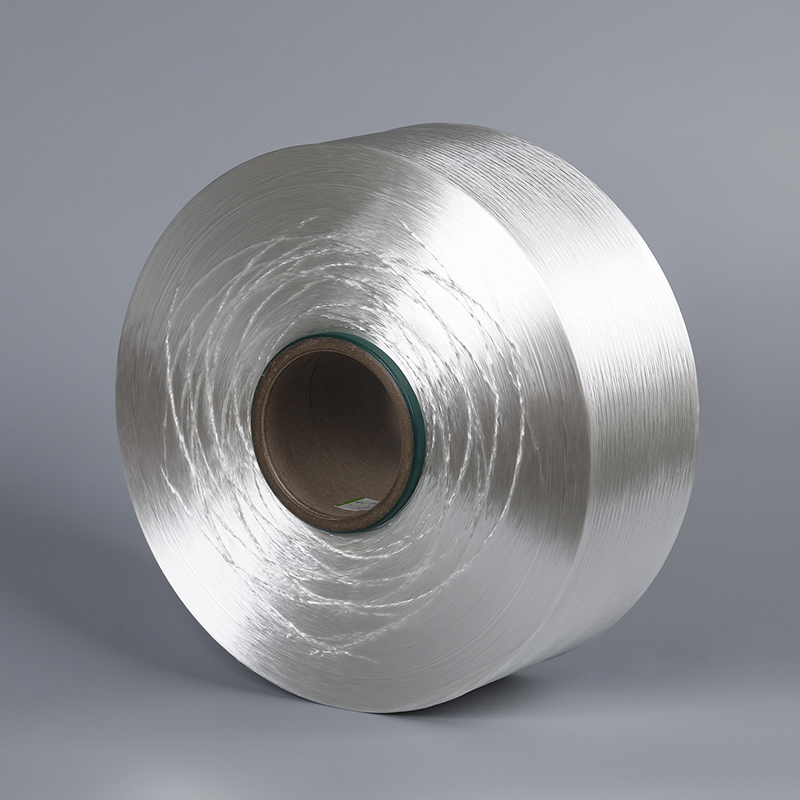
ECDP Pre-oriented POY Yarn
One of the central features of ECDP Pre-Oriented POY Yarn is its ability to support deep dyeing at approximately 85 degrees Celsius under suitable dyeing conditions. This is a significant difference from many conventional polyester dyeing processes, which commonly require higher temperatures and pressure to achieve satisfactory dye penetration and shade depth.
The ECDP modification increases the availability and accessibility of dye-receptive sites within the polyester structure. During dyeing, disperse dyes can enter the modified fiber more readily than they would enter ordinary polyester under comparable lower-temperature conditions. The result can be a deeper, more saturated shade with appropriate recipe design and process control.
Lower-temperature dyeing may provide practical benefits for dye houses. It can reduce the thermal burden placed on the equipment and may be useful when polyester is blended with elastane or other components that are sensitive to excessive heat. It can also provide greater flexibility when a production line must handle several fiber types or when the customer is seeking a more energy-conscious dyeing route.
The 85-degree feature should not be interpreted as meaning that every shade, fabric construction, and dyeing machine will produce identical results without adjustment. Dye concentration, bath ratio, pH, dispersing agent, leveling agent, dye class, fabric weight, liquor circulation, holding time, and reduction clearing all influence the final result. The appropriate production recipe should be confirmed through laboratory trials and bulk verification.
Compared with standard polyester POY, ECDP POY can offer a more accessible route to deep color. This is particularly useful for black, navy, burgundy, deep green, and other highly saturated shades where ordinary polyester may require demanding thermal conditions or longer processing. The yarn’s dyeing behavior may also help mills shorten development cycles because the desired color depth can be reached with fewer corrective adjustments.
High dyeing take-up is another important advantage of the product. Dyeing take-up refers to the amount of dye absorbed and retained by the textile substrate relative to the amount introduced into the dye bath. When a fiber exhibits efficient dye exhaustion, less dye remains in the bath at the end of the cycle.
For textile processors, improved dye take-up can support several operational goals. It may reduce the amount of unused dye requiring treatment, improve shade reproducibility, and lower the need for repeated dyeing adjustments. It can also reduce the cost associated with dye consumption, although the actual savings depend on the shade, recipe, production scale, and dye-house process.
More efficient dye utilization is also relevant to customers with environmental procurement requirements. Brands and fabric manufacturers increasingly evaluate not only the fiber itself but also the resources consumed during coloration. A yarn that supports lower-temperature dyeing and effective color absorption can contribute to a more efficient textile manufacturing chain.
Color consistency remains essential. High dye uptake must be combined with stable package formation, consistent filament properties, uniform polymer modification, and reliable downstream processing. If the yarn is not evenly produced, differences in orientation or denier can cause barre, streaks, or shade variation in fabric. For this reason, ECDP POY production requires control from raw material preparation through spinning, winding, packaging, and inspection.
ECDP POY is developed to provide a soft touch and good luster after downstream conversion and fabric formation. These properties are especially valuable in apparel, underwear, sportswear, and home textile products that are judged by both visual appearance and tactile comfort.
The softness comes from the interaction of several factors, including polymer structure, filament fineness, orientation level, cross-sectional design, texturing conditions, and finishing treatment. A higher filament count can create a finer filament bundle and a smoother contact surface. When processed correctly, the yarn can help produce fabric with a refined hand feel rather than a harsh or overly rigid polyester character.
Luster is influenced by the amount and distribution of delustrant, the filament cross-section, surface geometry, drawing conditions, and fabric construction. ECDP POY can be produced for applications that require a clean, attractive appearance while preserving a controlled visual effect. Depending on the specification, the resulting product may be suitable for semi-bright or brighter fabric appearances.
For apparel manufacturers, a soft hand and balanced luster can improve the perceived value of a garment. In underwear, the surface should feel comfortable against the skin. In sportswear, the fabric should combine a smooth hand with adequate recovery, durability, and moisture management. In home textiles, the material should provide a pleasant appearance while maintaining resistance to repeated use and laundering.
Compared with ordinary polyester yarns selected only for price and basic strength, ECDP POY offers a more performance-oriented design approach. It enables manufacturers to consider color, comfort, appearance, and processing together rather than treating them as separate objectives.
Deep color is valuable only when it remains stable during use. ECDP Pre-Oriented POY Yarn is designed to support good color fastness and lasting shade depth in finished textile products. Because the dye-receptive modification is incorporated into the fiber structure, the coloration is not dependent solely on a temporary surface treatment.
When dyeing is correctly controlled, the dye can become well distributed within the modified filament. This supports a clear and saturated appearance and can help reduce the risk of a superficial color effect that fades rapidly after washing. Finished performance still depends on the selected dye, the clearing process, fabric construction, finishing chemicals, exposure conditions, and care method.
Important color fastness categories may include washing, perspiration, rubbing, light, and water fastness. Different end uses require different performance levels. Sportswear may face repeated washing, perspiration, and friction. Underwear may require strong washing and perspiration performance. Home textiles may be exposed to light and frequent laundering. Buyers should request testing according to the relevant product standard before approving bulk production.
Compared with conventional polyester POY, the product’s high dye uptake and deep coloration capability can make it easier to develop rich shades without excessive dye loading. This may support more consistent color matching between laboratory samples and bulk lots, provided that the dye house uses a controlled recipe and stable equipment conditions.
Traditional polyester is valued for strength, dimensional stability, and low moisture regain, but low moisture absorption can sometimes contribute to a less comfortable microclimate next to the skin. ECDP POY is designed to provide better moisture regain than commodity polyester POY.
Moisture regain describes the ability of a fiber to absorb moisture from the surrounding atmosphere under specified conditions. In a finished fabric, improved moisture interaction can support a more comfortable wearing experience. The effect is particularly relevant in sportswear, underwear, base layers, and lightweight garments worn for extended periods.
ECDP yarn should not be confused with a highly absorbent natural fiber. Its moisture behavior remains that of a modified polyester system, and fabric performance depends on construction, capillary action, finishing, garment design, and environmental conditions. Nevertheless, the improved moisture-related performance can help reduce the dry, clammy sensation sometimes associated with untreated standard polyester fabrics.
When combined with suitable knitting structures, filament selection, and finishing, the yarn can contribute to better moisture movement at the skin surface. A sportswear fabric may use a fine-gauge construction to increase surface area and facilitate sweat spreading. An underwear fabric may use a soft, close-fitting structure to balance comfort, elasticity, and moisture management.
The advantage over standard polyester is therefore not limited to the raw yarn. It lies in the potential to create a more comfortable finished textile without abandoning the durability, easy-care performance, and processing compatibility associated with polyester.
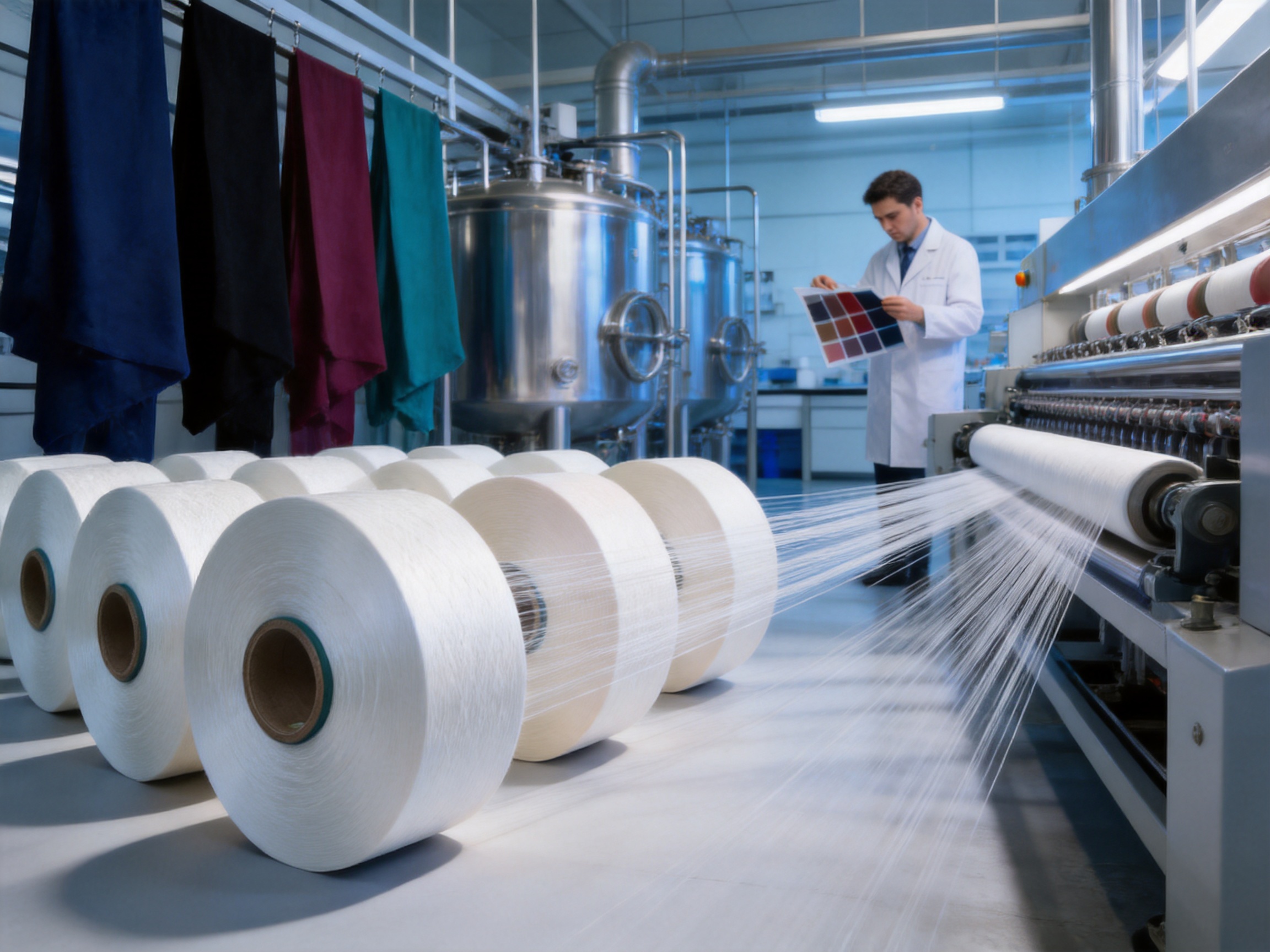
ECDP POY is an upstream yarn designed to be converted into other textile materials. Its partially oriented structure provides residual drawability, allowing the processor to develop the required elongation, bulk, crimp, and stability through controlled downstream operations.
In draw-texturing, the POY is drawn and simultaneously textured to create crimp and bulk. The resulting DTY can provide stretch, softness, coverage, and a more natural fabric appearance. Processing conditions may be adjusted to create different levels of crimp, intermingling, elongation, and torque.
In draw-winding, POY can be converted into FDY with a higher level of orientation and a relatively smooth filament structure. FDY is suitable for knitting, weaving, and applications that require dimensional stability, clean appearance, and controlled elongation.
The quality of POY directly influences downstream productivity. Stable denier, uniform interfilament properties, controlled orientation, consistent elongation, and reliable package build can help reduce thread breaks and processing interruptions. A well-produced POY package should unwind smoothly and maintain predictable behavior from the beginning to the end of the package.
ECDP modification must be uniformly distributed to preserve consistent dyeing behavior after conversion. If the functional component were concentrated unevenly, different sections of the yarn could show variations in color response. Melt-stage integration and controlled spinning help establish a more reliable foundation for uniformity.
For processors comparing ECDP POY with ordinary polyester POY, the key difference is that the product is not merely a general-purpose intermediate yarn. It is an intermediate yarn with a planned functional outcome. The processor can retain the flexibility of POY conversion while gaining a route to deep-dyeing, soft-touch, moisture-related, and color-performance advantages.
Sportswear requires a combination of comfort, flexibility, durability, color retention, and visual appeal. ECDP POY can be converted into yarns and fabrics for training garments, leggings, base layers, running wear, fitness apparel, cycling garments, and other active products.
The yarn’s soft touch helps reduce discomfort during extended wear. Its moisture-related properties may assist in managing perspiration when combined with an appropriate fabric structure. Deep dyeing allows sportswear designers to develop strong commercial shades, including dark and saturated colors that are widely used in performance clothing.
Sportswear also places high demands on repeated laundering and abrasion resistance. Polyester filament is inherently suitable for durable textile applications, while the final performance of ECDP-derived fabric depends on yarn processing, fabric construction, dyeing, finishing, and garment design. The yarn can therefore be considered a strong component in a broader performance system rather than a single solution for every fabric requirement.
For stretch sportswear, ECDP POY may be used in combination with elastane or other elastic fibers. Its lower-temperature dyeing potential can be useful in blended constructions where excessive heat may affect the recovery or dimensional stability of the companion fiber. The dyeing recipe should be developed specifically for the blend to maintain shade uniformity and fiber compatibility.
Underwear places particular importance on softness, fit, surface smoothness, color stability, and comfort during long periods of contact with the body. Fine ECDP filament specifications can be selected for a smooth and gentle fabric surface.
The yarn’s soft hand feel can support close-fitting knitted constructions. Its moisture-related properties may help maintain a more comfortable microclimate, while polyester’s durability supports repeated washing and everyday use. The deep-dyeing capability also enables designers to develop consistent shades across different product ranges.
Underwear frequently contains elastane, polyamide, cotton, or other fibers. ECDP POY can be evaluated for such blends where the dyeing temperature and chemical conditions must be carefully balanced. Its potential for lower-temperature coloration may help reduce stress on heat-sensitive components, but laboratory trials remain necessary for every blend and shade family.
For intimate apparel, appearance is also important. Good luster and even coloration can make a fabric look cleaner and more premium. A stable supply of uniform yarn helps reduce visual defects in fine-gauge knitted fabric, where small variations may become more noticeable.
ECDP POY and its downstream products are suitable for circular knitting, warp knitting, and other textile structures when the yarn is selected and processed according to the machine and fabric design. The softness and weavability of the filament can support complex patterns, lightweight surfaces, rib structures, interlock fabrics, and other constructions.
Knitting performance depends on yarn tension, friction, package unwinding, interlacing, filament cohesion, machine speed, needle condition, and lubrication. A stable POY package helps the processor maintain consistent feed and minimize production interruptions. The final fabric can be engineered for smoothness, stretch, coverage, drape, or surface texture.
Fine filament counts may be used to create a soft and compact surface. Higher total linear densities may be selected for coverage, durability, or more substantial fabric weight. The manufacturer can work with customers to evaluate alternative denier and filament combinations when a standard specification does not provide the required balance.
After knitting, the fabric may undergo scouring, dyeing, heat setting, raising, brushing, calendaring, coating, or other finishing processes. ECDP’s deep-dyeing response should be considered together with these treatments because finishing can affect shade, luster, handle, dimensional stability, and moisture behavior.
Woven products require yarns that can tolerate tension, friction, sizing, loom movement, and subsequent wet processing. ECDP-derived yarns can be used in woven fabrics for apparel, uniforms, sports products, linings, home textiles, and other applications where color and durability are important.
The yarn’s strength and wear resistance support stable woven construction. A suitable denier and filament count can be selected for the warp, weft, or both, depending on the required cover factor and surface effect. Higher filament counts may help create a smoother appearance, while different yarn structures can be used to create contrast between warp and weft.
Woven sportswear may benefit from the combination of color depth, soft touch, and polyester durability. Woven home textiles may use the yarn for curtains, decorative fabrics, lightweight coverings, or other products in which luster and shade stability influence consumer perception.
Weaving trials should assess loom efficiency, yarn breakage, sizing compatibility, fabric defects, dimensional change, and dyeing behavior. Technical support from the yarn supplier can help identify suitable processing parameters before large-scale production begins.
The performance of ECDP Pre-Oriented POY Yarn begins with raw material selection and polymer preparation. The ECDP modification must be introduced in a controlled manner so that the functional properties are distributed consistently through the polymer melt. Raw material quality, moisture control, melt viscosity, additive dispersion, and filtration all influence the stability of the final filament.
Before spinning, polyester chips or other approved polymer feedstocks are prepared under controlled conditions. Moisture management is important because excess moisture can contribute to polymer degradation during melting and may affect viscosity, spinning stability, and yarn strength. Proper drying and material handling help protect the consistency of the melt.
During melt spinning, the polymer is heated and extruded through a spinneret containing multiple capillaries. Each capillary forms one filament. The number of capillaries corresponds to the filament count of the yarn. Cooling air then solidifies the newly formed filaments, while controlled take-up speed establishes the desired level of molecular orientation.
For POY, the spinning speed is selected to create partial orientation and preserve the drawability required for later processing. Excessive orientation could reduce the yarn’s suitability for draw-texturing, while insufficient orientation could cause unstable downstream behavior. Maintaining the correct balance is a central part of process control.
After spinning, the filaments are gathered, interlaced when required, and wound onto packages. Package density, shape, traverse pattern, edge quality, and winding tension affect storage, transportation, and unwinding performance. Poor package formation can cause tension variation, snarling, or processing interruptions even when the underlying filament properties are acceptable.
Quality control may include tests for linear density, filament count, breaking strength, elongation, shrinkage, interlace level, oil pickup, package weight, appearance, and dyeing response. Depending on customer requirements, additional testing may cover moisture regain, color fastness after conversion, thermal behavior, and downstream texturing performance.
GC FIBER’s manufacturing strength is supported by multiple production lines and machines, control over raw material supply, and a dedicated design and research and development department. These resources allow the company to manage standard production while also supporting special functional products and custom material development.
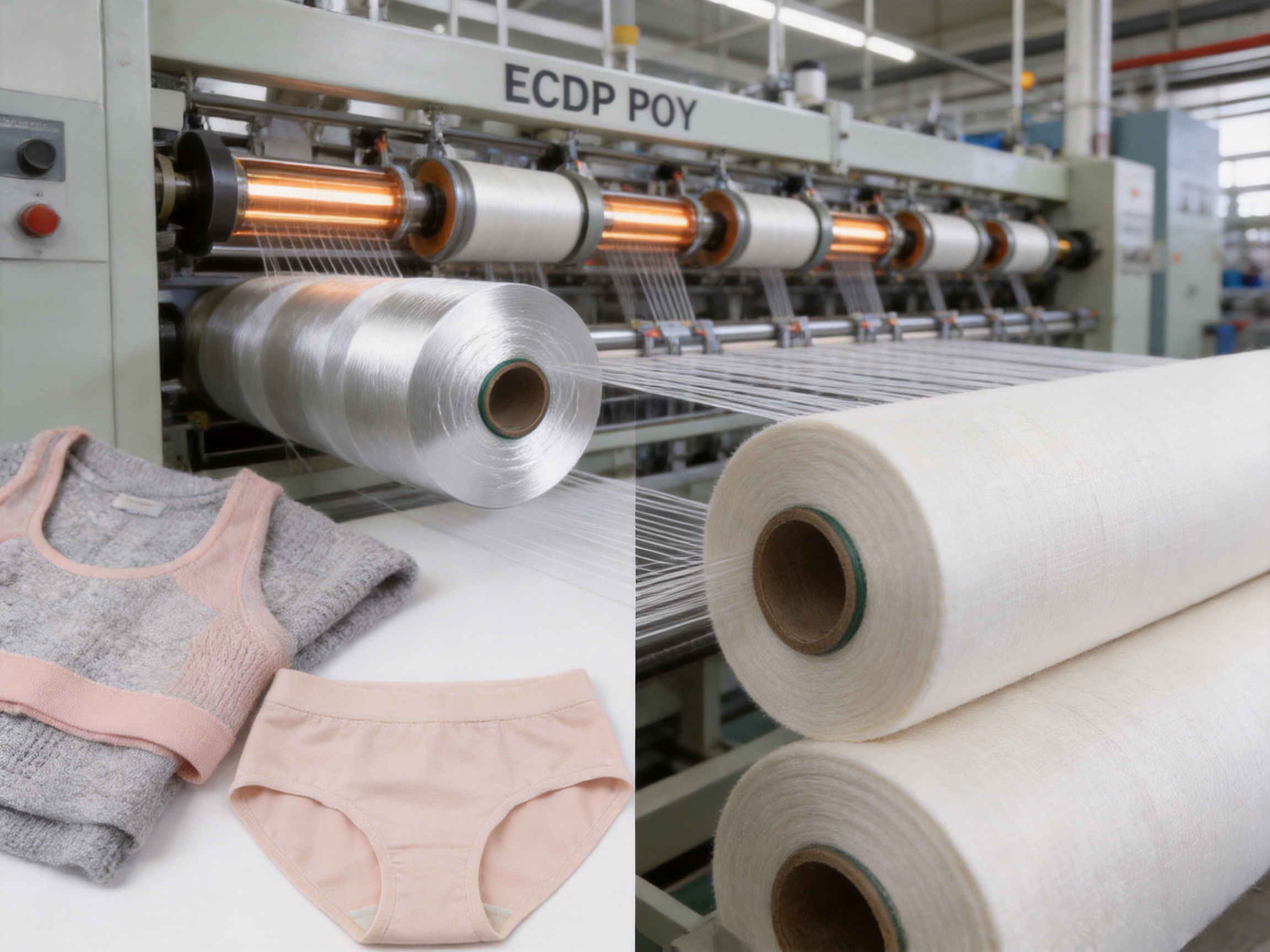
Textile buyers sometimes compare yarns mainly by nominal denier and price. However, two yarns with the same stated specification can produce very different results if their melt quality, filament uniformity, package build, or winding tension differs. Manufacturing consistency is therefore a key competitive factor.
For ECDP POY, consistency affects both downstream processing and dyeing. Variations in orientation can change drawability. Variations in filament diameter can affect fabric appearance. Uneven additive distribution can influence color response. Differences in package tension can create unstable feeding. A reliable production system must address all of these variables rather than focusing on a single laboratory result.
GC FIBER’s experience in functional and special textile materials supports a product-development approach that considers the entire manufacturing chain. The company’s work is not limited to producing a generic polyester filament. It also involves translating application requirements into practical yarn specifications, coordinating development trials, and supporting customers through production.
This type of coordination can be especially valuable for customers importing yarn for a new product. A buyer may know the target fabric hand, shade, weight, or performance level without knowing the exact denier and filament combination required. Technical discussion and sampling can help convert that target into a workable specification.
Conventional polyester POY remains an important and cost-effective textile raw material. It offers broad processing compatibility, useful strength, dimensional stability, and large-scale availability. ECDP POY is not intended to replace every standard polyester application. Its advantage is strongest where the buyer needs additional dyeing and comfort performance.
Compared with ordinary polyester POY, ECDP POY can offer improved deep-dyeing behavior at approximately 85 degrees Celsius, greater dye take-up, a softer touch, good luster, better moisture regain, and the potential for deep and durable shades. These features can support higher-value apparel and textile products.
Compared with yarns that rely primarily on topical dyeing aids or finishing agents, a polymer-level modification can provide a more integrated functional foundation. Surface finishes may be removed, reduced, or altered during processing, whereas a modification incorporated into the polymer can remain part of the filament structure. Final performance still depends on the entire production process, but the functional concept is more intrinsic to the fiber.
Compared with specialty yarns that are available only in limited standard counts, ECDP POY is supported by several denier and filament-count options and can be developed according to order requirements. This flexibility is useful for customers making several fabric types or seeking to optimize a product for a particular machine.
Compared with suppliers focused only on routine commodity production, a manufacturer with R&D, design, production, and sales coordination can provide broader support. GC FIBER’s custom and OEM service includes possible adjustment of denier, filament count, cross-section structure, and functional properties, subject to technical feasibility and order requirements.
Textile manufacturers increasingly require yarns that are adapted to a specific brand program, fabric construction, machine, or performance target. Standard catalog specifications may not always provide the ideal solution. Custom development allows the yarn to be designed around the customer’s actual process.
Potential customization areas include linear density, filament count, cross-section geometry, luster, softness, dyeing response, moisture-related performance, and other functional properties. The exact options depend on equipment, polymer compatibility, minimum order requirements, and technical validation.
A typical development process begins with a customer specification or application brief. This may include fabric type, machine gauge, target weight, dyeing method, color range, hand feel, tensile requirements, stretch system, and expected monthly consumption. The manufacturer then reviews the request and recommends a starting specification.
Samples may be produced for spinning, draw-texturing, knitting, weaving, dyeing, and end-use evaluation. Feedback from each stage is used to refine the yarn. For example, a customer may request a softer hand after the first knitting trial, a higher coverage level after fabric inspection, or improved shade depth in a dark color. Collaborative development helps identify which yarn variable should be adjusted.
OEM production can also support customers that have their own brand identity, packaging requirements, inspection standards, or delivery schedule. Consistent communication between the customer and supplier is important because custom projects involve more variables than standard repeat orders.
GC FIBER operates multiple production lines and machines, providing flexibility for standard and customized orders. Production flexibility is important for customers that need both small development quantities and larger commercial volumes. It can also help reduce the transition from sample stage to regular supply.
Control over raw material supply and quality is another strength. Functional polyester yarn requires stable input materials because changes in polymer viscosity, additive level, moisture, or impurity content can affect spinning and dyeing. Coordinated sourcing and incoming inspection help reduce avoidable variation.
The company’s professional team includes sales, research and development, design, and production personnel. This structure supports communication from the initial inquiry through technical review, sample preparation, order confirmation, manufacturing, quality inspection, and shipment.
For international customers, delivery coordination is an essential part of supply reliability. ECDP POY is shipped through Shanghai seaport, providing an established export route for overseas textile manufacturers. Production and delivery schedules should be confirmed in advance, particularly for custom specifications or seasonal apparel programs.
Buyers should begin with a clear description of the intended application. Important information includes whether the yarn will be converted into DTY or FDY, whether it will be knitted or woven, the planned fabric weight, the presence of elastane or other fibers, the target dyeing temperature, and the required color fastness level.
The next step is to select one or more candidate specifications. A fine yarn may be appropriate for soft, lightweight fabric, while a heavier high-filament yarn may be better for coverage, durability, or a fuller hand. When uncertain, it is often useful to compare two specifications in the same fabric construction.
Laboratory trials should examine package unwinding, downstream drawing or texturing, fabric appearance, dye absorption, shade depth, hand feel, moisture-related behavior, dimensional stability, and fastness. Testing should be performed on the actual machine or a representative production system whenever possible.
Color trials should include pale, medium, and deep shades. A yarn that performs well in a light shade may not show the same advantages in black or navy. Testing several dye classes and process temperatures can help identify the most efficient recipe.
Bulk approval should include an agreed specification sheet, inspection method, packaging standard, acceptable tolerance, labeling requirement, and delivery plan. Clear technical documentation helps maintain consistency between sample orders and commercial production.
ECDP POY can support more efficient dyeing by enabling deep coloration at approximately 85 degrees Celsius and by providing high dye take-up. Lower-temperature processing may reduce the energy required for heating the dye bath, while improved dye exhaustion may reduce the amount of residual dye in wastewater. The actual environmental benefit depends on the complete production recipe and factory equipment.
Customers should evaluate the entire life cycle of the textile, including polymer production, spinning, drawing, knitting or weaving, dyeing, finishing, transportation, use, and end-of-life handling. ECDP is a functional polyester modification and should not automatically be described as biodegradable unless a separate verified biodegradability standard applies to the specific product.
The product can nevertheless support environmental improvement through process efficiency, reduced dye waste, and potential compatibility with lower-temperature coloration. Textile manufacturers should verify energy consumption, chemical usage, wastewater parameters, and fastness performance using their own production data.
Operational efficiency is also important. Stable yarn packages, reliable downstream processing, and consistent color can reduce rejected fabric, reprocessing, and material waste. In commercial production, avoiding defects can provide an environmental and economic benefit at the same time.
POY packages should be stored in a clean, dry, and well-ventilated environment. Excessive humidity, direct sunlight, dust, heat, or contact with chemicals may affect package quality and processing performance. Packages should remain in their original protective packaging until they are ready for use.
Before processing, the yarn should be allowed to reach the production environment gradually if it has been transported through a significantly different climate. Sudden changes in temperature and humidity may cause condensation or alter yarn tension behavior.
Operators should inspect packages for damage, contamination, loose edges, or abnormal winding before mounting them on equipment. Yarn tension and feed conditions should be adjusted according to the selected specification and machine design. Downstream draw-texturing or draw-winding parameters should be established through trial runs rather than copied from an unrelated yarn.
Dyeing should be developed with suitable disperse dyes, auxiliaries, bath ratios, pH control, temperature ramping, holding time, and post-dyeing cleaning. The 85-degree capability provides a starting point for lower-temperature development, but the final recipe must be confirmed for each fabric and color.
Technical data, test reports, and sample evaluation should be reviewed with the supplier when the yarn is used in a new process. This approach reduces the risk of attributing a fabric issue to the yarn when the actual cause may be machine settings, dye selection, heat setting, or finishing conditions.
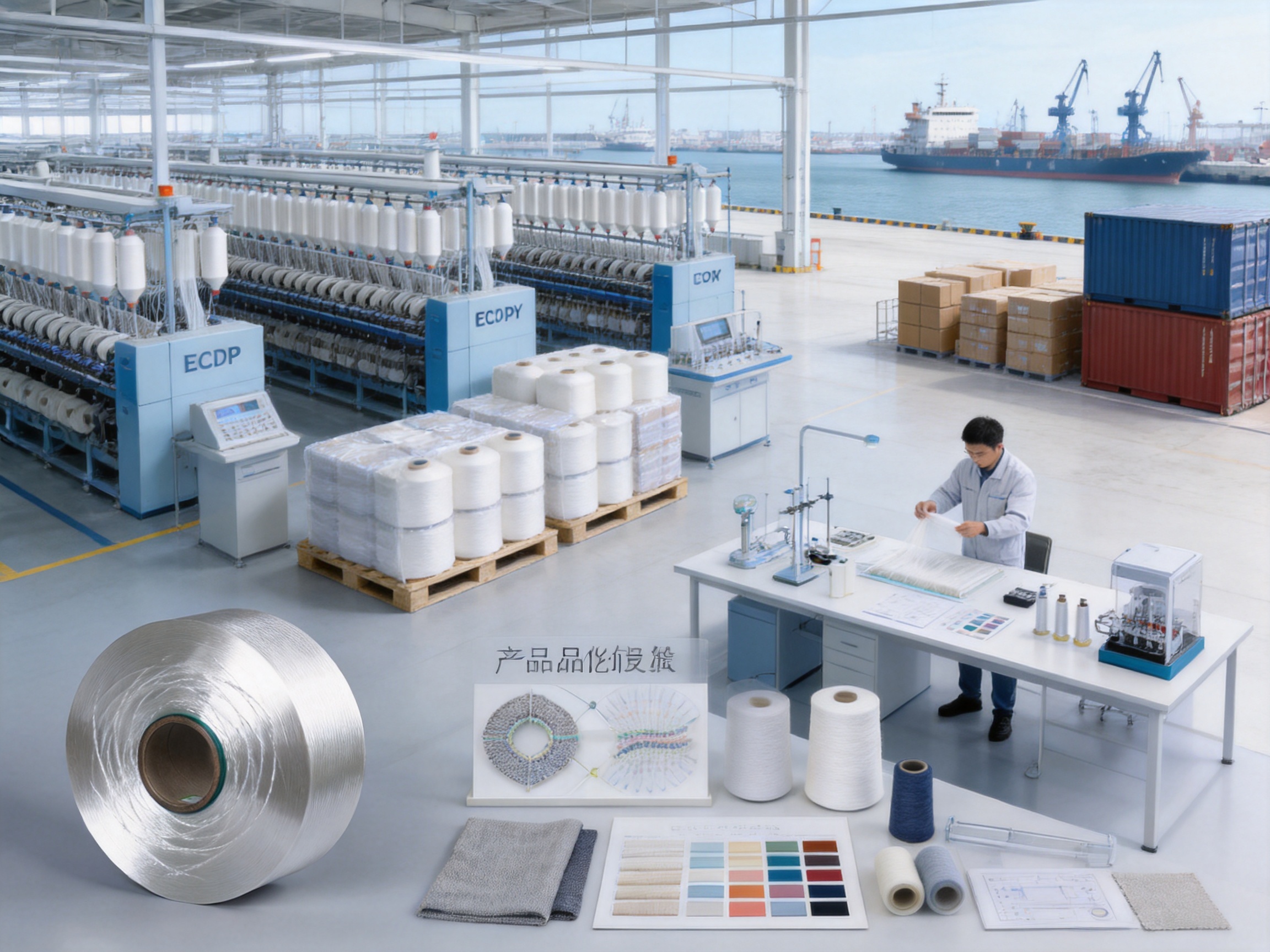
It is a partially oriented modified polyester filament yarn. It is produced for downstream conversion into draw-textured yarn, fully drawn yarn, knitted fabric, woven fabric, and other textile products. The ECDP modification is intended to improve dyeing performance, color depth, moisture regain, softness, and dye take-up.
POY means partially oriented yarn. The filament has been oriented during high-speed spinning but retains residual drawability. This makes it suitable for additional drawing, texturing, or draw-winding before final fabric production.
The product is designed to support deep dyeing at approximately 85 degrees Celsius under appropriate process conditions. Actual results depend on the dye, fabric construction, dyeing equipment, recipe, bath ratio, and process time. Laboratory and bulk trials are recommended.
The main advantages include deeper color development, good dye fastness, high dye take-up, soft touch, good luster, improved moisture regain, and the possibility of lower-temperature deep dyeing. It also retains the downstream processing flexibility of POY.
Yes. Its residual drawability makes it suitable for draw-texturing, subject to the selected specification and the processor’s equipment and settings. Trials should be conducted to optimize draw ratio, heater temperature, texturing speed, overfeed, interlacing, and winding conditions.
It may be converted into FDY through suitable draw-winding and processing conditions. The final product should be evaluated for orientation, elongation, strength, shrinkage, appearance, and downstream fabric performance.
Available standard options include 53Dtex/36F, 70Dtex/36F, 131Dtex/72F, and 250Dtex/144F. Other specifications may be considered for special orders, depending on production feasibility and customer requirements.
Yes. It can be used as a material for sportswear fabrics because of its soft hand, color performance, polyester durability, and improved moisture-related properties. The final sportswear performance depends on fabric construction, finishing, and any elastane or companion fibers used.
Yes. Fine ECDP filament specifications can be used in soft, close-fitting knitted fabrics for underwear and other next-to-skin products. Buyers should evaluate softness, perspiration fastness, washing fastness, and compatibility with elastane or other blended fibers.
Yes. It can be processed into woven products where color depth, appearance, strength, and wear resistance are important. Loom efficiency, sizing compatibility, yarn tension, and fabric construction should be verified before bulk production.
Customization may include denier, filament count, cross-section structure, luster, and selected functional properties. GC FIBER also supports OEM and collaborative material development, subject to technical review, minimum order requirements, and production feasibility.
Buyers should test the yarn through the intended downstream process, including draw-texturing or draw-winding, knitting or weaving, dyeing, finishing, and end-use performance evaluation. Testing should include shade depth, color fastness, hand feel, package unwinding, dimensional stability, and fabric appearance.
Commercial shipments are arranged through Shanghai seaport. Delivery timing, packaging, order quantity, and shipping terms should be confirmed with the supplier before purchase.
A quotation request should include the desired specification, estimated quantity, intended application, downstream processing route, color or dyeing requirements, packaging requirements, destination, expected delivery schedule, and any custom performance target.
ECDP Pre-Oriented POY Yarn is designed for textile manufacturers that need more than a basic polyester intermediate. Its partially oriented structure provides the drawability required for DTY and FDY production, while its ECDP modification supports deep coloration, high dye take-up, soft touch, good luster, improved moisture regain, and reliable color performance.
The product is suitable for sportswear, underwear, knitting, weaving, home textiles, and other applications in which comfort and appearance are important. Available specifications include 53Dtex/36F, 70Dtex/36F, 131Dtex/72F, and 250Dtex/144F, with additional custom options available according to technical requirements.
Its competitive value comes from the combination of functional polymer design, flexible POY processing, controlled manufacturing, multiple production capabilities, and customized technical support. GC FIBER’s experience in special and functional textile materials allows it to support customers from initial specification and sample development through bulk production and shipment.
For buyers comparing yarn suppliers, the most important evaluation should include not only nominal denier and price but also dyeing efficiency, shade depth, package quality, downstream process stability, fabric hand, fastness, moisture-related comfort, and supply consistency. When these factors are considered together, ECDP POY can provide a practical foundation for differentiated, comfortable, and visually rich textile products.
1. Textile Exchange, Preferred Fiber and Materials Terminology and Fiber Sustainability Guidance.
2. International Organization for Standardization, Textiles — Tests for Color Fastness.
3. International Organization for Standardization, Textiles — Determination of Moisture Regain and Related Fiber Properties.
4. American Association of Textile Chemists and Colorists, Technical Manual, Color Fastness and Textile Testing Methods.
5. Standard references on polyester fiber manufacturing, melt spinning, partially oriented yarn, draw-texturing, and draw-winding technology.
6. Technical product information supplied for ECDP Pre-Oriented POY Yarn, including available specifications, applications, dyeing characteristics, and customization capabilities.
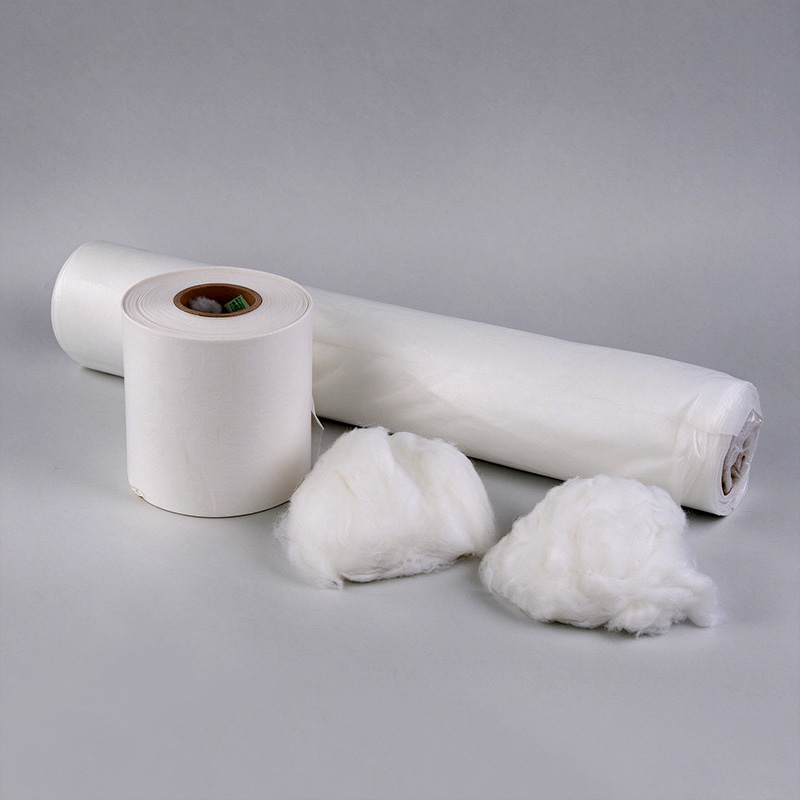
Made of PBS (Polybutylene Succinate), fully biodegradable.Features:1.Home compostable2.Raw material: PBS Polybutylene Su...
READ MOREPlease fill out the form below and our team will contact you as soon as possible.
Addres: No.66 Qiaogang Road, Haian, Nantong City, Jiangsu Province, China
E-mail: service@gcfiber.com admin@gcfiber.com
Copyright ? GC FIBER All Rights Reserved. Eco-Friendly Textile Products Manufacturer Biodegradable Yarn Company