English
 中文简体

Made of PBS (Polybutylene Succinate), fully biodegradable.Features:1.Home compostable2.Raw material: PBS Polybutylene Su...
READ MORE
Content
PLA biodegradable monofilament yarn is a plant-based technical fiber designed for applications that require a smooth, consistent, single-strand construction together with a lower environmental impact. Produced from polylactic acid derived from renewable resources such as corn starch or sugarcane, this yarn provides an alternative to conventional petroleum-based monofilaments, including polyester and nylon, in selected textile, agricultural, filtration, packaging, and consumer-product applications.
The product combines the processing advantages of a thermoplastic filament with the sustainability benefits of bio-based raw materials. Its continuous structure supports dimensional consistency, controlled stiffness, clean surface performance, and dependable tensile behavior. At the end of an appropriate service life, PLA monofilament can be directed to industrial composting systems where certified materials may disintegrate and biodegrade under controlled temperature, humidity, and microbial conditions.
This distinction is important. PLA monofilament is not intended to be described as a material that rapidly disappears in every natural environment. Industrial compostability depends on the resin formulation, product construction, certification status, and treatment conditions. When correctly specified and properly managed, however, PLA offers a practical route toward reducing reliance on fossil-based polymers in applications where temporary performance and responsible end-of-life management are priorities.
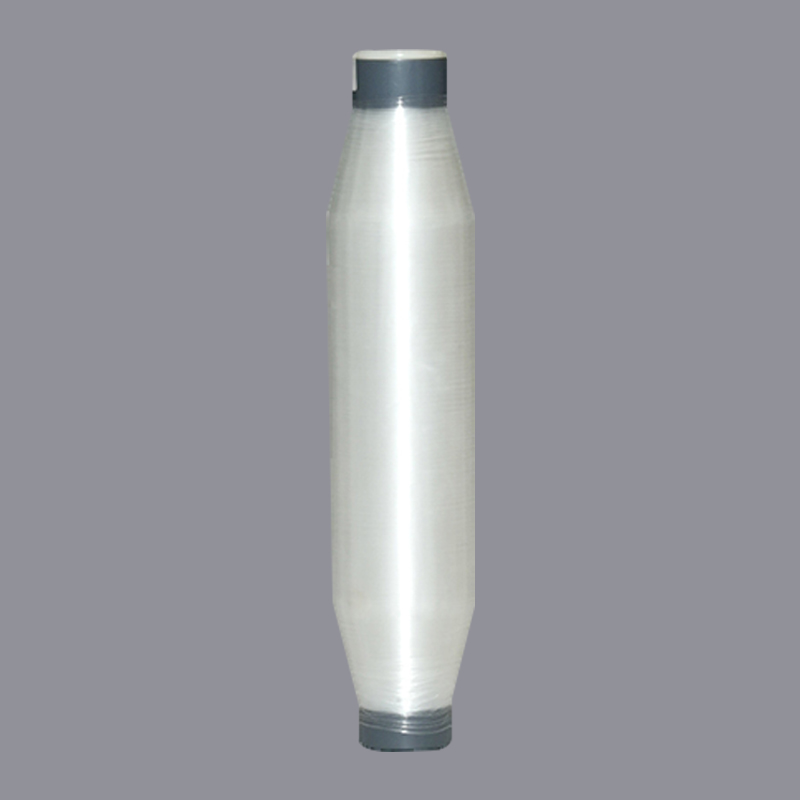
PLA Biodegradable Monofilament Yarn
PLA biodegradable monofilament yarn is a continuous, single-filament yarn manufactured by melting and extruding polylactic acid resin through a precision die. Unlike multifilament yarn, which contains many fine filaments bundled together, monofilament yarn is formed as one continuous strand. This construction gives the product a smooth surface, low fuzz, consistent diameter, and predictable interaction with guides, needles, meshes, and other processing equipment.
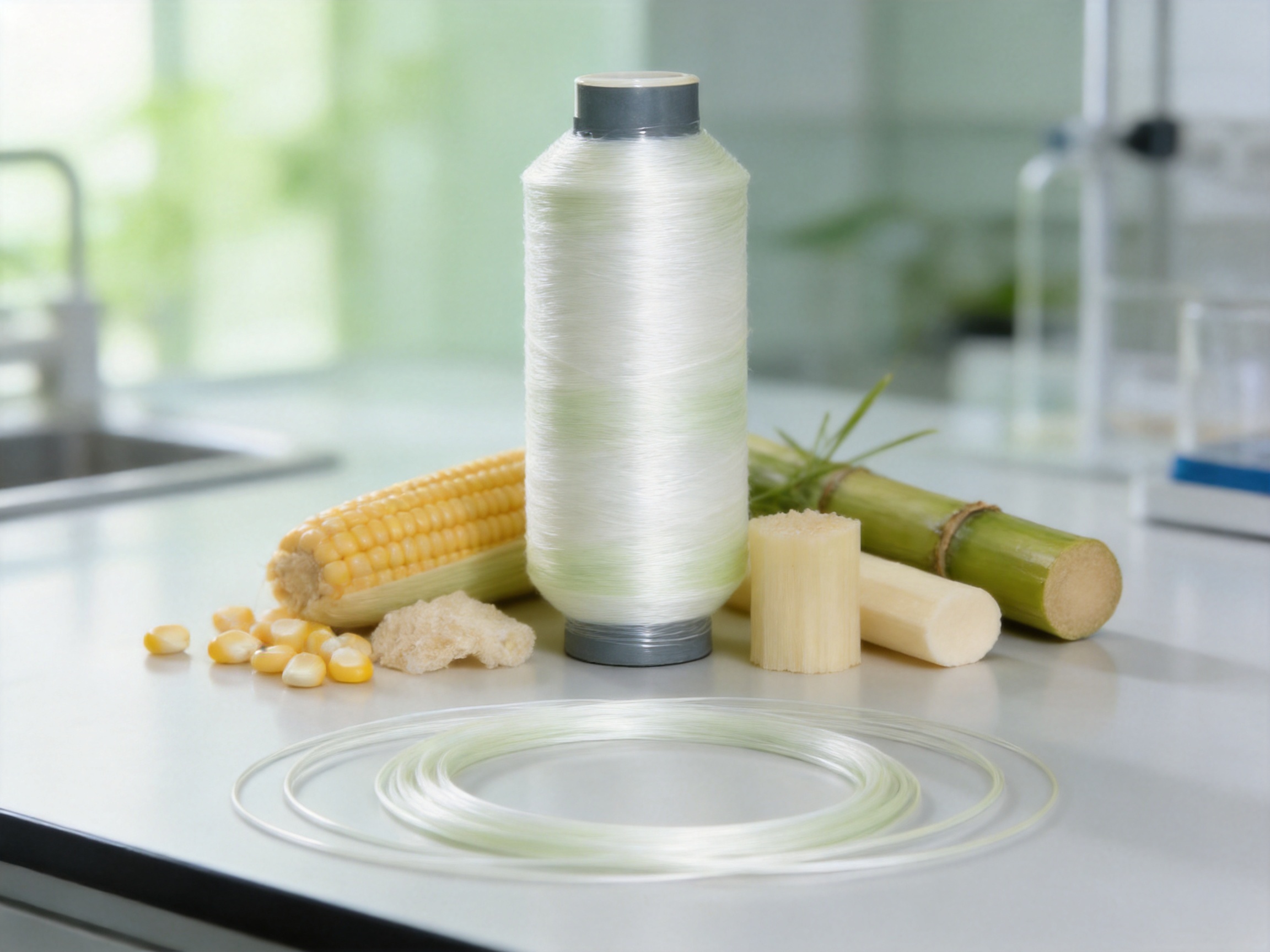
Polylactic acid is a thermoplastic polymer produced from lactic acid. The lactic acid used for PLA can be obtained by fermenting plant-based carbohydrates, including starch and sugar. Depending on the grade and formulation, the resulting polymer can be processed into films, molded products, fibers, and monofilaments.
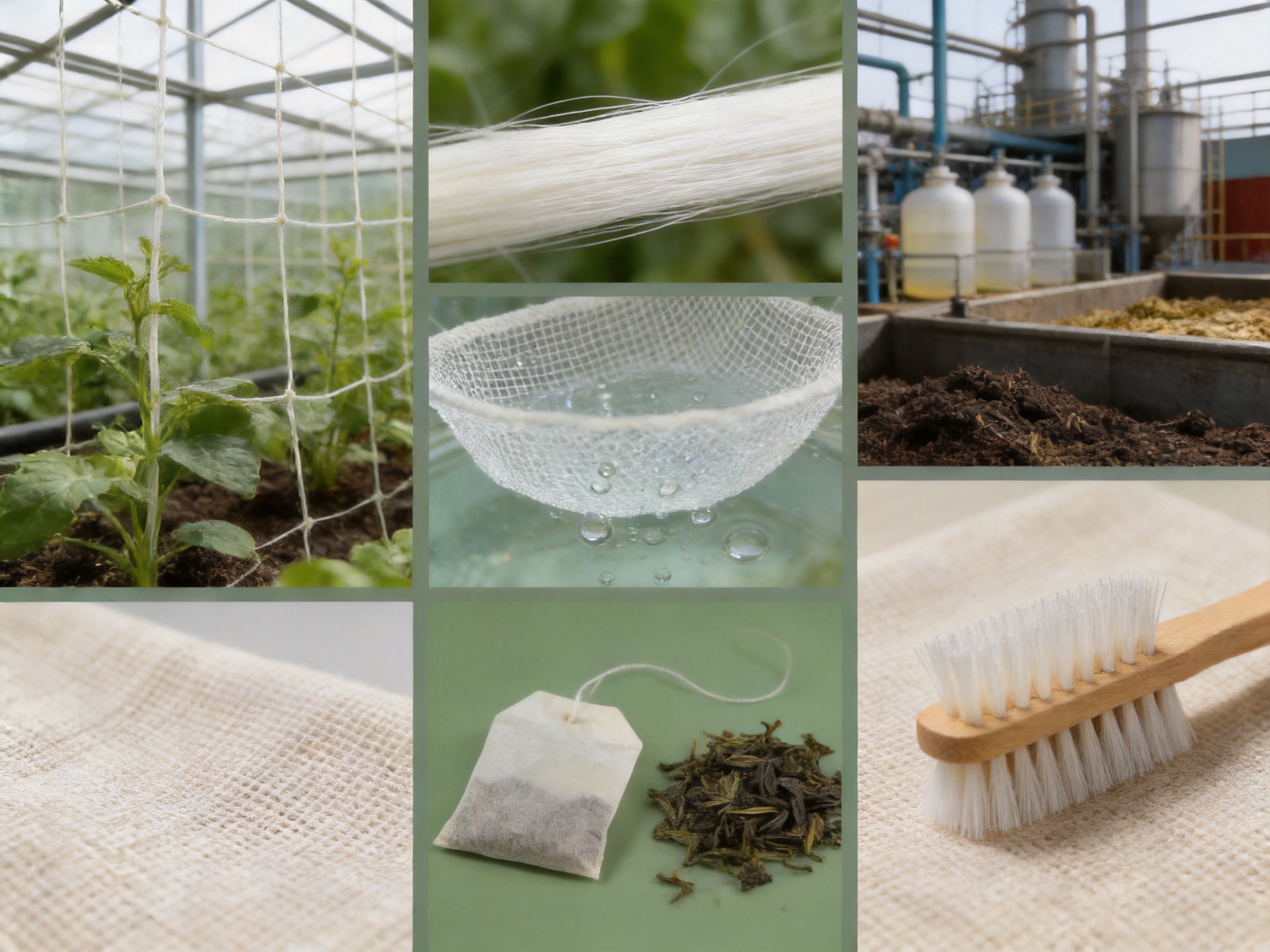
The yarn is available in the supplied standard count of 30D, while special production by order can be considered for projects requiring different specifications. Applications include weaving, knitting, tea bag strings, technical mesh, agricultural structures, filtration screens, brush components, and other single-strand fiber products.
Because PLA has a lower processing temperature than many conventional engineering polymers, manufacturers must carefully control drying, melt temperature, extrusion speed, cooling, drawing, winding, and storage. These controls help produce a filament with stable diameter and sufficient mechanical performance for the intended use.
Monofilament construction offers several functional benefits. The continuous strand has no internal bundle of separate filaments, which can reduce filament separation, surface fuzz, and capillary moisture movement. Its smooth surface may also support easier cleaning in selected mesh and screening applications.
Diameter uniformity is especially important in technical textiles. Small variations in diameter can influence mesh opening, filtration accuracy, tensile loading, needle movement, knot behavior, and the visual appearance of finished goods. A controlled monofilament extrusion process therefore contributes directly to the consistency of the finished product.
Monofilament yarn can also provide a degree of structural stiffness that is useful in netting, screen fabrics, brush bristles, support structures, and shaped textile components. The final level of stiffness depends on polymer grade, denier, draw ratio, cooling conditions, additives, and any subsequent heat-setting treatment.
The principal environmental advantage of PLA is its renewable feedstock origin. Conventional polyester and nylon are generally manufactured from fossil-derived raw materials. PLA, by contrast, can be produced from plant-based carbohydrates. This does not mean that every PLA product has zero environmental impact, but it provides a different raw-material pathway and can support sustainability programs focused on renewable carbon.
PLA products may help manufacturers reduce dependence on petroleum-based fibers in applications where the performance range of PLA is suitable. The environmental benefit is strongest when the entire product lifecycle is considered, including agricultural feedstock production, polymerization, fiber processing, transport, use, collection, and end-of-life treatment.
Industrial compostability should be evaluated separately from bio-based content. A product can be bio-based without being industrially compostable, and a product can contain compostable components without being suitable for home composting. For this reason, buyers should confirm the applicable resin grade, product construction, certification, and disposal route before making environmental claims.
Where industrial composting is available, certified PLA products can support circular waste-management strategies for temporary goods. Under suitable conditions, the polymer can break down into carbon dioxide, water, and biomass through biological activity. The actual rate depends on temperature, humidity, oxygen availability, microbial activity, thickness, additives, and the design of the finished product.
PLA monofilament is produced from polylactic acid derived from renewable plant resources. This gives buyers an alternative to monofilaments made exclusively from fossil-based polymer feedstocks. For brands and manufacturers seeking more sustainable material portfolios, plant-based PLA can support product development and environmental sourcing objectives.
When the selected grade and finished product meet the relevant requirements, PLA can be designed for industrial composting. Standards such as ASTM D6400 and EN 13432 are commonly referenced when evaluating compostability claims. Certification should always be confirmed for the specific material or finished article rather than assumed solely from the word “PLA.”
The monofilament format provides a smooth, continuous strand with controlled diameter. This is valuable in weaving, knitting, screening, netting, and other processes where consistent strand geometry affects production efficiency and finished-product quality.
PLA monofilament can be engineered to deliver a useful balance of stiffness, tensile strength, and elongation. This balance is important for support lines, filter screens, agricultural netting, brush components, and technical textiles that must retain shape during use.
PLA generally has low moisture regain compared with many natural fibers. Low moisture absorption can help maintain dimensional stability and reduce moisture-related changes during storage and processing. Nevertheless, PLA can be sensitive to hydrolysis at elevated temperature in the presence of moisture, so proper resin drying and storage remain essential.
PLA has a lower melting range than many conventional synthetic polymers. This can reduce the thermal energy required during extrusion and make it suitable for applications where moderate-temperature processing is acceptable. The lower melting range also means that processors must avoid excessive heat during downstream operations.
The product information identifies antibacterial performance as a feature of the yarn. In practice, the level of antimicrobial activity depends on polymer characteristics, additives, surface treatment, test method, and exposure conditions. Buyers requiring verified antibacterial performance should request test data for the specific yarn grade and intended application.
PLA can offer useful UV stability and weatherability when the formulation, pigments, stabilizers, and product design are correctly selected. Outdoor performance should be evaluated carefully because prolonged exposure to sunlight, heat, and moisture can eventually affect any biodegradable polymer. For temporary agricultural or seasonal applications, the balance between service life and planned degradation can be particularly valuable.
The following values represent typical ranges for standard PLA monofilament products and should be treated as general guidance rather than a guaranteed specification. Final values depend on resin grade, denier, filament diameter, draw ratio, additives, testing conditions, and customer requirements.
| Property | Typical Information | Application Significance |
| Polymer | Polylactic acid derived from renewable plant starch or sugar feedstock | Provides a bio-based alternative to conventional petroleum-derived polymers |
| Standard count | 30D available; special counts may be produced by order | Supports application-specific sizing and design |
| Diameter range | Approximately 0.05 mm to 3.0 mm, depending on product design | Allows use in fine textile structures and heavier technical strands |
| Tensile strength | Approximately 3.0 to 5.5 grams per denier | Supports tension-bearing and structural textile applications |
| Elongation at break | Approximately 15% to 35% | Provides controlled flexibility and impact tolerance |
| Melting point | Approximately 150°C to 170°C | Requires controlled heat during extrusion, finishing, and downstream processing |
| Density | Approximately 1.24 to 1.27 g/cm³ | Influences fabric weight, buoyancy, and material consumption |
| Moisture regain | Generally below 1% | Supports low moisture absorption and dimensional stability |
| UV performance | Moderate in standard grades; may improve with stabilizer treatment | Suitable for selected outdoor and seasonal uses after validation |
Technical data should be confirmed through a product specification sheet and laboratory testing before the yarn is approved for critical applications. Test results can vary according to gauge length, test speed, temperature, relative humidity, conditioning time, and instrument configuration.
Manufacturing begins with the selection of PLA resin appropriate for filament extrusion. The resin must be compatible with the target denier, diameter, mechanical profile, color, and end-use environment. Resin selection also considers melt flow behavior, optical appearance, thermal stability, crystallization characteristics, and compostability requirements.
For a technical monofilament, raw-material consistency is essential. Variations in molecular weight, moisture content, additive concentration, or pellet geometry can affect extrusion stability. A professional manufacturer therefore benefits from controlled supplier qualification, incoming inspection, batch identification, and traceability throughout the production process.
PLA is sensitive to hydrolytic degradation during melt processing. If excessive moisture remains in the pellets, heat can break polymer chains and reduce molecular weight. This may lead to lower tensile strength, unstable melt pressure, surface defects, discoloration, or brittle filament.
Controlled drying is therefore one of the most important steps in PLA monofilament production. Drying equipment must maintain the required temperature and dew point, while operators must control residence time and prevent the dried material from reabsorbing moisture before extrusion. Sealed conveying and carefully managed storage help protect the resin between drying and processing.
During extrusion, dried PLA pellets are fed into a heated barrel where the polymer is melted and homogenized. The screw design, barrel temperature profile, screw speed, residence time, and melt pressure must be balanced to produce a stable melt without excessive thermal history.
The molten polymer is then forced through a precision spinneret or die. Die geometry controls the initial cross-sectional shape and contributes to the final diameter. Cleanliness is critical because small particles or degraded polymer deposits can create surface marks, weak points, or interruptions in the filament.
After leaving the die, the hot filament is cooled in a controlled environment. Cooling may be achieved through air, water, or a carefully designed combination of cooling stages, depending on the intended product structure. Cooling rate influences crystallinity, orientation, stiffness, transparency, and dimensional stability.
Uniform cooling around the filament is particularly important for round monofilament. Uneven cooling can create ovality, internal stress, or differences in shrinkage. Process engineers monitor the cooling conditions to help maintain a stable cross-section from the beginning to the end of the production run.
Drawing stretches the partially solidified filament between controlled roller systems. This process orients polymer chains along the length of the yarn and can significantly improve tensile strength, dimensional stability, and handling performance.
The draw ratio must be selected according to the resin grade, filament diameter, temperature, and required balance of strength and elongation. Excessive drawing may create brittleness or reduce flexibility, while insufficient drawing may result in low strength and poor dimensional stability.
Depending on the specification, the filament may undergo heat setting or controlled relaxation. These steps help stabilize the yarn and reduce unwanted shrinkage during later processing. Heat treatment must remain within a carefully controlled range because PLA has a lower melting point than many conventional technical polymers.
Some applications require a finish to improve guide passage, knitting performance, winding behavior, antistatic properties, or compatibility with downstream equipment. Finishes must be selected carefully so that they do not interfere with compostability claims or create undesirable residues during industrial treatment.
Color can be introduced through masterbatching or downstream dyeing. PLA may accept suitable disperse dyes and pigments, but dye uptake, color fastness, and heat sensitivity can differ from polyester. Color development should therefore be validated on the actual yarn grade and production process.
After extrusion and finishing, the yarn is wound onto suitable packages. Tension control during winding helps prevent hard edges, loose layers, snarling, and deformation. Package design should match the customer’s weaving, knitting, braiding, or other processing equipment.
Finished packages should be protected from direct sunlight, excessive heat, and moisture. Clear labeling can identify batch number, count, color, production date, recommended storage conditions, and any relevant compostability or testing information.
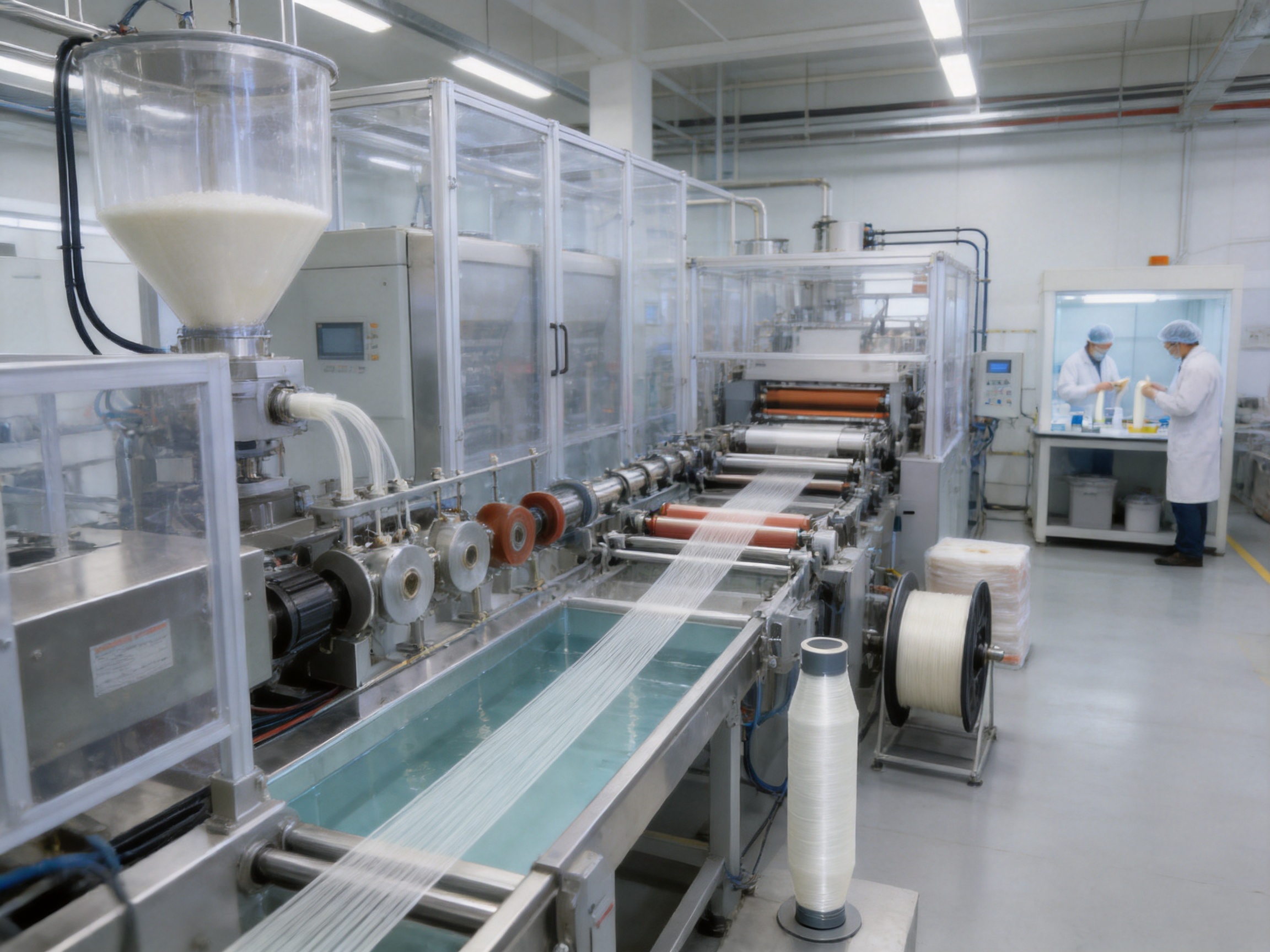
Reliable PLA monofilament production requires more than a bio-based raw material. The manufacturer must combine polymer knowledge, extrusion control, textile engineering, laboratory testing, and responsive technical support. GC FIBER has operated as a special textile manufacturer in China since 2006 and focuses on special and functional eco-friendly textile products.
The company’s product portfolio includes biodegradable yarn, low melting yarn, ECDP yarn, anti-static yarn, HDPE yarn, bio-component yarn, and polyester filament yarn. This broad product base provides experience across several polymer systems and textile performance requirements.
Integrated control from raw-material preparation through winding allows production teams to identify the relationship between resin behavior, extrusion settings, drawing conditions, and final yarn performance. This is important for PLA because a change in moisture, thermal history, or draw ratio can affect the finished filament significantly.
Multiple production lines and machines provide flexibility for different product counts, colors, package formats, and order volumes. Production flexibility is useful when customers need both small development quantities and larger commercial shipments. It also allows the manufacturer to select equipment according to the technical needs of a specific monofilament structure.
Control over raw-material supply and quality supports better batch consistency. A structured quality program may include incoming resin inspection, moisture testing, melt-pressure monitoring, diameter measurement, tensile testing, elongation testing, visual inspection, winding checks, and finished-package approval.
For customers developing new products, the ability to compare batches and maintain production records is as important as the initial laboratory result. Traceability helps identify the material and process conditions used for each shipment and supports corrective action when performance questions arise.
GC FIBER maintains a dedicated design and research and development department focused on special and functional eco-friendly textile products. This supports cooperation with customers that need more than a standard catalog item. Development work may involve custom denier, filament count, cross-section structure, stiffness, color, surface behavior, or other functional characteristics.
Collaborative development is especially valuable for PLA applications because the correct performance balance depends on the product design. A yarn intended for a tea bag string may require a different combination of flexibility, surface feel, and heat resistance than a yarn intended for agricultural netting or filtration mesh.
A diversified team across sales, research and development, design, and production can support projects from initial specification through delivery. Technical communication helps clarify the intended use, processing equipment, service environment, package requirements, and end-of-life objectives before production begins.
Responsive production tracking also helps customers plan sampling, approval, mass production, and shipment. For export customers, coordination with logistics and the Shanghai seaport supports practical delivery planning.
PLA monofilament should be selected because its overall performance and environmental profile fit the application. It is not a universal replacement for every polyester, nylon, or high-temperature engineering filament. The most appropriate comparison considers raw material, mechanical behavior, thermal resistance, cost, service life, processing requirements, and disposal route.
| Comparison Factor | PLA Monofilament | Conventional Polyester or Nylon Monofilament |
| Feedstock | Bio-based plant starch or sugar feedstock | Generally fossil-derived polymer feedstock |
| End-of-life potential | Industrial composting may be possible when the product is appropriately certified | Usually persistent unless recycled or otherwise treated through a suitable waste system |
| Heat resistance | Lower melting range and more limited high-temperature tolerance | Often higher heat resistance, depending on polymer type |
| Moisture behavior | Low moisture regain, but moisture must be controlled during processing | Varies by polymer; nylon generally absorbs more moisture than polyester |
| Stiffness | Can provide useful stiffness for mesh, support, and technical structures | Varies widely according to polymer, denier, and drawing conditions |
| Cost | May be higher because of resin sourcing and specialized processing | Often lower due to established supply chains and large-scale production |
| Best sustainability fit | Temporary, compostable, or renewable-material applications with an appropriate collection route | Long-life applications where durability and heat resistance are the primary objectives |
Compared with polyester, PLA may offer a stronger renewable-material story and a more suitable end-of-life option for specific products. Compared with nylon, PLA generally offers lower moisture regain but less high-temperature performance and potentially lower long-term durability in demanding environments. The right choice depends on the actual product requirements rather than on one property alone.
PLA monofilament can be incorporated into woven or knitted structures where a smooth, dimensionally controlled strand is required. It may be used as a structural element, support component, decorative filament, or functional yarn in fabrics designed around renewable material sourcing.
Processing trials should evaluate needle compatibility, yarn tension, friction, heat exposure, fabric shrinkage, and finishing conditions. Because PLA has a lower thermal tolerance than many conventional fibers, high-temperature treatments must be carefully reviewed.
Tea bag strings require clean handling, suitable strength, controlled appearance, and compatibility with the product’s intended disposal route. PLA monofilament can be considered for specialty tea products seeking a plant-based or compostable material position.
The finished tea bag system must be assessed as a whole. The string, tag, adhesive, filter paper, coating, and packaging should all be considered when making compostability claims. Food-contact suitability and applicable regulatory requirements must also be verified by the customer for the intended market.
Monofilament yarn is useful in filter mesh because its smooth surface and consistent diameter can support controlled openings. Potential applications include temporary industrial filter screens, liquid filtration bags, flour sifting screens, and other filtration products where a biodegradable or renewable material is desirable.
Filtration performance depends on mesh geometry, opening size, yarn diameter, tension, chemical exposure, pressure, temperature, and cleaning method. PLA is best suited to applications that remain within its thermal and chemical performance range.
PLA monofilament can be considered for crop support lines, greenhouse structures, biodegradable trellising, temporary netting, mulch-related products, and erosion-control fabrics. In these applications, the intended service period may be seasonal, after which collection and disposal can be difficult.
The material must be matched to the expected outdoor exposure. Sunlight, moisture, heat, soil contact, and mechanical loading can gradually alter the yarn. Product developers should test the complete structure under representative field conditions rather than relying only on laboratory data.
The combination of smooth surface, controlled diameter, and stiffness can make PLA monofilament suitable for selected brush bristle applications. Possible products include eco-focused consumer brushes and industrial brush components.
Bristle design should consider flex recovery, abrasion, cleaning chemicals, operating temperature, and user safety. Where antibacterial performance is desired, the finished brush rather than the raw yarn should be tested under the relevant method.
PLA monofilament can be used as string, twine, mesh, or reinforcement in packaging systems designed around compostable or renewable materials. It may help provide tensile support while preserving a consistent sustainability narrative across the package.
Packaging developers should evaluate sealing temperatures, contact with food or other contents, puncture resistance, tensile performance, shelf life, and the disposal route available to the target customer. A compostable reinforcement component does not automatically make an entire package compostable.
PLA is widely recognized as a material for additive manufacturing, and monofilament-style products can be considered for specialty filament or structured applications. Processing conditions, diameter tolerance, melt flow, winding quality, and color consistency are essential for reliable printing performance.
Standard 30D PLA monofilament provides a starting point, but many technical applications require a customized structure. OEM and development services can address the specific demands of a project, including custom denier, filament diameter, cross-sectional geometry, color, stiffness, tensile performance, surface characteristics, and package form.
Different products require different amounts of material per unit length. Fine filaments may be suitable for lightweight textile structures, while heavier monofilaments may be necessary for agricultural support, screening, or brush applications. The final diameter must be coordinated with equipment settings and product design.
A round cross-section is common for monofilament, but special profiles may be considered for applications requiring different surface area, optical effects, stiffness, or contact behavior. Any non-round design must be evaluated for extrusion stability, cooling uniformity, drawing performance, and final dimensional control.
Customers may request specific functional characteristics, such as improved antistatic behavior, color, enhanced handling, controlled stiffness, or selected surface performance. Additives and treatments must be assessed for compatibility with PLA, processing stability, regulatory requirements, and end-of-life claims.
A responsible development process begins with an application review and sample specification. Prototype yarn is then produced and tested in the customer’s actual equipment wherever possible. The trial should evaluate processing behavior as well as final-product performance.
Important validation areas may include tensile strength, elongation, diameter, ovality, shrinkage, friction, winding quality, color, thermal response, UV exposure, humidity conditioning, compostability, and compatibility with dyes or finishes.
Manufacturing flexibility allows customers to progress from research samples to pilot quantities and then to larger commercial production. This reduces the risk of committing to a large volume before the yarn has been validated in the final product.
GC FIBER’s production resources and experience with special textile products support both customized development and larger-volume requirements. Customers can discuss technical specifications, target performance, delivery requirements, and packaging before confirming an order.
PLA monofilament should be stored in a cool, dry environment away from direct sunlight. Excessive heat and prolonged UV exposure can affect the material before it reaches the intended application.
Packages should remain sealed until use whenever possible. If the yarn has been exposed to humid conditions for an extended period, conditioning or controlled drying may be required before thermal processing. The correct procedure depends on the yarn specification and customer equipment.
During weaving, knitting, extrusion, or heat treatment, operators should avoid temperatures above the recommended processing range. Excessive heat can reduce molecular weight, alter color, increase brittleness, and affect tensile performance.
Yarn tension should be controlled throughout downstream processing. Excessive tension may cause permanent deformation or breakage, while insufficient tension can result in loops, uneven fabric formation, and poor package unwinding.
Finished goods should be clearly labeled when compostability is part of the product proposition. Labels should identify the relevant certification or test basis and should not imply that the product will biodegrade rapidly in soil, seawater, landfill conditions, or a household compost bin unless such performance has been specifically demonstrated.
Clear environmental communication protects both manufacturers and customers. The phrase “biodegradable” should be accompanied by information about the required conditions. For PLA monofilament, industrial composting is generally the relevant route when the product has been designed and certified for that process.
ASTM D6400 and EN 13432 are commonly referenced standards for compostable products. They address requirements such as disintegration, biodegradation, ecotoxicity, and material composition under controlled composting conditions. The exact certification requirements may vary according to the product category, market, and certification body.
Claims should be based on documentation for the actual yarn or finished product. Resin-level information alone may not cover additives, colorants, coatings, finishes, adhesives, or composite structures added later. Customers should therefore review the complete product system before using certified environmental language.
Industrial composting infrastructure is also an important consideration. A product designed for industrial composting needs access to a collection and treatment system capable of accepting it. Without appropriate collection, even a technically compostable yarn may not achieve its intended environmental benefit.
PLA monofilament can be biodegradable under suitable industrial composting conditions when the specific yarn and finished product meet the relevant requirements. It should not be assumed to decompose quickly in ordinary soil, seawater, landfill, or a household compost bin.
Home composting is generally not reliable for PLA monofilament. Household compost systems often do not maintain the elevated and consistent temperature, humidity, oxygen, and microbial activity needed for predictable disintegration. Industrial composting is normally the preferred route when compostability has been verified.
The supplied product information identifies 30D as an available count. Special production by order may be considered for customers requiring different denier, diameter, filament structure, or functional properties.
Applications include weaving, knitting, tea bag strings, filtration mesh, agricultural netting, greenhouse structures, crop support, erosion-control fabrics, brush bristles, packaging reinforcement, and selected specialty products.
PLA can accept suitable disperse dyes and pigments, but dye uptake, color fastness, and processing temperature may differ from polyester. A production trial should be performed using the intended dye system, temperature profile, and finishing process.
It can be suitable for temporary or seasonal outdoor applications, such as agricultural netting and support structures, when the expected exposure period is compatible with the yarn’s UV, moisture, temperature, and mechanical performance. Long-term outdoor service should be validated through accelerated and field testing.
The product information identifies antibacterial performance as a feature. However, actual antibacterial activity depends on the material formulation, additives, surface condition, and test method. Customers requiring a verified antimicrobial claim should request test data for the exact product grade.
PLA offers a renewable raw-material pathway and may provide an industrial composting option, while nylon generally offers stronger high-temperature performance and established durability in demanding applications. PLA may be the better choice for temporary, renewable-material, or compostability-focused products, while nylon may be preferable where heat and long-term mechanical durability are dominant requirements.
PLA and polyester can both be produced as continuous filaments, but they differ in feedstock, thermal behavior, dyeing response, durability, and end-of-life options. PLA generally has a lower melting range and may provide a stronger renewable-material position, while polyester often offers higher heat resistance and broad processing familiarity.
Store the yarn in a cool, dry location away from direct sunlight and excessive heat. Keep packages protected from moisture until use, and follow the manufacturer’s recommendations for drying or conditioning before thermal processing.
Yes. Custom options may include denier, diameter, cross-section, color, tensile properties, stiffness, surface characteristics, and package format. OEM development can be coordinated according to the customer’s equipment and final-product requirements.
Useful information includes the intended application, required count or diameter, color, target tensile and elongation values, processing equipment, expected service temperature, outdoor exposure, compostability objective, order quantity, package requirements, and destination market.
PLA biodegradable monofilament yarn offers a practical combination of renewable feedstock, continuous-filament consistency, useful stiffness, controlled tensile performance, and industrial composting potential. It is particularly relevant for technical textiles and temporary products where the environmental profile of conventional petroleum-based monofilaments is a concern.
The product is not a universal substitute for every polyester or nylon application. Its lower thermal resistance, sensitivity to moisture during processing, and dependence on controlled composting conditions must be considered during material selection. When these factors are properly managed, PLA can provide an effective solution for agricultural netting, filtration, tea bag strings, woven and knitted materials, packaging reinforcement, brush components, and other specialized products.
Successful production depends on precise drying, stable extrusion, uniform cooling, controlled drawing, accurate winding, and rigorous quality management. GC FIBER combines special textile manufacturing experience, multiple production resources, research and development capability, and OEM support to help customers develop functional and eco-friendly yarn solutions. Through application-specific design and validated processing, PLA monofilament can contribute to products that balance technical performance with more responsible material sourcing.
ASTM International. ASTM D6400: Standard Specification for Labeling of Plastics Designed to be Aerobically Composted in Municipal or Industrial Facilities.
European Committee for Standardization. EN 13432: Requirements for Packaging Recoverable Through Composting and Biodegradation.
International Organization for Standardization. ISO 14855: Determination of the Ultimate Aerobic Biodegradability of Plastics Under Controlled Composting Conditions.
International Organization for Standardization. ISO 527: Plastics—Determination of Tensile Properties.
European Bioplastics. Technical information on bio-based plastics, industrial composting, and compostability terminology.
Polymer science and fiber-processing references concerning polylactic acid synthesis, melt extrusion, molecular orientation, hydrolysis, crystallization, and textile applications.
Manufacturer technical data for PLA resin, PLA monofilament yarn, extrusion processing, storage, testing, and customized textile development.
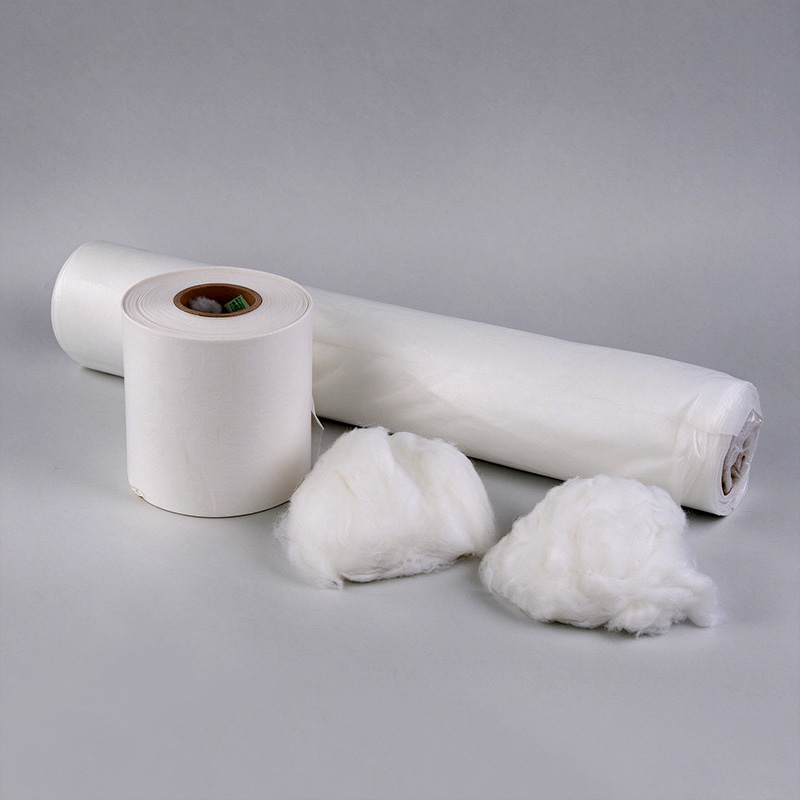
Made of PBS (Polybutylene Succinate), fully biodegradable.Features:1.Home compostable2.Raw material: PBS Polybutylene Su...
READ MOREPlease fill out the form below and our team will contact you as soon as possible.
Addres: No.66 Qiaogang Road, Haian, Nantong City, Jiangsu Province, China
E-mail: service@gcfiber.com admin@gcfiber.com
Copyright ? GC FIBER All Rights Reserved. Eco-Friendly Textile Products Manufacturer Biodegradable Yarn Company