English
 中文简体
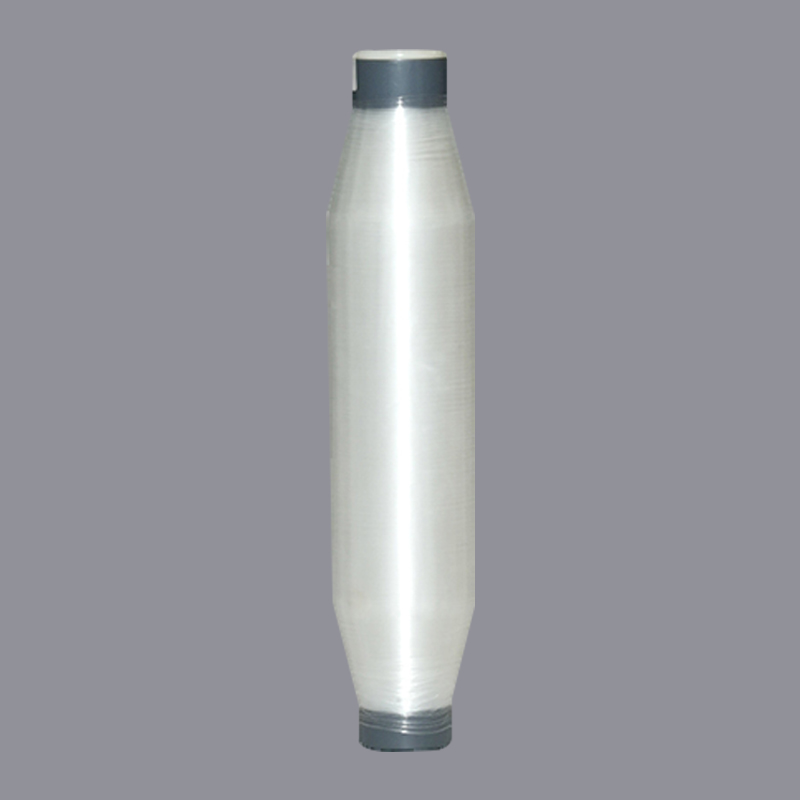
Made of PBS (Polybutylene Succinate), fully biodegradable.Features:1.Home compostable2.Raw material: PBS Polybutylene Su...
READ MORE
Content
The textile industry is under increasing pressure to reduce fossil-fuel dependence, minimize persistent waste, and develop materials that support more responsible product lifecycles. At the same time, textile manufacturers, fashion brands, home-furnishing producers, and industrial users still require yarns with dependable strength, smooth processing behavior, attractive appearance, and consistent quality. PLA biodegradable filament yarn responds to these combined requirements by bringing together renewable raw materials, continuous-filament performance, lower-temperature dyeing, natural antibacterial characteristics, and industrial compostability.
PLA, or polylactic acid, is a bio-based polymer produced from renewable plant resources such as corn starch and sugarcane. When converted into filament yarn, PLA provides a continuous, uniform structure that can be used in weaving, knitting, embroidery, sewing, and selected technical textile applications. Its smooth surface and consistent linear structure distinguish it from many short-staple alternatives, while its renewable origin and end-of-life compostability provide an important sustainability advantage over conventional petroleum-based polyester.
Modern PLA filament yarn is not simply a substitute for an ordinary synthetic yarn. It is a functional material engineered for manufacturers that want to combine environmental responsibility with practical textile performance. It can support sustainable apparel collections, premium home textiles, hygiene-sensitive products, decorative fabrics, outdoor applications, and specialized industrial materials.
GC FIBER develops and supplies special and functional textile products, including biodegradable yarn, low melting yarn, ECDP yarn, anti-static yarn, HDPE yarn, bio-component yarn, and polyester filament yarn. Its experience in functional fiber development, customized production, raw-material control, and multi-line manufacturing enables customers to source PLA filament yarn for both standard requirements and project-specific specifications.
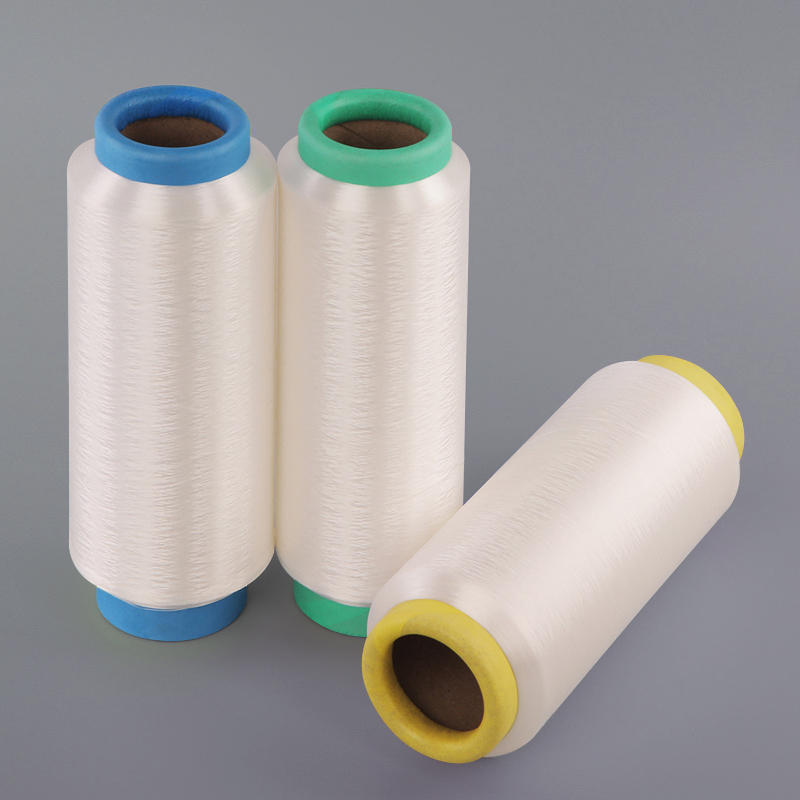
PLA Biodegradable Filament Yarn
PLA biodegradable filament yarn is a continuous-filament textile yarn made from polylactic acid. PLA is a thermoplastic polymer obtained from renewable biological resources. Plant-based sugars and starches are processed into lactic acid, which is then polymerized to create the PLA material used for fiber and filament production.
During yarn manufacturing, the polymer is melted and extruded through precision spinnerets to form continuous filaments. These filaments are cooled, drawn, and processed to obtain the required strength, elongation, denier, texture, and appearance. The resulting yarn can be supplied in several specifications, including DTY 50D, 75D, 100D, and 150D, with additional options available through made-to-order production.
The continuous-filament structure is one of the most important characteristics of this product. Unlike staple fibers, which are cut into short lengths and then spun into yarn, filament yarn remains continuous from the extrusion stage through the final yarn package. This creates a smoother surface, more uniform linear density, and consistent strength along the yarn length.
PLA filament yarn is designed to biodegrade under appropriate industrial composting conditions. In a controlled industrial composting environment, temperature, humidity, oxygen, and microbial activity are managed to accelerate material decomposition. At the end of the process, the material can break down into carbon dioxide, water, and organic matter, subject to the applicable compostability requirements and conditions.
Industrial compostability should be distinguished from uncontrolled decomposition in ordinary soil, seawater, or a household compost pile. End-of-life performance depends on the material formulation, product construction, processing history, and available composting conditions. For this reason, manufacturers and brands should confirm the relevant testing, certification, and disposal requirements for their intended market.
Yarn structure directly affects fabric appearance, processing stability, hand feel, and finished-product performance. Continuous filament yarn is formed from long, uninterrupted strands. This produces a smooth surface with fewer protruding fiber ends than many staple-spun yarns.
The smooth structure can reduce the tendency toward surface fuzz and pilling in suitable fabric constructions. It also supports even fabric formation in high-speed weaving and knitting. Consistent yarn geometry helps manufacturers maintain more uniform fabric density, dye uptake, surface luster, and mechanical behavior from one production lot to another.
For fine fabrics, a continuous filament structure can produce a clean and elegant surface. For lining materials and lightweight apparel, it can provide a smooth contact surface. For decorative applications, it can contribute to a subtle sheen and refined drape. For embroidery and sewing threads, the uniform strand structure can support a neat visual result when the yarn is properly twisted, finished, and processed for that purpose.
Filament construction also offers flexibility in yarn design. The producer can adjust denier, filament count, cross-section, texture, and other parameters to match the requirements of a particular fabric or end use. This makes it possible to develop yarns for lightweight fabrics, structured textiles, soft-flowing materials, and specialized functional products.
Conventional polyester is generally manufactured from petroleum-derived raw materials. Although polyester offers valuable performance benefits, its fossil-based origin and resistance to natural degradation create challenges for companies seeking more circular and renewable material strategies.
PLA begins with renewable plant resources. Using bio-based feedstocks can reduce dependence on finite fossil resources and provides a different material pathway for textile manufacturing. The renewable origin of the polymer is particularly relevant to brands that are developing sustainable collections, environmental product declarations, circular design programs, or lower-impact sourcing strategies.
The phrase “from the earth, back to the earth” summarizes the intended lifecycle concept. Plants absorb carbon dioxide during growth, renewable biomass is converted into PLA, the material is used in a textile product, and the product can be directed to an appropriate industrial composting process after its useful life. This approach does not eliminate all environmental impacts, because agricultural production, polymer processing, spinning, dyeing, transportation, and product disposal still require resources and energy. However, it provides a valuable alternative to materials that remain persistent for very long periods after disposal.
PLA filament yarn is therefore most effective when incorporated into a complete product-lifecycle strategy. Responsible sourcing should consider the origin of the raw material, energy consumption during production, dyeing and finishing methods, product durability, fiber blends, trims, coatings, packaging, and end-of-life collection. Products made entirely from compatible compostable components are generally better positioned for industrial composting than complex products containing non-compostable blends or accessories.
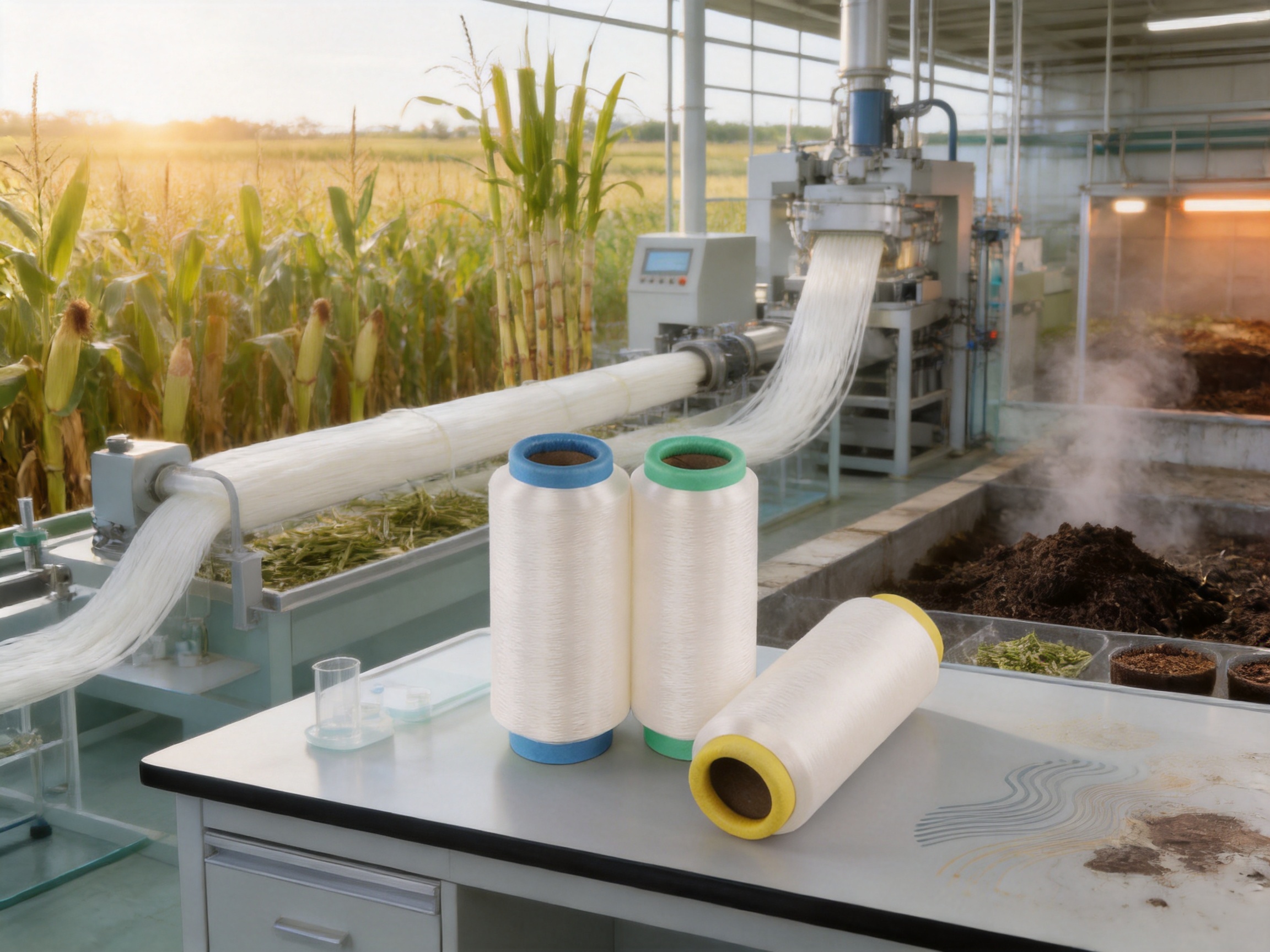
The primary advantage of PLA filament yarn is its renewable bio-based composition. Plant-derived raw materials provide an alternative to petroleum-based polymer feedstocks. For manufacturers and brands, this can support sustainability objectives and help diversify the raw-material portfolio.
Bio-based content can also provide a clear material story for consumers when supported by accurate documentation. A responsible communication strategy should identify the percentage of bio-based material, explain the meaning of industrial compostability, and avoid suggesting that every PLA product will disappear rapidly in any natural environment.
When the appropriate formulation and product construction meet the required standards, PLA materials can be processed through industrial composting systems. This is a major distinction from conventional polyester filament, which is highly resistant to biological breakdown under ordinary disposal conditions.
Industrial compostability can be especially valuable for products designed for short or controlled lifecycles, such as selected agricultural strings, disposable textile components, specialty packaging-related fabrics, and certain industrial textile items. It may also support circular product programs in which manufacturers establish collection and processing routes for used goods.
Compostability should always be evaluated at the finished-product level. A PLA yarn may be compostable, but dyes, finishes, coatings, elastane, sewing threads, labels, adhesives, and other components may affect the behavior of the complete article. Product developers should therefore conduct application-specific testing before making a finished-product compostability claim.
PLA filament yarn has inherent characteristics that can help inhibit bacterial growth. The lactic-acid-based polymer structure contributes to a material environment that may be less favorable to certain microorganisms. This feature can be useful in fabrics that remain close to the skin or are intended to maintain a fresh feel during use.
Potential applications include apparel linings, intimate apparel, lightweight sportswear, hygiene-sensitive textile components, and selected medical or care-related products. The antibacterial effect is built into the polymer rather than relying solely on a topical treatment. As a result, the functional property is less dependent on a finish that may wash out during repeated laundering.
Actual antibacterial performance depends on yarn formulation, fabric construction, moisture conditions, test method, finishing process, and the specific microorganisms evaluated. Product developers should use standardized testing and should distinguish between antibacterial activity, odor reduction, and antimicrobial protection. These terms are related but not identical.
PLA filament yarn can be dyed effectively at a lower temperature than conventional polyester filament yarn in suitable dyeing systems. Conventional polyester commonly requires high-temperature dyeing, while PLA can achieve appropriate color uptake under lower-temperature conditions when compatible dyes and process parameters are selected.
Lower dyeing temperatures can produce several operational benefits. They may reduce energy consumption, decrease thermal stress on the yarn, shorten heating and cooling stages, and help protect the dimensional stability and surface character of delicate fabrics. Lower processing temperatures can also be advantageous for mixed-material production when one component is sensitive to heat.
The exact temperature profile depends on the yarn grade, color depth, dye class, bath chemistry, equipment, fabric construction, and finishing requirements. Dyeing trials remain essential because color matching, fastness, levelness, and reproducibility must be confirmed for each product design.
PLA filament yarn offers good UV stability for many textile applications. Resistance to ultraviolet degradation can help preserve color appearance, surface quality, and mechanical performance during exposure to sunlight. This makes the yarn suitable for selected outdoor and long-exposure applications, including lightweight shading fabrics, curtains, decorative textiles, and outdoor-oriented fashion materials.
UV performance is influenced by yarn formulation, pigments, dyes, fabric construction, exposure intensity, humidity, temperature, and exposure duration. For demanding outdoor products, manufacturers should conduct accelerated weathering tests and outdoor trials rather than relying solely on general material descriptions.
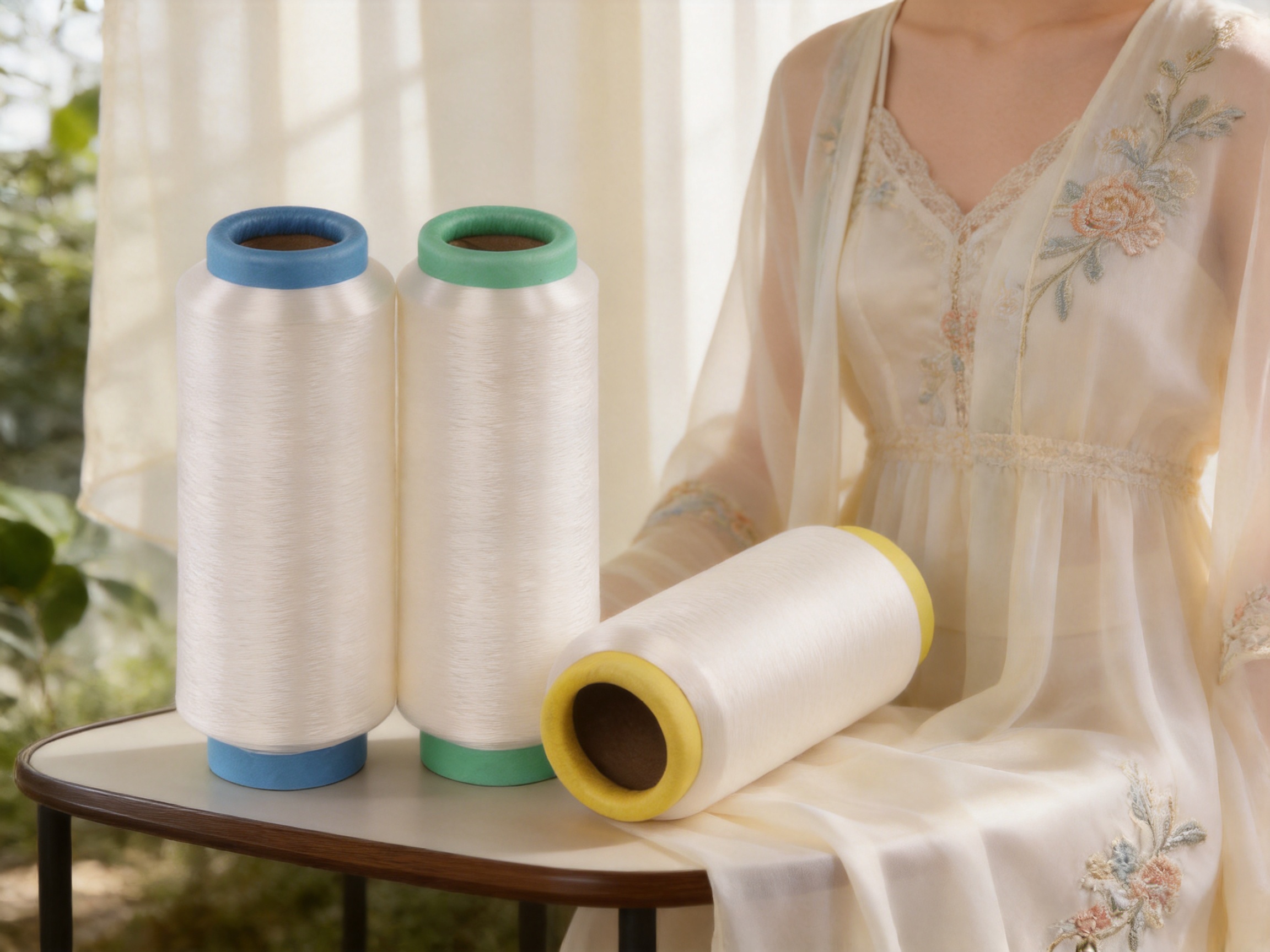
The continuous structure of PLA filament yarn creates a smooth surface and can provide a refined, silk-like luster. This appearance is valuable for fashion fabrics, linings, sheer materials, decorative textiles, and premium home furnishings.
The yarn can also offer an attractive drape when used in suitable fabric constructions. Designers can combine denier selection, filament count, weave or knit structure, and finishing treatment to create different levels of softness, fluidity, opacity, and visual brightness.
Continuous extrusion and controlled drawing help produce a uniform yarn structure. Consistent denier and filament distribution support stable downstream processing and reduce variation across the fabric width or length. Evenness is especially important for lightweight fabrics, fine-gauge knitting, high-speed weaving, and products with a smooth or glossy surface where irregularities are highly visible.
PLA biodegradable filament yarn and conventional polyester filament yarn share certain useful characteristics. Both can be produced as continuous filaments, both can be engineered in different deniers, and both can be processed into woven or knitted fabrics. However, their raw-material origins, end-of-life behavior, and dyeing requirements differ considerably.
| Performance Area | PLA Biodegradable Filament Yarn | Conventional Polyester Filament Yarn |
|---|---|---|
| Raw-material origin | Bio-based resources such as plant-derived sugars and starches | Generally petroleum-based resources |
| Filament structure | Continuous filament, with customized denier and filament options | Continuous filament, with broad denier and filament options |
| End-of-life potential | Industrial compostability under suitable conditions and requirements | Highly resistant to natural biological degradation |
| Dyeing temperature | Generally lower than conventional polyester in compatible processes | Generally higher-temperature dyeing is required |
| Antibacterial characteristics | Inherent antibacterial potential associated with the PLA structure | Usually requires a separate functional treatment if antibacterial performance is needed |
| Surface appearance | Smooth surface with potential for silk-like luster and elegant drape | Wide appearance range depending on polymer, texturing, and finishing |
| Sustainability positioning | Supports renewable-material and compostability strategies | Supports durability and recycling strategies but remains fossil-based in origin |
| Processing considerations | Requires temperature-sensitive handling and compatible dyeing and finishing conditions | Generally tolerates conventional polyester processing conditions |
The comparison does not mean that PLA is suitable for every textile requirement or that polyester lacks value. Polyester remains widely used because of its strength, durability, dimensional stability, chemical resistance, and broad processing experience. PLA is most attractive when renewable content, lower-temperature processing, antibacterial potential, and industrial compostability are priorities.
Stable yarn quality begins with controlled polymer preparation. PLA resin must be selected according to the intended denier, spinning behavior, mechanical requirements, dyeing conditions, and end-use performance. Moisture control is particularly important because polymer moisture can affect melt stability, viscosity, extrusion behavior, and filament quality.
Before extrusion, the raw material is prepared under controlled conditions. Proper drying and storage help reduce processing variation. The manufacturer must also manage batch identification, material traceability, and incoming quality inspection so that each production lot can be connected to its raw-material source and processing record.
In melt extrusion, prepared PLA polymer is heated until it reaches a suitable molten state. The polymer melt is conveyed through an extruder and delivered to a spinneret. Temperature, pressure, residence time, screw speed, and melt flow must be carefully controlled.
Stable extrusion is essential for obtaining uniform filament diameter. Excessive heat may damage the polymer, while insufficient heat may create unstable flow or incomplete melting. Precision equipment and trained operators help maintain consistent conditions throughout the spinning process.
The spinneret determines the initial shape and number of the extruded filaments. Different spinneret configurations can create round or specially shaped cross-sections, depending on the required optical effect, moisture behavior, hand feel, and fabric performance.
Spinneret cleanliness and dimensional accuracy are important quality factors. Small imperfections can affect filament uniformity, surface appearance, or downstream breakage. Regular maintenance and controlled replacement schedules help preserve spinning consistency.
After extrusion, the molten filaments must be cooled and solidified in a controlled manner. Cooling-air temperature, airflow uniformity, and quench-zone stability influence the filament structure and yarn evenness.
Uneven cooling can create differences in crystallinity, shrinkage, strength, and elongation among individual filaments. Advanced production management therefore monitors the spinning environment and maintains consistent airflow and temperature across the filament bundle.
Freshly spun filaments are drawn to orient the polymer molecules and improve the desired balance of strength, elongation, stability, and surface quality. Drawing conditions must be matched to the PLA grade and target yarn specification.
Overdrawing may make the yarn too brittle or reduce its flexibility, while insufficient drawing may produce inadequate strength or excessive shrinkage. Precise roller-speed control and temperature management help establish a stable molecular orientation.
Depending on the order, PLA filament yarn can be supplied in a flat filament form or processed into a textured structure such as draw-textured yarn. Texturing can add bulk, elasticity, softness, and a different surface character. The appropriate process depends on the intended application and the required fabric hand.
Texturing conditions must be selected carefully because PLA has a different thermal response from conventional polyester. Excessive heat or unsuitable tension can affect yarn stability. Production expertise is therefore essential when developing textured PLA products for high-speed knitting or weaving.
After spinning or texturing, the yarn is wound onto packages suitable for the customer’s equipment. Winding tension, package density, edge formation, and package hardness influence unwinding performance and downstream efficiency.
Well-controlled packages help reduce yarn breaks, tension fluctuations, and creasing during weaving or knitting. Packaging materials should also be selected to protect the yarn from moisture, dust, compression, and transport damage.
Quality assurance can include testing for denier, yarn evenness, tensile strength, elongation, shrinkage, oil content, color, package appearance, and unwinding behavior. Depending on the product, additional testing may evaluate antibacterial performance, UV resistance, compostability, dye uptake, and colorfastness.
Inspection should not be limited to the finished package. Process monitoring at the raw-material, extrusion, drawing, texturing, and winding stages allows potential deviations to be identified earlier. This reduces waste and improves lot-to-lot consistency.
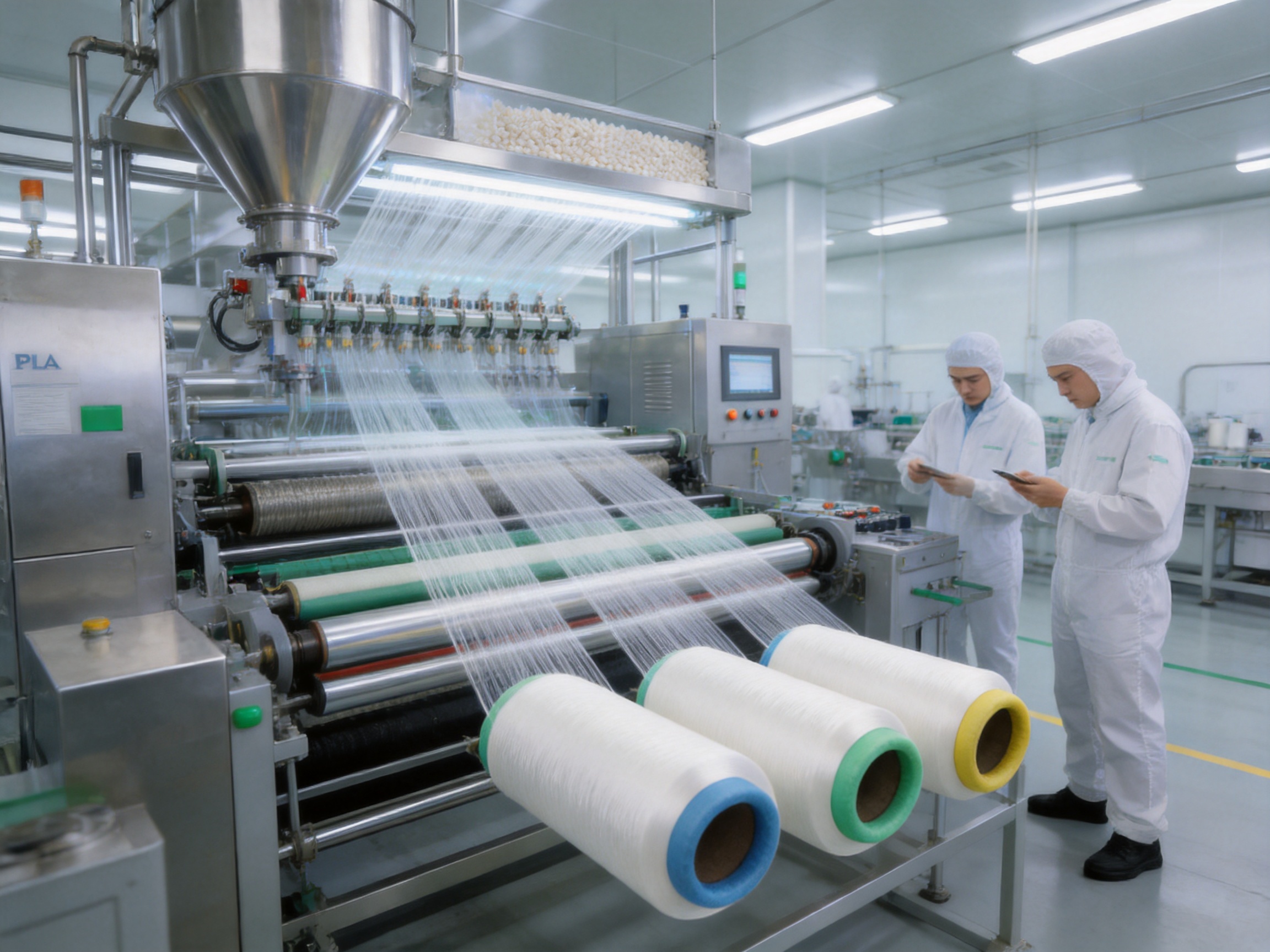
A major advantage of sourcing functional yarn from an experienced special-textile manufacturer is the ability to connect material development with practical production. Customers often require more than a standard catalog specification. They may need a particular denier, filament count, cross-section, luster, dyeing response, antibacterial level, or fabric hand.
GC FIBER supports customized and OEM production based on customer requirements. Its technical capability includes the development of special and functional eco-friendly textile materials, with cooperation between sales, research and development, design, production, and quality teams.
PLA filament yarn can be developed according to application-specific requirements. Possible variables include denier, filament count, yarn form, cross-section, luster, color, texture, winding format, and functional performance. Customization enables a manufacturer to match the yarn more closely to fabric construction and production equipment.
For example, a lightweight lining may require a fine denier and smooth surface, while a decorative home textile may require a particular luster and drape. An outdoor fabric may prioritize UV stability, while a hygiene-sensitive product may require documented antibacterial testing. The ability to adjust the yarn specification provides greater design freedom than selecting a one-size-fits-all material.
Functional textile development often requires several rounds of trials. A yarn that performs well in one fabric construction may require adjustment for another. Research and development support helps translate the customer’s product concept into measurable yarn properties.
Development work may include selecting the polymer grade, defining the extrusion conditions, adjusting drawing ratios, evaluating additives or pigments, optimizing texturing, and testing dyeing behavior. Collaboration between the customer and manufacturer can reduce development time and improve the likelihood of achieving stable mass production.
Multiple production lines and machines allow a specialized manufacturer to manage different yarn types and order requirements. Small custom projects may require trial quantities, while established programs may require larger and repeated deliveries. Production flexibility helps support both stages.
Strong control over raw-material supply and quality is also important. Consistent sourcing reduces unexpected changes in polymer behavior and supports stable product performance. Reliable production planning helps customers coordinate weaving, knitting, dyeing, garment manufacturing, and final delivery.
Functional yarn projects involve technical and commercial decisions at the same time. Sales teams clarify the customer’s application and delivery requirements. Research and development teams translate those requirements into material specifications. Production teams determine process routes and capacity. Quality teams verify conformance, while logistics teams coordinate shipment and documentation.
An integrated team structure reduces communication gaps and helps customers receive more consistent support from initial inquiry through sample development, approval, mass production, and delivery.
Custom production benefits from clear communication at every stage. Customers may need updates on raw-material preparation, sample completion, testing, production scheduling, inspection, packaging, and shipment. Responsive order tracking helps identify potential changes early and supports better planning throughout the supply chain.
PLA filament yarn is suitable for fashion collections that emphasize renewable materials, refined appearance, and lower-impact processing. It can be used in lightweight woven fabrics, knitted garments, blouses, dresses, skirts, scarves, linings, and selected accessories.
The smooth surface and subtle luster can contribute to a premium visual effect. Its lower dyeing temperature can also be useful for delicate fabric constructions and energy-conscious production programs. Designers should evaluate abrasion resistance, laundering conditions, seam performance, and garment-care requirements for each product.
Sportswear requires comfort, moisture management, durability, and effective odor control. PLA filament yarn may be used in selected lightweight sportswear, athleisure, base-layer, and lining applications where its smooth hand, antibacterial potential, and renewable composition are valuable.
Product developers should assess the yarn together with the complete fabric structure. Knitting gauge, fabric density, finishing, moisture transport, stretch components, and garment construction all influence final performance. Where high elasticity is required, compatibility with elastane or other fibers must be evaluated carefully in relation to end-of-life objectives.
The yarn can be used in curtains, sheer fabrics, bedding textiles, decorative panels, table textiles, and selected upholstery applications. Its surface appearance and drape can help create an elegant interior aesthetic, while its UV stability can be useful for fabrics exposed to daylight.
For curtains and shading textiles, colorfastness and dimensional stability should be tested under expected sunlight exposure. For bedding and skin-contact products, softness, dye safety, laundering, and antibacterial performance should be verified through appropriate testing.
A smooth continuous-filament surface is well suited to lining materials and intimate apparel. The yarn can reduce the roughness associated with protruding fiber ends and may provide a comfortable contact surface when used in an appropriate construction.
The inherent antibacterial potential of PLA is another reason to consider it for hygiene-sensitive products. Nevertheless, antibacterial claims should be supported by recognized test methods and should reflect the actual fabric rather than the yarn alone.
Fine PLA filament yarn can be developed for embroidery, decorative stitching, and ornamental textile components. Its evenness and luster may create clean visual lines and attractive highlights.
For embroidery applications, the yarn must be evaluated for friction, needle heat, tension, twist, colorfastness, and breakage. A suitable finishing or twisting process may be required to obtain the best sewing performance.
Good UV stability makes PLA filament yarn a candidate for selected outdoor and shading applications. Examples include lightweight curtains, decorative outdoor fabrics, sun-screening materials, and textile components exposed to intermittent sunlight.
Outdoor product developers should consider moisture, heat, abrasion, wind, dirt, cleaning chemicals, and prolonged ultraviolet exposure. Accelerated weathering tests can provide useful comparative information before full-scale production.
PLA filament yarn can support selected biodegradable sewing threads, lightweight filtration fabrics, agricultural strings, and other industrial textile products. These applications may benefit from controlled biodegradation and renewable material content.
Industrial product design should begin with a clear understanding of service life. A biodegradable yarn must remain stable for the required period of use and then be compatible with the intended disposal or composting route. The balance between durability during use and degradation after disposal is a central engineering consideration.
Before bulk production, customers should conduct trials on their own weaving or knitting equipment. PLA filament yarn may require adjustments to tension, speed, guides, needles, heaters, and lubrication compared with conventional polyester.
Because PLA can be more sensitive to excessive heat, unnecessary thermal exposure should be avoided. Contact with heated surfaces, high-temperature settings, and prolonged residence in heated zones should be controlled. Proper tension management can help reduce filament breakage and preserve fabric uniformity.
For weaving, warp preparation, sizing compatibility, beam formation, and loom tension should be evaluated. For knitting, needle selection, yarn-feed tension, take-down settings, and fabric relaxation should be reviewed. The optimal conditions depend on yarn denier, filament count, texture, fabric design, and machine type.
Dyeing and finishing trials should confirm color yield, levelness, shade reproducibility, washing fastness, rubbing fastness, light fastness, dimensional stability, and fabric hand. Lower-temperature dyeing can reduce energy demand, but compatible dyes and carefully controlled bath conditions remain necessary.
Material selection should begin with the final product rather than the yarn name alone. Buyers should define the intended fabric, production method, performance targets, appearance, care requirements, environmental claims, and expected service life.
| Selection Factor | Questions to Consider |
|---|---|
| Denier | Is the product intended to be lightweight, medium-weight, or more substantial? |
| Filament count | Is a softer, finer surface or a more structured yarn required? |
| Yarn form | Is flat filament, textured yarn, or another construction most appropriate? |
| Fabric method | Will the yarn be woven, knitted, embroidered, twisted, or sewn? |
| Appearance | Is the required effect matte, bright, semi-dull, lustrous, smooth, or textured? |
| Functional property | Are antibacterial behavior, UV stability, low-temperature dyeing, or compostability essential? |
| Color and dyeing | Which dye system, color depth, and fastness level are required? |
| End-of-life route | Is there an industrial composting pathway for the finished product? |
| Order volume | Is the project a sample, small custom order, or recurring mass-production program? |
| Documentation | What technical data, test reports, traceability records, and compliance documents are needed? |
Customers should request a technical data sheet and representative sample before placing a large order. Testing should be performed on the actual fabric and, where possible, on the finished product. This approach provides a more accurate picture of performance than relying only on isolated yarn data.
PLA biodegradable filament yarn can make a meaningful contribution to lower-impact textile design, but sustainability claims should be precise. Renewable feedstock does not automatically mean zero impact. Industrial compostability does not mean rapid decomposition in every environment. A biodegradable yarn is not automatically suitable for disposal in nature.
Manufacturers should communicate whether the yarn is bio-based, industrially compostable, recyclable, biodegradable under specified conditions, or certified according to a particular standard. These terms should not be used interchangeably.
Blended fabrics require special attention. A PLA yarn combined with conventional polyester, nylon, elastane, metallic fibers, non-compostable coatings, or incompatible trims may not be suitable for industrial composting. Product developers should consider mono-material construction or compatible component selection when compostability is a core objective.
Durability is also part of sustainability. A textile that performs well and lasts for its intended service life may reduce replacement demand. PLA filament yarn should therefore be selected according to the actual requirements of the product, balancing end-of-life goals with strength, comfort, appearance, and care performance.
PLA stands for polylactic acid. It is a bio-based polymer commonly produced from renewable plant resources such as corn starch, sugarcane, and other sources of fermentable sugars.
Yes. PLA filament yarn is formed from continuous strands extruded through a spinneret. This gives it a smooth surface and consistent structure compared with yarns spun from short staple fibers.
PLA is generally designed to break down under suitable industrial composting conditions rather than rapidly decomposing in ordinary soil or natural environments. The actual behavior depends on the formulation, product construction, temperature, humidity, microbial activity, and disposal conditions.
Yes. PLA filament yarn can be dyed using compatible dyeing systems. It can generally achieve color uptake at a lower temperature than conventional polyester, although laboratory trials are necessary to establish the correct dyes, bath chemistry, temperature profile, and fastness performance.
PLA has inherent characteristics that can help inhibit the growth of certain bacteria. The level of performance depends on the yarn, fabric, test method, and processing conditions. Finished-product antibacterial claims should be supported by appropriate standardized testing.
It can be suitable for selected sportswear and athleisure applications, particularly where renewable content, smooth hand, lower-temperature dyeing, and antibacterial potential are valuable. Moisture management, stretch, abrasion resistance, laundering, and fabric construction should be evaluated for each design.
No. PLA and polyester have different performance profiles and processing requirements. PLA is particularly attractive for renewable-material, compostability, lower-temperature dyeing, and selected antibacterial applications. Polyester may remain preferable where very high durability, chemical resistance, heat resistance, or established recycling systems are the primary requirements.
Common available specifications include DTY 50D, 75D, 100D, and 150D. Other deniers, filament counts, structures, colors, and functional properties may be available through special production by order.
Yes. Customization may include denier, filament count, cross-section, luster, color, texture, winding format, and selected functional properties. Custom specifications should be developed through sample testing and application trials.
Buyers should evaluate denier, tensile strength, elongation, evenness, shrinkage, unwinding behavior, weaving or knitting performance, dye uptake, colorfastness, fabric hand, abrasion, dimensional stability, and any antibacterial, UV, or compostability claims relevant to the finished product.
The yarn may be designed for industrial compostability, but the finished product must be assessed as a complete system. Dyes, finishes, coatings, sewing threads, labels, elastane, and other components can affect whether the final article meets compostability requirements.
Production and export arrangements can be coordinated through the Shanghai seaport. Delivery terms, packaging, documentation, and logistics schedules should be confirmed for each order.
PLA biodegradable filament yarn offers a practical route toward more sustainable textile production without abandoning the advantages of continuous-filament construction. Its renewable plant-based origin, industrial compostability potential, inherent antibacterial characteristics, lower-temperature dyeing behavior, UV stability, smooth surface, and refined luster make it a compelling material for modern textile development.
Compared with conventional polyester filament yarn, PLA provides a stronger sustainability proposition in applications where renewable feedstocks, lower processing temperatures, and controlled end-of-life compostability are important. Its continuous structure also supports evenness, clean fabric appearance, reduced surface fuzz, and consistent downstream processing.
Successful use depends on appropriate specification, careful thermal management, compatible dyeing and finishing, and testing at the fabric and finished-product stages. Manufacturers should also plan the end-of-life route from the beginning, especially when compostability is a central product claim.
With experience in special and functional textile products, customized development, research and development cooperation, multi-line production, raw-material control, and responsive order support, GC FIBER is positioned to help customers move from an initial sustainable-material concept to a stable PLA filament yarn solution. Whether the requirement is a standard DTY specification, a customized eco-friendly yarn, or a new functional material developed for a specific application, close cooperation between the customer and manufacturer remains the key to achieving reliable results.
1. NatureWorks, technical literature on polylactic acid polymers, fiber applications, and industrial compostability.
2. International Organization for Standardization, standards and guidance concerning compostable plastics, biodegradation, and environmental claims.
3. ASTM International, test methods and specifications for compostability and biodegradation of plastic materials.
4. European Committee for Standardization, standards concerning industrially compostable packaging and biodegradable polymer products.
5. Textile Exchange, preferred fiber and material guidance for bio-based and lower-impact textile sourcing.
6. A. R. Bunsell, Handbook of Textile Fibre Structure, technical discussion of filament formation, fiber morphology, and textile performance.
7. J. E. McIntyre, Synthetic Fibres, reference material on polymer spinning, drawing, filament formation, and yarn processing.
8. Technical documentation supplied for PLA biodegradable filament yarn, including product specifications, processing characteristics, and application information.
Made of PBS (Polybutylene Succinate), fully biodegradable.Features:1.Home compostable2.Raw material: PBS Polybutylene Su...
READ MOREPlease fill out the form below and our team will contact you as soon as possible.
Addres: No.66 Qiaogang Road, Haian, Nantong City, Jiangsu Province, China
E-mail: service@gcfiber.com admin@gcfiber.com
Copyright ? GC FIBER All Rights Reserved. Eco-Friendly Textile Products Manufacturer Biodegradable Yarn Company