English
 中文简体
Made of PBS (Polybutylene Succinate), fully biodegradable.Features:1.Home compostable2.Raw material: PBS Polybutylene Su...
READ MORE
Content
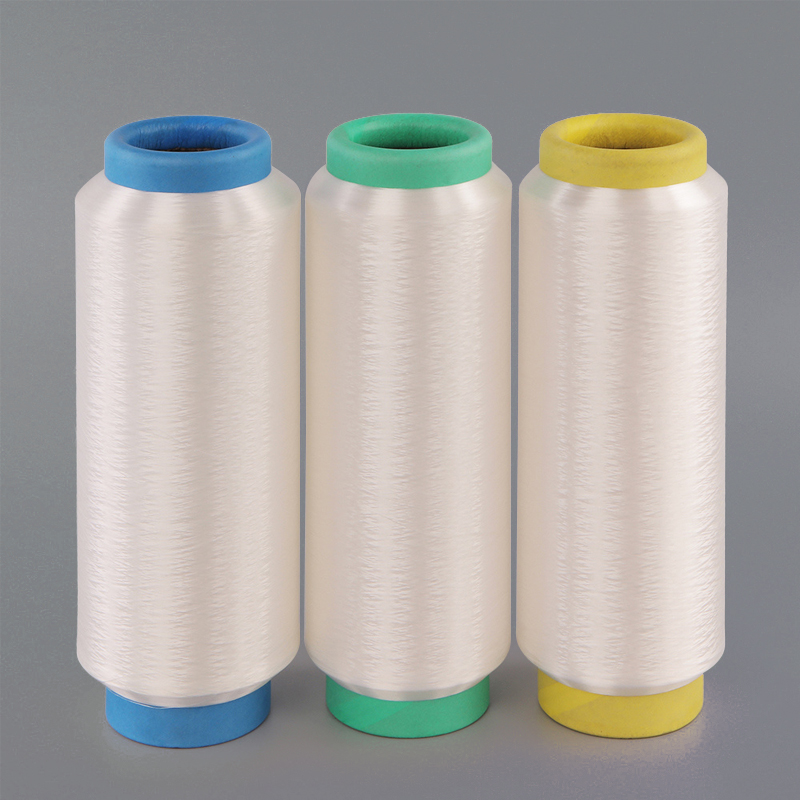
PE Texture DTY Yarn is a functional bi-component textured filament yarn developed for textile applications that require a cool hand feel, reliable mechanical performance, and adaptable processing characteristics. By combining a polyethylene-based component with another polymer component such as polypropylene or nylon, this yarn provides a specialized cross-section structure that conventional single-polymer yarns may not offer.
The yarn is available in 30D, 40D, 50D, and 75D specifications, making it suitable for lightweight apparel, sportswear, knitted fabrics, woven fabrics, bedding, home textiles, and selected technical textile applications. Its combination of cooling touch, tenacity, elongation, texture, and customization potential allows fabric manufacturers to develop products that respond to growing consumer demand for comfort-oriented and performance-driven materials.
Manufactured by GC FIBER, a special textile factory established in China in 2006, PE Texture DTY Yarn is supported by specialized production equipment, material research capabilities, quality control procedures, and order-based manufacturing. The product is designed not only as a standard yarn but also as a platform for developing customized functional textile solutions.
PE Texture DTY Yarn is a draw textured yarn produced from a bi-component filament structure. The abbreviation DTY refers to Drawn Textured Yarn, a filament yarn that has been drawn and texturized to improve its bulk, elasticity, softness, appearance, and fabric performance. In this product, the textured filament is further enhanced through a special cross-section design involving PE and another polymer.
The available material combinations include PE/PP and PE/NYLON. These combinations are intended to bring together the advantages of different polymers within one filament structure. Polyethylene can contribute to a smooth and cooling touch, while polypropylene or nylon can help improve strength, processing behavior, durability, or other functional properties depending on the selected design.
The special cross-section is a key difference between this yarn and ordinary round-section filament yarns. A profiled or composite cross-section can increase the area of contact between the yarn and the surrounding environment. It can also influence moisture movement, surface feel, light reflection, fabric coverage, and the visual texture of the finished textile.
Because it is textured, the yarn can provide a more fabric-friendly structure than a completely flat filament. Texturing may improve bulk and surface character while supporting stretch recovery and comfortable hand feel. The resulting yarn can be used in both knitted and woven structures, depending on the selected denier, fabric construction, finishing process, and end-use requirements.
The standard denier options are 30D, 40D, 50D, and 75D. These specifications cover a useful range from lightweight, fine textile constructions to fabrics requiring greater yarn body and coverage.
| Item | Available Option | Typical Value for Textile Development |
|---|---|---|
| Product type | PE Texture DTY Yarn | Functional bi-component textured filament yarn |
| Standard denier | 30D | Lightweight fabrics, fine knits, cooling apparel |
| Standard denier | 40D | Light to medium-weight apparel and blends |
| Standard denier | 50D | General apparel, sportswear, and home textiles |
| Standard denier | 75D | More structured fabrics and durable textile constructions |
| Cross-section options | PE/PP or PE/NYLON | Selection according to performance and processing objectives |
| Production method | Special production by order | Customization based on technical requirements |
| Shipment location | Shanghai seaport | Convenient export handling for international customers |
The denier selection should be made according to fabric weight, target hand feel, machine compatibility, required coverage, and final product function. A 30D yarn may be preferred for lightweight next-to-skin products, while a 75D yarn may be better suited to fabrics requiring greater body, coverage, or structural stability.
Actual performance will depend on the selected polymer combination, filament construction, texturing parameters, fabric design, dyeing and finishing conditions, and the final application. For this reason, sample development and technical confirmation are recommended before large-scale production.
PE Texture DTY Yarn
One of the most important advantages of PE Texture DTY Yarn is its naturally cooling touch. When the yarn is incorporated into a suitable fabric construction, the surface can feel cooler when it comes into contact with human skin. This makes the yarn particularly attractive for summer clothing, lightweight underwear, sportswear, bedding, and other products where thermal comfort is important.
The cooling sensation is associated with the material properties of the PE-based component, the special cross-section structure, surface contact behavior, and the ability of the fabric to support heat and moisture transfer. A textile made with this yarn may help move heat away from the skin more effectively than some conventional textile structures, although the final cooling effect depends on the entire fabric system rather than the yarn alone.
Fabric construction has a major influence on the perceived result. Knitting density, yarn arrangement, surface area, moisture management, finishing chemistry, fabric weight, and garment design all affect how quickly a fabric feels cool. PE Texture DTY Yarn gives designers a functional foundation for developing this type of material, but the final textile should be evaluated under realistic use conditions.
Compared with ordinary polyester yarns that are selected mainly for strength, appearance, and processing convenience, a PE-based bi-component textured yarn can offer a more specialized touch and comfort profile. Compared with basic round-section filament yarns, the profiled cross-section may provide additional surface interaction and a different hand feel.
The cooling effect is especially relevant in markets where consumers seek comfortable clothing for hot climates, high-intensity activity, travel, and indoor environments with limited temperature control. It can also support bedding and home textile products intended to provide a fresher sleeping experience.
Functional comfort must be supported by mechanical reliability. PE Texture DTY Yarn is designed to provide good tenacity and elongation, allowing it to withstand the stresses associated with knitting, weaving, garment production, repeated use, and laundering.
Tenacity describes the strength of a yarn relative to its fineness. A yarn with appropriate tenacity can resist breakage during processing and use. This is important because excessive yarn breakage can reduce production efficiency, create defects, and increase waste. Good strength also supports the durability of the finished fabric.
Elongation describes the ability of the yarn to extend under tension. Balanced elongation is valuable because it allows the yarn to accommodate movement and fabric deformation without breaking immediately. In sportswear, activewear, and fitted garments, this can contribute to improved comfort and shape retention when combined with a suitable fabric construction.
The relationship between tenacity and elongation is important. A yarn that is strong but excessively rigid may produce an uncomfortable or harsh textile. A yarn that stretches easily but lacks sufficient strength may not withstand demanding processing or end use. PE Texture DTY Yarn is developed to provide a practical balance between these properties.
Its performance can be beneficial in fabrics exposed to repeated bending, stretching, friction, and laundering. Examples include training garments, lightweight outdoor products, fitted knitwear, and bedding that undergoes frequent washing. Nevertheless, buyers should confirm detailed mechanical values, shrinkage behavior, and color-related performance through technical data sheets and samples for each specific production batch.
The bi-component design is central to the product's functional identity. Instead of relying on one polymer throughout the entire filament, the yarn combines two polymer components in a controlled cross-section arrangement. The available structures include PE/PP and PE/NYLON.
Different component combinations can be selected for different development goals. A PE/PP configuration may be considered where low density, a smooth touch, moisture-related comfort, and processing stability are important. A PE/NYLON configuration may be explored where higher strength, abrasion resistance, and a more durable performance profile are required.
The actual behavior of a bi-component yarn depends on the proportion, arrangement, interface, cross-sectional geometry, drawing conditions, texturing conditions, and finishing process. These variables provide opportunities for customization but also make process control essential. Consistent temperature, tension, speed, and polymer supply are necessary to keep the yarn uniform from package to package.
The special cross-section may also contribute to visual differentiation. Depending on the fabric construction and finishing method, a profiled filament can influence luster, texture, coverage, and the way the surface reflects light. This can help textile brands create fabrics with a distinctive appearance in addition to functional comfort.
Bi-component construction can offer advantages over conventional single-component yarns because it allows the manufacturer to combine selected properties rather than relying on one polymer to perform every function. This approach is particularly useful when product developers need cooling touch, strength, elongation, durability, and processability in the same textile system.
For customers developing a new material, the appropriate cross-section should be selected after considering end use, fabric construction, dyeing conditions, finishing chemistry, required hand feel, and expected mechanical performance. GC FIBER supports this type of project-based evaluation through its research and development team.
Texturing changes the physical character of a filament yarn. Draw texturing can introduce crimp, bulk, softness, elasticity, and a more natural textile appearance. These features may improve the yarn's suitability for fabrics intended to feel comfortable rather than excessively flat or rigid.
Textured yarns can help create fabrics with improved coverage and a more pleasant surface. In knitted fabrics, the yarn may contribute to a soft, flexible structure. In woven fabrics, it can provide a different balance between smoothness, surface interest, and dimensional stability. The best result depends on the loom or knitting machine, fabric construction, yarn tension, and finishing process.
PE Texture DTY Yarn can therefore be considered for a wide variety of fabric development projects. The yarn may be combined with other filaments or spun yarns to adjust softness, appearance, stretch, moisture movement, weight, and cost. Blending also allows manufacturers to create fabrics with a more precise balance of functional and aesthetic characteristics.
Compared with an untextured filament, a textured yarn may produce a fuller hand and a more fabric-like appearance. Compared with ordinary textured yarns, the bi-component structure adds another level of functional design. This combination of texturing and polymer engineering is one of the product's main competitive advantages.
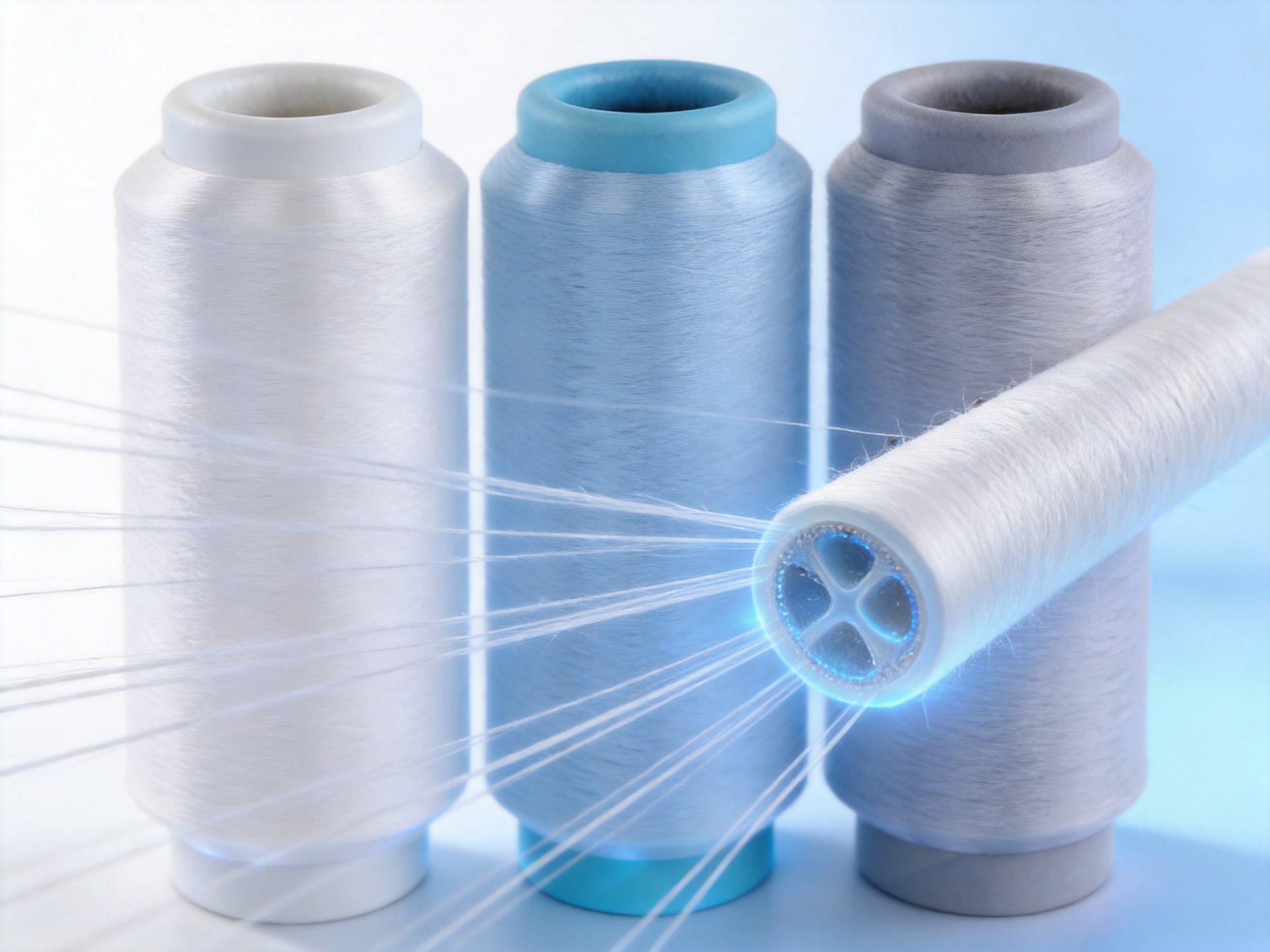
Textile manufacturers often choose yarns based on a combination of performance, price, processing stability, availability, and development flexibility. PE Texture DTY Yarn is positioned as a functional alternative for applications where ordinary polyester, nylon, polypropylene, or standard DTY may not provide the required balance of properties.
Many conventional yarns provide strength and reliable processing but do not emphasize cool-touch performance. The PE-based component and special cross-section of this product are designed specifically to support a cooler surface sensation. This can create a stronger product story for summer apparel, performance clothing, and bedding.
A standard round-section filament has a relatively simple geometry. The special cross-section of PE Texture DTY Yarn creates additional possibilities for controlling surface contact, texture, appearance, and functional behavior. This offers product developers more design freedom than a basic single-component yarn.
Some fine yarns are selected for softness and lightweight performance but may have limited durability. PE Texture DTY Yarn is designed to combine fine denier options with good tenacity and elongation, helping manufacturers develop lightweight fabrics without sacrificing practical processing performance.
The availability of PE/PP and PE/NYLON configurations allows customers to select a structure aligned with their application. This is more flexible than a single standard yarn that cannot be adjusted for different performance priorities.
Many catalog yarns are offered only in fixed specifications. This product can be specially produced by order, allowing customers to discuss denier, filament count, cross-section structure, polymer combination, and other project requirements. Customization can be valuable for brands and fabric mills seeking differentiated materials.
The product can be developed for apparel, sportswear, home textiles, bedding, knitted fabrics, woven fabrics, and selected technical applications. This versatility allows textile manufacturers to use one functional yarn platform across several product categories.
PE Texture DTY Yarn is suitable for lightweight summer garments designed to provide a fresh and comfortable skin feel. Potential products include T-shirts, tops, base layers, casual dresses, lightweight trousers, underwear, and other warm-weather apparel.
The yarn can be used in knitted or woven fabrics. Fine denier options may support lightweight constructions, while larger deniers can provide greater coverage and fabric body. Fabric developers should consider yarn density and finishing conditions carefully to preserve the intended cooling sensation.
Sportswear requires a combination of comfort, mobility, strength, and resistance to repeated use. Good elongation can help fabrics accommodate body movement, while good tenacity supports manufacturing and wear durability. The cooling touch can improve comfort during exercise, especially in warm or humid environments.
Potential products include training shirts, running garments, cycling apparel, yoga wear, fitness tops, lightweight athletic bottoms, and sports accessories. In these applications, the yarn may be used alone or blended with elastic, moisture-management, recycled, or other performance-oriented fibers.
The cool-touch characteristic is also relevant to bedding. Sheets, pillowcases, mattress covers, blankets, and other home textile products can benefit from a surface that feels fresh and smooth. The yarn's strength and elongation can support repeated laundering and everyday use when the fabric is properly engineered.
For bedding, the final hand feel is influenced by yarn size, weave or knit structure, fabric finishing, and washing performance. Different deniers can be tested to achieve a balance between softness, coverage, breathability, and durability.
Blending PE Texture DTY Yarn with other fibers can help fabric manufacturers fine-tune performance. It may be combined with polyester, nylon, elastane, regenerated fibers, or other functional yarns according to the design objective.
A blend can improve softness, stretch, color effect, moisture management, dimensional stability, or cost efficiency. The recommended blend ratio should be determined through sample development because polymer compatibility, dyeing behavior, shrinkage, and finishing response vary by material combination.
Although textured filament yarns are often associated with knitting, PE Texture DTY Yarn can also be considered for selected woven structures. It may contribute to surface texture, comfort, lightweight coverage, and functional differentiation in shirts, linings, sports fabrics, casualwear, and home textiles.
Warp and weft preparation should be evaluated carefully. Appropriate tension control, sizing or preparation, loom settings, and heat treatment may be needed to optimize weaving efficiency and reduce filament damage.
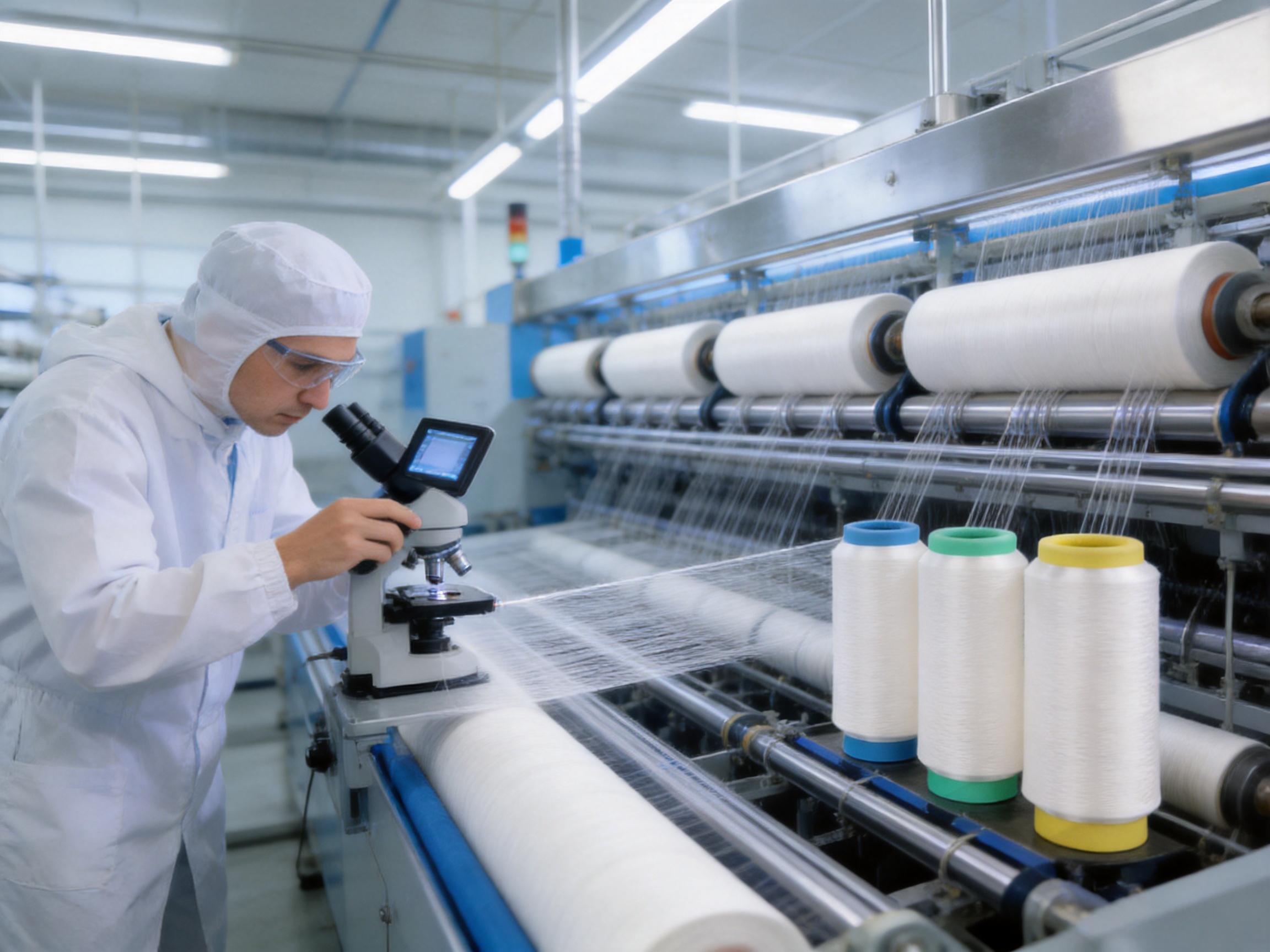
The performance of a functional yarn depends not only on its material formulation but also on the consistency of its manufacturing process. A yarn with excellent laboratory properties may not meet customer expectations if the package quality, denier uniformity, interlace, texturing, or winding consistency is unstable.
GC FIBER operates as a special textile factory with experience in research, development, production, and sales of functional and eco-oriented textile products. Its product range includes biodegradable yarn, low melting yarn, ECDP yarn, anti-static yarn, HDPE yarn, bio-component yarn, and polyester filament yarn. This broad product base supports knowledge across multiple polymer systems and textile functions.
Bi-component yarn production begins with reliable polymer supply and appropriate raw material preparation. The PE component and the second polymer must meet defined requirements for purity, melting behavior, viscosity, thermal response, and compatibility with the selected process. Stable raw materials help support consistent spinning and texturing performance.
Control over raw material supply enables the manufacturer to reduce variation and coordinate production more effectively. This is particularly important for customized products, where a small change in polymer characteristics can affect the final yarn's touch, strength, elongation, and processability.
Bi-component spinning requires precise control of the polymer streams and their arrangement within the filament. The spinning system must maintain stable temperature, pressure, flow, cooling, and take-up conditions. These controls help preserve the intended PE/PP or PE/NYLON cross-section.
Uniform filament formation is essential. Irregularities in the cross-section may produce variations in denier, surface appearance, strength, or texturing behavior. Continuous monitoring and experienced process technicians help maintain production stability.
Drawing changes the orientation and mechanical properties of the filament, while texturing creates the desired crimp and surface character. Both stages require controlled yarn tension, speed, temperature, and contact conditions.
Correct process settings help balance tenacity, elongation, bulk, elasticity, and hand feel. Excessive tension may reduce desired elongation, while insufficient control may create uneven texture or unstable package formation. The manufacturing team must adjust settings according to polymer combination and denier.
Even winding is important for downstream knitting and weaving. Packages should have stable shape, appropriate hardness, clean edges, and consistent unwinding behavior. Poor package quality can lead to tension fluctuation, yarn breaks, machine stoppages, and fabric defects.
Quality winding also helps protect the yarn during storage and transportation. For international orders, packaging must be planned to preserve the material from moisture, contamination, crushing, and other handling risks.
Functional yarn should be evaluated through a combination of physical inspection, laboratory testing, process monitoring, and customer feedback. Relevant checks may include denier, filament uniformity, tenacity, elongation, crimp, appearance, package build, oil content, and unwinding behavior.
When the yarn is intended for a specific fabric or garment, testing should also include knitting or weaving trials. A yarn's actual value is determined by how reliably it performs in production and how well the finished textile meets the customer's requirements.
Functional textile development requires more than routine production. It involves understanding polymer behavior, textile construction, consumer comfort, manufacturing economics, and application-specific performance. GC FIBER maintains a dedicated design and research and development department focused on special and functional eco-friendly textile products.
This research orientation supports the development of yarns beyond standard catalog products. Customers can cooperate with the technical team to discuss a target application, identify required properties, select an appropriate polymer combination, and establish a practical production specification.
For PE Texture DTY Yarn, research and development may involve adjusting denier, filament count, cross-section structure, texturing level, strength and elongation balance, surface touch, or compatibility with a particular textile process. The objective is to convert a general product concept into a stable yarn specification that can be reproduced at commercial scale.
Collaborative development is particularly useful for brands introducing a new cooling fabric, fabric mills seeking a differentiated yarn, and textile manufacturers replacing an existing material. Instead of selecting from a fixed list, customers can communicate the performance gap they need to solve.
The development process may include technical discussions, sample production, laboratory testing, fabric trials, garment evaluation, revisions, and final production confirmation. This step-by-step approach reduces the risk of selecting a yarn that performs well in isolation but does not meet the requirements of the finished product.
PE Texture DTY Yarn is available for custom and OEM projects. Customization may involve denier, filament count, cross-section structure, polymer combination, functional balance, color, package requirements, and production quantity, subject to technical feasibility and order confirmation.
Custom denier development can help customers match a particular fabric weight or machine setting. A fine yarn may be needed for lightweight next-to-skin clothing, while a thicker yarn may be preferred for upholstery, home textiles, or more structured fabrics.
Filament count can also influence hand feel, coverage, surface appearance, and processing behavior. The appropriate filament configuration should be selected together with the denier because the relationship between total denier and individual filament size affects the final textile result.
Cross-section customization provides another development path. A customer may prioritize a cool surface, improved abrasion resistance, enhanced strength, specific texture, or compatibility with a certain finishing process. PE/PP and PE/NYLON structures can be considered according to these priorities.
GC FIBER's production flexibility supports both smaller custom orders and larger-volume requirements. Multiple production lines and machines allow the company to organize different specifications while maintaining the capacity needed for commercial supply. Strong control over raw material sourcing and quality further supports continuity between development samples and production orders.
A dedicated professional team coordinates sales, research and development, design, production, and service. This integrated approach helps reduce communication gaps and keeps technical information aligned throughout the project. Customers can receive support from the initial inquiry through sampling, production, shipment, and follow-up.
For textile mills and brands, supply reliability is as important as product performance. A yarn must be available in consistent quality and delivered according to the production schedule. Variations in denier, texture, color, or mechanical behavior can affect fabric appearance and increase manufacturing costs.
GC FIBER's manufacturing approach emphasizes process coordination, raw material control, production monitoring, and quality management. These activities are intended to support stable yarn performance across different production lots. Customers should still confirm the required acceptance criteria before placing a commercial order.
Shanghai seaport is available for shipment arrangements, providing an established export route for international customers. Packing, documentation, lead time, minimum order quantity, and shipping terms should be confirmed according to the specific order.
Responsive service is another part of supply reliability. During custom projects, customers benefit from receiving updates on sampling, production progress, inspection, packing, and delivery. Clear communication helps buyers plan their own knitting, weaving, dyeing, garment, and logistics schedules.
The correct specification should be selected according to the intended product rather than denier alone. Buyers should consider the following factors:
Determine whether the final product will be worn directly against the skin, used during exercise, or placed in a home textile environment. Next-to-skin applications may require finer denier, softer finishing, and a carefully controlled fabric density.
Identify whether the yarn will be knitted, woven, or blended. Machine type, gauge, loom setting, yarn tension, and fabric density can influence which denier and filament count will perform best.
Consider tensile strength, elongation, abrasion, tear resistance, laundering, and expected service life. Sportswear and outdoor products may require a different structure from lightweight casualwear.
Define whether the priority is cool touch, breathability, moisture transfer, quick drying, or a combination of these properties. The yarn should be evaluated together with fabric design and finishing rather than as an isolated component.
Consider luster, surface texture, softness, bulk, drape, and color effect. The special cross-section and texturing level may affect each of these characteristics.
Confirm sample quantity, trial order volume, expected annual demand, delivery schedule, and repeat-order requirements. A production plan should be established before finalizing a custom specification.
A structured development procedure can help customers achieve a more predictable result.
First, define the target application and list the required properties. These may include cooling sensation, softness, strength, elongation, abrasion resistance, colorability, dimensional stability, and cost target.
Second, select a preliminary denier and polymer combination. PE/PP and PE/NYLON should be compared according to the intended application and processing conditions.
Third, request samples for yarn inspection and fabric trials. Test the yarn on the actual knitting or weaving equipment whenever possible, because laboratory results alone cannot reveal every processing issue.
Fourth, evaluate the finished fabric. Examine hand feel, cooling sensation, appearance, strength, stretch recovery, shrinkage, pilling, laundering behavior, and garment comfort.
Fifth, review the results with the technical team and adjust the specification if necessary. Changes may involve denier, filament count, cross-section design, texturing conditions, or blend ratio.
Finally, approve a production standard that defines the key quality requirements, packaging, inspection procedures, and delivery conditions. This provides a reference for repeat orders and helps maintain consistency over time.
PE Texture DTY Yarn is a synthetic functional yarn and should be evaluated within the complete environmental profile of the finished product. Material selection, product lifespan, manufacturing efficiency, washing behavior, recycling possibilities, and end-of-life management all influence environmental impact.
A durable textile that remains useful for a longer period may reduce the need for frequent replacement. Good tenacity and elongation can support this objective when the yarn is incorporated into a suitable fabric. Lightweight construction may also reduce material consumption in selected applications, although this should be balanced against durability and performance requirements.
GC FIBER's wider product portfolio includes biodegradable yarn, bio-component yarn, low melting yarn, anti-static yarn, and other special textile materials. This broader research direction demonstrates an interest in developing functional and environmentally oriented textile solutions. Customers seeking a specific sustainability target should discuss the applicable material composition, certifications, testing, and production requirements before placing an order.
| Denier | Potential Textile Direction | Development Considerations |
|---|---|---|
| 30D | Fine summer apparel, lightweight inner layers, delicate knitted fabrics | Focus on softness, light weight, coverage, and careful machine settings |
| 40D | Lightweight sportswear, casual apparel, blended fabrics | Balance comfort, strength, appearance, and production efficiency |
| 50D | General apparel, activewear, bedding, and home textiles | Versatile option for balanced fabric body and functional performance |
| 75D | Structured apparel, durable sports fabrics, woven textiles, home products | Greater coverage and fabric body with application-specific finishing |
This table provides general guidance rather than fixed application limits. The same denier may be used in different products depending on fabric density, blending, machine configuration, and customer requirements.
Working with a specialist can provide advantages over purchasing a standard commodity yarn from a supplier with limited development capability. Functional yarn projects often require technical communication, sampling, cross-section design, process adjustment, and application testing. These activities are easier to coordinate when the manufacturer has relevant equipment and experience.
GC FIBER's experience in special textile production supports a more integrated development model. The company researches, develops, produces, and sells functional textile materials rather than focusing only on distribution. This allows technical knowledge to be carried from raw material selection through yarn production and customer support.
The company's manufacturing strengths include multiple production lines and machines, control of raw material supply, quality management, customized production, and cooperation with customers on new materials. Its professional teams cover sales, research and development, design, and production, helping customers manage projects from concept to delivery.
For international buyers, this combination of production and service can reduce the need to coordinate several independent suppliers. A customer can discuss the functional target, receive sample support, arrange production, and manage shipment through one manufacturing partner.
The most important competitive advantage is not simply the availability of a PE-based yarn. It is the combination of cooling touch, bi-component design, good mechanical properties, several denier choices, customized production, and manufacturing support. This combination makes the product suitable for customers looking for differentiation rather than a basic commodity input.
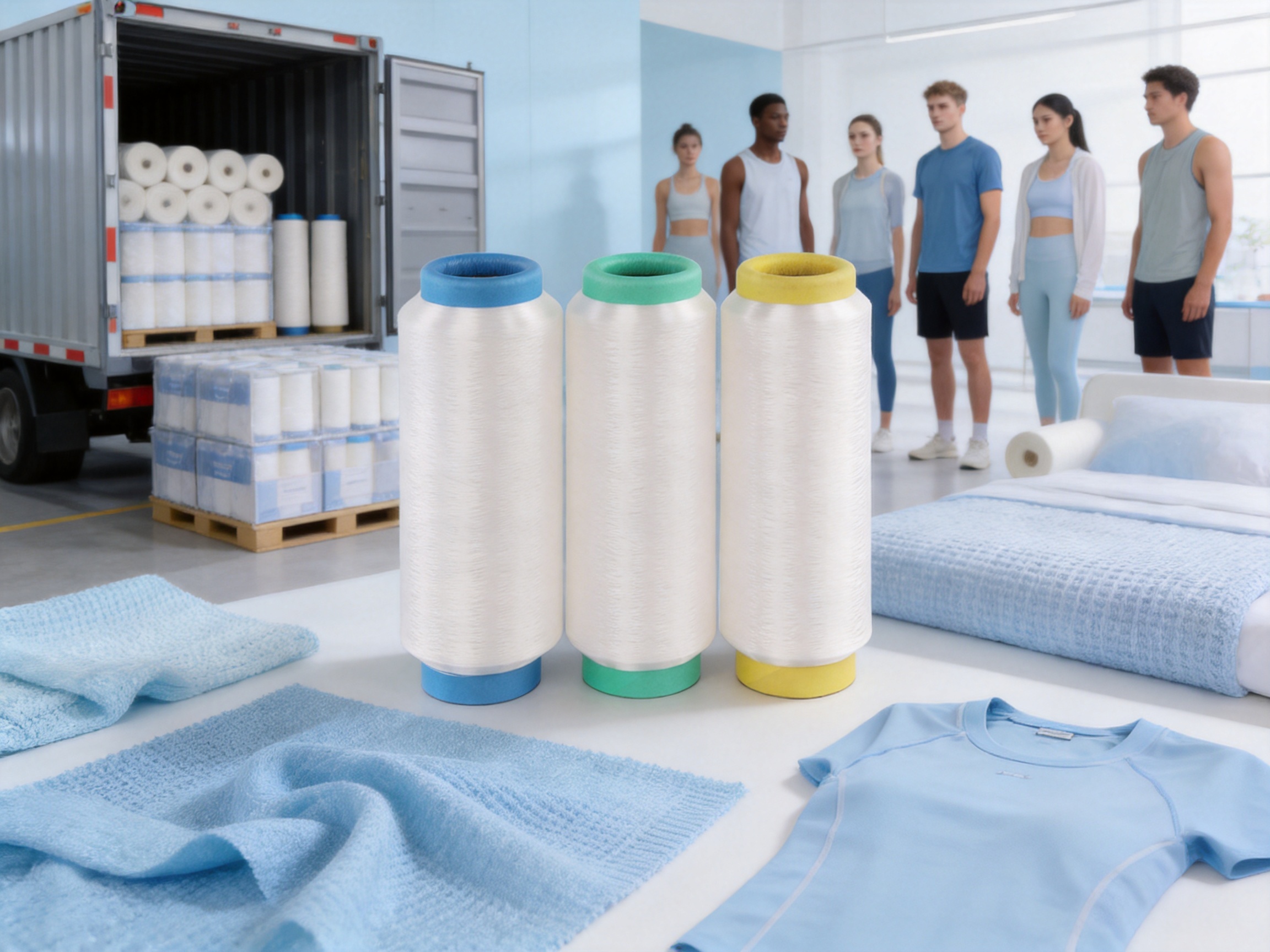
PE Texture DTY Yarn is a draw textured bi-component filament yarn featuring a special PE/PP or PE/NYLON cross-section. It is designed to provide a cooling touch, good tenacity, balanced elongation, and flexible textile processing performance.
The standard options are 30D, 40D, 50D, and 75D. Other specifications may be discussed for custom production according to technical feasibility and order requirements.
The cooling sensation is associated with the PE-based component, the special cross-section, surface contact, and heat and moisture transfer behavior. The final effect also depends on fabric construction, finishing, garment design, and environmental conditions.
Yes. Its cooling touch, good tenacity, and elongation make it suitable for sportswear and activewear development. The final fabric should be tested for stretch recovery, moisture management, abrasion, laundering, and comfort.
Yes. The yarn can be considered for sheets, pillowcases, mattress covers, blankets, and other home textile products where a cool surface feel and durable performance are desired.
Both are bi-component structures, but they may provide different balances of touch, strength, abrasion resistance, processing behavior, and durability. The appropriate combination should be selected according to the end-use requirements and confirmed through samples.
It can be developed for both knitted and woven fabrics. Machine settings, yarn tension, fabric construction, and finishing conditions should be evaluated during the trial stage.
Yes. It may be blended with polyester, nylon, elastane, regenerated fibers, or other functional yarns. The blend ratio should be determined through fabric trials because different fibers may respond differently to dyeing and finishing.
Yes. Customization may include denier, filament count, cross-section structure, polymer combination, functional properties, and other technical requirements. Production is available by order after specification and feasibility confirmation.
Yes. GC FIBER provides OEM and customized yarn and fiber solutions. Its sales, research and development, design, and production teams can cooperate with customers from initial specification through production and delivery.
Buyers should request samples, review technical information, conduct knitting or weaving trials, and test the finished fabric for cooling sensation, strength, elongation, appearance, dimensional stability, laundering, and end-use comfort.
Shanghai seaport is available for shipment arrangements. Exact shipping terms, packaging, lead time, and documentation should be confirmed for each order.
No. The yarn provides a functional starting point, but the final cooling performance depends on fabric construction, yarn density, finishing, garment design, and use conditions. Application testing remains important.
PE Texture DTY Yarn combines a cooling touch, good tenacity, balanced elongation, textured filament performance, and a special bi-component cross-section. Available in 30D, 40D, 50D, and 75D, it provides a practical material platform for summer apparel, sportswear, activewear, bedding, home textiles, knitted fabrics, woven fabrics, and blended textile products.
Its PE/PP and PE/NYLON structures provide flexibility for customers seeking different balances of comfort, strength, durability, and processing performance. Compared with conventional single-component or standard round-section yarns, the product offers greater potential for functional differentiation and customized fabric development.
The product is supported by GC FIBER's experience as a special textile manufacturer, including research and development, specialized production, raw material control, multiple production lines, quality management, OEM service, and customer collaboration. This manufacturing foundation enables the company to support both standard requirements and customized projects.
For textile manufacturers, fabric mills, apparel brands, and home textile developers, PE Texture DTY Yarn can serve as a useful solution when comfort and performance must be combined in one material. A carefully planned sample and fabric evaluation will help customers select the right denier, polymer combination, cross-section, and finishing process for their intended application.
1. Textile Institute, Textile Terms and Definitions, technical reference on yarn structures and textile processing.
2. Textile Research Journal, general research literature concerning draw textured yarns, filament behavior, and fabric performance.
3. International Organization for Standardization, standards for textile yarn testing, tensile properties, elongation, and textile conditioning.
4. American Society for Testing and Materials, standard methods for evaluating textile yarn strength, elongation, abrasion, and fabric performance.
5. Polymer materials engineering references covering polyethylene, polypropylene, nylon, bi-component fibers, and polymer processing.
6. Technical information supplied for PE Texture DTY Yarn, including available deniers, cross-section options, product features, applications, and customization capabilities.
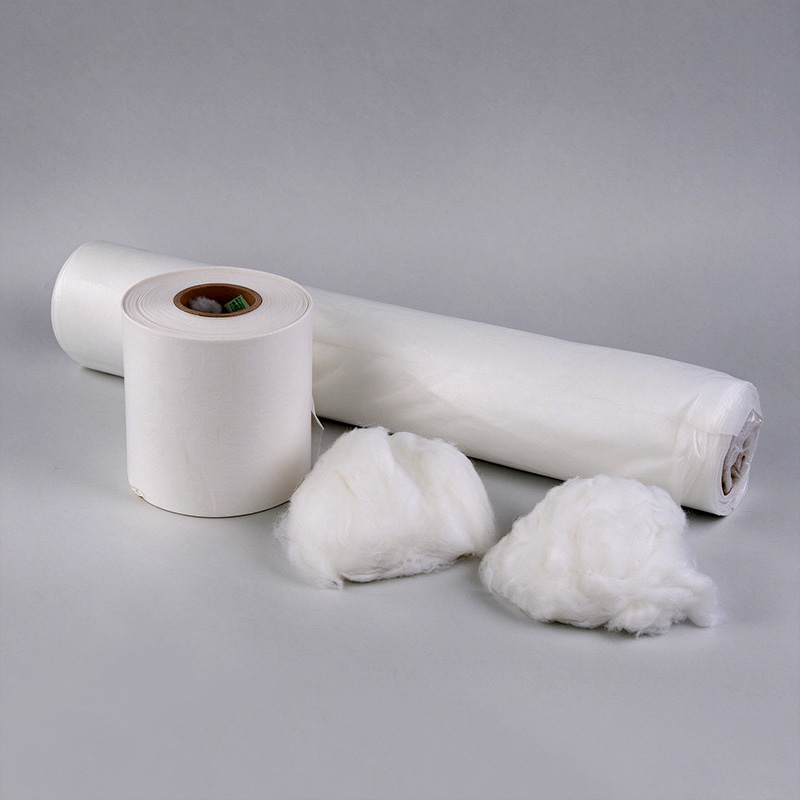
Made of PBS (Polybutylene Succinate), fully biodegradable.Features:1.Home compostable2.Raw material: PBS Polybutylene Su...
READ MOREPlease fill out the form below and our team will contact you as soon as possible.
Addres: No.66 Qiaogang Road, Haian, Nantong City, Jiangsu Province, China
E-mail: service@gcfiber.com admin@gcfiber.com
Copyright ? GC FIBER All Rights Reserved. Eco-Friendly Textile Products Manufacturer Biodegradable Yarn Company