English
 中文简体
Made of PBS (Polybutylene Succinate), fully biodegradable.Features:1.Home compostable2.Raw material: PBS Polybutylene Su...
READ MORE
Content
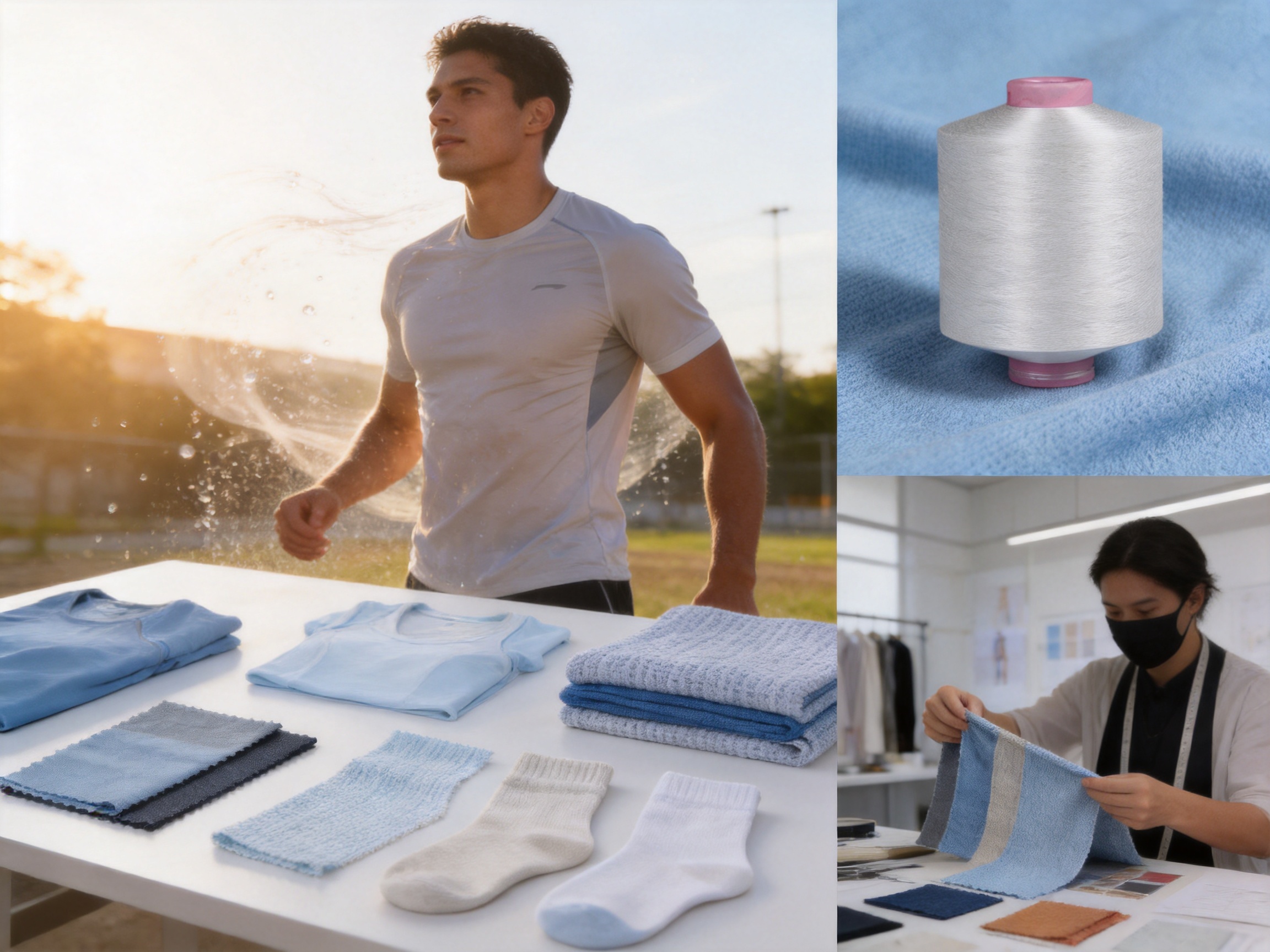
PE/PP bi-component yarn is a specialized functional filament yarn that combines polyethylene and polypropylene in a single yarn structure. By bringing two different polymer materials together within one filament system, this yarn is designed to provide a distinctive balance of lightweight performance, cooling touch, soft handle, micro-filament fineness, and functional textile value.
The yarn is suitable for both weaving and knitting and can be supplied in several commonly used specifications, including DTY 75D, 100D, and 150D. It is intended for manufacturers of sportswear, innerwear, summer apparel, socks, base layers, home textiles, and other applications that require a comfortable, light, and performance-oriented fabric.
Unlike a conventional single-polymer yarn, PE/PP bi-component yarn uses the different physical characteristics of polyethylene and polypropylene as part of one coordinated filament design. The result is a yarn that can be engineered for a cool hand-feel, low fabric weight, good softness, and practical processing performance.
The product is manufactured by GC FIBER, a Chinese special textile factory established in 2006. The company researches, develops, produces, and sells special and functional eco-friendly textile products, including biodegradable yarn, low melting yarn, ECDP yarn, anti-static yarn, HDPE yarn, bio-component yarn, and polyester filament yarn. Its production and development capabilities also support customized yarn projects and new material cooperation.
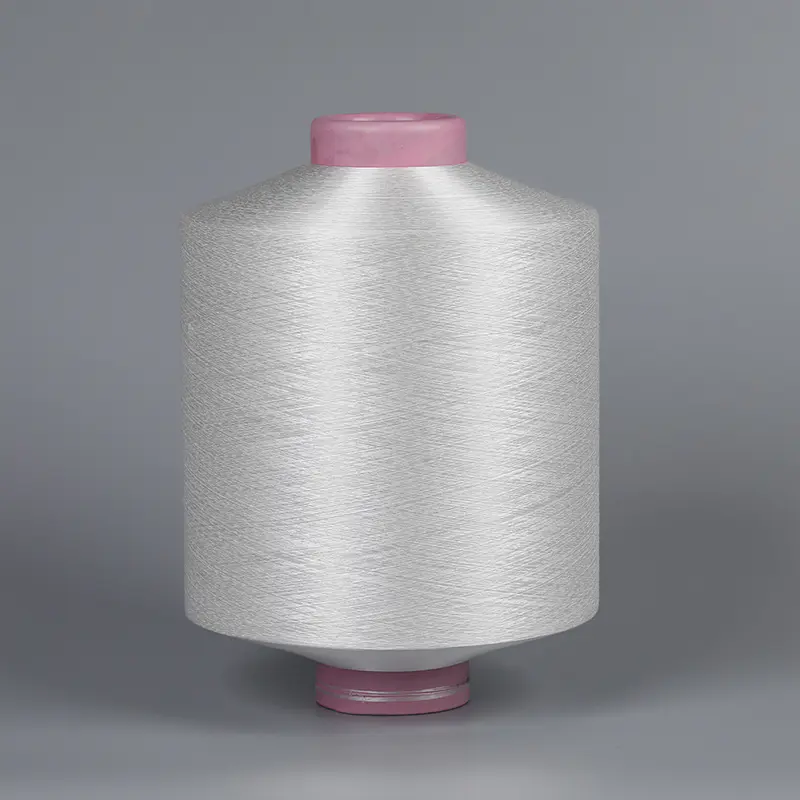
PE/PP bio-component Yarn
PE/PP bi-component yarn is made from two different polyolefin materials: polyethylene, commonly abbreviated as PE, and polypropylene, commonly abbreviated as PP. These polymers are combined within a specially designed filament structure rather than simply being blended as separate fibers.
The term “bi-component” refers to the presence of two polymer components in the same filament or yarn construction. Depending on the requested design and manufacturing configuration, the materials may be arranged in a way that creates a controlled surface, a composite cross-section, or a fine multi-component filament structure. The final arrangement influences softness, moisture interaction, thermal sensation, dyeing behavior, strength, and fabric appearance.
In this product, the PE and PP components are selected to complement one another. Polyethylene is associated with a low-density, smooth, and comfortable surface character, while polypropylene is valued for its low moisture regain, low density, chemical resistance, and useful mechanical performance. When engineered together, the two materials can support a functional yarn designed for lightweight and comfort-driven textiles.
The yarn is not simply a standard PE yarn or a standard PP yarn. Its value comes from the combination of materials and the control of filament fineness, yarn construction, texture, and processing conditions. This makes the product suitable for manufacturers looking for performance characteristics that are difficult to achieve with an ordinary single-component filament.
One of the central features of the product is its micro-filament structure. Fine filaments can create a smoother fabric surface and a softer contact sensation than coarser filament constructions. They also allow textile designers to develop lightweight fabrics with a refined appearance and comfortable drape.
Micro-filament yarns can increase the number of contact points between the yarn and the surrounding air, skin, or finishing system. In a finished fabric, this can influence softness, surface smoothness, light diffusion, and the way moisture is spread across the textile surface.
A fine filament structure may also help manufacturers produce delicate knitted fabrics, closely constructed woven fabrics, and performance materials that require a combination of light weight and coverage. The suitability of the final fabric depends on factors such as filament count, yarn denier, fabric construction, finishing treatment, and machine settings.
The main technical distinction between PE/PP bi-component yarn and many conventional yarns is the interaction of the two polymer components. Each component contributes its own physical characteristics to the combined structure.
Polyethylene can contribute a smooth and pleasant surface character. Polypropylene can support low density, moisture-management potential, and resistance to many common chemicals. Their combined use provides a foundation for a yarn intended for summer garments, sportswear, intimate apparel, and other comfort-focused products.
The exact performance of the yarn depends on the grade of polymer, component ratio, cross-sectional design, spinning conditions, texturing conditions, and any functional additives used. For this reason, manufacturers should evaluate product samples under their intended knitting, weaving, dyeing, finishing, and end-use conditions before confirming large-scale production.
PE and PP are both low-density polymers compared with many conventional textile materials. This provides an important advantage when the objective is to reduce the weight of a finished fabric while maintaining suitable coverage and visual fullness.
A lightweight yarn can help apparel manufacturers create garments that feel less bulky during wear. This is particularly useful for summer clothing, athletic garments, base layers, socks, and travel apparel. Lower fabric weight may also contribute to easier packing, faster drying, and improved comfort in warm conditions.
Lightness should not be considered only as a reduction in material quantity. The yarn structure, filament fineness, fabric density, and finishing process must work together to ensure that the final product still provides adequate opacity, durability, dimensional stability, and appearance.
Compared with heavier conventional fibers, PE/PP bi-component yarn gives product developers additional flexibility when designing thin or lightweight textiles. It can be used as part of a single-fiber construction or combined with other yarns to create a balanced fabric with specific stretch, strength, appearance, or moisture-management characteristics.
The yarn is designed to provide a cooling functional effect. The cool sensation is influenced by the surface properties of the yarn, the thermal behavior of the polymer components, the fabric structure, and the way the material transfers heat at the skin-fabric interface.
When a textile feels cool to the touch, it can provide an immediate perception of freshness. This is valuable in warm-weather apparel, sportswear, sleepwear, underwear, socks, and fabrics designed for outdoor use. The effect is especially relevant when the fabric is thin, smooth, and in close contact with the body.
A cooling sensation should be distinguished from active refrigeration. PE/PP bi-component yarn does not mechanically cool the body. Instead, its material and surface characteristics can support heat transfer and a cool-touch sensation under appropriate conditions.
Fabric construction has a significant influence on the result. A tight woven structure, open knitted structure, brushed surface, finishing treatment, and garment fit can all change the wearer's perception. Product developers should therefore assess the yarn in the exact fabric construction intended for commercial use.
The combination of fine filaments and carefully selected polymer components gives PE/PP bi-component yarn a soft and smooth hand-feel. This characteristic is important for garments worn directly against the skin.
A comfortable hand-feel can improve the perceived quality of sportswear, innerwear, base layers, summer apparel, and legwear. It may also make the yarn suitable for selected home textile products where smoothness and lightness are important.
Hand-feel is affected by yarn texturing, filament arrangement, fabric density, knitting or weaving tension, dyeing, washing, and finishing. The yarn can be developed as part of a broader fabric engineering program in which the manufacturer adjusts the construction to achieve the desired softness, loft, drape, and recovery.
Compared with coarse or highly rigid filament yarns, a micro-filament PE/PP construction can provide a more refined surface. This gives designers an opportunity to develop fabrics that feel smooth without relying solely on heavy chemical softeners.
“Good handle” refers to the overall way a fabric feels when touched, bent, compressed, or moved. It includes softness, smoothness, flexibility, fullness, drape, and surface character.
PE/PP bi-component yarn is designed to support a balanced fabric handle. It can be used in lightweight fabrics that require a combination of softness and structural stability. With suitable processing, the yarn may contribute to fabrics that are comfortable but not excessively limp.
For apparel manufacturers, fabric handle influences consumer perception at the point of purchase. A fabric that feels smooth, light, and comfortable can strengthen the product’s quality impression. The final result will depend on the selected denier, filament count, fabric construction, and finishing recipe.
The product can be produced with anti-bacterial functionality for applications that require improved hygiene performance and odor-control support. Depending on the specific production specification, this functionality may be achieved through the use of suitable functional additives and controlled manufacturing processes.
Anti-bacterial yarn is relevant to sportswear, socks, base layers, innerwear, medical-related textiles, and other products exposed to sweat, moisture, and repeated use. By helping inhibit the growth of selected bacteria on the textile surface, the yarn can contribute to a cleaner and more comfortable wearing experience.
Anti-bacterial performance should always be verified according to the target market, applicable test method, and intended product claim. Results may vary according to additive concentration, fabric construction, washing conditions, finishing, and the microorganisms evaluated.
Manufacturers should not treat anti-bacterial functionality as a substitute for normal textile hygiene or laundering. Instead, it should be considered an added performance feature that can support odor management and textile cleanliness when properly specified and tested.
A single-component yarn is limited by the inherent characteristics of one polymer. A bi-component structure provides a broader design platform because the manufacturer can use two materials with different physical properties.
PE/PP bi-component yarn is therefore suitable for customers who need more than basic filament performance. The combination can be engineered around comfort, low weight, cool touch, surface smoothness, and functional treatment requirements.
This does not mean that the yarn is automatically superior for every textile application. Polyester, nylon, viscose, acrylic, and other materials remain highly valuable for applications requiring specific dyeing, strength, elasticity, moisture, or heat-resistance properties. The advantage of PE/PP bi-component yarn is its suitability for a defined group of lightweight, skin-contact, and cooling-oriented textile products.
Polyolefin materials generally have low density. This creates an opportunity to produce fabrics that are lighter than comparable constructions made from higher-density fibers.
Lower density can be especially valuable for activewear and travel clothing, where consumers appreciate reduced garment weight. It can also help brands design summer products that provide coverage without creating a heavy or hot feeling.
When compared with a conventional yarn at the same nominal denier, actual fabric weight, volume, coverage, and handle still depend on filament construction and fabric engineering. Therefore, the comparison should be made using finished fabrics rather than yarn labels alone.
The micro-filament structure gives PE/PP bi-component yarn an important comfort advantage over many standard coarse-filament products. Fine filaments can produce a smoother surface and reduce the perception of harshness during skin contact.
For products such as base layers, underwear, sports shirts, and socks, this surface quality may be a decisive factor. A softer fabric can improve wearability during long periods of use, especially when the garment is exposed to movement and perspiration.
Many textile markets are moving toward materials that provide a clear comfort benefit in warm environments. A cool-touch yarn gives manufacturers a way to develop products with a functional story beyond basic softness or appearance.
PE/PP bi-component yarn can support summer collections, cooling innerwear, outdoor sports products, and lightweight bedding or home textile concepts. Its cooling-oriented positioning can help differentiate a fabric in a competitive market.
The product can be developed with functional properties such as anti-bacterial performance, subject to technical confirmation and testing. This creates opportunities for customers who need a yarn platform that can support more than one performance feature.
Functional additives must be selected carefully. They need to be compatible with the polymer system, the spinning process, the desired filament quality, and the end-use requirements. Poorly selected additives can affect spinnability, color, strength, surface quality, or long-term performance.
PE/PP bi-component yarn can be used in both weaving and knitting. This broad processing suitability allows textile manufacturers to use the material across multiple product categories.
In knitting, the yarn can be used for close-to-skin garments, sportswear, socks, underwear, and flexible lightweight fabrics. In weaving, it can contribute to shirts, linings, technical fabrics, summer fabrics, and other constructions requiring surface smoothness and light weight.
Processing conditions should be adjusted according to the selected denier, yarn texturing, machine type, stitch or weave structure, and desired fabric appearance. A technical sample trial is recommended before mass production.
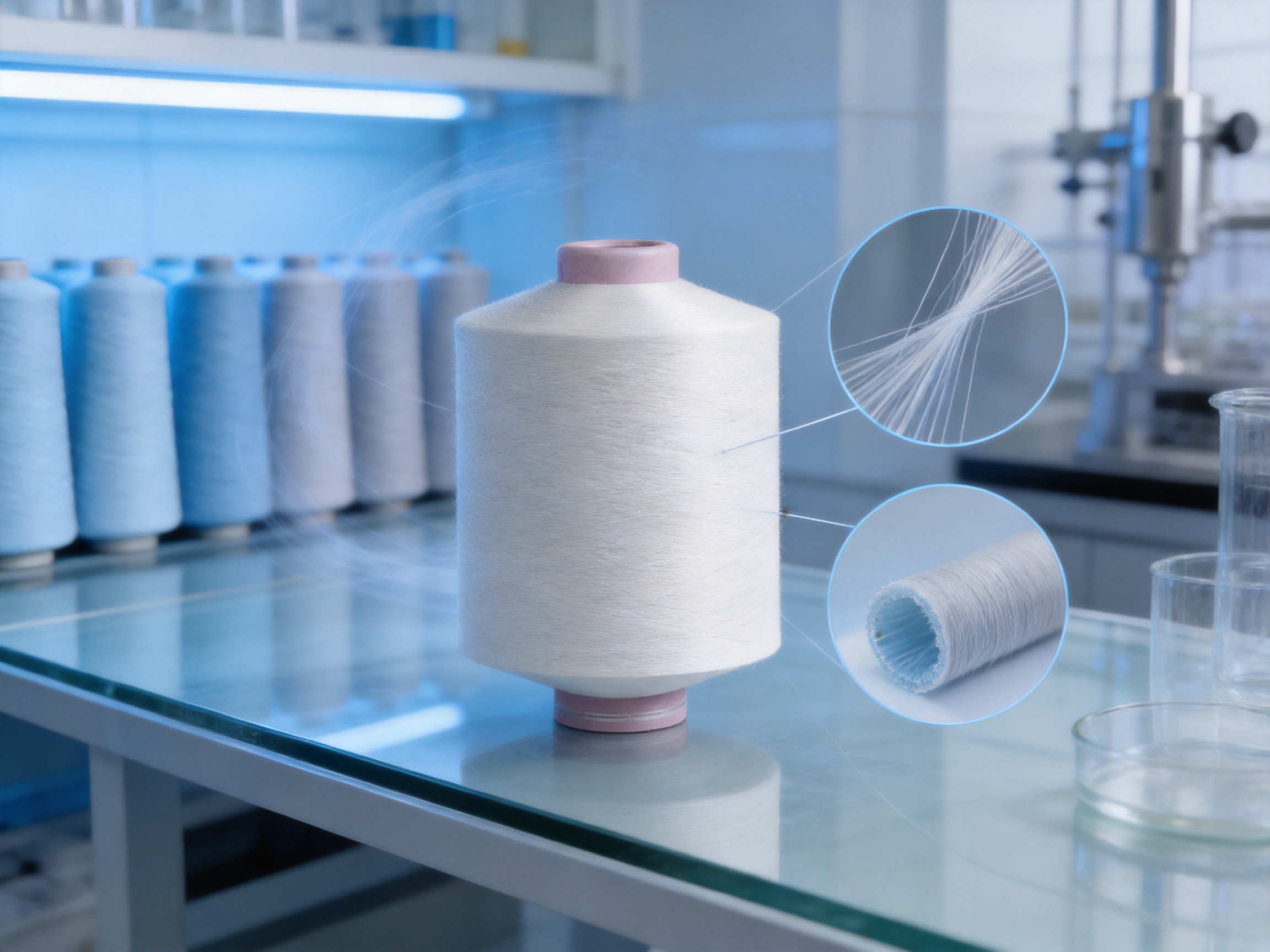
The standard product range includes DTY 75D, DTY 100D, and DTY 150D. These specifications provide a practical starting point for customers who need different levels of fineness, coverage, and fabric body.
| Specification | General Positioning | Potential Applications | Selection Considerations |
|---|---|---|---|
| DTY 75D | Fine and lightweight option | Innerwear, thin sportswear, summer garments, fine knitted fabrics | Suitable when softness, lightness, and a delicate surface are priorities |
| DTY 100D | Balanced all-purpose option | Sportswear, base layers, socks, woven and knitted apparel | Useful when a balance of coverage, softness, and fabric stability is required |
| DTY 150D | Higher body and coverage option | Structured apparel, heavier knitted fabrics, selected technical textiles | Suitable when increased fabric substance and coverage are needed |
| Customized specification | Application-specific solution | Special fabrics, OEM projects, functional textiles, new material development | Can be discussed according to denier, filament count, cross-section, and functional requirements |
Denier is only one part of yarn selection. Customers should also evaluate filament count, cross-sectional structure, texture, elongation, crimp, strength, uniformity, and compatibility with their production equipment.
The correct specification depends on the target fabric. A fine 75D yarn may be preferred for a light and smooth base layer, while 150D may provide more body for a fabric requiring greater coverage. The 100D option can provide a middle position for a wide variety of woven and knitted products.
Customers with special requirements can discuss customized production. Possible development factors include denier, filament count, cross-section, functional additives, surface effect, and performance priorities. Custom development should be based on technical specifications, sample evaluation, and agreed quality standards.
Consistent raw materials are the foundation of consistent bi-component yarn. The PE and PP materials must be selected according to melt-flow characteristics, thermal behavior, compatibility, purity, and the intended filament design.
Raw material control is particularly important for a two-polymer yarn because the components must process together under carefully coordinated conditions. Differences in viscosity, melting behavior, or thermal stability can affect the uniformity of the composite filament.
GC FIBER emphasizes control over raw material supply and quality as part of its production strength. This supports more stable manufacturing and makes it easier to develop customized products for specific customer requirements.
During production, the selected polymer materials are prepared and melted under controlled conditions. Temperature, residence time, pressure, filtration, and material cleanliness are all important factors.
Each polymer must reach a suitable processing state without excessive degradation. Overheating or extended residence time can affect molecular stability and may lead to changes in yarn strength, color, viscosity, or spinning behavior.
The two polymer streams are then prepared for combination according to the required bi-component structure. The process must maintain a stable relationship between the PE and PP components from the melting stage through extrusion and spinning.
The composite filament is formed through specialized spinning equipment and a carefully designed spinneret. The spinneret controls the shape and arrangement of the polymer components as they leave the spinning pack.
Cross-sectional design is a critical factor in bi-component yarn performance. A controlled structure helps define how the two polymers are distributed within the filament and how the filament behaves during cooling, drawing, texturing, and fabric formation.
Uniformity at this stage is essential. Variations in component distribution can influence filament diameter, surface quality, shrinkage, strength, elongation, and the finished fabric’s appearance.
After extrusion, the newly formed filaments must be cooled and solidified under controlled conditions. Air flow, cooling uniformity, spinning speed, and environmental stability all influence filament quality.
Effective cooling helps the filament retain the intended cross-sectional structure. Uneven cooling may create variations in orientation or physical properties, which can later affect yarn uniformity and fabric performance.
Because PE and PP have different thermal characteristics, process control is particularly important in a bi-component system. The cooling conditions must support stable formation of the combined filament without damaging the desired structure.
Drawing aligns the polymer molecules and contributes to the mechanical properties of the filament. The drawing ratio and temperature must be controlled to achieve the desired balance of strength, elongation, stability, and softness.
Excessive drawing can produce a filament that is too rigid or has insufficient elongation. Insufficient drawing may lead to poor dimensional stability, uneven performance, or unsuitable yarn formation. The optimum process depends on the selected polymer grades and the required product specification.
The available product specifications include DTY, or draw textured yarn. Texturing introduces controlled crimp and bulk into the filament yarn, improving its suitability for apparel and other textile applications.
Texturing can influence stretch behavior, coverage, softness, surface character, and fabric volume. The texturing process must be matched to the PE/PP composite structure to prevent excessive filament damage and to maintain stable yarn quality.
For customers, DTY offers practical processing advantages because it can provide a more textile-like character than a completely flat filament. The final fabric may show improved softness and a more comfortable hand while retaining the advantages of the low-density polymer system.
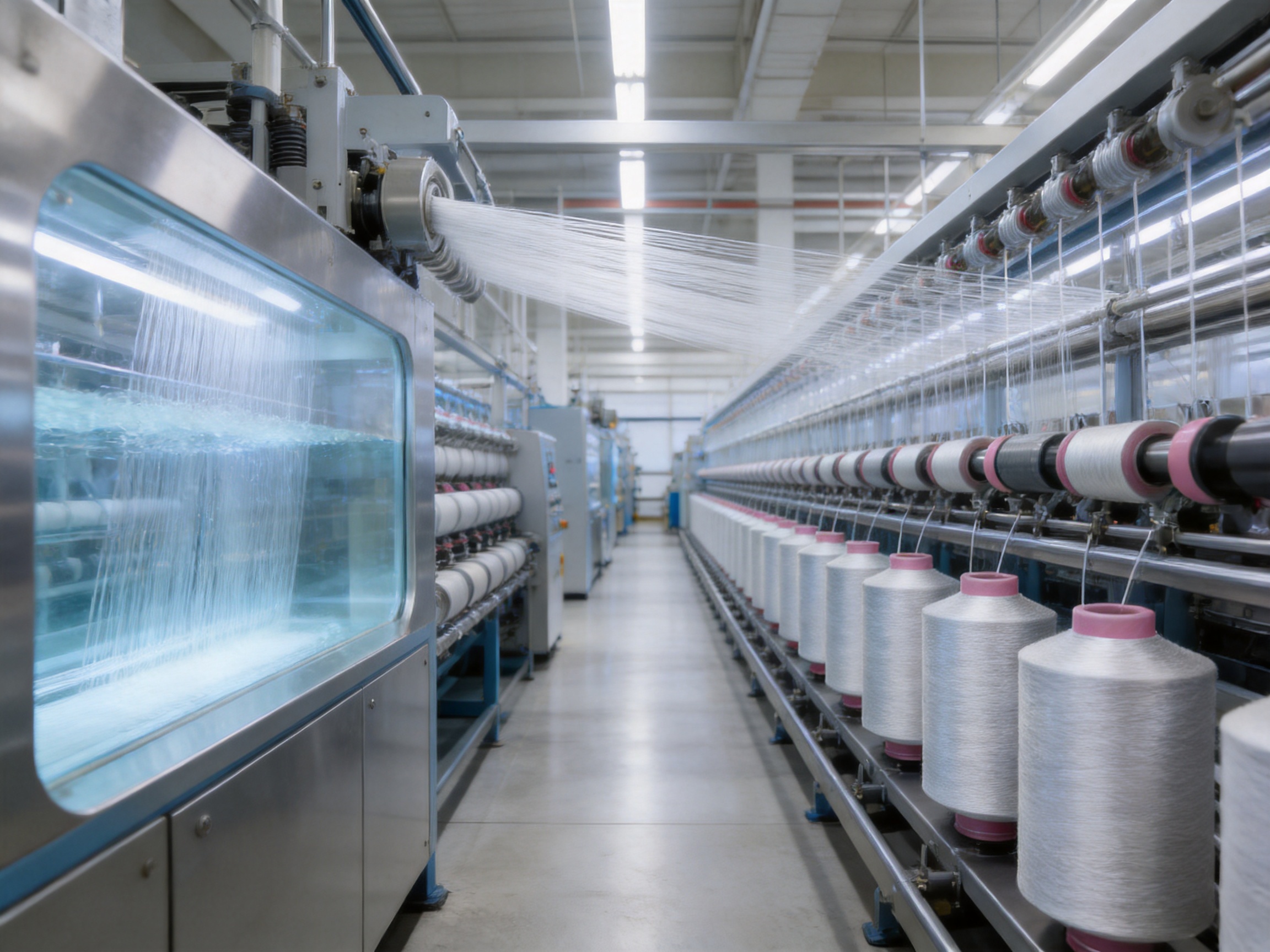
After texturing and quality inspection, the yarn is wound onto packages suitable for storage, transportation, and downstream processing. Package density, yarn tension, winding precision, and package stability affect how efficiently the customer can use the material.
A well-formed package helps reduce unwinding problems, yarn breaks, tension variation, and machine stoppages. Stable winding is especially important for high-speed knitting and weaving operations.
Quality control may include inspection of denier, filament uniformity, appearance, strength, elongation, crimp, shrinkage, winding condition, and functional performance. The exact inspection program should be matched to the product specification and customer requirements.
For anti-bacterial products, performance should be assessed according to an agreed test method. For cooling-oriented products, evaluation may include instrumental testing and sensory assessment under defined conditions. Testing should be conducted on both yarn and finished fabric where appropriate.
Quality control is most effective when it is integrated throughout the process rather than limited to final inspection. Raw material control, process monitoring, equipment maintenance, and production records all contribute to more stable quality.
GC FIBER has operated as a special textile factory since 2006. Its product portfolio includes multiple categories of functional and specialty yarns, giving the company experience in developing materials for different performance requirements.
This broader product knowledge is valuable for customers because a single project may require several different yarn types. A fabric development program might combine PE/PP bi-component yarn with polyester filament yarn, anti-static yarn, low melting yarn, or another specialty material.
The company’s experience across several product categories also supports technical comparison. Customers can discuss whether a bi-component yarn, polyester-based yarn, HDPE yarn, or another construction is most suitable for their intended application.
The company maintains a Design and R&D department focused on special and functional eco-friendly textile products. This development capability supports projects that go beyond standard catalog specifications.
Customers can cooperate with the technical team to translate a product concept into a practical yarn solution. Development discussions may address fabric weight, cooling sensation, softness, anti-bacterial requirements, filament fineness, process compatibility, and end-use performance.
Collaborative development is especially useful when a customer has a target fabric but does not yet have a finalized yarn specification. In such cases, yarn samples and fabric trials can be used to compare different structures and processing options.
Multiple production lines and machines provide flexibility for both customized and larger-volume projects. This is important because textile customers may have different order sizes, development stages, and delivery requirements.
A new product may begin with a small sample or pilot order before moving into regular production. The ability to support this progression can reduce development barriers and allow customers to evaluate commercial potential before committing to higher volumes.
For established products, production flexibility helps accommodate repeat orders and larger volume requirements. Capacity planning, raw material preparation, machine allocation, and quality monitoring can be coordinated according to the customer’s schedule.
Successful specialty yarn projects require cooperation between sales, research and development, design, production, quality control, and logistics. GC FIBER uses a diversified professional team to support projects from initial specification through delivery.
The sales team can collect application information and coordinate communication. The R&D team can evaluate material and structure options. Production personnel can organize manufacturing conditions, while quality and logistics teams support inspection and shipment.
This integrated approach reduces the risk of misunderstanding technical requirements. It also provides customers with a clearer path from concept development to commercial supply.
Specialty yarn orders often require more communication than standard commodity products. Customers may need updates about sample preparation, technical confirmation, production scheduling, inspection, packaging, and shipment.
GC FIBER provides dedicated support and all-weather tracking service throughout the custom and OEM production process. Regular communication helps customers monitor progress and respond quickly when technical or scheduling decisions are required.
Sportswear requires a combination of comfort, lightness, breathability, movement freedom, and durability. PE/PP bi-component yarn can support these requirements through its lightweight structure, smooth hand-feel, and cooling-oriented performance.
It may be used in shirts, training tops, running apparel, cycling products, lightweight jackets, and sports underwear. For active garments, the fabric construction should be selected to support moisture transfer, drying speed, stretch, and body movement.
Innerwear and base layers remain in close contact with the skin, making softness and surface comfort especially important. The micro-filament structure can provide a smooth touch, while the cooling effect may improve comfort during warm weather or physical activity.
Anti-bacterial functionality may also be relevant to these products, particularly where odor management and repeated wear are important. Any such claim should be supported by appropriate testing under the intended washing and usage conditions.
Summer apparel benefits from light fabric weight, smooth surface quality, and cool-touch performance. PE/PP bi-component yarn can be used for shirts, lightweight dresses, casual tops, skirts, and other warm-weather clothing.
The yarn can be knitted into soft jersey fabrics or woven into lightweight constructions. Fabric designers can adjust density, texture, and finishing to create different levels of drape, opacity, and surface appearance.
Socks and legwear require skin comfort, low weight, abrasion resistance, and effective management of the warm and humid microclimate around the feet. A PE/PP yarn may be used alone or blended with other yarns to achieve a balanced performance profile.
The suitability of the yarn will depend on the sock construction, machine gauge, reinforcement areas, elastic components, and finishing process. Anti-bacterial versions may be considered for products where odor-control performance is a key selling point.
In weaving, PE/PP bi-component yarn can be used for lightweight apparel fabrics, linings, technical fabrics, and selected home textile constructions. Warp and weft settings should be optimized to manage yarn tension and fabric stability.
The yarn’s smooth surface can support a clean fabric appearance. The selected denier and filament count will influence coverage, drape, luster, and fabric body.
Knitting provides opportunities to use the yarn in flexible, soft, and close-fitting products. Circular knitting, warp knitting, and other suitable knitting methods may be considered depending on the yarn specification and fabric design.
The fabric developer should evaluate loop formation, yarn tension, surface uniformity, dimensional stability, and recovery after washing. A knitting trial helps establish the appropriate machine settings and finishing conditions.
Not every textile project can be served by a standard yarn. Different brands, mills, and fabric manufacturers may require special denier, filament count, cross-section, cooling level, anti-bacterial performance, or processing behavior.
GC FIBER offers OEM and customized yarn and fiber solutions based on customer specifications. The development process can begin with a technical discussion covering the target fabric, end-use application, production equipment, performance priorities, expected order quantity, and quality requirements.
Denier influences yarn fineness, coverage, fabric weight, and appearance. Filament count affects surface smoothness, bulk, handle, and the number of filaments available to create a fine textile structure.
By adjusting these factors, the manufacturer can help customers develop a yarn suited to a thin base layer, a soft knitted garment, a more substantial fabric, or a technical textile construction.
The cross-sectional design determines how the PE and PP components are arranged within the filament. It can influence surface behavior, heat transfer, softness, strength, and processing characteristics.
Special cross-sectional requirements should be discussed during the early development stage because they may affect spinneret design, process conditions, equipment selection, and minimum order considerations.
Customers may request additional functions such as anti-bacterial performance or other specialty characteristics. Functional development should be approached systematically, beginning with the required performance level and applicable testing standard.
The development team can then evaluate material compatibility, additive selection, production conditions, and potential effects on yarn appearance or physical properties. Samples should be tested in the final fabric because a yarn-level result may not fully predict garment performance.
Production flexibility allows the company to support both smaller custom or OEM orders and larger volume requirements, subject to product type, specification, and production planning.
Small development orders are useful for sampling and market testing. Once the fabric and garment have been approved, larger production can be organized according to confirmed specifications and delivery schedules.
Before bulk production, customers should conduct a trial using the intended knitting or weaving equipment. This allows the manufacturer to confirm yarn tension, machine speed, needle or loom settings, fabric appearance, and defect levels.
Because PE and PP have different thermal and surface characteristics from polyester and nylon, dyeing and finishing must be carefully considered. The available coloration method, pigment system, surface treatment, and finishing recipe should be confirmed according to the final product requirements.
Customers should also evaluate dimensional stability after washing, drying, heat exposure, and repeated use. The final fabric may behave differently depending on construction and finishing, even when the same yarn specification is used.
When anti-bacterial or cooling claims are planned, testing should be completed on the finished fabric or garment. Performance claims should be based on reliable test data and presented in accordance with the regulations of the target market.
Storage is also important. Yarn should be protected from excessive heat, moisture, contamination, and direct sunlight. Proper packaging and warehouse management help preserve package quality before processing.
PE/PP bi-component yarn can contribute to lightweight textile design and may help reduce the material weight of certain finished products. However, the term “bi-component” describes the use of two polymer components and should not automatically be interpreted as meaning biodegradable.
Customers seeking biodegradable performance should distinguish between bi-component, bio-based, biodegradable, and recycled materials. These are different technical categories and require separate definitions and verification.
The product may be positioned as a functional and lightweight yarn rather than as a biodegradable yarn unless a specific biodegradable material and validated claim are included in the confirmed specification. Clear communication is important for responsible marketing and regulatory compliance.
Environmental performance should be assessed across the product life cycle, including raw materials, manufacturing energy, fabric weight, garment durability, washing behavior, service life, and end-of-life options.
GC FIBER’s wider product portfolio includes biodegradable yarn and other eco-focused specialty products. This allows customers to discuss different material routes according to the environmental and functional objectives of their project.
The first step is to define the intended end use. A yarn for a summer base layer may require a different specification from a yarn for a structured woven fabric or a performance sock.
The second step is to define the required performance priorities. These may include cool touch, low fabric weight, softness, anti-bacterial functionality, surface appearance, abrasion resistance, dimensional stability, or compatibility with an existing production line.
The third step is to select a starting denier. DTY 75D, 100D, and 150D provide useful reference points, but the final choice should be confirmed through fabric sampling.
The fourth step is to establish the processing route. Customers should identify whether the yarn will be knitted or woven, the machine type, the fabric density, the finishing method, and any yarns that will be blended with the PE/PP material.
The fifth step is to agree on testing requirements. These may include yarn physical properties, fabric weight, cooling performance, anti-bacterial performance, color fastness, wash durability, dimensional stability, and other end-use criteria.
The final step is to confirm commercial conditions, including sample quantity, minimum order, packaging, production lead time, shipment arrangement, and technical documentation.
PE/PP bi-component yarn is a filament yarn made by combining polyethylene and polypropylene within one composite filament structure. It is designed to provide lightweight performance, a cooling touch, soft hand-feel, and suitability for functional woven and knitted fabrics.
Bi-component means that two polymer components are combined in the yarn. It does not automatically mean biodegradable. Customers requiring biodegradability should request a separate specification and supporting technical documentation for the intended material.
Common specifications include DTY 75D, DTY 100D, and DTY 150D. Customized denier, filament count, cross-sectional structure, and functional properties may also be discussed for OEM and development projects.
Yes. The yarn is intended for both weaving and knitting. Processing conditions should be adjusted according to the yarn specification, machine type, fabric structure, and desired final appearance.
The cooling sensation is associated with the surface and thermal characteristics of the PE/PP composite structure, as well as the final fabric construction. The effect is a cool-touch comfort feature rather than active refrigeration.
Yes. Its light weight, smooth hand-feel, cooling-oriented performance, and potential anti-bacterial functionality make it suitable for sportswear, training garments, base layers, and other active products.
Yes. The micro-filament structure and soft surface are appropriate for close-to-skin applications. Product developers should evaluate softness, fabric recovery, moisture behavior, and wash performance in the final construction.
Anti-bacterial functionality can be included according to the confirmed product specification. Because performance depends on the additive, processing, fabric construction, and test method, customers should request the relevant technical data and conduct application testing.
The denier indicates the yarn’s linear mass. Generally, 75D is a finer and lighter option, 100D provides a balanced option, and 150D offers greater body and coverage. The best choice depends on fabric construction and end-use requirements.
Yes. Customized and OEM development can address denier, filament count, cross-section, functional properties, and other technical requirements. Development begins with a review of the customer’s application, equipment, target fabric, and performance specifications.
It may be combined with other yarns depending on the fabric objective and processing method. Compatibility should be evaluated through knitting or weaving trials, followed by testing of fabric appearance, stability, comfort, and performance.
Claims should be verified using recognized test methods appropriate to the target market. Testing should be conducted under defined conditions and, where possible, on the finished fabric or garment rather than on yarn alone.
Support can include technical communication, sample development, material selection, production coordination, quality monitoring, order tracking, and delivery assistance. A professional team works across sales, R&D, design, production, and logistics.
The product can be arranged for shipment through Shanghai seaport. Final logistics, packaging, documentation, and delivery terms should be confirmed with the supplier for each order.
PE/PP bi-component yarn provides a practical combination of material innovation and commercial flexibility. Its two-polymer structure offers a platform for lightweight, cool-touch, soft, and functional textile development.
The product is available in standard DTY specifications, making it suitable for initial sampling and regular production. At the same time, the manufacturer can support customized projects that require different filament structures, deniers, or functional requirements.
Its strongest advantages are the combination of a micro-filament surface, low-density material system, cooling-oriented comfort, smooth hand-feel, and suitability for both weaving and knitting. These features allow textile manufacturers to develop products for sports, summer, intimate, and performance markets.
The manufacturing strength behind the product is equally important. Stable raw material control, specialized composite filament processing, texturing capability, multiple production lines, R&D support, and an integrated professional team help transform a material concept into a reliable yarn supply.
For customers seeking a functional yarn with a differentiated comfort profile, PE/PP bi-component yarn is a strong candidate for evaluation. Proper sampling, processing trials, and application testing will help determine the best specification for each finished product.
PE/PP bi-component yarn combines polyethylene and polypropylene in a specialized micro-filament construction designed for modern lightweight textiles. It offers a distinctive mix of cooling touch, low weight, soft hand-feel, good fabric handle, and optional anti-bacterial functionality.
The yarn can be supplied in DTY 75D, 100D, and 150D specifications and used in both woven and knitted fabrics. Its potential applications include sportswear, innerwear, base layers, summer apparel, socks, legwear, and other performance-oriented textiles.
Compared with conventional single-component yarns, the bi-component structure provides a broader platform for balancing comfort, surface quality, thermal sensation, and functional treatment. Its performance can be further adapted through filament design, denier selection, texturing, fabric construction, and customized development.
GC FIBER supports this product with special textile manufacturing experience, R&D resources, flexible production capacity, raw material and quality control, OEM service, and dedicated customer support. These strengths make the company a suitable development partner for customers seeking standard supply or customized functional yarn solutions.
Before commercial adoption, customers should confirm yarn specifications, processing conditions, functional test results, fabric performance, and market claim requirements. With appropriate development and testing, PE/PP bi-component yarn can provide a valuable material solution for comfortable, lightweight, and function-focused textile products.
1. General principles of synthetic filament yarn manufacturing, including melt spinning, drawing, texturing, winding, and quality control.
2. Textile fiber science references covering polyethylene, polypropylene, polymer density, moisture behavior, thermal sensation, and filament construction.
3. Textile testing standards and laboratory practices for yarn linear density, tensile properties, elongation, dimensional stability, fabric weight, and abrasion resistance.
4. Standard methods for evaluating anti-bacterial activity on textile materials and finished fabrics.
5. Technical literature concerning cool-touch textiles, thermal transfer at the skin-fabric interface, and comfort performance in warm-weather apparel.
6. Technical documentation and product information supplied for PE/PP bi-component yarn, including DTY 75D, 100D, and 150D specifications.
7. Manufacturing and product development information provided by GC FIBER concerning special textile products, customized yarn solutions, OEM services, and functional eco-friendly material development.
Made of PBS (Polybutylene Succinate), fully biodegradable.Features:1.Home compostable2.Raw material: PBS Polybutylene Su...
READ MOREPlease fill out the form below and our team will contact you as soon as possible.
Addres: No.66 Qiaogang Road, Haian, Nantong City, Jiangsu Province, China
E-mail: service@gcfiber.com admin@gcfiber.com
Copyright ? GC FIBER All Rights Reserved. Eco-Friendly Textile Products Manufacturer Biodegradable Yarn Company