English
 中文简体

Made of PBS (Polybutylene Succinate), fully biodegradable.Features:1.Home compostable2.Raw material: PBS Polybutylene Su...
READ MORE
Content
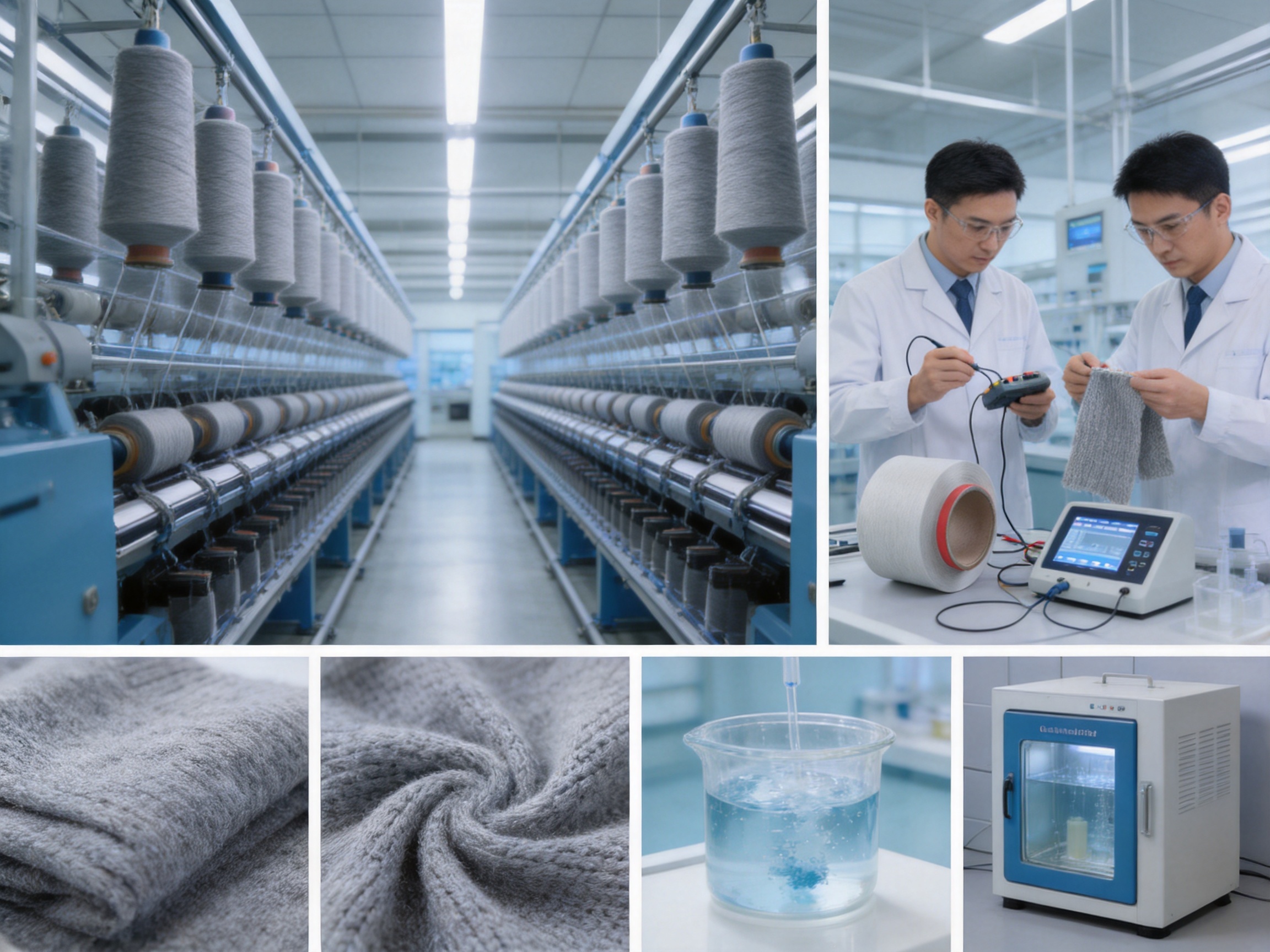
Static electricity is a familiar but often underestimated problem in modern manufacturing, healthcare, electronics, textile processing, packaging, and clean working environments. When synthetic fibers rub against one another or come into contact with machinery, garments, skin, or other materials, electrical charges can accumulate on their surfaces. In a general consumer application, this may cause minor inconvenience. In a sensitive industrial environment, however, uncontrolled static electricity can attract dust, create uncomfortable shocks, interfere with equipment, damage electronic components, or contribute to operational and safety risks.
Anti Static PET Yarn Grey Color is a functional polyester filament yarn developed to provide stable and durable static suppression. It combines the processing advantages of PET with a low resistance value and long-lasting anti-static performance. The yarn is suitable for weaving, knitting, blending, and the manufacture of anti-static fabrics, workwear, industrial textiles, protective garments, curtains, and other textile products that require reliable control of electrostatic charge.
Unlike surface-applied anti-static finishes that may gradually weaken through washing, abrasion, or environmental changes, this yarn is engineered as a functional fiber material. Its performance is designed to remain more consistent throughout repeated use and laundering. The result is a practical solution for manufacturers seeking anti-static textile performance without sacrificing the versatility, processability, and dimensional stability associated with polyester filament yarn.
Anti Static PET Yarn Grey Color is a grey polyester filament yarn with specialized anti-static properties. PET, or polyethylene terephthalate, is widely used in textile manufacturing because it offers a favorable balance of strength, durability, heat resistance, chemical stability, dimensional stability, and cost efficiency. By introducing functional anti-static characteristics into the yarn, the material can be used in textile constructions where ordinary polyester would otherwise allow static charges to build up.
The yarn is available in regular FDY counts of 20D, 40D, and 60D, as well as DTY 60D. Special counts can be customized according to the customer’s requirements. FDY, or fully drawn yarn, is suitable for applications that require a relatively smooth and stable filament structure. DTY, or draw textured yarn, provides additional bulk, softness, elasticity, and texture for selected knitting and weaving applications.
According to the supplied technical information, the resistance specification is 109 Ω/cm. Because resistance terminology can vary between yarn, fiber, fabric, and finished-product testing, buyers should confirm the precise test method, conditioning environment, electrode arrangement, and whether the requested value refers to volume resistance, surface resistance, or another measurement. This confirmation helps ensure that the yarn is correctly matched with the performance requirements of the final textile.
| Parameter | Specification |
|---|---|
| Material | PET / Polyester |
| Color | Grey |
| Regular FDY counts | 20D / 40D / 60D |
| Regular DTY count | 60D |
| Special counts | Customizable by order |
| Resistance specification | 109 Ω/cm, according to supplied product information |
| Primary function | Static charge suppression and dissipation |
| Processing options | Suitable for weaving, knitting, and textile development |
| Production model | Standard counts and special production by order |
| Shipping port | Shanghai seaport |
Static electricity is created when two materials contact and separate, especially when they have different electrical properties. Synthetic fibers can accumulate charge during spinning, winding, weaving, knitting, cutting, sewing, garment movement, packaging, and use. Low humidity can make the problem more noticeable because dry air provides fewer opportunities for charge dissipation.
Static accumulation can produce several unwanted effects. It may cause fibers or fabric layers to cling together, making processing less efficient. It can attract dust and airborne particles, which is undesirable in cleanrooms, electronics manufacturing, medical environments, and precision textile production. Static discharge can also create uncomfortable shocks for workers or users. In locations where flammable materials or sensitive components are present, uncontrolled discharge may create additional operational concerns.
Anti-static yarn addresses the problem at the textile-construction stage. Instead of relying only on a topical finish applied after fabric formation, functional anti-static yarn can be incorporated into the fabric structure during knitting or weaving. This approach supports more consistent performance across the textile surface and can simplify product design for manufacturers that need long-term static control.
For example, an anti-static yarn may be integrated into workwear used around electronic components, conductive flooring textiles, cleanroom garments, protective curtains, industrial covers, or specialized fabric panels. The exact performance of the finished material will depend on yarn placement, fabric construction, blend ratio, finishing process, garment design, humidity, and the relevant testing standard. Nevertheless, the use of functional yarn provides a strong foundation for developing durable anti-static products.
The most important advantage of Anti Static PET Yarn Grey Color is its low resistance value. A low-resistance textile pathway helps accumulated charge move away from the fiber and fabric surface instead of remaining concentrated in one location. This reduces the likelihood of static build-up during contact, separation, friction, or movement.
In comparison with ordinary polyester yarn, which is generally a strong electrical insulator, anti-static PET yarn is designed to provide improved charge dissipation. This difference is especially valuable where regular polyester may cling, attract dust, produce sparks, or interfere with production handling. The yarn does not simply provide a temporary surface effect; it is manufactured as a functional textile material intended to support static control during service.
Low resistance also provides flexibility in product design. Manufacturers can combine the yarn with other polyester yarns, elastic fibers, recycled fibers, or selected technical materials to create fabrics with a target balance of strength, softness, appearance, comfort, and electrostatic performance. The appropriate blend and fabric structure should be determined through application testing.
Durability is a major point of difference between a functional yarn and a short-term anti-static treatment. Many topical finishes can be reduced by repeated laundering, abrasion, perspiration, cleaning chemicals, or mechanical wear. When anti-static performance is incorporated into the fiber or yarn design, the functional effect is better positioned to remain available throughout the useful life of the textile.
Long-lasting performance is particularly important for workwear, uniforms, reusable protective clothing, industrial fabrics, and textile products that are cleaned frequently. A textile that performs well only when new may not provide sufficient value in a demanding production environment. By contrast, a durable anti-static yarn can help manufacturers develop products with more predictable service performance.
The actual life of a finished textile still depends on the full product system. Fabric density, yarn arrangement, sewing thread, coatings, detergents, finishing agents, mechanical stress, and contamination can all influence measured performance. For this reason, manufacturers should evaluate fabric and finished garments rather than relying solely on the yarn specification.
PET is widely selected for textile applications because of its practical heat and water resistance. In Anti Static PET Yarn Grey Color, these material characteristics support the retention of the fiber structure during regular textile processing and repeated washing. The supplied product information indicates that the fiber can maintain excellent static suppression performance after repeated washing.
This feature gives the yarn a significant advantage in applications where cleaning and hygiene are routine requirements. Examples include work garments, reusable protective apparel, curtains, industrial covers, institutional textiles, and other products exposed to regular laundering. The yarn can help reduce the risk that static-control performance will decline simply because the textile has been washed several times.
Washing conditions should always be reviewed before commercial production. Temperature, alkalinity, oxidizing agents, solvents, mechanical agitation, drying conditions, and ironing may affect the final fabric. Product developers should conduct laundering trials using the intended care procedure and then test resistance or charge decay under controlled conditions.
Humidity has a strong influence on static behavior. In many conventional textile systems, higher humidity helps charges dissipate, while dry conditions can make static accumulation more severe. Anti Static PET Yarn Grey Color is designed to have weak dependence on humidity and to continue suppressing static electricity in low-humidity environments.
This characteristic is important in winter climates, air-conditioned production facilities, dry electronic workshops, climate-controlled warehouses, and other locations where relative humidity may be low. A material that remains functional across changing humidity conditions gives product designers a wider operating range and helps reduce dependence on artificial humidity control.
Humidity independence does not mean that environmental conditions have no effect at all. The performance of every anti-static textile may vary according to temperature, moisture, fabric construction, body contact, surface contamination, and testing method. However, reduced dependence on humidity is a valuable advantage over materials that rely mainly on moisture absorption or temporary surface treatments.
Anti Static PET Yarn Grey Color is designed for common textile manufacturing routes. Depending on the selected count and construction, it can be used in weaving or knitting. This allows textile manufacturers to integrate the yarn into existing production systems rather than adopting an entirely new material platform.
FDY counts may be selected for smooth surfaces, stable filament arrangements, and applications that require a relatively clean appearance. DTY can be considered where additional texture, bulk, softness, or stretch recovery is desired. The final yarn selection should be based on machine settings, fabric weight, stitch or weave design, hand feel, end-use requirements, and the desired anti-static performance.
Because the yarn is available in multiple regular counts, customers can select a specification that fits different fabric constructions. The availability of special counts also gives developers the opportunity to create products with customized denier, filament arrangement, or functional targets. This is useful for technical textile manufacturers whose requirements may not correspond to standard apparel yarns.
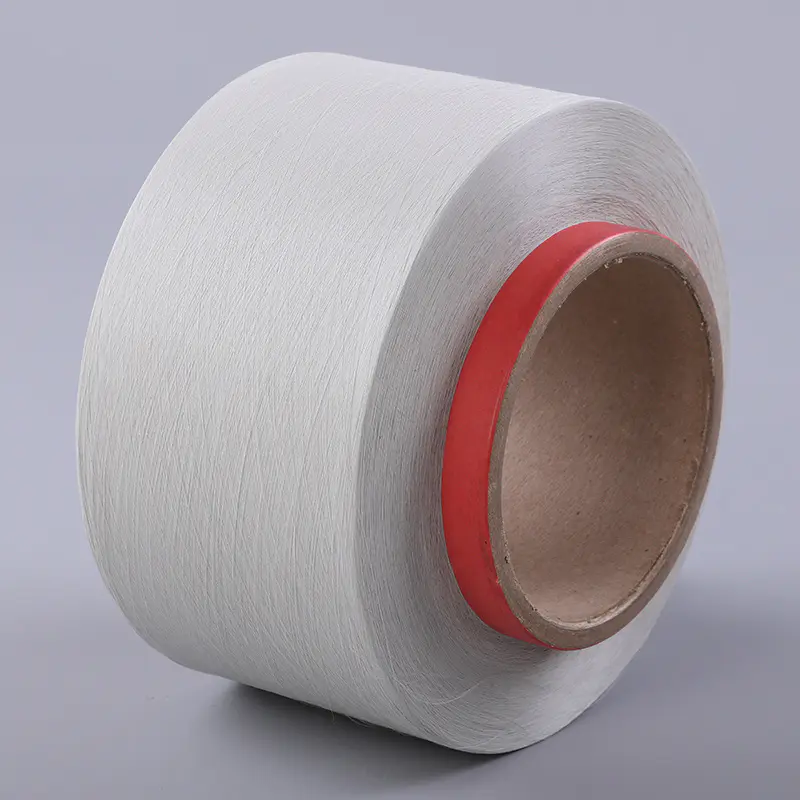
Anti Static PET Yarn Grey Color
Ordinary polyester filament yarn is valued for its strength, uniformity, abrasion resistance, dimensional stability, and affordability. However, its insulating nature can contribute to static accumulation. Anti Static PET Yarn Grey Color retains the basic processing advantages of PET while adding a functional pathway for improved static dissipation.
This means that manufacturers do not necessarily need to abandon polyester when static control becomes important. Instead, they can select a functional polyester yarn that is more appropriate for the application. The approach can simplify material compatibility, dyeing and finishing development, and production planning, although all processes should be validated on the intended equipment.
Surface finishes may provide useful anti-static performance, particularly for products with short service lives or limited washing requirements. However, their effectiveness can decrease after laundering, abrasion, exposure to chemicals, or contact with other materials. They may also require additional application steps, drying capacity, chemical management, and quality-control procedures.
A functional anti-static yarn offers a more integrated route. The anti-static property is associated with the yarn itself rather than depending exclusively on a finishing bath applied after fabric formation. This can improve durability and reduce the risk that the fabric will lose its intended function after routine care.
Functional yarn does not eliminate the value of fabric finishing. Finishes may still be used to improve softness, stain resistance, moisture management, flame performance, appearance, or other properties. The difference is that anti-static performance has a stronger foundation in the yarn structure, allowing finishing decisions to focus on the broader product specification.
Some anti-static materials rely heavily on moisture absorption to reduce electrical charge. These products may perform well under humid conditions but become less effective when the environment is dry. Anti Static PET Yarn Grey Color is designed to reduce this dependence, making it more suitable for applications exposed to fluctuating or low humidity.
Stable behavior across environmental conditions is valuable for international supply chains. A fabric manufactured in a humid region may later be used in a dry climate, or a textile produced in summer may be used in winter. A yarn with weak humidity dependence can help reduce geographic and seasonal performance variation.
Some textile producers attempt to achieve static control by adding conductive elements or specialty fibers without fully optimizing their distribution within the fabric. If the conductive component is unevenly placed, the finished textile may show inconsistent performance across different areas. Yarn selection, filament uniformity, process control, and fabric engineering are therefore important.
A specialized anti-static PET yarn from an experienced functional-yarn manufacturer can provide a more controlled starting point. Standard counts, customized production, technical coordination, and testing support help customers design a repeatable solution rather than relying on trial-and-error material combinations.
Electronic components and semiconductor manufacturing environments can be sensitive to electrostatic discharge. Anti-static garments, cleanroom accessories, curtains, bags, covers, and technical fabrics may be developed using functional polyester yarn. The objective is to reduce charge accumulation and limit the possibility of uncontrolled discharge near sensitive components.
In these applications, yarn selection is only one part of the protection system. Garment pattern, grounding method, footwear, flooring, work procedures, air cleanliness, and environmental control must also be considered. The anti-static yarn provides a material basis for the textile portion of the system.
Medical and healthcare environments may benefit from textiles that reduce static attraction and uncomfortable discharge. Potential products include curtains, uniforms, bedding components, equipment covers, and selected institutional fabrics. Reducing static can also help limit the attraction of airborne dust to textile surfaces.
Healthcare applications require additional attention to hygiene, skin contact, sterilization, chemical resistance, colorfastness, and regulatory requirements. The yarn can be evaluated as part of a broader textile solution, but the finished product must meet the applicable standards for its intended use.
Industrial workwear often experiences repeated movement, friction, washing, and contact with equipment. Anti Static PET Yarn Grey Color can be used in fabrics intended for uniforms, protective garments, jackets, trousers, gloves, and accessories where static suppression is required.
The yarn may be combined with other fibers to balance comfort, durability, moisture management, mechanical strength, and appearance. For example, a fabric developer may use a functional polyester component in selected warp, weft, or knitted courses while using other yarns for softness or stretch. The correct ratio depends on the garment design and required test results.
Static control can improve the handling of textile materials during production. Fibers and fabric layers that cling to machinery or one another can slow down operations and affect product consistency. Anti-static yarn may help reduce unwanted attraction during weaving, knitting, cutting, sewing, and assembly.
Manufacturers should test the yarn on their own machines because settings, speed, tension, guides, needles, friction surfaces, and ambient conditions vary. A technical yarn supplier can assist with trial planning and parameter adjustment to help integrate the product into existing production lines.
Anti-static curtains and covers can be useful in controlled workspaces, electronic production areas, clean environments, and industrial facilities where dust attraction or static discharge is undesirable. The yarn’s heat and water resistance can support repeated cleaning and long-term use.
For large textile panels, fabric construction and grounding design should be considered together. The yarn can reduce charge generation and support dissipation, while the complete installation may require a defined grounding path or conductive connection, depending on the application.
Static-control textiles may be used in reusable bags, sleeves, protective covers, handling wraps, and packaging components for sensitive parts. Such products can help reduce the risk of charge accumulation during transport or manual handling.
Packaging performance depends on the product geometry, contact materials, humidity, handling procedures, and required resistance range. Before commercial use, customers should test the complete package with the actual components and logistics conditions.
FDY 20D is a fine-count option suitable for lightweight textile constructions and applications where a relatively fine filament is preferred. It may be used in blends or carefully engineered fabric zones where the designer wants to introduce anti-static functionality without significantly increasing fabric weight.
Fine yarns require appropriate machine settings and tension control. The final performance will depend on the number of filaments, fabric density, placement, and the ratio of functional yarn in the construction.
FDY 40D provides an intermediate count for applications requiring a balance between fineness, coverage, and mechanical handling. It may be considered for woven or knitted fabrics where the developer needs more substance than a very fine yarn while maintaining a relatively smooth textile surface.
This count can be suitable for a wide range of technical and apparel-related textile trials. Customers should confirm compatibility with the intended machine, needle or reed configuration, and finishing process.
FDY 60D offers greater linear density and can provide additional coverage and fabric substance. It may be used in heavier constructions, workwear, protective textiles, or products where a stronger visual and tactile presence is required.
The selection of 60D should be matched with the desired fabric weight, drape, abrasion resistance, and comfort. When combined with other yarns, it may contribute both functional performance and structural support.
DTY 60D is a textured option that can provide additional bulk, softness, and surface character. It may be suitable for knitted fabrics, comfortable workwear, home textiles, and applications where a less rigid hand feel is desired.
Textured yarn behavior can differ from flat yarn behavior during knitting and finishing. Trial production is recommended to evaluate loop formation, fabric recovery, pilling, appearance, shrinkage, and anti-static performance after laundering.
The performance of functional yarn depends not only on its raw materials but also on manufacturing precision. Anti-static properties must be distributed consistently enough to support reliable results in downstream textile production. A supplier with experience in specialty and functional yarns can provide advantages in material selection, process development, testing, and order execution.
GC FIBER has operated as a special textile manufacturer in China since 2006. Its product development scope includes biodegradable yarn, low melting yarn, ECDP yarn, anti-static yarn, HDPE yarn, bio-component yarn, and polyester filament yarn. This portfolio reflects experience with yarns designed not only for conventional textile use but also for specific functional, environmental, and processing requirements.
Experience across several functional material categories can be valuable when customers require a combination of properties. A project may involve anti-static performance together with softness, low melting behavior, biodegradability, strength, special cross-section design, or compatibility with another fiber. A manufacturer familiar with different material platforms can help evaluate possible routes more efficiently.
Stable raw material supply is important for maintaining repeatability between production batches. Variations in polymer quality, additives, moisture, viscosity, color, and other factors can affect spinning behavior and final yarn properties. Strong control over raw material sourcing and quality inspection helps reduce these risks.
For customers purchasing functional yarn, batch consistency is often as important as the nominal specification. A yarn that meets the target in one shipment but varies significantly in another can create problems in knitting, weaving, dyeing, finishing, and final-product testing. Quality-control procedures should therefore cover both incoming materials and finished yarn.
GC FIBER reports multiple production lines and machines, supporting both standard and customized production. Manufacturing flexibility is particularly important for functional yarn because customers may request special deniers, filament counts, cross-sections, colors, or performance combinations.
Multiple lines can also help a manufacturer allocate appropriate equipment to different order types. Standard products can be produced efficiently for regular supply, while special orders can be scheduled with the process controls required for development or customized production. This supports a broader range of customer requirements without limiting service to only large-volume orders.
A dedicated Design and R&D department supports the development of special and functional eco-friendly textile products. For anti-static yarn projects, research may involve polymer selection, additive distribution, spinning conditions, filament structure, denier design, texture development, and compatibility with downstream processing.
R&D support is especially useful when a customer’s requirement is expressed as an application problem rather than a fixed yarn specification. For example, a customer may need a fabric that passes a particular static test after repeated washing, remains comfortable in a dry environment, or fits a specific machine setup. The manufacturer can then work backward from the application to identify a suitable yarn configuration.
Functional yarn production requires attention to both visible and performance-related quality. Typical control areas may include appearance, denier, filament uniformity, winding quality, package formation, tensile properties, elongation, color, moisture, and electrical resistance. The exact inspection plan should be adapted to the product and customer specification.
Electrical testing should be performed under controlled conditions because temperature and humidity can influence results. The testing method should be documented clearly, including sample preparation, conditioning time, contact arrangement, voltage, measurement duration, and reporting unit. This transparency helps customers compare results accurately and establish suitable acceptance criteria.
Production flexibility allows GC FIBER to accommodate both smaller customized orders and larger volume requirements. This is valuable for brands, textile mills, technical-product developers, and research teams that need to conduct sampling before committing to full-scale production.
A practical development process may begin with a technical discussion, followed by sample yarn, laboratory fabric, pilot production, performance testing, and commercial scale-up. Clear communication at each stage can reduce the risk of selecting a yarn that performs well in isolation but does not fit the customer’s machine or finished-product design.
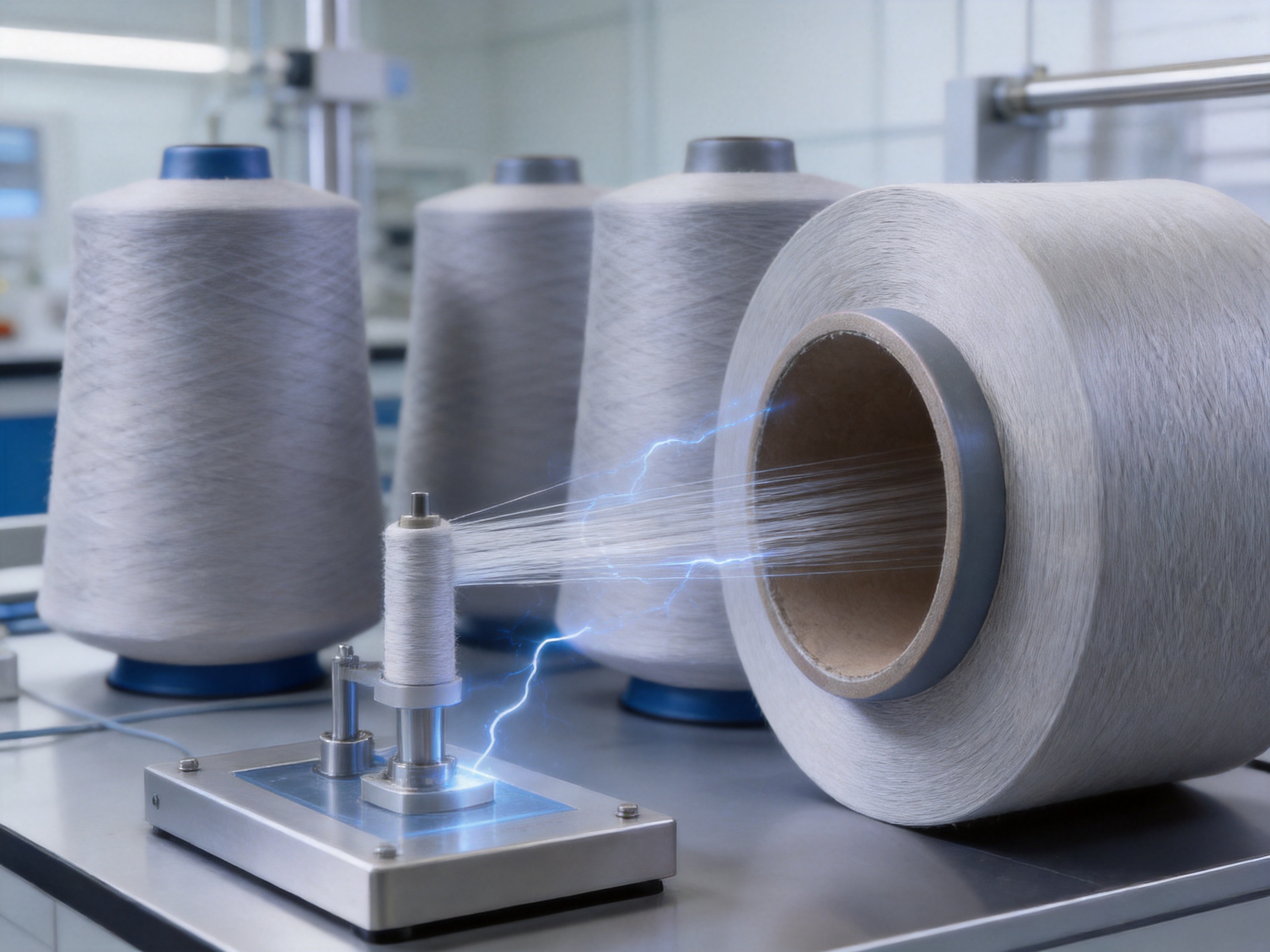
Not every anti-static textile can be produced successfully using a standard yarn. A customer may require a special denier, filament count, cross-section, color, texture, resistance range, or combination of properties. Customization allows the yarn to be adjusted to the needs of the fabric and end product rather than forcing the product design to conform to a standard catalog item.
Denier affects yarn weight, coverage, fabric thickness, appearance, and processing behavior. Filament count affects surface character, softness, compactness, and mechanical response. Adjusting these factors can help the customer achieve a more suitable balance between static control and textile comfort.
For instance, a lightweight cleanroom fabric may require a finer yarn construction, while a durable industrial cover may benefit from a heavier yarn. A knitted workwear fabric may require a textured option for comfort, while a woven technical panel may favor a smoother filament structure.
Filament cross-section can influence luster, surface area, hand feel, friction, and the way the yarn interacts with other materials. Special cross-section designs may be considered when a customer requires a particular fabric appearance or processing behavior in addition to anti-static functionality.
Any cross-section modification must be evaluated for spinning stability, mechanical performance, dyeing, knitting or weaving behavior, and final electrical results. This is why collaborative development between the yarn producer and textile manufacturer is important.
The standard product is supplied in grey. Grey can be practical for industrial textiles, workwear, technical fabrics, and products where a neutral appearance is desired. Depending on the project, customers may discuss alternative color requirements or the compatibility of the yarn with subsequent dyeing and finishing processes.
Color development should be assessed together with anti-static performance because pigments, masterbatch composition, and processing conditions may influence the final yarn properties. Any customized color should therefore be validated through both visual and functional testing.
GC FIBER welcomes cooperation with customers to develop new materials. Collaborative development can include reviewing technical drawings, analyzing existing fabric problems, selecting candidate yarns, conducting laboratory trials, and optimizing production parameters.
This approach is useful when the customer has a defined performance target but does not yet know the most suitable yarn structure. It also supports product differentiation for textile companies that want to create specialized anti-static fabrics rather than compete solely on standard materials.
A disciplined development process helps ensure that Anti Static PET Yarn Grey Color delivers the intended benefit in the finished textile.
The customer should identify where and how the textile will be used. Important questions include whether the product is a garment, curtain, cover, packaging material, cleanroom accessory, or industrial fabric. The expected temperature, humidity, cleaning method, mechanical stress, user contact, and service life should also be recorded.
The customer should define the required resistance or charge-decay target and identify the applicable testing standard. Terms such as surface resistance, volume resistance, resistivity, and static decay should not be used interchangeably without clarification. A clear test specification prevents misunderstandings between yarn supplier, fabric mill, garment manufacturer, and end user.
The customer can then compare FDY 20D, FDY 40D, FDY 60D, and DTY 60D according to fabric design and machine requirements. If none of the standard options is suitable, special denier or filament configurations can be discussed.
Small-scale knitting or weaving trials should be used to assess processability, fabric appearance, hand feel, dimensional stability, shrinkage, abrasion behavior, and initial anti-static performance. The trial should use production-representative machine settings where possible.
Samples should be tested after the intended washing, drying, aging, abrasion, and environmental conditioning procedures. Low-humidity and normal-humidity tests can provide useful information about performance stability. If the final product will be sterilized or exposed to industrial chemicals, those conditions should also be included.
Before bulk production, the buyer and supplier should confirm yarn count, color, package size, tolerance, resistance specification, test method, inspection requirements, minimum order quantity, delivery schedule, packaging, and shipping arrangements. Clear documentation supports consistent purchasing over time.
Anti-static performance should be evaluated at multiple stages. Yarn testing confirms the material’s basic properties, fabric testing shows the effect of construction and blend ratio, and finished-product testing verifies performance in the actual article. A garment, for example, may behave differently from a laboratory fabric because of seams, linings, buttons, elastic components, labels, and contact with footwear or other materials.
Testing should be conducted under controlled temperature and humidity. Samples should be conditioned for an appropriate period before measurement. The number of test points, sample size, electrode pressure, applied voltage, and calculation method should be documented.
Repeated washing tests are important for products promoted as durable or reusable. The selected washing procedure should represent the customer’s intended care label. After each defined number of cycles, the fabric should be inspected and electrically tested. This provides a clearer picture of performance retention than a single test on a new sample.
Mechanical testing can also be relevant. Tensile strength, elongation, abrasion resistance, pilling, seam performance, dimensional change, and bursting strength may influence the usefulness of the final textile. Anti-static performance should be optimized without compromising the physical properties needed for the application.
Polyester remains a widely used textile material because it offers long service life and efficient processing. When a functional yarn extends product usability or reduces the need for repeated chemical re-treatment, it may contribute to more efficient textile production. Durable anti-static performance can also support reusable garments and industrial textiles rather than short-life alternatives.
Environmental claims should be based on the full product life cycle. Anti Static PET Yarn Grey Color is a functional PET product, and it should not automatically be described as biodegradable or recycled unless the specific grade has been verified for those properties. GC FIBER’s broader portfolio includes eco-friendly and bio-component products, but each yarn should be evaluated according to its own documented composition and certification.
Manufacturers can improve sustainability by selecting the correct yarn count, reducing production waste, optimizing fabric weight, extending service life, and designing products for appropriate reuse or recycling. The supplier’s ability to customize yarn can help customers avoid over-engineering and use material more efficiently.
Choosing a supplier for anti-static yarn involves more than comparing price per kilogram. The supplier must understand the relationship between polymer, yarn structure, electrical behavior, textile processing, and final-product testing. Experience in functional yarn development helps reduce technical risk and supports faster problem solving.
GC FIBER combines specialty textile manufacturing experience, product development capability, multiple production lines, raw material control, OEM flexibility, and professional support across sales, R&D, design, and production. This structure enables the company to support projects from initial specification through sampling, production, quality coordination, and delivery.
Dedicated communication is particularly important for custom orders. The customer may need assistance selecting the correct count, preparing a trial plan, interpreting test results, or adjusting a yarn specification. A responsive technical and commercial team can help ensure that the project remains aligned with its performance and delivery objectives.
GC FIBER is located in Nantong, Jiangsu Province, China, and supports shipment through Shanghai seaport. Its production-by-order model allows it to serve customers seeking both regular yarn counts and customized functional solutions.
It is used to develop fabrics and textile products that require static suppression. Potential applications include anti-static workwear, industrial textiles, electronic and semiconductor garments, medical and institutional fabrics, curtains, covers, packaging materials, and other woven or knitted products.
The regular options listed are FDY 20D, FDY 40D, FDY 60D, and DTY 60D. Special counts can be produced according to customer requirements and technical feasibility.
Yes. The yarn is designed for use in both knitting and weaving. The appropriate count and yarn type should be selected according to the machine, fabric construction, texture, weight, and final-product requirements.
The supplied product information specifies a resistance value of 109 Ω/cm. Because electrical terminology and test methods vary, customers should confirm the exact measurement definition, test standard, conditioning requirements, and acceptance range before placing a production order.
The fiber is described as having heat and water resistance, with the ability to maintain excellent static suppression performance after repeated washing. Actual retention depends on the washing method, fabric construction, finishing chemicals, and other components in the finished textile. Validation testing is recommended.
The product is designed to have weak dependence on humidity and to suppress static electricity even in low-humidity environments. Finished-product performance may still vary according to fabric structure, contamination, temperature, and testing conditions.
Yes. Customization may include denier, filament count, cross-section structure, color, and selected functional properties. Customers should provide technical drawings, target performance, application details, expected order volume, and testing requirements.
It can be considered for anti-static workwear and industrial garments. The finished garment must be tested as a complete product because garment construction, accessories, seams, linings, footwear, and grounding arrangements can affect overall performance.
The supplied product information identifies this product as PET/polyester anti-static yarn. It should not be described as biodegradable unless a specific biodegradable grade and supporting documentation have been confirmed. The manufacturer offers other functional and eco-friendly yarn categories that may be evaluated separately.
Customers should provide the required yarn type, denier, filament count, color, intended application, quantity, fabric process, resistance target, test standard, washing requirements, packaging needs, delivery destination, and expected delivery schedule. This information allows the supplier to recommend the most suitable option.
Sample and trial arrangements can be discussed with the manufacturer. Sampling is recommended before bulk production so that the yarn can be evaluated on the customer’s actual knitting or weaving equipment and tested in the intended fabric construction.
The listed shipping port is Shanghai seaport. Final logistics arrangements should be confirmed according to order quantity, packaging, destination, trade terms, and production schedule.
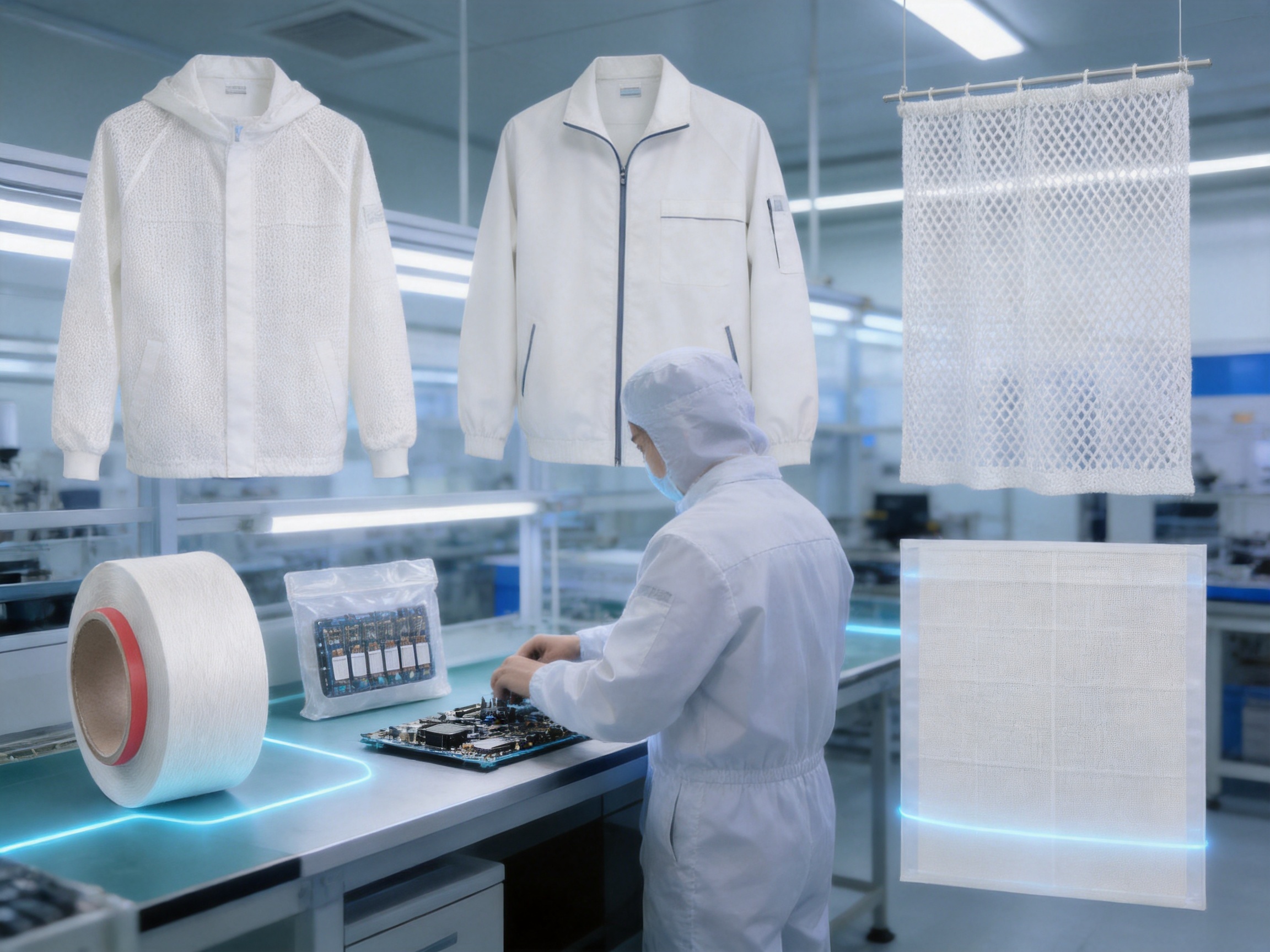
Anti Static PET Yarn Grey Color is a practical functional polyester solution for textile manufacturers that need reliable static suppression, durable performance, and flexible processing options. Its key advantages include a low resistance value, long-lasting anti-static behavior, heat and water resistance, repeated-washing performance, and reduced dependence on humidity. These properties make it suitable for a broad range of industrial, electronic, medical, textile, and protective applications.
The availability of FDY 20D, FDY 40D, FDY 60D, and DTY 60D gives customers a useful starting range for different fabric designs. Special counts and customized structures provide additional flexibility for OEM development and technically demanding applications. As with all functional yarns, the final product should be evaluated through controlled fabric and garment testing.
GC FIBER strengthens this product offering through specialty textile experience since 2006, R&D capability, multiple production lines, raw material control, customized manufacturing, and support from specification through delivery. These manufacturing strengths help customers move from a general static-control requirement to a workable yarn and textile solution.
For manufacturers seeking a durable alternative to ordinary polyester or temporary anti-static finishes, Anti Static PET Yarn Grey Color provides a strong basis for developing dependable, washable, and application-specific textiles.
1. Product technical information supplied for Anti Static PET Yarn Grey Color, including material, counts, resistance specification, application notes, and performance features.
2. Product development information supplied for functional polyester filament yarn, OEM customization, R&D support, and production flexibility.
3. General textile engineering principles concerning polyester filament yarn, FDY, DTY, static electricity, resistance testing, and fabric performance.
4. General guidance on evaluating electrostatic control in textile materials under different humidity, laundering, abrasion, and end-use conditions.
5. General principles of quality control for specialty yarn manufacturing, including raw material inspection, process monitoring, package quality, electrical testing, and finished-product validation.
Made of PBS (Polybutylene Succinate), fully biodegradable.Features:1.Home compostable2.Raw material: PBS Polybutylene Su...
READ MOREPlease fill out the form below and our team will contact you as soon as possible.
Addres: No.66 Qiaogang Road, Haian, Nantong City, Jiangsu Province, China
E-mail: service@gcfiber.com admin@gcfiber.com
Copyright ? GC FIBER All Rights Reserved. Eco-Friendly Textile Products Manufacturer Biodegradable Yarn Company