English
 中文简体
中文简体
It is made with Bio-base PLA, fully biodegradable Feature: 1. Industrial compost product 2. Made with PLA 3. Eco-frie...
READ MORE
Content
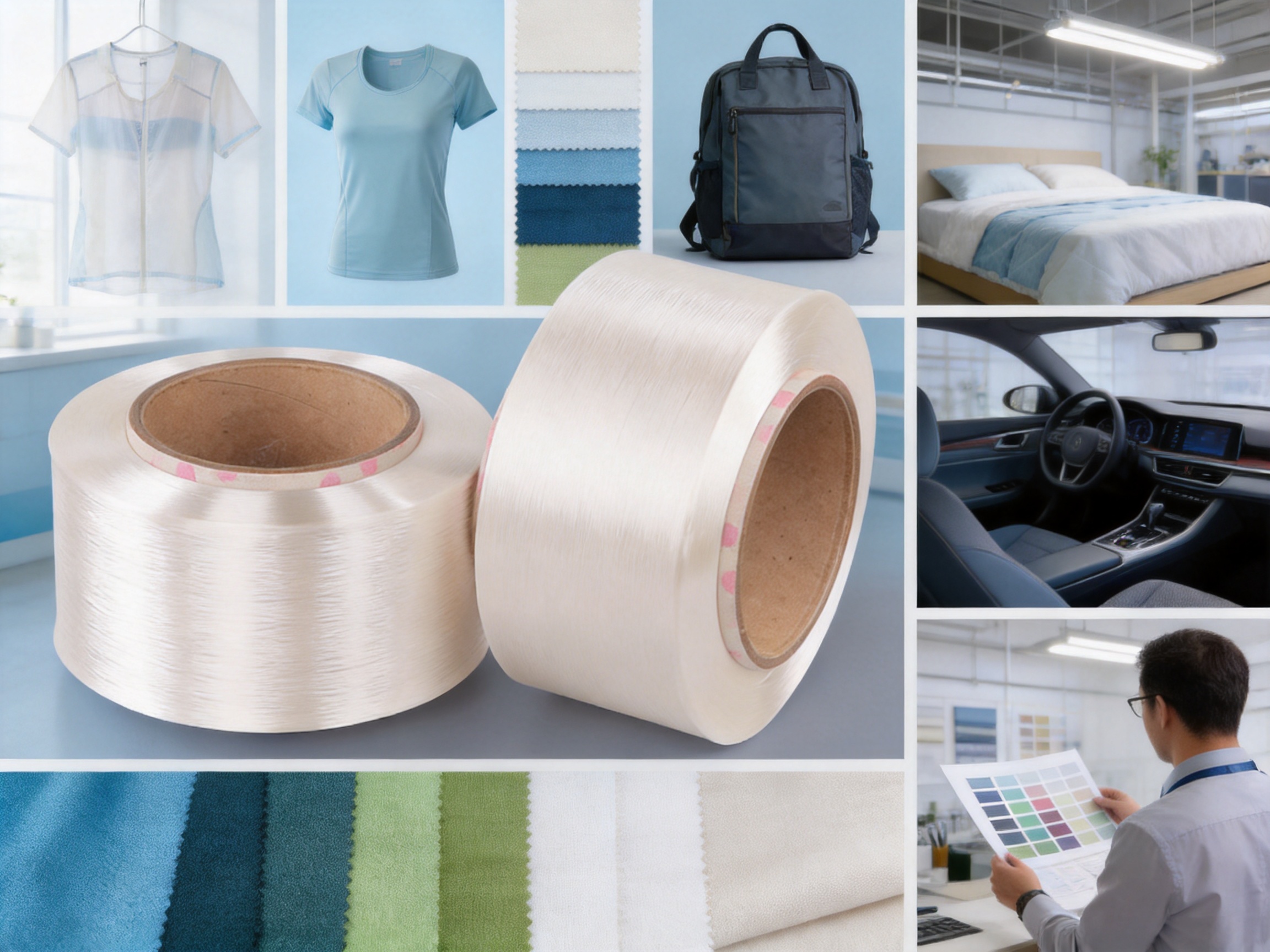
PE flat FDY yarn is a specialized functional textile material designed for applications that require a combination of cooling touch, dependable mechanical performance, dimensional stability, and production flexibility. Made from polyethylene and processed as fully drawn yarn, it offers a distinctive alternative to conventional filament yarns used in apparel, home textiles, technical fabrics, and selected industrial products.
The product is particularly recognized for two core characteristics: a cooling tactile sensation and a favorable balance of tenacity and elongation. These properties make it suitable for products that come into direct contact with the skin, face repeated stretching, or need to maintain their appearance during long-term use. Available in 50D, 75D, 100D, 200D, 300D, and 400D specifications, PE flat FDY yarn can be selected according to fabric weight, coverage, strength requirements, and end-use conditions.
As textile manufacturers increasingly seek materials that combine comfort, performance, and environmental responsibility, functional polyethylene yarn has attracted growing interest. It can contribute to lighter, cooler, and more durable textile constructions while also supporting customized production. For buyers, the most important advantages are not limited to the yarn itself. They also include stable manufacturing practices, technical development capability, specification flexibility, quality awareness, and cooperation with customers on special materials.
PE flat FDY yarn is a polyethylene filament yarn with a flat yarn structure and a fully drawn processing route. The term “FDY” means fully drawn yarn. During production, the filament is drawn to develop its final orientation and performance characteristics before it is supplied for downstream textile processing. Compared with less-developed filament forms, fully drawn yarn is generally prepared for direct use in weaving, knitting, covering, and other fabric-forming processes.
The “flat” characteristic refers to the yarn’s designed surface and appearance rather than a conventional round filament profile. This structure can influence how the yarn reflects light, contacts the skin, covers a fabric surface, and interacts with neighboring yarns. In practical applications, a flat filament construction can help create a distinctive hand feel and visual effect while supporting smooth textile surfaces.
Polyethylene is valued for its low moisture affinity, chemical resistance, light weight, and useful strength-to-weight relationship. When engineered into a functional filament yarn, these characteristics can be combined with a cooling hand feel and good extensibility. The resulting material can be used in products where comfort, reduced weight, and resilience are important.
PE flat FDY yarn is supplied in a range of deniers. Denier is a measurement associated with the mass per length of a filament or yarn. A lower-denier yarn is generally lighter and finer, while a higher-denier yarn provides more substance, coverage, and resistance to mechanical stress. The available range allows customers to select an appropriate yarn for delicate fabrics, medium-weight textiles, or more demanding technical constructions.
| Available specification | General positioning | Potential application direction |
|---|---|---|
| 50D | Light and fine | Lightweight apparel, linings, fine textile surfaces, and breathable constructions |
| 75D | Light to medium | Comfort fabrics, fashion materials, sportswear, and home textile blends |
| 100D | Balanced weight and coverage | Apparel, bedding, decorative fabrics, and general-purpose textile products |
| 200D | Medium to substantial | Durable clothing, upholstery-related fabrics, bags, and functional textile structures |
| 300D | Strong and substantial | Outdoor goods, protective textile products, automotive interiors, and heavier fabrics |
| 400D | High coverage and durability orientation | Industrial textiles, high-strength constructions, equipment fabrics, and robust consumer products |
The table provides a practical starting point rather than a substitute for application testing. The best denier depends on the fabric design, weave or knit structure, finishing process, target weight, and required handle. Customers can discuss specific requirements with the manufacturer when a product requires a special combination of fineness, strength, flexibility, or appearance.
The most distinctive selling point of PE flat FDY yarn is its cooling touch. The sensation is created by the interaction between the yarn surface, the human body, and heat transfer at the point of contact. When a textile material draws heat away from the skin efficiently, the wearer may perceive an immediate cool feeling, particularly when the fabric is first touched or worn.
This feature is highly relevant to warm-weather apparel. Summer shirts, inner layers, sports garments, lightweight trousers, sleepwear, and accessories can benefit from a surface that feels cool and comfortable. The yarn can also be considered for bedding products such as sheets, pillowcases, mattress covers, and blankets designed for warm climates or consumers who prefer a cooler sleeping environment.
A cooling touch does not mean that the yarn functions as an active refrigeration material. Instead, it relates to the physical interaction between the textile surface and the skin. The perceived effect can vary according to fabric construction, finishing treatment, ambient temperature, humidity, garment fit, and the presence of other fibers. For this reason, product developers should evaluate the completed fabric rather than relying only on yarn-level assumptions.
The flat yarn structure can contribute to the tactile experience by presenting a smooth and distinctive surface. It may also help manufacturers create fabrics with a clean appearance and a pleasant hand. When combined with an appropriate knitting or weaving design, PE flat FDY yarn can support lightweight constructions that are comfortable against the body without sacrificing useful durability.
For brands and textile converters, cooling comfort is an increasingly valuable product message. Consumers often look for garments that feel fresh during travel, exercise, outdoor activities, and daily summer use. A yarn that provides a naturally cool tactile impression can help manufacturers develop differentiated products without relying solely on heavy chemical finishing or complex fabric structures.
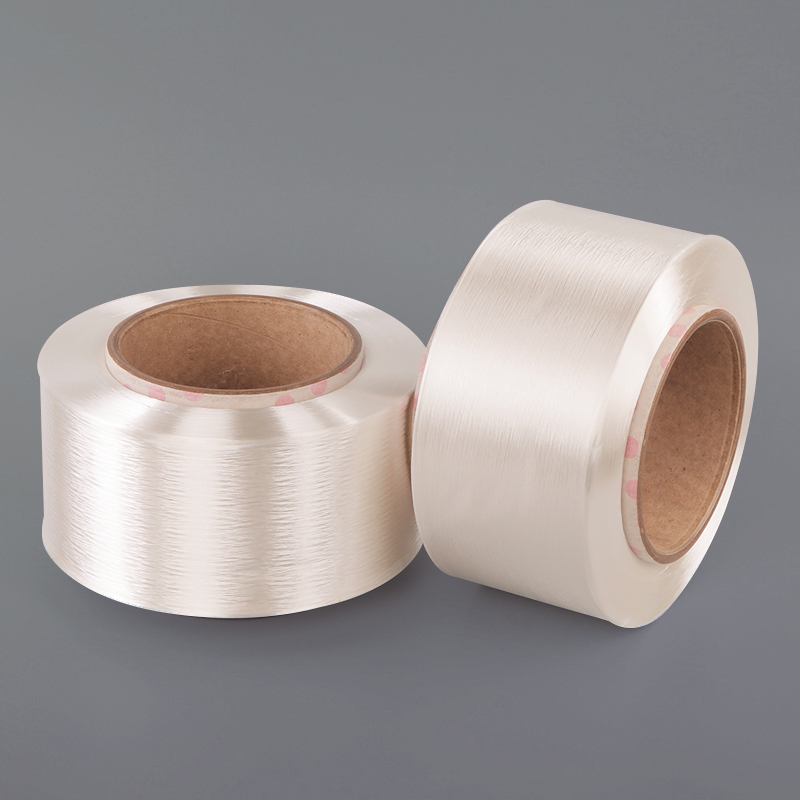
PE Flat FDY Yarn
Tenacity describes the strength of a yarn relative to its linear density. Good tenacity allows a filament yarn to withstand tension during processing and use. It is important during warping, weaving, knitting, sewing, garment construction, laundering, and repeated movement. A yarn with suitable tenacity is less likely to break prematurely when exposed to normal mechanical forces.
PE flat FDY yarn is designed to offer a useful balance between its lightweight nature and its ability to withstand tension. This balance is important because many cooling textiles are intended to be light and comfortable. A material that is cool but fragile may not perform well in everyday products. By combining a cooling hand with good tenacity, the yarn is better positioned for practical commercial applications.
High or dependable yarn strength can also improve production efficiency. Broken filaments and frequent machine stops can reduce output, increase waste, and create inconsistent fabric quality. When the yarn is matched correctly to the machine and process, its fully drawn structure can support stable downstream processing. Actual performance will depend on machine settings, tension control, fabric design, and the selected denier, but yarn strength remains a central consideration.
For outdoor and technical products, tenacity can support resistance to handling stress and repeated use. Bags, equipment covers, selected automotive textile components, and protective fabric constructions may benefit from a filament that maintains integrity under tension. In apparel, good tenacity can help garments retain their structure during movement and routine care.
The value of tenacity is particularly clear when PE flat FDY yarn is compared with materials selected only for softness or surface appearance. A well-designed functional yarn must perform throughout the supply chain, from package unwinding to final consumer use. Strength is therefore not simply a laboratory characteristic; it can influence productivity, fabric quality, product lifespan, and customer satisfaction.
In addition to strength, PE flat FDY yarn provides good elongation. Elongation is the capacity of a yarn or filament to extend under tension. Appropriate elongation enables a textile to accommodate movement, handling, and temporary deformation without immediate breakage. It can be especially valuable in knitted fabrics, stretch-oriented structures, sportswear, and products exposed to repeated flexing.
Good elongation also supports recovery of the textile structure after temporary stretching. The final recovery behavior depends on the yarn, fabric construction, finishing, and blend composition, so product developers should conduct testing on the complete fabric. Nevertheless, a filament with useful elongation can contribute to a more resilient textile and reduce the tendency of a product to become permanently distorted during ordinary use.
For clothing, this property can improve comfort during walking, sitting, exercise, and other body movements. For home textiles, it may help the material tolerate regular handling, folding, and laundering. For technical textiles, elongation can assist the fabric in absorbing limited movement or tension without sudden failure.
The combination of tenacity and elongation is more valuable than either property considered in isolation. A yarn with high strength but insufficient elongation may feel rigid or become vulnerable to stress concentration. A yarn with high elongation but inadequate strength may stretch excessively or lose structural integrity. PE flat FDY yarn is positioned as a balanced functional material, offering both resistance to force and the ability to accommodate controlled extension.
PE flat FDY yarn competes in a market that includes standard polyester filament yarn, nylon yarn, polypropylene yarn, blended yarns, and other specialty fibers. Each material has its own strengths, and the best selection depends on the intended use. The advantages of PE flat FDY yarn are most apparent when a product requires a cool surface, light weight, useful strength, and a specialized tactile experience.
Compared with conventional polyester yarns selected primarily for general-purpose performance, PE flat FDY yarn offers a more distinctive cooling touch. Polyester remains an important textile fiber because of its versatility, availability, and broad processing compatibility. However, manufacturers seeking a clear comfort feature may prefer a polyethylene-based functional yarn for products intended to feel cooler against the skin.
Compared with heavier or more rigid technical yarns, the available fine deniers can support lighter constructions. A 50D, 75D, or 100D option may be appropriate when the product requires low fabric weight and a softer, more refined surface. Higher deniers are available when additional coverage and durability are needed, allowing one product family to serve multiple markets.
Compared with materials that depend heavily on surface coatings to create a special hand feel, PE flat FDY yarn builds its functional identity into the yarn structure. This can simplify product development and reduce dependence on additional finishing steps. Coatings and finishes may still be used where appropriate, but the yarn itself contributes to the desired tactile effect.
Compared with some natural fibers, polyethylene filament yarn can offer useful consistency in filament form, low weight, and resistance to certain types of moisture-related degradation. Natural fibers remain valued for their comfort, appearance, and renewable origins, but they may require different care and processing strategies. PE flat FDY yarn gives manufacturers another option when performance consistency and functional design are priorities.
| Evaluation factor | PE flat FDY yarn advantage | Importance to product developers |
|---|---|---|
| Surface sensation | Distinctive cooling touch | Supports comfort-oriented product differentiation |
| Mechanical performance | Good tenacity and elongation | Helps the yarn withstand processing and repeated use |
| Specification flexibility | 50D to 400D choices | Allows adjustment of weight, coverage, and strength |
| Processing format | Fully drawn filament yarn | Suitable for downstream weaving and knitting applications |
| Design potential | Flat yarn appearance and functional hand | Supports distinctive fabric surfaces and product concepts |
| Environmental direction | Designed within an eco-conscious product portfolio | Helps customers evaluate functional materials alongside sustainability goals |
These advantages should be assessed alongside the requirements of each specific application. Dyeing behavior, blending compatibility, heat-setting conditions, sewing performance, and care instructions should be confirmed through technical sampling. A responsible supplier should help customers select the right specification rather than presenting one yarn as suitable for every purpose.
The performance of PE flat FDY yarn depends on the consistency of its raw materials, polymer processing, spinning conditions, drawing control, winding quality, and inspection procedures. A professional manufacturing process therefore requires more than simply extruding polymer into filaments. It requires coordinated control at every stage so that the yarn delivered to the customer is stable, uniform, and appropriate for further processing.
Production begins with the selection and preparation of polyethylene-based raw material. The polymer must be handled under controlled conditions to reduce contamination and moisture-related processing problems. Material preparation affects melt stability, filament formation, surface quality, and the final mechanical properties of the yarn.
Careful material management is especially important for functional yarns. Variations in raw material quality can influence viscosity, extrusion behavior, denier uniformity, and filament strength. A disciplined manufacturing system establishes procedures for incoming material verification, storage, batch identification, and production traceability.
In the extrusion stage, prepared polymer is heated and transformed into a stable melt. The melt is conveyed through the spinning system and formed into continuous filaments through a specialized spinneret. Temperature, pressure, throughput, and filtration must be controlled to maintain a consistent flow.
The spinneret design contributes to the shape and surface characteristics of the filament. For PE flat FDY yarn, the production system is configured to create a flat filament form that supports the intended tactile and visual properties. Uniform cooling after extrusion is also essential. If cooling conditions vary across the spinning position, the filaments may develop differences in orientation, denier, or mechanical performance.
Stable extrusion helps reduce defects such as thick and thin places, irregular filament formation, surface imperfections, and package inconsistencies. These controls are directly connected to downstream weaving and knitting performance. A yarn that appears acceptable visually but has unstable internal characteristics may produce problems during high-speed textile processing.
The defining FDY process includes controlled drawing. During drawing, the freshly formed filaments are stretched under carefully managed conditions. This process develops molecular orientation and helps establish the desired balance of tenacity, elongation, flexibility, and dimensional behavior.
Drawing must be controlled with precision because excessive or insufficient drawing can change the yarn’s performance. The drawing ratio, roller speed, temperature, tension, and contact conditions all influence the result. Professional production teams therefore monitor the relationship between process parameters and laboratory test results rather than relying only on visual inspection.
For PE flat FDY yarn, drawing control is particularly important because the product must preserve its flat appearance while developing useful mechanical properties. The process must support strength without making the yarn unnecessarily brittle or difficult to process. The final objective is a filament that can run consistently through downstream operations and contribute to a comfortable, durable fabric.
After drawing, the yarn is wound into packages for storage, transportation, and customer use. Package formation affects unwinding tension, machine efficiency, and the risk of yarn damage. A well-formed package should allow the yarn to unwind smoothly and consistently during warping, knitting, or weaving.
Winding tension must be controlled to avoid excessive compression, loose layers, slippage, or deformation. The winding system also needs to maintain the required package weight and identification information. Clear labeling supports traceability and helps customers match each package with the relevant specification and production batch.
Quality assurance should cover both the yarn and the manufacturing process. Typical evaluations may include linear density, tenacity, elongation, appearance, package formation, and consistency between packages. Depending on customer requirements, additional testing can be conducted for fabric performance, dimensional behavior, or compatibility with a specific downstream process.
Inspection is most effective when it is integrated throughout production. Monitoring only the final package may identify a problem after significant material has already been produced. In-process checks allow the production team to respond more quickly to changes in melt pressure, spinning conditions, drawing tension, or winding behavior.
A reliable quality system also records production information. Batch traceability enables the manufacturer and customer to investigate any issue efficiently. It supports continuous improvement by allowing technical teams to compare process conditions with performance results over time.
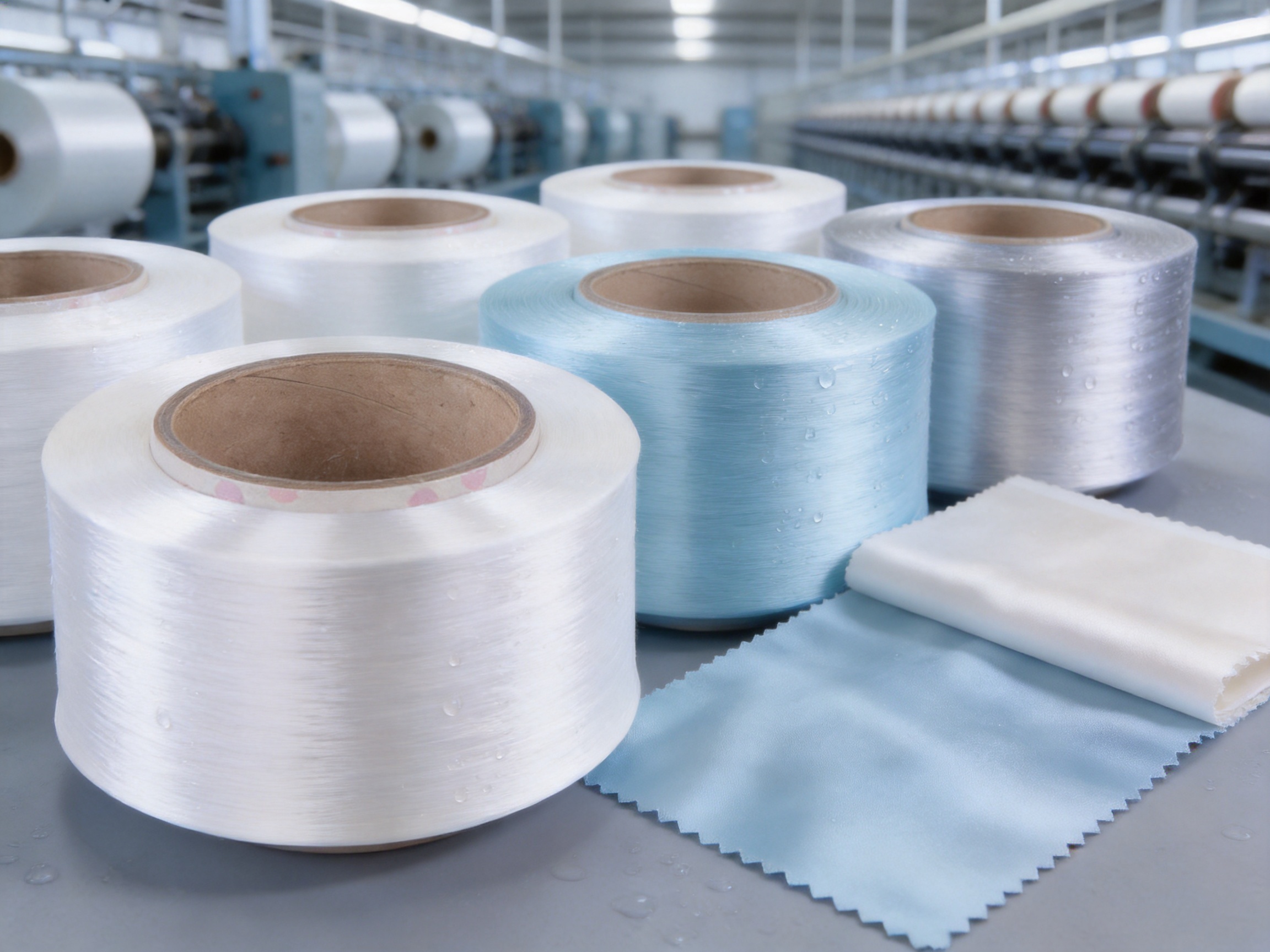
The supplier behind PE flat FDY yarn operates as a specialized textile factory in China and has worked in the field of special and functional textiles since 2006. Its product portfolio includes biodegradable yarn, low melting yarn, ECDP yarn, anti-static yarn, HDPE yarn, bio-component yarn, and polyester filament yarn. This breadth is significant because it demonstrates experience across multiple functional fiber technologies rather than dependence on a single conventional product.
A broad portfolio can strengthen technical development in several ways. Engineers can compare different polymer systems, filament structures, and functional approaches. Customers can discuss whether a particular application is better served by PE flat FDY yarn, another polyethylene-based yarn, a polyester filament, or a blended construction. This consultative approach is more useful than offering a standard product without considering the final fabric.
The company also cooperates with customers to develop new materials. This capability is valuable when standard deniers or general product specifications do not fully meet an application. Custom development may involve adjustments to yarn fineness, surface effect, mechanical balance, package form, production quantity, or downstream compatibility. Special production is available by order, allowing customers to explore solutions tailored to their manufacturing needs.
Product development in functional textiles requires an understanding of the complete value chain. A yarn may perform well in isolation but behave differently after knitting, weaving, dyeing, coating, laminating, sewing, or washing. The manufacturer’s experience with multiple specialty yarn categories can help identify these interactions earlier and support a more efficient sampling process.
Environmental responsibility is also part of the company’s stated operating concept. Its product strategy focuses on special and functional eco-friendly textile products, while its development work emphasizes resource efficiency, reduced waste, and the potential for recycling and reuse where technically appropriate. Sustainability claims should always be verified according to the specific product, production route, and end-of-life system, but an environmental focus provides a useful foundation for responsible material selection.
Textile sustainability involves more than selecting a material described as environmentally friendly. It includes raw material sourcing, production energy, water use, process emissions, product durability, transportation, consumer care, and end-of-life management. PE flat FDY yarn can contribute to a more responsible textile strategy when its long service life, functional performance, and recycling potential are considered together.
Durability is one part of sustainability. A fabric that maintains its structure and appearance for a longer period may reduce the need for frequent replacement. Good tenacity and elongation can support this objective by helping products withstand regular wear, handling, and movement. The environmental benefit depends on actual product life, so designers should avoid overengineering and should match the denier to the application.
Lightweight design can also reduce material consumption in selected applications. A lower-denier yarn may provide an adequate fabric structure with less mass, provided that the final product meets performance requirements. Reduced weight can potentially lower transportation impacts as well. However, lightweighting should not result in premature failure, since replacement and waste can offset the original material savings.
Recycling and reuse should be evaluated at the product-design stage. Monomaterial or relatively simple material constructions may be easier to sort and process than complex combinations of fibers, coatings, and finishes. Customers considering PE flat FDY yarn for circular products should review the full construction and confirm what recycling infrastructure is available in the target market.
The manufacturing process should also emphasize energy conservation, efficient production planning, and waste reduction. Process stability can reduce off-quality material, while accurate specification control can prevent unnecessary overproduction. A manufacturer that records production data and continuously improves operating conditions is better positioned to support measurable sustainability objectives.
Customers should request appropriate documentation when environmental claims are important to a project. Depending on the market, this may include material declarations, production information, test reports, recycled-content statements where applicable, or evidence related to relevant management systems. Clear communication prevents sustainability language from becoming vague or misleading.
Summer apparel is one of the most natural applications for PE flat FDY yarn. The cooling touch can improve the first-contact sensation and overall comfort of shirts, tops, dresses, lightweight trousers, scarves, and inner layers. The range of available deniers allows designers to choose a fine option for a lightweight garment or a heavier option for a more structured fashion fabric.
The yarn can be used in garments designed for everyday wear, travel, resort clothing, and hot-climate uniforms. Its good tenacity can support garment durability, while its elongation can contribute to freedom of movement when incorporated into suitable fabric constructions. Designers should evaluate drape, opacity, seam performance, and care behavior in the completed garment.
Sports and outdoor products require materials that can manage movement and repeated mechanical stress. PE flat FDY yarn offers a cooling tactile effect that can be attractive for activewear used in warm conditions. It may be considered for shirts, base layers, lightweight jackets, sun-protective accessories, and selected outdoor clothing components.
Outdoor product developers may also value the yarn’s low weight and useful strength. A lighter textile can improve comfort during hiking, cycling, training, and travel. At the same time, the yarn should be tested for abrasion, seam strength, color performance, and dimensional stability according to the intended application.
Bedding products benefit from a surface that feels cool and smooth. PE flat FDY yarn can be incorporated into sheets, pillowcases, mattress covers, blankets, and decorative bedding fabrics. The cooling hand may be especially attractive in warm regions and in products promoted for summer use.
Home textile manufacturers can select different deniers according to the desired hand, coverage, and durability. Fine yarns may support a lightweight, refined surface, while heavier yarns may be more appropriate for structured coverings or products subject to frequent handling. Washing, drying, and finishing tests should be performed before commercial production.
Automotive interiors require materials that combine visual appeal, surface comfort, dimensional stability, and resistance to repeated use. PE flat FDY yarn may be considered for selected seat fabrics, door-panel textiles, roof-related fabrics, trim materials, and decorative interior components.
The cooling touch can support comfort-oriented interior design, particularly in vehicles exposed to hot weather. However, automotive applications require comprehensive validation, including abrasion resistance, light exposure, heat aging, flammability, odor, fogging, and chemical compatibility. The yarn is therefore best viewed as a functional component within a larger engineered textile system.
Higher-denier options such as 200D, 300D, and 400D may be considered for bags, equipment covers, organizers, cases, and other products requiring more substantial fabric coverage. Good tenacity helps support resistance to handling and loading, while elongation can allow limited flexibility during use.
In these applications, the flat appearance may contribute to a distinctive surface design. The final performance will depend on the weave, coating, backing, sewing construction, and hardware used. Product developers should define whether the primary objective is low weight, high coverage, abrasion resistance, visual appearance, or a combination of these characteristics.
PE flat FDY yarn can also be used in decorative fabrics where surface feel and appearance are important. Curtains, cushions, wall-related textile surfaces, and selected furnishings may benefit from a smooth, clean filament effect. The yarn’s available specifications offer flexibility for both fine decorative fabrics and more substantial structures.
Interior applications often require attention to color consistency, light stability, cleaning methods, and dimensional behavior. Early fabric trials can help determine whether the yarn should be used alone, blended with other fibers, or combined with a special finishing process.
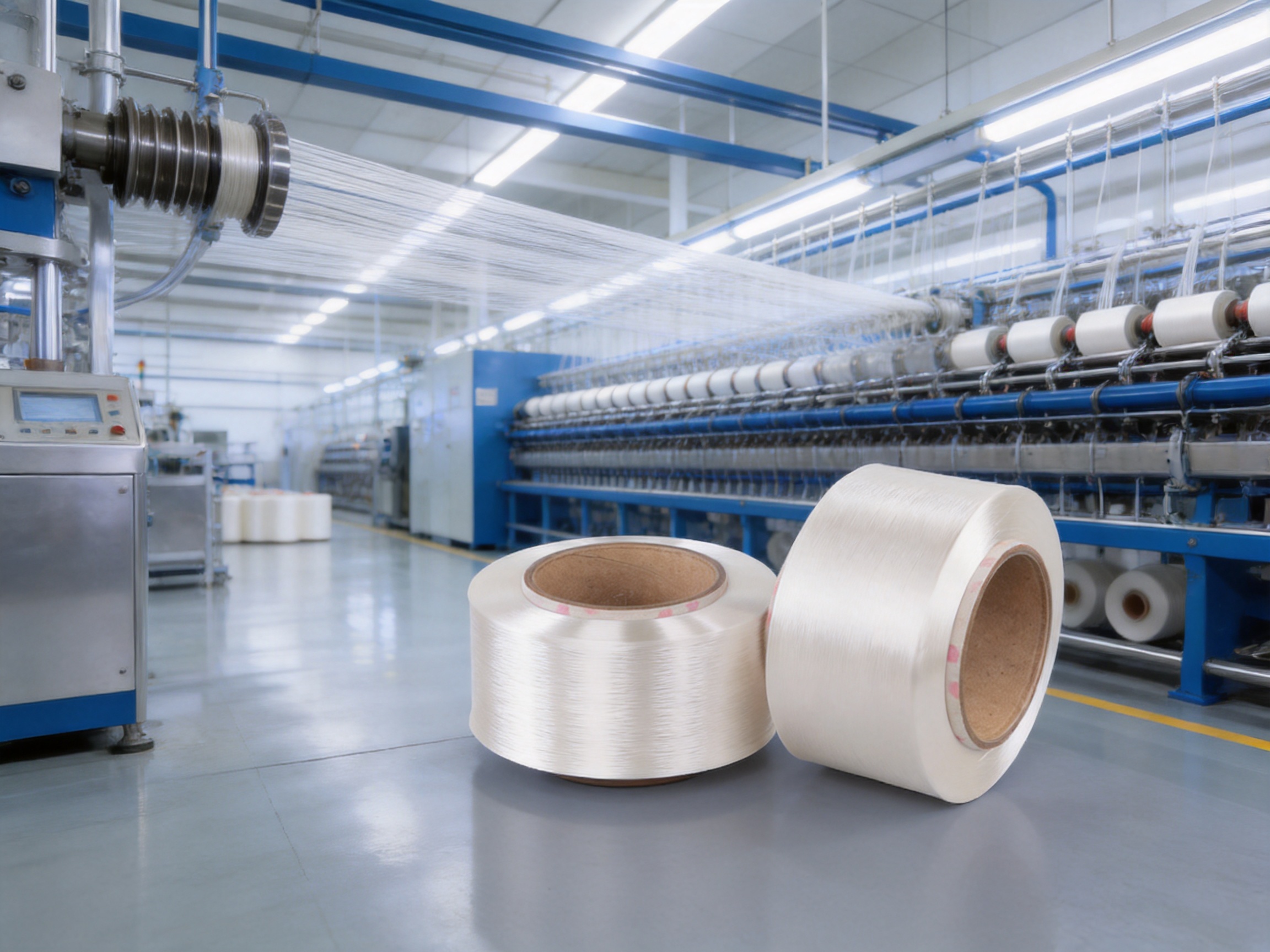
Denier selection should begin with the final product rather than the yarn catalog. Designers should identify the desired fabric weight, surface coverage, flexibility, strength, drape, transparency, and tactile effect. The yarn specification can then be chosen to support these objectives.
50D is appropriate for concepts that prioritize lightness and a fine surface. It may be useful in lightweight clothing, delicate fabric constructions, and applications where breathability and reduced mass are important. Because fine yarns can be more sensitive to processing conditions, machine settings and tension should be carefully controlled.
75D and 100D provide a balanced range for many apparel and home textile applications. They can offer more coverage than 50D while retaining a relatively light construction. These specifications are often suitable for products that need a combination of comfort, appearance, and everyday durability.
200D is a practical option when the fabric requires more substance and strength. It can be evaluated for durable clothing, bags, upholstery-related textiles, and medium-weight technical structures. The additional yarn mass may influence drape and hand, so fabric sampling remains important.
300D and 400D are oriented toward heavier or more robust constructions. These deniers may be considered for outdoor goods, equipment fabrics, automotive interiors, and industrial textile uses where coverage and mechanical performance are more important than ultra-light weight.
Customers should also consider whether the yarn will be used in a woven or knitted structure. Knitting may require a different balance of elongation and surface behavior than weaving. The machine gauge, fabric density, finishing temperature, and intended sewing process can all influence the final choice.
Successful development begins with a clear technical brief. The brief should include the intended end use, target fabric weight, construction type, color requirements, finishing method, expected order volume, performance targets, and any environmental documentation required by the buyer or market.
Sampling should be conducted using the same or similar equipment planned for commercial production. A laboratory sample may not reveal every issue that appears on a high-speed knitting or weaving line. Production trials can confirm unwinding behavior, tension stability, filament integrity, fabric appearance, and compatibility with subsequent processes.
Testing should be selected according to the application. Common evaluations may include yarn linear density, tenacity, elongation, fabric tensile strength, tear strength, abrasion, dimensional change, washing durability, colorfastness, and tactile evaluation. For outdoor or automotive products, additional environmental and safety tests may be required.
Finishing conditions should be optimized carefully. Excessive heat or tension may alter the yarn’s structure and affect its intended balance of strength, elongation, and hand feel. A controlled finishing trial can help determine whether heat setting, softening, coating, calendaring, or other treatments improve the final product without reducing comfort.
Blending is another possible development route. PE flat FDY yarn may be combined with other fibers to achieve a particular balance of cooling effect, moisture management, appearance, elasticity, softness, or cost. The compatibility of the materials should be assessed throughout spinning, weaving or knitting, dyeing, finishing, and care testing.
PE flat FDY yarn is available for regular specification selection and special production by order. This flexibility is useful for customers who require a nonstandard package, a specific denier, a customized production quantity, or a development sample for a new textile concept.
Customization should be based on measurable requirements. Instead of describing a product only as “cool” or “strong,” customers can specify the desired hand feel, fabric weight, breaking performance, elongation range, appearance, and end-use conditions. Clear criteria help the manufacturer recommend a suitable specification and reduce unnecessary sampling cycles.
Communication about delivery is also important. The supplier identifies Shanghai seaport as a shipping option, which can support international logistics planning. Buyers should confirm packaging, loading quantities, production lead time, documentation, inspection arrangements, and shipping terms before placing an order.
Long-term cooperation can provide advantages beyond individual orders. A manufacturer familiar with the customer’s machines, fabric constructions, and quality expectations can respond more efficiently to repeat orders and product improvements. Regular feedback from fabric mills and brands can also contribute to better yarn development and more consistent commercial results.
A specialized functional yarn manufacturer brings focused experience to materials that require more than basic filament production. Functional yarns must deliver a defined tactile, mechanical, thermal, electrical, or environmental benefit. Producing them successfully requires process knowledge, testing discipline, and the ability to connect yarn characteristics with real textile applications.
The manufacturer behind this product has developed a portfolio covering multiple specialty categories, including biodegradable, low melting point, ECDP, anti-static, HDPE, bio-component, and polyester filament yarns. This combination demonstrates an established interest in material innovation and provides customers with access to different technology directions under one production organization.
Its experience since 2006 also supports accumulated knowledge in production management, customer service, material selection, and application development. Experience does not eliminate the need for testing, but it can help shorten the path from concept to commercial sample by identifying practical process considerations at an earlier stage.
The company’s location in Haian, Nantong City, Jiangsu Province, China, places its manufacturing operation within an important textile and industrial region. Its cooperation with customers on new materials allows the supplier to serve both standard procurement needs and development-oriented projects.
For buyers, the most important question is whether the supplier can provide consistent quality and responsive technical support. A specialized manufacturer should be able to discuss denier selection, processing conditions, application suitability, sampling, quality documentation, and production scheduling. These services add value because they reduce uncertainty throughout the procurement process.
Consistency is essential when a yarn moves from sampling to mass production. A fabric mill needs the yarn to perform similarly from package to package and from batch to batch. Variations in denier, tension behavior, surface appearance, or mechanical properties can lead to visible fabric differences and production losses.
PE flat FDY yarn’s commercial value therefore depends on more than its cooling touch. The product must also be supplied in a form that supports efficient processing. Good package formation, clear labeling, stable specifications, and responsive handling of technical questions can influence the total cost of ownership.
Durability can create additional value for downstream brands. If a garment or home textile maintains its appearance and performance through repeated use, the product may achieve better customer acceptance. Functional differentiation can also support premium positioning when the performance is clearly communicated and demonstrated through appropriate testing.
Manufacturers should avoid selecting yarn solely on the basis of the lowest purchase price. A slightly lower yarn price may be offset by higher breakage, lower machine efficiency, fabric rejection, or inconsistent quality. Evaluating the complete production result provides a more realistic comparison between suppliers and materials.
Before approving PE flat FDY yarn for commercial use, customers should prepare a structured evaluation checklist. The checklist should reflect the end-use requirements and should be agreed upon by the yarn supplier, fabric producer, garment manufacturer, and brand or purchasing team where applicable.
| Evaluation area | Questions to review |
|---|---|
| Product identity | Is the yarn confirmed as PE flat FDY, and is the requested denier clearly identified? |
| Mechanical properties | Do tenacity and elongation meet the requirements of the intended fabric and processing route? |
| Touch and appearance | Does the completed fabric provide the desired cooling sensation, smoothness, and visual effect? |
| Processing behavior | Does the yarn unwind consistently and run effectively on the planned knitting or weaving equipment? |
| Finishing compatibility | Can the fabric tolerate the selected heat, tension, dyeing, coating, or finishing conditions? |
| Durability | Does the finished product meet expectations for abrasion, washing, stretching, and repeated use? |
| Environmental information | Are sustainability claims supported by suitable documentation and relevant end-of-life considerations? |
| Supply capability | Can the supplier support the required quantity, lead time, packaging, and shipping arrangements? |
This checklist encourages a complete evaluation instead of focusing on one isolated characteristic. It also helps different members of the supply chain use the same criteria when reviewing samples and approving production.
The future of PE flat FDY yarn is connected to several major textile trends. Consumers continue to seek clothing and bedding that feel comfortable in warmer conditions. Sports and outdoor markets require lighter materials with reliable performance. Automotive and industrial designers are exploring new combinations of comfort, durability, and functional surface design. These trends create opportunities for specialized filament yarns.
Material innovation will likely focus on improving the balance between cooling sensation, strength, flexibility, processability, and environmental performance. Manufacturers may also develop additional deniers, surface structures, blends, and application-specific formats. Cooperation between yarn producers, fabric mills, brands, and testing organizations will be important for converting these concepts into dependable commercial products.
Environmental expectations will become increasingly specific. Customers may request more transparent information about raw materials, energy consumption, production waste, recyclability, and product life. Functional yarn manufacturers that combine performance development with responsible production practices will be better prepared for these requirements.
Customization will remain another important direction. Different markets have different requirements for hand feel, weight, appearance, and durability. The ability to produce special orders and cooperate on new materials can help a manufacturer serve niche applications while continuing to supply standard specifications efficiently.
PE flat FDY yarn is a versatile functional material that combines a cooling tactile effect with good tenacity, useful elongation, and multiple denier choices. Its performance profile makes it suitable for summer apparel, sportswear, outdoor products, bedding, home textiles, automotive interiors, accessories, and selected industrial applications.
Its competitive advantage lies in the balance of properties. The yarn offers more than a cool hand feel: it is designed to support textile strength, controlled extension, processing stability, and product differentiation. The availability of 50D, 75D, 100D, 200D, 300D, and 400D options allows manufacturers to select a specification according to the final fabric rather than forcing every application into one standard format.
The supplier’s experience in special and functional textiles, its product range, customer cooperation model, and capacity for special production provide a foundation for both regular purchasing and new material development. Its focus on environmental protection, innovation, energy conservation, waste reduction, and recyclable product directions is also relevant to customers building more responsible textile portfolios.
For the best results, buyers should evaluate the yarn through application-based sampling and testing. The completed fabric should be assessed for cooling touch, mechanical properties, appearance, care durability, and processing behavior. When the specification is correctly selected and the production process is well controlled, PE flat FDY yarn can help textile manufacturers create products that are cooler, lighter, stronger, and more distinctive.
PE flat FDY yarn is a polyethylene flat filament yarn produced through a fully drawn yarn process. It is designed to provide a cooling tactile sensation together with good tenacity and elongation for textile applications.
FDY means fully drawn yarn. The filament is drawn during production to develop its orientation and performance before it is supplied for downstream textile processing such as weaving or knitting.
The main advantage is the combination of cooling touch and mechanical performance. The yarn can provide a fresh tactile sensation while also offering useful tenacity and elongation for practical textile products.
The listed options are 50D, 75D, 100D, 200D, 300D, and 400D. Lower deniers are generally suitable for lighter and finer fabrics, while higher deniers can provide greater coverage and a more substantial construction.
Yes. The cooling touch makes it suitable for evaluating in summer shirts, lightweight dresses, sportswear, inner layers, sleepwear, and other warm-weather garments. Fabric trials should confirm the desired hand, drape, breathability, and durability.
Yes. PE flat FDY yarn can be considered for sheets, pillowcases, mattress covers, blankets, and other bedding products where a cool and smooth surface is desirable.
It can be suitable for selected sportswear and outdoor applications because it combines a cooling tactile effect with useful strength and elongation. Developers should conduct testing for abrasion, stretching, washing, seams, and the specific performance requirements of the garment.
No. Cooling touch refers to the perceived sensation created by heat transfer between the textile surface and the skin. The effect can vary according to fabric construction, ambient conditions, finishing, garment fit, and the use of other fibers.
Customers should consider fabric weight, required coverage, drape, strength, flexibility, end use, and processing method. Fine deniers such as 50D to 100D may suit lightweight products, while 200D to 400D may be more appropriate for substantial or technical fabrics.
Yes. Special production by order is available. Customers should provide clear requirements concerning denier, tactile effect, mechanical performance, package format, quantity, application, and delivery expectations.
Shanghai seaport is identified as a shipping option. Buyers should confirm shipping terms, packaging, lead time, documentation, and loading arrangements directly with the supplier before ordering.
Important controls include raw material preparation, melt extrusion, filament formation, cooling, drawing, winding, package formation, inspection, and batch traceability. Stable control at each stage supports consistent yarn quality and downstream processing.
The yarn is presented within an eco-conscious portfolio and is associated with production practices focused on energy conservation, emission reduction, recycling, and reuse. Specific environmental claims should be verified according to the exact product, manufacturing route, documentation, and available end-of-life systems.
A specialized manufacturer can provide more focused knowledge of functional fibers, application development, quality control, and customization. A supplier with experience across biodegradable, low melting, anti-static, HDPE, bio-component, and polyester yarns can also help customers compare material options for different textile objectives.
1. Manufacturer-provided product information for PE Flat FDY Yarn, including listed features, available deniers, shipping information, and special-order capability.
2. Manufacturer-provided company information concerning the development and production of special and functional eco-friendly textile products since 2006.
3. Textile terminology references concerning denier, filament yarn, fully drawn yarn, tenacity, and elongation.
4. General textile engineering references on polymer melt spinning, filament drawing, winding, package formation, and yarn quality control.
5. General textile sustainability references concerning material efficiency, product durability, recycling, resource reduction, and responsible environmental claims.
It is made with Bio-base PLA, fully biodegradable Feature: 1. Industrial compost product 2. Made with PLA 3. Eco-frie...
READ MOREPlease fill out the form below and our team will contact you as soon as possible.
Addres: No.66 Qiaogang Road, Haian, Nantong City, Jiangsu Province, China
E-mail: service@gcfiber.com admin@gcfiber.com
Copyright ? GC FIBER All Rights Reserved. Eco-Friendly Textile Products Manufacturer Biodegradable Yarn Company