English
 中文简体

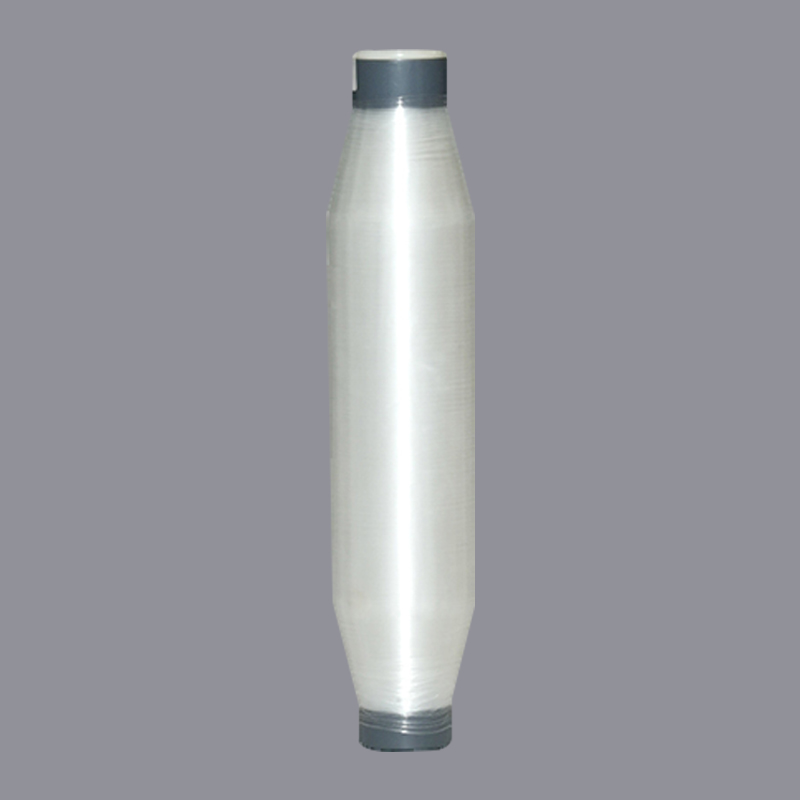
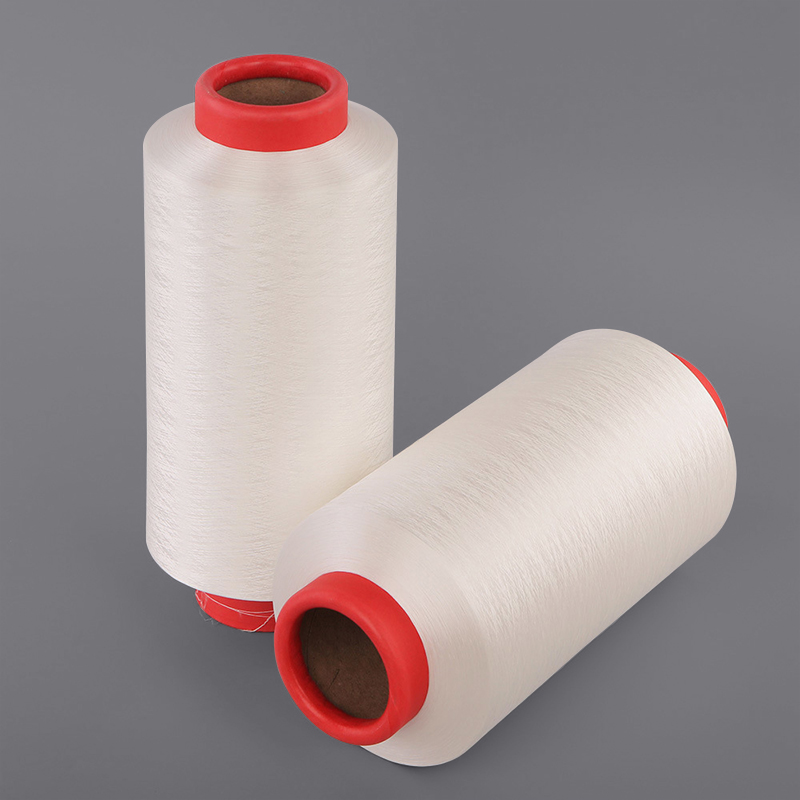
Made of PBS (Polybutylene Succinate), fully biodegradable.Features:1.Home compostable2.Raw material: PBS Polybutylene Su...
READ MORE
Content
As governments, retailers, manufacturers, and consumers increasingly seek alternatives to conventional petroleum-based materials, PLA biodegradable non-woven fabric has become an important option for sustainable textile production. Made from polylactic acid derived from renewable plant resources, this non-woven material combines bio-based content with practical performance characteristics, including softness, dimensional stability, antibacterial potential, lower-temperature processing, and good resistance to ultraviolet exposure.
PLA biodegradable non-woven fabric is designed for applications in hygiene, medical-adjacent products, packaging, agriculture, catering, filtration, and protective layers. Unlike traditional woven textiles, non-woven fabric is formed by bonding fibers or filaments rather than interlacing yarns. This structure allows manufacturers to control weight, thickness, porosity, strength, softness, and converting performance according to the requirements of the finished product.
GC FIBER is a specialized textile manufacturer that develops and produces functional and eco-friendly fiber products. Since 2006, the company has focused on special textile materials, including biodegradable yarn, low melting yarn, ECDP yarn, anti-static yarn, HDPE yarn, bio-component yarn, and polyester filament yarn. Its experience in functional fiber development provides a strong technical foundation for producing and customizing PLA-based non-woven materials.
This article examines the composition, manufacturing process, performance advantages, application possibilities, customization capabilities, and quality considerations associated with PLA biodegradable non-woven fabric.
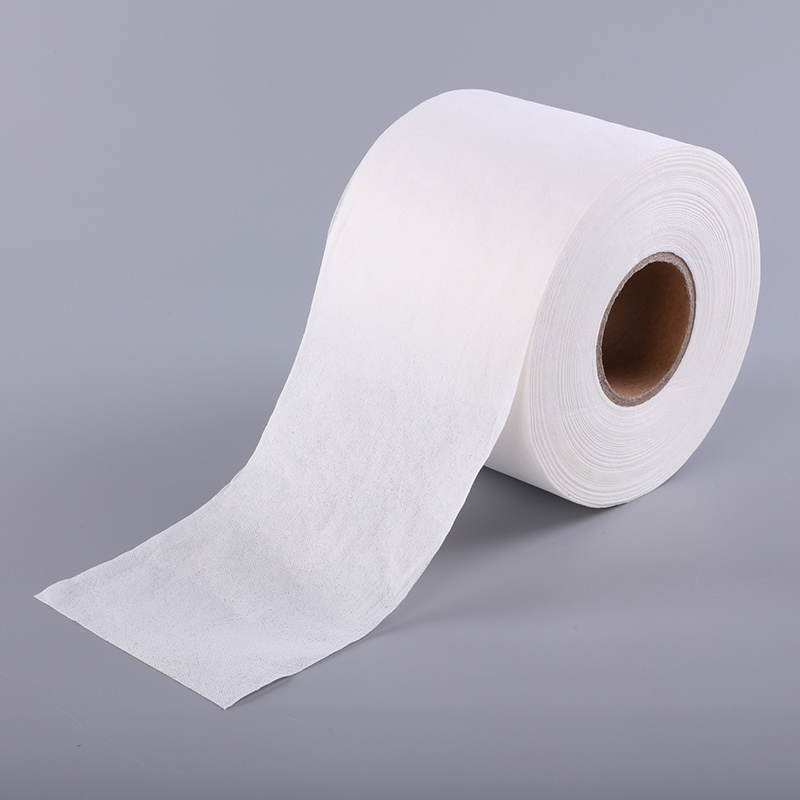
PLA Biodegradable Non Woven Fabric
PLA stands for polylactic acid, a polymer produced from lactic acid. Lactic acid can be obtained by fermenting renewable agricultural resources such as corn starch, sugarcane, cassava, and other plant-based feedstocks. After purification and polymerization, the resulting PLA can be converted into fibers, filaments, films, and non-woven structures.
PLA non-woven fabric is made by forming PLA fibers or continuous filaments and bonding them together. Depending on the intended use, the fabric may be manufactured through spunbond, meltblown, thermal bonding, or other specialized non-woven processes. The final structure does not require conventional weaving or knitting, which allows efficient production of lightweight rolls with controlled physical properties.
The term “biodegradable” must be understood in relation to the disposal environment. PLA non-woven fabric is generally designed for industrial composting, where elevated temperature, controlled humidity, oxygen availability, and active microorganisms accelerate degradation. Under suitable industrial composting conditions, PLA can ultimately break down into carbon dioxide, water, and organic matter.
Industrial compostability is different from ordinary disposal in soil, landfill, or a home composting system. Home composting environments may not provide the temperature and microbial activity needed for timely decomposition. Therefore, manufacturers and buyers should match product claims with applicable certification, testing, and end-of-life infrastructure.
The performance of PLA biodegradable non-woven fabric begins with the quality of the polymer and the control of the fiber-forming process. Polymer purity, molecular weight, melt behavior, crystallinity, moisture content, and additive selection all influence spinning stability and final fabric performance.
During production, PLA resin is dried before melting because excessive moisture can cause hydrolytic degradation at elevated processing temperatures. Proper drying helps maintain molecular weight and supports stable extrusion. The polymer is then melted and pushed through precision spinnerets to form either continuous filaments or short fibers.
For spunbond products, continuous PLA filaments are extruded, stretched, distributed across a moving web, and bonded. This process creates a lightweight fabric with good uniformity and high production efficiency. For meltblown structures, the polymer melt is extruded through fine openings and attenuated by high-velocity air, producing fine fibers with a high surface area. Different combinations of spunbond and meltblown layers can be used to balance strength, softness, filtration, and barrier performance.
Fiber cross-section, filament count, denier, orientation, web density, and bonding temperature can all be adjusted. These variables make it possible to create fabrics for different applications rather than relying on a single standard construction.
The supplied product range includes 30 GSM, 50 GSM, and 100 GSM options, with additional weights available for special production by order. GSM refers to grams per square meter and provides a basic indication of fabric weight. A lower GSM material is generally suitable for lightweight wipes, liners, packaging inserts, and breathable layers, while a higher GSM structure may be preferred for protective covers, industrial components, and more demanding handling conditions.
| Specification | Typical Significance | Potential Applications |
|---|---|---|
| 30 GSM | Lightweight, flexible, and economical | Wipes, liners, lightweight packaging, disposable covers |
| 50 GSM | Balanced softness, strength, and coverage | Shopping bags, hygiene products, agricultural covers, protective layers |
| 100 GSM | Higher coverage, strength, and durability | Industrial sheets, heavier packaging, filtration media, protective textile components |
| Custom GSM | Adjusted to project requirements | OEM products, specialty converting, multilayer constructions, application-specific designs |
Actual performance depends on more than fabric weight. Fiber orientation, bonding method, pore structure, roll width, color, surface treatment, and production conditions also influence the final result. Buyers should therefore define requirements using a complete technical specification rather than GSM alone.
One of the main advantages of PLA non-woven fabric is its renewable origin. Conventional polypropylene and polyethylene non-wovens are manufactured from fossil-based raw materials. PLA, by contrast, is derived from plant-based feedstocks. This provides manufacturers with an opportunity to reduce dependence on petroleum resources and introduce a bio-based material into their product portfolio.
A renewable origin does not automatically mean that a product has zero environmental impact. Agricultural inputs, energy consumption, transportation, processing, and disposal must all be considered in a complete life-cycle assessment. Nevertheless, replacing a portion of fossil-derived materials with responsibly manufactured PLA can support broader material-diversification and sustainability strategies.
PLA can offer an end-of-life pathway that differs from conventional synthetic fiber. When a suitable PLA product is certified for industrial composting and processed in a compatible facility, it can break down under controlled conditions rather than remaining persistent as a conventional plastic material.
This characteristic is especially valuable for products that are difficult to collect, wash, or recycle after a single use. Examples may include selected hygiene articles, food-service disposables, agricultural covers, and contaminated medical-adjacent products. However, compostability should always be communicated accurately. A PLA fabric should not be described as suitable for home composting unless it has been specifically tested and certified for that environment.
PLA can be thermally bonded at lower temperatures than some conventional synthetic materials. This may reduce energy requirements during selected bonding, laminating, or finishing operations. Lower processing temperatures can also help manufacturers work with heat-sensitive components, coatings, or multilayer constructions.
The actual energy advantage depends on equipment efficiency, line speed, bonding pressure, cooling conditions, and the selected PLA grade. It should be evaluated through process trials and measured production data. Even so, the ability to process the material at comparatively lower temperatures is a useful advantage for converters seeking to optimize energy consumption.
PLA fibers can provide a soft and comfortable hand feel when the polymer grade, filament fineness, web formation, and bonding conditions are properly controlled. This makes the fabric suitable for products requiring gentle contact with the skin, including wipes, liners, hygiene components, and selected disposable medical-adjacent products.
Skin-contact suitability depends on the complete construction, not only the base fiber. Dyes, finishes, adhesives, coatings, and sterilization processes must also be assessed. For food-contact or medical applications, the final product should be evaluated according to the relevant market regulations and testing requirements.
PLA is often considered suitable for applications where low odor and hygienic handling are important. The material may provide an environment that is less favorable to certain microorganisms than some conventional fibers, and the supplied product information identifies antibacterial performance as a feature.
Antibacterial claims should be supported by appropriate laboratory testing because performance can vary according to bacterial species, humidity, contact time, fabric construction, and finishing treatments. Buyers should request test methods, laboratory data, and defined performance conditions before making regulated antibacterial claims on consumer packaging.
Good UV stability is another useful characteristic identified for this fabric. Resistance to ultraviolet exposure can help the material retain its appearance and structural integrity during outdoor handling or short- to medium-term exposure. Potential applications include agricultural covers, fruit protection bags, protective packaging, outdoor transport layers, and selected geotextile-related uses.
UV durability is affected by exposure intensity, climate, temperature, color, polymer grade, additives, and exposure duration. For long-term outdoor applications, accelerated weathering tests and field trials are recommended.
PLA biodegradable non-woven fabric can be designed for common converting operations such as slitting, cutting, heat sealing, ultrasonic welding, coating, lamination, and bag making. Compatibility with standard equipment is a major commercial advantage because it allows manufacturers to evaluate sustainable materials without immediately investing in an entirely new production line.
Processing conditions may need to be optimized because PLA has different thermal behavior from polypropylene, polyester, or polyethylene. Equipment temperature, dwell time, web tension, sealing pressure, and cooling conditions should be adjusted through controlled trials. GC FIBER’s experience in functional yarn and fiber production can support this type of technical coordination.
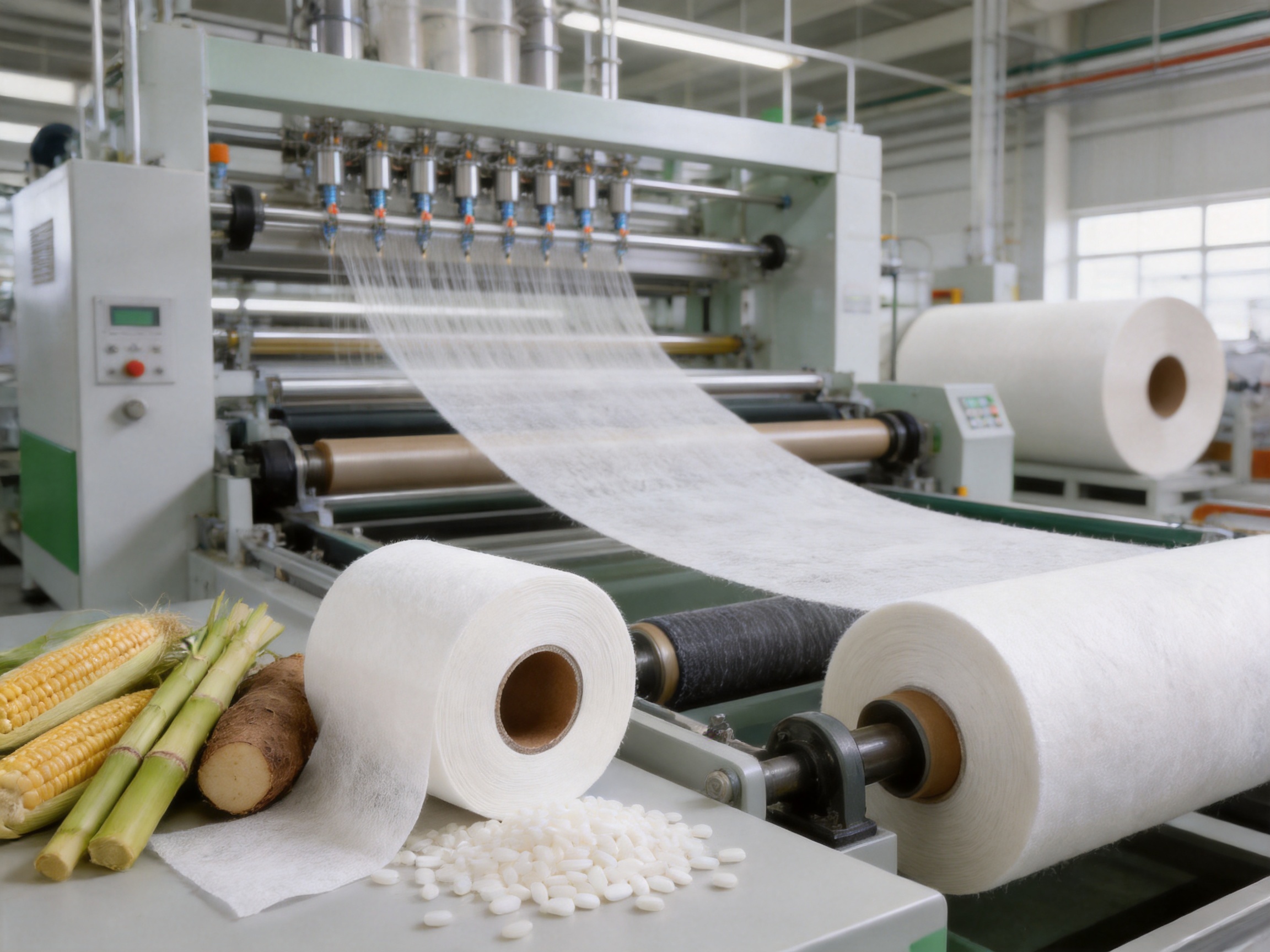
Manufacturing begins with the selection of a PLA grade appropriate for the target product. Important considerations include melt flow behavior, molecular weight, crystallization characteristics, thermal stability, color, and intended fiber-forming method.
Incoming raw materials should be inspected and documented. Moisture control is particularly important because PLA is sensitive to hydrolysis during melting. Proper storage and drying procedures help minimize degradation and maintain consistent extrusion behavior.
The prepared PLA resin is fed into an extruder, where controlled heat and screw movement transform the solid polymer into a homogeneous melt. Temperature zones must be carefully managed to prevent incomplete melting, excessive thermal degradation, or unstable viscosity.
Filtration systems may be used to remove impurities before the melt reaches the spinneret. A clean and stable melt supports uniform filament formation, reduces breakage, and improves fabric consistency. Precise pressure and temperature monitoring are important for maintaining steady output throughout the production run.
In the spinning stage, the polymer melt passes through a spinneret containing multiple fine openings. The shape and dimensions of these openings influence filament diameter and cross-sectional structure. Depending on the product design, the fiber may be round, hollow, trilobal, or another engineered form.
After extrusion, the filaments are cooled and drawn. Drawing aligns polymer chains and improves tensile properties. The degree of drawing affects strength, elongation, softness, and thermal shrinkage. A carefully controlled drawing process is essential for producing a fabric that performs consistently during subsequent bonding and converting.
The filaments or fibers are deposited onto a moving conveyor to form a web. Airflow, conveyor speed, fiber distribution, and electrostatic conditions can influence basis-weight uniformity and anisotropy. A well-controlled web provides more consistent strength in both machine and cross-machine directions.
For specialized products, multiple layers may be combined. A coarse spunbond layer can provide strength and handling performance, while a finer meltblown layer can improve filtration or surface coverage. Layer combinations can be designed according to the application rather than using a one-layer construction for every market.
Thermal bonding joins fibers at selected contact points using heated calender rolls, through-air bonding, or other methods. The bonding temperature must be high enough to create stable connections but controlled enough to preserve softness, porosity, and fabric flexibility.
Lower-temperature bonding is one of the attractive processing features of PLA. It can support efficient production and may reduce the thermal load on the material. Excessive heat, however, can cause deformation, shrinkage, stiffness, or loss of desired texture. For this reason, production parameters must be matched to fabric weight, line speed, polymer grade, and bonding pattern.
After bonding, the fabric can be treated, slit, wound, printed, coated, laminated, or converted into specific widths. Optional finishing may include hydrophilic treatment, water repellency, softness enhancement, antistatic treatment, color application, or compatibility improvements for downstream processes.
Any finishing chemistry must be evaluated in relation to the product’s sustainability and end-of-life claims. A compostable base fabric may not remain compostable if it is combined with unsuitable coatings, adhesives, inks, or barrier films. Finished-product testing is therefore essential.
Reliable non-woven fabric requires consistent control from raw material receipt through final roll inspection. Quality control can include visual inspection, GSM measurement, thickness testing, tensile strength, elongation, tear resistance, air permeability, moisture behavior, thermal shrinkage, color consistency, and roll-width verification.
For products marketed as industrially compostable, testing should address the complete finished construction whenever possible. The presence of dyes, coatings, binders, laminates, and packaging components can affect degradation. Certification requirements differ by market, so buyers should define the destination country and intended claim at the beginning of development.
| Quality Area | Typical Evaluation | Why It Matters |
|---|---|---|
| Basis Weight | GSM measurement across the web | Confirms material consistency and product coverage |
| Tensile Strength | Machine-direction and cross-direction testing | Indicates resistance to handling and tearing |
| Elongation | Stretch before rupture | Helps determine flexibility and converting behavior |
| Thermal Behavior | Bonding, shrinkage, and sealing trials | Supports stable processing on customer equipment |
| Air Permeability | Airflow through the fabric | Important for breathable hygiene and filtration products |
| Compostability | Testing under applicable industrial conditions | Supports accurate environmental claims |
| Microbiological Performance | Antibacterial testing under defined methods | Verifies hygienic performance claims |
| UV Stability | Accelerated weathering or outdoor exposure | Estimates performance during light exposure |
Manufacturers should establish sampling procedures for both production runs and finished rolls. Traceability records can include raw-material batch numbers, machine settings, production dates, operator information, inspection results, and shipment details. This documentation supports problem solving and gives customers greater confidence in supply consistency.
Hygiene products are among the most promising application areas for PLA non-woven fabric. Its soft surface, breathable structure, renewable origin, and potential for industrial compostability make it suitable for selected wipes, liners, sanitary products, diapers, and disposable protective garments.
Wipes require a careful balance between softness, wet strength, absorbency, lint control, and compatibility with lotions or cleansing solutions. PLA fabric can be engineered as a dry substrate or combined with other biodegradable components. The final wipe should be assessed for strength during use, dispersibility requirements, packaging compatibility, and disposal conditions.
For disposable medical-adjacent gowns, caps, shoe covers, and protective layers, fabric weight and barrier performance must be selected according to the intended risk level. A biodegradable base material does not automatically provide protection against liquids, aerosols, or pathogens. If a product is intended for regulated medical use, it requires appropriate testing for barrier, cleanliness, biocompatibility, and sterilization compatibility.
Antibacterial claims can be valuable in hygiene markets, but they must be supported by test data. A general statement about the polymer should not replace verification of the finished article. Product developers should also assess whether any added coating or antimicrobial treatment is compatible with industrial composting.
PLA non-woven fabric can provide a distinctive alternative for reusable or semi-reusable shopping bags, gift bags, product wraps, protective inserts, tea bags, coffee-related applications, and specialty retail packaging. It offers a textile-like appearance and can be engineered for printing, cutting, sewing, heat sealing, or ultrasonic welding.
For shopping bags, a 50 GSM or higher construction may provide an appropriate balance between carrying strength and material efficiency. The correct basis weight depends on bag dimensions, handle design, load requirements, seam construction, and expected reuse cycles.
Packaging designers should consider the entire package rather than the fabric alone. Thread, labels, coatings, adhesives, handles, printing inks, and closures may affect recyclability or compostability. A package intended for industrial composting should be designed as a compatible system, with clear disposal instructions.
The fabric can also help brands communicate a more natural visual identity. Its plant-based origin and soft textile surface are useful for premium packaging concepts where material appearance is part of the customer experience.
Agricultural applications may include crop covers, fruit protection bags, seedling protection, temporary weed-control layers, and soil-contact materials. These products can benefit from the combination of low weight, light-management potential, and compostability after the useful service period.
In agricultural use, degradation timing is particularly important. A crop cover must remain functional throughout the growing period but should not create persistent waste after removal. Product developers should evaluate strength retention, moisture exposure, soil contact, ultraviolet radiation, temperature changes, and microbial activity.
Good UV stability can help maintain performance during sunlight exposure. However, the desired service life should be clearly defined. Some agricultural products are intended to last several weeks, while others may require several months of outdoor durability. Formulation, fabric weight, color, and stabilization package should be selected accordingly.
PLA-based agricultural materials should not be assumed to disappear immediately in ordinary soil. Industrial compostability and soil biodegradation are different performance categories. Field testing and local disposal guidance are important before making agricultural biodegradation claims.
In industrial environments, PLA non-woven fabric may be used for filtration media, protective sheets, cushioning layers, packaging separators, equipment covers, and interior textile components. The appropriate design depends on airflow, particle capture, pressure drop, mechanical strength, temperature, and chemical exposure.
For catering and food-service applications, potential uses include tablecloths, placemats, food-contact-adjacent layers, tray liners, and disposable service materials. Food-contact suitability depends on the polymer grade and all substances used during production. Regulatory testing should be completed for the specific destination market and intended food-contact conditions.
Airline and hospitality industries may also evaluate biodegradable non-woven fabric for disposable headrest covers, tray liners, service accessories, packaging, and protective layers. These sectors often value low weight, neat appearance, supply consistency, and efficient disposal. PLA fabric can contribute to sustainability programs when the organization has access to suitable collection and composting infrastructure.
A sustainable material must also be technically reliable. Customers need fabric that runs smoothly on converting lines, arrives with consistent width and weight, and performs predictably in the final product. Manufacturing expertise directly affects these outcomes.
GC FIBER’s product portfolio covers multiple functional fiber categories. Experience with biodegradable yarn, low melting yarn, ECDP yarn, anti-static yarn, HDPE yarn, bio-component yarn, and polyester filament yarn provides knowledge across polymer types, spinning behavior, functional additives, and downstream textile requirements.
The company’s technical capabilities include product research, development, production, and customer collaboration. Its dedicated design and R&D department supports special and functional eco-friendly textile products. This is important for PLA projects because the most appropriate solution may require several rounds of formulation, spinning, web formation, bonding, and converting trials.
Multiple production lines and machines provide flexibility for different order sizes and product constructions. Control over raw-material supply and quality can help reduce variation between production batches. For customers, this means that a development project can potentially move from sample quantities to larger commercial orders without changing suppliers at every stage.
The company’s location in Haian, Nantong City, Jiangsu Province, with access to the Shanghai seaport, also supports international logistics. Export coordination, documentation, roll packaging, and shipment planning are important considerations for customers purchasing industrial textile materials across borders.
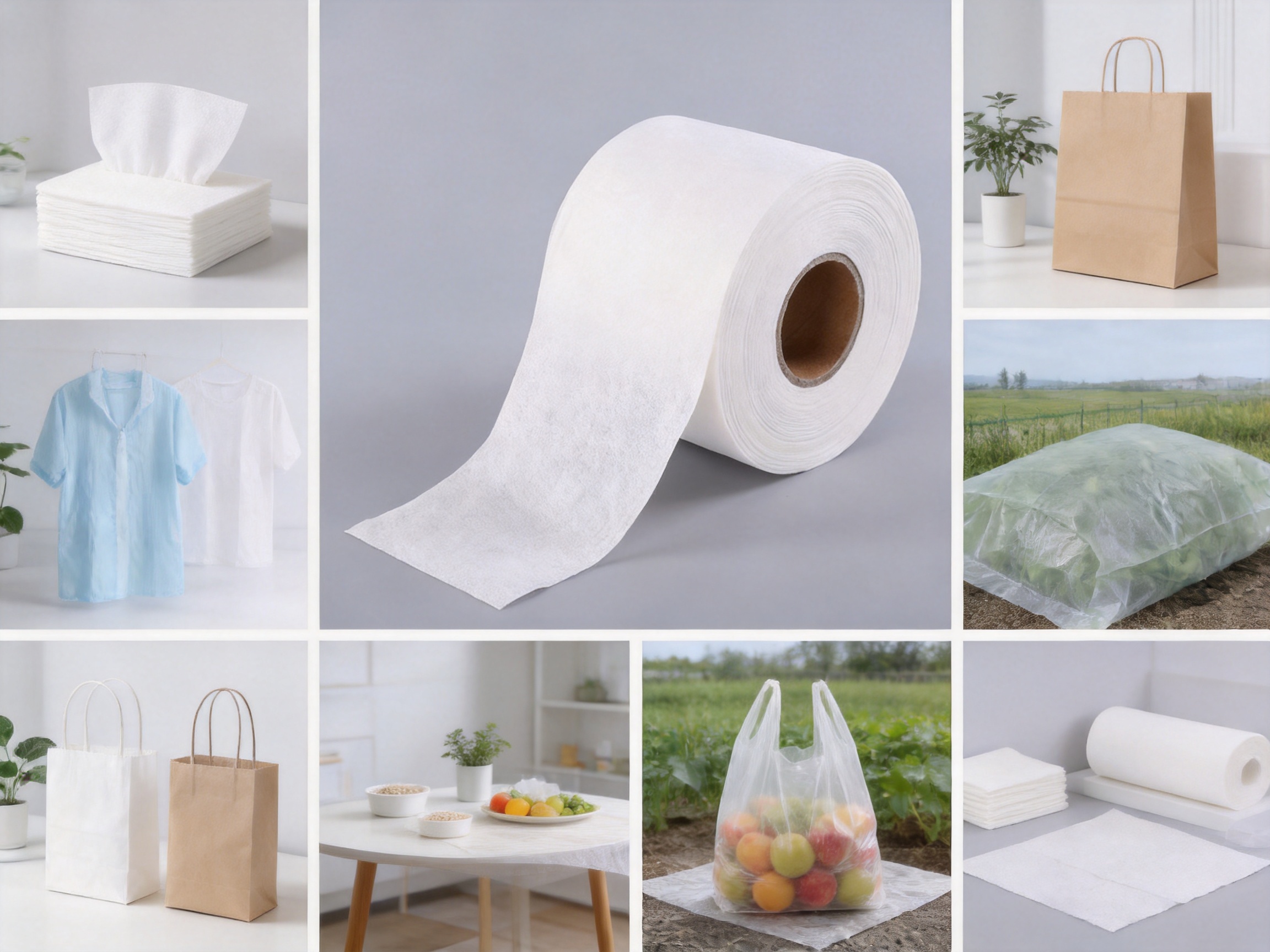
PLA biodegradable non-woven fabric is not limited to standard catalog specifications. OEM customers may require different GSM values, roll widths, colors, surface finishes, filtration levels, softness, tensile strength, thermal behavior, or bonding patterns.
Fiber fineness affects softness, coverage, porosity, surface texture, and strength. Fine fibers can create a smoother and more uniform surface, while larger filaments may contribute to handling strength and dimensional stability. Filament count and distribution can be adjusted according to the desired fabric structure.
Cross-sectional geometry can influence moisture movement, luster, touch, strength, and inter-fiber bonding. A custom cross-section may be useful when a product requires a special hand feel or a particular balance between surface coverage and air permeability.
Depending on the application, customers may request hydrophilic, water-repellent, antistatic, softening, printable, or heat-sealable characteristics. Each finishing option should be evaluated for durability, safety, process compatibility, and environmental impact.
Some products require more than one performance function. A multilayer structure may combine a soft surface, a strength layer, and a fine-fiber filtration or barrier layer. Composite designs can be developed with compatible biodegradable components where required.
New-material projects often begin with samples or pilot runs. Production flexibility allows customers to validate fabric performance before committing to larger volumes. Once the formulation and construction are approved, the same technical specifications can guide scale-up production and quality control.
Successful OEM development requires communication between the customer’s product team and the manufacturer’s sales, R&D, design, and production departments. The process normally begins with a clear application brief. This should identify the product’s purpose, required service life, fabric weight, width, color, strength, softness, disposal route, converting method, and target market.
After reviewing the brief, the manufacturer can recommend a preliminary construction and produce samples. Customers may then conduct laboratory testing and production trials. Feedback from these trials can lead to adjustments in GSM, bonding pattern, roll dimensions, surface treatment, or thermal settings.
Before commercial production, both sides should confirm approved specifications, inspection standards, packing requirements, delivery terms, and documentation. Clear approval procedures reduce the risk of misunderstandings and help ensure that the delivered material matches the validated sample.
GC FIBER provides dedicated support throughout custom and OEM projects. Its professional team works across sales, research and development, design, and production. Ongoing communication and shipment tracking can help customers monitor progress from initial specification through delivery.
Polypropylene remains widely used because it offers low cost, light weight, chemical resistance, and established processing technology. PLA is not intended to replace polypropylene in every application. Instead, it offers a different value proposition for customers who prioritize renewable content, industrial compostability, sustainability positioning, or lower-temperature bonding.
| Consideration | PLA Non-Woven Fabric | Conventional Polypropylene Non-Woven Fabric |
|---|---|---|
| Raw Material Origin | Plant-based renewable feedstocks | Generally fossil-based feedstocks |
| End-of-Life Potential | Industrial composting where certified and supported | Typically persistent unless recycled or otherwise processed |
| Processing | Can support lower-temperature thermal bonding | Highly established thermal processing range |
| Softness | Can provide a soft textile hand feel | Wide range from soft to stiff depending on grade and finish |
| Outdoor Behavior | Good UV stability for selected applications | Performance depends on stabilization and formulation |
| Market Positioning | Suitable for bio-based and compostable product concepts | Suitable for cost-focused conventional applications |
| Supply Consideration | Requires control of polymer grade and moisture | Mature and broadly available supply chain |
The best material depends on the application. A buyer should compare total product performance, cost, processing requirements, environmental claims, disposal infrastructure, and regulatory obligations rather than selecting a material solely on the basis of a single property.
Environmental communication should be precise and supported by evidence. Terms such as “bio-based,” “biodegradable,” “industrially compostable,” “plastic-free,” and “environmentally friendly” do not always mean the same thing.
PLA is a bio-based polymer, but it is still a polymeric material. Describing a product as “plastic-free” may be misleading unless the claim has a clearly defined legal and technical meaning in the target market. A more precise description may be “plant-based PLA non-woven fabric” or “industrially compostable PLA non-woven fabric,” provided the relevant evidence is available.
Claims should identify the conditions under which they apply. For example, industrial compostability depends on access to an appropriate facility, and the finished product may require certification. If the material contains non-compostable labels, coatings, adhesives, or packaging components, the complete product may not qualify for the same claim.
Accurate communication protects both the supplier and the customer. It also helps end users dispose of the product correctly and prevents confusion between composting, recycling, landfill disposal, and natural degradation.
A: It is made from polylactic acid, a polymer produced from lactic acid derived from renewable plant resources such as corn starch, sugarcane, or similar agricultural feedstocks. The PLA is converted into fibers or filaments and bonded into a non-woven structure.
A: Recycling options depend on the product construction and local infrastructure. Some PLA materials may be mechanically or chemically recycled, but the available systems are not as widespread as conventional plastic recycling systems. Industrial composting may be the more appropriate end-of-life route when the product is certified and the required facilities are available.
A: Generally, no. The product described here is intended for industrial composting, which uses controlled temperature, humidity, oxygen, and microbial conditions. Home composting systems may not provide the conditions required for timely decomposition.
A: Under suitable certified industrial composting conditions, PLA can break down into carbon dioxide, water, and organic matter. The actual rate depends on fabric construction, thickness, temperature, humidity, microbial activity, and the requirements of the applicable testing standard.
A: It may be suitable for selected food-contact applications, but this must be confirmed through testing of the specific polymer grade, fabric construction, colorants, finishes, coatings, and processing aids. Food-contact compliance is determined by the regulations of the target market.
A: The supplied product information identifies antibacterial performance as a feature. However, the level of antibacterial activity should be verified using an appropriate test method for the intended application. Claims should be based on data from the finished fabric or finished product rather than on general assumptions about the polymer.
A: Yes, selected grades can be used in outdoor and agricultural applications because the material offers good UV stability. The expected exposure period, climate, temperature, moisture, and required strength retention should be defined before production. Accelerated weathering or field testing is recommended for long-term outdoor use.
A: PLA non-woven fabric can be designed for heat sealing and thermal bonding. The correct temperature, pressure, dwell time, and cooling conditions depend on fabric weight, polymer grade, sealing equipment, and the intended seam strength. Production trials are recommended before mass conversion.
A: Standard options identified for this product include 30 GSM, 50 GSM, and 100 GSM. Other weights can be produced according to order requirements, subject to technical feasibility and production planning.
A: Customization may be available for color, roll width, fabric weight, filament structure, surface properties, and other specifications. Customers should provide the complete technical brief so the manufacturer can assess the best construction.
A: An inquiry should state the intended application, target GSM, roll width, color, annual or monthly volume, strength requirements, softness, breathability, converting method, packaging requirements, disposal route, destination market, and any certification or compliance needs.
A: The company identifies Shanghai seaport as the shipping point. Final logistics arrangements depend on order quantity, packaging, destination, delivery terms, and customer requirements.
Businesses considering PLA biodegradable non-woven fabric should begin with a structured evaluation. First, define the application and identify the most important performance requirements. These may include softness, tensile strength, tear resistance, air permeability, liquid behavior, thermal sealing, UV exposure, or compostability.
Second, request representative samples in more than one GSM or construction. Laboratory data is useful, but production trials are equally important. The fabric should be tested on the customer’s actual converting equipment whenever possible.
Third, examine the end-of-life route. Confirm whether industrial composting facilities are accessible in the target market and whether the complete finished product can meet the required claim. Packaging, labels, adhesives, coatings, and printing systems should be reviewed as part of the complete design.
Fourth, clarify quality-control procedures and documentation. Buyers should ask about raw-material traceability, batch consistency, inspection standards, roll packaging, shipment protection, and handling recommendations.
Finally, establish a realistic scale-up plan. A material that performs well in a small sample may require additional optimization during continuous production. Close cooperation between the customer and manufacturer helps ensure that the final product remains consistent when order volume increases.
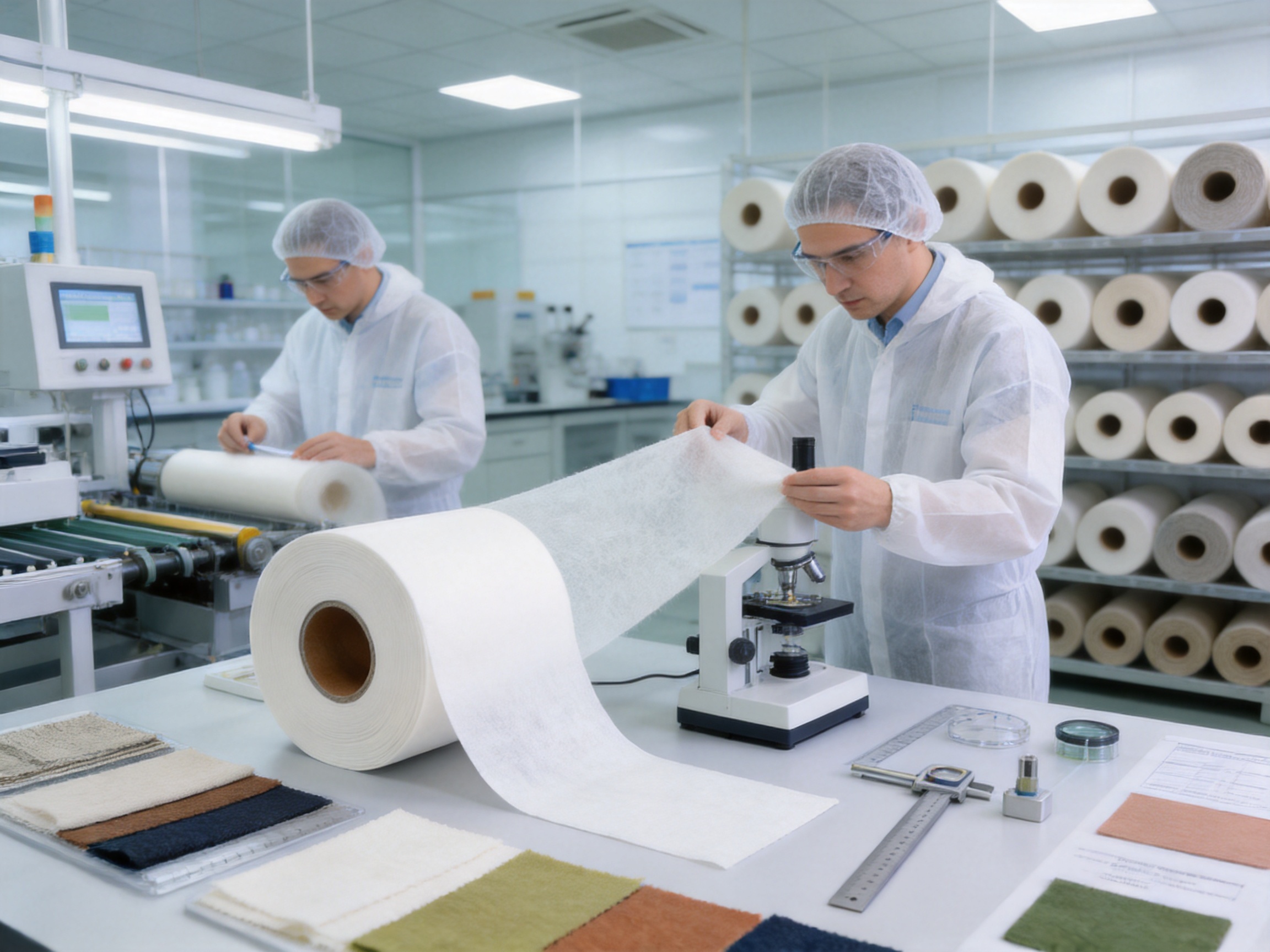
PLA biodegradable non-woven fabric provides a practical route toward more sustainable textile and disposable-product design. Its renewable plant-based origin, potential for industrial compostability, soft hand feel, lower-temperature bonding, good UV stability, and flexible converting performance make it a valuable alternative for selected applications.
The material is particularly suitable for hygiene products, medical-adjacent disposables, eco-packaging, retail bags, agricultural covers, food-service items, filtration media, and protective textile layers. Its advantages are strongest when the product is designed around a clearly defined application and supported by appropriate performance testing.
Manufacturing quality is essential. Stable raw-material preparation, moisture control, precision extrusion, uniform web formation, controlled thermal bonding, and careful finishing determine whether the fabric performs reliably in real production. GC FIBER’s experience in special and functional fiber products, combined with its research and development resources, production flexibility, and OEM support, provides a foundation for developing customized PLA non-woven solutions.
For customers seeking a sustainable material that can work with established textile and converting processes, PLA biodegradable non-woven fabric offers a balanced combination of environmental positioning and functional performance. The most successful projects will combine responsible claims, validated technical data, suitable disposal planning, and close cooperation between the buyer and manufacturer.
1. General technical literature on polylactic acid polymer production, fiber spinning, and biodegradable polymer applications.
2. General technical literature on spunbond, meltblown, thermal bonding, and non-woven fabric manufacturing processes.
3. International standards and certification guidance for industrially compostable plastics and finished products.
4. Technical references concerning bio-based polymers, life-cycle assessment, renewable feedstocks, and sustainable textile production.
5. Laboratory test methods for non-woven fabric tensile strength, elongation, basis weight, air permeability, UV stability, and antibacterial performance.
6. Food-contact material regulations and compliance guidance applicable to polymeric materials and textile-based food-service products.
7. Product and manufacturing information supplied by GC FIBER for PLA biodegradable non-woven fabric and customized functional textile development.
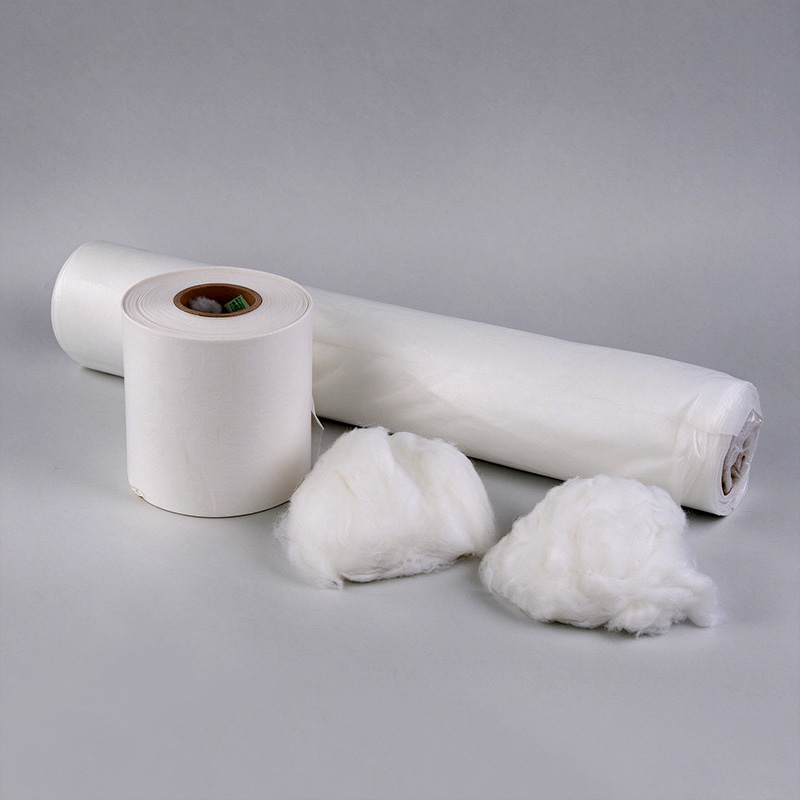
Made of PBS (Polybutylene Succinate), fully biodegradable.Features:1.Home compostable2.Raw material: PBS Polybutylene Su...
READ MOREPlease fill out the form below and our team will contact you as soon as possible.
Addres: No.66 Qiaogang Road, Haian, Nantong City, Jiangsu Province, China
E-mail: service@gcfiber.com admin@gcfiber.com
Copyright ? GC FIBER All Rights Reserved. Eco-Friendly Textile Products Manufacturer Biodegradable Yarn Company