English
 中文简体
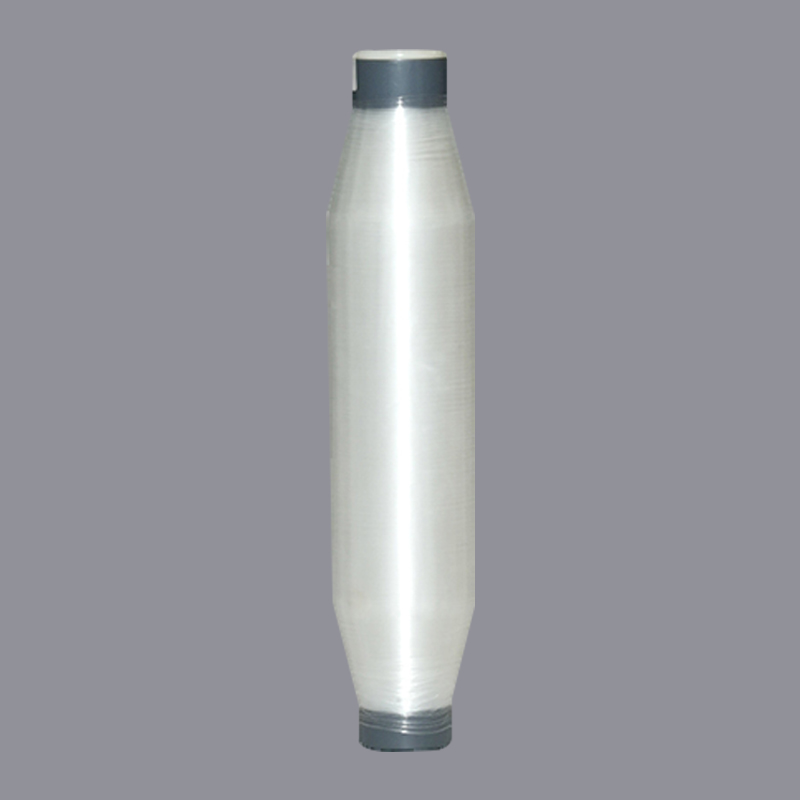
Made of PBS (Polybutylene Succinate), fully biodegradable.Features:1.Home compostable2.Raw material: PBS Polybutylene Su...
READ MORE
Content
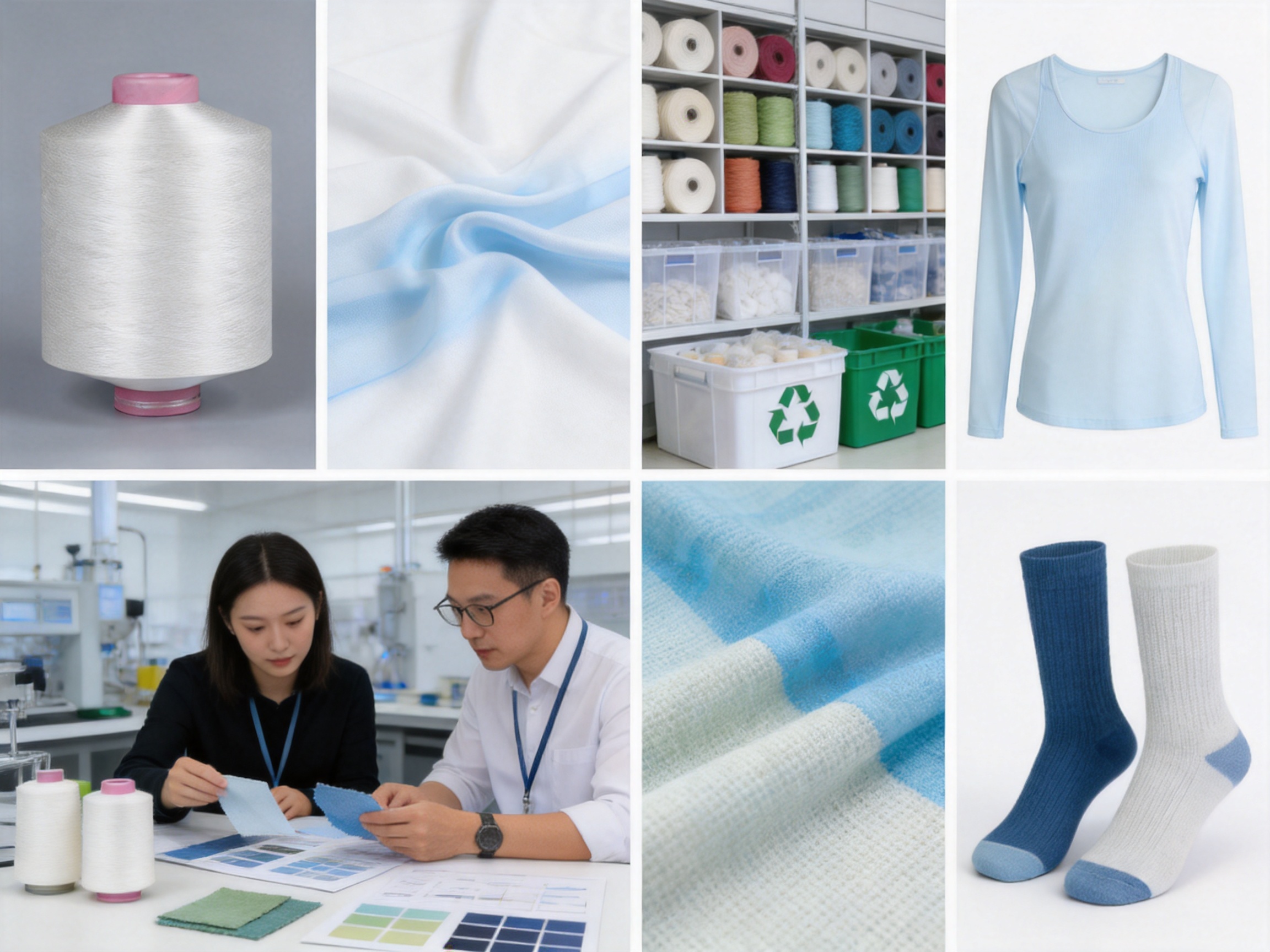
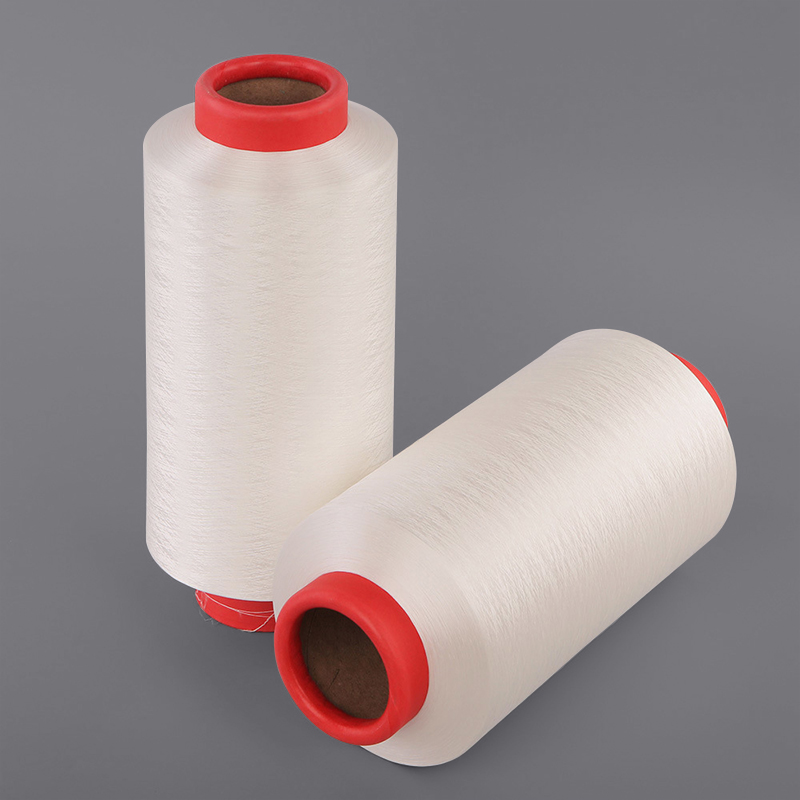
PE/PP bio-component yarn is a specialized functional filament yarn made by combining two different polymer materials, polyethylene and polypropylene, within one yarn structure. The combination is designed to provide a balanced performance profile that is difficult to achieve with a single polymer alone. The resulting yarn can offer a lightweight construction, a cool-touch effect, a soft and smooth handle, micro-filament performance, and antibacterial functionality for selected textile applications.
As textile manufacturers and product developers look for materials that deliver comfort, functionality, and production flexibility, dual-polymer yarns are becoming increasingly important. Conventional polyester, nylon, polypropylene, or polyethylene yarns can each provide useful properties, but they may also have limitations relating to weight, moisture comfort, hand-feel, thermal sensation, or application versatility. A carefully engineered PE/PP structure can combine complementary characteristics and create a yarn suitable for both woven and knitted fabrics.
This article examines the structure, manufacturing principles, performance benefits, application potential, customization options, and quality advantages associated with PE/PP bio-component yarn. It also explains why a specialized functional-yarn manufacturer with experience in research, production, and custom development can provide greater value than a supplier offering only standard commodity filament products.
PE/PP bio-component yarn is a dual-polymer filament yarn that combines polyethylene, commonly abbreviated as PE, and polypropylene, commonly abbreviated as PP. The two polymers are integrated into a single filament system rather than simply being blended as unrelated fibers. Depending on the production design, the components can be arranged in a controlled cross-sectional structure that allows each polymer to contribute specific properties to the final yarn.
The term “bio-component” in this product category refers to a yarn formed from two distinct polymer components. It should not automatically be interpreted as meaning that the complete yarn is biodegradable or derived entirely from renewable biological resources. The environmental profile of a particular yarn depends on the exact polymer grades, additives, processing conditions, recycling pathway, and end-of-life treatment. Buyers should therefore request the relevant technical documentation when biodegradability, recycled content, or renewable feedstock is a specific requirement.
In practical textile development, the value of this yarn comes from the controlled combination of materials. Polyethylene can contribute low density, smoothness, and a cool surface sensation, while polypropylene can contribute low moisture absorption, chemical resistance, lightness, and durability. Through micro-filament processing and suitable finishing, the yarn can be developed for comfortable apparel, sportswear, innerwear, summer products, socks, legwear, and other performance textile applications.
The yarn is available in selected denier specifications, including DTY 75D, 100D, and 150D. Special specifications can also be discussed for made-to-order production. The product can be used in weaving and knitting, allowing textile manufacturers to select the most appropriate fabric construction for their target market.
The main technical advantage of PE/PP bio-component yarn is the ability to use two polymers with different physical characteristics in one engineered filament system. A single-material yarn generally reflects the strengths and weaknesses of its base polymer. A dual-component yarn, by comparison, can be designed to create a more balanced combination of surface comfort, weight, thermal behavior, processability, and fabric performance.
The PE and PP components can work together at the filament level. This means that the benefits are not limited to mixing two separate yarns during fabric production. The component arrangement is established during spinning and filament formation, giving the yarn a consistent structure throughout its length when properly manufactured.
The final performance depends on many factors, including polymer grade, component ratio, spinneret design, filament count, drawing conditions, texturing conditions, heat treatment, finishing chemistry, and fabric construction. This is why advanced process control is essential. A bio-component yarn is not simply a basic blend; it is a functional material that requires accurate control from raw-material preparation through final inspection.
Polyethylene is recognized for its low density and smooth surface characteristics. In a textile yarn structure, the PE component can help reduce the weight of the finished fabric while supporting a soft and comfortable contact sensation. Its smooth surface can also contribute to a low-friction hand-feel, which is useful in garments worn close to the skin.
PE can also support a cool-touch effect because of the way the material interacts with heat at the fabric surface. The actual cooling sensation depends on fabric construction, moisture conditions, yarn cross-section, finishing, and the surrounding environment, but polyethylene can be an important part of a surface designed to feel cool and comfortable in warm conditions.
Polypropylene is one of the lightest commonly used textile polymers. It has low moisture absorption and can provide useful resistance to many chemicals encountered in normal textile processing and end use. In performance fabrics, polypropylene is often selected for its ability to help move moisture away from the skin when combined with suitable yarn geometry and fabric design.
Within a PE/PP structure, PP can help support low weight, drying performance, and durability. Its low moisture regain can also help the yarn avoid retaining large amounts of water within the polymer itself. However, moisture management is a system property. The yarn structure, fabric density, knitting or weaving pattern, finishing treatment, and garment design all influence the final result.
The combination of PE and PP can produce a filament yarn with a useful balance of lightness, surface smoothness, cooling sensation, and practical durability. Compared with a conventional single-polymer yarn, the PE/PP construction may offer a more distinctive hand-feel and thermal response. Compared with a heavy or highly absorbent yarn, it can help create lighter fabrics that feel less burdened by moisture.
This balance is particularly valuable for sportswear, summer clothing, base layers, socks, and other products where the wearer expects comfort during movement or in warm environments. It can also be used in woven structures when a manufacturer wants to combine a refined surface with lightweight fabric construction.
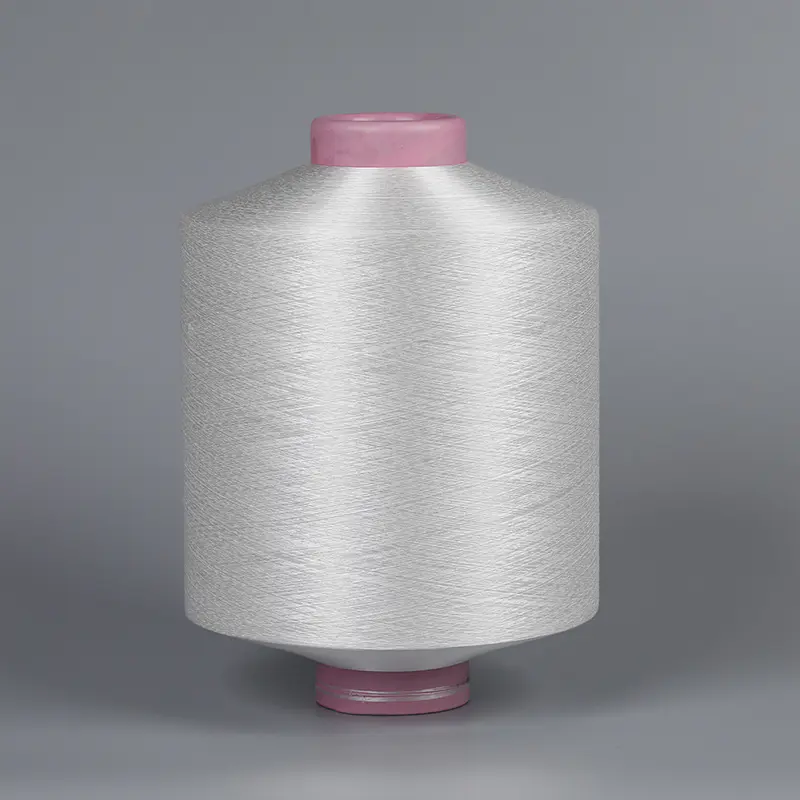
PE/PP bio-component Yarn
Micro-filament technology is one of the most important features of PE/PP bio-component yarn. A micro-filament yarn is made with very fine individual filaments, creating a larger total surface area and a smoother distribution of fibers within the yarn. The exact filament fineness depends on the product specification and production design, but the general objective is to improve softness, surface uniformity, drape, and comfort.
Fine filaments can create a fabric surface that feels smoother and more refined than a conventional coarse-filament construction. They can also help the textile achieve a softer touch without relying only on heavy chemical softeners. For garments worn directly against the skin, this can be an important advantage. The yarn may be used in innerwear, base layers, lightweight tops, socks, and other products where a harsh or rough surface would reduce customer satisfaction.
Micro-filaments can also improve visual appearance. They may create a more even surface, support a clean fabric face, and contribute to a subtle luster. In some structures, the fine filaments help the fabric develop improved drape and a more fluid movement. The final appearance still depends on knitting or weaving parameters, dyeing, finishing, and fabric weight, but yarn structure provides the foundation.
The small diameter of the filaments allows the finished textile to distribute contact over many fine fibers. This can create a soft, smooth hand-feel and reduce the perception of stiffness. The PE/PP component design can complement this effect by providing smooth polymer surfaces and a lightweight construction.
Comfort is especially important in garments that remain in contact with the body for long periods. Base layers, sports underwear, socks, summer apparel, and sleepwear all require materials that feel pleasant during repeated use. A yarn that offers a good handle can help manufacturers reduce the need for excessive finishing treatments while maintaining a premium tactile impression.
Fine filaments can support a flexible fabric structure with a graceful drape. This is useful for apparel that needs to move with the body rather than stand away from it. The yarn can also provide a more delicate visual effect in lightweight woven and knitted constructions.
In addition to softness, the yarn may provide a natural and controlled gloss. The level of luster depends on the cross-section, surface treatment, polymer selection, and fabric construction. A moderate gloss can add visual freshness to sportswear and fashion apparel, while a more subdued finish can be selected for innerwear or technical base layers.
Micro-filament yarns can contribute to a tightly integrated textile surface. When the yarn is correctly processed and the fabric is properly constructed, this may support resistance to surface wear and help maintain appearance during use. However, abrasion and tear strength must always be evaluated on the finished fabric rather than assumed from yarn structure alone. Fabric weight, stitch density, weave construction, finishing, and testing conditions all affect performance.
The cooling function of PE/PP bio-component yarn is one of its most attractive features. The yarn is intended to create a cool-touch sensation and support comfortable heat management in warm-weather products. This performance comes from the interaction between polymer properties, filament fineness, surface contact, fabric geometry, and moisture movement.
Polyethylene and polypropylene have thermal and moisture characteristics that can be useful in cool-touch textile design. When the fabric contacts the skin, heat can be transferred between the body and the textile surface. A smooth, lightweight, low-moisture-retaining surface can feel cooler than a heavier or more absorbent textile under comparable conditions.
The perceived cooling effect is not the same as active refrigeration. It does not mean that the yarn continuously lowers body temperature regardless of environmental conditions. Instead, it can provide an initial cool sensation and support a more comfortable microclimate through heat transfer and moisture management. Product developers should evaluate the completed fabric under realistic wear conditions.
Summer garments must often balance low weight, softness, air permeability, moisture comfort, and visual appeal. PE/PP yarn can contribute to all of these design goals when matched with a suitable fabric construction. Lightweight knitted structures can provide stretch, breathability, and body comfort, while woven constructions can deliver a clean surface and controlled shape.
Potential applications include summer T-shirts, lightweight shirts, sports tops, underwear, sleepwear, scarves, socks, and other warm-weather garments. The yarn is also suitable for products designed for outdoor activity, where reducing fabric weight and maintaining a comfortable surface can improve the user experience.
Polypropylene has low moisture absorption, and the smooth filament structure can help moisture spread across the textile surface when fabric geometry supports capillary movement. The PE component can contribute to a smooth contact surface and lightweight feel. Together, these characteristics may help the fabric feel less saturated than a material that holds more water inside the fiber.
Actual drying speed depends on fabric thickness, surface area, air movement, dyeing, finishing, and the amount of moisture present. A yarn supplier should therefore work with fabric manufacturers to select knitting or weaving parameters that support the desired moisture-management performance.
Low weight is a central advantage of PE/PP bio-component yarn. Both polyethylene and polypropylene have relatively low densities compared with many common textile polymers. This makes it possible to produce fabrics that provide useful coverage and performance without becoming unnecessarily heavy.
Lightweight textiles are valuable in activewear because they reduce the burden on the wearer during movement. They are also attractive in travel apparel, summer products, socks, undergarments, and layered clothing. A lighter garment may occupy less space during packing and can feel more comfortable in hot or humid climates.
Low weight can also influence manufacturing economics. A lower fabric mass may reduce the quantity of yarn required for a specific product, although the actual cost benefit depends on yarn pricing, fabric construction, production efficiency, finishing requirements, and quality standards. Weight reduction should never compromise durability, opacity, dimensional stability, or required protection.
Micro-filament yarns can provide a large surface area relative to their mass. This may help manufacturers design fabrics that remain lightweight while achieving an attractive surface and adequate coverage. The best result depends on the number of filaments, yarn denier, stitch or weave density, and finishing process.
DTY 75D, 100D, and 150D options provide a practical starting range for different product concepts. A lower denier can be considered for delicate and lightweight fabrics, while a higher denier may be more suitable when additional coverage or body is required. Final selection should be based on the finished fabric’s target weight, opacity, drape, strength, and end-use requirements.
Handle, also called hand-feel, describes the way a fabric feels when touched, folded, stretched, or worn. It is a key commercial characteristic because customers often judge textile quality through touch before they understand technical specifications. PE/PP bio-component yarn is designed to provide a soft, smooth, and comfortable handle through the combined effect of micro-filament technology and polymer selection.
A pleasant handle is important in both fashion and performance textiles. In sportswear, it can make a technical garment feel less synthetic and more comfortable during exercise. In innerwear and base layers, it can reduce irritation during prolonged contact. In casual summer clothing, it can support a light and fresh product impression.
The yarn can also help manufacturers create fabrics with a balance between softness and structure. Excessive softness may cause a textile to lose shape, while excessive firmness can reduce comfort. Through denier selection, texturing, heat setting, and fabric construction, developers can adjust the final balance for a specific product.
Some soft textiles achieve their hand-feel through high fabric weight or heavy finishing. A micro-filament PE/PP yarn offers another route by using fine fibers and a smooth polymer surface. This can support softness without necessarily creating a bulky fabric.
For products worn in layers, this is a meaningful advantage. A thin, smooth base layer can fit comfortably beneath another garment without creating unnecessary thickness. Similarly, lightweight socks and underwear can provide a comfortable surface while remaining easy to pack and wear in warm conditions.
PE/PP bio-component yarn can be produced with antibacterial functionality. In the supplied product concept, antibacterial agents are added during manufacturing to help inhibit the growth and reproduction of bacteria on the textile surface. This feature is intended to support hygiene, odor control, and freshness in selected end uses.
Antibacterial performance depends on the type and concentration of the active agent, its distribution within or on the yarn, wash durability, fabric construction, and test method. The term “antibacterial” should therefore be supported by appropriate laboratory testing and regulatory documentation for the intended market.
The function is not a substitute for normal washing or personal hygiene. Instead, it can provide an additional performance layer for fabrics exposed to sweat, repeated wear, or close skin contact. This may be valuable in sportswear, socks, innerwear, uniforms, healthcare-related textiles, and other products where odor management and surface hygiene are important.
Bacteria can contribute to unpleasant odors when they interact with sweat and organic residues on a textile surface. By inhibiting bacterial growth, an antibacterial yarn may help reduce odor development between washes. The result will vary according to body chemistry, garment design, ventilation, washing practices, and the durability of the treatment.
For sports and active products, this function can support a more comfortable user experience. For socks and legwear, it can be especially useful because these products are exposed to heat, moisture, friction, and prolonged contact with the body.
Manufacturers should select antibacterial technologies carefully. The active chemistry should be suitable for the intended application and should comply with the relevant requirements of the destination market. Performance claims should be based on test data rather than general assumptions.
It is also important to distinguish between antibacterial performance and medical protection. A functional textile may inhibit the growth of certain tested microorganisms under specified laboratory conditions, but it should not automatically be described as a medical or protective product unless it has completed the required validation and regulatory process.
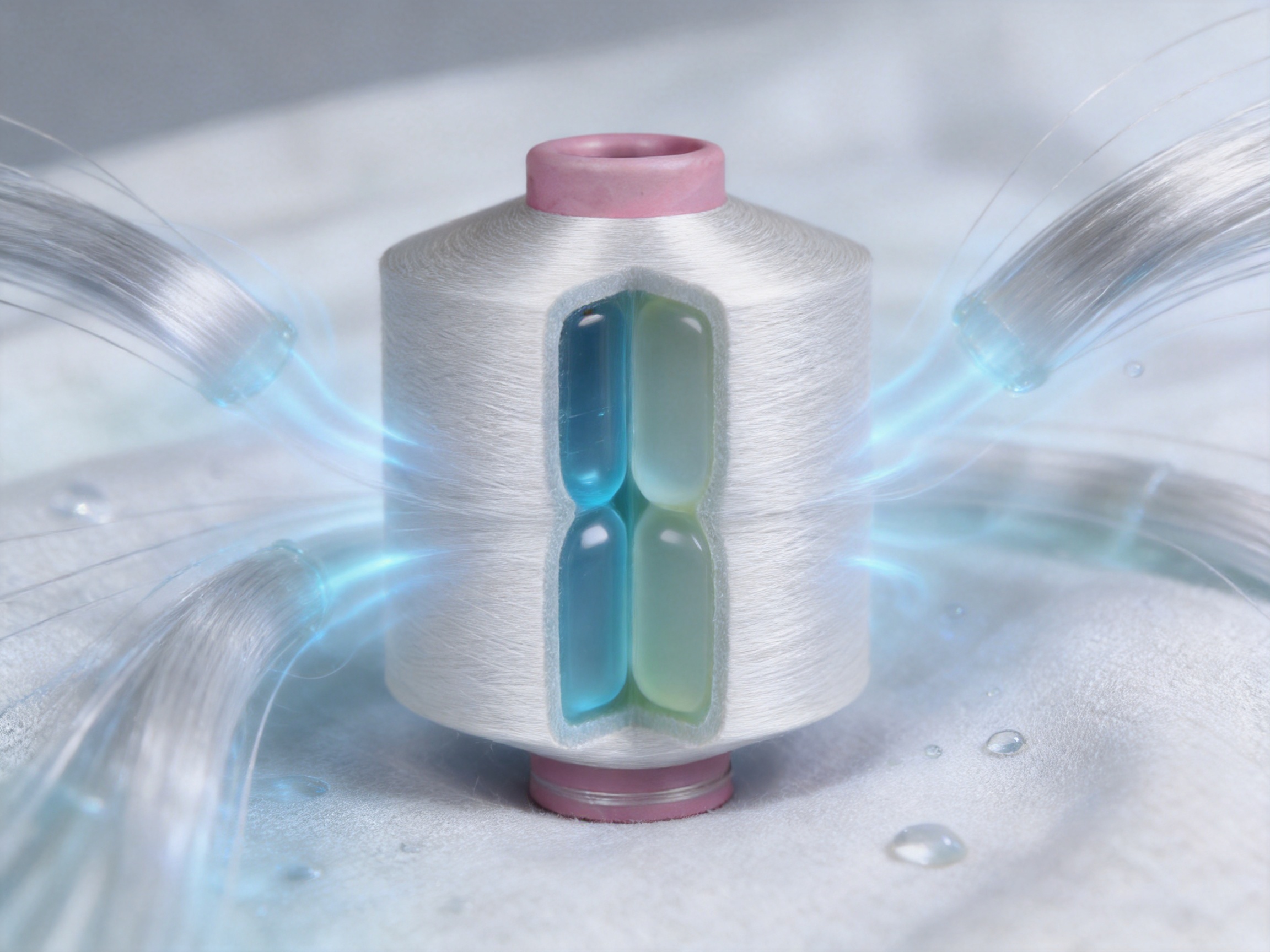
PE/PP bio-component yarn is not intended to replace every other yarn. Different fibers are appropriate for different applications. Its advantage is that it provides a distinctive combination of properties for products where lightness, cooling comfort, smoothness, and functionality are priorities.
Polyester is widely used because of its strength, dimensional stability, dyeability, and broad processing compatibility. However, some polyester fabrics can feel warmer or heavier than desired for certain summer products. PE/PP yarn can offer a lower-density alternative with a different surface sensation and thermal response.
Polyester may remain the better choice where high dye depth, high tensile performance, or specific heat-setting behavior is essential. PE/PP yarn is particularly attractive where a lightweight, cool, smooth, and low-moisture-retaining effect is more important than conventional polyester performance.
Polypropylene yarn already provides low density and low moisture absorption. The PE component can add another dimension to the surface feel and thermal behavior. The dual-polymer structure may create a more refined hand-feel and a differentiated product story compared with a standard PP yarn.
The actual advantage depends on yarn architecture and processing quality. A poorly controlled bi-component yarn will not automatically outperform a well-made single-polymer yarn. Consistent component distribution, stable spinning, uniform texturing, and reliable quality inspection are essential.
Polyethylene offers low density and smoothness, but pure PE yarn may not provide the same balance of processability, durability, and application flexibility as a carefully engineered PE/PP structure. The PP component can contribute complementary functional characteristics and support a wider range of textile development options.
In warm-weather products, heavy or highly absorbent textiles may retain more water and feel less comfortable when saturated. PE/PP yarn is designed for low weight and low moisture retention, which can help create lighter garments with a drier surface sensation. Again, the final performance depends on fabric construction and finishing.
The performance of PE/PP bio-component yarn begins with raw-material selection and continues through every stage of production. A specialized manufacturer must control polymer preparation, component feeding, spinning, filament formation, drawing, texturing, winding, inspection, and packaging.
The first stage is the selection and preparation of appropriate PE and PP polymer materials. Important considerations include melt-flow behavior, molecular characteristics, thermal stability, cleanliness, additive compatibility, and suitability for the intended spinning process.
Raw materials must be stored under controlled conditions to reduce contamination and moisture-related processing problems. Although PE and PP generally have low moisture absorption, contamination, dust, and inconsistent material handling can still affect spinning stability and filament quality. Good material control helps reduce defects and supports consistent production.
A bi-component yarn requires precise feeding of the two polymers. The component ratio and feed stability influence cross-sectional uniformity, yarn performance, and downstream processing behavior. Metering equipment and process monitoring are therefore important parts of the manufacturing system.
Stable feeding helps ensure that the PE and PP components remain consistently positioned throughout the filament. Irregular feeding can create variation in denier, surface appearance, strength, shrinkage, and functional performance. Advanced production lines use controlled pumps, temperature systems, and monitoring procedures to maintain stable conditions.
During composite spinning, the two polymer melts are brought together through a specially designed spinneret. The spinneret determines how the components are arranged within the filament cross-section. It must be engineered to accommodate the different flow behavior and processing characteristics of PE and PP.
Temperature control is critical because the two materials may have different melting and processing windows. If the temperature is too high, polymer degradation or excessive fluidity may occur. If it is too low, poor flow and unstable filament formation may result. Proper equipment design and operating discipline are necessary to create a stable composite filament.
After extrusion through the spinneret, the molten filaments are cooled and solidified. Cooling conditions influence filament diameter, orientation, surface quality, and internal stress. Uniform cooling is especially important in micro-filament production because small variations can become visible as differences in denier or fabric appearance.
Airflow, temperature, quench-zone design, and spinning speed must be coordinated. A specialized manufacturer can adjust these conditions according to the selected denier, filament count, polymer combination, and intended end use.
Drawing stretches the newly formed filaments and aligns polymer molecules along the filament direction. This process can improve tensile properties, stabilize the yarn, and establish the required balance of strength and elongation. Drawing conditions must be carefully controlled because excessive tension can cause breakage, while insufficient orientation can reduce performance and create unstable downstream behavior.
Drawn textured yarn, or DTY, is processed to create bulk, elasticity, surface character, and improved fabric coverage. The texturing process can influence yarn crimp, stretch, recovery, softness, and appearance. For PE/PP bio-component yarn, texturing must be managed in a way that respects the different thermal responses of the two polymers.
Correct texturing can improve fabric comfort and make the yarn more suitable for knitting and weaving. It can also support a fuller appearance without requiring excessive mass. The specified DTY options of 75D, 100D, and 150D can be selected according to the target fabric construction and end use.
Heat treatment may be used to stabilize the yarn and control shrinkage or dimensional behavior. The temperature and duration must be selected carefully so that the yarn receives sufficient stabilization without damaging the component structure or reducing functional performance.
When antibacterial functionality is required, the active agent may be introduced through a suitable masterbatch, polymer additive, surface treatment, or finishing system. The exact method depends on the desired durability, regulatory requirements, and technical specification. Proper dispersion and process compatibility are essential.
After processing, the yarn is wound onto packages suitable for storage, transportation, weaving, or knitting. Winding tension must be controlled to avoid package deformation and unwinding problems. Packaging should protect the product from contamination, moisture, mechanical damage, and confusion between different specifications.
Clear labeling is especially important for made-to-order yarn. Labels should identify denier, filament count where applicable, batch information, color or natural specification, production date, and any relevant functional treatment.
Quality control can include denier testing, tensile strength, elongation, shrinkage, evenness, filament breakage, package appearance, and process stability. Functional tests may include cool-touch evaluation, antibacterial testing, moisture-management testing, abrasion testing, and fabric-level comfort assessment.
Testing should be matched to the customer’s intended application. A yarn for sportswear may require different evaluation priorities from a yarn intended for socks, innerwear, industrial textiles, or decorative woven products. A strong supplier does not rely only on a generic certificate; it helps connect yarn properties with actual product requirements.
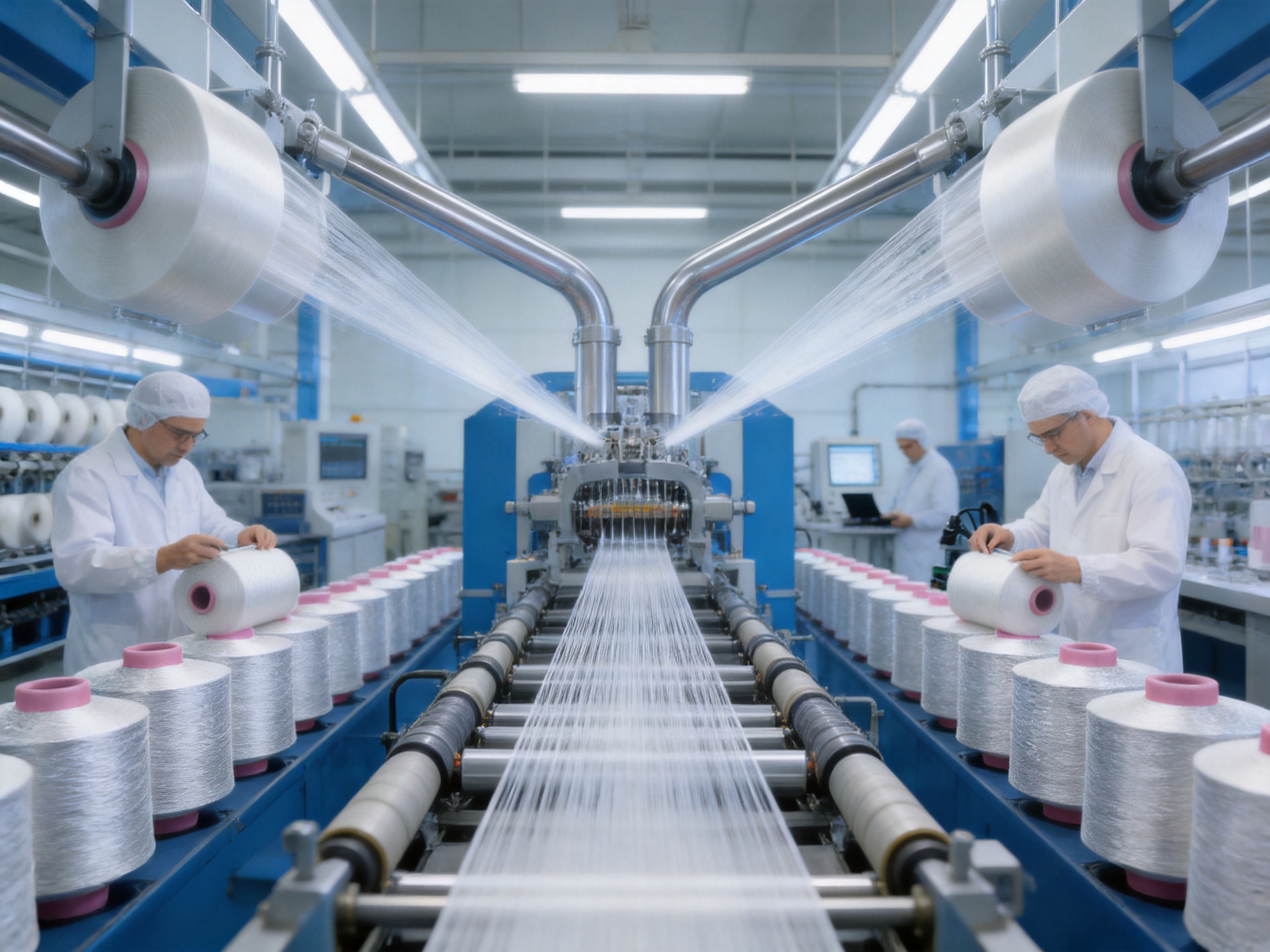
A specialized functional-yarn manufacturer can provide advantages beyond the basic supply of polymer filament. Experience in special and eco-friendly textile products allows the supplier to understand the relationship between material formulation, spinning technology, textile processing, and end-use performance.
A company with dedicated research and development capability can also respond more effectively when customers need a product outside standard catalog specifications. This is important because functional textiles are often developed for a particular fabric construction, brand requirement, climate, or performance target.
Experience with biodegradable yarn, low-melting-point yarn, ECDP yarn, anti-static yarn, HDPE yarn, bio-component yarn, and polyester filament yarn creates a broad technical foundation. Each product category presents different challenges related to polymer behavior, spinning temperature, compatibility, finishing, and downstream processing.
Knowledge gained across these categories can help engineers identify suitable solutions more quickly. For example, a customer may need one yarn that combines low weight with antibacterial performance, or another that requires a particular melting behavior and hand-feel. A diversified product portfolio supports more informed material selection.
Functional yarn development often requires cooperation between the supplier and the customer. The customer may know the target garment, fabric weight, market, and user requirements, while the yarn manufacturer contributes polymer, spinning, and processing expertise.
A dedicated design and research team can help translate general objectives such as “cooling,” “soft,” “lightweight,” or “antibacterial” into measurable technical targets. This may include denier selection, filament count, cross-section design, component ratio, additive selection, texturing level, and test methods.
Production flexibility is an important advantage for custom projects. Multiple production lines and machines can allow the manufacturer to handle different polymer combinations, denier ranges, texturing requirements, and order volumes. It may also reduce the risk that one production interruption will affect all orders.
Flexible production is useful when a customer wants to begin with a development sample, proceed to a pilot order, and later scale to regular commercial volumes. The supplier should be able to maintain product consistency as the order size changes.
Stable raw-material sourcing supports consistent yarn quality. Variations in polymer grade, additive concentration, or supplier batch can affect melt behavior and finished performance. Strong control over raw-material supply allows a manufacturer to reduce unnecessary variation and improve repeatability.
For customers developing branded or long-term products, repeatability is especially important. A fabric mill or garment maker needs confidence that a later batch will process similarly to the original approved sample.
PE/PP bio-component yarn can be produced according to specific requirements rather than limited to one standard construction. Customers may request adjustments to denier, filament count, cross-section, component balance, luster, texturing, antibacterial functionality, or package format.
Custom production should begin with a clear technical brief. The brief may include target fabric type, knitting or weaving method, desired hand-feel, weight, cooling requirement, color, testing standard, order quantity, and delivery schedule. The manufacturer can then recommend a practical specification and identify any development risks before production begins.
Custom yarn projects involve more than production. They may require sample coordination, technical communication, testing, packaging confirmation, logistics planning, and after-sales support. A professional team that connects sales, research, design, production, and quality control can make the development process more efficient.
Responsive communication is also important when production schedules or technical details change. Regular updates help customers manage fabric planning, garment development, and delivery commitments.
PE/PP bio-component yarn is suitable for a range of woven and knitted products that benefit from a light, smooth, cool, and functional textile surface.
Sportswear requires comfort during movement, moisture control, low weight, and resistance to repeated use. PE/PP yarn can be used in sports tops, training garments, running apparel, base layers, and lightweight athletic fabrics. The yarn’s cooling and antibacterial functions may support products designed for exercise and outdoor activity.
Innerwear and base layers remain in direct contact with the skin, making softness and surface comfort essential. The yarn’s micro-filament structure can create a smooth touch, while its lightweight construction can reduce bulk beneath outer garments.
Summer apparel benefits from fabrics that feel light, breathable, smooth, and cool. The yarn can be considered for T-shirts, lightweight shirts, casual tops, dresses, sleepwear, and other warm-weather clothing.
Socks and legwear are exposed to friction, moisture, heat, and repeated washing. The lightweight construction, smooth hand-feel, and antibacterial functionality of PE/PP yarn can be valuable in these products. Developers should evaluate pilling, abrasion, stretch recovery, and colorfastness at the finished-fabric or finished-garment stage.
In woven fabrics, the yarn can support lightweight shirting, technical lining, summer apparel, and selected functional textile constructions. The choice of weave, yarn density, and finishing can adjust opacity, drape, air permeability, and surface appearance.
Knitting can make use of the yarn’s softness, texturing, and potential stretch characteristics. Circular knitting, warp knitting, and other structures may be considered depending on the target product. Sampling is recommended because the same yarn can produce significantly different results in different knit constructions.
Choosing the correct yarn specification requires more than selecting a denier. Customers should consider the complete relationship between yarn, machine, fabric construction, finishing, and final use.
| Selection Factor | Key Consideration | Development Question |
|---|---|---|
| Denier | Influences weight, coverage, and fabric body | Is the target fabric delicate, medium weight, or more substantial? |
| Filament structure | Influences softness, surface uniformity, and drape | Is a smooth micro-filament surface required? |
| Texturing level | Influences bulk, stretch, recovery, and handle | Should the fabric feel flat, full, elastic, or highly soft? |
| Antibacterial function | Influences hygiene and odor-control performance | Which test standard and wash durability are required? |
| Processing method | Determines machine compatibility | Will the yarn be used for weaving, knitting, or both? |
| Fabric construction | Controls moisture movement, air permeability, and appearance | What stitch, weave, density, and finishing will be used? |
| End use | Defines performance priorities | Is the product sportswear, innerwear, summer apparel, or socks? |
| Order scale | Influences production planning and development cost | Is the requirement a sample, pilot quantity, or commercial volume? |
DTY 75D, 100D, and 150D provide a useful starting range for many textile projects. A technical team can help determine whether a standard specification is suitable or whether a custom version would provide better results.
Functional performance and environmental responsibility should be considered together. PE/PP bio-component yarn can contribute to lightweight product design, which may reduce material consumption for certain fabrics. A long-lasting textile may also provide value through extended use, provided that the product is designed for durability and maintained properly.
However, the environmental profile of a polymer yarn cannot be judged from the term “bio-component” alone. Customers should examine the source of the polymers, recycled content, additives, production energy, packaging, transport, washing requirements, durability, and end-of-life options.
A manufacturer focused on eco-friendly textile products can support customers by discussing alternative raw materials, functional additives, production efficiency, and product-life considerations. Where biodegradability or certified environmental claims are required, the correct documentation and recognized certification should be obtained.
Product developers should also avoid unnecessary functional treatments. If antibacterial performance is required, the treatment should be specified according to a real use case and verified through appropriate testing. Responsible development means achieving the desired function without adding materials or processing steps that do not provide meaningful value.
Before placing a commercial order, buyers should request technical information and samples. Important documents may include the yarn specification sheet, safety information, antibacterial test report where applicable, product consistency data, packaging details, and relevant compliance declarations.
Sample fabric production is strongly recommended. Yarn performance can change significantly when used on different knitting machines, loom settings, fabric densities, and finishing lines. A yarn that feels excellent in a laboratory package may require process adjustment to achieve the intended result in production.
Buyers should evaluate at least the following characteristics:
1. Yarn evenness and package quality.
2. Tensile strength and elongation.
3. Shrinkage and dimensional stability.
4. Fabric hand-feel and surface smoothness.
5. Cool-touch or thermal comfort performance.
6. Moisture-management behavior.
7. Antibacterial performance and wash durability where relevant.
8. Abrasion, pilling, and tear behavior at fabric level.
9. Colorfastness and compatibility with the intended dyeing process.
10. Machine performance during weaving or knitting.
11. Batch-to-batch consistency.
12. Packaging, labeling, and delivery reliability.
It is made by combining polyethylene and polypropylene in a dual-polymer filament structure. The two materials are integrated during filament production so that they work together within the yarn.
The product name describes a two-component polymer structure and does not automatically confirm complete biodegradability. Biodegradability depends on the exact materials, additives, certifications, and environmental conditions. Customers requiring biodegradable performance should request specific technical and certification documents.
Micro-filament refers to a yarn made from very fine individual filaments. This structure can provide a smoother surface, softer handle, improved drape, and a more refined fabric appearance.
It is designed to provide a cool-touch sensation and support comfort in warm conditions. The actual result depends on polymer structure, fabric construction, moisture, finishing, and environmental conditions. It should be evaluated on the finished fabric.
Yes. Its lightweight, smooth, cooling, and optional antibacterial characteristics make it suitable for sportswear, training apparel, base layers, and other performance garments.
Yes. The micro-filament construction and good handle are suitable for garments worn close to the skin, including innerwear and lightweight base layers.
Yes. The yarn can be considered for socks and legwear, particularly where low weight, surface comfort, cooling sensation, and odor-control functionality are desired. The finished product should be tested for abrasion, stretch recovery, pilling, and wash durability.
Common listed options include DTY 75D, 100D, and 150D. Other specifications may be possible through special production by order, depending on technical feasibility and volume.
Yes. The product is intended for both weaving and knitting. Machine settings and fabric construction should be adjusted according to the selected denier, texturing level, and target fabric performance.
An antibacterial agent can be incorporated or applied during the manufacturing process to help inhibit the growth of selected bacteria on the textile surface. The level and durability of performance depend on the treatment technology and test conditions.
No. Antibacterial functionality is an additional textile performance feature and does not replace regular washing, cleaning, or personal hygiene.
Customization may be available for denier, filament count, cross-section structure, functional properties, and other technical requirements. Customers should provide a detailed specification and intended application for evaluation.
A quotation request should include the target application, processing method, denier, quantity, functional requirements, color or natural specification, testing needs, delivery destination, and expected schedule. Fabric samples or technical drawings can also help the manufacturer recommend a suitable solution.
Shanghai seaport is listed as the shipping port for this product. Final logistics arrangements should be confirmed according to order quantity, destination, packaging, and delivery terms.
The yarn should be stored in clean, dry conditions away from direct sunlight, excessive heat, chemicals, and mechanical damage. Packages should remain properly sealed until they are ready for processing.
Yarn performance is influenced by knitting or weaving conditions, fabric density, finishing, dyeing, and garment design. Finished-fabric testing confirms whether the yarn delivers the required comfort, weight, cooling, durability, and antibacterial performance in the real product.
PE/PP bio-component yarn is a versatile functional filament designed to combine the complementary properties of polyethylene and polypropylene. Its micro-filament structure supports a smooth surface, soft handle, refined appearance, and comfortable drape. Its low-density polymer combination helps create lightweight fabrics, while its thermal and moisture characteristics can contribute to a cool-touch sensation and warm-weather comfort.
The yarn is suitable for weaving and knitting and can be considered for sportswear, innerwear, base layers, summer apparel, socks, legwear, and selected technical fabrics. Optional antibacterial functionality can provide additional support for odor management and textile hygiene when the appropriate treatment, testing, and regulatory requirements are followed.
The strongest results come from controlled manufacturing and close cooperation between the yarn supplier, fabric mill, garment maker, and product developer. Accurate polymer feeding, stable composite spinning, controlled cooling, drawing, texturing, heat treatment, finishing, winding, and quality inspection are all important to consistent performance.
A specialized manufacturer with experience in functional and eco-friendly textile materials can provide more than a standard yarn package. Research and development support, custom specifications, flexible production lines, raw-material control, professional testing, and made-to-order service can help customers develop reliable products for different markets.
For buyers seeking a lightweight, smooth, cooling, and functional textile material, PE/PP bio-component yarn offers a practical platform for product innovation. The correct specification should be selected through technical consultation, sample processing, and finished-fabric testing so that the final textile delivers measurable value in its intended application.
1. Polymer Science and Engineering references covering the structure and processing behavior of polyethylene and polypropylene.
2. Textile Testing references covering yarn evenness, tensile strength, elongation, shrinkage, abrasion, and fabric performance.
3. Technical literature on bi-component fiber spinning, spinneret design, composite filament formation, and polymer compatibility.
4. Textile engineering references on micro-filament yarns, draw-textured yarn, fabric drape, handle, and surface comfort.
5. Research literature concerning cool-touch textiles, heat transfer, moisture movement, and thermal comfort in apparel.
6. Standard antibacterial textile testing methods and applicable product-safety requirements for treated textile materials.
7. Technical guidance on responsible environmental claims, polymer recycling, biodegradability, and life-cycle considerations for textile products.
8. Product and manufacturing information supplied for PE/PP bio-component yarn, including listed denier options, applications, functional features, and custom-production capabilities.
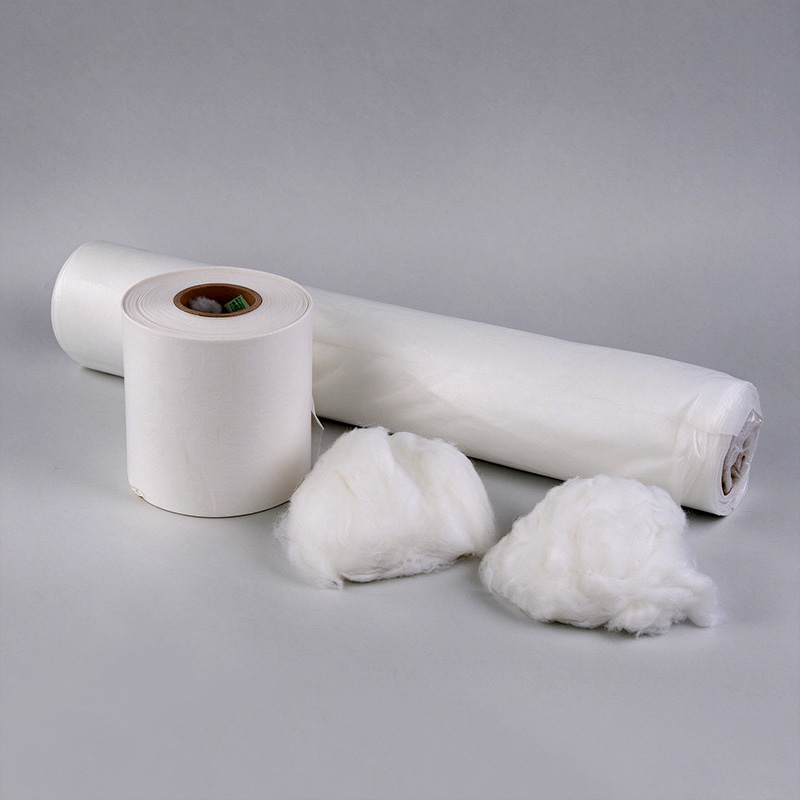
Made of PBS (Polybutylene Succinate), fully biodegradable.Features:1.Home compostable2.Raw material: PBS Polybutylene Su...
READ MOREPlease fill out the form below and our team will contact you as soon as possible.
Addres: No.66 Qiaogang Road, Haian, Nantong City, Jiangsu Province, China
E-mail: service@gcfiber.com admin@gcfiber.com
Copyright ? GC FIBER All Rights Reserved. Eco-Friendly Textile Products Manufacturer Biodegradable Yarn Company