English
 中文简体

Made of PBS (Polybutylene Succinate), fully biodegradable.Features:1.Home compostable2.Raw material: PBS Polybutylene Su...
READ MORE
Content
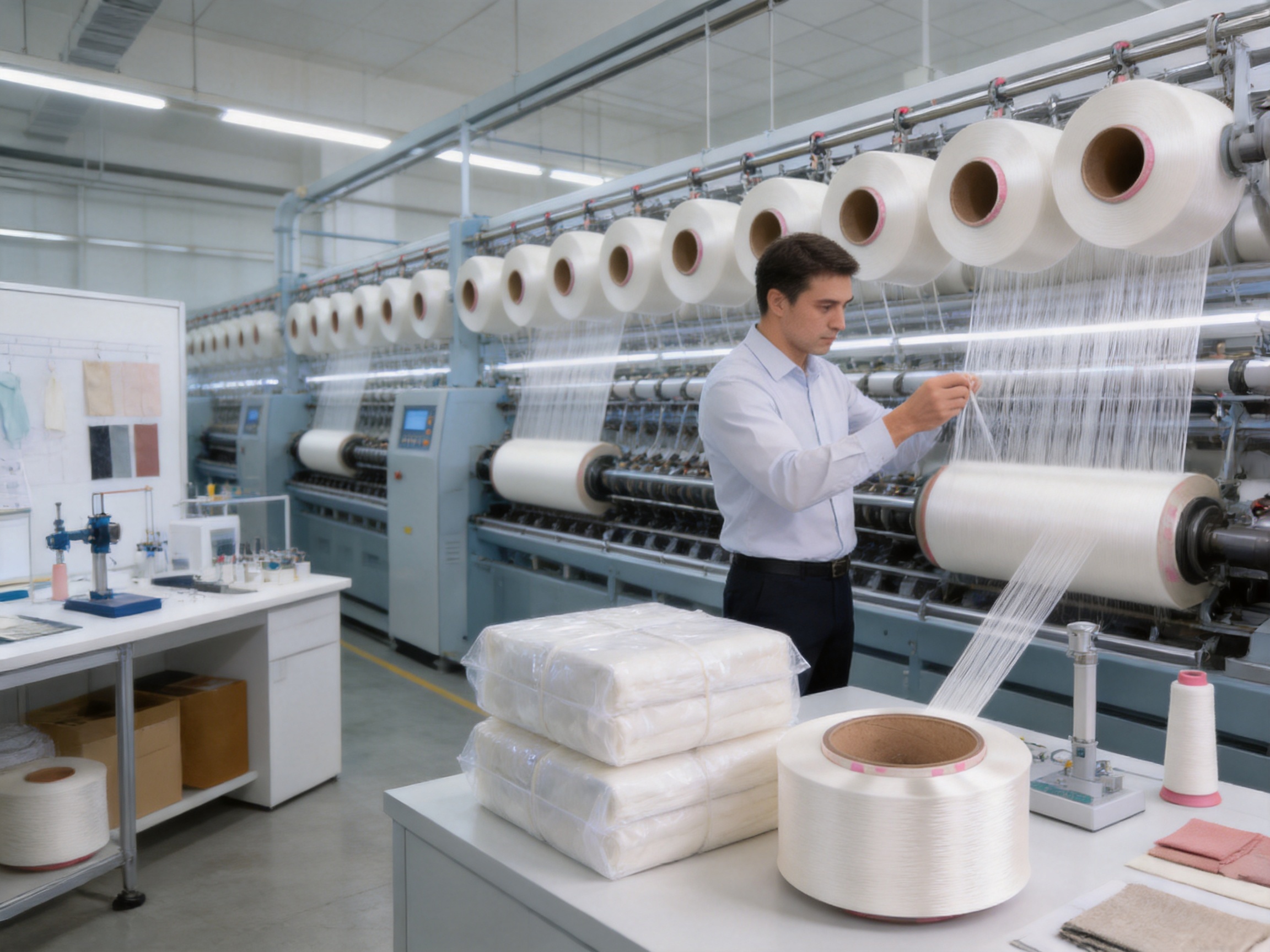
In the development of modern textile materials, manufacturers increasingly need yarns that combine comfort, durability, processing stability, and application flexibility. PE Flat FDY Yarn addresses these requirements through a flat-filament polyethylene structure and a fully drawn yarn production process. The result is a functional yarn characterized by a cooling touch, good tenacity, useful elongation, and a broad range of available deniers.
PE Flat FDY Yarn is designed for companies producing apparel, sportswear, home textiles, decorative fabrics, and selected industrial textile products. Its flat cross-section gives the yarn a distinctive surface structure, while the FDY process provides a more fully developed filament with stable physical properties. Depending on the selected denier, the yarn can support lightweight, breathable fabric constructions or heavier and more durable textile applications.
Manufactured by GC FIBER, a special textile factory established in China in 2006, the yarn forms part of a broader portfolio of functional and eco-focused textile materials. The company develops and produces biodegradable yarn, low melting yarn, ECDP yarn, anti-static yarn, HDPE yarn, bio-component yarn, and polyester filament yarn. Its product development approach combines material research, production control, customization, and cooperation with customers seeking new textile solutions.
This article examines the structure, benefits, production characteristics, applications, customization opportunities, and competitive advantages of PE Flat FDY Yarn. It also explains how the material can help textile manufacturers create products with a cooler hand-feel while maintaining dependable strength and elongation during processing and use.
PE Flat FDY Yarn is a flat-filament polyethylene yarn produced using the Fully Drawn Yarn process. The term “PE” refers to polyethylene, while “flat” describes the shape of the filament cross-section. “FDY” means that the yarn has been fully drawn during production, allowing the filaments to achieve a developed orientation and stable performance suitable for direct textile processing.
Unlike a conventional round filament, a flat filament presents a broader surface profile. This structural difference can increase the area of contact between the yarn and the skin or surrounding fabric surfaces. In finished textiles, the structure supports a smooth hand-feel and contributes to the yarn’s noticeable cooling touch.
The yarn is available in several standard deniers, including 50D, 75D, 100D, 200D, 300D, and 400D. This selection allows buyers to choose a specification appropriate for the intended fabric weight, construction, appearance, and performance requirements. Lower deniers are generally suitable for lighter fabrics, while higher deniers can provide greater substance and support for heavier textile structures.
Although yarn performance depends on fabric construction, finishing conditions, blend ratios, and end-use requirements, the basic combination of a flat cross-section and fully drawn filament provides a useful platform for functional textile development.
The cooling sensation associated with PE Flat FDY Yarn comes primarily from its filament geometry and surface interaction. A flat filament can expose a wider surface area than a conventional round filament. When incorporated into a fabric, this geometry may improve the contact relationship between the textile surface and the wearer’s skin.
When a fabric first touches the skin, the rate at which heat is transferred away from the contact area influences the immediate sensory response. A flatter yarn surface can help spread and distribute heat across the textile structure. This creates a cool-touch effect that is especially desirable in warm-weather apparel, bedding, sportswear, and other products designed for comfort in hot or humid conditions.
The cooling touch is a tactile and comfort-related feature rather than a substitute for active refrigeration. Its practical effect depends on yarn selection, fabric density, knitting or weaving method, moisture conditions, finishing treatment, garment construction, and the surrounding environment. Nevertheless, the flat-filament design gives product developers a useful material option when a cooler first-touch sensation is an important objective.
Compared with ordinary round-filament yarns, a flat yarn can offer a different surface appearance and hand-feel. It may contribute to a smoother fabric surface and can be incorporated into constructions where a refined, comfortable touch is required. This gives manufacturers an opportunity to differentiate finished products without relying exclusively on chemical finishing or complicated fabric treatments.
For summer clothing, the cooling touch may improve the initial wearing experience. In bedding, it can support a more comfortable contact surface during warm nights. In sportswear, the feature can complement lightweight fabric construction and moisture-management strategies. In interior textiles, it can provide an alternative tactile character for products that come into regular contact with users.
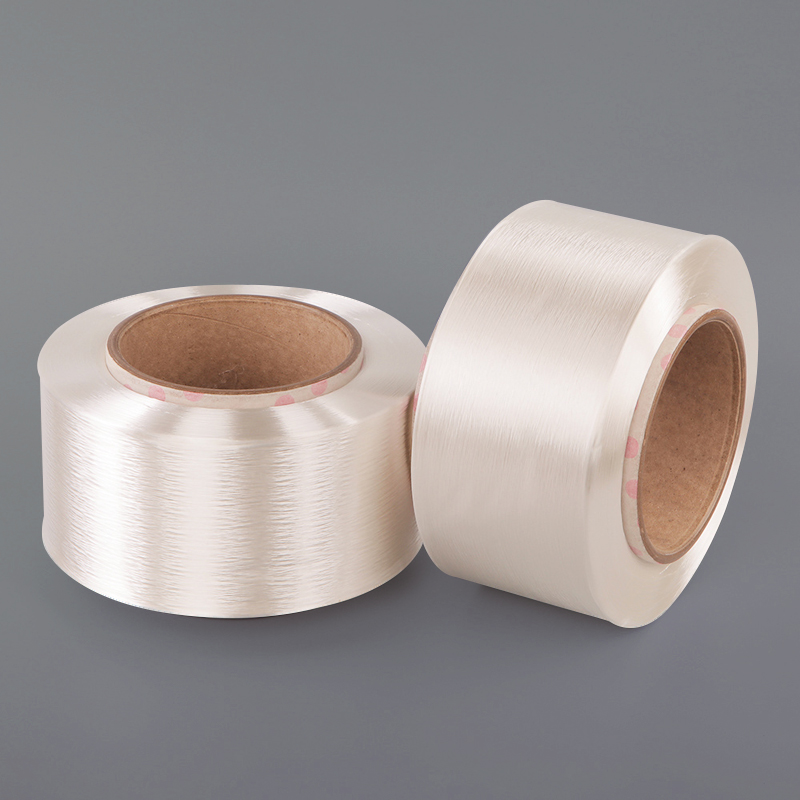
PE Flat FDY Yarn
The Fully Drawn Yarn process is important because drawing develops the molecular orientation and physical stability of the filament. During production, polymer is formed into continuous filaments and subjected to controlled drawing conditions. Drawing reduces uncontrolled deformation and helps establish more consistent yarn characteristics.
A fully drawn filament is generally intended to be ready for subsequent textile processing without requiring the same level of additional drawing associated with partially oriented yarn. This can simplify downstream operations and provide a stable starting point for weaving, knitting, texturing, or other fabric-forming processes, depending on the selected product specification.
For PE Flat FDY Yarn, the drawing stage must work in coordination with the flat cross-section. The process needs to preserve the intended geometry while achieving the required balance of strength, elongation, appearance, and processing behavior. Consistent control of polymer flow, spinning conditions, drawing ratios, temperature, winding, and package formation is therefore important to the overall quality of the yarn.
Good production control can reduce variations between packages and support smoother operation on customer equipment. This is particularly valuable for textile manufacturers working with high-speed knitting and weaving machinery, where inconsistent yarn behavior can lead to tension fluctuations, broken filaments, uneven fabric appearance, or unnecessary production interruptions.
The FDY process also contributes to the yarn’s ability to maintain good tenacity and elongation. Tenacity provides resistance to applied tensile force, while elongation allows the filament to extend before breaking and helps accommodate movement during fabric formation and use. These properties need to be balanced: a yarn that is strong but excessively rigid may be difficult to process, while a yarn with high extension but insufficient strength may be vulnerable during production.
By controlling the production process, manufacturers can aim for a practical balance between strength, flexibility, elongation, and surface performance. The final result is a yarn that can be adapted to both comfort-oriented and performance-oriented textile applications.
The most distinctive feature of PE Flat FDY Yarn is its cooling touch. The flat filament profile increases the potential contact area of the yarn surface and supports a smooth, comfortable tactile response. This makes the yarn suitable for products where the first-touch experience has a direct effect on perceived quality.
In apparel, the feature can support shirts, lining materials, summer garments, casualwear, and selected performance clothing. In household products, the yarn can be considered for sheets, pillowcases, blankets, upholstery fabrics, and decorative textiles where users value a pleasant surface.
Good tenacity allows the yarn to withstand tensile stresses during winding, warping, knitting, weaving, sewing, and routine use. A stable strength profile can support production efficiency and help finished fabrics maintain their integrity when exposed to repeated handling or moderate mechanical stress.
Tenacity is especially important for higher-denier yarns used in heavier constructions. In these applications, the yarn may contribute not only surface comfort but also structural support. The exact performance of a finished fabric depends on the complete construction, but a yarn with dependable strength provides manufacturers with a stronger foundation for development.
Elongation gives the filament the ability to extend under tension. This property can help the yarn accommodate the dynamic conditions of textile production and finished-product use. During knitting or weaving, controlled elongation can support smoother yarn movement and reduce the risk of sudden breakage caused by short-term tension changes.
In finished fabrics, suitable elongation can help the material tolerate handling, bending, stretching, and repeated use. It may also contribute to shape retention when the yarn is combined with an appropriate fabric construction and finishing program.
The flat cross-section distinguishes this material from standard round-filament yarns. It contributes to the cooling sensation, surface appearance, and hand-feel of the resulting fabric. It can also give designers another structural tool for creating fabrics with a particular luster, cover, smoothness, or tactile character.
The cross-section is not merely a visual feature. It affects how filaments are arranged in the yarn and how the yarn interacts with adjacent yarns in a fabric. Consequently, fabric developers may use the material to explore different combinations of density, weave, knit structure, finishing, and yarn count.
The range from 50D to 400D enables manufacturers to select a yarn according to the weight and durability requirements of the finished product. A 50D yarn may be appropriate for delicate or lightweight constructions, while 75D and 100D options can support common apparel and sportswear fabrics. The 200D, 300D, and 400D options can be considered for heavier home textile, decorative, or industrial applications.
A broad denier range also helps a supplier serve different product categories while maintaining a consistent material concept. Buyers can develop coordinated product lines with different fabric weights or performance levels without changing to an entirely unrelated yarn platform.
Traditional round-filament yarns remain useful in many textile applications, but they do not provide exactly the same surface structure as a flat filament. A round yarn presents a relatively compact cross-section, while a flat yarn can create broader surface contact and a different fabric hand.
When cooling touch is a priority, PE Flat FDY Yarn offers a structural advantage over ordinary round-filament alternatives. The yarn is designed around the contact behavior of the filament rather than relying only on post-treatment. This can be valuable to brands and textile mills that want a differentiated tactile property built into the yarn itself.
The material can also provide a practical alternative to products that depend heavily on topical cooling finishes. Finishes may contribute to initial coolness, but their performance can be influenced by washing, abrasion, formulation, and fabric preparation. A yarn-level structural approach can provide a more fundamental basis for the cooling effect, although final product testing remains necessary.
Another advantage is the balance between functional sensation and mechanical performance. Some specialty cooling materials may focus strongly on thermal response while offering limited processing flexibility. PE Flat FDY Yarn is developed to combine the cooling touch with good tenacity and elongation, helping it remain suitable for normal textile manufacturing processes.
In comparison with lower-performance polyethylene yarns, the FDY process offers a more controlled and fully drawn structure. This can support more stable processing and help manufacturers achieve consistent results. The exact difference depends on the competing yarn specification, but the combination of material, cross-section, and process is central to the product’s value.
| Performance or Selection Factor | PE Flat FDY Yarn | Potential Value to Textile Manufacturers |
|---|---|---|
| Filament shape | Flat cross-section | Supports cooling touch, smooth hand-feel, and differentiated surface character |
| Production process | Fully drawn yarn process | Provides a developed filament structure for stable downstream processing |
| Tenacity | Good tenacity | Helps withstand tension during weaving, knitting, winding, and use |
| Elongation | Good elongation | Allows the yarn to accommodate movement and controlled extension |
| Available deniers | 50D, 75D, 100D, 200D, 300D, and 400D | Supports lightweight through heavier fabric development |
| Customization | Special production by order | Allows specifications to be adjusted for project requirements |
| Application range | Apparel, sportswear, home textiles, and industrial fabrics | Enables use across multiple market segments |
The table provides a general comparison framework. Final fabric performance should always be confirmed through sample development and testing under the customer’s actual processing and end-use conditions.
Summer apparel is one of the most direct applications for PE Flat FDY Yarn. Shirts, lightweight jackets, dresses, skirts, casual trousers, and other warm-weather garments can benefit from a yarn that provides a cooler first-touch sensation.
Garment developers can combine the yarn with open fabric constructions, breathable patterns, moisture-management designs, or lightweight finishing systems. The yarn itself does not replace ventilation or moisture control, but it can complement these features and improve the tactile experience of the final garment.
Sportswear users often value a combination of comfort, low fabric weight, resilience, and rapid recovery from movement. PE Flat FDY Yarn can be incorporated into selected activewear constructions where cooling touch and stable tensile performance are important.
Potential products include training tops, leisure sportswear, lightweight outdoor clothing, base-layer fabrics, and accessories. Product developers should evaluate abrasion resistance, colorfastness, moisture behavior, seam performance, and repeated-wash durability according to the specific activity and market requirement.
The yarn can be used in bedding, pillow covers, sheets, blankets, upholstery, and decorative fabrics. A cool-touch surface is particularly attractive in bedding intended for summer use or warm climates. The tactile quality can also support premium positioning in home products where consumers interact directly with the fabric.
Denier selection is important in this segment. Lower deniers may suit lightweight bedding and apparel-like home fabrics, while higher deniers may be considered for upholstery, heavier decorative fabrics, and products requiring more substantial coverage.
Higher-denier options such as 300D and 400D can be evaluated for industrial or semi-industrial textile structures. Possible areas include protective covers, equipment fabrics, bags, furnishings, and other products where greater yarn substance is required.
In technical applications, cooling touch may be less important than strength, handling, construction stability, and surface behavior. Even so, the flat structure and available denier range give engineers additional flexibility when designing a fabric for a specialized purpose.
The material may also be considered for selected automotive interior or transportation-related fabrics. Seat materials, trim fabrics, headliner components, and decorative surfaces often require a balance of appearance, hand-feel, durability, and process compatibility.
Automotive applications have strict requirements, so developers must conduct appropriate testing for abrasion, light exposure, heat aging, odor, flammability, dimensional stability, and chemical resistance where applicable. PE Flat FDY Yarn can serve as a material option within such development programs, subject to project-specific qualification.
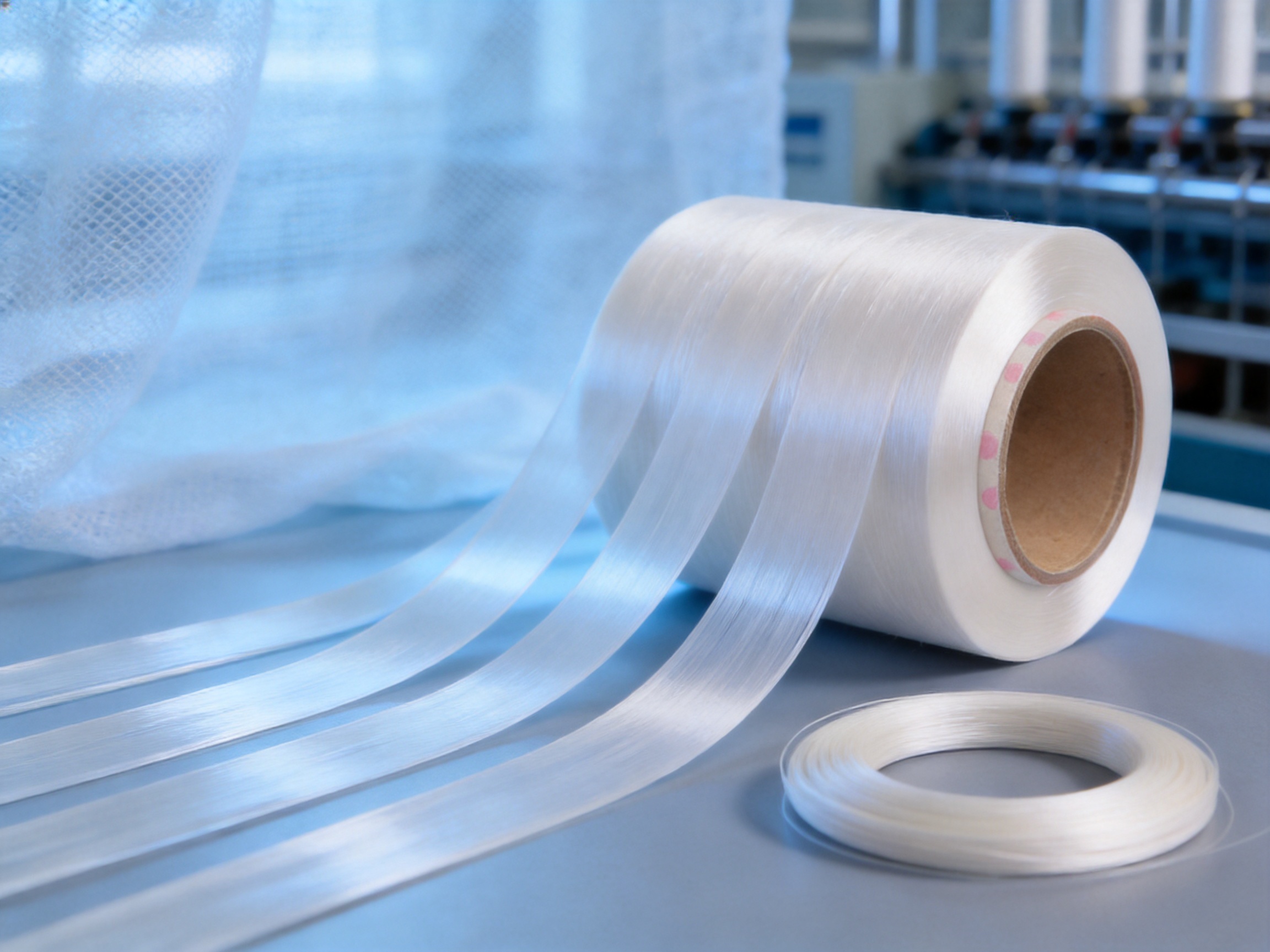
Choosing the correct denier is one of the first decisions in product development. Denier describes the mass per unit length of the yarn and provides a practical indication of yarn fineness or substance. It should not be viewed as the only determinant of performance, because filament count, fabric construction, twist, weave or knit density, and finishing also influence the result.
The 50D option is suitable for lightweight and fine fabric constructions. It may be selected for thin summer apparel, delicate woven fabrics, lightweight knitted fabrics, linings, or products where low fabric weight and a smooth touch are priorities.
The 75D specification provides a slightly greater yarn substance while remaining appropriate for many lightweight applications. It can be evaluated for apparel, sportswear, lining fabrics, and home textile constructions that require a balance between lightness and coverage.
The 100D option is a versatile choice for a wide range of fabrics. It can support everyday clothing, activewear, bedding, decorative fabrics, and other products where moderate yarn substance and functional comfort are required.
The 200D specification is appropriate for medium-weight applications requiring a more substantial yarn profile. Potential uses include heavier apparel, upholstery components, bags, furnishings, and selected technical fabrics.
The 300D and 400D options are intended for heavier constructions and applications with increased requirements for coverage, substance, or durability. They may be considered for industrial fabrics, heavier home textiles, upholstery, and products where a more robust yarn is desirable.
These descriptions are general development guidelines. Customers should confirm the most appropriate specification through fabric trials, mechanical testing, and end-use evaluation.
Consistent yarn quality depends on more than the polymer selected. It requires control over raw materials, spinning equipment, filament geometry, drawing conditions, winding, packaging, storage, and order management. A supplier with experience in functional textile materials can coordinate these factors more effectively than a producer focused only on basic commodity yarns.
GC FIBER has operated as a special textile factory in China since 2006. Its product portfolio reflects a long-term focus on special, functional, and environmentally considerate textile materials. This experience supports the development of yarns that are intended to solve specific performance or comfort requirements rather than simply provide a standard filament.
The company’s production capabilities include multiple production lines and machines. This production flexibility can help support both standard catalog requirements and special production by order. It also allows the company to respond to different denier requirements, order volumes, and development schedules.
Control of raw material supply is another important strength. Stable access to appropriate raw materials helps reduce variation and supports more predictable product quality. For functional yarns, raw material consistency is especially significant because small changes in polymer behavior can influence spinning stability, filament formation, drawing response, and final yarn properties.
Quality management should cover both incoming materials and finished yarn. During production, relevant control points may include extrusion conditions, spinneret performance, filament uniformity, drawing behavior, winding tension, package formation, and visual inspection. Finished products can then be evaluated according to the specifications agreed with the customer.
Although specific test values should be confirmed in the technical data sheet or commercial specification, typical development evaluations may include linear density, tenacity, elongation, filament uniformity, appearance, package quality, and process behavior. Customers may also request testing related to their final application, such as abrasion, heat exposure, washing, color compatibility, or dimensional stability.
A professional production system must also address traceability. Clear batch identification and order records help connect raw materials, production conditions, inspection results, packaging, and shipment information. This is valuable when customers need repeat orders with comparable performance or when a technical issue must be investigated.
Functional textile development often requires cooperation between material scientists, process engineers, designers, sales personnel, and production teams. A yarn may perform well in laboratory testing but require adjustment before it can run efficiently on a customer’s equipment. Practical development therefore benefits from communication across the entire supply chain.
GC FIBER maintains a dedicated design and research and development department focused on special and functional eco-friendly textile products. This supports work beyond standard catalog offerings and enables the company to cooperate with customers developing new materials.
For PE Flat FDY Yarn, development may involve adjustments to denier, filament count, cross-section structure, physical property targets, package format, or other technical parameters. The objective is to translate the customer’s application requirements into a manufacturable yarn specification.
Collaborative development can begin with a discussion of the final product. Important information may include the fabric type, machine model, processing speed, target fabric weight, end-use environment, desired hand-feel, required strength, color requirements, finishing process, order quantity, and delivery schedule.
Based on these requirements, the supplier can recommend a starting specification and arrange sample production. The customer can then conduct knitting or weaving trials, evaluate fabric performance, and provide feedback. Adjustments may be made before final production to improve compatibility with the intended process.
This approach is particularly valuable for buyers who need more than a standard yarn. Instead of selecting an existing product without technical dialogue, the customer can work with the manufacturer to create a better match between yarn structure and final application.
Special production is available by order for customers requiring specifications outside the standard selection. Customization may include denier, filament count, cross-section structure, physical properties, package requirements, and other production details agreed during technical review.
Custom denier development can help a buyer achieve a particular fabric weight, coverage, drape, or tactile effect. A custom filament count may influence yarn compactness, processing characteristics, appearance, and fabric surface. Adjustments to cross-section structure can support specialized hand-feel or optical objectives.
OEM cooperation may be suitable for brands, fabric mills, garment manufacturers, distributors, and technical textile companies. The supplier can work according to the customer’s specifications while supporting sampling, production planning, quality coordination, and delivery tracking.
Production flexibility is important in OEM projects because order sizes can vary significantly. A new product may begin with a small development quantity before moving into regular volume production. Multiple production lines and machines help the manufacturer accommodate both smaller custom orders and larger requirements, subject to production review and minimum order conditions.
A dedicated team across sales, research and development, design, and production can guide a project from initial inquiry through shipment. This integrated structure reduces the risk of communication gaps and helps ensure that technical requirements are understood by the personnel responsible for making the product.
Customers can also receive support throughout the production process. Order tracking, production updates, sample review, quality coordination, and delivery communication are important parts of a reliable OEM service. Clear communication is especially valuable when a yarn is being developed for a new fabric or an unfamiliar application.
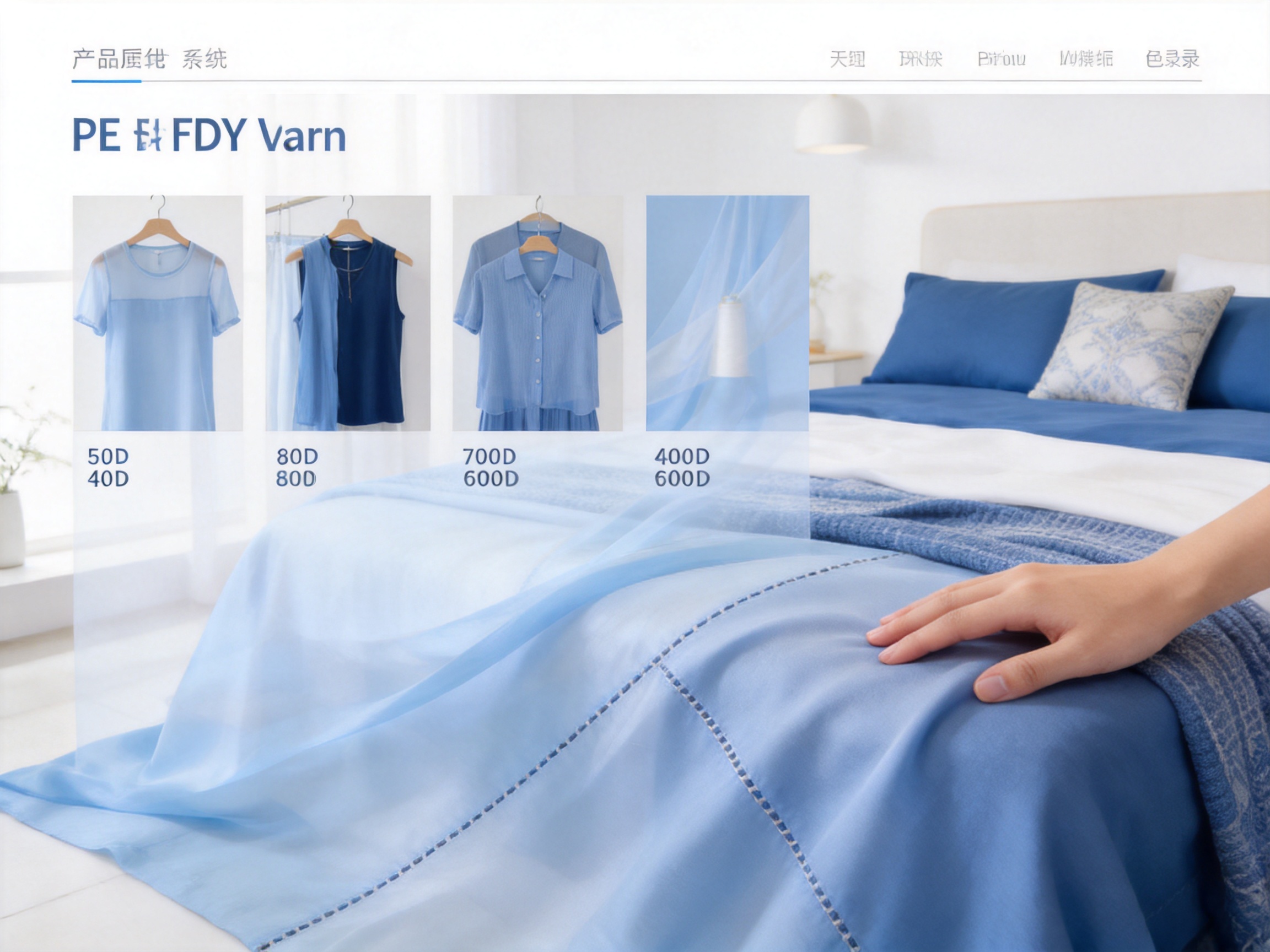
Environmental performance is becoming increasingly important in textile sourcing. Buyers are evaluating not only the properties of a finished yarn but also the production system, resource use, material selection, recyclability, and potential impact throughout the product life cycle.
GC FIBER states that environmental protection and innovation are central to its product development approach. Its product line includes biodegradable yarn, bio-component yarn, low melting yarn, anti-static yarn, HDPE yarn, and polyester filament yarn, in addition to PE Flat FDY Yarn. This broader portfolio reflects an effort to provide different material solutions for evolving environmental and performance requirements.
PE Flat FDY Yarn can be considered within a sustainability-oriented textile program when its durability, service life, processing efficiency, and end-of-life pathway are appropriate for the application. A durable textile that remains useful for a longer period may reduce the need for frequent replacement, while efficient processing can help reduce avoidable production waste.
However, sustainability claims should be evaluated carefully. The environmental profile of a finished fabric depends on polymer sourcing, production energy, transportation, dyeing, finishing, use, washing, recycling, and disposal. Buyers should request relevant technical and environmental information and assess the complete supply chain before making specific claims.
The company’s broader work with biodegradable and bio-component materials may also support customers that wish to compare different material strategies. In some projects, PE Flat FDY Yarn may be selected for its cooling touch and physical performance, while another product from the portfolio may be more suitable when biodegradability or renewable content is the primary requirement.
Before bulk production, fabric manufacturers should conduct a controlled trial using the intended machine, fabric construction, and finishing route. The trial should examine yarn tension, feeding behavior, breakage, package unwinding, fabric appearance, and the resulting hand-feel.
Storage conditions should be managed to protect the yarn from contamination, excessive moisture, direct sunlight, and mechanical damage. Packages should remain in suitable packaging until they are required for production. Any customer-specific storage or conditioning requirements should be confirmed with the supplier.
Machine settings may need to be adjusted according to denier, filament count, fabric structure, and processing speed. Tension, guide condition, feed rate, winding behavior, and take-up settings can influence the final result. A yarn that performs well under one machine configuration may require optimization under another.
Fabric developers should also evaluate the effect of dyeing and finishing. The cooling touch and smooth hand-feel may be influenced by softeners, coatings, resin treatments, heat setting, calendaring, brushing, and other finishing operations. Testing before and after finishing can help determine which process conditions best preserve the desired characteristics.
For apparel products, testing may include wear trials, washing, drying, pilling, seam behavior, colorfastness, and dimensional stability. For bedding and upholstery, abrasion, repeated contact, laundering, and surface appearance may be more important. For industrial products, tensile strength, tear resistance, environmental aging, and construction stability may receive greater attention.
The correct evaluation program should be based on the final product rather than the yarn alone. A yarn’s laboratory results provide essential information, but fabric construction and finishing determine how the consumer ultimately experiences the product.
A specialized manufacturer can provide more than a product list. It can contribute material knowledge, process experience, technical communication, production flexibility, and development support. These advantages are especially important for functional yarns, where performance depends on the relationship between structure, processing, and application.
GC FIBER’s specialization in functional and eco-friendly textile products gives it experience across several different material categories. This can help customers compare alternatives and select a yarn according to the complete project objective rather than a single property.
The company’s location in Haian, Nantong City, Jiangsu Province, China, and its access to the Shanghai seaport support international order coordination. Export-oriented customers can discuss packaging, shipping arrangements, documentation, and delivery planning during the purchasing process.
Its experience since 2006 also provides a foundation for long-term cooperation. Buyers often need repeatability, technical response, and stable communication as a product moves from sampling to regular production. A manufacturer with established production systems and a diversified professional team is better positioned to support that transition.
The combination of research and development, multiple production lines, raw material control, custom production, and dedicated service creates a competitive advantage over suppliers that only offer standard yarns without development support. For customers seeking a differentiated cooling textile, this integrated capability can shorten the path from concept to commercial product.
The process begins with a clear description of the intended product. The customer should identify whether the yarn will be used in apparel, sportswear, bedding, upholstery, industrial fabric, or another application. The expected environment and performance requirements should also be discussed.
The buyer and supplier can select a preliminary denier from 50D, 75D, 100D, 200D, 300D, or 400D. This decision should consider fabric weight, coverage, drape, machine compatibility, desired hand-feel, and durability.
Technical requirements may include tenacity, elongation, filament count, cross-section, package size, color, winding format, and acceptable variation. The customer should also identify any applicable industry or internal testing standards.
Sample yarn is produced for knitting, weaving, or other fabric trials. The purpose is to confirm whether the yarn runs effectively on the customer’s equipment and creates the desired fabric appearance and tactile response.
Customer feedback is reviewed by the supplier’s sales, research and development, design, and production teams. If necessary, the specification can be adjusted to improve processing or final performance.
After the sample has been approved, the parties can finalize the production quantity, packaging, inspection requirements, delivery schedule, and commercial terms. Batch records and quality controls help support consistency in future orders.
PE Flat FDY Yarn is a flat-filament polyethylene yarn produced through the Fully Drawn Yarn process. It is designed to provide a cooling touch, good tenacity, good elongation, and a smooth surface character for various textile applications.
FDY means Fully Drawn Yarn. The filament is drawn during production to develop its orientation and physical stability, making it suitable for direct downstream textile processing according to the selected specification.
The flat cross-section creates a broader surface profile and increases the potential contact area between the yarn and the skin or fabric surface. This structure contributes to a noticeable cool-touch sensation, particularly when the yarn is used in suitable fabric constructions.
The standard options include 50D, 75D, 100D, 200D, 300D, and 400D. The appropriate selection depends on the intended fabric weight, construction, appearance, processing conditions, and end-use requirements.
Yes. It can be evaluated for sportswear and activewear where cooling touch, comfort, good tenacity, and useful elongation are desired. The final fabric should also be tested for moisture behavior, abrasion, washing, colorfastness, and activity-specific durability.
Yes. Potential home textile applications include bedding, sheets, pillow covers, upholstery, blankets, and decorative fabrics. Lower deniers may suit lightweight products, while higher deniers may be considered for heavier home textile constructions.
Special production by order is available. Custom development may involve denier, filament count, cross-section structure, physical properties, package format, and other technical requirements agreed with the manufacturer.
Yes. GC FIBER provides OEM and customized yarn and fiber solutions. Its sales, research and development, design, and production teams can cooperate with customers from initial specifications through sampling, manufacturing, quality coordination, and delivery.
Higher-denier options such as 300D and 400D may be evaluated for industrial, decorative, or heavier textile applications. Suitability depends on the required tensile, tear, abrasion, environmental, and construction performance.
Buyers should provide information about the end use, fabric construction, machine type, processing speed, desired hand-feel, target fabric weight, physical requirements, and expected order volume. A sample trial is recommended before bulk production.
The company is located in Haian, Nantong City, Jiangsu Province, China, and Shanghai seaport is listed as a shipping option. Delivery arrangements should be confirmed for each order.
Customers should evaluate yarn linear density, tenacity, elongation, appearance, package quality, unwinding behavior, knitting or weaving performance, fabric hand-feel, cooling sensation, dimensional stability, and end-use durability according to their application.
PE Flat FDY Yarn offers a practical combination of cooling comfort, flat-filament structure, good tenacity, useful elongation, and broad denier flexibility. These characteristics make it a valuable option for manufacturers developing summer apparel, sportswear, bedding, upholstery, decorative products, automotive interiors, and selected industrial fabrics.
Its main advantage over conventional round-filament alternatives is the integration of a cool-touch surface concept directly into the yarn structure. The FDY process further supports a stable filament suitable for downstream textile operations. Together, these features give product developers an opportunity to create fabrics that feel comfortable while maintaining dependable processing and physical performance.
The manufacturing strength behind the product is equally important. GC FIBER combines experience in special textile production, research and development, multiple production lines, raw material control, customization, OEM cooperation, and dedicated customer service. This integrated approach enables the company to support both standard orders and collaborative development projects.
For buyers seeking a functional yarn with a distinctive tactile property, PE Flat FDY Yarn can provide a strong starting point. Through correct denier selection, fabric trials, technical evaluation, and close communication with the manufacturer, customers can develop textile products that combine comfort, appearance, durability, and application-specific performance.
1. GC FIBER product information for PE Flat FDY Yarn, including available deniers, general features, applications, and customization options.
2. GC FIBER company information regarding special textile manufacturing, functional yarn development, eco-friendly product research, and OEM cooperation.
3. General textile engineering principles concerning filament cross-sections, yarn drawing, tenacity, elongation, and fabric construction.
4. General product development practices for apparel, sportswear, home textile, automotive interior, and industrial fabric applications.
5. General quality evaluation principles for synthetic filament yarns, including linear density, tensile performance, elongation, package integrity, processing behavior, and end-use testing.
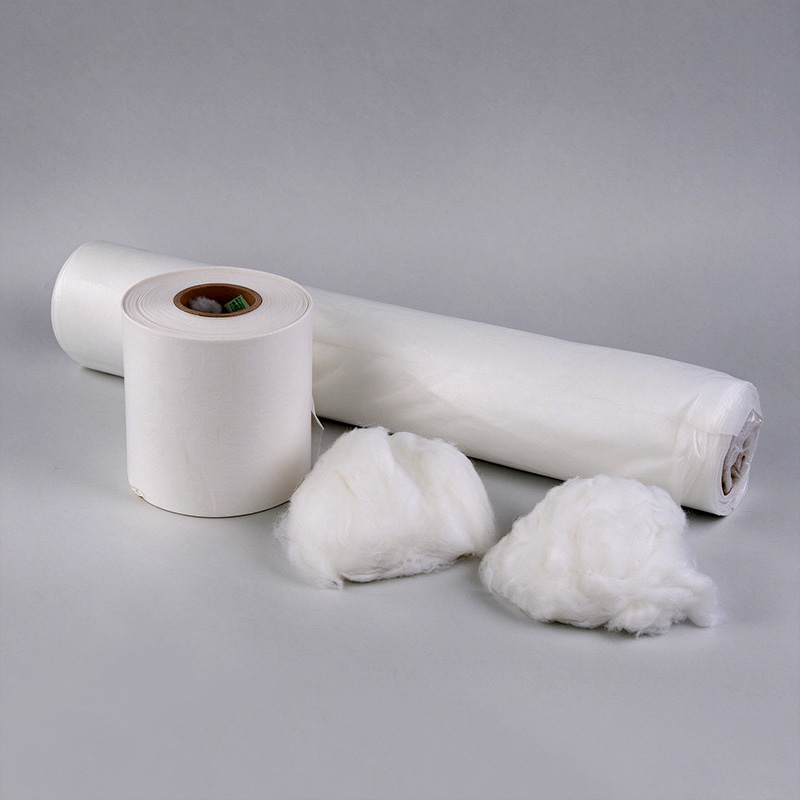
Made of PBS (Polybutylene Succinate), fully biodegradable.Features:1.Home compostable2.Raw material: PBS Polybutylene Su...
READ MOREPlease fill out the form below and our team will contact you as soon as possible.
Addres: No.66 Qiaogang Road, Haian, Nantong City, Jiangsu Province, China
E-mail: service@gcfiber.com admin@gcfiber.com
Copyright ? GC FIBER All Rights Reserved. Eco-Friendly Textile Products Manufacturer Biodegradable Yarn Company