English
 中文简体

Made of PBS (Polybutylene Succinate), fully biodegradable.Features:1.Home compostable2.Raw material: PBS Polybutylene Su...
READ MORE
Content
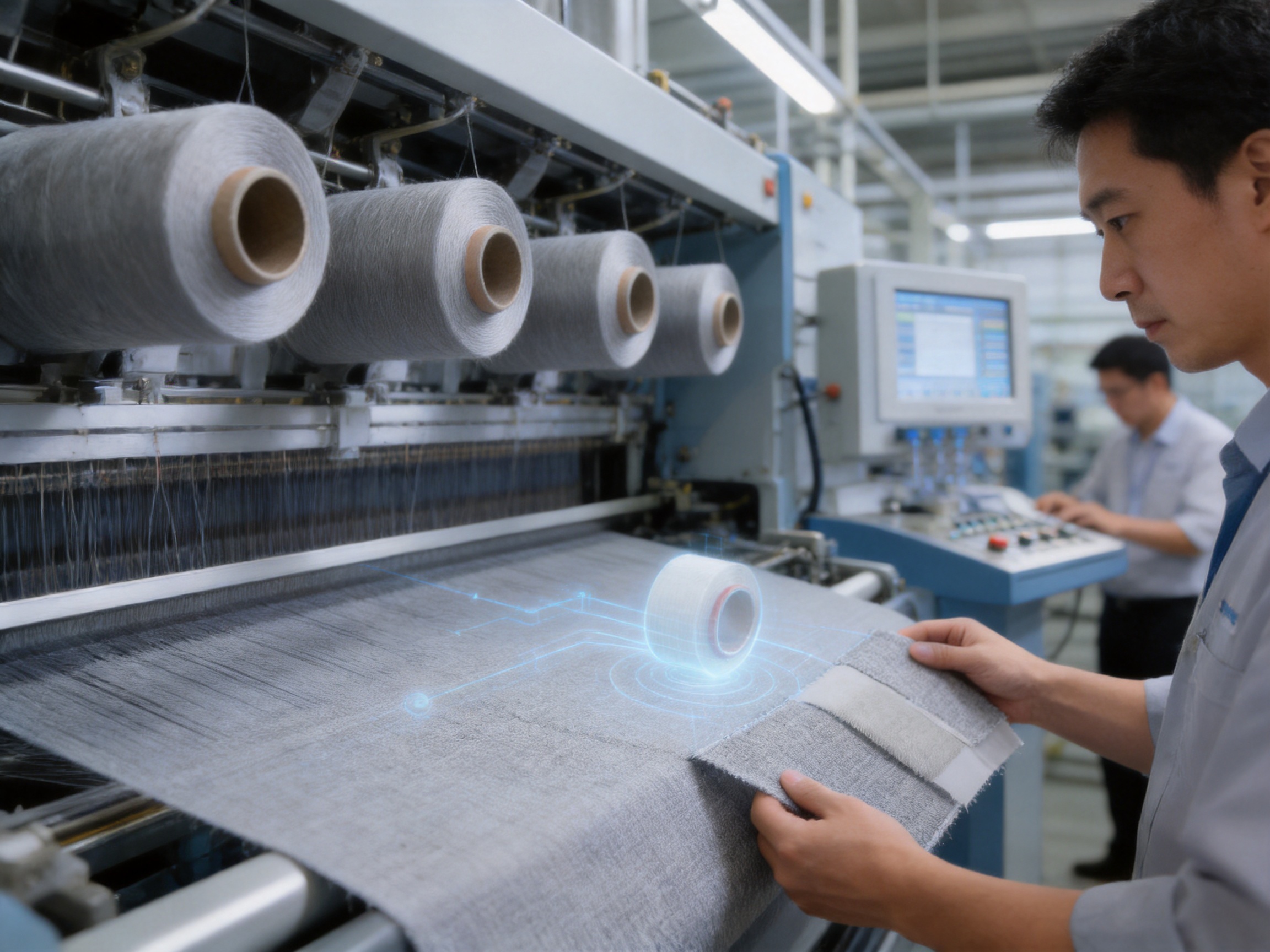
Static electricity is a persistent challenge in modern manufacturing, textile processing, electronics production, medical environments, packaging, and industrial workplaces. It can attract dust, interfere with sensitive equipment, create uncomfortable shocks, damage electronic components, and contribute to quality problems during fabric production. As industries become more automated and products become more sensitive, textile materials must provide more than appearance and basic mechanical performance. They must also offer dependable functional properties that remain stable during use, washing, and changing environmental conditions.
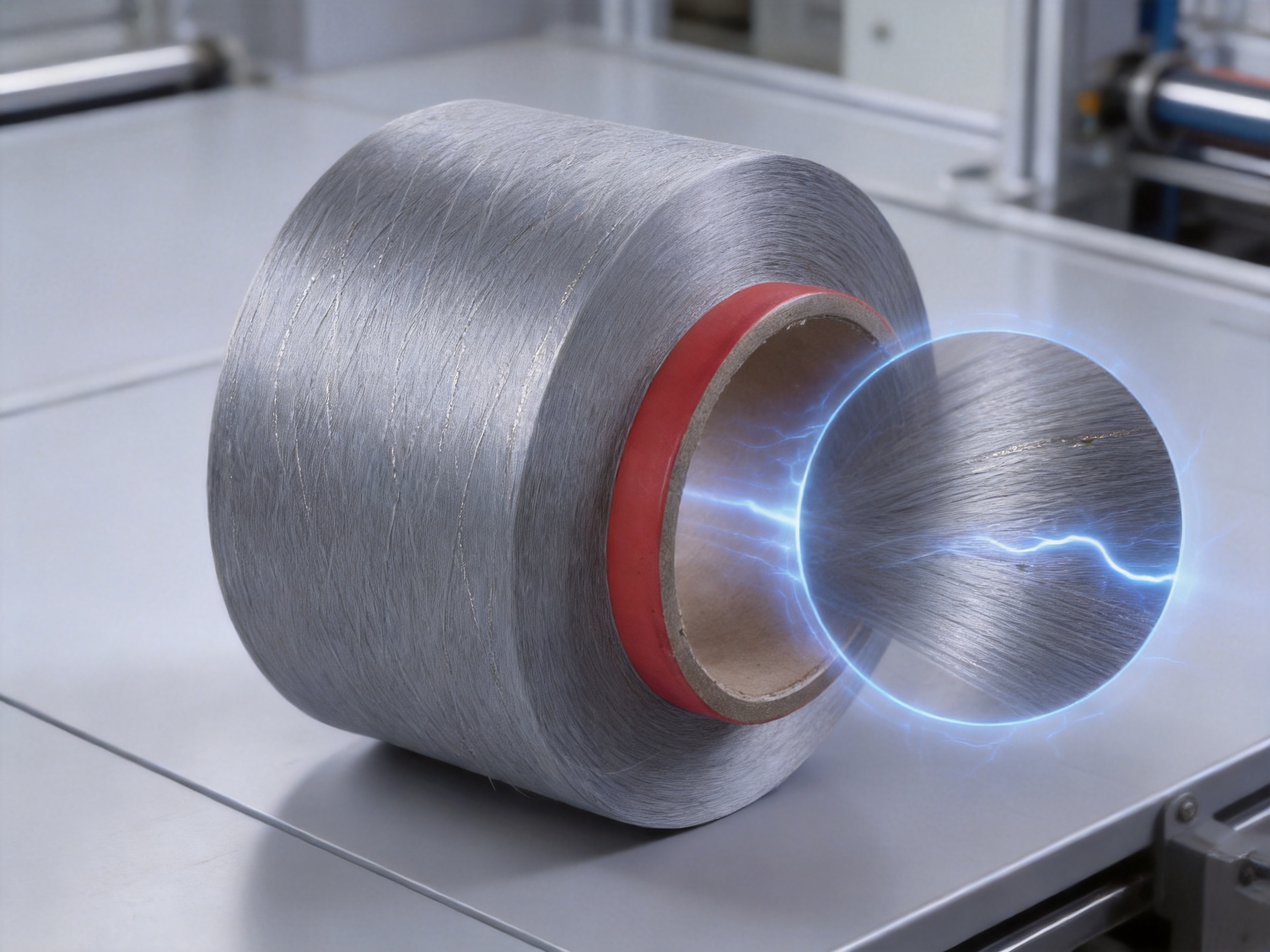
Anti-Static PET Yarn Grey Color is a functional polyester filament yarn developed for applications that require reliable electrostatic dissipation. Made from PET, also known as polyester, this yarn combines the practical benefits of filament construction with a low resistance value and durable static-suppression performance. It is suitable for weaving and knitting into anti-static fabrics, workwear, industrial textiles, protective clothing, curtains, linings, and other textile products where static control is important.
The yarn is available in regular FDY counts of 20D, 40D, and 60D, as well as DTY 60D. Special counts can also be customized according to application requirements. This flexibility enables fabric manufacturers, garment producers, industrial textile companies, and material developers to select a suitable yarn construction instead of adapting their designs to a limited standard specification.
Produced by GC FIBER, a specialized textile manufacturer established in 2006, the yarn benefits from experience in special and functional textile materials. The company researches, develops, produces, and supplies biodegradable yarn, low melting yarn, ECDP yarn, anti-static yarn, HDPE yarn, bio-component yarn, and polyester filament yarn. Its production structure is supported by dedicated research and development capabilities, multiple production lines, raw-material control, and coordinated technical, sales, design, and manufacturing teams.
Anti-Static PET Yarn Grey Color is a conductive or static-dissipative polyester filament material. Its principal function is to reduce the accumulation of electrostatic charge and help release charge in a controlled manner. The yarn is designed to be incorporated into textile structures so that the finished fabric can provide electrostatic protection without abandoning the processing advantages of polyester.
Static electricity is generated when two materials contact, separate, rub, or move against each other. In textile production, fibers and fabrics may repeatedly pass through rollers, guides, needles, cutting equipment, winding systems, and packaging machinery. Friction between textile surfaces can create an electrical charge. When the charge cannot dissipate effectively, it may remain on the fabric or transfer suddenly to another object.
In everyday products, this may result in small shocks or dust attraction. In more demanding environments, the consequences can be more serious. Static discharge can affect electronic components, create production interruptions, disturb measurement systems, attract airborne contaminants, and cause discomfort for workers. In certain facilities, static control is also relevant to process safety and product protection.
Adding an anti-static yarn to a textile structure provides a practical way to address these issues at the material level. Rather than relying only on temporary surface treatments, a functional yarn can contribute to the performance of the fabric throughout its service life. The grey PET yarn is therefore suitable for manufacturers seeking a yarn-based solution for more consistent and durable static control.
Its low resistance value is one of its defining characteristics. The stated resistance specification is 10^9 Ω/cm. This value indicates a controlled electrical pathway that helps accumulated charge move away from the textile surface. The exact performance of the final fabric depends on yarn arrangement, fabric construction, blend ratio, finishing, grounding conditions, test method, and environmental factors. Nevertheless, the yarn provides a functional foundation for the development of anti-static textile products.
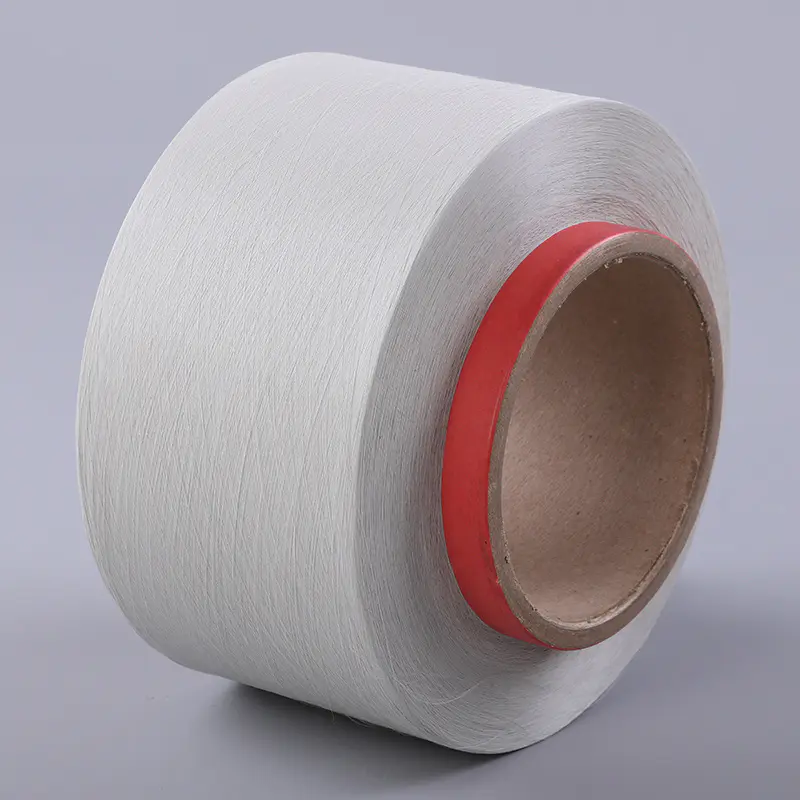
Anti Static PET Yarn Grey Color
The main advantage of Anti-Static PET Yarn Grey Color is its low resistance. A material with a controlled resistance value can help prevent charge from remaining concentrated on the surface of the textile. As the fabric moves, contacts other materials, or is handled by workers, the yarn helps provide a route for electrostatic dissipation.
This characteristic is especially valuable in textile products used around sensitive equipment, clean production areas, industrial machinery, and electronic components. It can also improve user comfort by reducing the frequency and intensity of unpleasant static shocks. For fabric manufacturers, incorporating a functional yarn during weaving or knitting may be more efficient than depending entirely on a temporary topical antistatic finish.
Low resistance does not mean that every fabric produced from the yarn will have identical electrical results. Fabric density, yarn placement, finishing chemicals, humidity, grounding, and test procedures all influence the final value. For this reason, manufacturers should evaluate the complete textile construction and confirm performance against the requirements of the intended application.
Many conventional antistatic treatments work primarily at the fabric surface. Their performance may decline through abrasion, aging, handling, and repeated laundering. A yarn-based functional solution offers a different approach because the electrostatic-control component is integrated into the filament structure or yarn system rather than being applied only as a temporary coating.
Anti-Static PET Yarn Grey Color is engineered for long-lasting static suppression. Its functional performance is intended to remain stable during extended use, provided that the yarn is processed and used within suitable conditions. This is an important advantage for workwear, uniforms, industrial fabrics, curtains, and reusable textile products that must deliver reliable performance over multiple use cycles.
Durability also contributes to lower maintenance requirements. If a textile retains its antistatic performance for a longer period, users may reduce the need for frequent re-treatment or replacement. This can support more predictable product performance and simplify quality management for textile manufacturers and end users.
Polyester is widely used in textile manufacturing because of its strength, dimensional stability, abrasion resistance, and processing versatility. The anti-static polyester filament maintains these practical advantages while adding a functional static-control property. Its resistance to heat and water supports use in textile products that may encounter washing, moisture, elevated processing temperatures, or routine industrial handling.
Repeated washing is a major challenge for many antistatic fabrics. A surface-applied finish can gradually be removed or weakened by detergents, mechanical action, rinsing, drying, and ironing. The fiber structure of Anti-Static PET Yarn Grey Color is designed to remain intact after repeated washing, helping the textile retain its static-suppression performance.
Actual laundering results depend on washing temperature, detergent chemistry, mechanical intensity, drying conditions, fabric construction, and the proportion of anti-static yarn used. Product developers should conduct laundering trials using the planned care procedure. Even so, the yarn’s heat and water resistance makes it better suited to reusable textile applications than many short-term surface solutions.
Some antistatic materials depend heavily on atmospheric moisture. In a humid environment, moisture can help provide a conductive path across a textile surface. In dry conditions, however, the same material may become significantly less effective. This creates difficulties for facilities located in dry climates, heated indoor environments, winter conditions, or low-humidity production areas.
Anti-Static PET Yarn Grey Color is designed to maintain its electrostatic-suppression effect with weak dependence on humidity. It can help control static generation in low-humidity conditions, where ordinary textile materials often become more prone to charge accumulation. This characteristic expands its potential use across different geographic regions and operating environments.
Humidity independence does not mean that environmental conditions have no influence on textile electricity. The final performance of a fabric remains affected by the surrounding atmosphere, grounding systems, contact materials, and the overall textile design. However, reduced humidity dependence provides a more stable starting point and can make product performance easier to manage.
The yarn is offered in grey and can be produced in both standard and customized counts. FDY and DTY options allow customers to select different filament characteristics according to the intended textile construction. Fully drawn yarn may be selected for applications requiring a more stable and uniform filament structure, while draw textured yarn can provide additional bulk, softness, stretch-related behavior, or surface effects depending on the processing design.
| Parameter | Specification |
|---|---|
| Product | Anti-Static PET Yarn Grey Color |
| Material | PET / Polyester |
| Color | Grey |
| Regular FDY counts | 20D, 40D, 60D |
| Regular DTY count | 60D |
| Special counts | Customizable by order |
| Stated resistance specification | 10^9 Ω/cm |
| Processing options | Suitable for weaving or knitting |
| Application focus | Anti-static fabrics, workwear, industrial textiles, and functional textile products |
| Shipping location | Shanghai seaport |
The resistance information supplied for the product refers to the stated anti-static specification. In technical documentation, resistance, volume resistance, surface resistance, and surface resistivity may be reported using different test methods and units. Buyers should therefore confirm the preferred terminology, test standard, sample preparation, and acceptance criteria before placing a production order. GC FIBER can discuss application-specific requirements and provide appropriate technical coordination for customized projects.
PET polyester is one of the most established synthetic fibers in the global textile industry. It offers a combination of tensile strength, dimensional stability, abrasion resistance, chemical resistance, and processing flexibility. These properties make it suitable for high-volume textile production and for specialized applications where consistent yarn behavior is essential.
Using PET as the base polymer allows manufacturers to process the yarn through familiar weaving, knitting, winding, and fabric-finishing systems. Textile companies that already work with polyester may be able to introduce the anti-static yarn without completely changing their production infrastructure. This can reduce development time and simplify integration into existing product lines.
Polyester also performs well in many demanding service conditions. It resists wrinkling, maintains shape, and can be designed for a wide range of yarn counts and surface characteristics. When combined with anti-static functionality, PET becomes a practical platform for producing technical fabrics that require both everyday durability and specialized electrical performance.
The grey color provides a neutral appearance for industrial and functional textile products. It may be used as a visible design element or incorporated into a multilayer, blended, striped, grid, or hidden conductive arrangement. The final visual effect depends on fabric construction and the placement of the yarn within the textile.
A key advantage of functional yarn is that it introduces static-control capability during textile construction. Conventional antistatic finishes are often applied after fabric formation and may be concentrated at the surface. An integrated yarn approach can provide a more durable foundation because the functional component participates in the textile structure.
This can be particularly useful when the final product will be washed frequently, exposed to abrasion, or used over a long service period. It may also help manufacturers reduce reliance on repeated finishing treatments. The resulting production route can be more predictable when the antistatic property is designed into the yarn selection stage.
Humidity-sensitive antistatic materials may show inconsistent performance when the air becomes dry. This can create challenges in winter, air-conditioned factories, heated buildings, and dry geographic regions. The weak dependence on humidity of Anti-Static PET Yarn Grey Color gives it an advantage in situations where environmental moisture cannot be carefully controlled.
For companies operating facilities in several countries, a material with more stable performance across different climates can simplify product qualification. It can also reduce the risk that a textile performs well in a humid test environment but poorly in actual dry-weather use.
Reusable workwear, medical textiles, industrial curtains, and protective products may undergo many washing cycles. If an antistatic finish loses effectiveness quickly, the textile may no longer meet the user’s expectations even though the fabric remains physically intact. Anti-Static PET Yarn Grey Color is designed to preserve its static-suppression capability after repeated washing, making it suitable for products where laundering is part of normal operation.
This feature can support a longer usable life and more consistent functional performance. It may also help textile brands make clearer durability claims after completing their own application-specific testing.
Availability in 20D, 40D, and 60D FDY, together with 60D DTY, gives customers several starting points for fabric development. Fine counts may be useful in lightweight fabrics, linings, apparel components, and blended constructions. Heavier or textured options may be more appropriate for industrial textiles, workwear, thicker fabrics, or products requiring a different hand feel.
Special counts can be customized. This is a valuable advantage over suppliers that offer only fixed catalog specifications. A customer may need a particular denier, filament count, cross-section, texture, strength profile, or combination of functional properties. The ability to discuss these parameters directly with the manufacturer supports more efficient development of application-specific materials.
Electronic components and semiconductor products can be highly sensitive to electrostatic discharge. Even a discharge that is not visible or felt by a worker may affect a sensitive component. Anti-static garments, gloves, shoe coverings, cleanroom textiles, curtains, and equipment covers are commonly considered in electrostatic-control programs.
Anti-Static PET Yarn Grey Color can be woven or knitted into textiles used for workwear, coats, caps, sleeves, bags, partitions, and other textile components. The yarn does not replace a complete electrostatic-control system, which may also include grounding, flooring, footwear, humidity management, and handling procedures. Instead, it contributes a functional textile layer to a broader protection strategy.
Medical environments contain equipment, synthetic surfaces, disposable materials, and textiles that may generate static through movement or contact. Anti-static fabrics can be used in selected garments, curtains, covers, upholstery components, and other products where reducing charge accumulation is desirable.
The yarn’s resistance to washing is relevant to reusable healthcare textiles. Products that are laundered frequently require materials that retain their functional properties while withstanding repeated cleaning. The suitability of any finished product must be evaluated in relation to sterilization, disinfection, chemical exposure, skin contact, and applicable medical or institutional standards.
Industrial workers may move through environments containing machinery, synthetic materials, dust, packaging films, and electrically sensitive equipment. Anti-static workwear can improve comfort and contribute to a controlled working environment. It may be used in jackets, trousers, coveralls, vests, gloves, linings, and accessories.
For workwear manufacturers, the ability to choose different yarn counts and customize special specifications allows the fabric to be engineered for weight, breathability, durability, appearance, and comfort. A balanced product must provide static control without becoming excessively heavy, stiff, hot, or difficult to sew.
Static can create production difficulties during spinning, winding, weaving, knitting, cutting, sewing, and packaging. Charged filaments may cling to machine parts, attract lint, disturb alignment, or make automated handling less consistent. Incorporating anti-static yarn into selected textile structures can help reduce static-related problems during use and may support better behavior in downstream processing.
The precise processing benefit depends on the machinery and textile design. Trial production is recommended so that tension, friction, guiding, winding speed, needle selection, and fabric construction can be optimized.
Industrial curtains, covers, partitions, and protective textile barriers may accumulate charge when repeatedly opened, closed, moved, or cleaned. An anti-static polyester yarn can be considered for products used near equipment, dust-sensitive production zones, and areas where static discharge should be minimized.
Polyester’s durability and dimensional stability are useful in these applications. The grey appearance is also suitable for practical industrial products where a neutral, professional color is preferred.
Static can cause lightweight films, textile bags, and flexible packaging materials to cling together or attract dust. Anti-static textile components may be used in bags, sleeves, handling covers, and reusable packaging systems. The yarn’s performance should be matched with the electrical requirements of the packaged product and the conditions of transport and storage.
GC FIBER has operated as a special textile factory in China since 2006. Its product portfolio covers several categories of functional and eco-oriented textile materials, including biodegradable yarn, low melting yarn, ECDP yarn, anti-static yarn, HDPE yarn, bio-component yarn, and polyester filament yarn.
This broad product focus is important because functional yarn development often requires knowledge that extends beyond one material category. Polymer selection, spinning behavior, filament design, heat treatment, texturing, finishing, and downstream fabric performance must be considered together. Experience across multiple specialty yarn families can support more informed technical discussions with customers.
The company maintains a Design and R&D department focused on special and functional eco-friendly textile products. This capability supports development beyond standard catalog items. Customers can cooperate with the technical team to translate a specific application requirement into a workable yarn concept.
For example, a customer may require a combination of denier, filament count, texture, color, hand feel, resistance value, and washing durability. These requirements may conflict with one another, so material development requires testing and adjustment. A dedicated research function helps organize this process and supports communication between application designers and production specialists.
Functional yarn performance begins with raw-material consistency. Polymer quality, additives, masterbatch dispersion, moisture control, and processing stability can affect filament uniformity and electrical behavior. Strong control over raw-material supply provides a better basis for repeatable production.
Multiple production lines and machines provide flexibility in handling standard orders, customized projects, and larger-volume requirements. Production capacity must be considered together with process control. For technical yarns, stable temperature, pressure, spinning conditions, drawing ratios, winding tension, and packaging procedures all contribute to final quality.
Not every customer needs an off-the-shelf yarn. Some are developing a new fabric, replacing an existing material, improving durability, or solving a specific static-control problem. GC FIBER offers OEM and customized yarn solutions involving parameters such as denier, filament count, cross-section structure, and functional properties.
Special production by order allows the manufacturer and customer to clarify technical targets before production begins. This can include sample development, specification review, trial manufacturing, performance evaluation, and adjustment. Such cooperation is especially useful for textile companies that need a material differentiated from standard market offerings.
Custom projects require more than a sales transaction. Technical requirements must be communicated accurately between the customer, research team, design personnel, production department, quality staff, and logistics coordinators. GC FIBER’s diversified professional team is structured to support this process from initial specification through delivery.
Dedicated support can help customers address questions about count selection, processing compatibility, order quantities, packaging, production progress, and shipment arrangements. All-weather tracking service is also available to keep customers informed during the custom or OEM process.
The most appropriate integration method depends on the required static performance, fabric construction, target cost, appearance, and comfort. The yarn may be used as a primary component, a conductive grid, periodic insertion, stripe, mixed filament system, or localized functional element. It can be combined with ordinary polyester, nylon, cotton, regenerated fibers, or other technical yarns where compatibility has been confirmed.
In woven fabrics, the yarn can be introduced in the warp, weft, or both directions. The spacing and arrangement influence the continuity of the electrostatic-control pathway. In knitted fabrics, the yarn can be incorporated into selected courses, wales, plated structures, or engineered zones. The fabric designer should evaluate whether the yarn is visible, whether it affects surface feel, and whether the selected construction provides adequate coverage.
Texturing may influence bulk, stretch, cover, softness, and visual appearance. FDY and DTY should therefore be evaluated according to the final fabric’s functional and aesthetic requirements. A technical sampling program can compare different yarn types and construction patterns before full-scale production.
Grounding is also important. A textile can dissipate charge only when there is an appropriate path and suitable system conditions. Garment design, conductive footwear, flooring, personnel grounding, and facility procedures may all influence results. The anti-static yarn should be viewed as an important textile component within a complete electrostatic-control plan.
Customers developing anti-static fabrics should define the intended application before selecting a yarn. Important questions include the expected resistance range, whether the product will be worn or used as a cover, laundering frequency, temperature exposure, abrasion level, humidity range, required comfort, and applicable safety standards.
Laboratory testing should be performed on both the yarn and the finished textile where appropriate. Useful evaluations may include electrical resistance, surface charge decay, static voltage generation, laundering durability, abrasion resistance, tensile properties, dimensional stability, color fastness, and compatibility with finishing chemicals.
Test methods must be documented clearly. Different standards may produce different readings because of variations in humidity conditioning, electrode configuration, applied voltage, sample size, pressure, measurement time, and grounding. A meaningful comparison requires the same method and controlled conditions.
The customer should also confirm whether the product specification refers to resistance per unit length, surface resistance, surface resistivity, or another electrical property. The supplied product information states a resistance value of 10^9 Ω/cm and separately identifies the product as having an anti-static function. Before final approval, the supplier and buyer should align terminology and testing requirements so that the purchase specification matches the performance target.
Wash testing is particularly important for garments and reusable fabrics. Samples should be tested before laundering and after the planned number of wash cycles. If industrial detergents, disinfectants, softeners, or high-temperature drying will be used, the same conditions should be included in the evaluation.
Functional yarn sourcing can affect more than fabric performance. A dependable manufacturer can help reduce development time, simplify communication, improve supply planning, and provide more consistent quality between trial and production batches.
The availability of standard counts gives customers a practical entry point for sampling. They can begin with FDY 20D, 40D, 60D, or DTY 60D and then determine whether a special count is necessary. If the application requires a different construction, the custom development process can continue without changing to an unrelated supplier.
Production flexibility is also valuable for customers at different stages of growth. Small custom or OEM quantities may be required during development, while larger volumes may be needed after product launch. Multiple machines and production lines allow the manufacturer to discuss both project-scale and commercial-scale requirements.
Shipment through Shanghai seaport provides an established logistics option for international customers. Delivery planning should still account for production lead time, custom development, inspection, packaging, documentation, and transportation schedules. Early communication helps coordinate these factors more effectively.
Long-lasting textile performance can support more efficient product use. If a garment or industrial fabric retains its anti-static function through repeated washing, it may remain useful for a longer period and require fewer replacements. This can be relevant to companies evaluating lifecycle cost and resource use.
PET is a durable synthetic polymer, and the environmental profile of a finished product depends on raw materials, energy consumption, manufacturing, transportation, use, laundering, and end-of-life management. Customers seeking a broader sustainability strategy may discuss recycled content, production efficiency, fabric durability, and recycling pathways with the supplier where applicable.
GC FIBER’s wider product range includes biodegradable yarn and bio-component yarn in addition to anti-static and polyester filament products. This indicates an operating focus that includes functional and eco-friendly textile development. However, environmental claims should always be based on the exact material composition, certification, processing conditions, and lifecycle data of the specific product being purchased.
Identify whether the yarn will be used in workwear, cleanroom clothing, medical textiles, industrial curtains, electronic manufacturing garments, packaging, or another product. Each application may require a different balance of resistance, comfort, durability, appearance, and cost.
Choose among FDY 20D, 40D, 60D, and DTY 60D based on fabric weight, construction, hand feel, and processing equipment. If none of these options is suitable, provide the desired denier and filament configuration for a custom discussion.
State the required resistance or static-control target, the test standard, conditioning humidity, and finished-fabric acceptance criteria. This avoids confusion between yarn-level specifications and fabric-level performance.
Produce laboratory or pilot samples using the proposed weaving or knitting method. Evaluate the fabric’s electrical properties together with strength, comfort, appearance, wash durability, and processability.
Once the sample meets the application requirements, confirm the yarn count, color, package form, test method, tolerance, order quantity, packaging, delivery conditions, and inspection procedure. A detailed specification supports repeatable production and reduces misunderstandings.
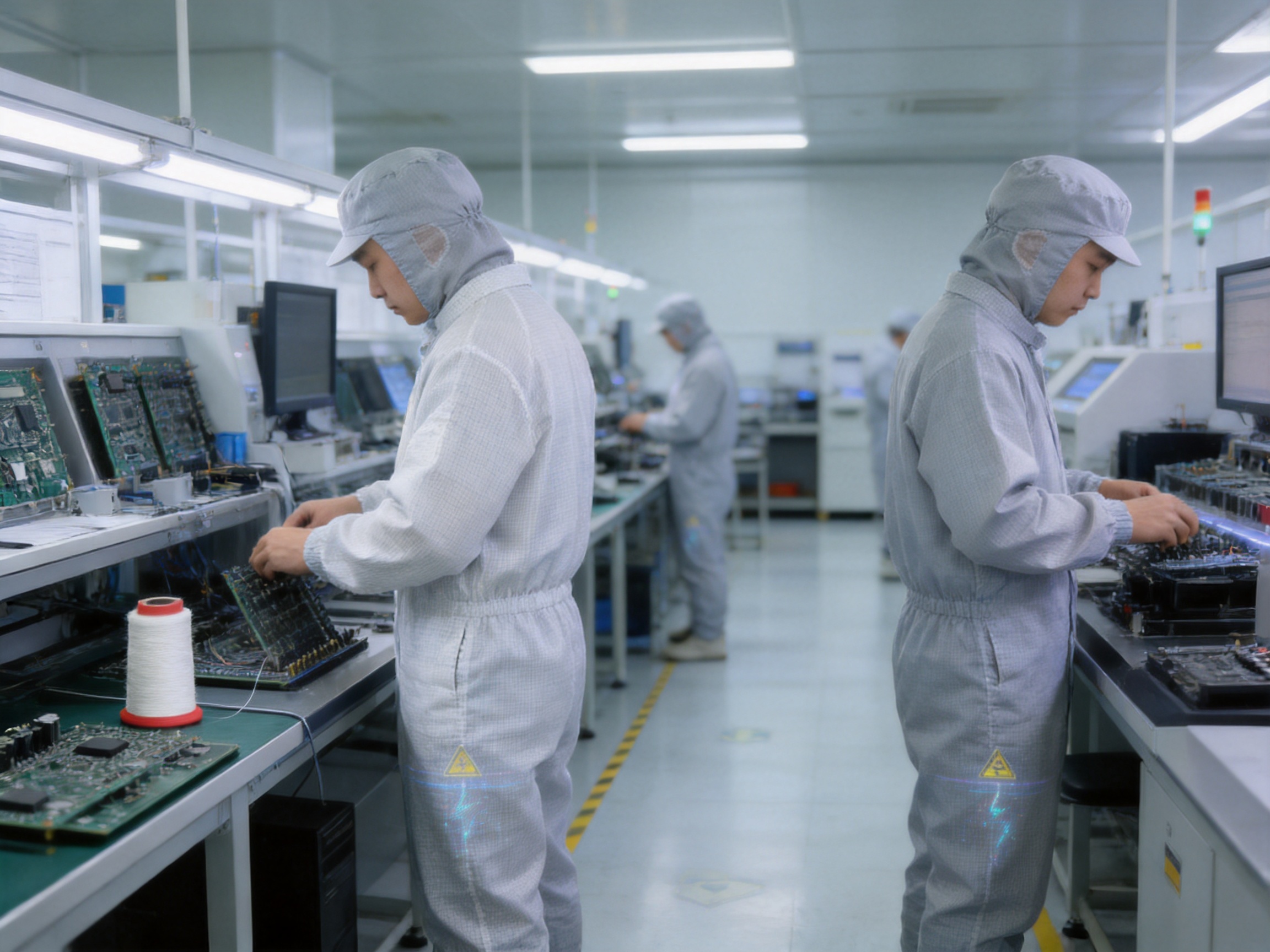
It is a grey polyester filament yarn designed to help suppress static-electricity generation and dissipate accumulated charge. It is suitable for weaving or knitting into anti-static fabrics, workwear, industrial textiles, and related products.
The yarn is made from PET, or polyester. PET provides strength, dimensional stability, abrasion resistance, and broad compatibility with textile manufacturing processes.
Regular options include FDY 20D, FDY 40D, FDY 60D, and DTY 60D. Special counts can be customized by order according to the customer’s technical requirements.
The supplied product information states a resistance specification of 10^9 Ω/cm. Because electrical properties can be reported using different terms and test methods, customers should confirm the exact measurement method and finished-fabric target before ordering.
The fiber is designed to maintain excellent static-suppression performance after repeated washing. Actual results depend on washing temperature, detergent, mechanical action, drying, fabric construction, and the proportion of anti-static yarn used. Application-specific laundering tests are recommended.
The yarn is designed to have weak dependence on humidity and to suppress static generation even in low-humidity environments. Nevertheless, the final performance of a textile is also influenced by grounding, fabric construction, surrounding materials, and test conditions.
Yes. It can be considered for garments and textile products used in electronic, semiconductor, and other static-sensitive environments. It should be incorporated into a complete electrostatic-control program that may include grounding, footwear, flooring, humidity management, and handling procedures.
Yes. Special counts and other specifications can be customized. Customers may discuss denier, filament count, cross-section, color, texture, and functional requirements with the manufacturer’s technical team.
Yes. The yarn can be used in woven or knitted structures. The most suitable construction depends on the required resistance, coverage, appearance, comfort, mechanical properties, and manufacturing equipment.
A yarn-based solution integrates the functional property into the textile structure and can offer better durability during repeated washing and use. Surface finishes may still be useful in some applications, but their performance can be affected by abrasion, cleaning, and aging.
GC FIBER provides customized and OEM support involving technical specification review, collaborative development, production planning, research and development, and delivery coordination. The company can work with customers to develop new functional textile materials beyond standard catalog offerings.
The listed shipping location is Shanghai seaport. Customers should confirm production lead time, packaging, shipping terms, documentation, and delivery schedules when requesting a quotation.
Anti-Static PET Yarn Grey Color is a practical functional textile material for manufacturers that need durable and dependable static control. Its low resistance, long-lasting performance, heat and water resistance, and reduced dependence on humidity distinguish it from many temporary antistatic approaches. The yarn is suitable for a broad range of applications, including electronic manufacturing, semiconductor workwear, medical textiles, industrial fabrics, reusable garments, curtains, covers, and textile-processing products.
The availability of FDY 20D, 40D, and 60D, together with DTY 60D and customizable special counts, gives customers flexibility during fabric development. Polyester provides a familiar and durable base material, while the anti-static function enables the production of textiles designed for more demanding environments.
GC FIBER strengthens the product offering through experience in special textile materials, dedicated design and research capabilities, multiple production lines, raw-material and quality control, collaborative development, and OEM flexibility. Customers can begin with a standard count or work with the technical team to develop a yarn that matches a specific fabric, garment, industrial, or environmental requirement.
For the best results, buyers should evaluate the complete fabric system rather than relying only on the yarn specification. Electrical testing, laundering trials, fabric construction, grounding, humidity, and end-use conditions should all be considered. When properly selected and integrated, Anti-Static PET Yarn Grey Color can provide a durable foundation for high-performance textiles that require reliable control of electrostatic charge.
1. Product information supplied for Anti-Static PET Yarn Grey Color, including material, available counts, resistance specification, applications, and customization options.
2. Product and company information supplied for GC FIBER, including special textile manufacturing, research and development, OEM services, and functional yarn categories.
3. General textile engineering principles concerning polyester filament yarn, fabric construction, laundering durability, and electrostatic behavior.
4. General industry guidance on electrostatic discharge control in electronics, semiconductor, medical, and industrial environments.
5. General laboratory considerations for measuring textile resistance, surface resistivity, charge dissipation, humidity dependence, and wash durability.
Made of PBS (Polybutylene Succinate), fully biodegradable.Features:1.Home compostable2.Raw material: PBS Polybutylene Su...
READ MOREPlease fill out the form below and our team will contact you as soon as possible.
Addres: No.66 Qiaogang Road, Haian, Nantong City, Jiangsu Province, China
E-mail: service@gcfiber.com admin@gcfiber.com
Copyright ? GC FIBER All Rights Reserved. Eco-Friendly Textile Products Manufacturer Biodegradable Yarn Company