English
 中文简体
Made of PBS (Polybutylene Succinate), fully biodegradable.Features:1.Home compostable2.Raw material: PBS Polybutylene Su...
READ MORE
Content
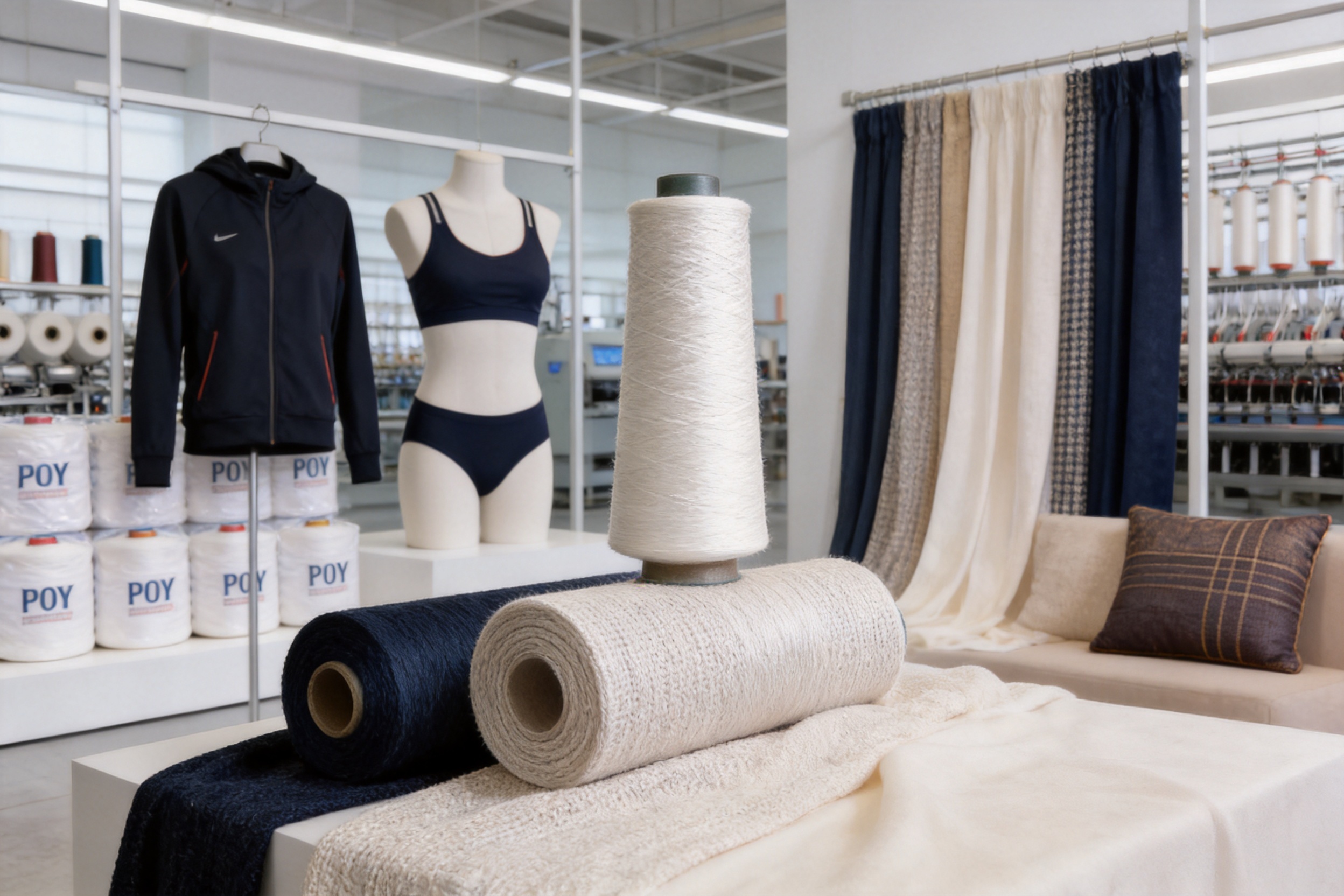
ECDP pre-oriented POY yarn is a modified polyester filament designed for textile manufacturers that need improved dyeing performance, a softer hand, deeper color development, and dependable downstream processability. As a partially oriented yarn, or POY, it is not normally intended to be the final fabric yarn. Instead, it is an important intermediate material used to produce draw-textured yarn, fully drawn yarn, and other specialized polyester products.
The value of ECDP POY comes from the combination of two characteristics. First, its pre-oriented molecular structure provides controlled residual drawability for later draw-texturing or draw-winding. Second, its modified polyester chemistry improves dye affinity compared with ordinary polyester. These characteristics allow processors to manufacture fabrics with rich shades, comfortable touch, good luster, and more efficient dyeing performance.
For manufacturers serving sportswear, underwear, knitted fabrics, woven fabrics, home textiles, and other applications, the product offers a practical route to differentiated polyester materials. It combines the productivity advantages of filament yarn processing with functional properties that are increasingly important in modern textile supply chains.
The product is available in multiple specifications, including 53Dtex/36F, 70Dtex/36F, 131Dtex/72F, and 250Dtex/144F. Other counts can be produced according to customer requirements. This range enables textile mills to select a suitable linear density and filament arrangement for different fabric constructions, machine settings, and end-use requirements.
Pre-oriented yarn is a partially drawn polyester filament produced at high spinning speeds. In typical production, spinning speeds are approximately 3,000 to 3,600 meters per minute. At this stage, the polymer chains have achieved an intermediate level of orientation, but the yarn retains controlled elongation and drawability.
This intermediate structure makes POY an upstream material rather than a finished yarn for most applications. A processor may convert it into draw-textured yarn, commonly called DTY, through a combination of drawing and false-twist texturing. Alternatively, POY can be processed into fully drawn yarn, or FDY, through draw-winding and related operations. The selected downstream process determines the final yarn’s bulk, stretch, surface character, strength, and fabric behavior.
ECDP refers to a modified polyester system developed to improve the interaction between the fiber and dyestuffs. The modification is incorporated during the polymer or melt preparation stage, allowing the functional chemistry to be distributed through the filament rather than applied only to the surface after spinning. This approach supports more uniform dyeing behavior across the filament cross-section.
Because the ECDP modification is present throughout the polymer structure, the benefits can continue into products made from the POY. When the POY is converted into DTY or FDY, the resulting yarn can retain the improved dye affinity, soft touch, luster, and moisture-related performance associated with the modified polyester composition.
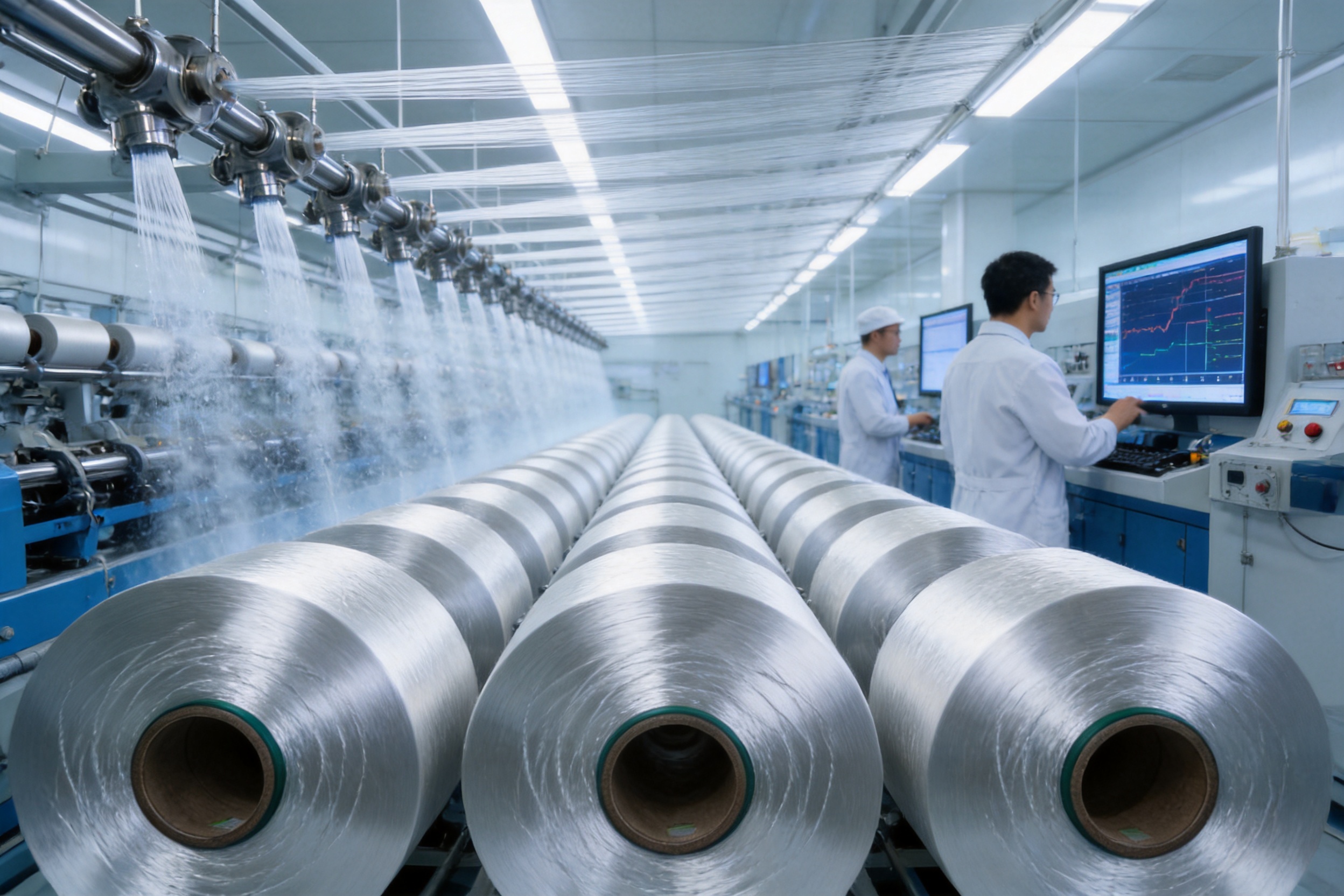
The manufacturing process begins with the selection and preparation of polyester raw materials. For ECDP POY, the modified polymer composition is carefully prepared so that the dye-receptive characteristics are established before spinning. The quality and consistency of this stage are important because variations in polymer composition can affect melt viscosity, spinning stability, filament uniformity, and dyeing results.
After the polymer components are prepared, they are converted into a homogeneous melt under controlled temperature conditions. Stable melting is essential for producing continuous filaments with consistent denier and fewer process irregularities. The melt must pass through the spinning system in a uniform state so that each filament receives comparable thermal and mechanical treatment.
The polymer melt is extruded through a spinneret containing multiple precision holes. Each hole forms an individual filament. The number of holes determines the filament count, while the overall polymer throughput and spinning conditions influence the yarn’s linear density.
High-speed spinning creates the partially oriented molecular structure required for POY. At approximately 3,000 to 3,600 meters per minute, the newly formed filaments are cooled, gathered, and wound into packages. The cooling conditions must be carefully controlled because excessive or insufficient cooling can influence filament structure, yarn evenness, shrinkage, and downstream drawability.
Production control at this stage includes monitoring spinning temperature, melt pressure, throughput, cooling air conditions, winding tension, and package formation. These factors influence the stability of the yarn during later processing. A well-controlled process helps ensure that the yarn unwinds smoothly, performs consistently on draw-texturing equipment, and delivers uniform fabric appearance.
POY is supplied in packages designed for efficient unwinding and continuous downstream processing. Package density, winding tension, traverse movement, and edge formation all affect how the yarn behaves when it is fed into a draw-texturing or draw-winding machine.
Poor package formation can create tension fluctuations, snarling, yarn breaks, and irregular feeding. For this reason, package quality is not merely a logistical consideration. It is directly related to process efficiency, machine productivity, and the appearance of the final textile product.
Consistent winding also helps processors manage larger production runs. When packages have stable dimensions and predictable unwinding behavior, operators can reduce interruptions and maintain more consistent machine settings from one package to the next.
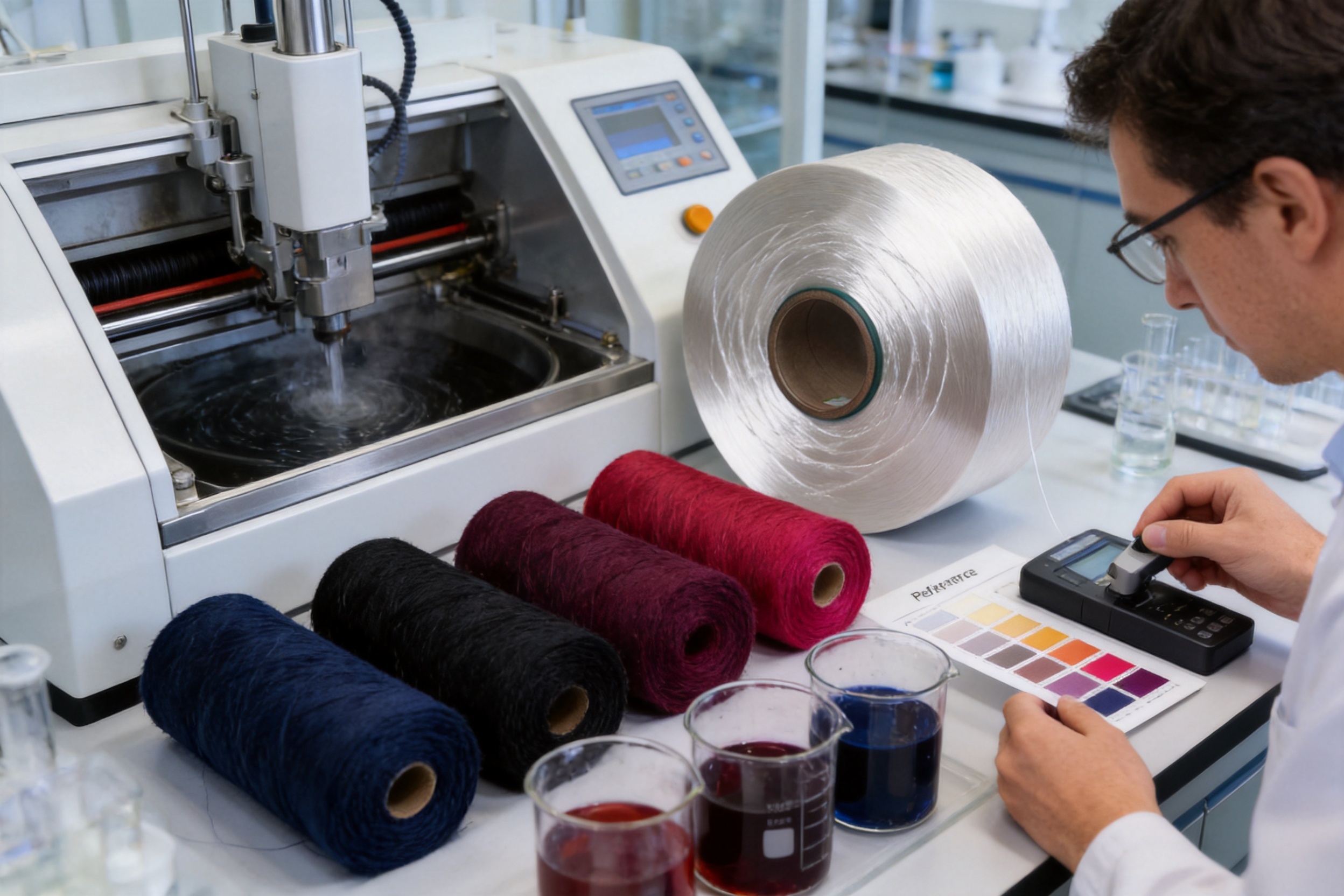
Manufacturing control should cover both physical yarn properties and processing performance. Typical quality checks include linear density, filament count, tenacity, elongation, yarn evenness, appearance, package weight, and unwinding behavior. For ECDP products, dyeing tests are also important because the principal value of the yarn is connected to its color-development capability.
Laboratory dyeing evaluations can be used to review shade depth, color uniformity, exhaustion behavior, and fastness performance. Process data can then be compared across production lots to support stable supply. This systematic approach is especially valuable for customers producing large volumes of fabric for brand programs, apparel collections, or industrial textile applications.
GC FIBER operates as a special and functional textile manufacturer with experience in products including biodegradable yarn, low melting yarn, ECDP yarn, anti-static yarn, HDPE yarn, bio-component yarn, and polyester filament yarn. Its product development approach is centered on special materials and functional textile solutions rather than only standard commodity specifications. The company also works with customers on the development of new materials, which can be useful when a standard yarn specification does not fully meet a particular fabric or processing requirement.
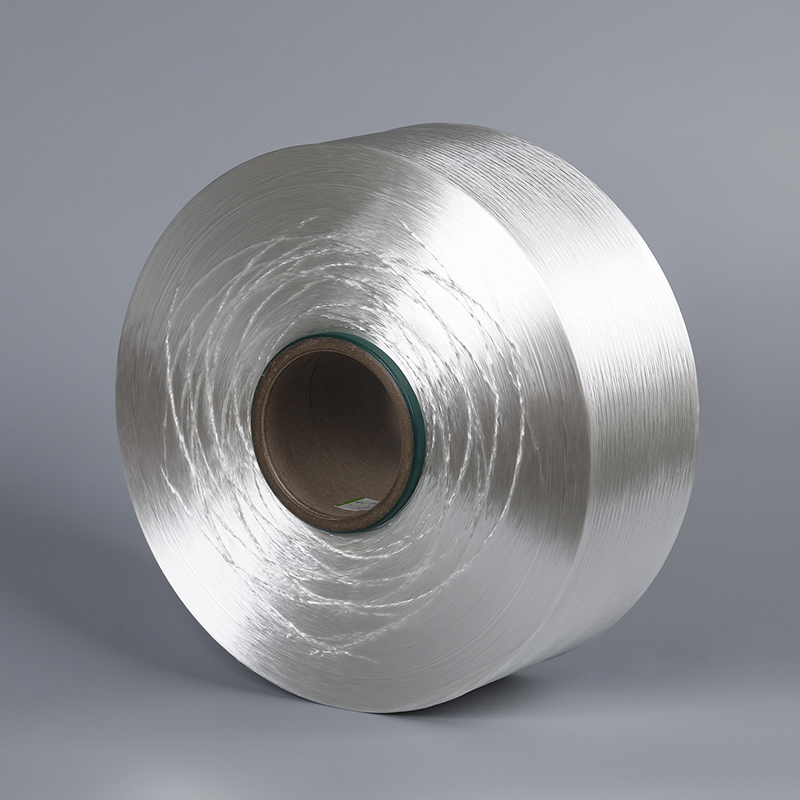
ECDP Pre-oriented POY Yarn
One of the defining features of ECDP POY is its ability to support deep dyeing at approximately 85 degrees Celsius. The modified polyester structure provides more accessible dye-receptive sites than conventional polyester, allowing the finished yarn or fabric to develop a deeper shade under comparatively moderate dyeing conditions.
Traditional polyester dyeing commonly requires high-temperature and high-pressure conditions. Depending on the fabric construction, dye class, machinery, and recipe, standard polyester systems may be processed near or above 120 degrees Celsius. ECDP-derived materials can offer an alternative route in applications where atmospheric or lower-temperature dyeing is preferred.
The 85-degree deep-dyeing characteristic can be particularly valuable when processing blended fabrics. Elastane, delicate trims, coatings, heat-sensitive components, and certain finishing agents may be affected by severe thermal conditions. Lower-temperature dyeing can help reduce thermal stress and give manufacturers additional flexibility when designing fabric recipes.
Lower-temperature processing may also contribute to reduced energy demand. The actual saving depends on machine efficiency, bath ratio, heating system, dyeing time, fabric weight, and recipe design, so processors should validate the benefit in their own production environment. Nevertheless, the ability to achieve strong color at a lower temperature creates a meaningful opportunity for improved process efficiency.
ECDP POY is designed to produce a soft and comfortable tactile quality after downstream processing. The combination of modified polyester chemistry and the filament structure can support a smoother surface feel in DTY, FDY, knitted fabrics, and woven fabrics.
Touch is a major factor in apparel selection. Sportswear, underwear, base layers, lightweight tops, and next-to-skin fabrics must provide comfort during extended wear. A yarn that contributes to a softer fabric surface can help reduce the harsh or overly synthetic feel sometimes associated with conventional polyester constructions.
The yarn also provides good luster. Depending on the selected polymer formulation and delusterant level, the final product can be designed with a semi-bright, bright, or other controlled appearance. Uniform luster across the package is important because irregular optical behavior may become visible as streaks, bars, or shade differences after knitting or weaving.
The dyeing performance of ECDP POY is based on the modified fiber structure rather than a temporary surface treatment. Dye-receptive characteristics distributed through the filament can support more stable color development throughout the fiber cross-section.
This characteristic helps manufacturers obtain saturated shades and clear color expression. It is relevant for black, navy, dark sportswear colors, fashion brights, and other shades where insufficient depth can make a fabric appear dull or washed out.
Uniform dye uptake is equally important. If individual filaments absorb dye at noticeably different rates, the final fabric may show streaks, patchiness, or package-to-package variation. A stable ECDP production process helps reduce the risk of inconsistent dyeing and supports more predictable shade matching.
ECDP-derived fabrics can provide good color fastness when appropriate dyes, auxiliaries, dyeing parameters, washing procedures, and finishing conditions are used. The modified polymer structure promotes the retention of color within the fiber and can support resistance to fading during commercial use.
Important fastness categories may include washing, perspiration, rubbing, and light fastness. Actual results depend on the final yarn type, fabric construction, dye class, shade, finishing process, and test standard. For this reason, customers should conduct testing using their intended production recipe and target end use.
For apparel producers, dependable color fastness reduces the risk of customer complaints and supports longer product life. It is especially significant in sportswear and underwear, where repeated washing and exposure to perspiration are common.
Polyester is generally recognized for low moisture regain compared with many natural fibers. The ECDP modification is designed to provide better moisture-related performance than ordinary commodity polyester POY. When the yarn is converted into fabric, this can contribute to a more comfortable microclimate near the skin.
Moisture regain does not mean that the yarn behaves exactly like cotton, viscose, or other highly absorbent fibers. Instead, it indicates an improvement within the polyester category. The practical result may include better moisture interaction, a more comfortable hand, and improved performance when combined with suitable fabric structures and finishing treatments.
In sportswear, moisture management is influenced by yarn chemistry, filament fineness, cross-sectional shape, fabric density, knitting structure, garment design, and finishing. ECDP POY can be used as one component of a broader performance strategy, helping manufacturers create fabrics that balance softness, color depth, durability, and moisture comfort.
High dyeing take-up means that a larger proportion of the dye can be absorbed by the fiber during the dyeing cycle. This can improve color efficiency, shorten the distance between the intended and actual shade, and reduce the amount of residual dye remaining in the dye bath.
Higher dye exhaustion may help reduce dye consumption per unit weight of finished fabric. It can also lower the dye load in wastewater, although wastewater treatment requirements remain dependent on the complete recipe and the chemicals used during production.
For textile mills, high dyeing take-up can support improved reproducibility. When dye absorption is efficient and predictable, technicians may find it easier to control shade matching across lots. This is valuable in supply chains where the same color must be reproduced over multiple production seasons or across several fabric suppliers.
Standard polyester POY remains a widely used and cost-effective material. It offers good strength, availability, process familiarity, and broad application potential. However, ordinary polyester may require more demanding dyeing conditions and may not deliver the same depth of color, moisture-related comfort, or soft touch as a modified ECDP product.
ECDP POY is differentiated by its functional balance. It maintains the essential characteristics of a polyester precursor yarn while adding greater dye affinity and comfort-oriented performance. This enables processors to develop products that are more distinctive than basic commodity polyester without changing completely to another fiber family.
| Performance area | Conventional polyester POY | ECDP pre-oriented POY | Potential manufacturing value |
|---|---|---|---|
| Dyeing temperature | Often requires high-temperature polyester dyeing conditions | Supports deep dyeing at approximately 85 degrees Celsius under suitable conditions | Greater flexibility for lower-temperature processing and selected blends |
| Color depth | Good, but may require stronger recipes or more severe conditions for deep shades | Designed for deep, saturated color development | Useful for dark shades, fashion colors, and premium visual effects |
| Touch | Depends strongly on filament and finishing design | Soft touch is a planned product characteristic | Improved suitability for next-to-skin and comfort-focused products |
| Moisture regain | Typical polyester behavior | Improved moisture regain compared with commodity polyester | Supports comfort and moisture-management fabric concepts |
| Dye take-up | Depends on standard polyester dyeing behavior | High dyeing take-up is a key functional feature | Potentially lower dye waste and more efficient shade development |
| Downstream use | Suitable for DTY, FDY, and other processing routes | Suitable for the same routes while adding modified-fiber performance | Allows existing polyester equipment to be used with a differentiated material |
The comparison does not mean that ECDP POY replaces conventional polyester in every application. Commodity polyester can remain the right choice when the main priorities are minimum cost, standard performance, and basic fabric construction. ECDP POY is most valuable when dyeing flexibility, comfort, color depth, and product differentiation justify the additional functional specification.
POY is commonly processed into DTY through draw-texturing. During this process, the POY is drawn to develop the required orientation and then textured to introduce bulk, stretch, crimp, and a softer surface. The exact performance depends on draw ratio, heater temperature, texturing speed, false-twist settings, overfeed, interlacing, and winding conditions.
ECDP POY provides the residual drawability needed for this conversion. Its performance should remain stable as the yarn passes through the draw-texturing machine, allowing processors to target the required stretch and bulk without excessive breakage or irregularity.
DTY made from ECDP POY can be used in knitted sportswear, underwear, casual apparel, leggings, base layers, and other fabrics where softness and controlled elasticity are important. The improved dye affinity of the original POY can continue into the textured yarn, supporting deep and uniform coloration in the finished fabric.
POY can also be converted into FDY through draw-winding. This process produces a more highly oriented yarn with properties suitable for direct use in knitting or weaving. FDY is often selected when manufacturers want a smooth filament yarn, stable dimensions, good strength, and a clean fabric appearance.
ECDP-based FDY can be considered for woven apparel, linings, lightweight fabrics, home textiles, and other products where a smooth filament surface and strong color development are desired. The final application should determine whether a bright, semi-bright, or dull luster is appropriate.
Because POY is an intermediate product, close cooperation between the yarn supplier and the downstream processor is valuable. Machine type, draw ratio, heater arrangement, yarn speed, and fabric construction can all affect the final result. Technical support and sample trials help customers establish the most suitable processing window.
Sportswear fabrics require a combination of comfort, color durability, flexibility, abrasion resistance, and stable dimensional behavior. ECDP POY can contribute to these requirements through its soft touch, deep-dyeing capability, improved moisture regain, and suitability for conversion into elastic or textured yarn structures.
Dark and saturated colors are widely used in athletic apparel. Deep color development helps brands create visually strong designs, while good color fastness supports repeated laundering. The yarn can be incorporated into knitted constructions for training shirts, leggings, running garments, compression-inspired products, and leisure sportswear.
Performance depends on the complete fabric system. Knitting structure, filament count, yarn twist, elastane content, finishing chemistry, and garment design must be considered together. ECDP POY provides a functional foundation but should be evaluated in the precise construction intended for commercial production.
Underwear and base-layer fabrics are worn close to the skin, making touch, softness, moisture behavior, and color fastness important purchasing factors. ECDP-derived yarns can help manufacturers produce fabrics that feel smoother and more comfortable while maintaining the durability expected from polyester filament materials.
The yarn can be used in seamless garments, knitted underwear, bra fabrics, briefs, camisoles, thermal base layers, and blended structures. Its ability to accept deep color may also support fashion-oriented intimate apparel and coordinated garment collections.
For these applications, yarn selection should be combined with low-irritation finishing, suitable fabric cover, and controlled seam or garment construction. A soft yarn alone cannot determine total garment comfort, but it can make an important contribution to the overall hand and wear experience.
Knitting mills can use ECDP POY as a raw material for DTY or FDY production, depending on the required fabric appearance and stretch. The yarn’s softness and weavability support a broad range of circular knitting, warp knitting, and specialty knitting structures.
Fine filament specifications can create smooth, lightweight fabrics, while heavier specifications can provide more coverage and body. The available options of 53Dtex/36F, 70Dtex/36F, 131Dtex/72F, and 250Dtex/144F offer different combinations of linear density and filament count.
Filament count affects surface coverage and hand. A higher filament count can support a finer, softer surface when the total denier is appropriately selected. The correct choice depends on machine gauge, stitch length, fabric weight, desired opacity, and final garment design.
In woven products, yarn strength, abrasion resistance, dimensional stability, and dye uniformity are important. ECDP POY can be converted into a suitable drawn yarn for warp or weft applications, with the final yarn selected according to loom settings and fabric construction.
Applications may include apparel fabrics, lightweight outerwear, lining materials, decorative textiles, and other woven products that require a balance of appearance and performance. Deep and even coloration can help improve the visual quality of woven surfaces, especially in solid shades and patterned fabrics where color consistency is important.
ECDP-derived polyester yarns can also be considered for curtains, decorative fabrics, carpets, cushion covers, and other household textile products. Good luster may be used to create a clean or refined appearance, while color fastness helps fabrics maintain their visual effect during normal use and cleaning.
For curtains and decorative materials, the selected luster and fabric construction can influence light reflection and overall interior appearance. For carpets and household surfaces, abrasion resistance, stain treatment, pile construction, and backing materials must be evaluated together with the yarn.
The choice of yarn specification should begin with the intended downstream process and final product. Linear density determines the mass of the yarn, while filament count influences surface fineness and fabric hand.
| Available specification | General characteristics | Potential use direction |
|---|---|---|
| 53Dtex/36F | Lightweight yarn with a relatively fine filament arrangement | Light knitted fabrics, delicate apparel, underwear, and fine textile constructions |
| 70Dtex/36F | Light-to-medium linear density with a smooth filament profile | Sportswear, underwear, fashion apparel, and general knitting applications |
| 131Dtex/72F | Higher linear density with increased filament count and coverage potential | Textured yarn production, medium-weight knits, woven fabrics, and performance apparel |
| 250Dtex/144F | Heavier yarn with many filaments for fuller coverage and substantial fabric character | Heavier knitted or woven materials, home textiles, and selected industrial or decorative uses |
These descriptions are general guidance rather than fixed application limitations. The same specification may be processed differently depending on the customer’s equipment and design objective. Customers should consider yarn count, filament count, target stretch, fabric weight, machine gauge, dyeing method, and finishing process before confirming a production specification.
Special production by order is available. This is useful for customers that need a count outside the standard selection, a particular package weight, a defined luster level, or a customized production arrangement. Order-based production should be confirmed through technical discussion, sampling, and specification approval.
GC FIBER has operated as a special textile factory in China since 2006. Its product portfolio covers several functional and environmentally oriented textile materials. This experience supports a development mindset based on polymer modification, filament processing, application testing, and customer-specific problem solving.
Working across multiple functional yarn categories can also help a manufacturer understand the interaction between polymer chemistry and textile processing. Different projects may require changes in dye affinity, melting behavior, electrical performance, biodegradation profile, strength, or surface characteristics. Experience with these different requirements strengthens the company’s ability to develop and manufacture specialized materials.
An integrated approach allows product information to move more efficiently between research, production, quality control, and customer service. When a customer reports a dyeing issue, winding concern, or downstream processing challenge, the manufacturer can review the problem from both a product and process perspective.
This type of cooperation is particularly important for POY because the yarn’s success is measured not only by laboratory properties but also by its behavior during draw-texturing, draw-winding, knitting, weaving, dyeing, and finishing. A supplier that understands the complete textile chain can provide more practical support than a supplier focused only on the initial spinning stage.
Different textile mills often require different counts, package sizes, luster levels, and delivery schedules. A flexible production system enables the manufacturer to respond to these requirements instead of limiting customers to a narrow standard catalog.
Custom production also supports product differentiation. A sportswear customer may need a fine filament yarn with soft touch and strong color depth, while a home-textile customer may require a heavier yarn with fuller coverage. Both projects can be approached through specification adjustment and application-based testing.
Products are shipped through Shanghai seaport. A major export port provides a practical logistics channel for international customers and supports coordination of containers, documentation, and delivery planning.
Shipping arrangements should be confirmed according to the customer’s destination, order volume, packaging requirements, and trade terms. Early communication is recommended when customers have fixed production schedules or require synchronized delivery across multiple raw-material suppliers.
POY packages should be stored in a clean, dry environment away from direct sunlight, excessive heat, water, oil, and chemical contamination. Packaging should remain intact until the yarn is ready for conditioning and processing.
Sudden changes in temperature and humidity may influence package behavior and yarn tension. Before use, processors should allow the packages to reach the production-room environment according to their internal handling procedures. Proper storage helps reduce unwinding irregularities and protects the yarn from avoidable contamination.
Because ECDP POY may have different dyeing and drawing behavior from standard polyester POY, processors should not automatically copy all settings from conventional products. Initial trials should review draw ratio, heater temperature, yarn speed, tension, interlacing, and winding conditions.
The objective is to find a stable operating window that delivers the desired yarn properties without creating excessive breaks or unevenness. Small adjustments may be needed when changing from one count to another or when moving between different machine models.
Dyeing trials should be conducted using the actual fabric construction whenever possible. Yarn skeins can provide preliminary information, but knitted or woven fabric trials offer a more accurate representation of production behavior.
Trial programs may compare temperature, time, dye concentration, bath ratio, auxiliaries, pH, and reduction-clearing conditions. The target should be evaluated not only by visual depth but also by exhaustion, levelness, fastness, shade reproducibility, and wastewater characteristics.
The 85-degree deep-dyeing feature should be understood as a product capability that must be matched with a suitable dyeing recipe. It does not mean that every shade, fabric structure, and dye system will achieve identical results under the same conditions. Technical trials remain essential for commercial approval.
Textile manufacturers increasingly evaluate yarns according to both product performance and resource efficiency. ECDP POY can contribute to this discussion through its potential for lower-temperature dyeing and high dyeing take-up.
Lower-temperature dyeing may reduce the energy required to heat the dye bath, particularly when compared with conventional high-temperature polyester processing. The actual environmental benefit depends on the complete production system, including boiler efficiency, heat recovery, dyeing time, bath ratio, water reuse, and fabric preparation.
High dyeing take-up may reduce residual dye in the bath and support more efficient use of dyestuffs. This can help lower dye consumption and reduce the organic or color load associated with wastewater. Proper wastewater treatment remains necessary, and processors should verify environmental performance through measurements at their own facilities.
The product is also part of a broader portfolio of special and eco-friendly textile products developed by GC FIBER. Customers seeking sustainability improvements may evaluate ECDP POY alongside biodegradable yarn, bio-component yarn, low melting yarn, and other materials, selecting the solution that best matches the product’s technical and environmental objectives.
Textile markets are increasingly divided between low-cost commodity products and differentiated materials that provide recognizable performance benefits. ECDP POY belongs to the second category. It gives manufacturers a way to improve the value of polyester-based fabrics without sacrificing the established processing routes associated with filament yarn.
Its advantages are especially relevant when a product needs one or more of the following characteristics:
Deep and saturated color with controlled shade development.
Potential for dyeing at approximately 85 degrees Celsius under suitable process conditions.
A softer hand for sportswear, underwear, and next-to-skin fabrics.
Good luster and a more refined surface appearance.
Improved moisture regain compared with standard commodity polyester.
High dyeing take-up and potentially lower dye waste.
Compatibility with downstream DTY and FDY manufacturing.
Availability in multiple counts and the possibility of special production by order.
These benefits can help textile mills develop fabrics with a stronger marketing story and improved functional positioning. They can also help apparel brands offer products that combine appearance, comfort, durability, and more flexible dyeing options.
POY means pre-oriented yarn. It is a partially drawn filament yarn with intermediate molecular orientation and residual drawability. It is commonly processed into DTY or FDY before being used in many final textile products.
ECDP POY uses a modified polyester composition designed to improve dye affinity and comfort-related properties. Compared with ordinary polyester POY, it is intended to provide deeper dyeing, higher dyeing take-up, softer touch, improved moisture regain, and good luster.
ECDP POY is designed to support deep dyeing at approximately 85 degrees Celsius under suitable atmospheric dyeing conditions. Actual results depend on the dye system, shade, fabric construction, auxiliaries, time, and equipment. A production trial should be completed before commercial approval.
It is usually an intermediate yarn. It can be converted into DTY through draw-texturing or into FDY through draw-winding. The downstream product is then used for knitting, weaving, apparel, sportswear, underwear, and other applications.
Common specifications include 53Dtex/36F, 70Dtex/36F, 131Dtex/72F, and 250Dtex/144F. Other counts can be produced by order, subject to technical confirmation and production planning.
Typical applications include sportswear, underwear, knitted fabrics, woven fabrics, home decoration textiles, and selected household products. The appropriate specification depends on fabric weight, construction, hand, coverage, stretch, and final use.
It is intended for downstream polyester processing routes such as draw-texturing and draw-winding. However, machine settings may require optimization because the modified yarn can have different drawing and thermal behavior from standard polyester POY. Sampling is recommended.
ECDP POY provides improved moisture regain compared with commodity polyester, but final moisture management depends on the complete textile system. Filament count, fabric structure, finishing, garment design, and blending choices all influence the final result.
Customers should produce representative knitted or woven samples and test washing, perspiration, rubbing, light, and other relevant fastness categories according to their intended market requirements. Results should be judged using the final dyeing and finishing recipe.
Special production by order is available. Customers can discuss required counts, application targets, package requirements, luster, processing conditions, and delivery plans with the manufacturer. New-material cooperation is also available for projects requiring a customized functional yarn.
Products are shipped through Shanghai seaport. Final logistics arrangements should be confirmed according to destination, order size, packaging, delivery schedule, and agreed trade terms.
Customers should provide the desired specification, approximate quantity, intended application, downstream process, preferred package format, destination port, delivery schedule, and any special requirements concerning dyeing, luster, moisture performance, or certification.
ECDP pre-oriented POY yarn is a functional polyester precursor designed for manufacturers seeking more than standard filament performance. Its modified polymer structure supports deep dyeing at approximately 85 degrees Celsius, high dyeing take-up, good color fastness, soft touch, good luster, and improved moisture regain.
As a POY product, it also provides the residual drawability required for conversion into DTY and FDY. This enables textile mills to use established downstream processes while developing fabrics with stronger color, enhanced comfort, and more differentiated performance.
The product is available in several counts and can be specially produced according to customer requirements. With experience in functional and eco-friendly textile materials, integrated research and manufacturing capabilities, customer development cooperation, and export access through Shanghai seaport, GC FIBER provides a practical supply option for companies developing specialized polyester textiles.
For the best commercial result, customers should evaluate the yarn through a complete application trial covering downstream conversion, knitting or weaving, dyeing, finishing, and final performance testing. When correctly matched with the production process, ECDP POY can help textile manufacturers improve product quality while creating more efficient and competitive fabric solutions.
1. General technical principles for polyester filament spinning, pre-oriented yarn production, draw-texturing, and draw-winding.
2. Textile dyeing and finishing practice for modified polyester fibers and deep-shade development.
3. Standard laboratory methods for evaluating yarn linear density, tensile properties, elongation, evenness, moisture regain, and color fastness.
4. Technical guidance for polyester filament yarn applications in sportswear, underwear, knitted fabrics, woven fabrics, and household textiles.
5. Manufacturer-provided product information for ECDP pre-oriented POY yarn, including available counts, performance features, applications, and shipping arrangements.
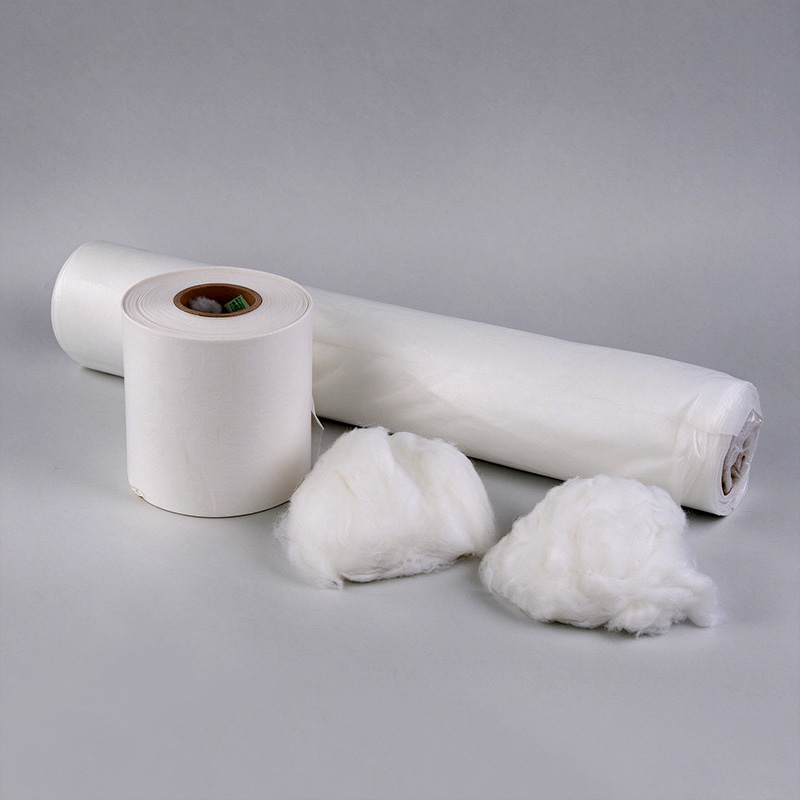
Made of PBS (Polybutylene Succinate), fully biodegradable.Features:1.Home compostable2.Raw material: PBS Polybutylene Su...
READ MOREPlease fill out the form below and our team will contact you as soon as possible.
Addres: No.66 Qiaogang Road, Haian, Nantong City, Jiangsu Province, China
E-mail: service@gcfiber.com admin@gcfiber.com
Copyright ? GC FIBER All Rights Reserved. Eco-Friendly Textile Products Manufacturer Biodegradable Yarn Company